JAC Class 12 Chemistry Question Paper 2014 with Solution
JAC Class 12
Chemistry2014Download pdf solved JAC Class 12 chemistry question paper 2014. Learn how to get higher marks with this in-depth solution of chemistry for your JAC Board 12th exam.
Downloaded from jac.jharkhand.gov.in
About this paper
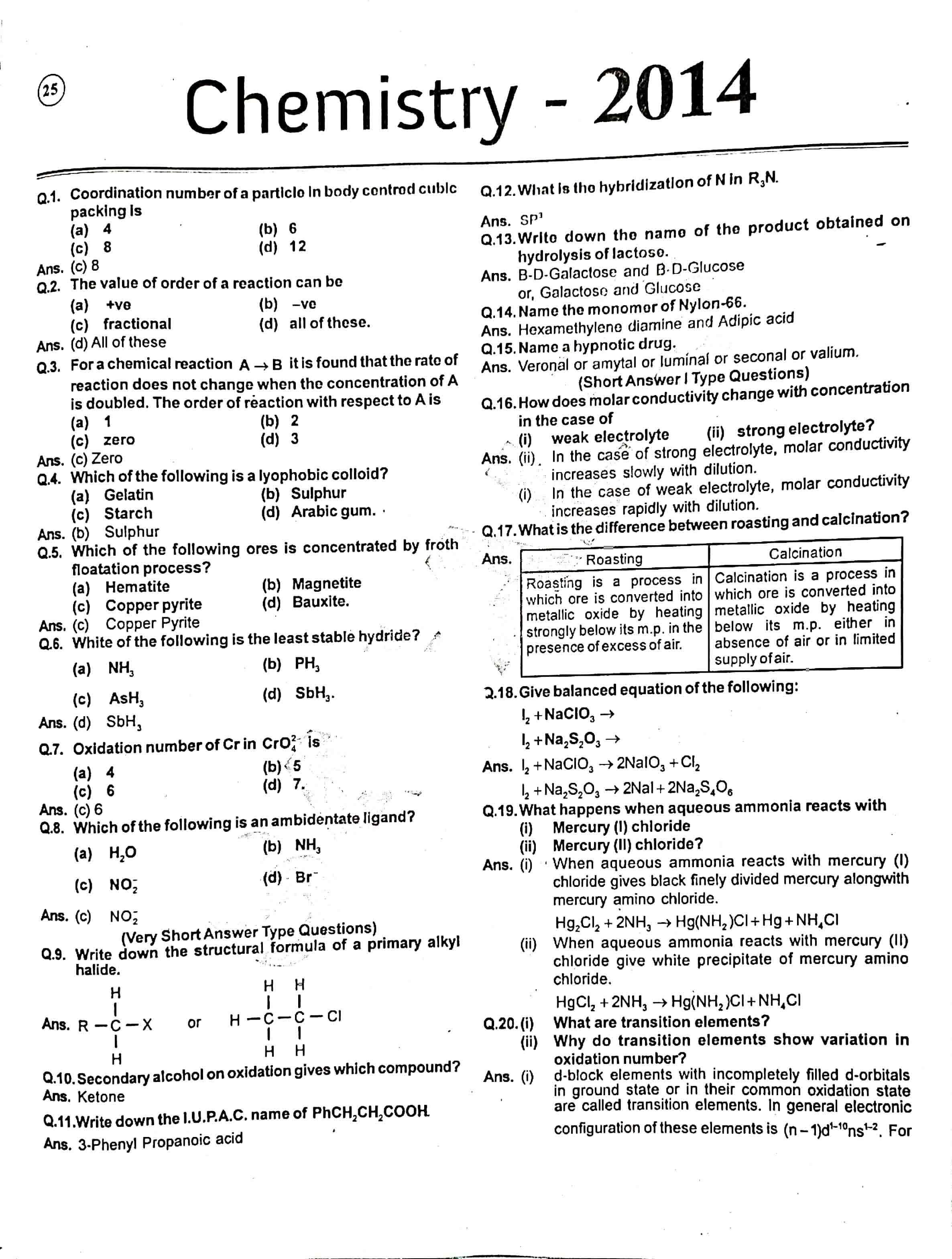
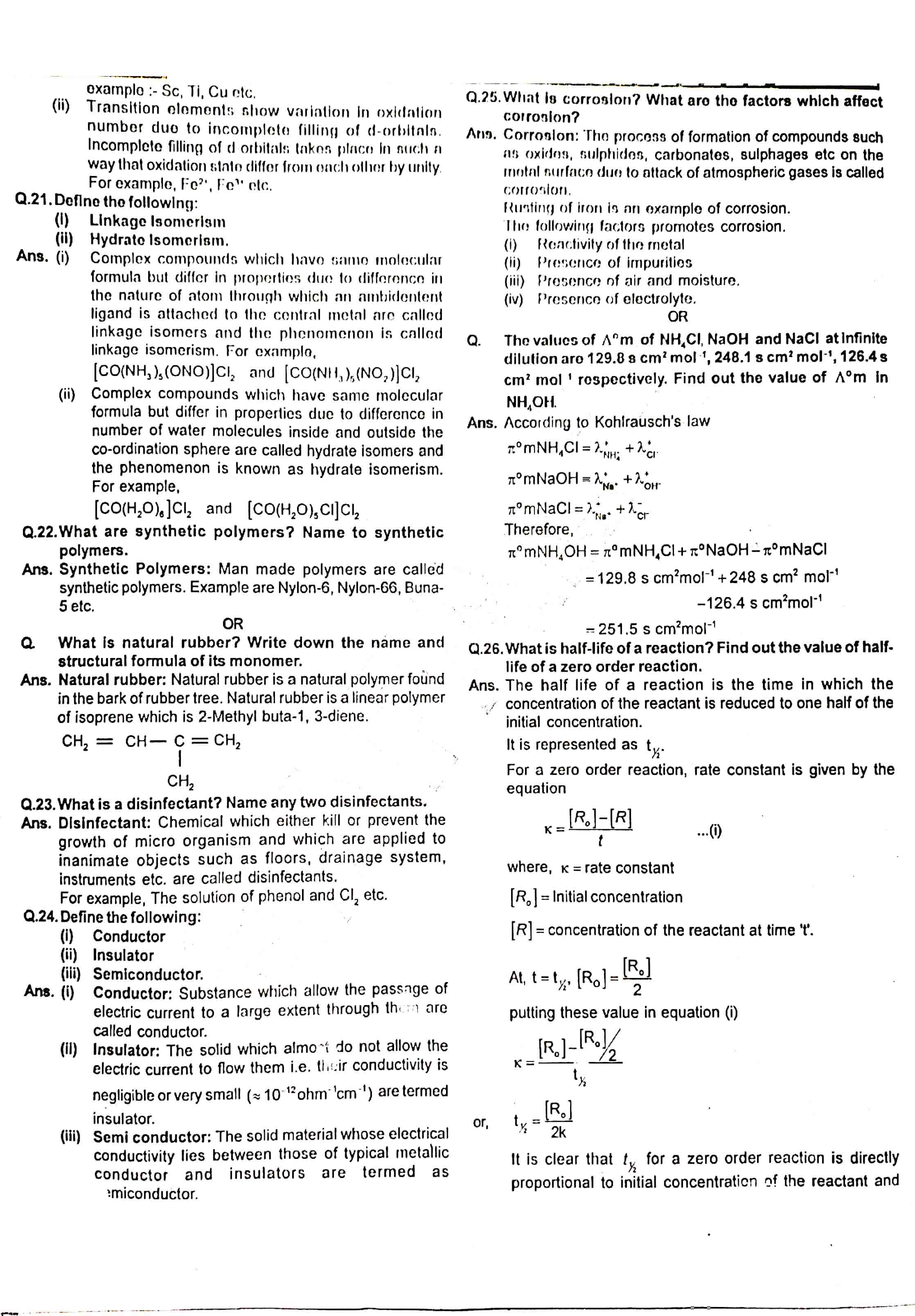
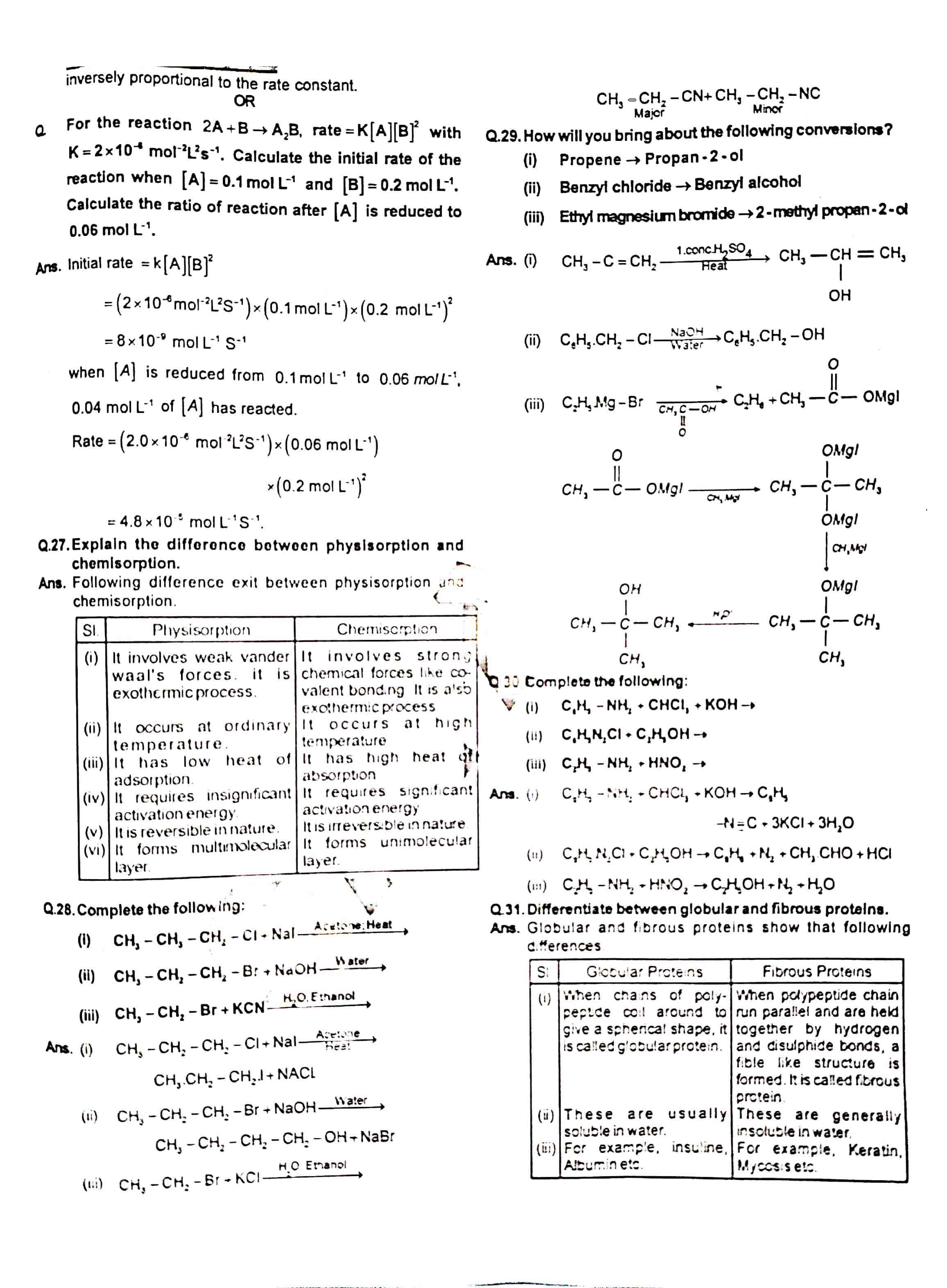
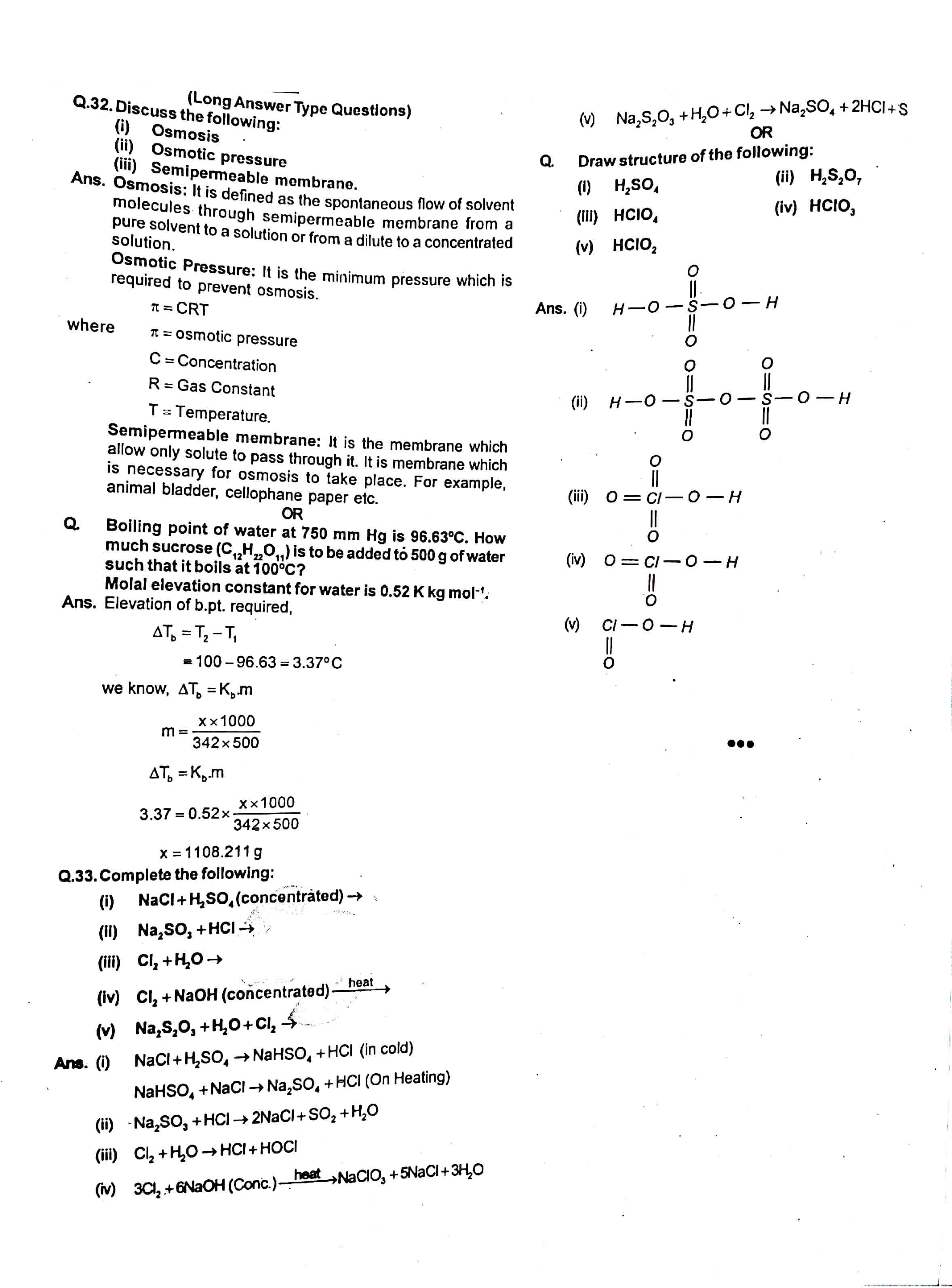
This is the Jharkhand Academic Council (JAC) Class 12 Chemistry paper from the 2014 board examination, with answers and worked steps under each question. Its 33 questions run from eight multiple-choice items (Questions 1–8) and seven very short answers (Questions 9–15) to short answers (Questions 16–31) and two long answers (Questions 32–33), with internal 'Or' choices in Questions 22, 25, 26, 32 and 33. Numerical problems include Kohlrausch's law for NH₄OH, a rate calculation for 2A + B → A₂B and the mass of sucrose needed to make water boil at 100 °C. The answers also draw the structures of sulphur and chlorine oxoacids. Marks and time are not printed.
- Exam
- JAC Class 12
- Subject
- Chemistry
- Year
- 2014
- Questions
- 33
- Pages
- 4
- Answers included
- Yes
Paper pattern
Questions 1–8
Multiple-choice questions
Questions 9–15
Very short answer questions
Questions 16–31
Short answer questions; internal choice in Questions 22, 25 and 26
Questions 32–33
Long answer questions, each with an 'Or' choice
Topics covered
- Solid state
- Solutions and colligative properties
- Electrochemistry and corrosion
- Chemical kinetics
- Surface chemistry
- Metallurgy
- p-Block elements
- d-Block elements
- Coordination compounds and isomerism
- Haloalkanes, alcohols and amines
- Biomolecules
- Polymers and chemistry in everyday life
Questions from this paper
- For a chemical reaction A → B, the rate does not change when the concentration of A is doubled. What is the order of reaction with respect to A?
- What is the difference between roasting and calcination?
- What happens when aqueous ammonia reacts with mercury(I) chloride and with mercury(II) chloride?
- The values of Λ°m of NH₄Cl, NaOH and NaCl at infinite dilution are 129.8, 248.1 and 126.4 S cm² mol⁻¹ respectively. Find the value of Λ°m for NH₄OH.
- What is the half-life of a reaction? Find the half-life of a zero-order reaction.
- The boiling point of water at 750 mm Hg is 96.63 °C. How much sucrose (C₁₂H₂₂O₁₁) must be added to 500 g of water so that it boils at 100 °C? The molal elevation constant for water is 0.52 K kg mol⁻¹.
Free email alert
Get the 2027 JAC Class 12 papers first
One email when the new JAC Class 12 Chemistry question papers are published here. No spam, unsubscribe any time.
What's next
Thinking about what comes next?
Scholarships, education loans, and study-abroad costs, explained with real numbers.
See guidance