JAC Class 12 Chemistry Question Paper 2018 with Solution
JAC Class 12
Chemistry2018Download pdf solved JAC Class 12 chemistry question paper 2018. Learn how to get higher marks with this in-depth solution of chemistry for your JAC Board 12th exam.
Downloaded from jac.jharkhand.gov.in
About this paper
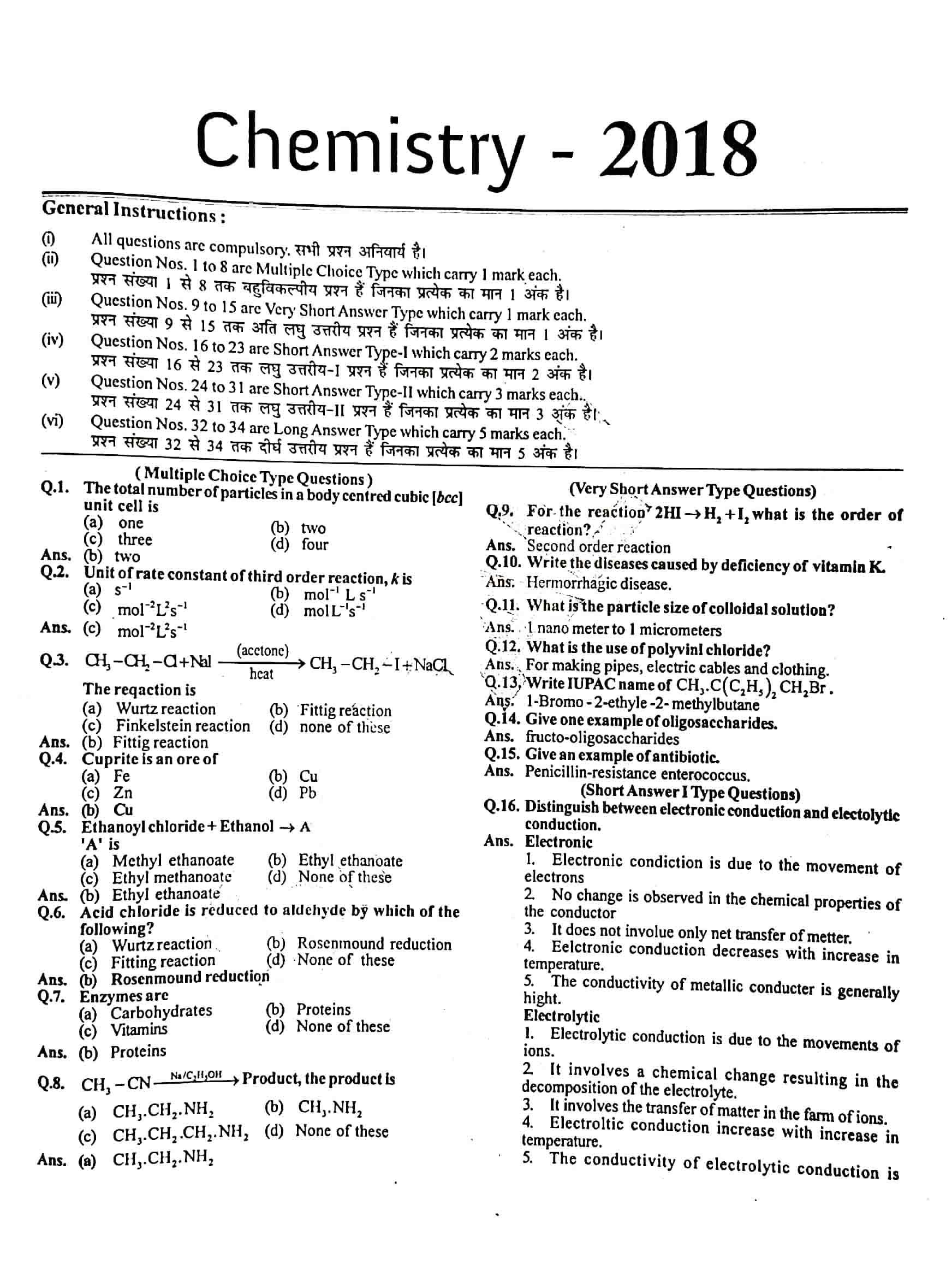
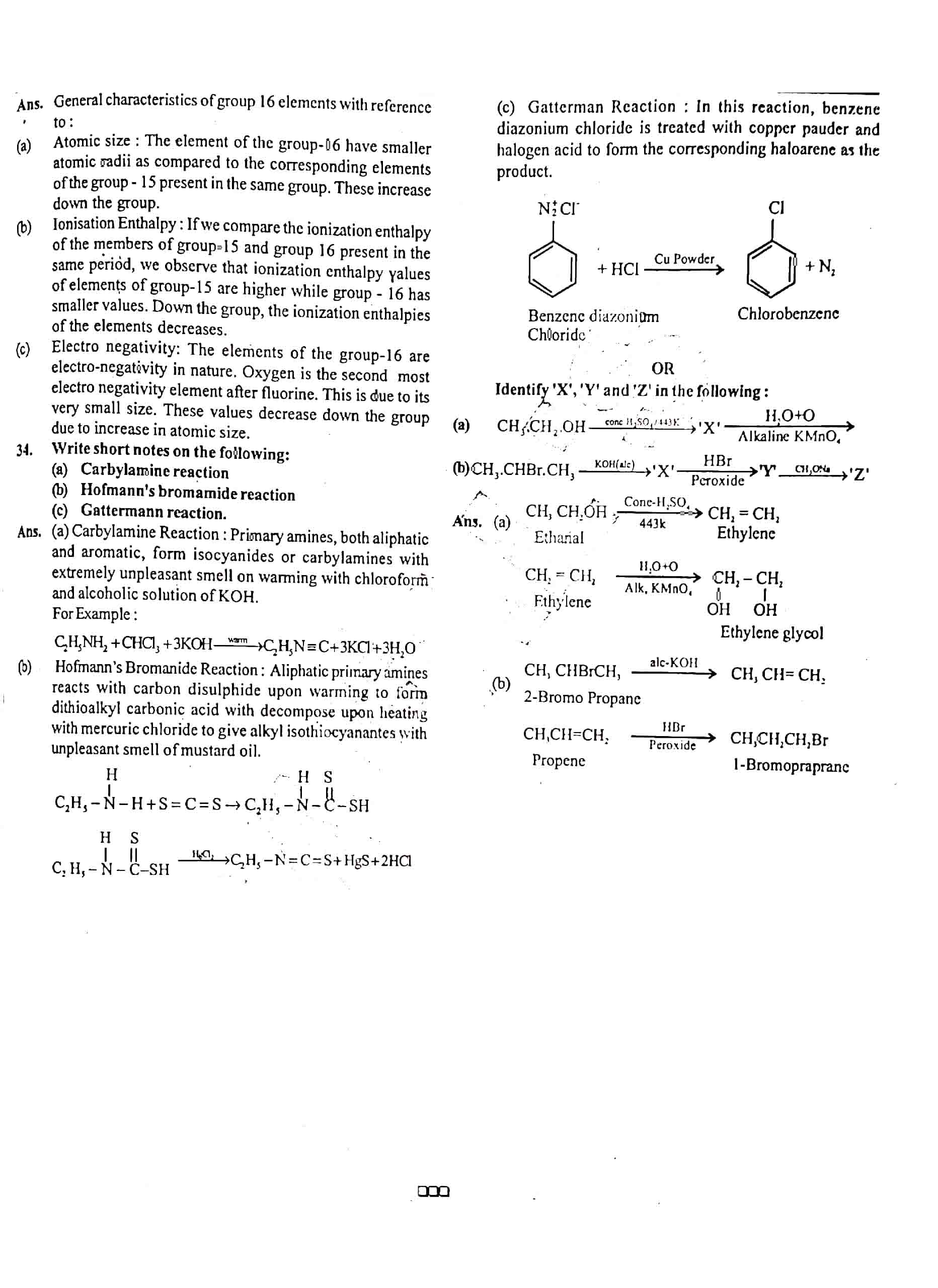
This is the Jharkhand Academic Council (JAC) Class 12 Chemistry paper from the 2018 board examination, with an answer under each question. The instructions set it at 70 marks and 34 questions: eight multiple-choice and seven very short questions of one mark, eight Short Answer I questions of two marks, eight Short Answer II questions of three marks, and three long answers of five marks. The long answers are an ethylene-glycol antifreeze calculation, the laboratory preparation of phosphine, and notes on the carbylamine, Hofmann bromamide and Gattermann reactions, each with an Or alternative. A three-mark question asks for the products of reactions of xenon fluorides. Time is not printed.
- Exam
- JAC Class 12
- Subject
- Chemistry
- Year
- 2018
- Maximum marks
- 70
- Questions
- 34
- Pages
- 5
- Answers included
- Yes
Paper pattern
Multiple Choice Type Questions
8 marksQuestions 1–8, one mark each
Very Short Answer Type Questions
7 marksQuestions 9–15, one mark each
Short Answer Type-I
16 marksQuestions 16–23, two marks each
Short Answer Type-II
24 marksQuestions 24–31, three marks each
Long Answer Type
15 marksQuestions 32–34, five marks each, each with an Or alternative
Topics covered
- Solid state
- Solutions
- Electrochemistry
- Chemical kinetics
- Surface chemistry
- General principles of isolation of metals
- p-Block elements
- d- and f-block elements
- Coordination compounds
- Haloalkanes, alcohols and amines
- Biomolecules
- Polymers and chemistry in everyday life
Questions from this paper
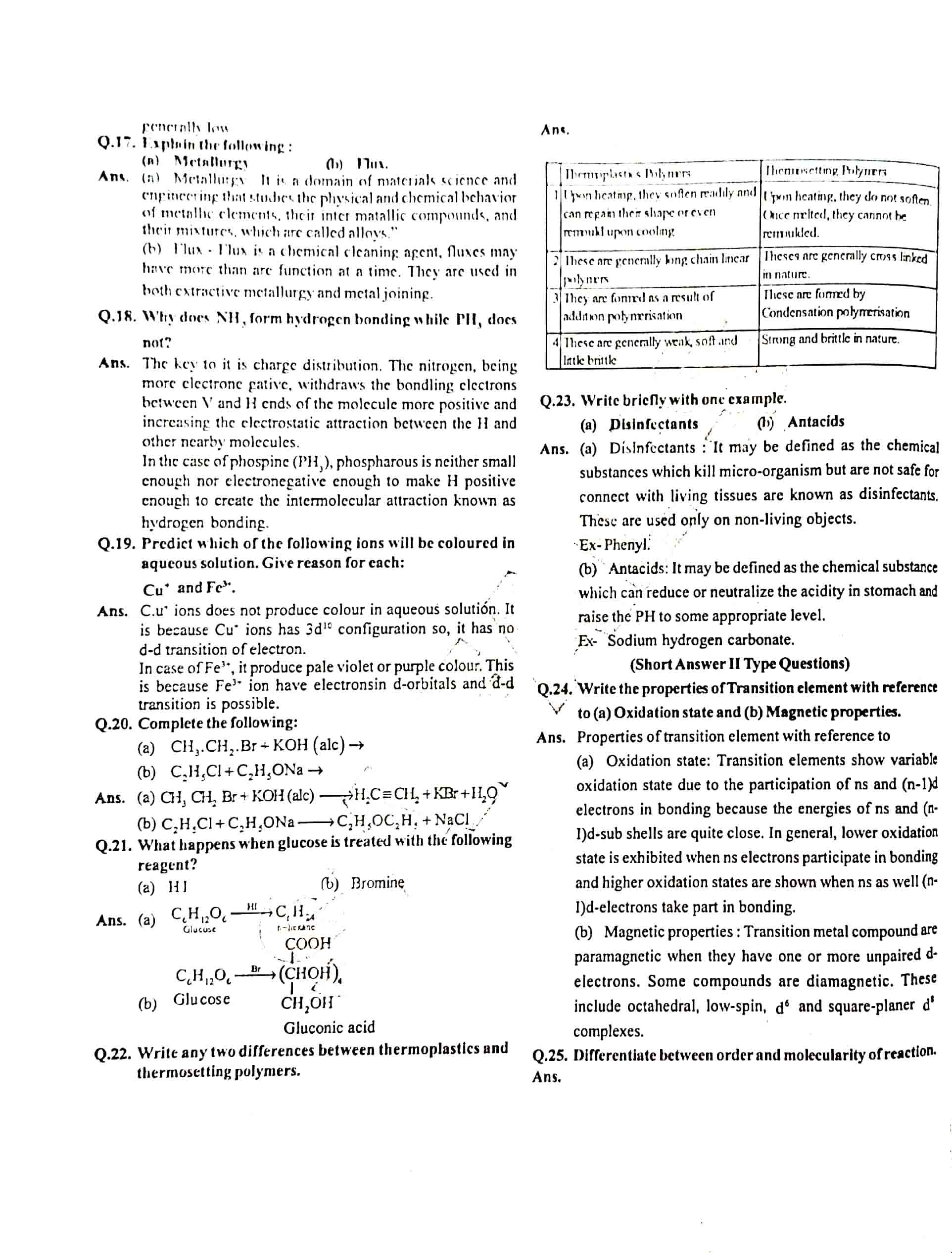
- Why does NH₃ form hydrogen bonds while PH₃ does not?
- Predict which of Cu⁺ and Fe³⁺ will be coloured in aqueous solution, and give a reason for each.
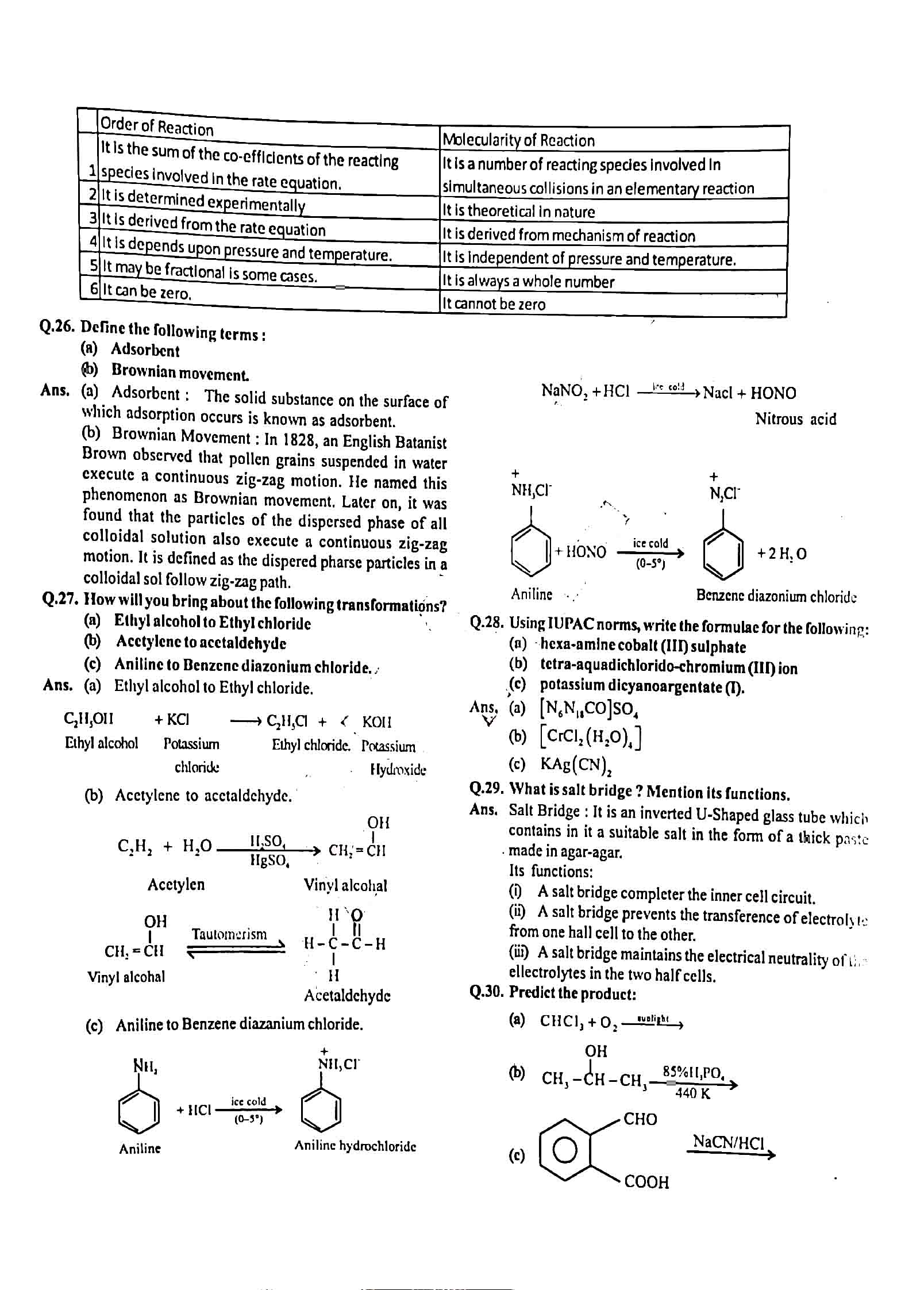
- What is a salt bridge? Mention its functions.
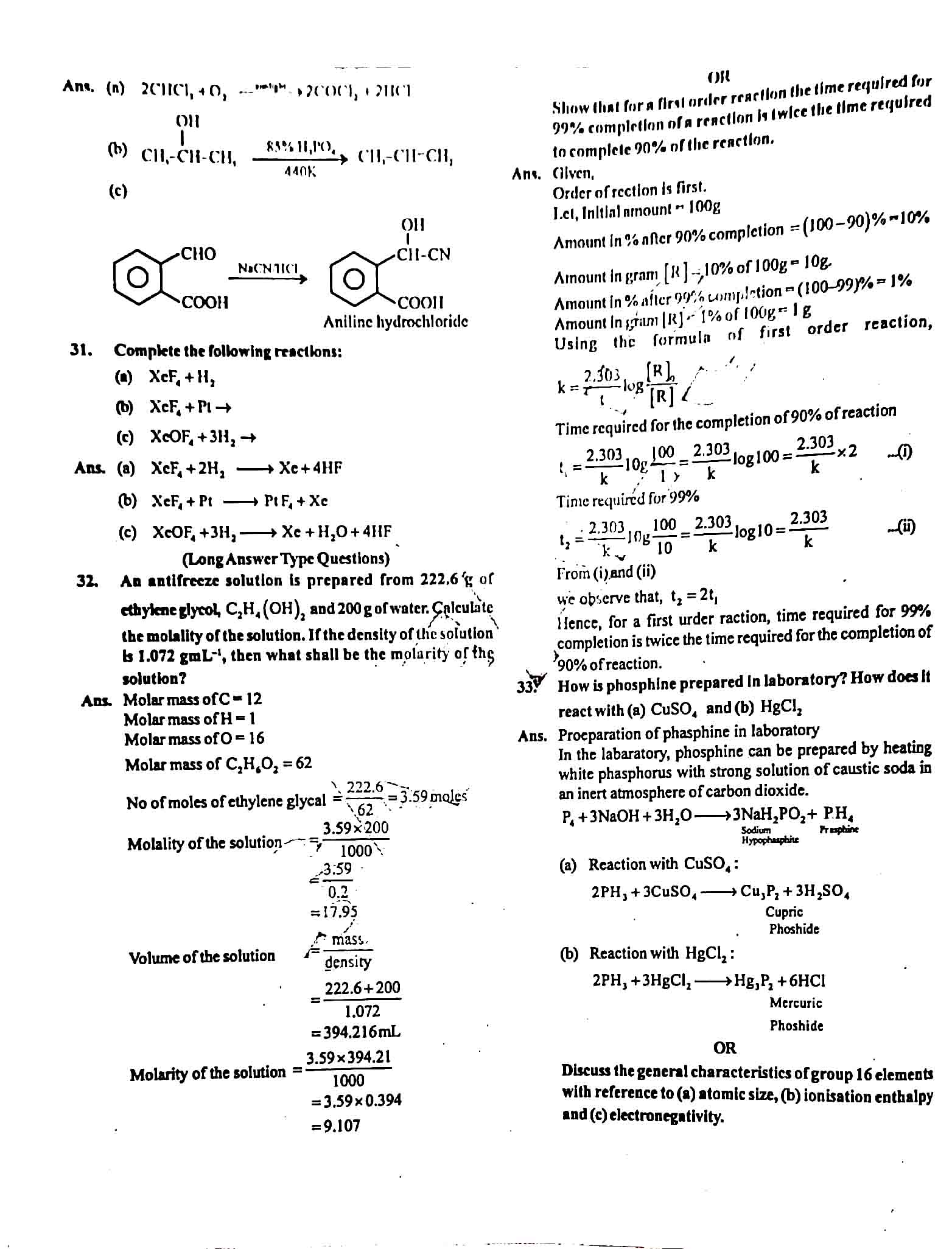
- An antifreeze solution is prepared from 222.6 g of ethylene glycol, C₂H₆O₂, and 200 g of water. Calculate its molality. If the density of the solution is 1.072 g mL⁻¹, what is its molarity?
- How is phosphine prepared in the laboratory, and how does it react with CuSO₄ and with HgCl₂?
- Write short notes on the carbylamine reaction, Hofmann's bromamide reaction and the Gattermann reaction.
Free email alert
Get the 2027 JAC Class 12 papers first
One email when the new JAC Class 12 Chemistry question papers are published here. No spam, unsubscribe any time.
What's next
Thinking about what comes next?
Scholarships, education loans, and study-abroad costs, explained with real numbers.
See guidance