CBSE Class 10 Social Science Summative Assessment II, 2017 (code 32/1): 30 questions for 90 marks in 3 hours, including two map questions.
CBSE 2017 Social Science Question Paper for Class 10

CBSE
Social Science2017
About this paper
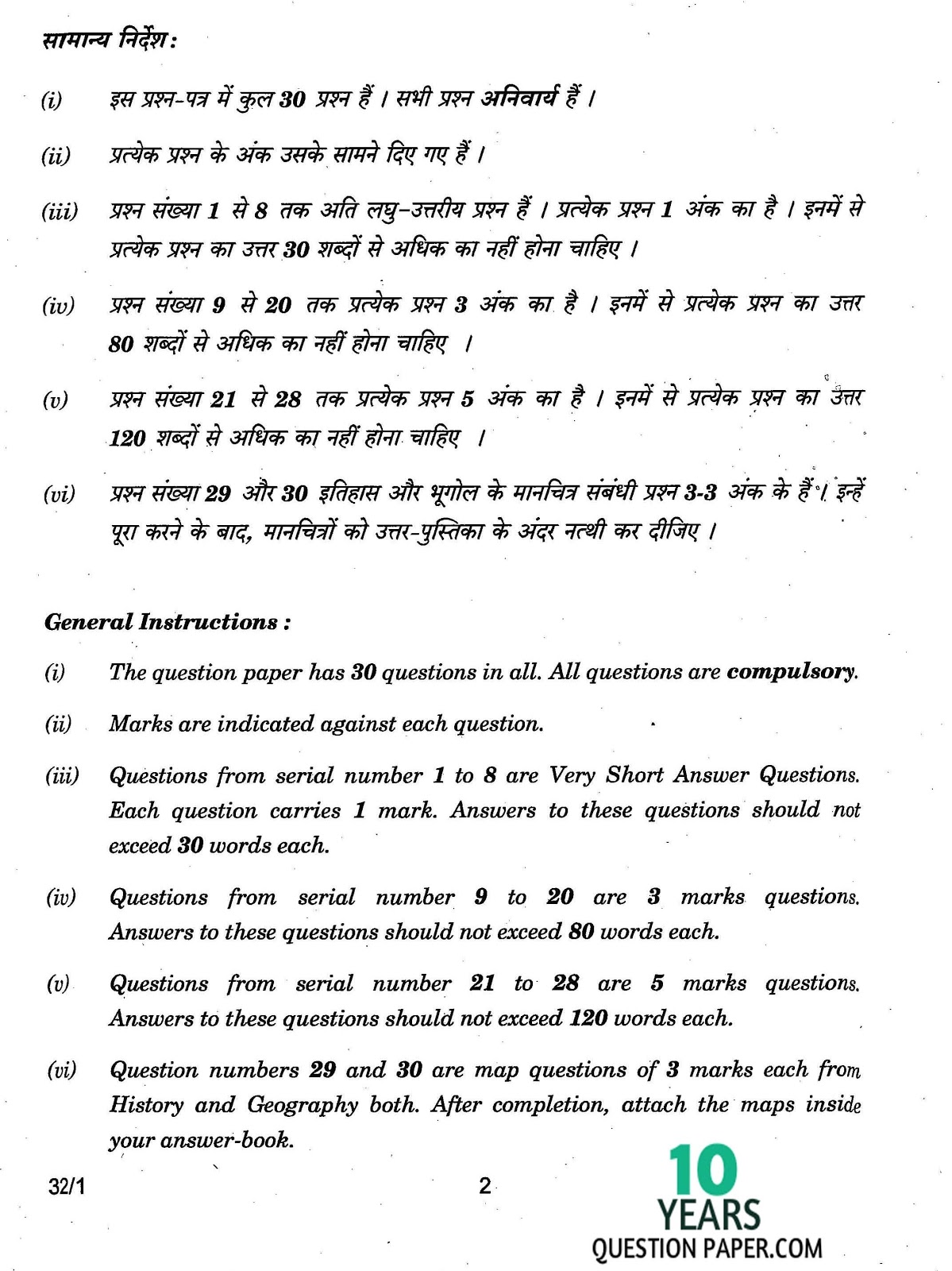
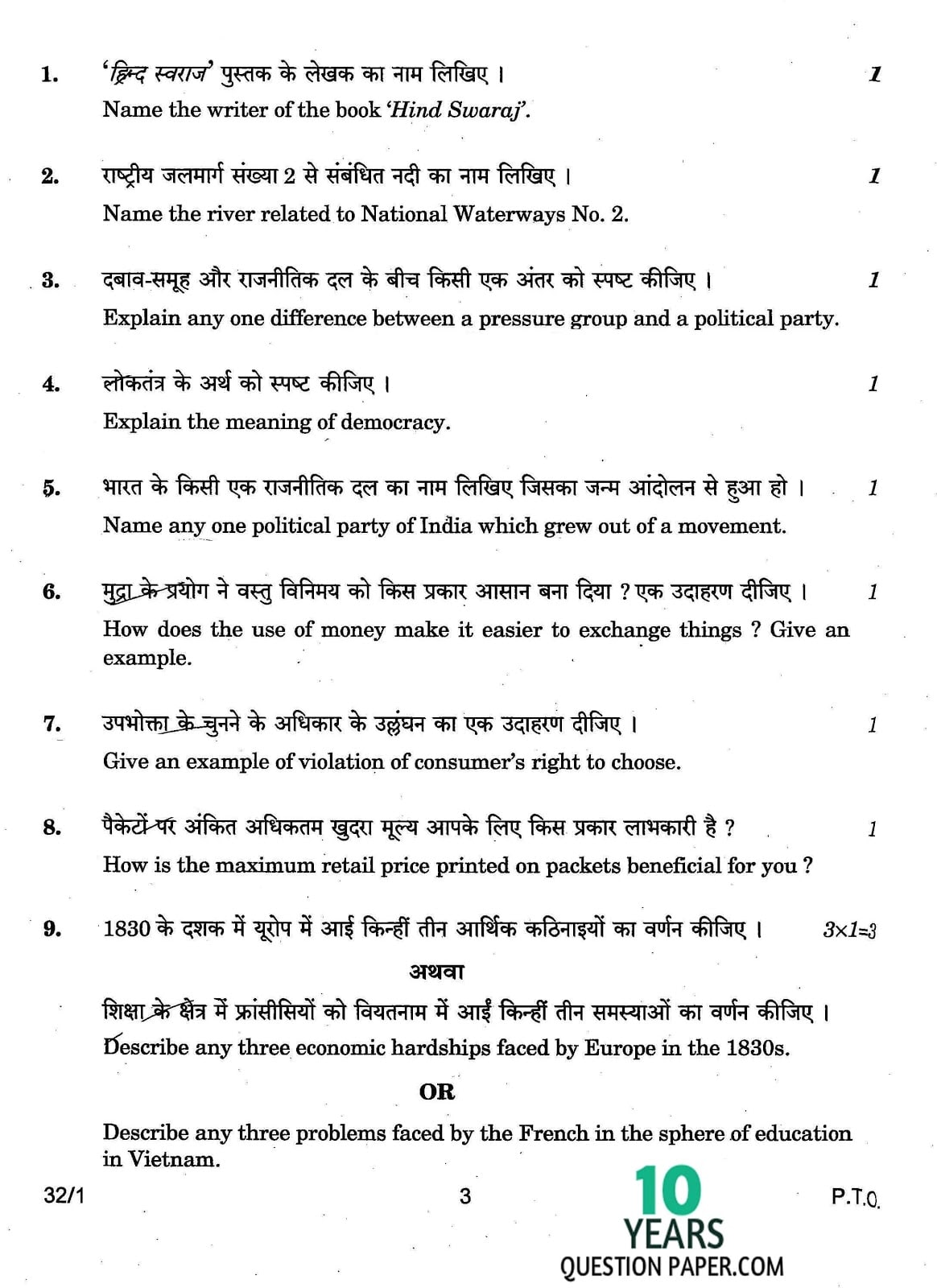
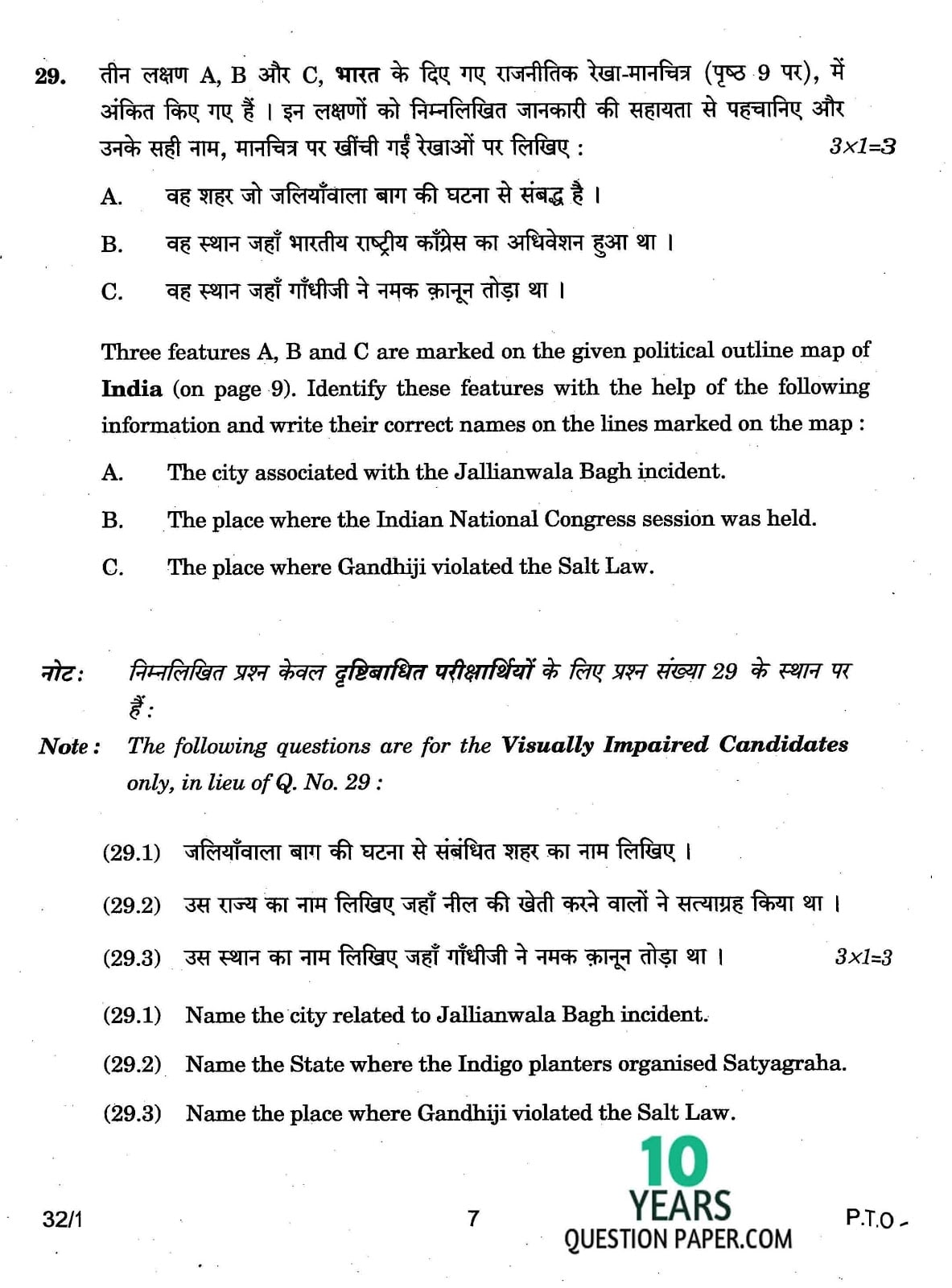
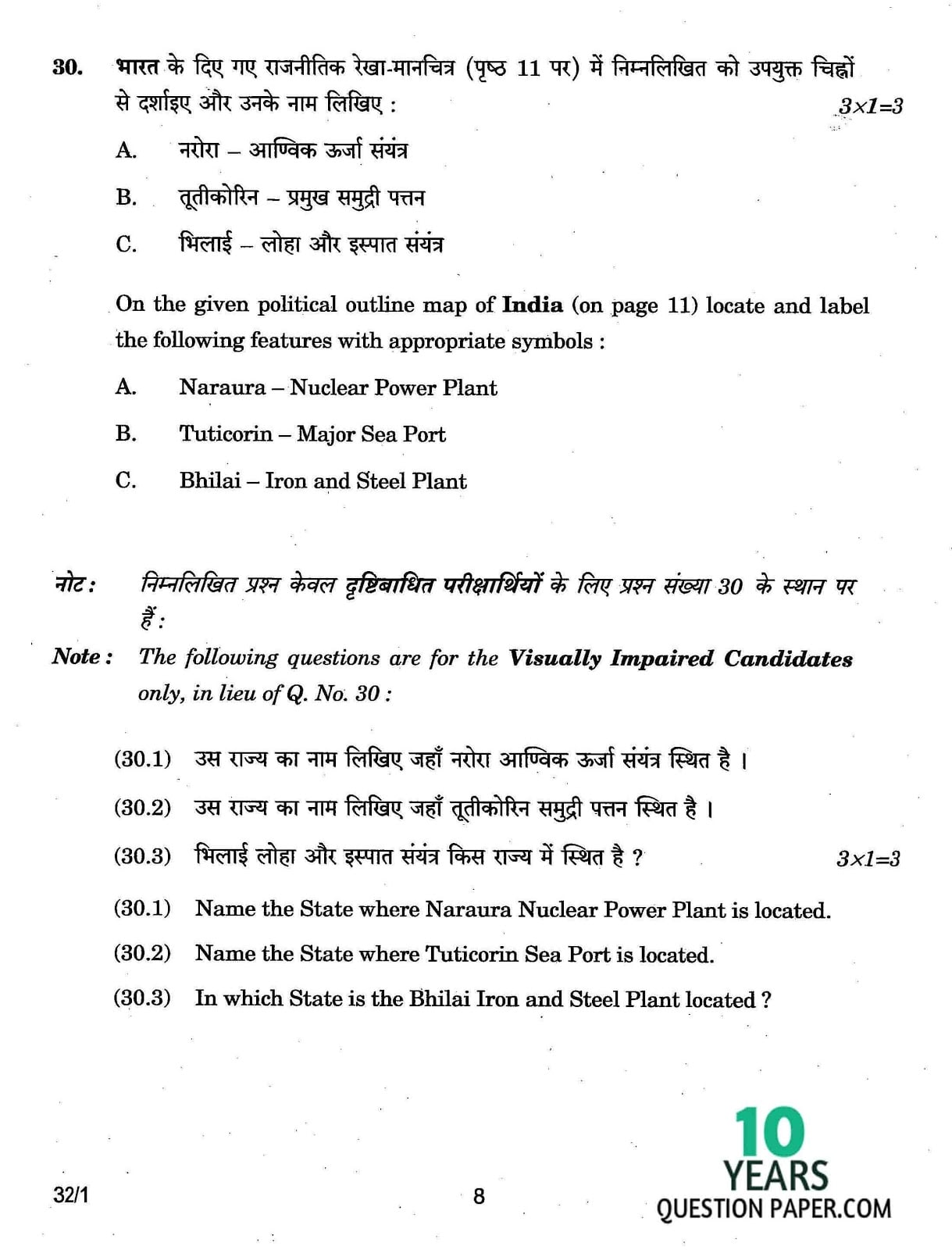
This is the CBSE Class 10 Social Science question paper for Summative Assessment II from the 2017 board examination, code 32/1, Series HRK, Set 1. It carries 90 marks for three hours and has 30 compulsory questions: eight one-mark answers of up to 30 words, twelve three-mark answers of up to 80 words, eight five-mark answers of up to 120 words, and two three-mark map questions on the political outline map of India. History questions offer a choice between nationalism in Europe and the nationalist movement in Vietnam, from the French Revolution to America's withdrawal from the war. The map questions, on places such as Jallianwala Bagh and the salt law, and on Narora, Tuticorin and Bhilai, have alternatives for visually impaired candidates. This copy has the questions only.
- Exam
- CBSE Class 10
- Subject
- Social Science
- Year
- 2017
- Paper code
- 32/1
- Maximum marks
- 90
- Time allowed
- 3 hours
- Questions
- 30
- Pages
- 8
- Answers included
- No, questions only
Paper pattern
Questions 1–8
8 marksVery short answer questions of up to 30 words, one mark each
Questions 9–20
36 marksShort answers of up to 80 words, three marks each
Questions 21–28
40 marksLong answers of up to 120 words, five marks each
Questions 29–30
6 marksMap questions on the political outline map of India, one from history and one from geography, three marks each, with alternatives for visually impaired candidates
Topics covered
- The rise of nationalism in Europe
- The nationalist movement in Indo-China
- Nationalism in India
- Minerals and energy resources
- Manufacturing industries
- Lifelines of national economy
- Popular struggles and movements
- Political parties
- Outcomes of democracy
- Money and credit
- Globalisation and liberalisation
- Consumer rights
Questions from this paper
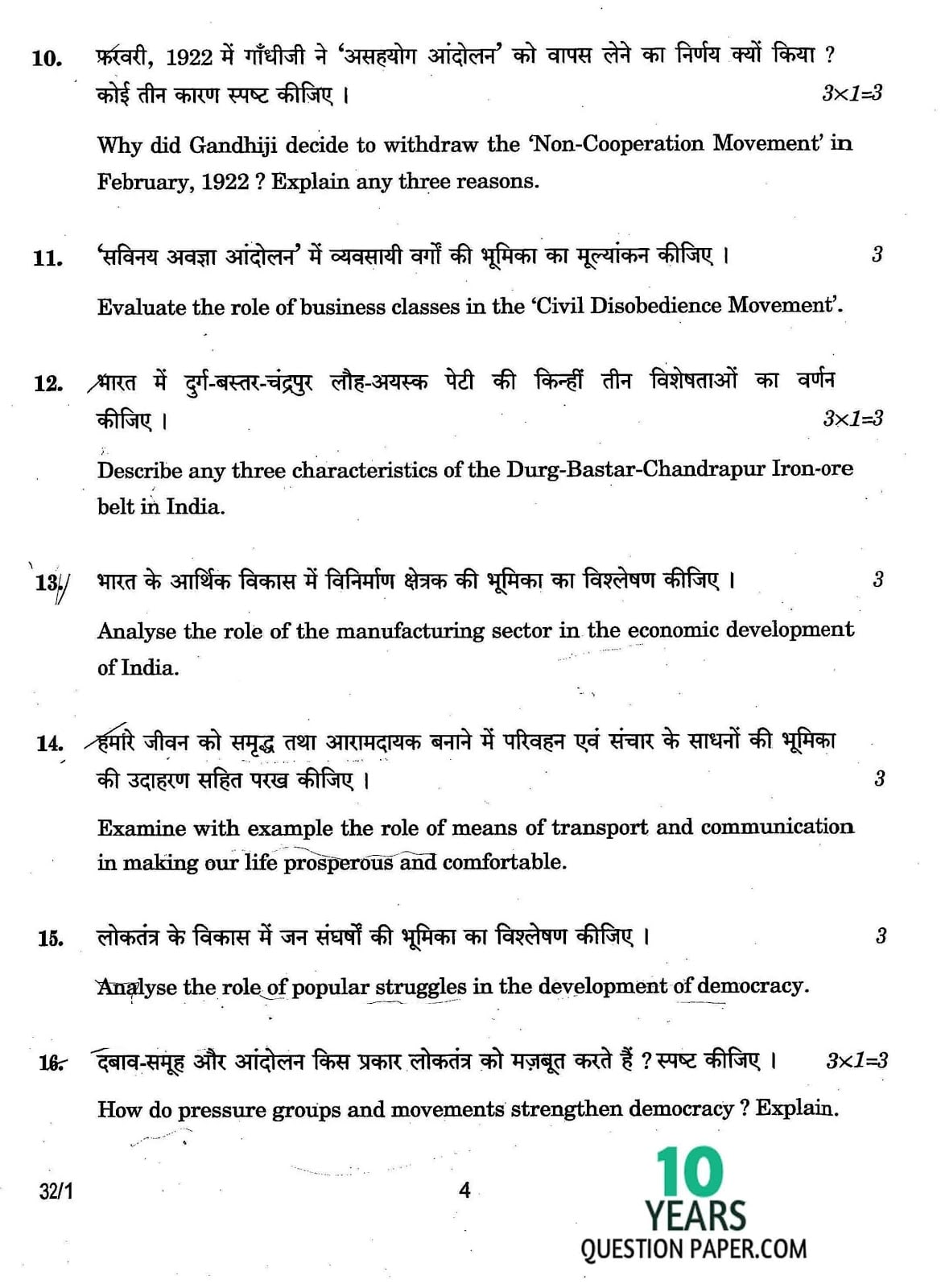
- Name the writer of the book Hind Swaraj.
- Why did Gandhiji decide to withdraw the Non-Cooperation Movement in February 1922? Explain any three reasons.
- Describe any three characteristics of the Durg-Bastar-Chandrapur iron-ore belt in India.
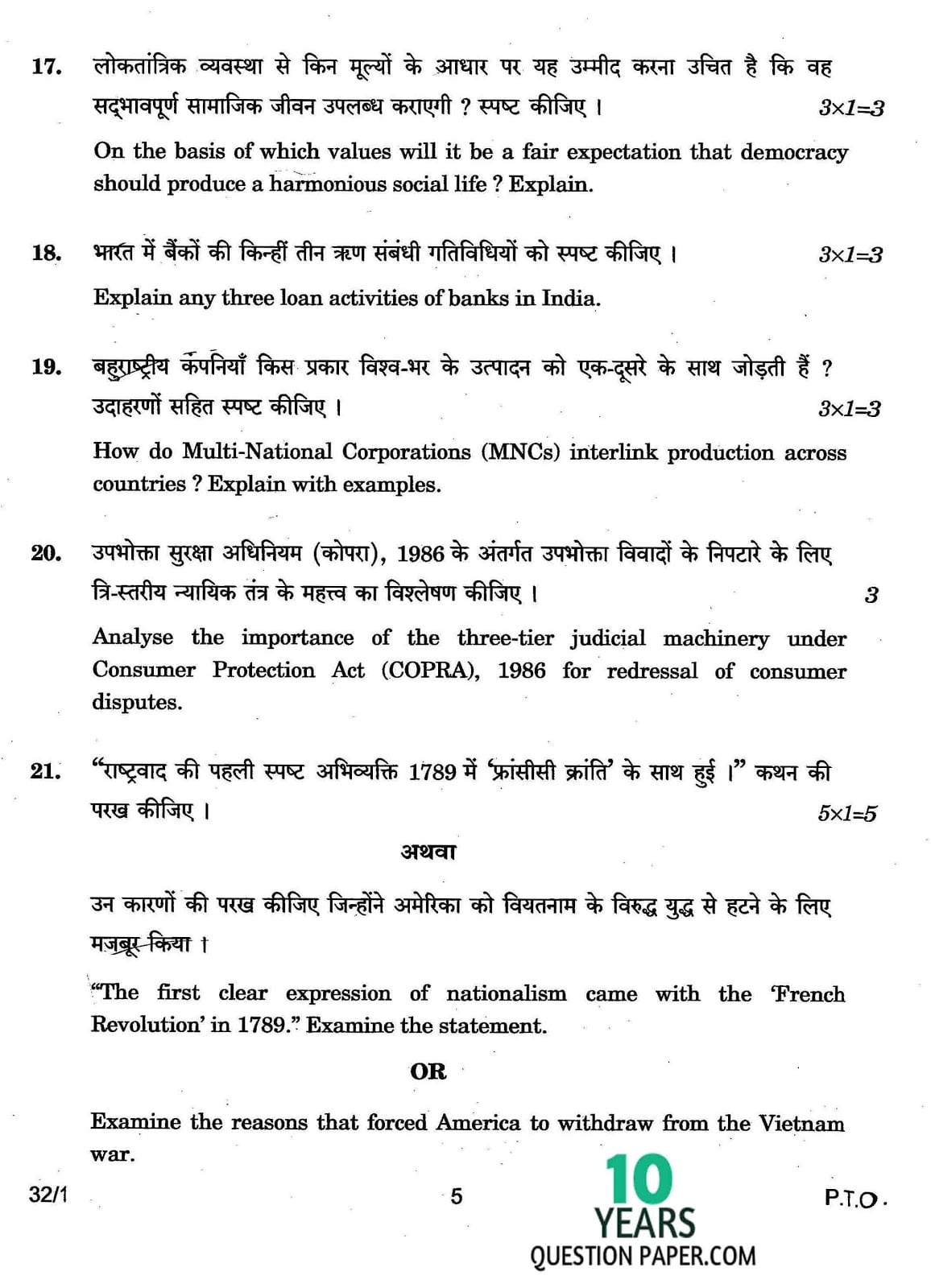
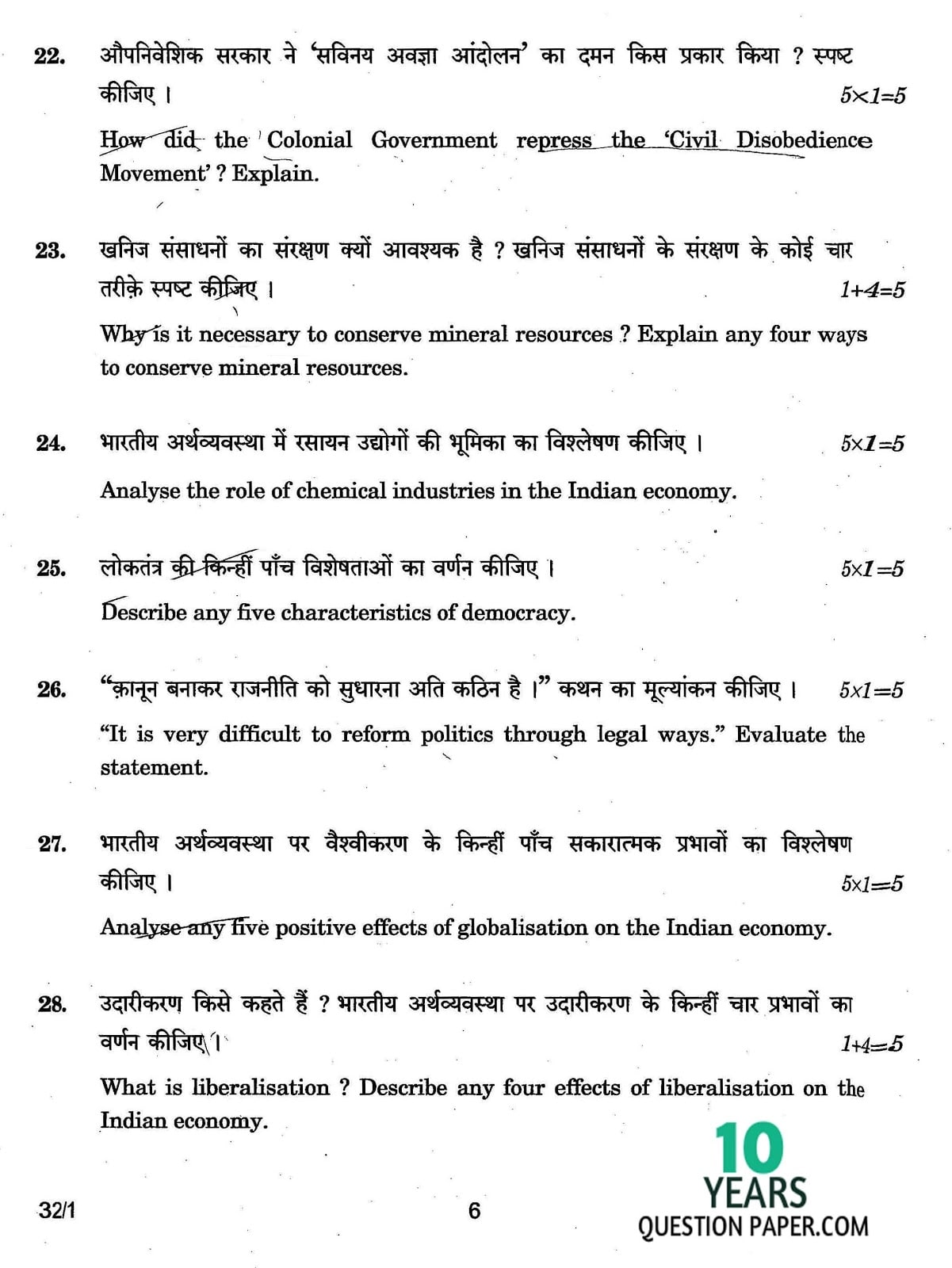
- Why is it necessary to conserve mineral resources? Explain any four ways to conserve them.
- What is liberalisation? Describe any four effects of liberalisation on the Indian economy.
- "The first clear expression of nationalism came with the French Revolution in 1789." Examine the statement.
Free email alert
Get the 2027 CBSE Class 10 papers first
One email when the new CBSE Class 10 Social Science question papers are published here. No spam, unsubscribe any time.
Download
- Format
- Size
- Unknown
- Pages
- 8
What's next
Class 10 done next year?
A number of scholarships for Class 11–12 depend on your Class 10 marks.
Check eligibility