ISC 2017 Chemistry Practical Question Paper for Class 12

ISC
Chemistry Practical2017Download ISC Board Chemistry Practical Question Paper for Class 12 of 2017 year. This Practical Question Paper of Chemistry will help you in revision for the final ISC examination.
Downloaded from www.cisce.org
About this paper
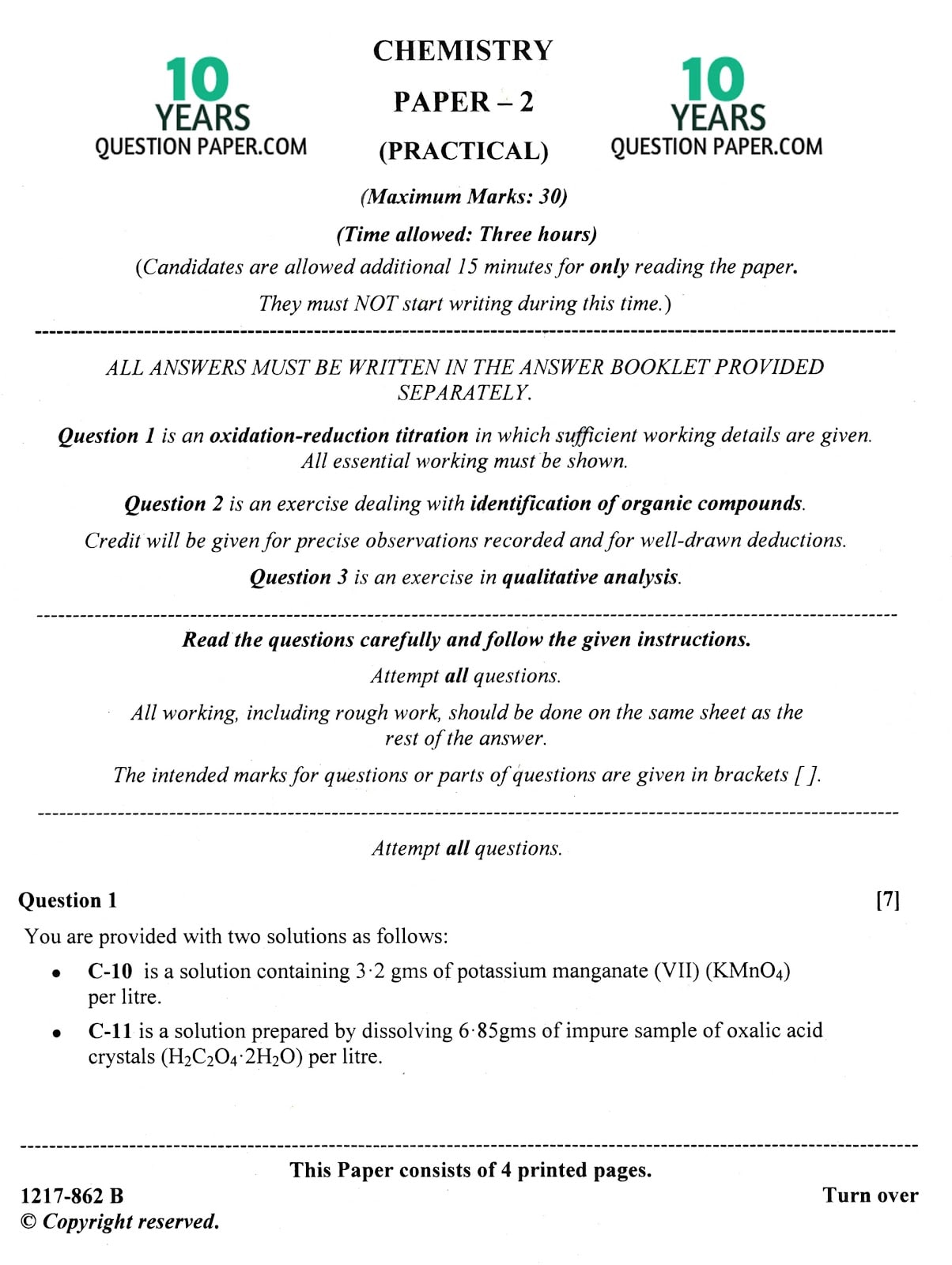
This is ISC Class 12 Chemistry Paper 2 (Practical), code 862 B, from the 2017 examination. It carries 30 marks and runs for three hours plus fifteen minutes of reading time. All four questions are compulsory. Question 1 is a redox titration: C-10 contains 3.2 g of KMnO₄ per litre, and C-11 is 6.85 g per litre of impure oxalic acid, H₂C₂O₄·2H₂O. The candidate calculates both molarities, the strength of the oxalic acid and its percentage purity. Question 2 identifies two organic compounds, and Question 3 is the qualitative analysis of a salt with two anions and two cations. A qualitative analysis table is not allowed. Question 4 is the project and the Chemistry practical file, shown to the Visiting Examiner. This copy has the questions only.
- Exam
- ISC Class 12
- Subject
- Chemistry Practical
- Year
- 2017
- Paper code
- 862 B
- Maximum marks
- 30
- Time allowed
- 3 hours + 15 min reading
- Questions
- 4
- Pages
- 4
- Answers included
- No, questions only
Paper pattern
Question 1
7 marksRedox titration of impure oxalic acid with potassium manganate(VII), with molarity, strength and percentage purity to be calculated
Question 2
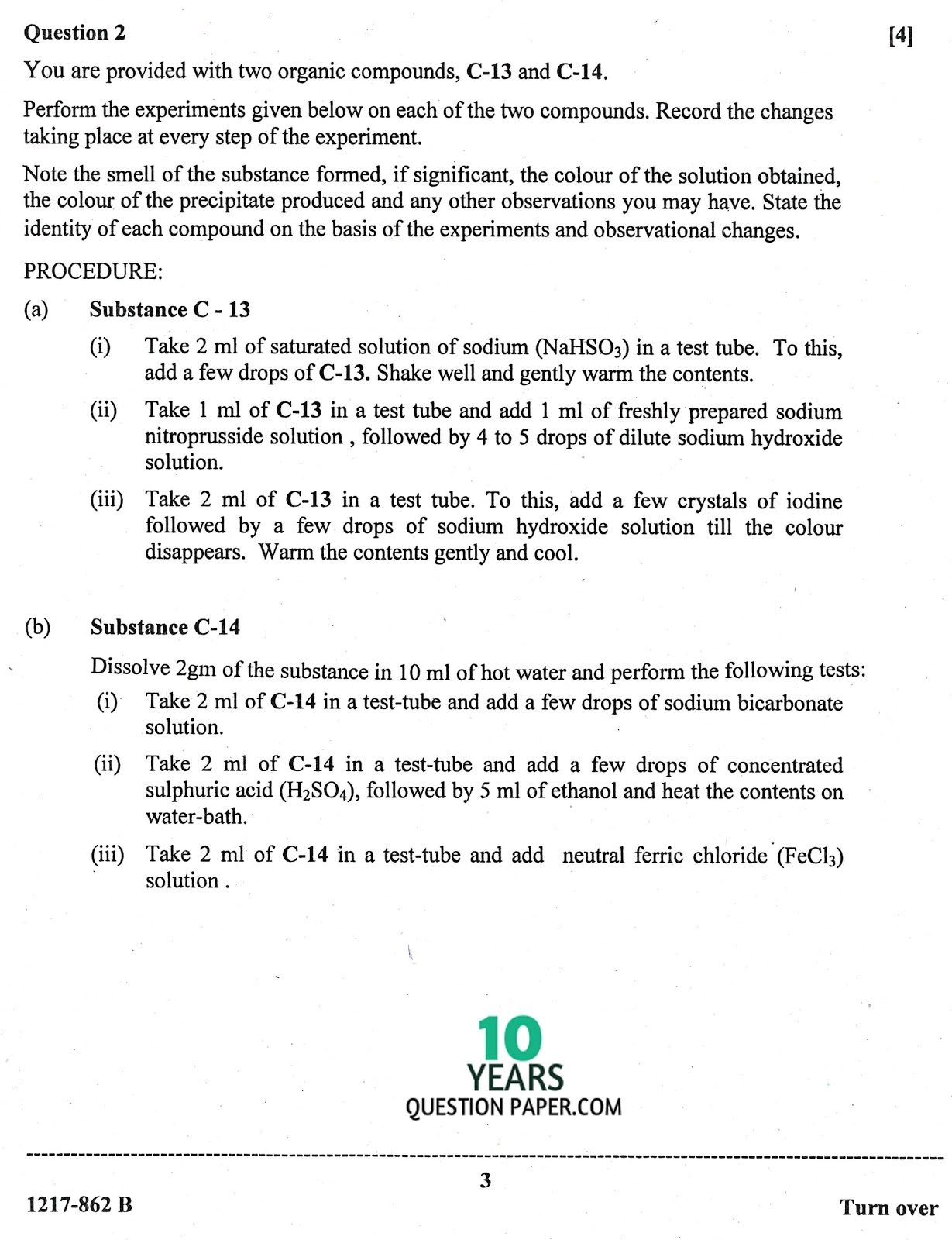
4 marksIdentification of two organic compounds, C-13 and C-14, from the tests given
Question 3
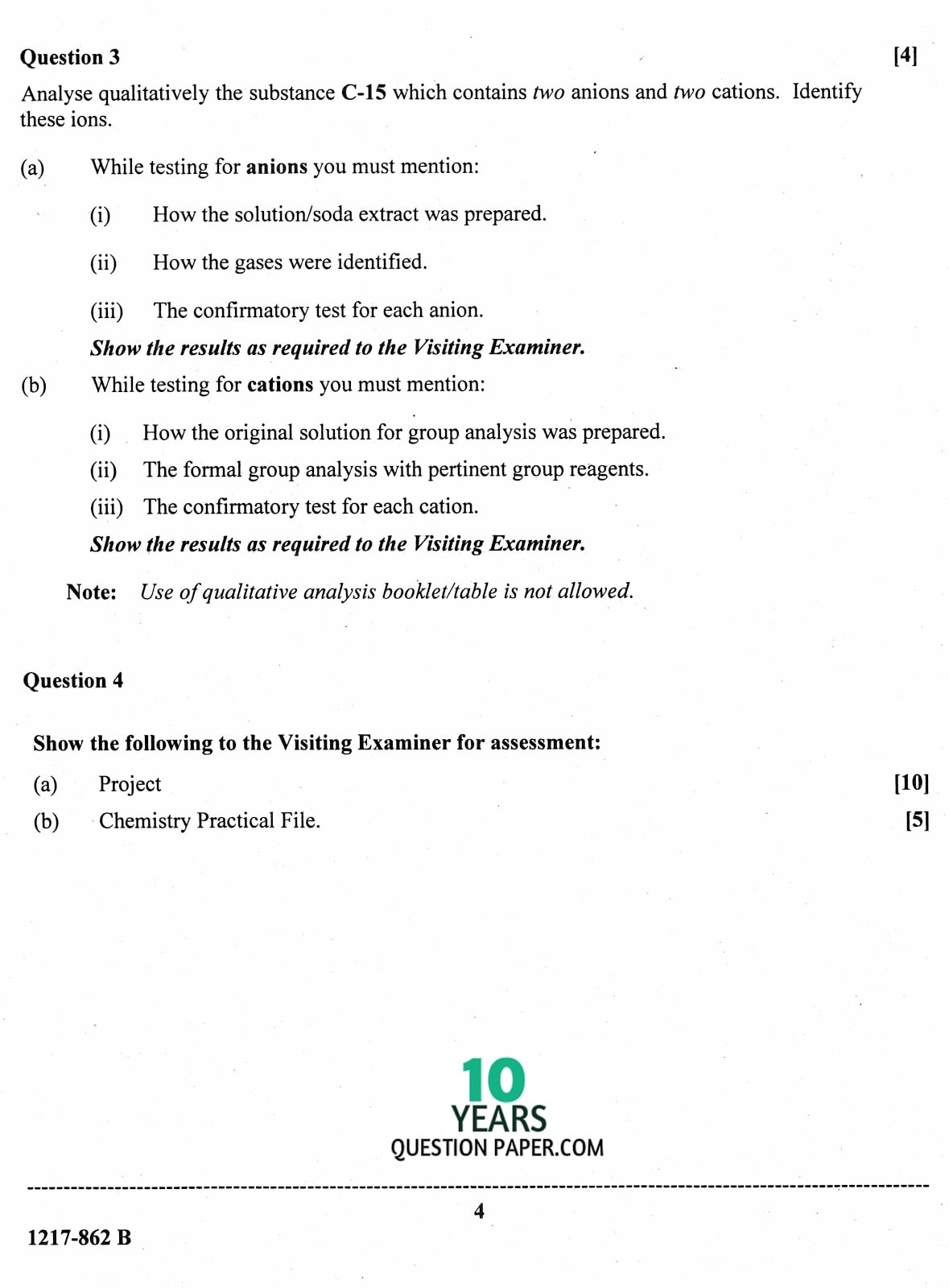
4 marksQualitative analysis of C-15, which contains two anions and two cations; a qualitative analysis booklet or table is not allowed
Question 4
15 marksProject (10 marks) and Chemistry practical file (5 marks), shown to the Visiting Examiner
Topics covered
- Redox titration
- Potassium permanganate
- Oxalic acid
- Percentage purity
- Identification of organic compounds
- Qualitative analysis of anions and cations
- Project and practical file
Questions from this paper
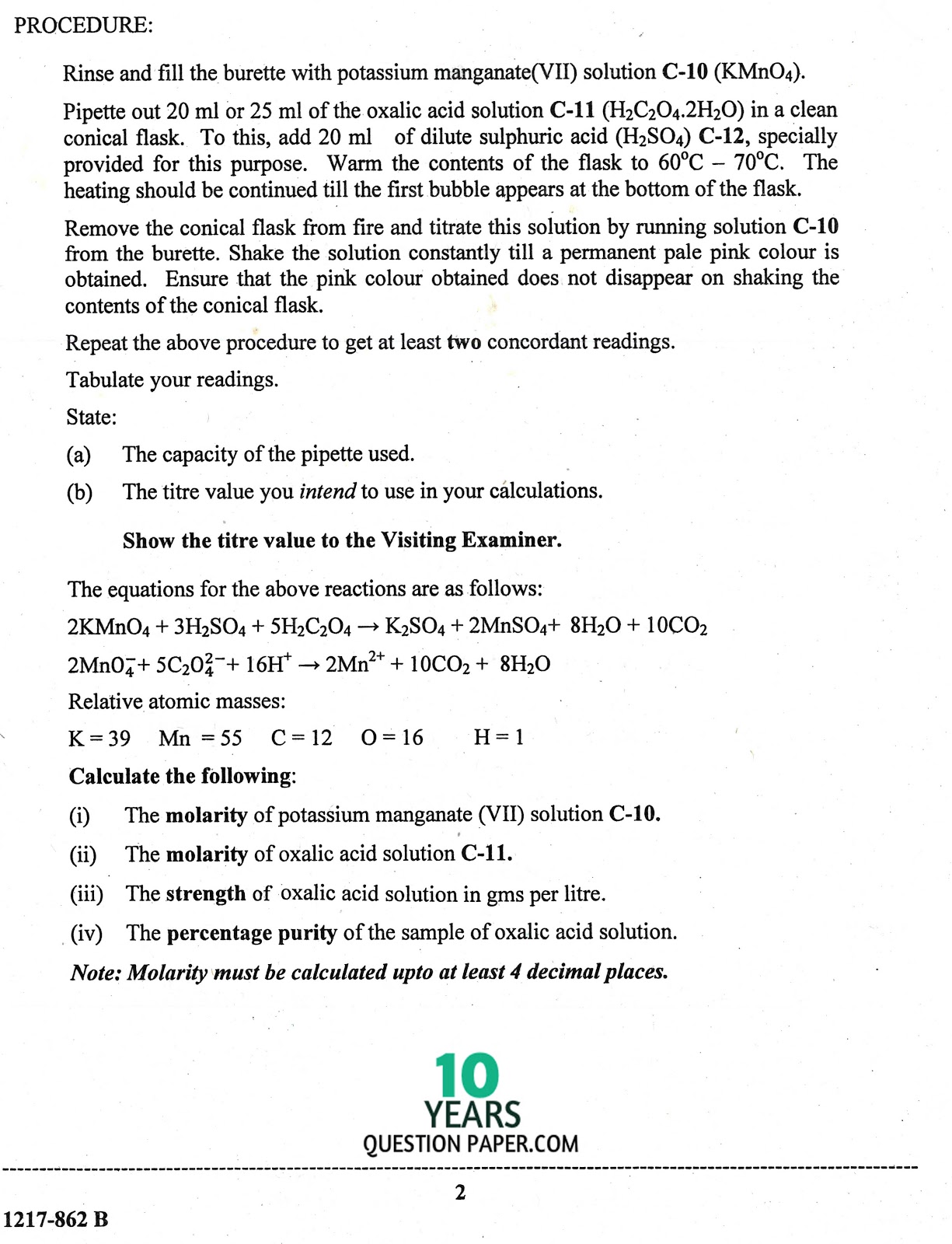
- C-10 contains 3.2 g of potassium manganate(VII) per litre, and C-11 is prepared by dissolving 6.85 g of impure oxalic acid crystals (H₂C₂O₄·2H₂O) per litre. Calculate the molarity of each solution, the strength of the oxalic acid in grams per litre, and the percentage purity of the sample. Give molarity to at least four decimal places.
- Pipette out 20 ml or 25 ml of oxalic acid solution C-11, add 20 ml of dilute sulphuric acid, warm the flask to 60°C–70°C until the first bubble appears, and titrate with KMnO₄ to a permanent pale pink colour.
- For organic compound C-13, warm a few drops with saturated sodium bisulphite, test it with freshly prepared sodium nitroprusside and dilute sodium hydroxide, and carry out the test with iodine and sodium hydroxide.
- Dissolve 2 g of organic compound C-14 in 10 ml of hot water. Test portions with sodium bicarbonate, with concentrated sulphuric acid and ethanol on a water bath, and with neutral ferric chloride.
- Analyse substance C-15, which contains two anions and two cations. State how the soda extract and the original solution were prepared, and give a confirmatory test for each ion. A qualitative analysis booklet or table is not allowed.
Free email alert
Get the 2027 ISC Class 12 papers first
One email when the new ISC Class 12 Chemistry Practical question papers are published here. No spam, unsubscribe any time.
What's next
Engineering, medicine, or abroad after ISC?
See what a degree actually costs before you shortlist colleges.
See the cost breakdown