CBSE 2013 Bio-Technology Question Paper for Class 12

CBSE
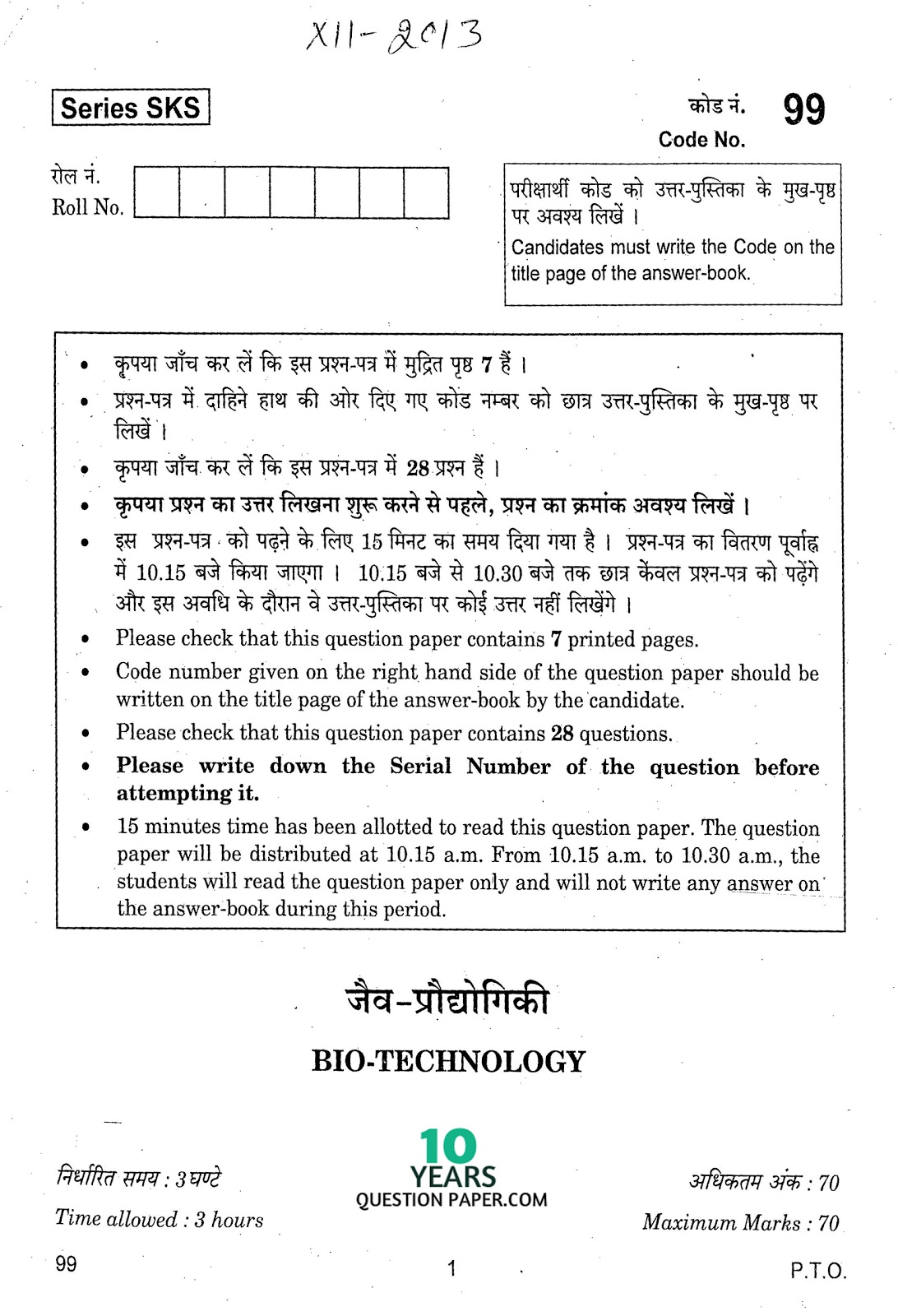
Bio-Technology2013CBSE Class 12 Bio-Technology question paper from the 2013 board exam (code 99): 28 questions in four sections for 70 marks in 3 hours, questions only.
Practice these questions to improve your performance in the board examination.
About this paper
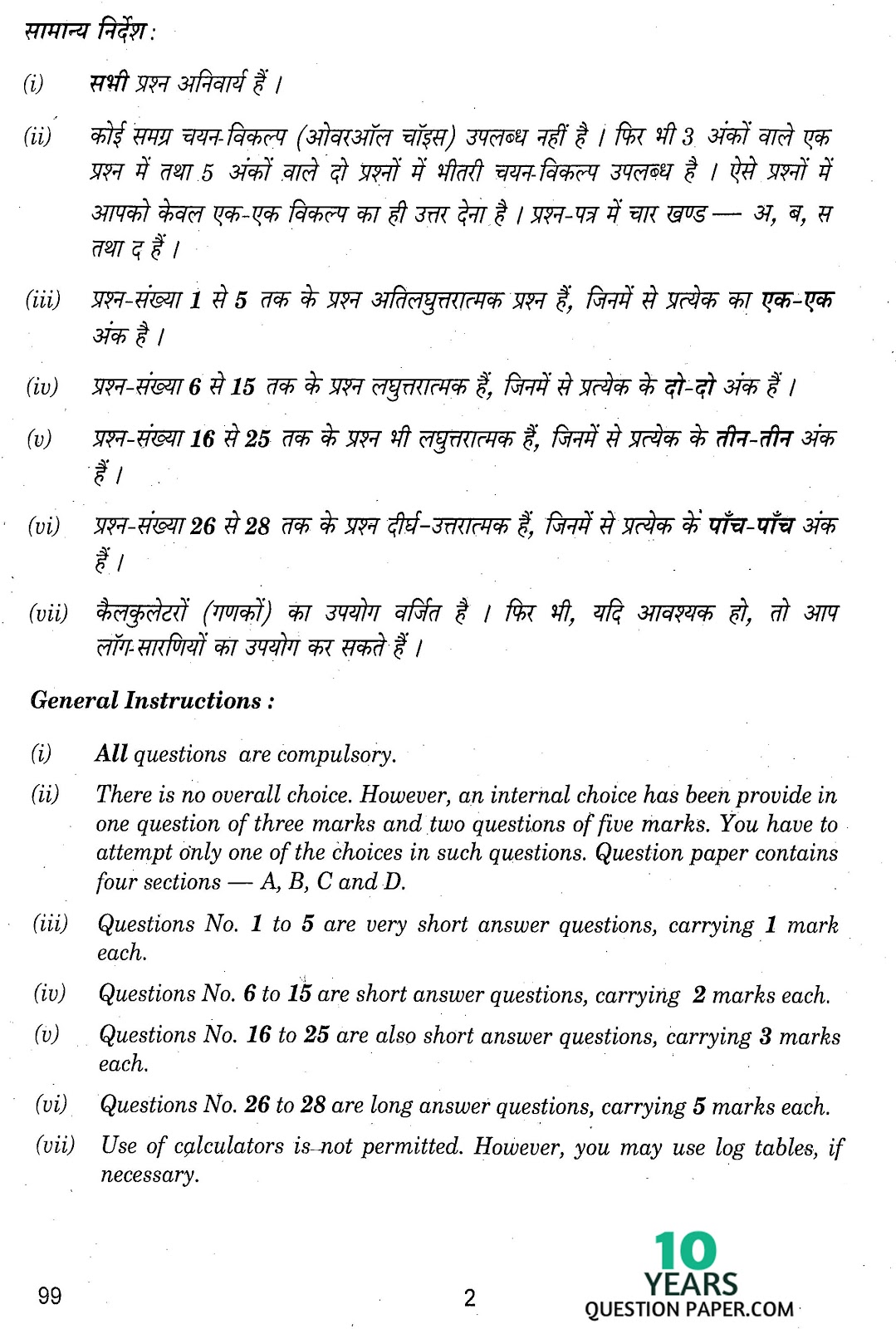
This is the CBSE Class 12 Bio-Technology question paper code 99 (Series SKS) from the 2013 board examination, printed in both Hindi and English. It carries 70 marks over three hours and has 28 compulsory questions in four sections, rising from one-mark very short answers to three five-mark long answers. There is no overall choice, but internal choices are given in one three-mark question and two five-mark questions. Questions range across cell and tissue culture, recombinant DNA work, protein studies and genomics, including a numerical on how long two 50 L fermentors need to produce 500 g of erythropoietin. Calculators are not allowed; log tables may be used. This copy has the questions only, without answers.
- Exam
- CBSE Class 12
- Subject
- Bio-Technology
- Year
- 2013
- Paper code
- 99
- Maximum marks
- 70
- Time allowed
- 3 hours
- Questions
- 28
- Pages
- 7
- Answers included
- No, questions only
Paper pattern
Section A
5 marksQuestions 1–5, very short answers, one mark each
Section B
20 marksQuestions 6–15, short answers, two marks each
Section C
30 marksQuestions 16–25, short answers, three marks each; internal choice in one
Section D
15 marksQuestions 26–28, long answers, five marks each; internal choice in two
Topics covered
- Microbial culture and growth kinetics
- Plant cell and tissue culture
- Animal cell culture and cell lines
- Recombinant DNA technology and cloning vectors
- Transgenic plants and animals
- Protein engineering and downstream processing
- Mass spectrometry and protein analysis
- DNA fingerprinting and Southern hybridisation
- DNA sequencing and microarrays
- Monoclonal antibodies
- Bioinformatics and sequence databases
Questions from this paper
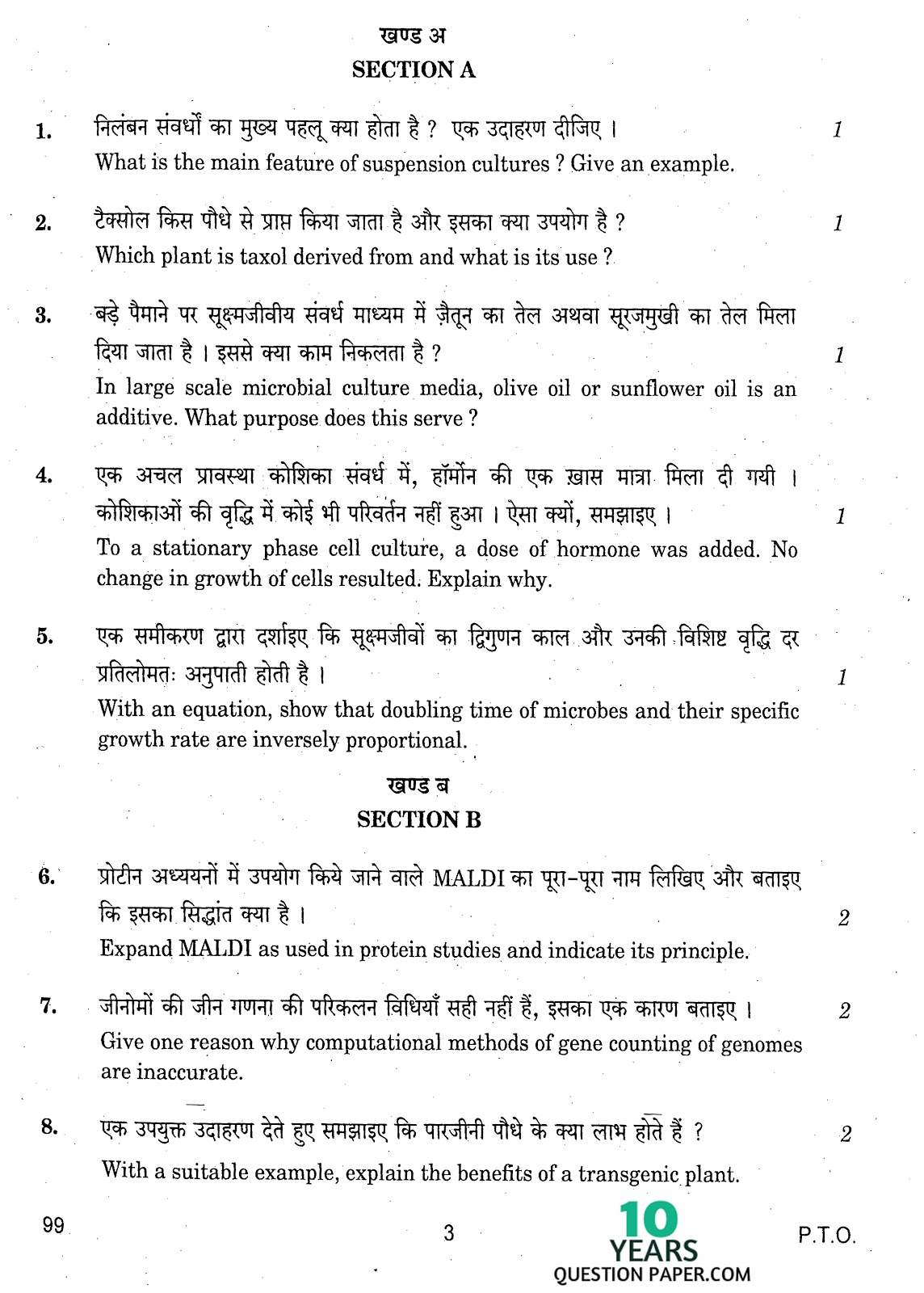
- In large-scale microbial culture media, olive oil or sunflower oil is added. What purpose does this serve?
- Give one reason why computational methods of counting the genes in a genome are inaccurate.
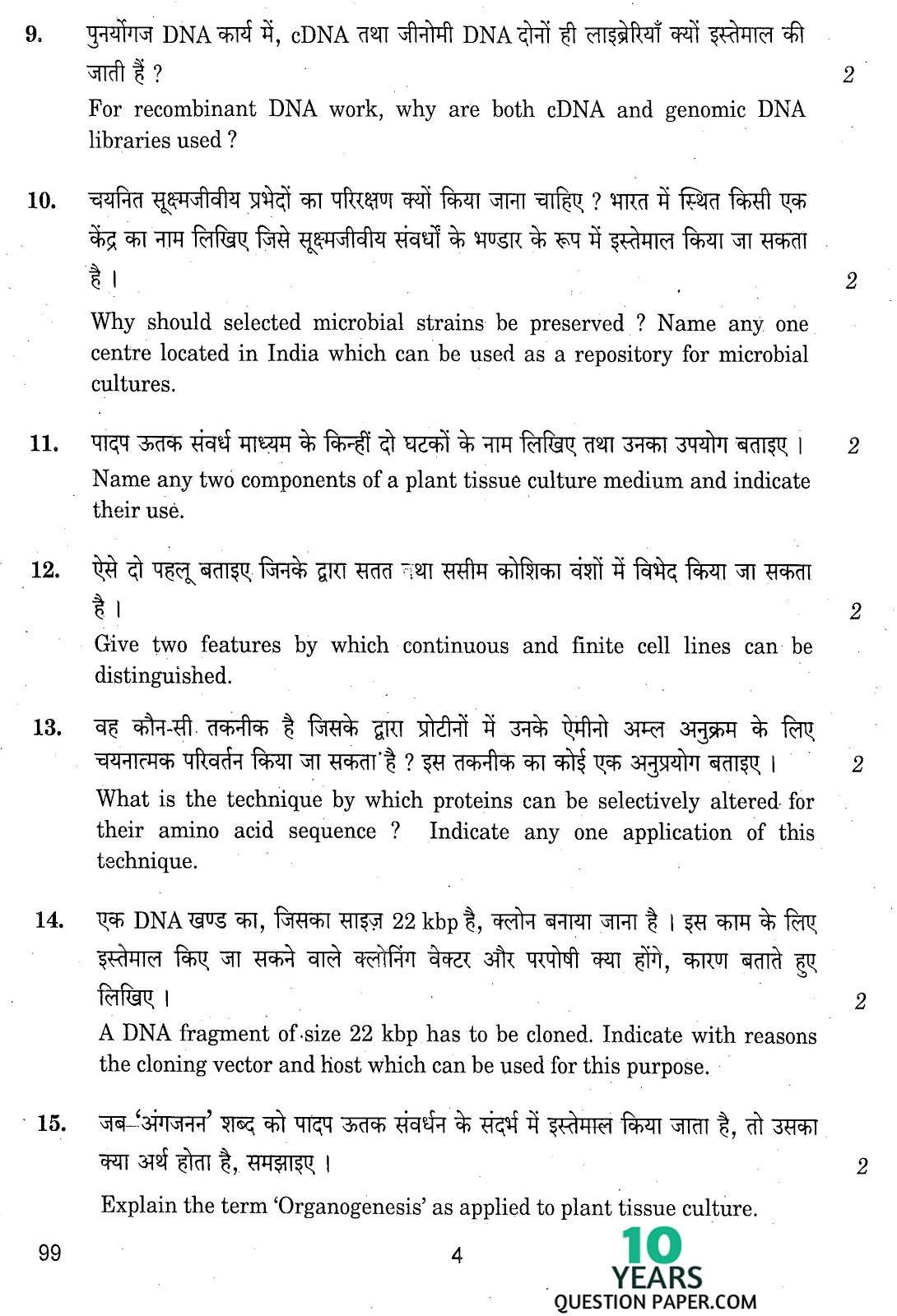
- A DNA fragment of 22 kbp has to be cloned. Indicate, with reasons, the cloning vector and host that can be used.
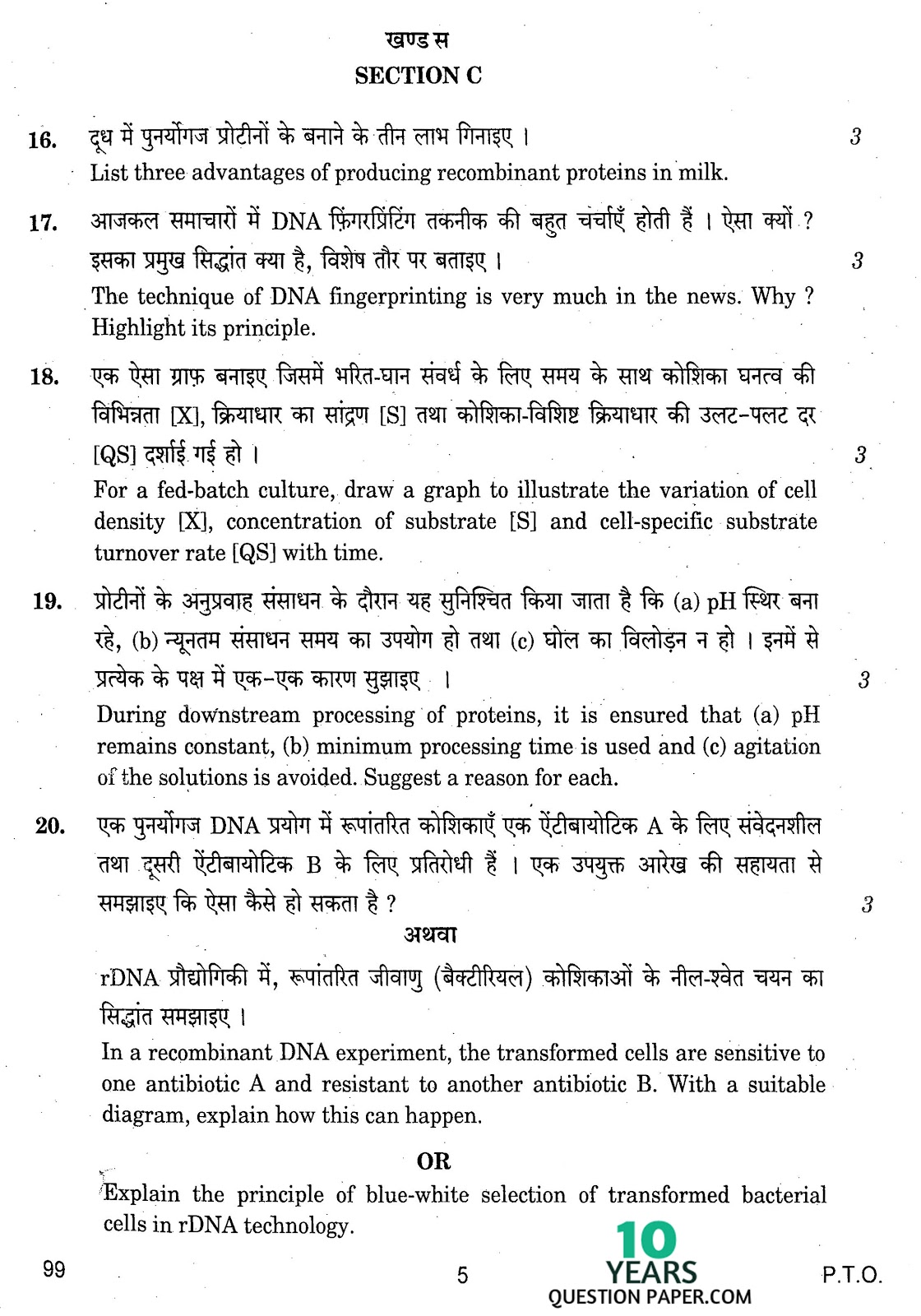
- During downstream processing of proteins, the pH is kept constant, processing time is kept to a minimum and agitation of the solutions is avoided. Suggest a reason for each.
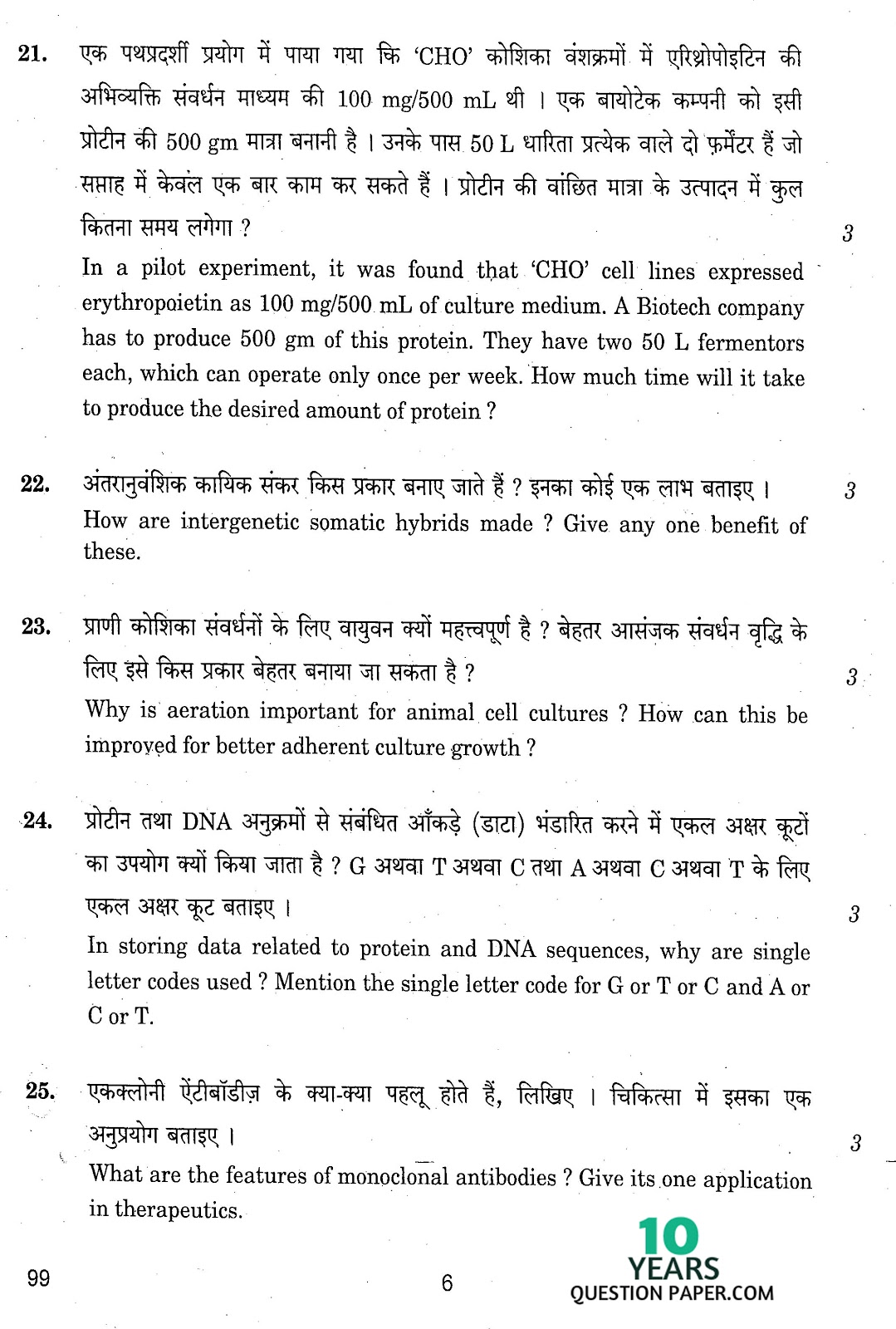
- In a pilot experiment, CHO cell lines expressed erythropoietin at 100 mg per 500 mL of culture medium. A company must produce 500 g of this protein using two 50 L fermentors, each of which can run only once a week. How long will it take?
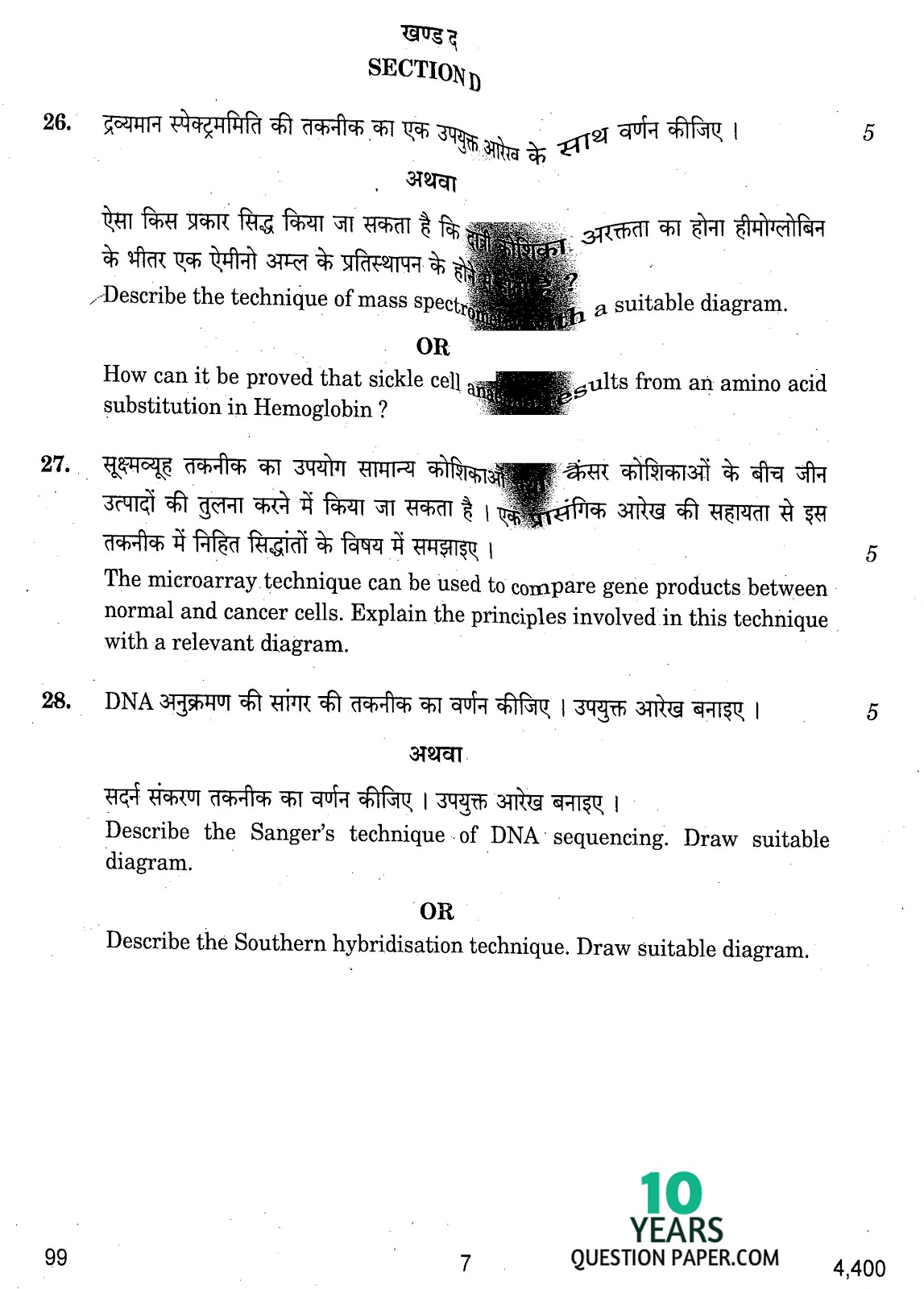
- The microarray technique can be used to compare gene products in normal and cancer cells. Explain the principles involved, with a relevant diagram.
Free email alert
Get the 2027 CBSE Class 12 papers first
One email when the new CBSE Class 12 Bio-Technology question papers are published here. No spam, unsubscribe any time.
What's next
Planning what comes after Class 12?
Compare college costs, education loans, and scholarships in one place.
See the cost breakdown