CBSE 2014 Bio-Technology Question Paper for Class 12

CBSE
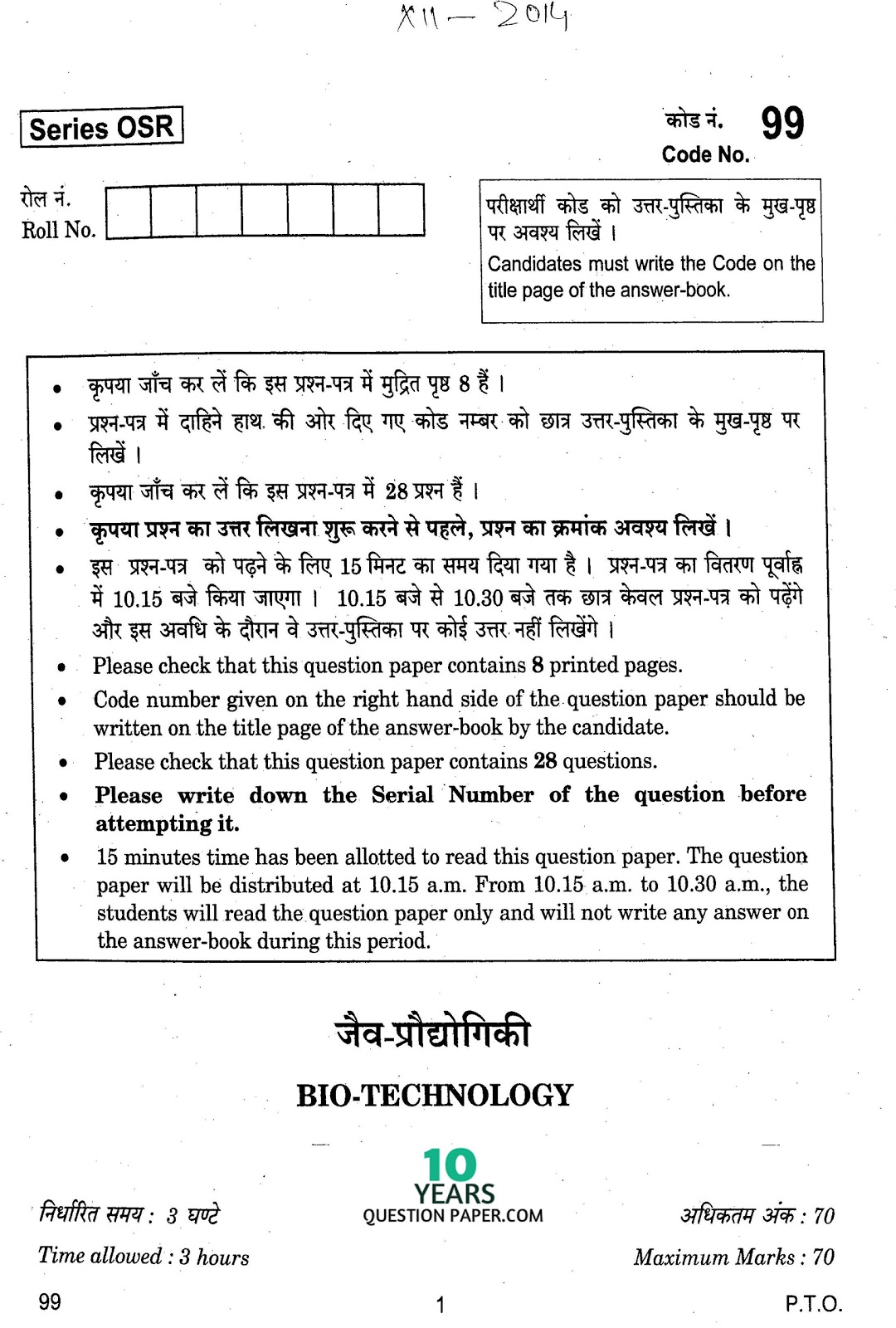
Bio-Technology2014CBSE Class 12 Bio-Technology question paper from the 2014 board exam (code 99): 28 questions in four sections for 70 marks in 3 hours, questions only.
Practice these questions to improve your performance in the board examination.
About this paper
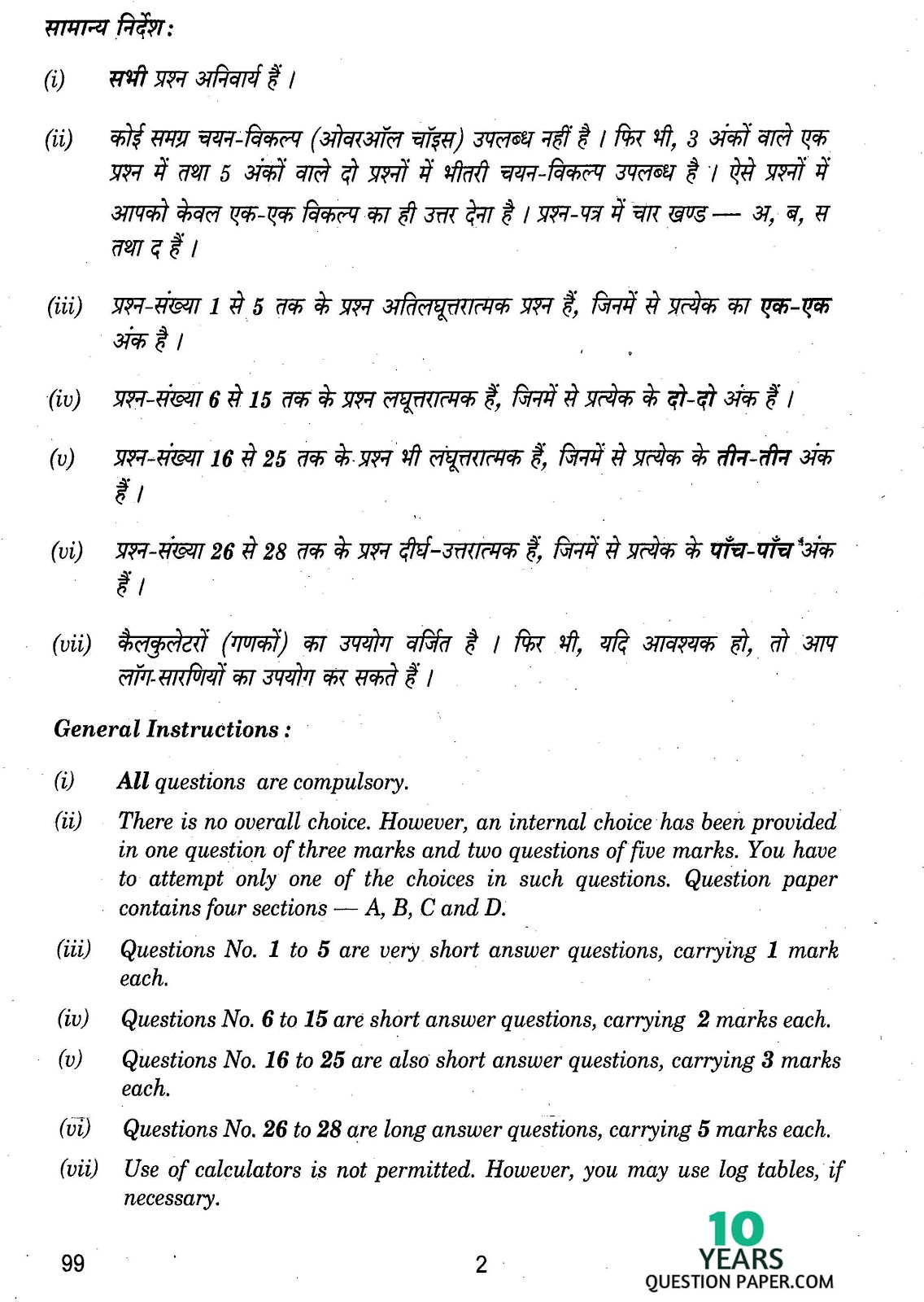
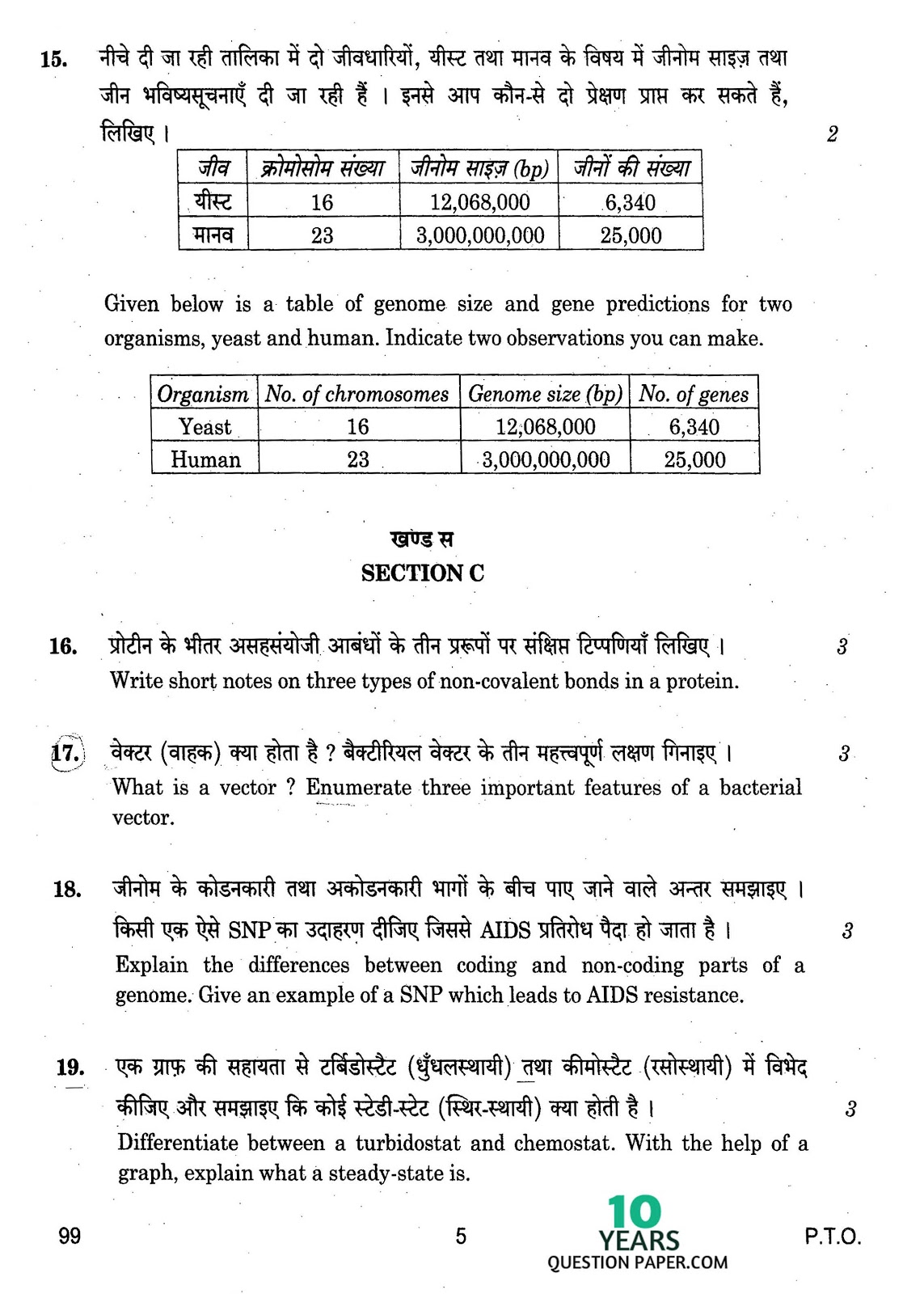
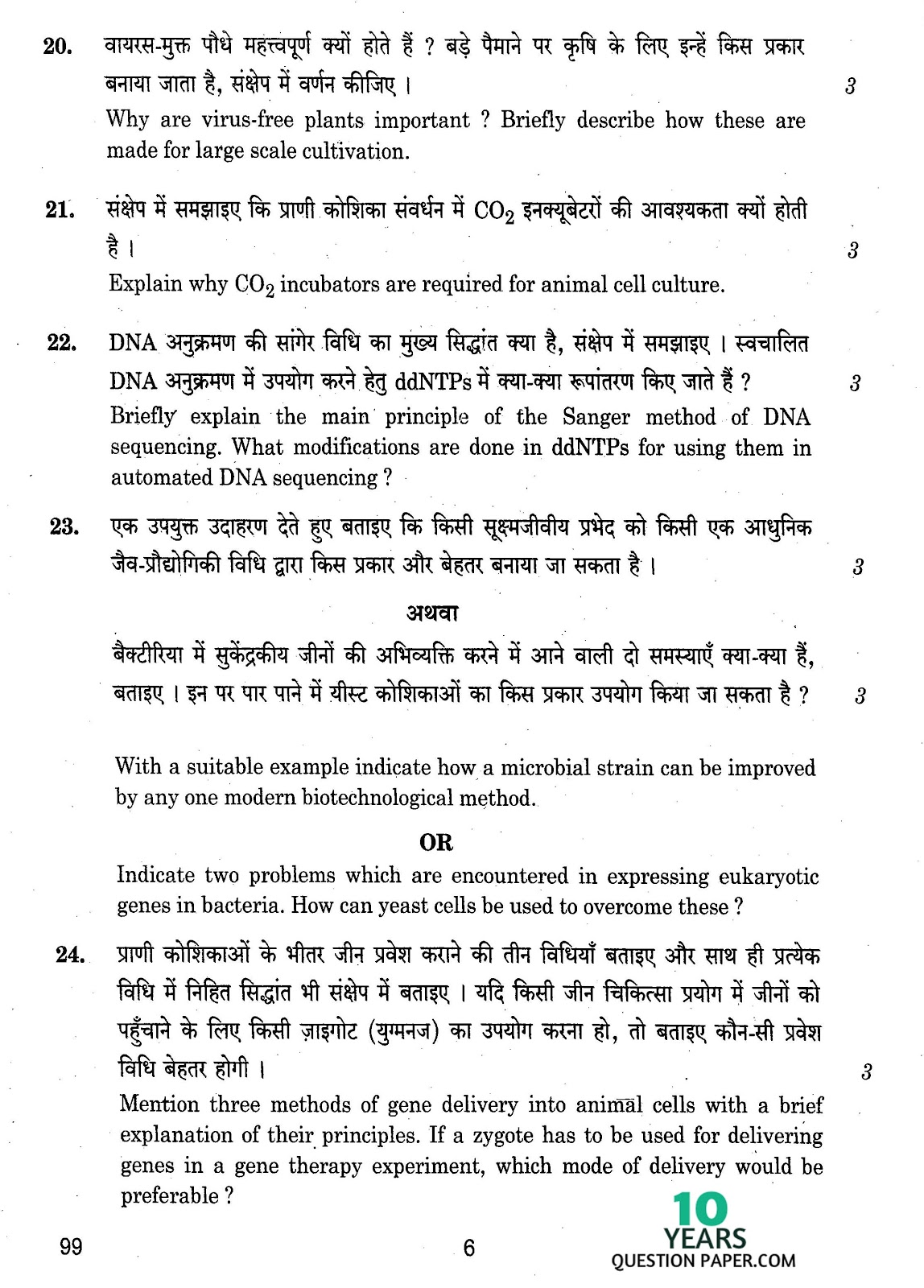
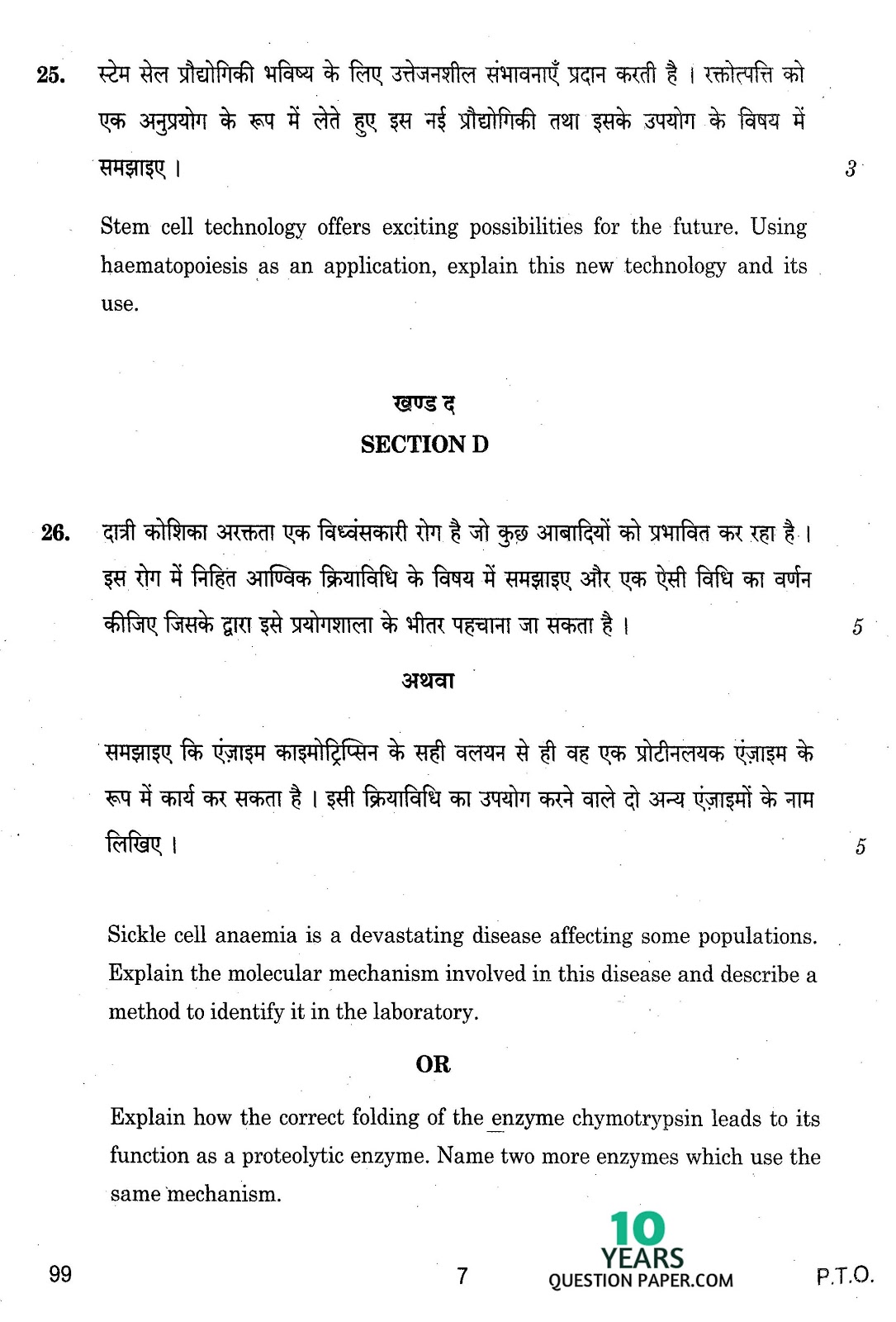
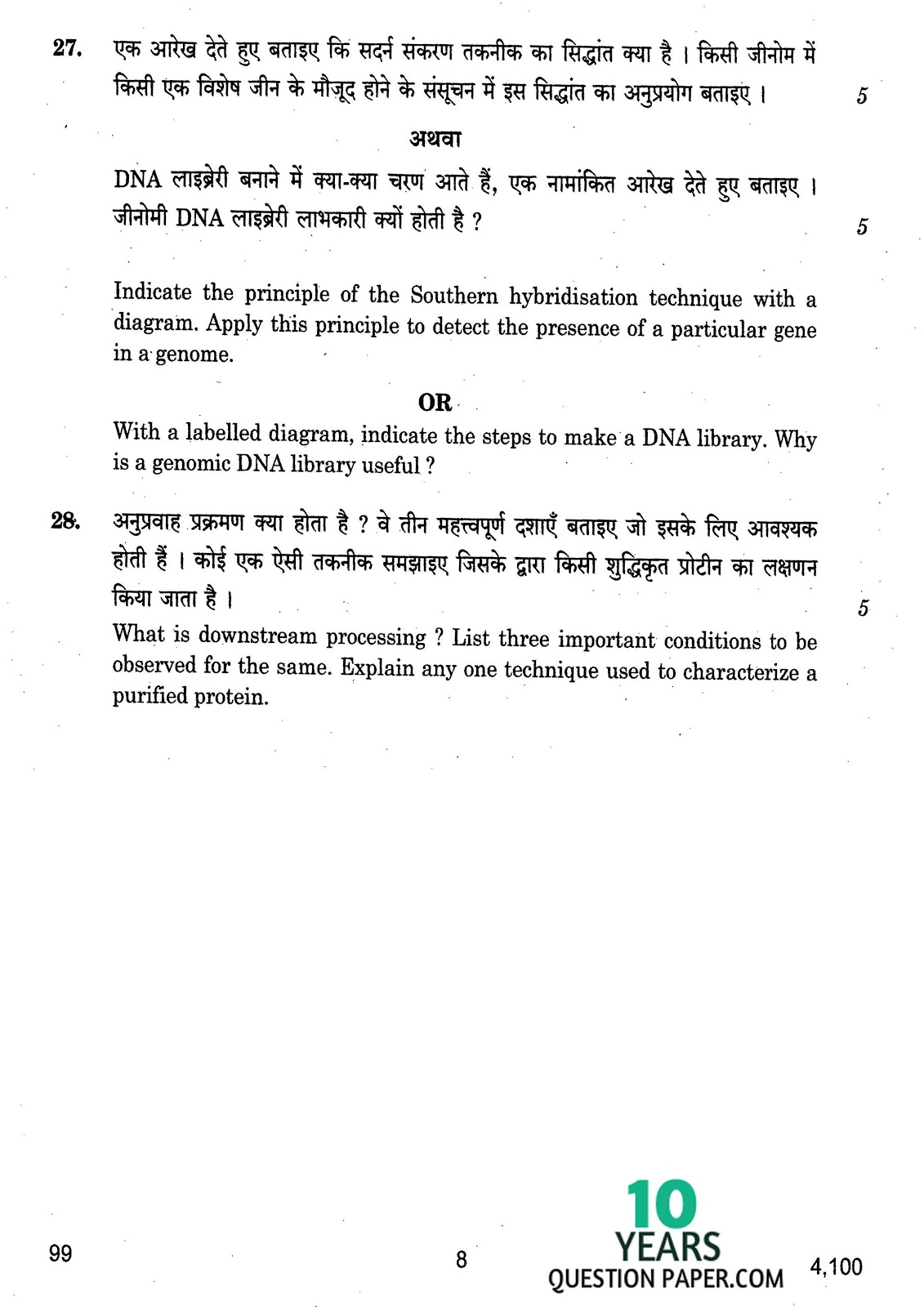
This is the CBSE Class 12 Bio-Technology question paper code 99 (Series OSR) from the 2014 board examination. It carries 70 marks over three hours and has 28 compulsory questions in four sections, rising from one-mark very short answers to three five-mark long answers. There is no overall choice, but internal choices are given in one three-mark question and two five-mark questions. Section B includes a table of chromosome number, genome size and gene count for yeast and humans to interpret, and other questions cover stem cells and haematopoiesis, sickle cell anaemia and SNP profiles. Calculators are not allowed; log tables may be used. This copy has the questions only, without answers.
- Exam
- CBSE Class 12
- Subject
- Bio-Technology
- Year
- 2014
- Paper code
- 99
- Maximum marks
- 70
- Time allowed
- 3 hours
- Questions
- 28
- Pages
- 8
- Answers included
- No, questions only
Paper pattern
Section A
5 marksQuestions 1–5, very short answers, one mark each
Section B
20 marksQuestions 6–15, short answers, two marks each
Section C
30 marksQuestions 16–25, short answers, three marks each; internal choice in one
Section D
15 marksQuestions 26–28, long answers, five marks each; internal choice in two
Topics covered
- Genomics and genome sequencing
- Protein structure and diversity
- Recombinant DNA technology and vectors
- Microbial culture and bioreactors
- Plant tissue culture and virus-free plants
- Animal cell culture
- Gene delivery and stem cell technology
- DNA sequencing and SNPs
- Southern hybridisation and DNA libraries
- Downstream processing
Questions from this paper
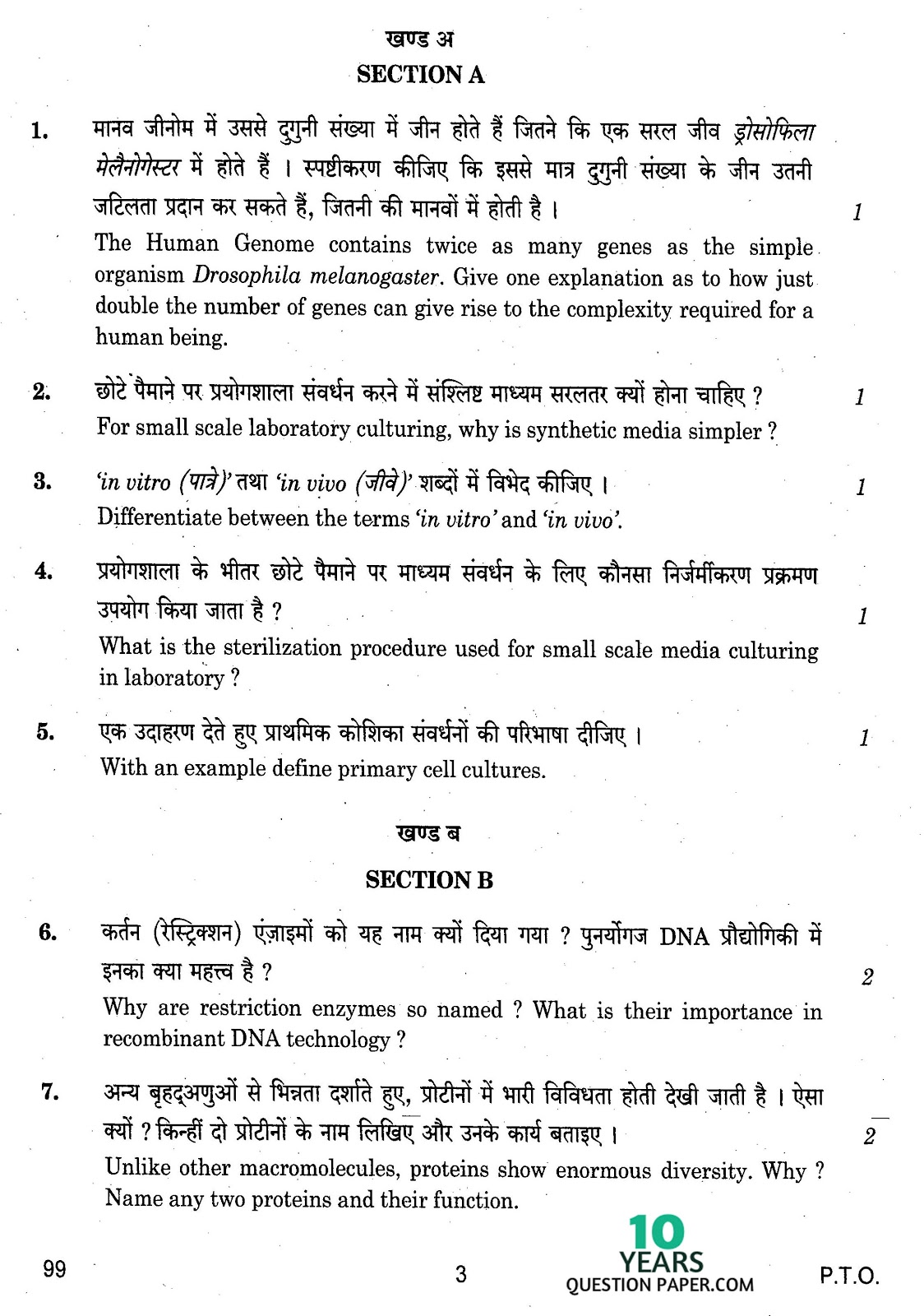
- Differentiate between the terms 'in vitro' and 'in vivo'.
- Why are restriction enzymes so named? What is their importance in recombinant DNA technology?
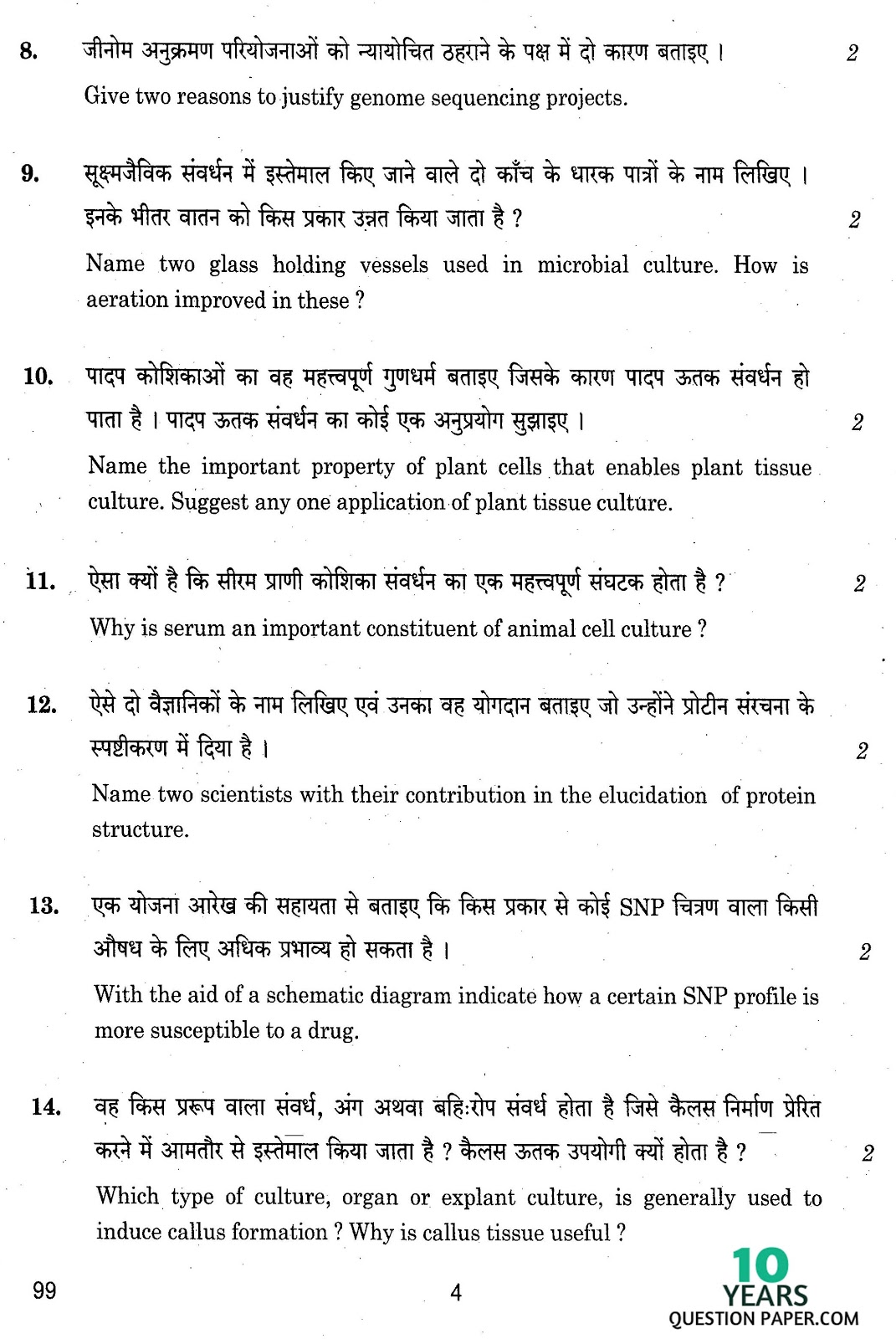
- Why is serum an important constituent of animal cell culture media?
- Differentiate between a turbidostat and a chemostat. With the help of a graph, explain what a steady state is.
- Mention three methods of delivering genes into animal cells, briefly explaining their principles. If a zygote is to be used in a gene therapy experiment, which method would be preferable?
- What is downstream processing? List three important conditions to be observed during it, and explain one technique used to characterise a purified protein.
Free email alert
Get the 2027 CBSE Class 12 papers first
One email when the new CBSE Class 12 Bio-Technology question papers are published here. No spam, unsubscribe any time.
What's next
Planning what comes after Class 12?
Compare college costs, education loans, and scholarships in one place.
See the cost breakdown