CBSE 2015 Bio-Technology Question Paper for Class 12

CBSE
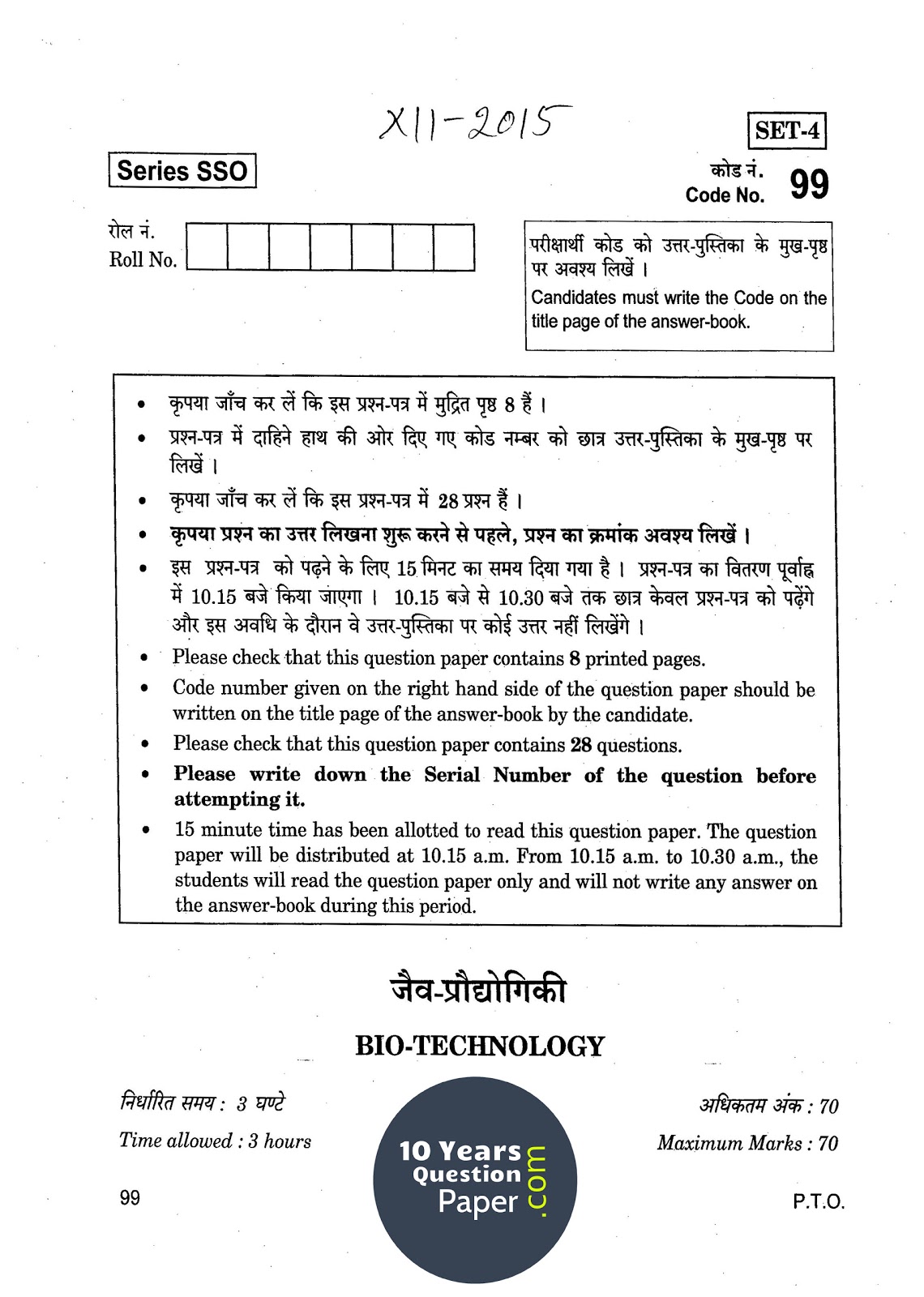
Bio-Technology2015CBSE Class 12 Bio-Technology question paper from the 2015 board exam (code 99, Set 4): 28 questions for 70 marks in 3 hours, questions only, no answers.
Practice these questions to improve your performance in the board examination.
About this paper
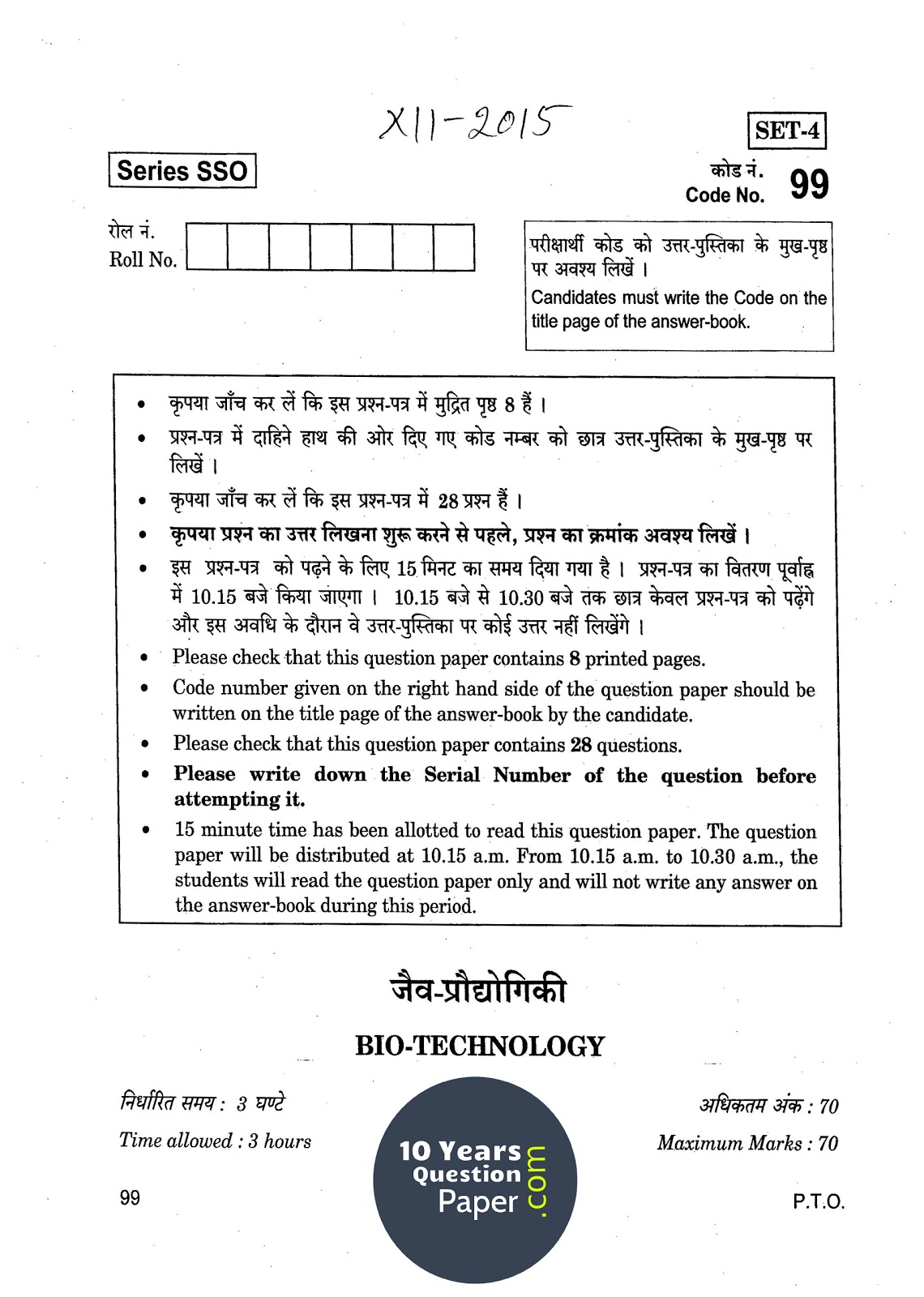
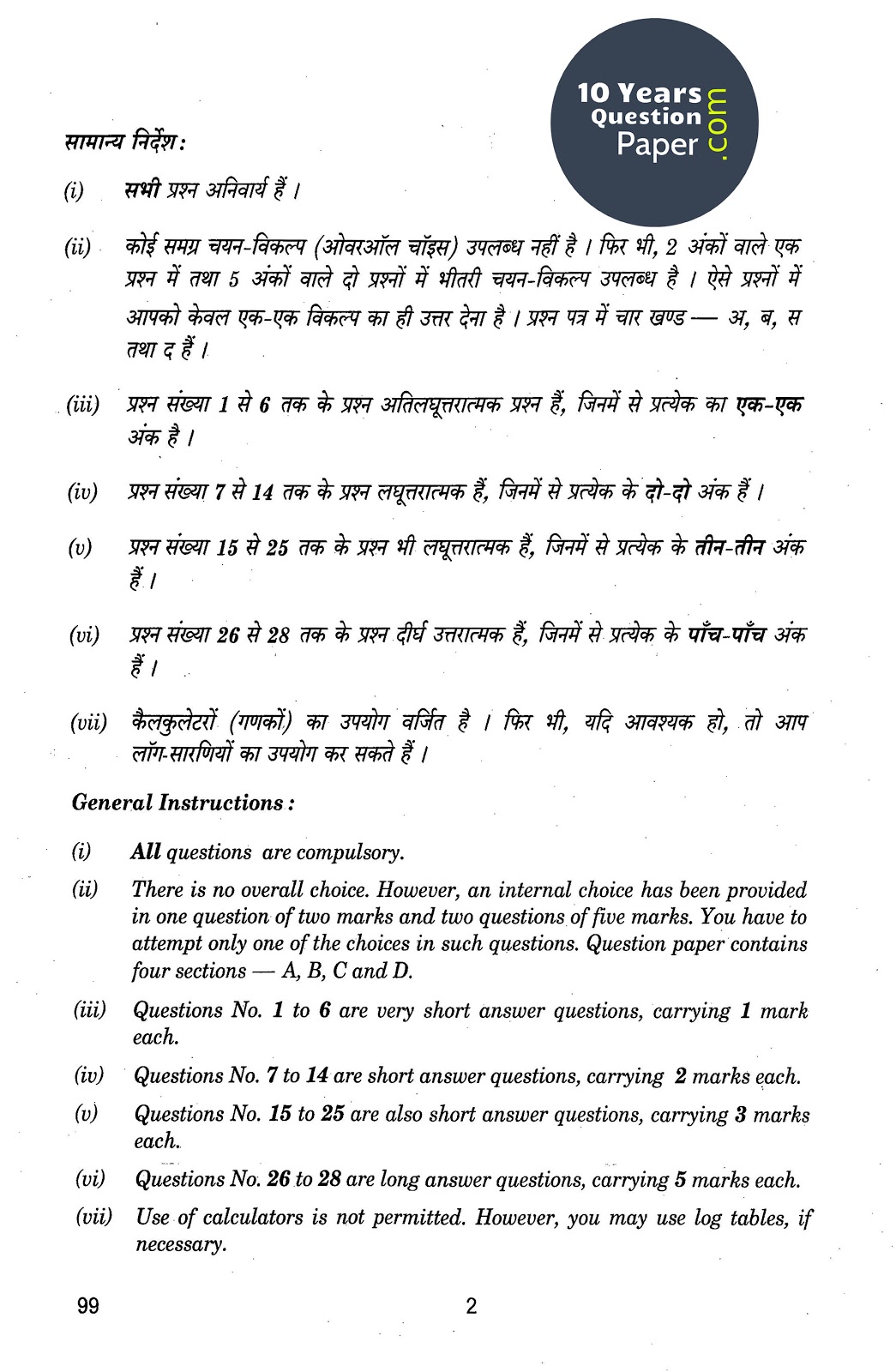
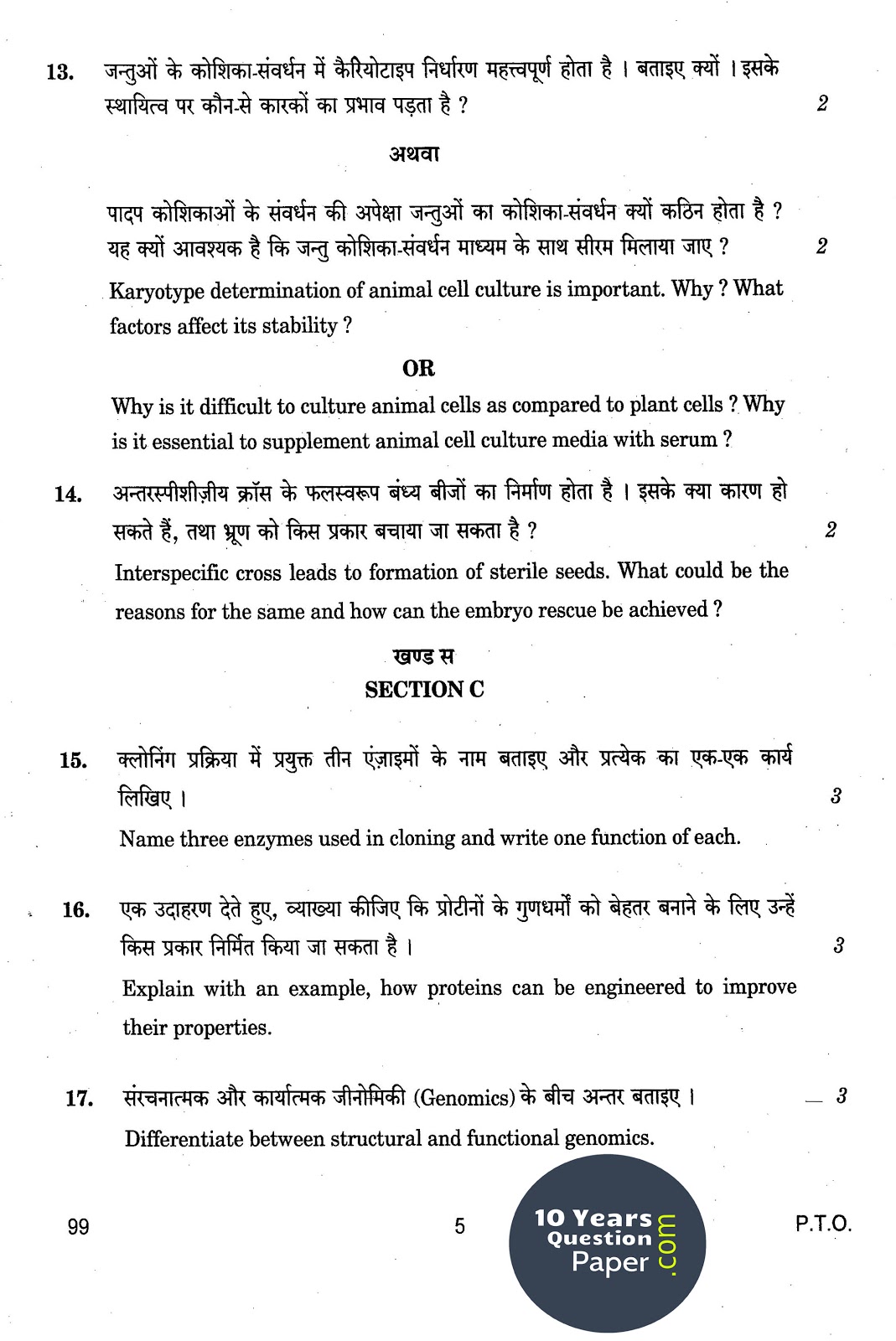
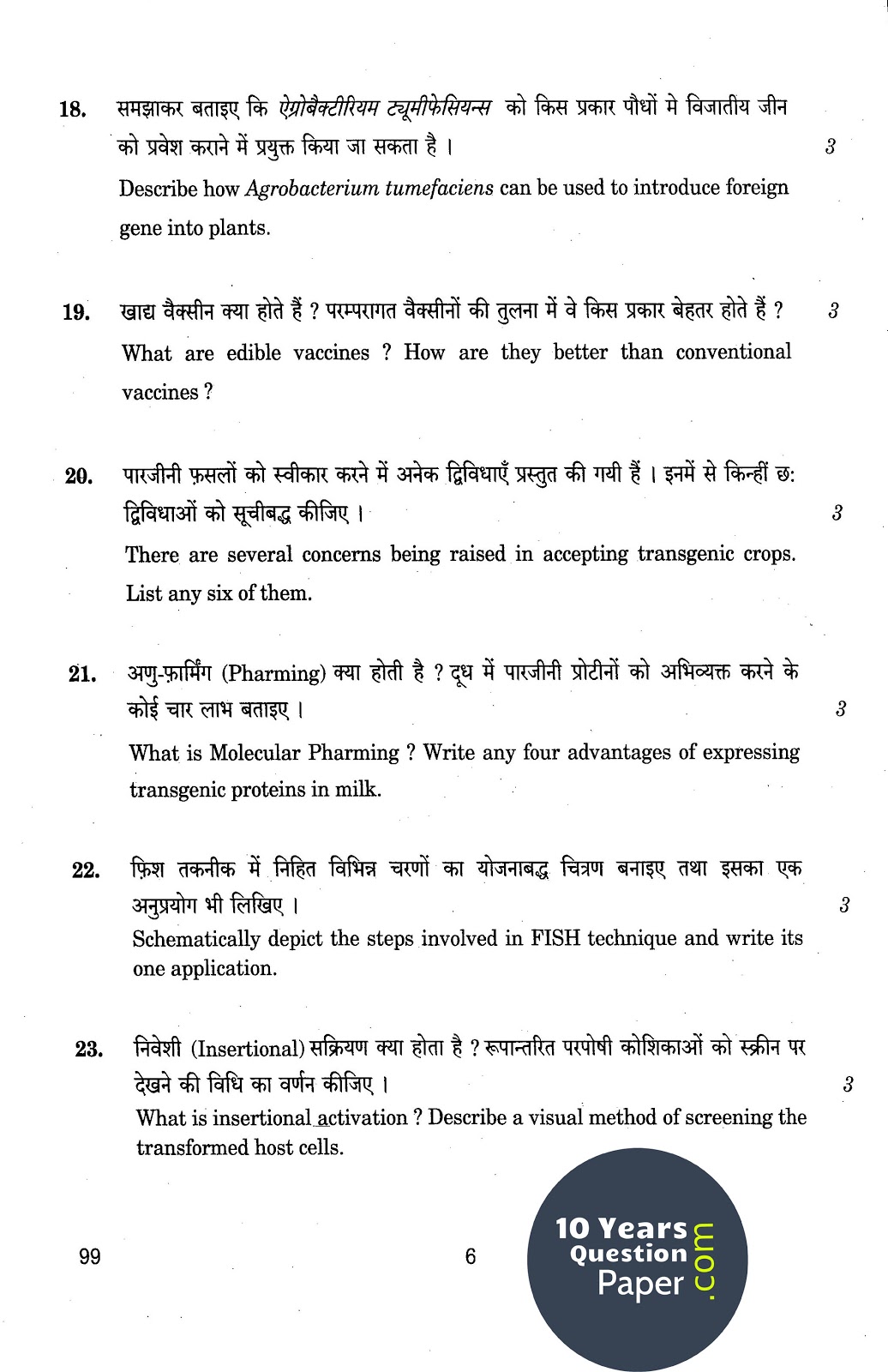
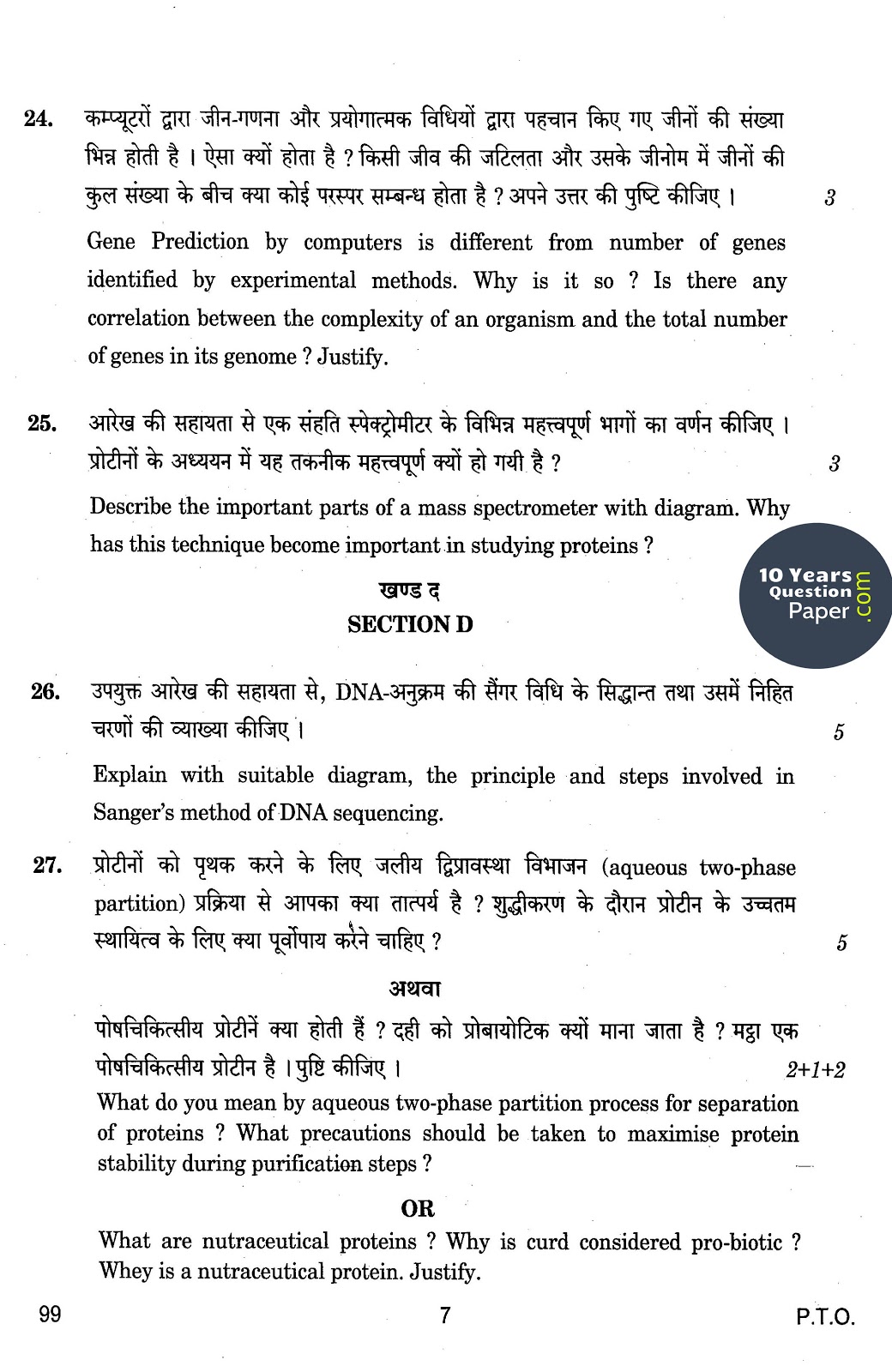
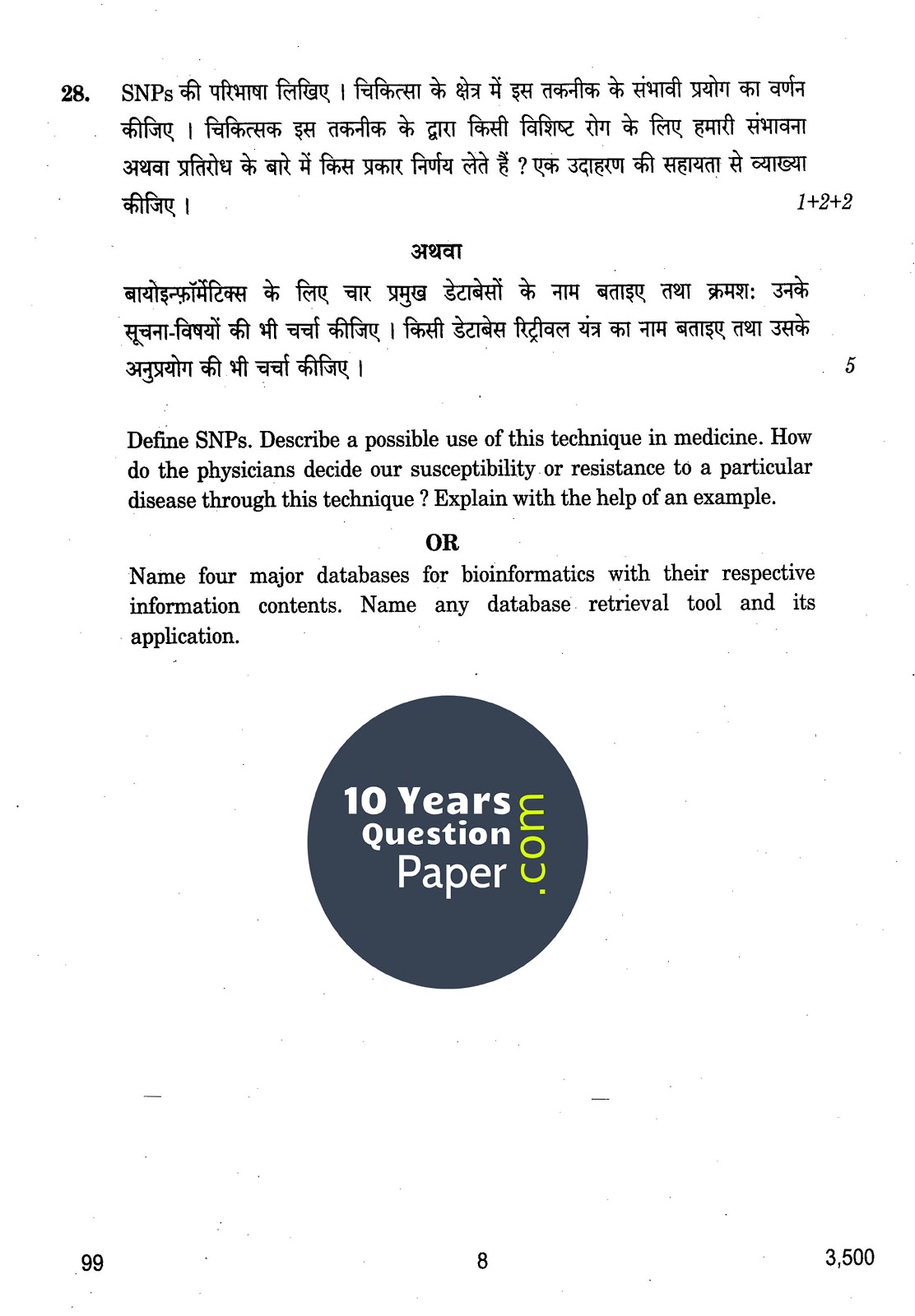
This is the CBSE Class 12 Bio-Technology question paper code 99 (Series SSO, Set 4) from the 2015 board examination, printed in both Hindi and English. It carries 70 marks over three hours and has 28 compulsory questions in four sections: six one-mark questions, eight two-mark, eleven three-mark and three five-mark questions. There is no overall choice, but internal choices are given in one two-mark question and two five-mark questions. Questions cover animal and microbial culture, cloning enzymes, Agrobacterium-mediated gene transfer, edible vaccines, molecular pharming, FISH, mass spectrometry and bioinformatics databases, with a long answer on nutraceutical proteins and probiotics as one option. Calculators are not allowed; log tables may be used. This copy has the questions only, without answers.
- Exam
- CBSE Class 12
- Subject
- Bio-Technology
- Year
- 2015
- Paper code
- 99
- Maximum marks
- 70
- Time allowed
- 3 hours
- Questions
- 28
- Pages
- 9
- Answers included
- No, questions only
Paper pattern
Section A
6 marksQuestions 1–6, very short answers, one mark each
Section B
16 marksQuestions 7–14, short answers, two marks each; internal choice in one
Section C
33 marksQuestions 15–25, short answers, three marks each
Section D
15 marksQuestions 26–28, long answers, five marks each; internal choice in two
Topics covered
- Protein purification and downstream processing
- Animal cell culture
- Microbial culture
- Plant tissue culture and embryo rescue
- Recombinant DNA technology and cloning enzymes
- Protein engineering
- Transgenic plants and edible vaccines
- Molecular pharming
- Genomics and gene prediction
- DNA sequencing and SNPs
- Bioinformatics databases
Questions from this paper
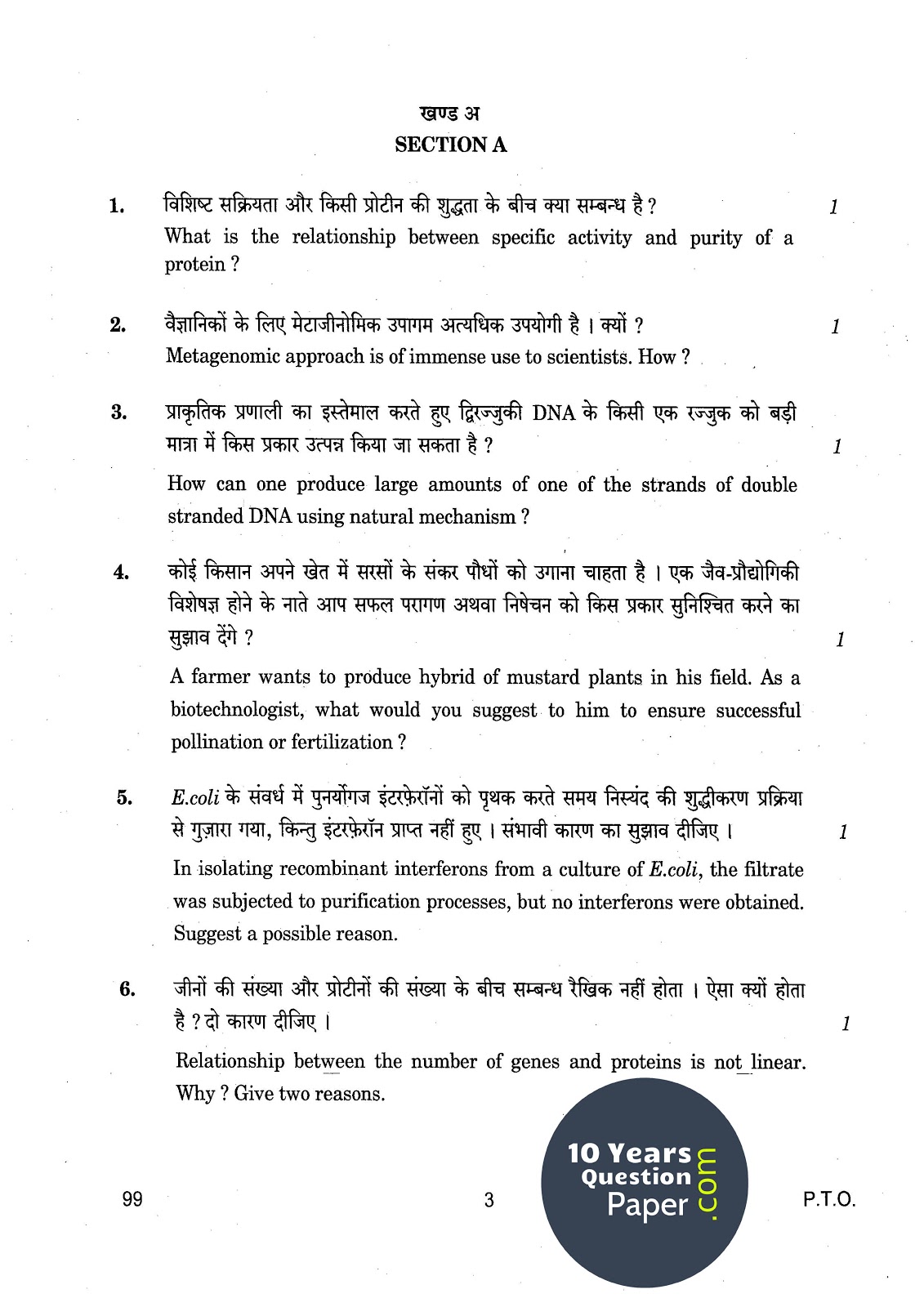
- What is the relationship between the specific activity and the purity of a protein?
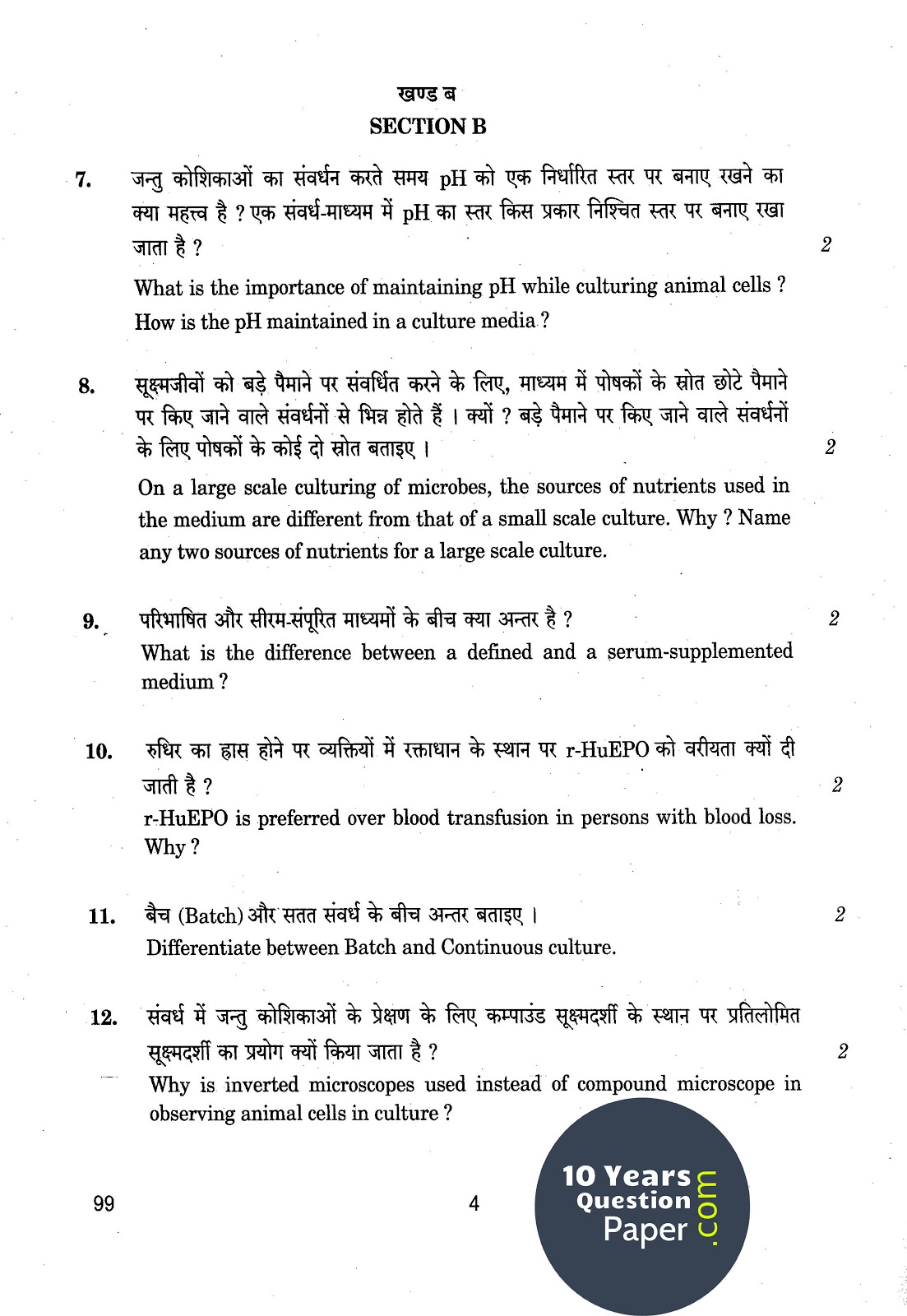
- Why is r-HuEPO preferred over blood transfusion for people who have lost blood?
- Why is an inverted microscope used instead of a compound microscope to observe animal cells in culture?
- Describe how Agrobacterium tumefaciens can be used to introduce a foreign gene into plants.
- Several concerns are being raised about accepting transgenic crops. List any six of them.
- Explain, with a suitable diagram, the principle and steps of Sanger's method of DNA sequencing.
Free email alert
Get the 2027 CBSE Class 12 papers first
One email when the new CBSE Class 12 Bio-Technology question papers are published here. No spam, unsubscribe any time.
What's next
Planning what comes after Class 12?
Compare college costs, education loans, and scholarships in one place.
See the cost breakdown