GPAT Question Paper 2011

GPAT
GPAT2011Download GPAT 2011 question paper with answers free download PDF.
Downloaded from nta.ac.in
About this paper
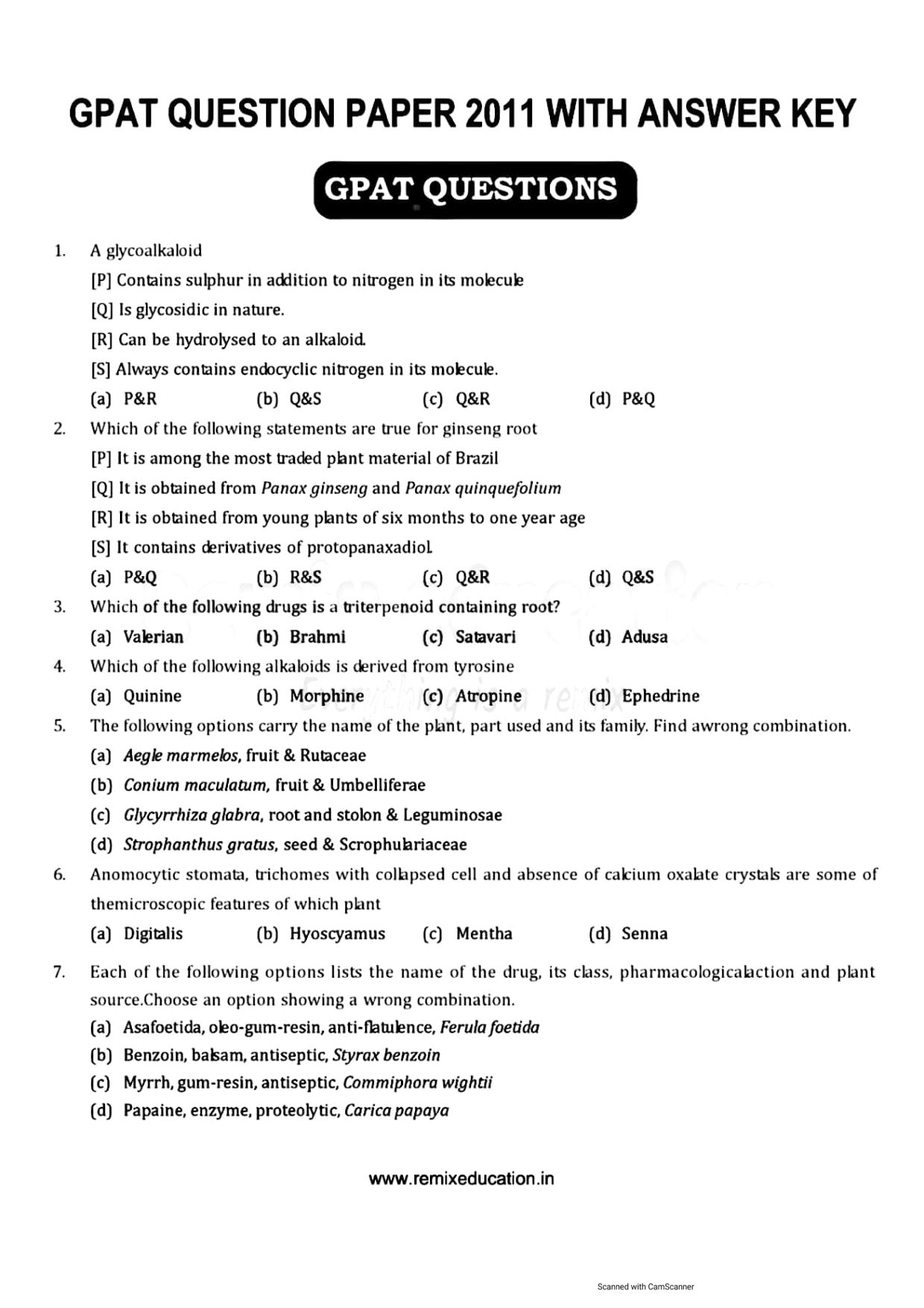
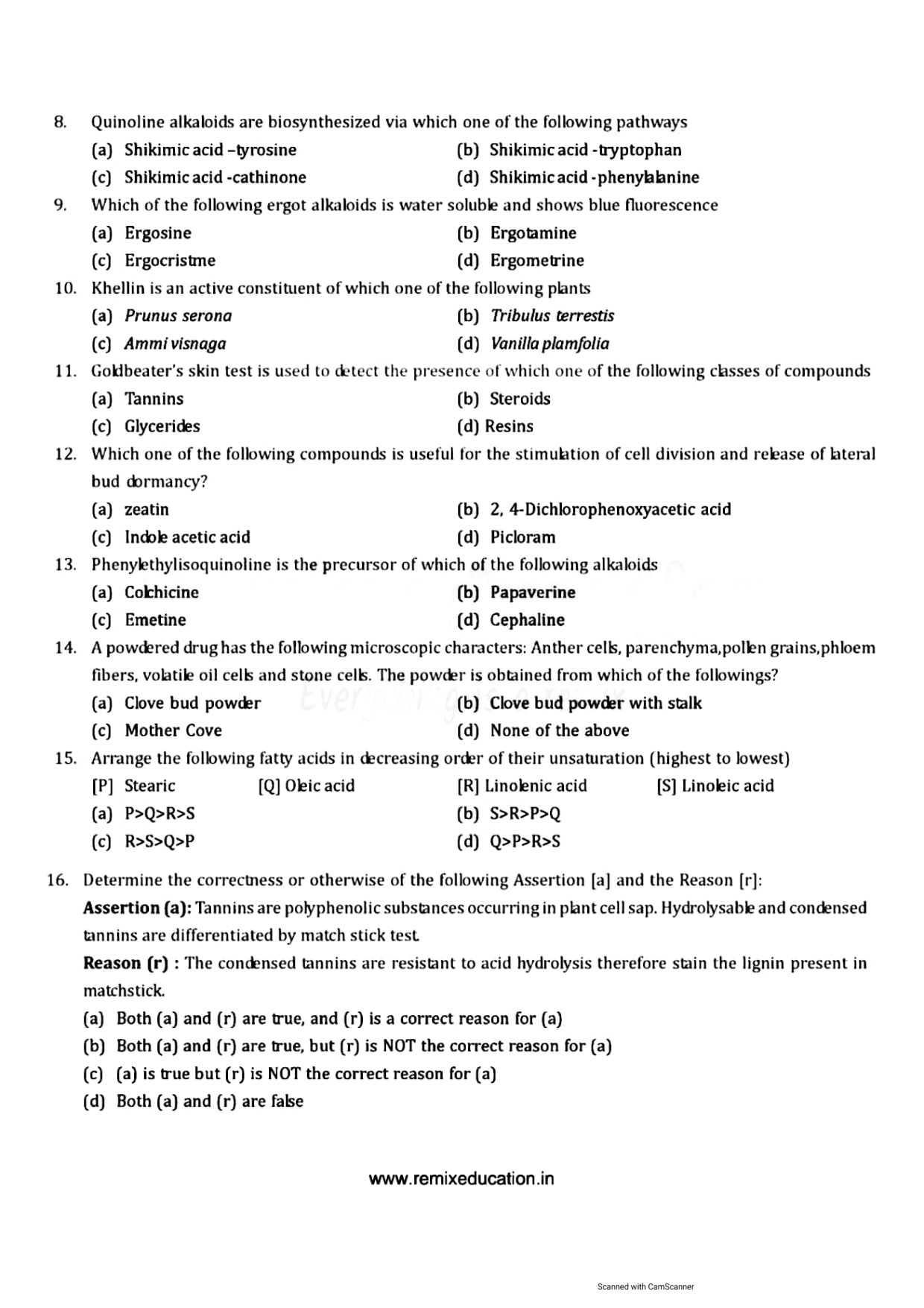
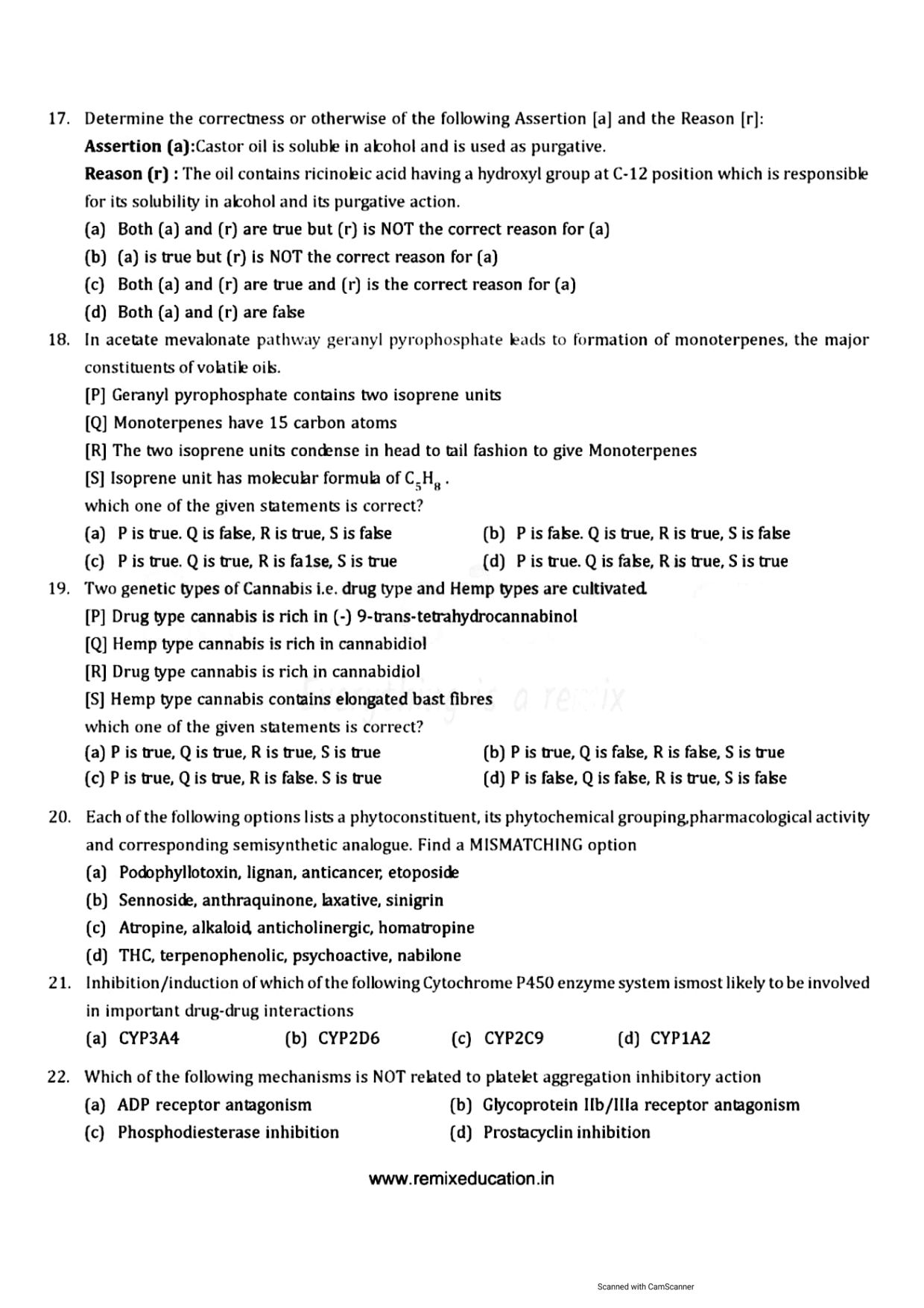
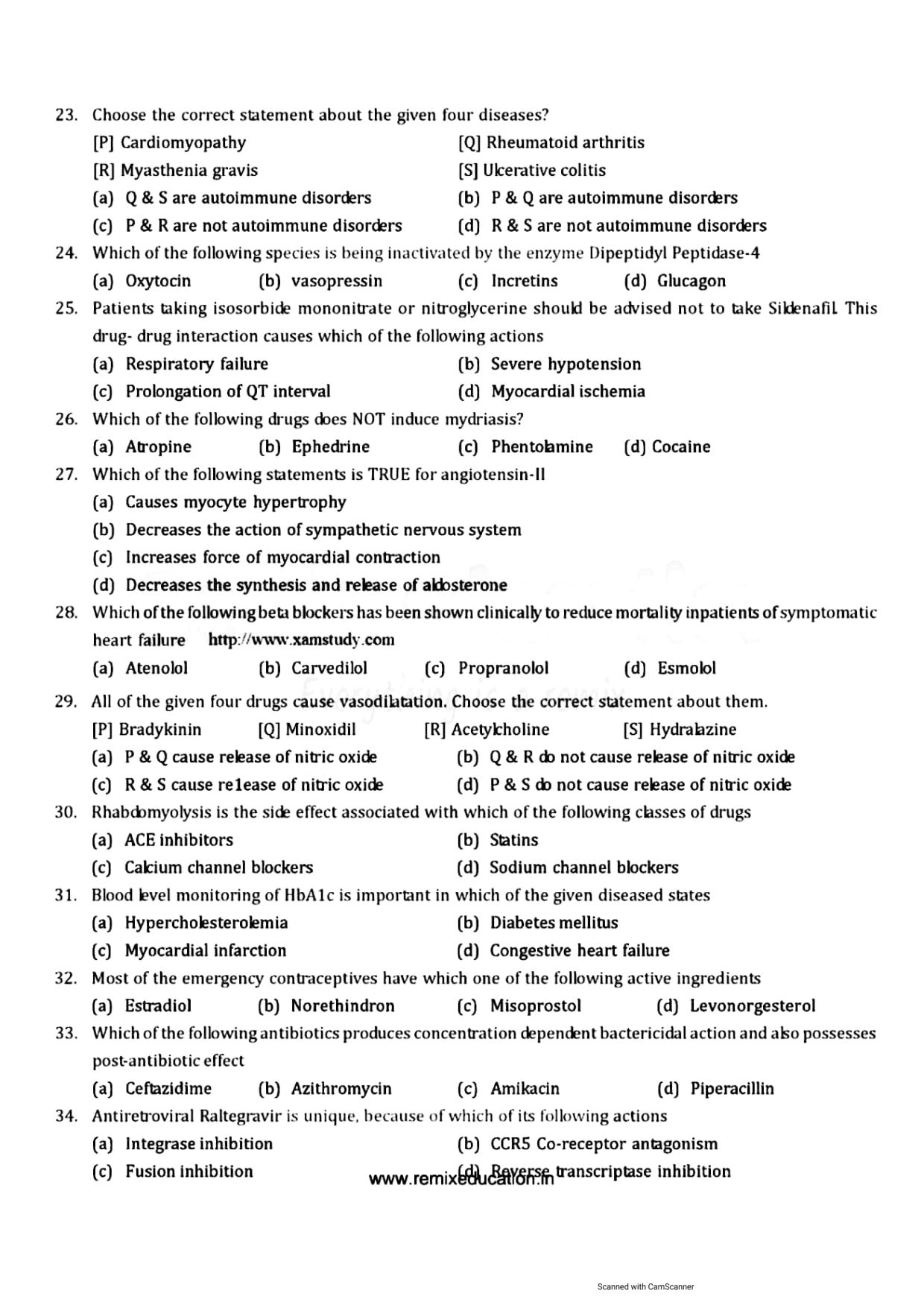
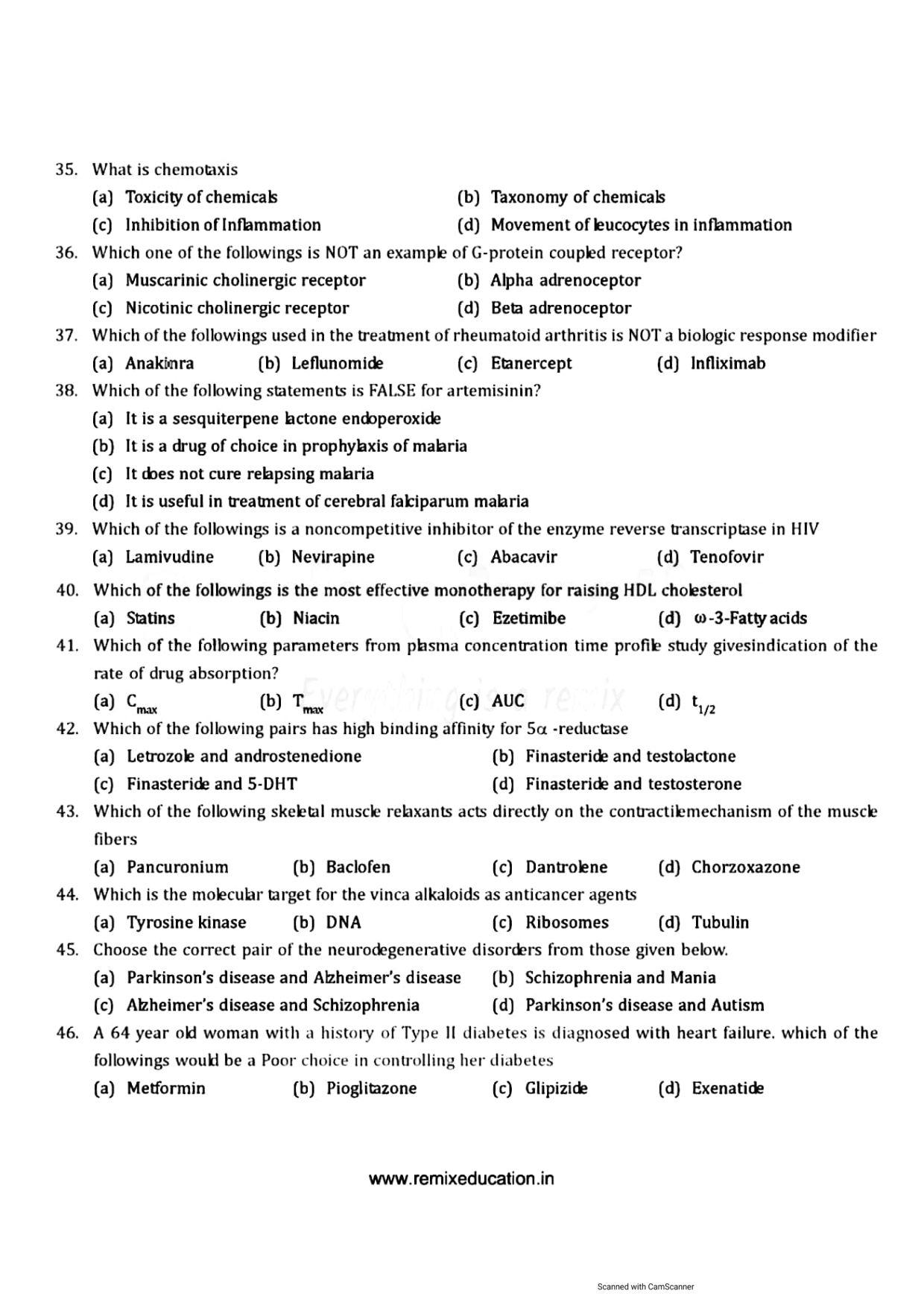
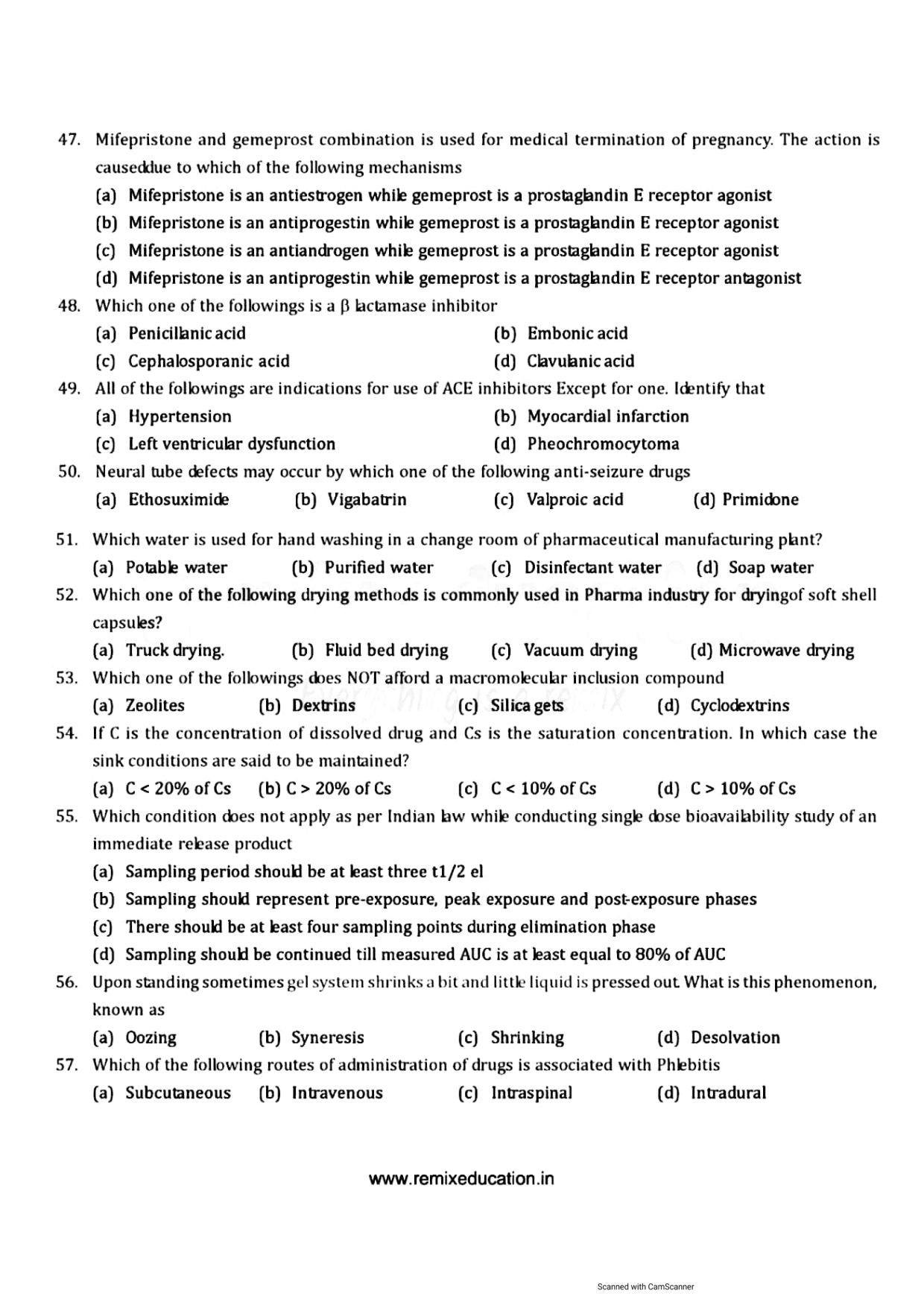
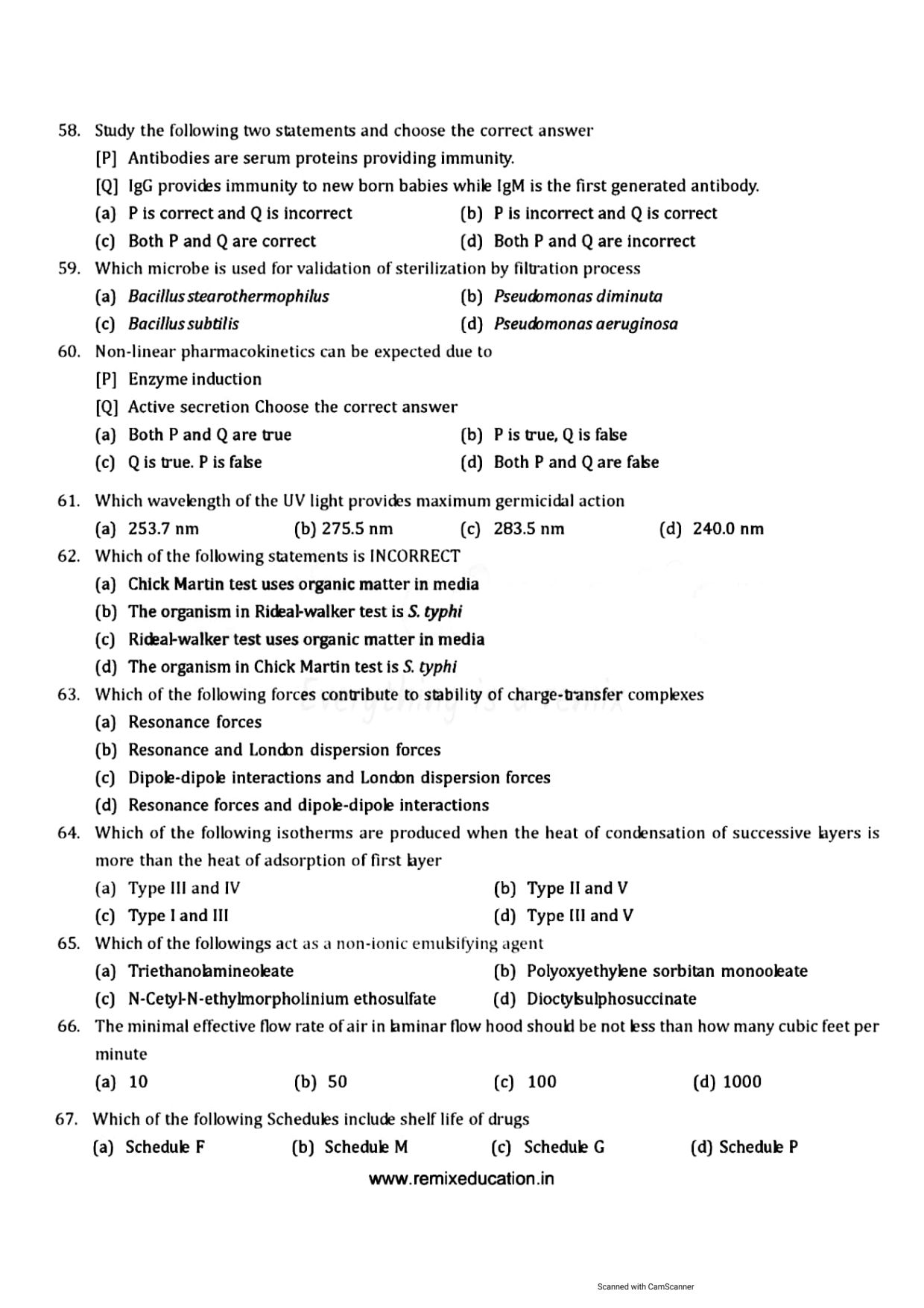
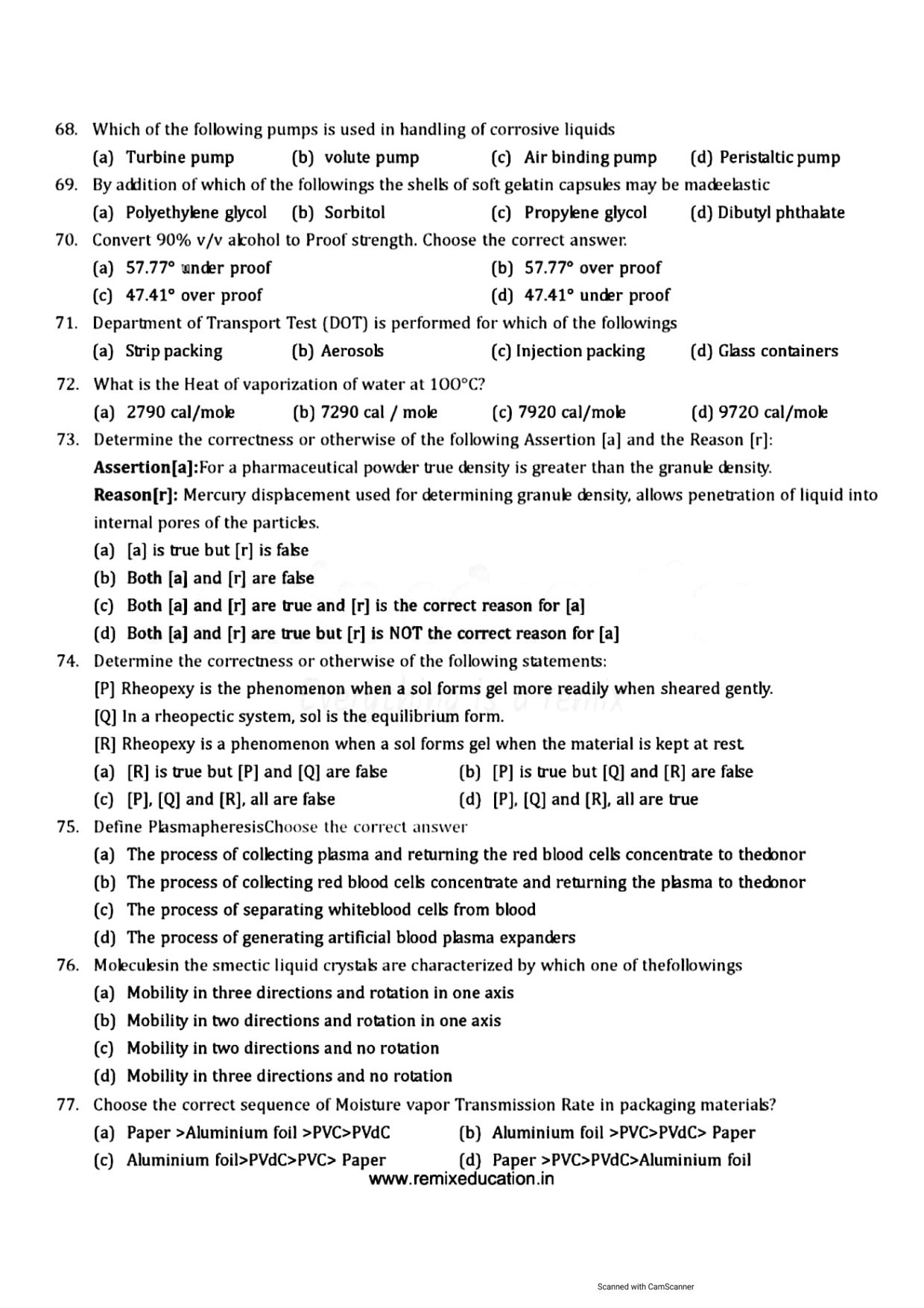
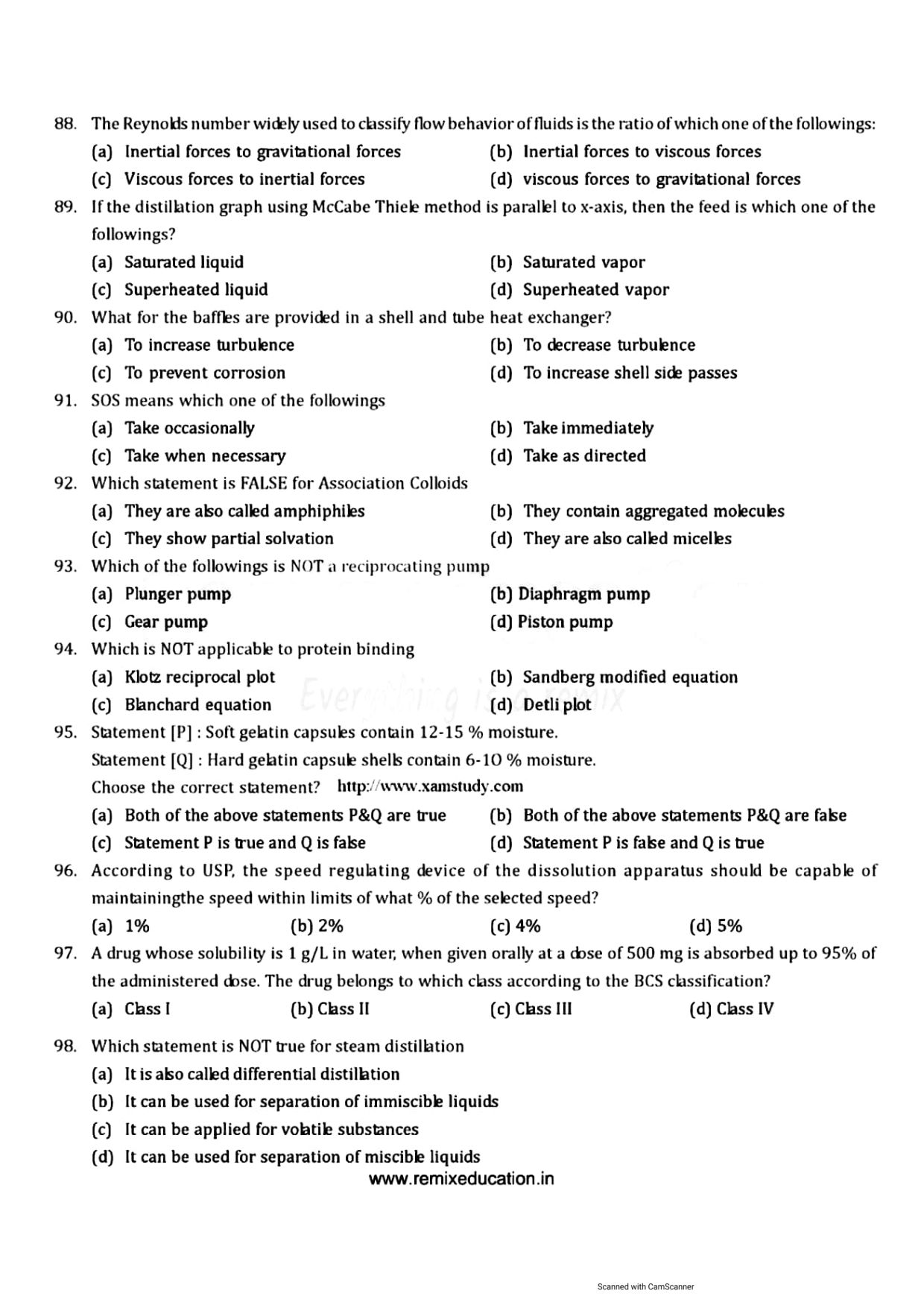
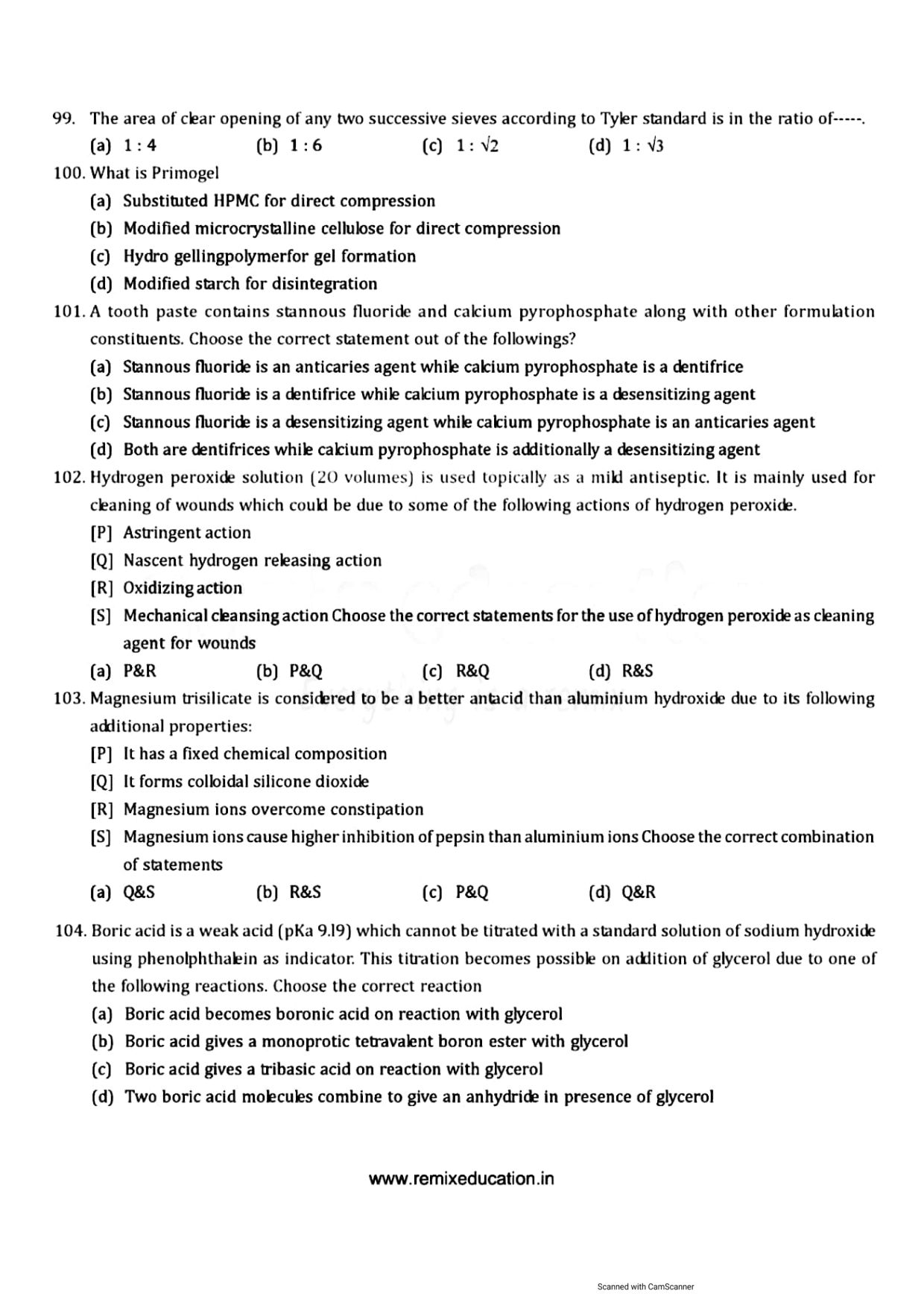
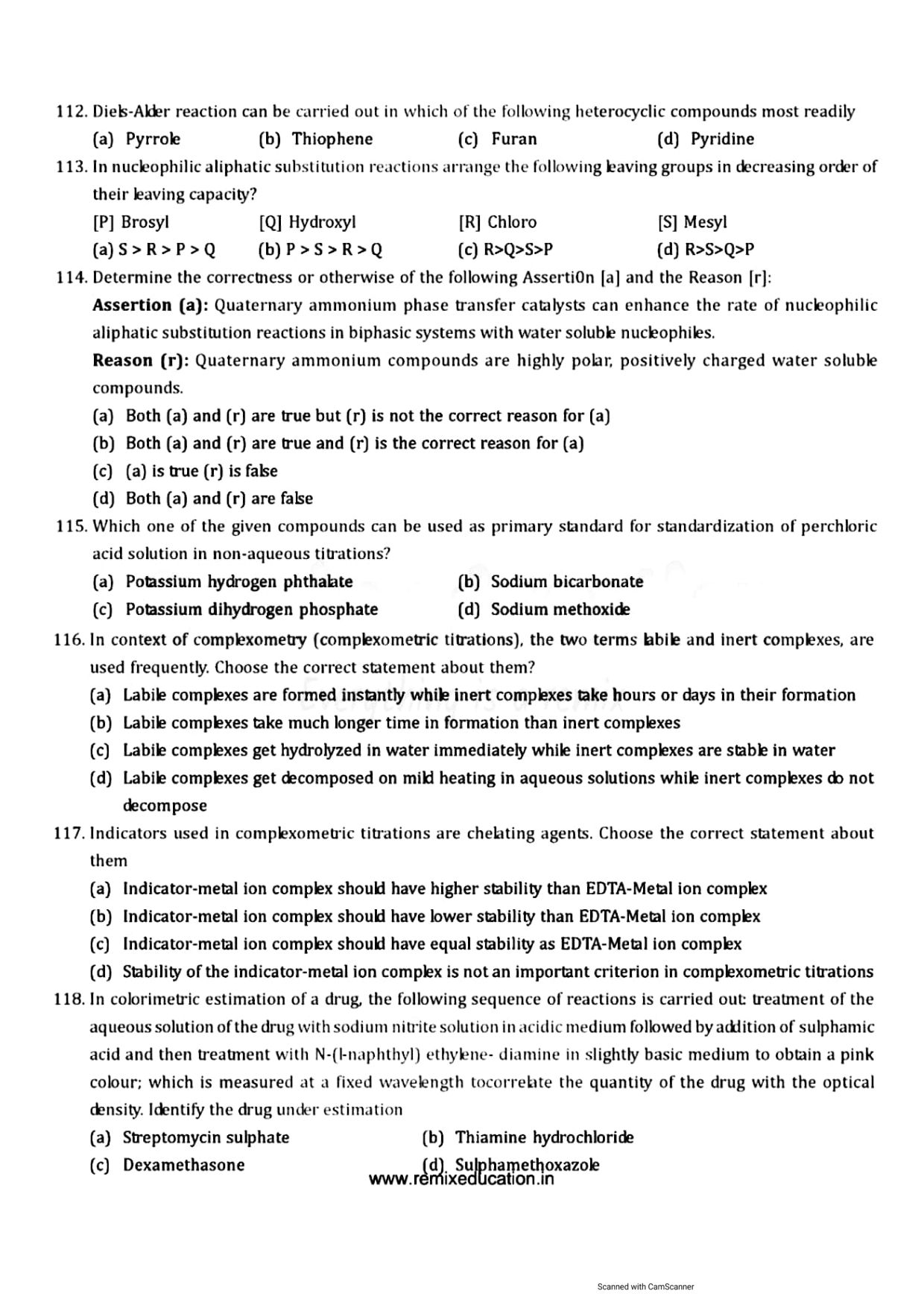
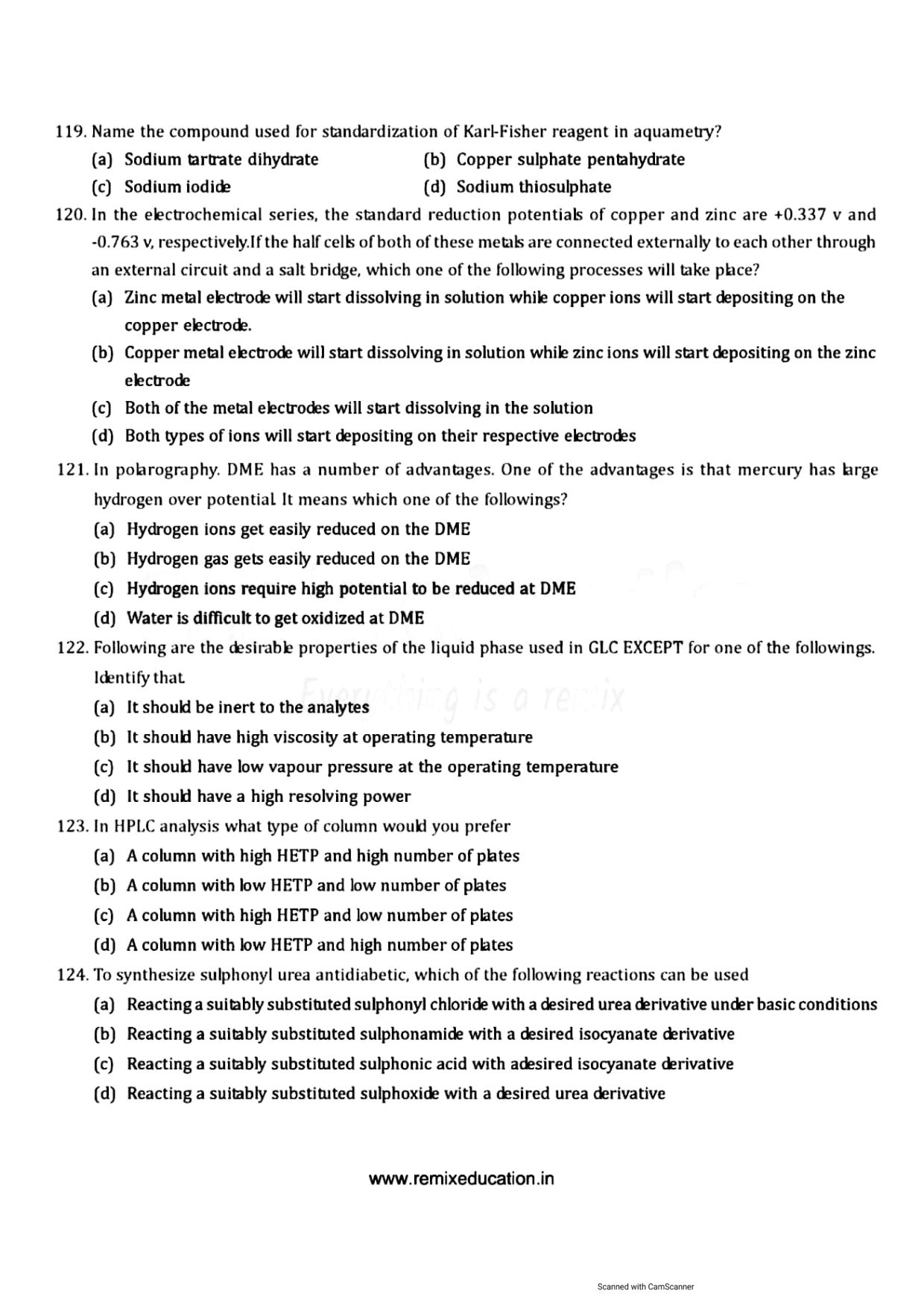
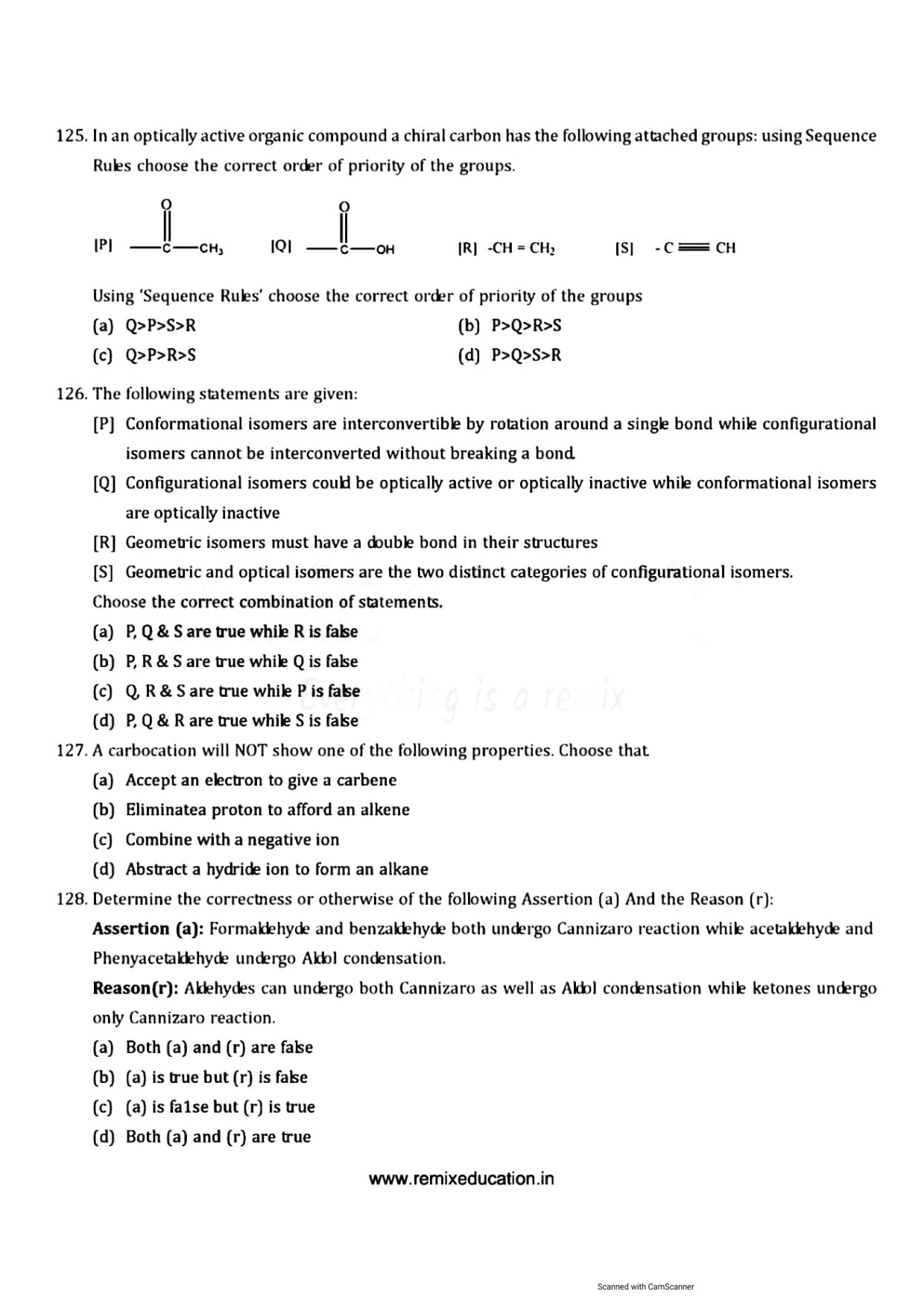
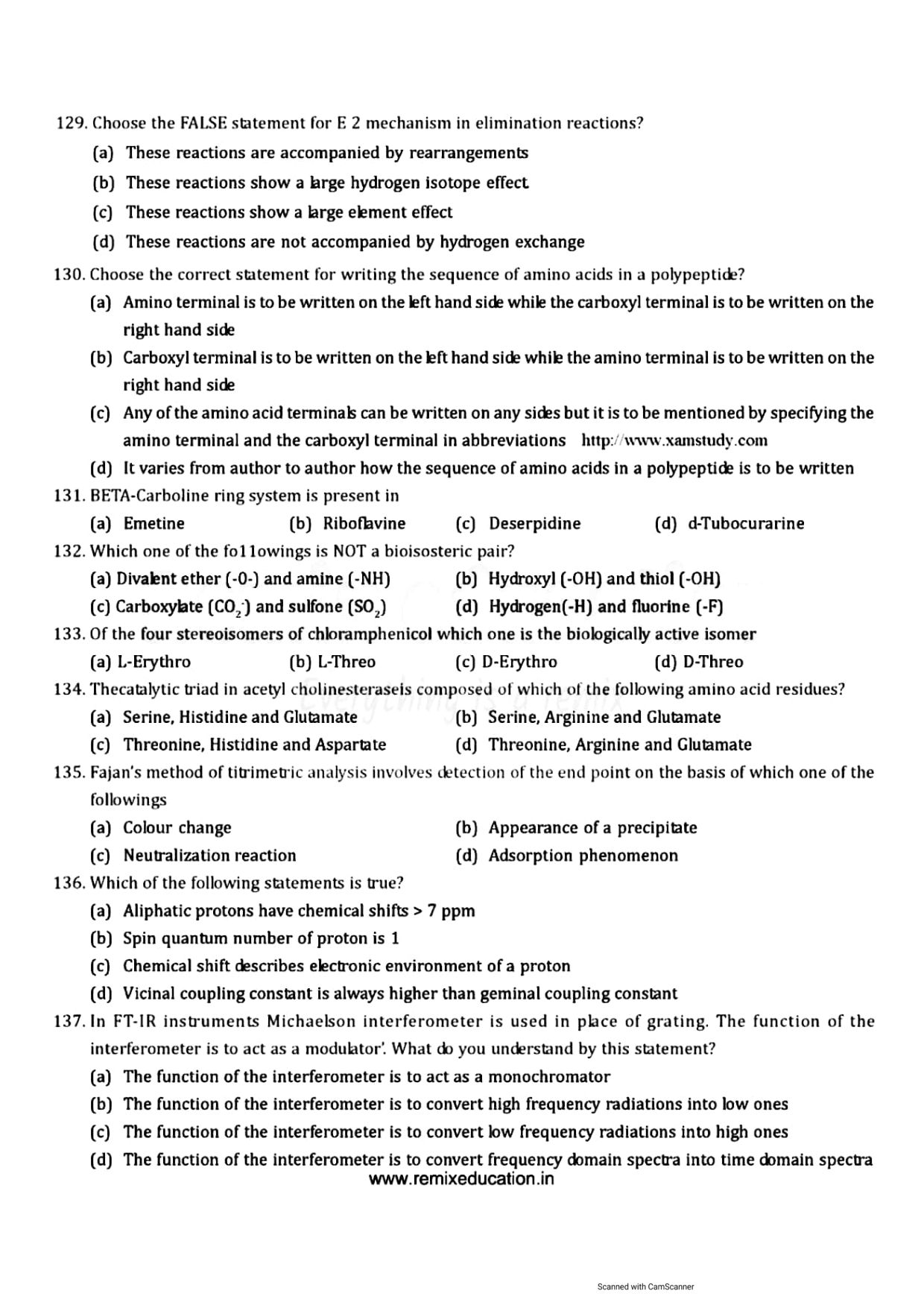
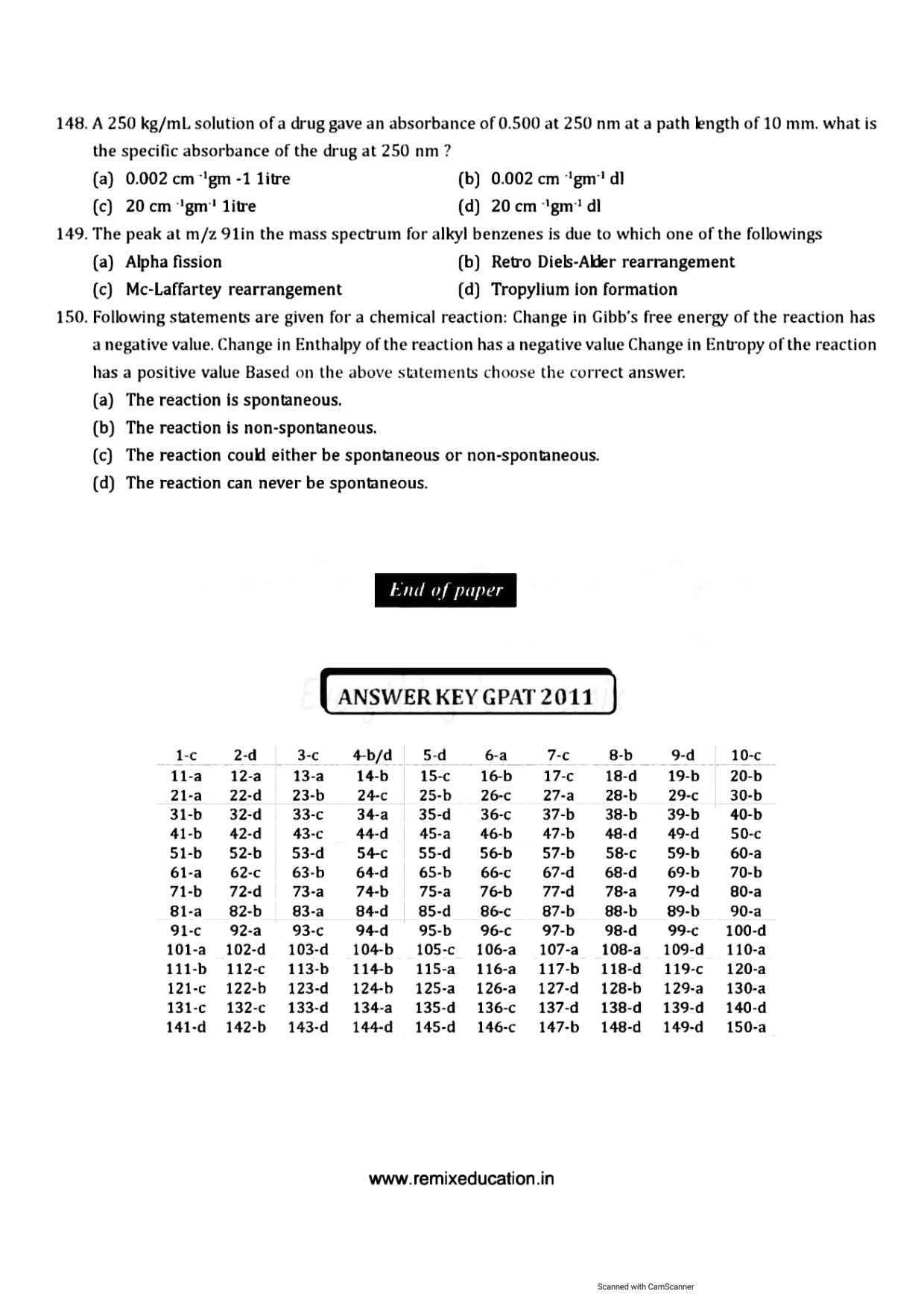
This is a scanned copy of the Graduate Pharmacy Aptitude Test (GPAT) 2011 question paper, with an answer key on the last page. It has 150 multiple-choice questions with four options each and no sections; marks and time are not printed. Many items are assertion–reason questions or ask which combination of statements P, Q, R and S is true. The paper opens with about twenty pharmacognosy questions, then covers pharmacology, pharmaceutics and microbiology, physical pharmacy and pharmaceutical engineering, inorganic and organic chemistry, medicinal chemistry, and instrumental analysis. Calculations include proof strength of alcohol, dextrose dilution, steady-state concentration and urine-to-plasma drug ratios.
- Exam
- GPAT
- Subject
- GPAT
- Year
- 2011
- Questions
- 150
- Pages
- 18
- Answers included
- Yes
Topics covered
- Pharmacognosy and biosynthetic pathways
- Pharmacology and drug interactions
- Pharmaceutics and dosage forms
- Pharmaceutical microbiology and sterilisation
- Physical pharmacy and colloids
- Pharmaceutical engineering
- Biopharmaceutics and pharmacokinetics
- Inorganic pharmaceutical chemistry
- Organic reaction mechanisms and stereochemistry
- Medicinal chemistry
- Titrimetric and electrochemical analysis
- Spectroscopy and chromatography
Questions from this paper
- Which ergot alkaloid is water soluble and shows blue fluorescence?
- Which beta blocker has been shown clinically to reduce mortality in patients with symptomatic heart failure?
- Convert 90% v/v alcohol to proof strength.
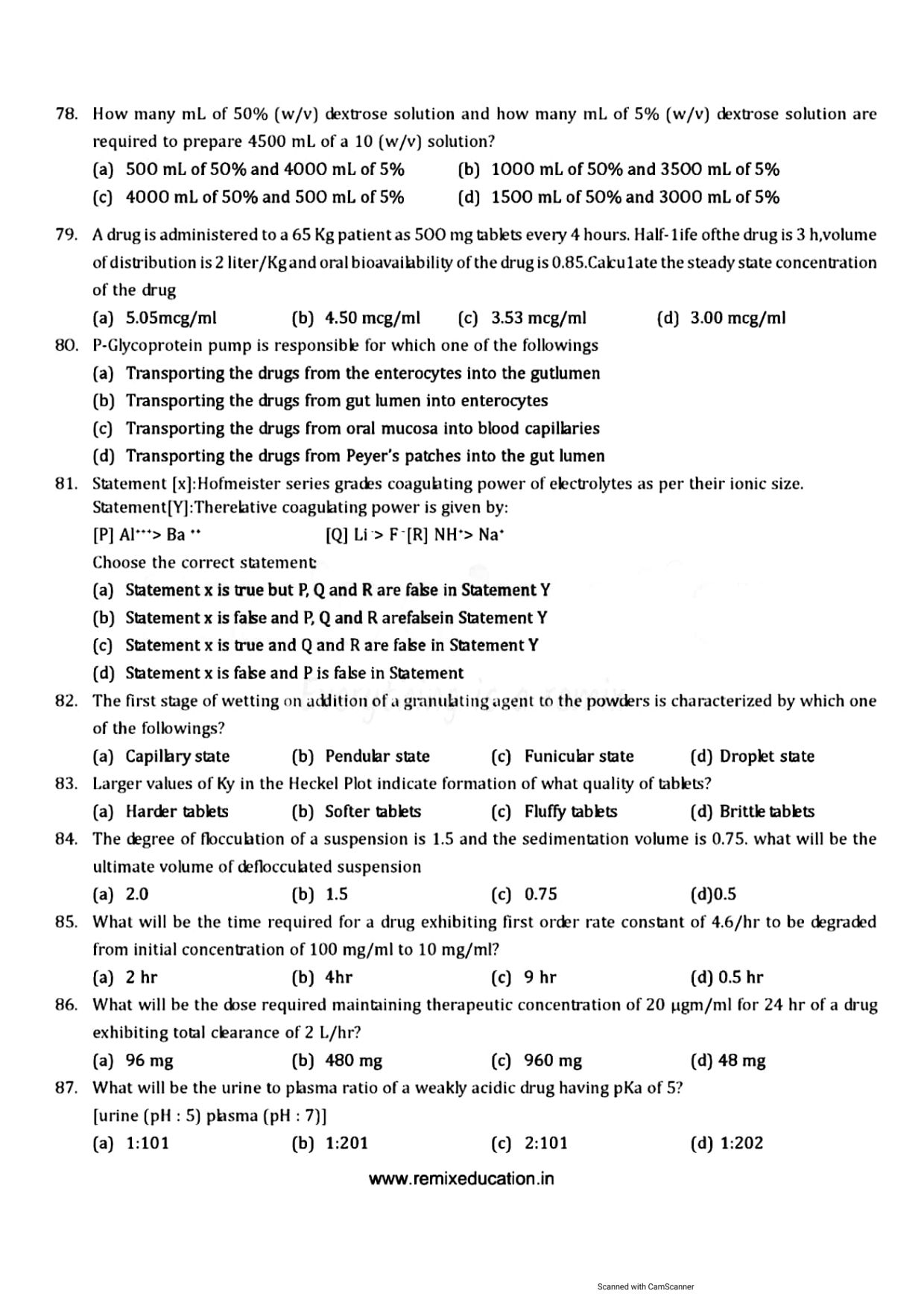
- How many mL of 50% w/v and 5% w/v dextrose solutions are needed to prepare 4500 mL of a 10% w/v solution?
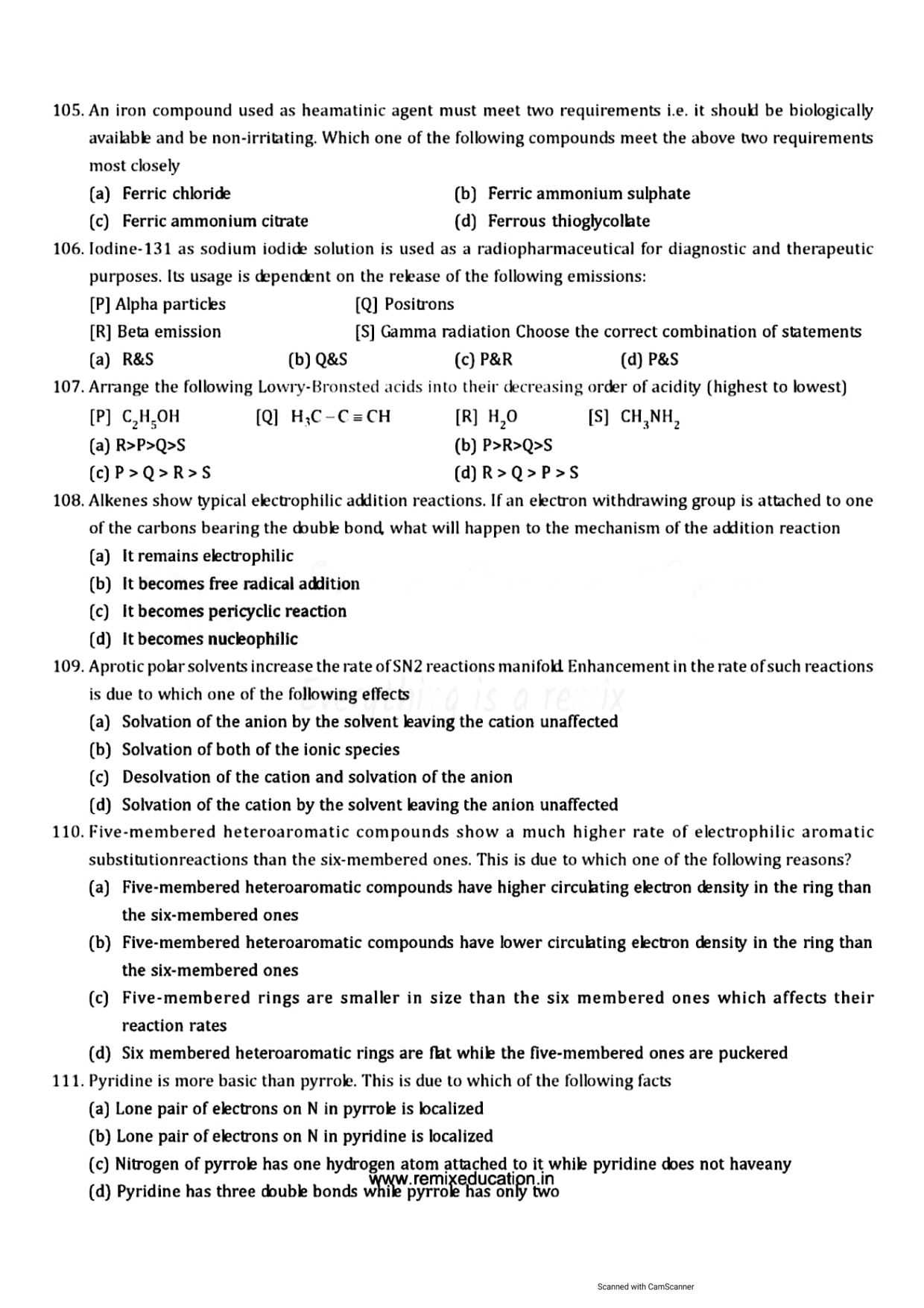
- Why is pyridine more basic than pyrrole?
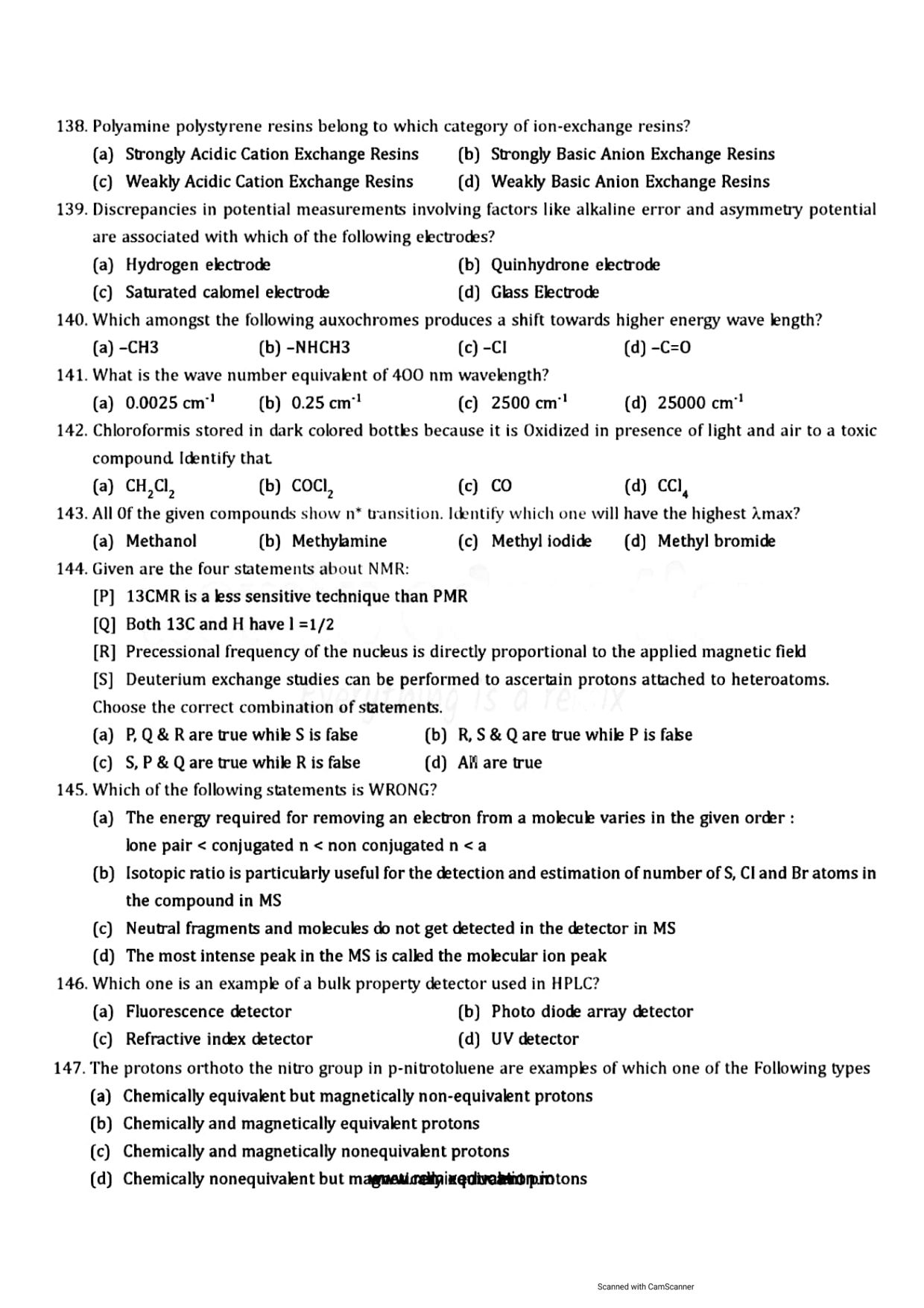
- What is the wavenumber equivalent of a wavelength of 400 nm?
Free email alert
Get the 2027 GPAT papers first
One email when the new GPAT GPAT question papers are published here. No spam, unsubscribe any time.
What's next
Thinking about what comes next?
Scholarships, education loans, and study-abroad costs, explained with real numbers.
See guidance