ISC 2026 Physics Improvement Examination Question Paper for Class 12

ISC
Physics2026Download the official ISC Class 12 Physics question paper from the 2026 Improvement Examination conducted by CISCE (paper code 861A). Practise with the actual 2026 paper to revise for the ISC board examination.
Official question paper published by CISCE.
About this paper
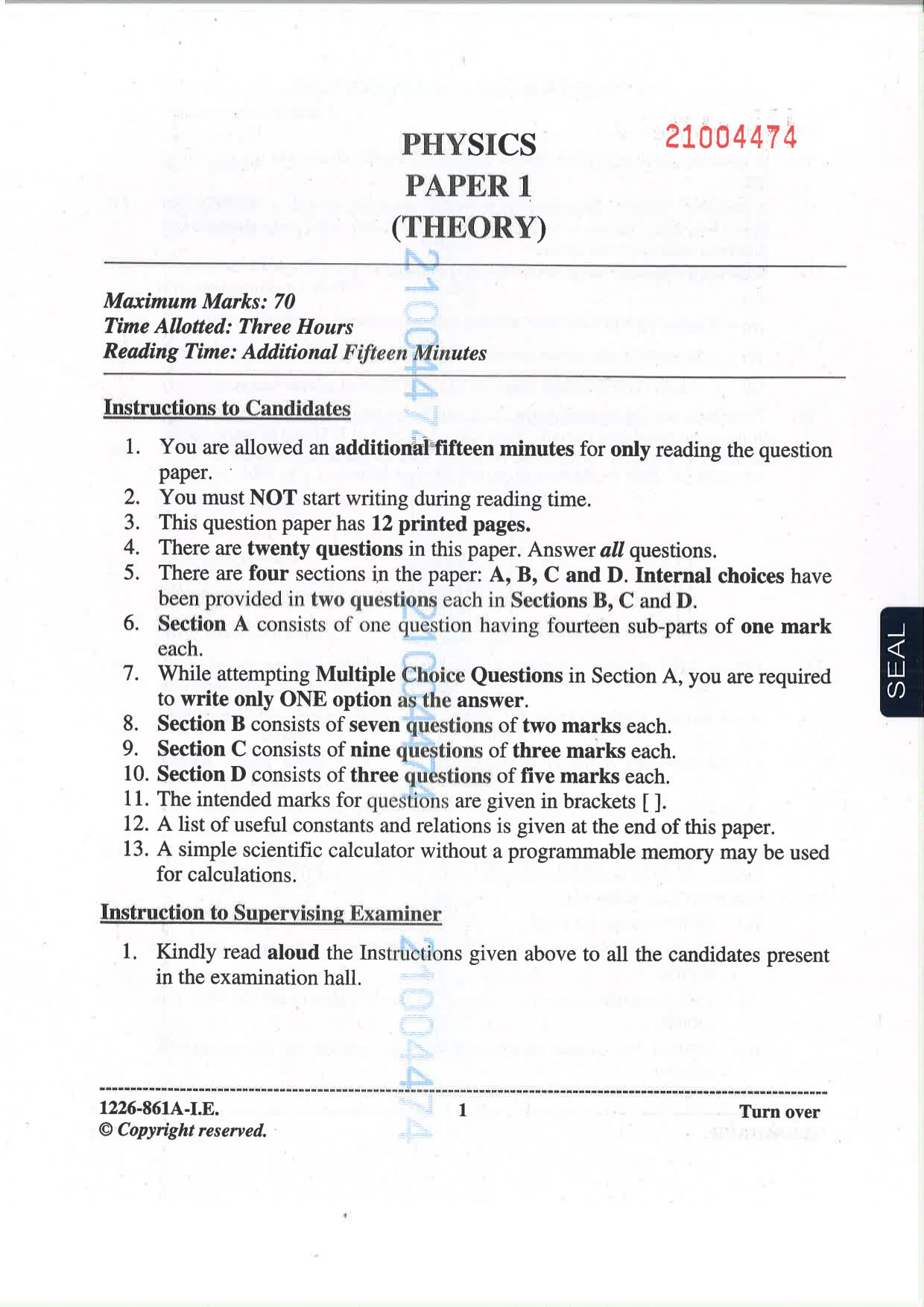
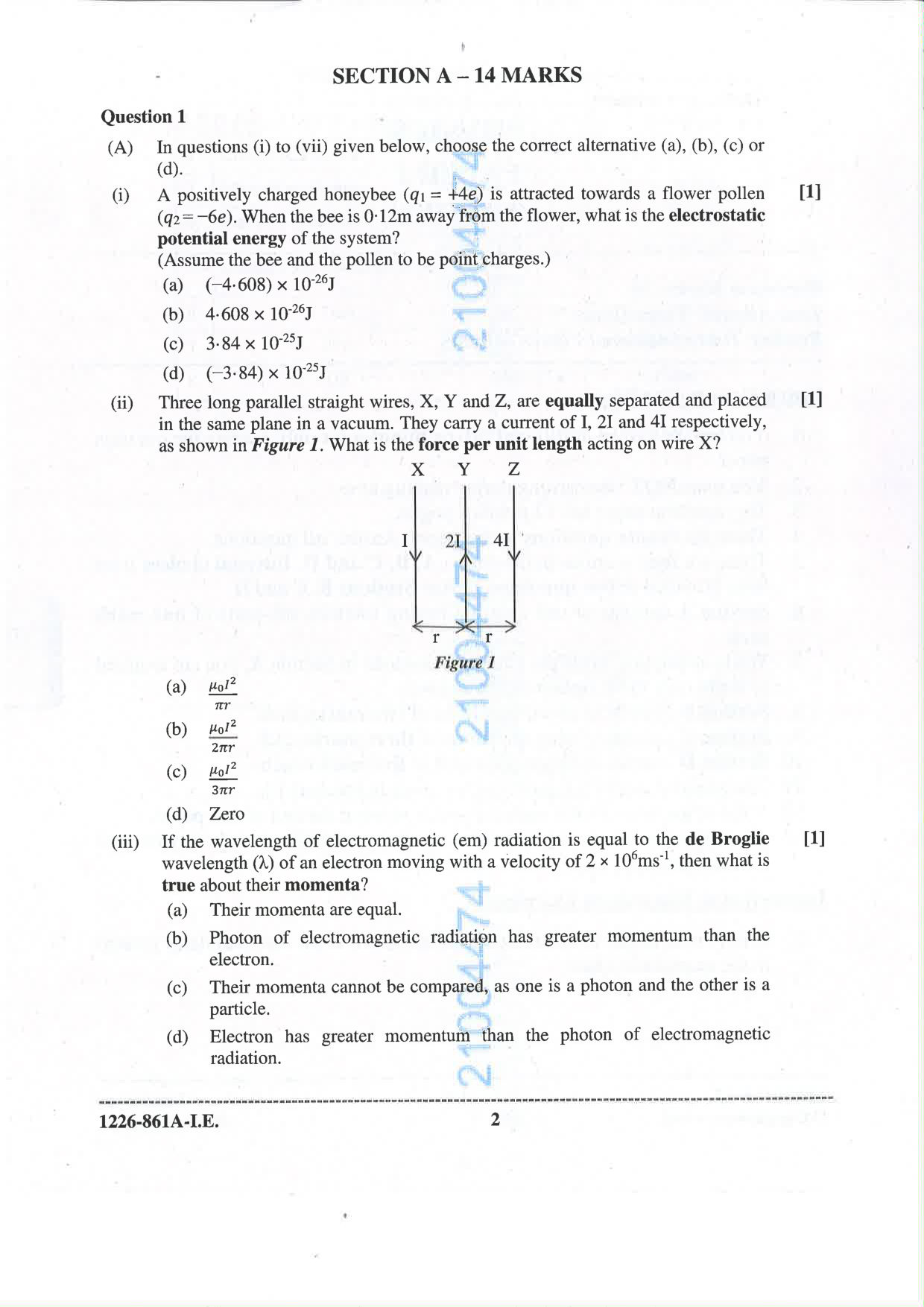
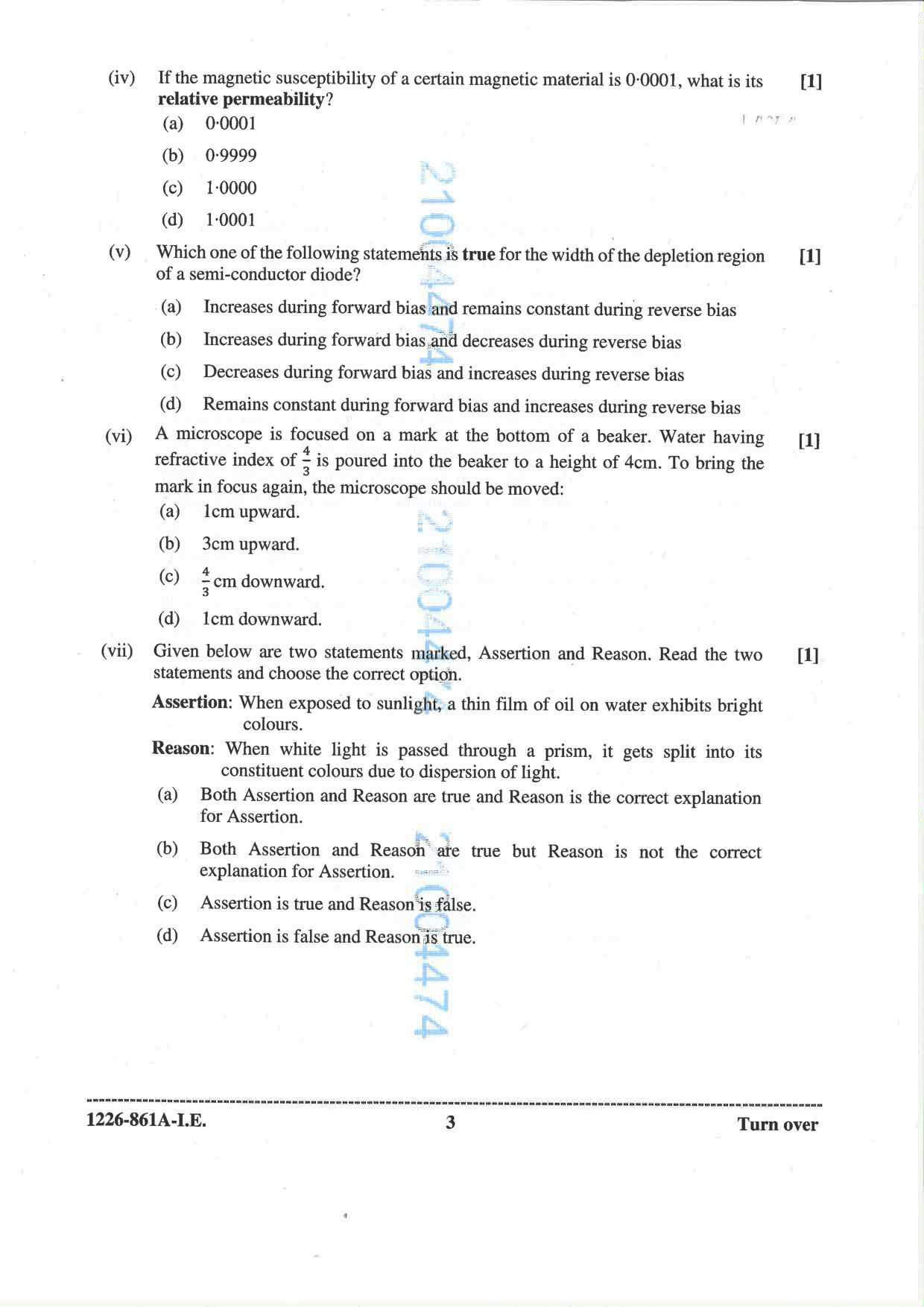
This is ISC Class 12 Physics Paper 1 (Theory) from CISCE's 2026 Improvement Examination (paper code 861A, printed as 1226-861A-I.E.). It carries 70 marks, runs for three hours plus fifteen minutes of reading time, and has 20 compulsory questions in four sections, with internal choices in two questions each in Sections B, C and D. Section A has seven multiple-choice items, opening with the potential energy of a charged honeybee and a pollen grain, plus seven very short answers. Section B includes a question on the radiation used in a cash counting machine, and Section D ends with a passage about a panel discussion on atomic models, fission and fusion. A list of useful constants is printed at the end, and a simple scientific calculator is allowed.
- Exam
- ISC Class 12
- Subject
- Physics
- Year
- 2026
- Paper code
- 861A
- Maximum marks
- 70
- Time allowed
- 3 hours + 15 min reading
- Questions
- 20
- Pages
- 12
- Answers included
- No, questions only
Paper pattern
Section A
14 marksQuestion 1 with 14 one-mark parts: 7 multiple-choice (one assertion–reason) and 7 very short answers
Section B
14 marksQuestions 2–8, two marks each; internal choice in two questions
Section C
27 marksQuestions 9–17, three marks each; internal choice in two questions
Section D
15 marksQuestions 18–20, five marks each, ending with a passage-based question on atomic and nuclear physics; internal choice in two questions
Topics covered
- Electrostatic potential and electric dipole
- Capacitors
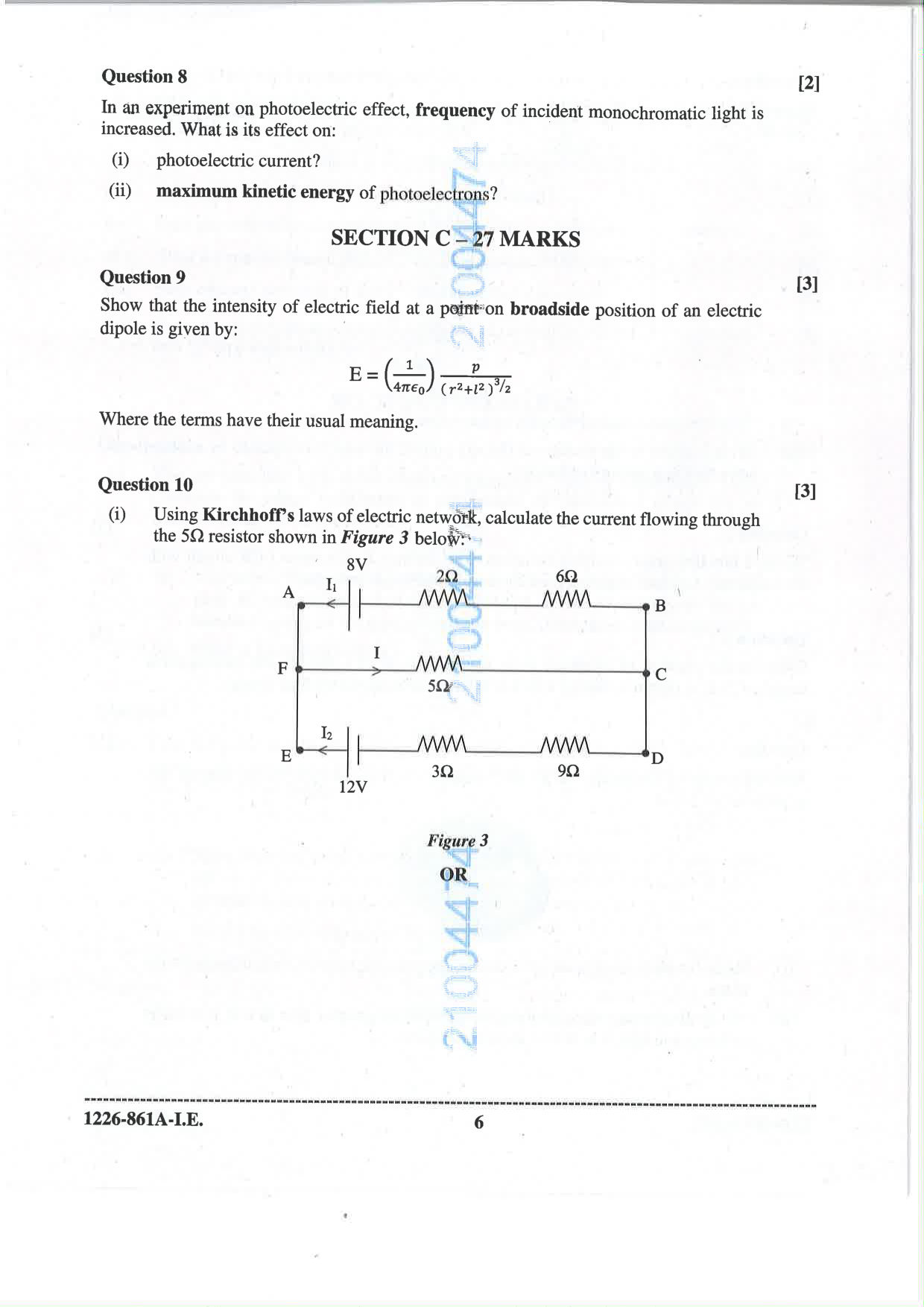
- Current electricity, Kirchhoff's laws and metre bridge
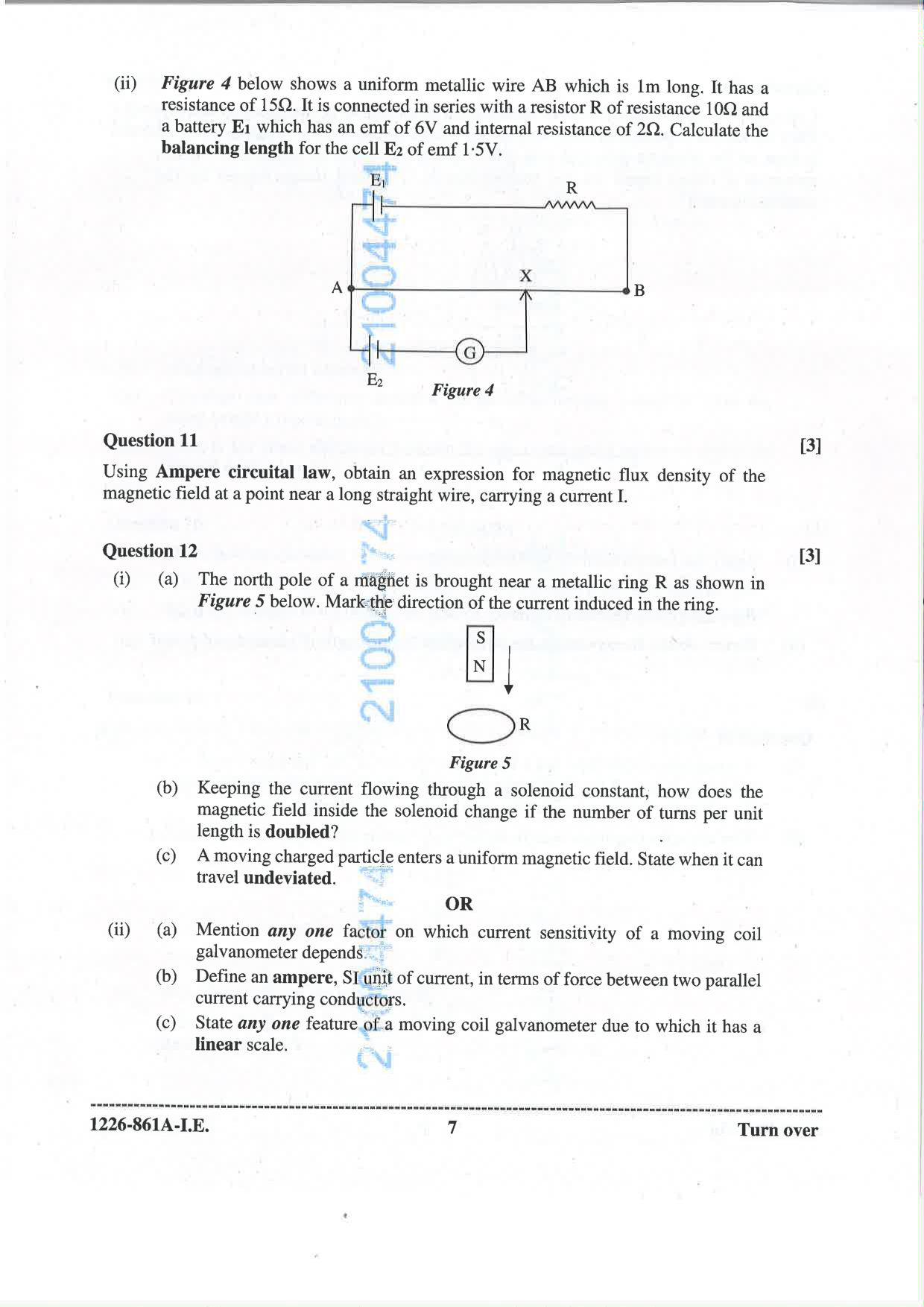
- Potentiometer
- Moving charges, Ampère's law and galvanometers
- Electromagnetic induction and alternating current
- Electromagnetic waves
- Lenses and optical instruments
- Interference and diffraction
- Photoelectric effect
- Atoms and nuclei
- Semiconductor diodes
Questions from this paper
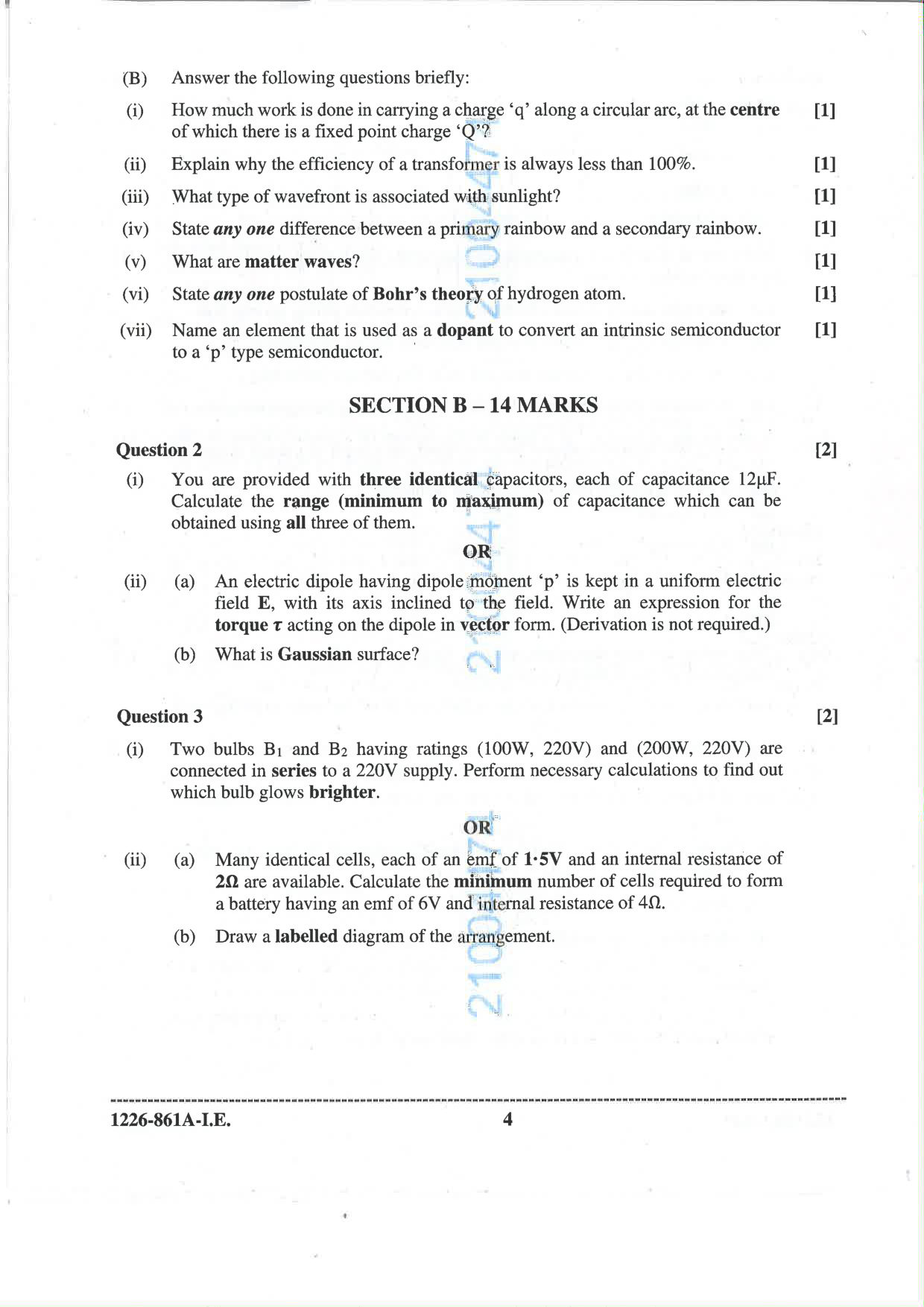
- You are provided with three identical capacitors, each of capacitance 12 μF. Calculate the range (minimum to maximum) of capacitance that can be obtained using all three of them.
- Two bulbs B₁ (100 W, 220 V) and B₂ (200 W, 220 V) are connected in series to a 220 V supply. Perform the necessary calculations to find out which bulb glows brighter.
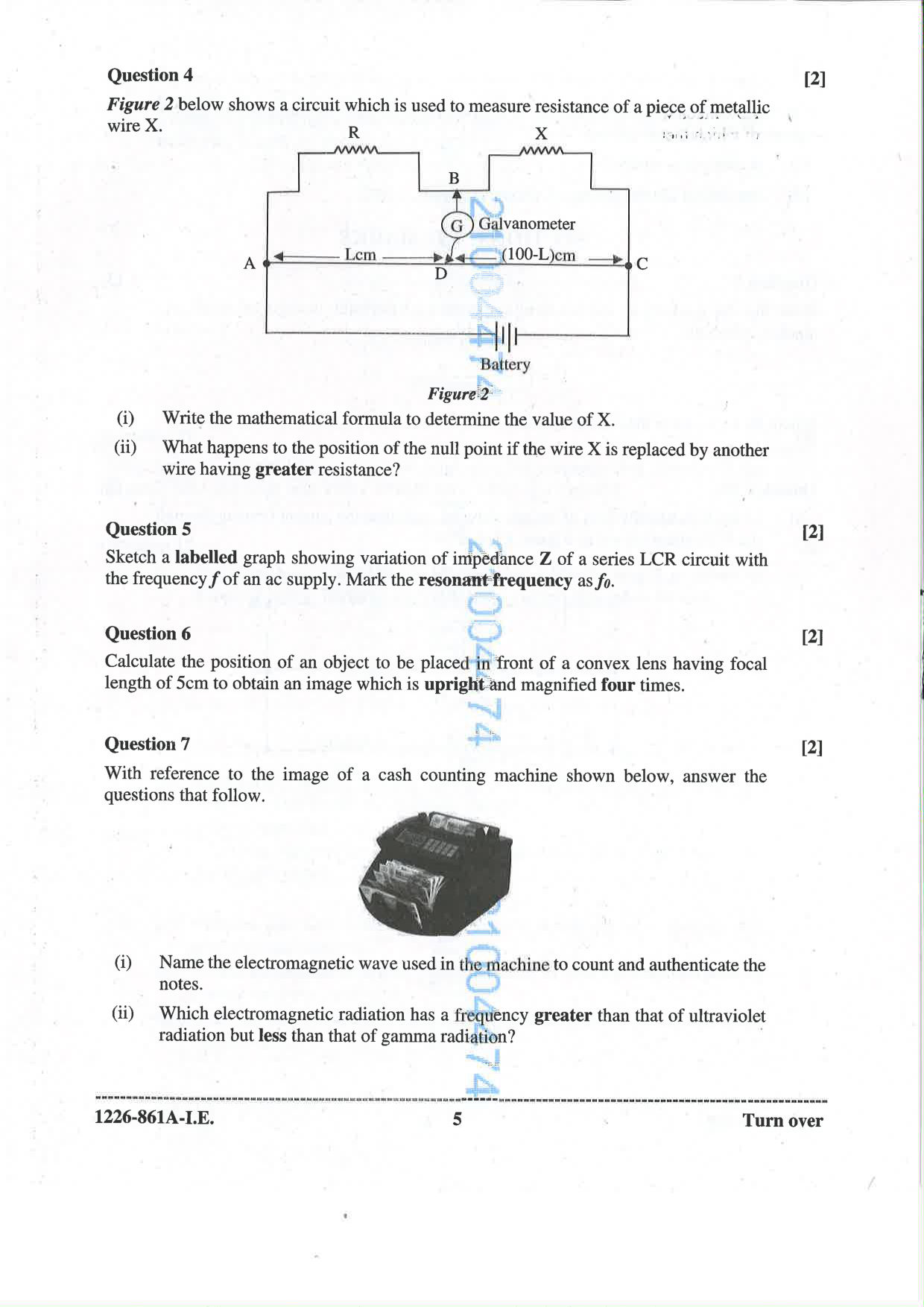
- Calculate the position of an object placed in front of a convex lens of focal length 5 cm to obtain an image that is upright and magnified four times.
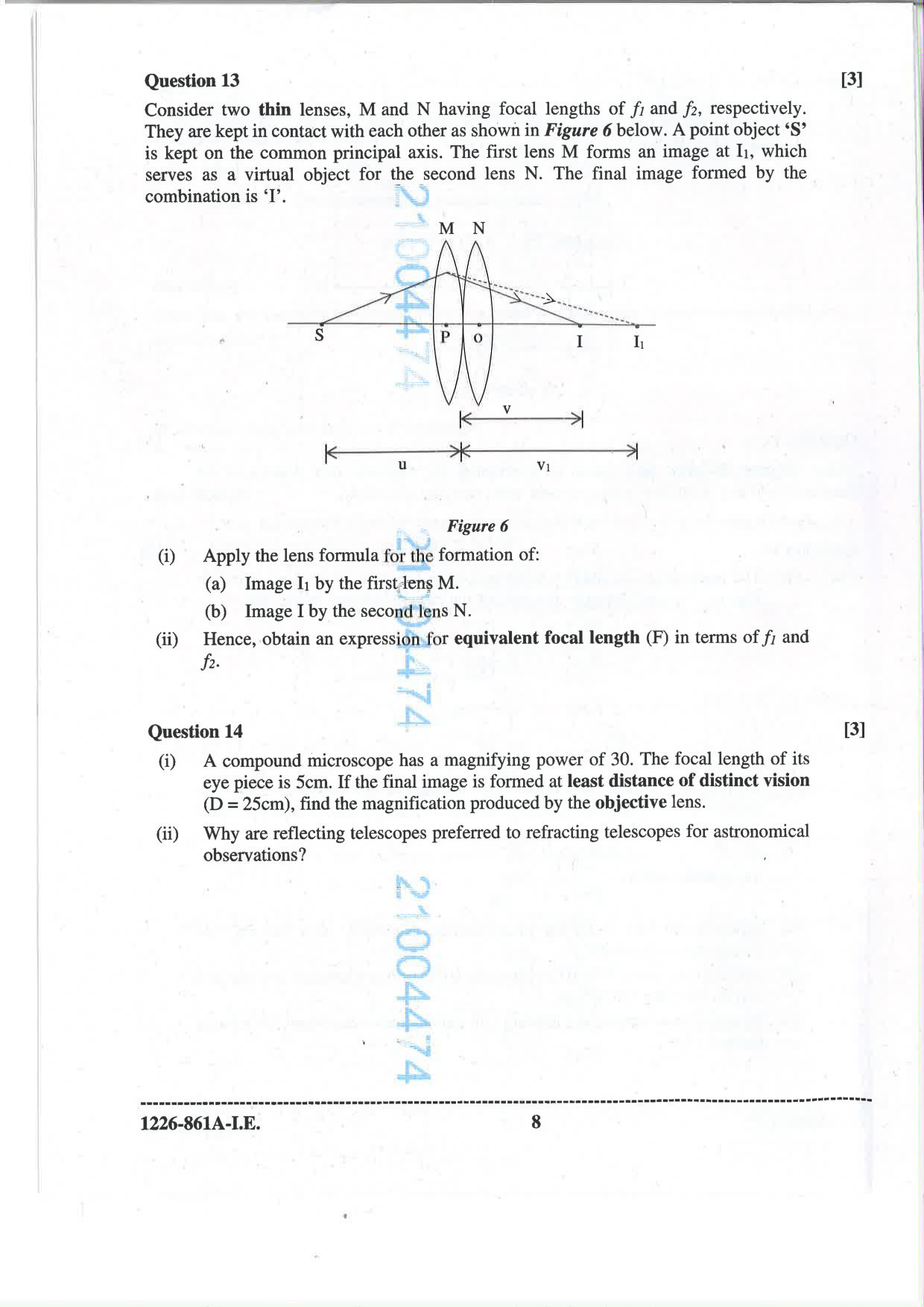
- A compound microscope has a magnifying power of 30 and its eyepiece has a focal length of 5 cm. If the final image is formed at the least distance of distinct vision (D = 25 cm), find the magnification produced by the objective lens.
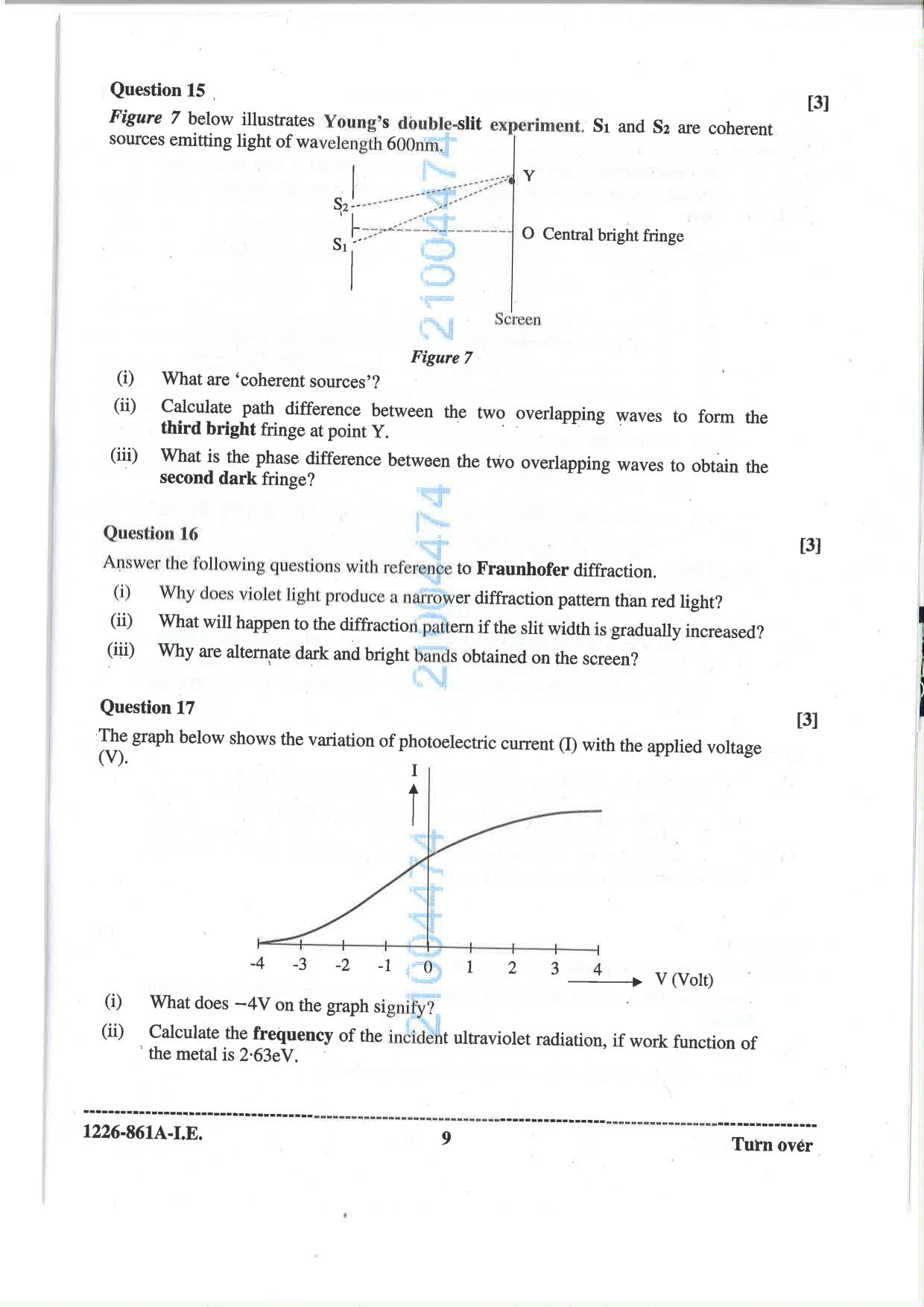
- Why does violet light produce a narrower diffraction pattern than red light in a Fraunhofer single slit experiment?
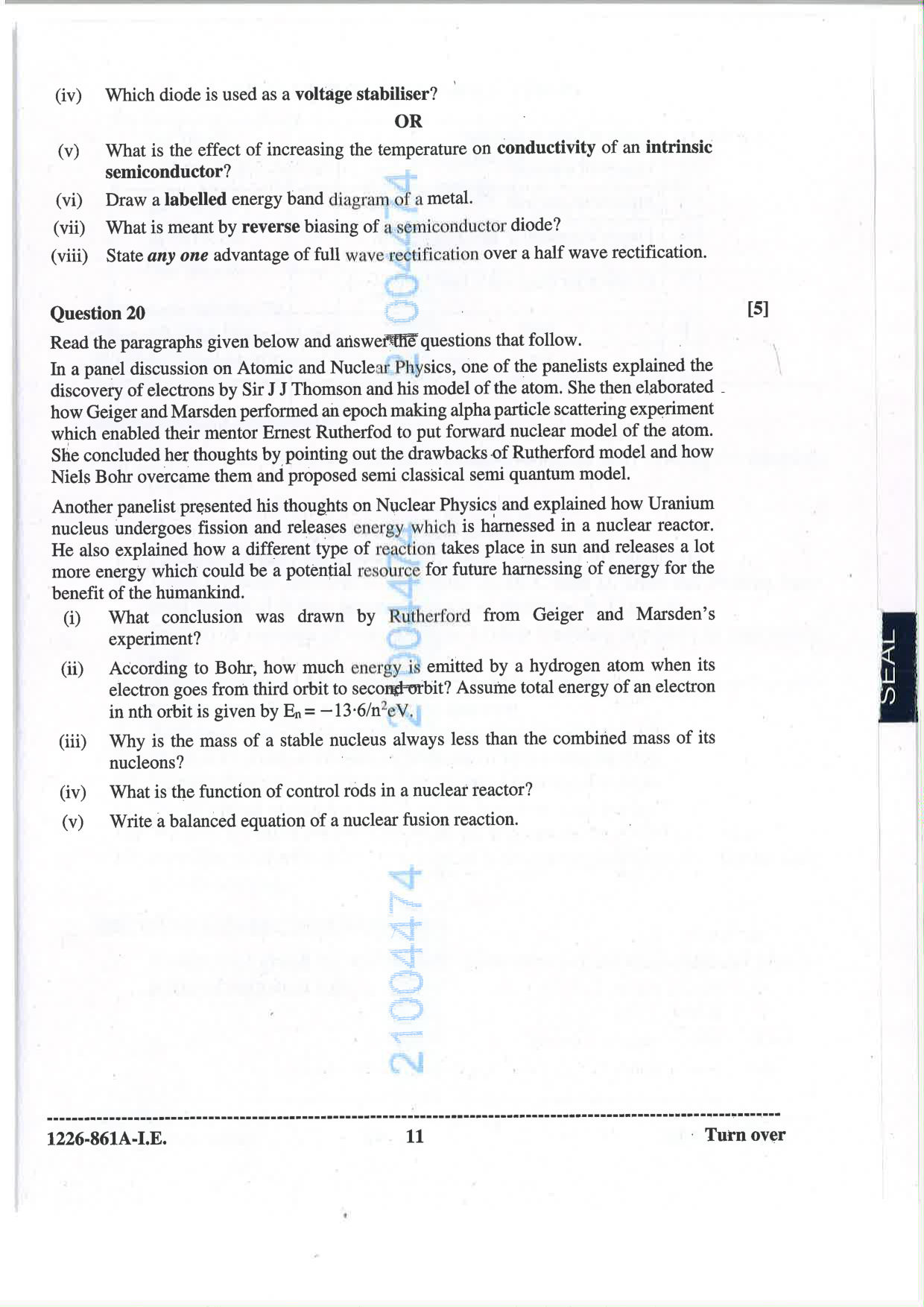
- According to Bohr, how much energy is emitted by a hydrogen atom when its electron goes from the third orbit to the second, if the total energy in the nth orbit is Eₙ = −13.6/n² eV?
Free email alert
Get the 2027 ISC Class 12 papers first
One email when the new ISC Class 12 Physics question papers are published here. No spam, unsubscribe any time.
What's next
Engineering, medicine, or abroad after ISC?
See what a degree actually costs before you shortlist colleges.
See the cost breakdown