CBSE 2026 Science Question Paper for Class 10

CBSE
Science2026CBSE Class 10 Science 2026, code 31/5/2: 39 questions for 80 marks in 3 hours, split into Biology, Chemistry and Physics.
Official question paper published by CBSE.
About this paper
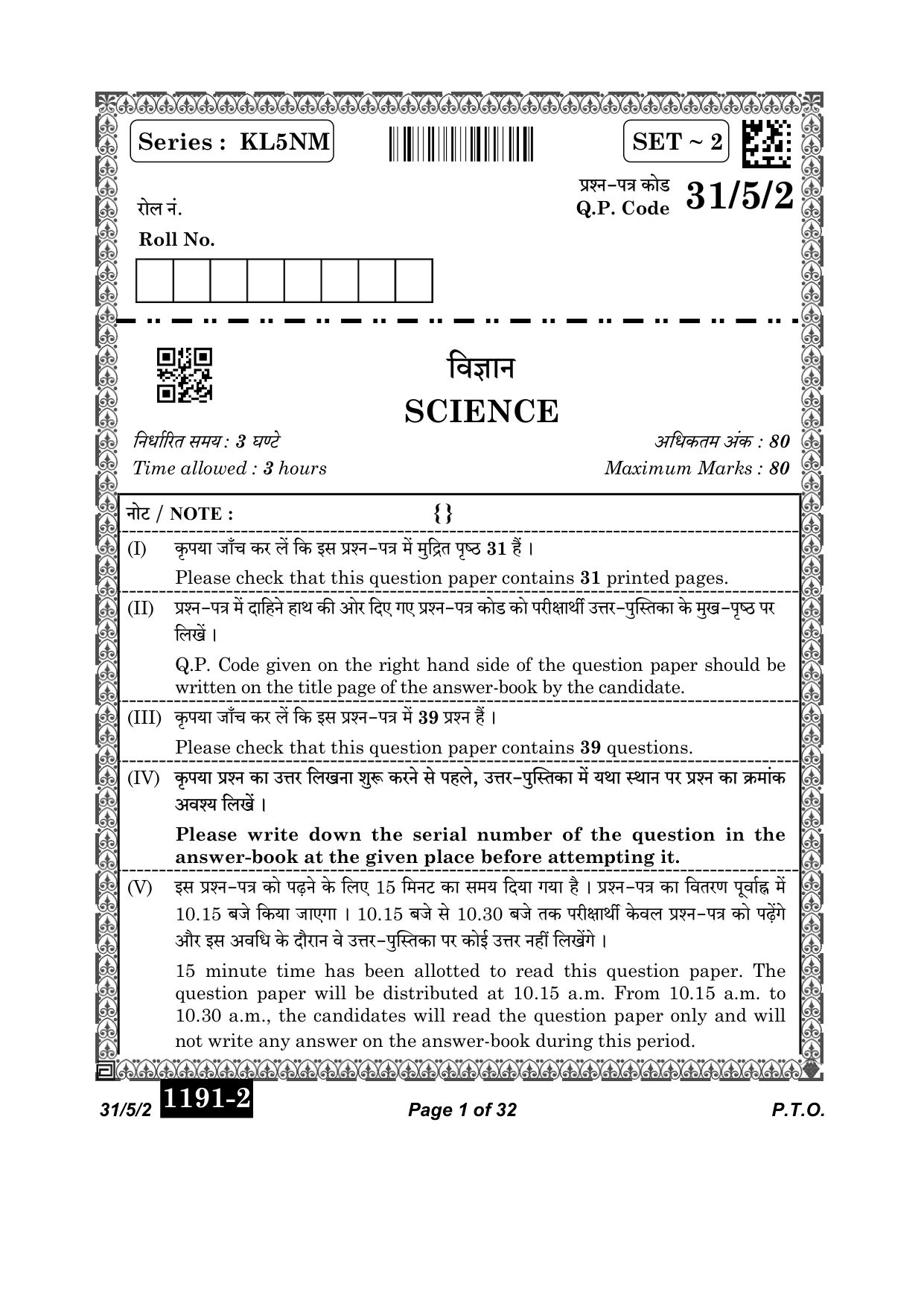
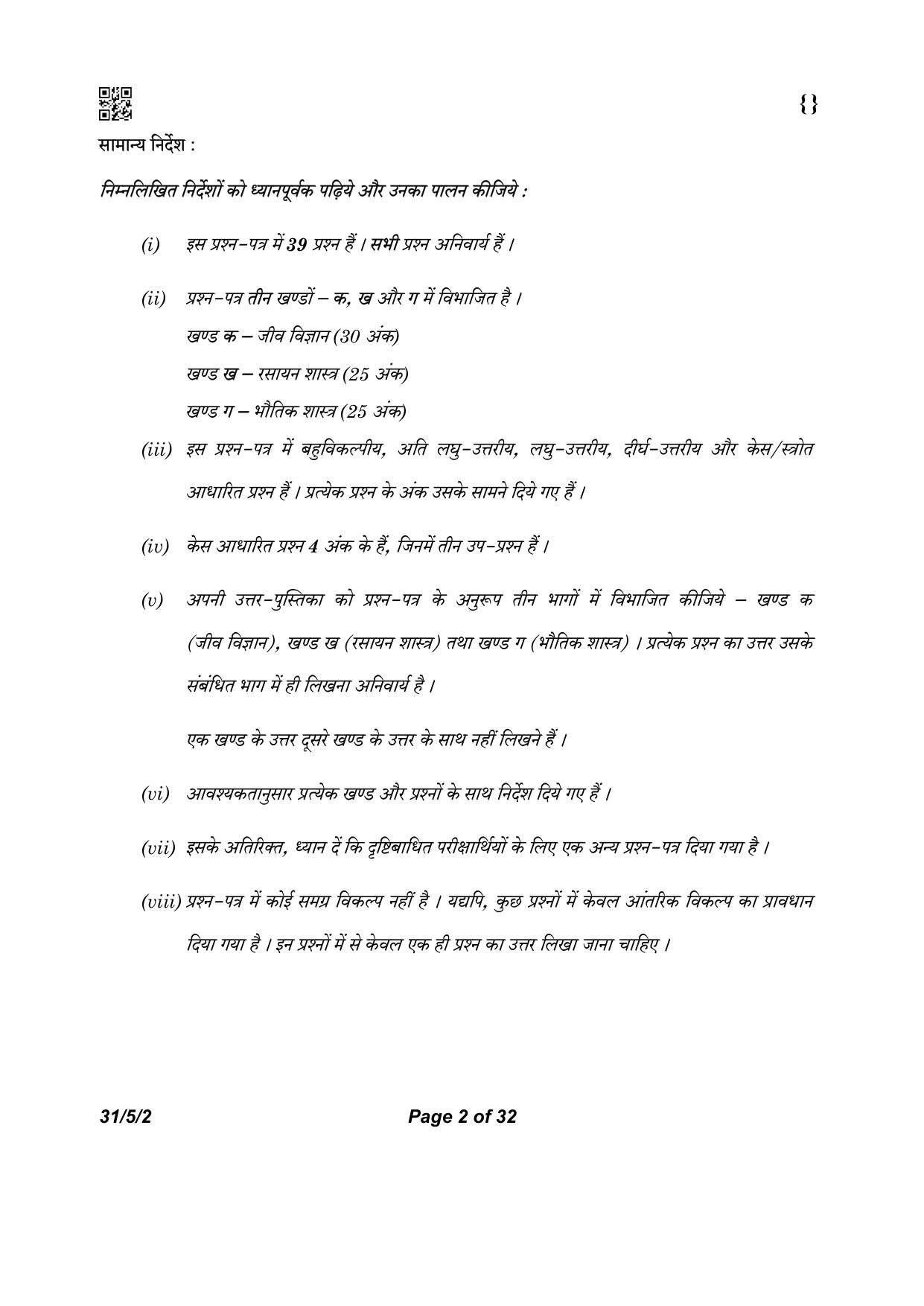
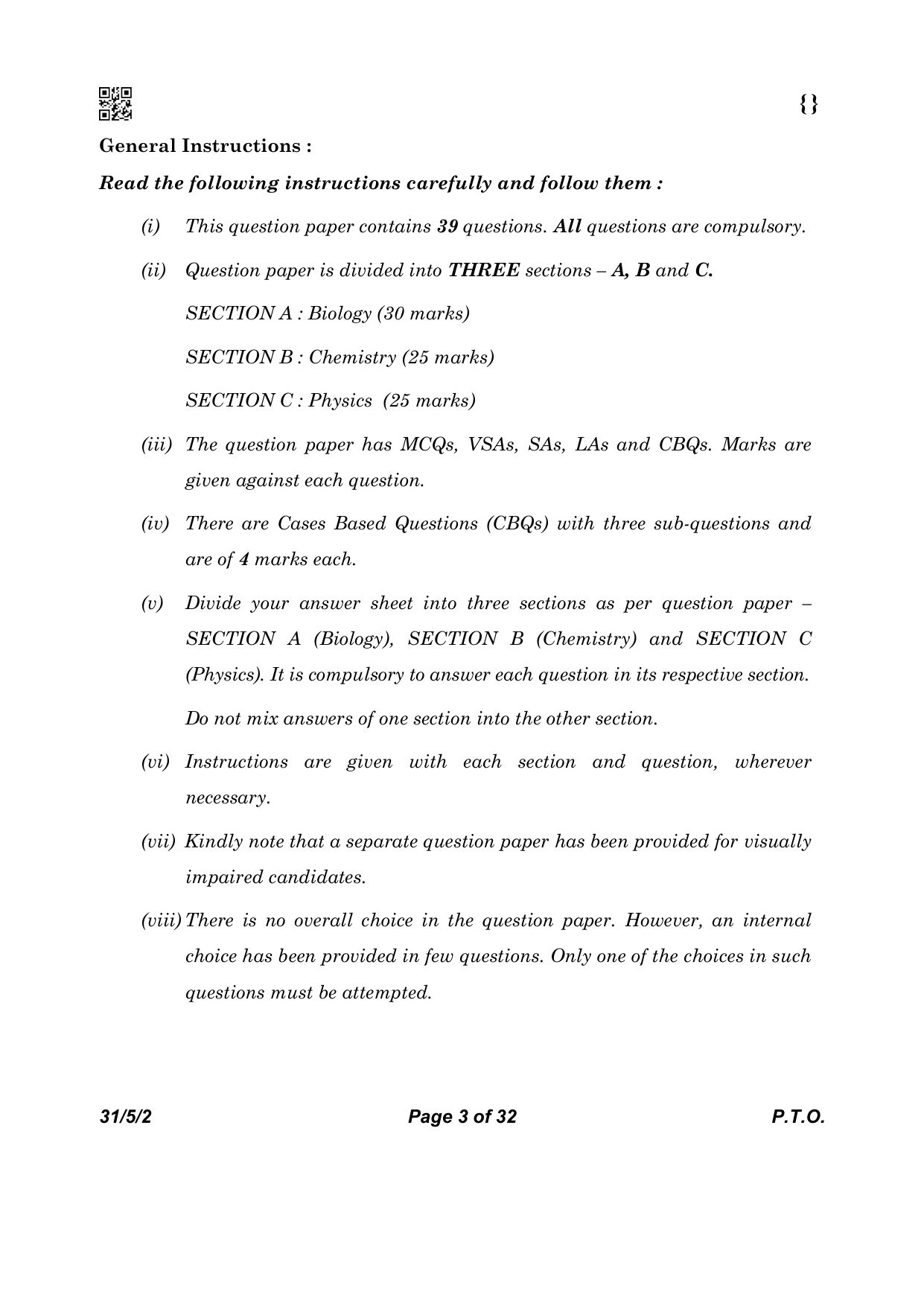
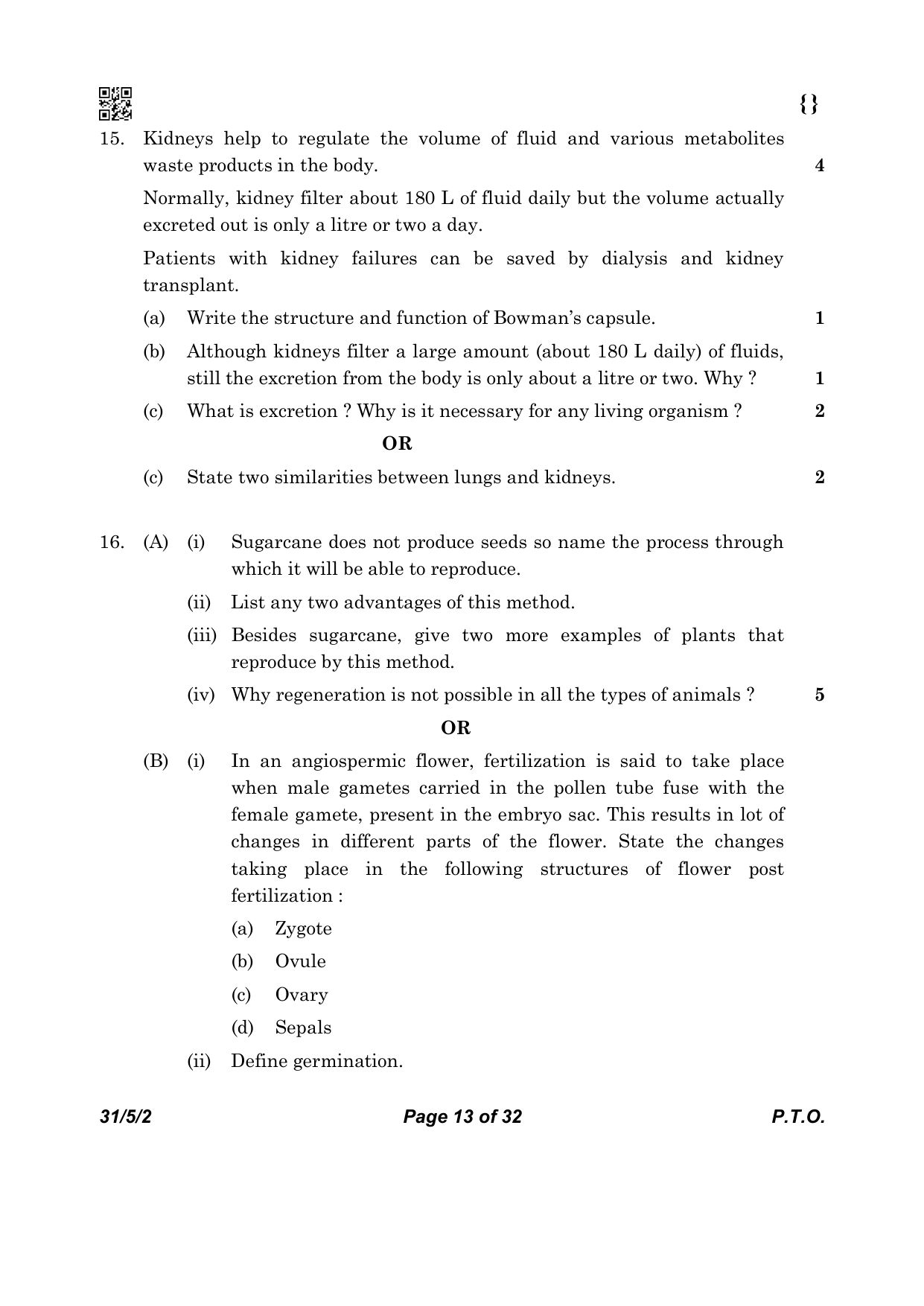
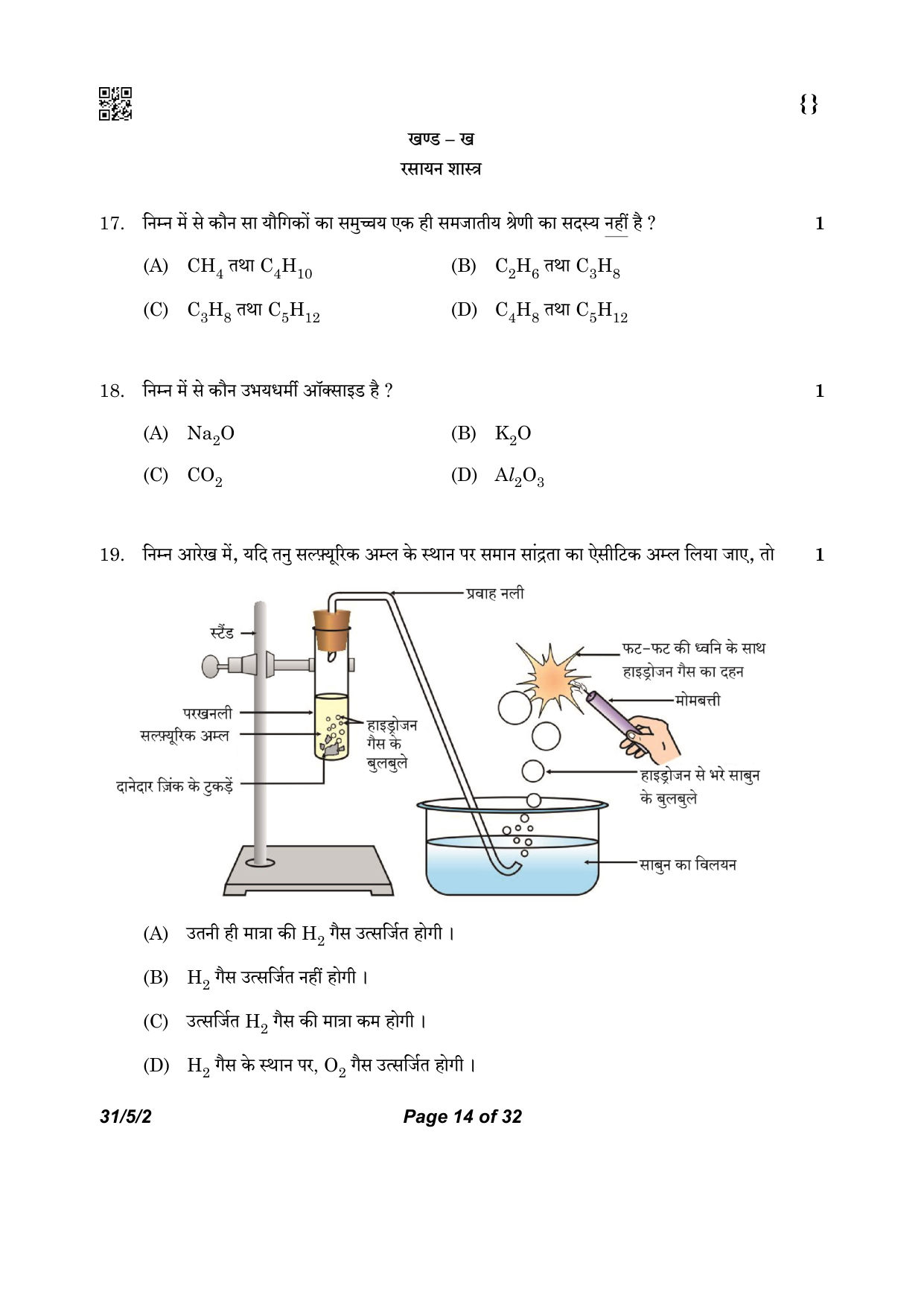
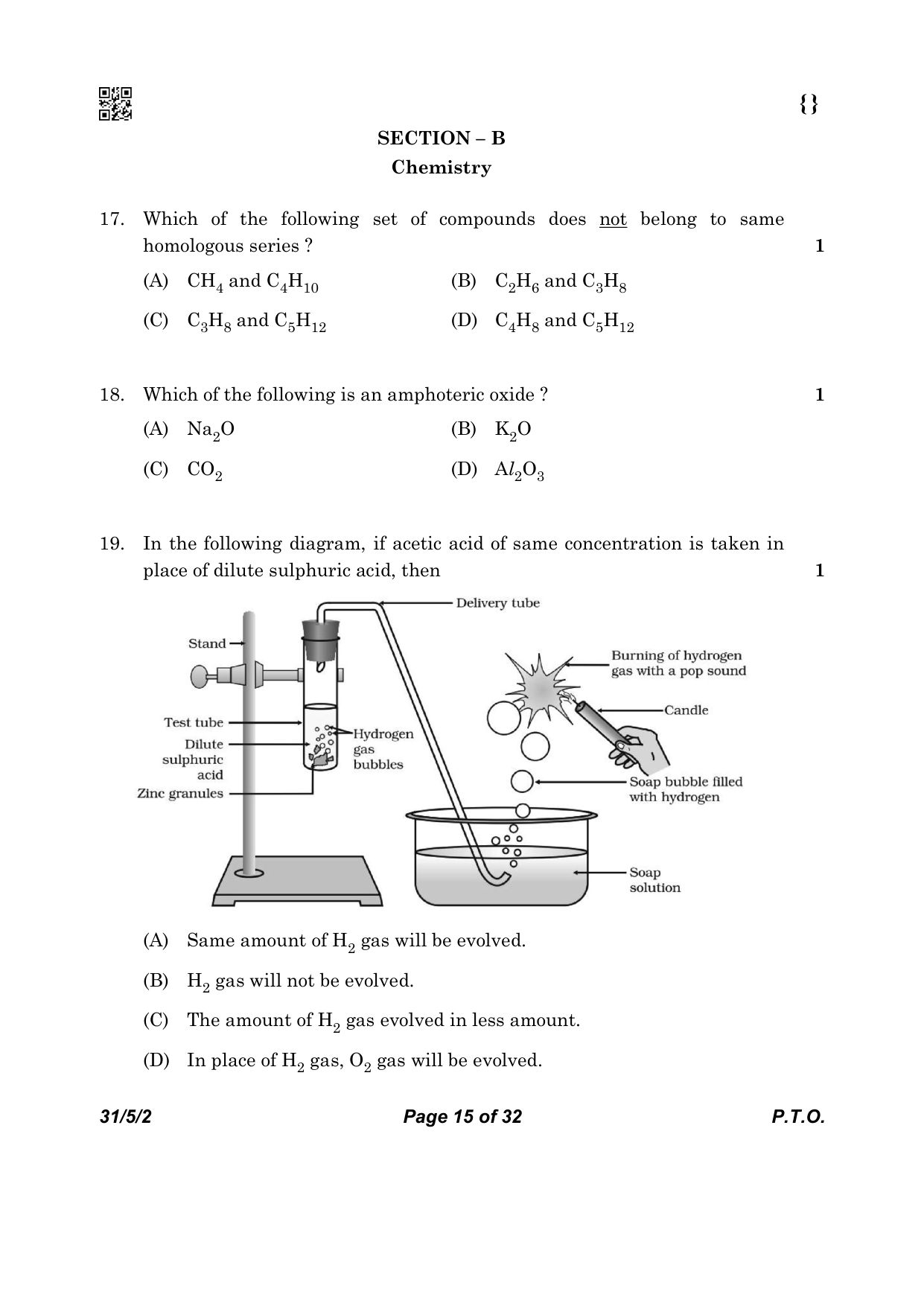
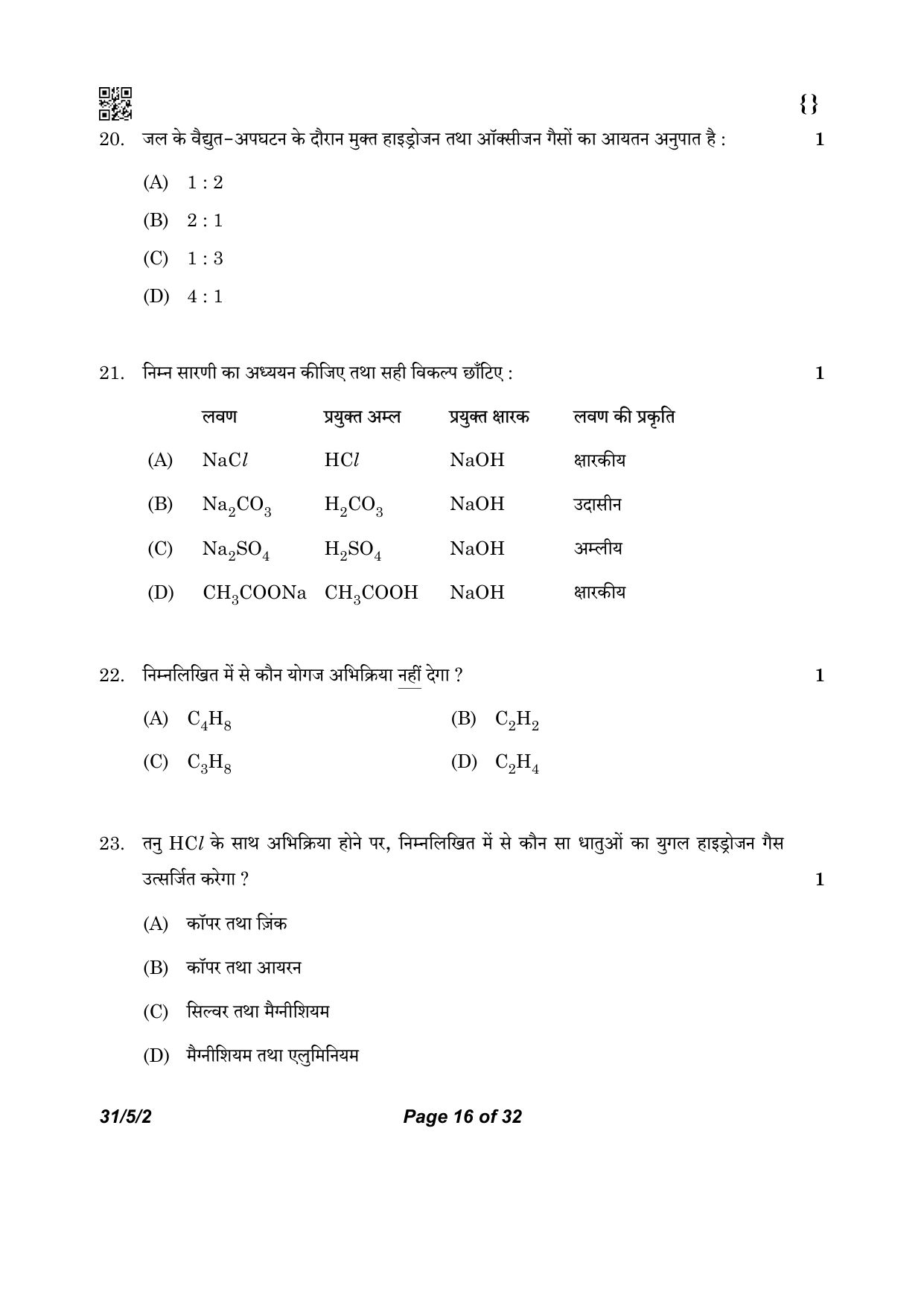
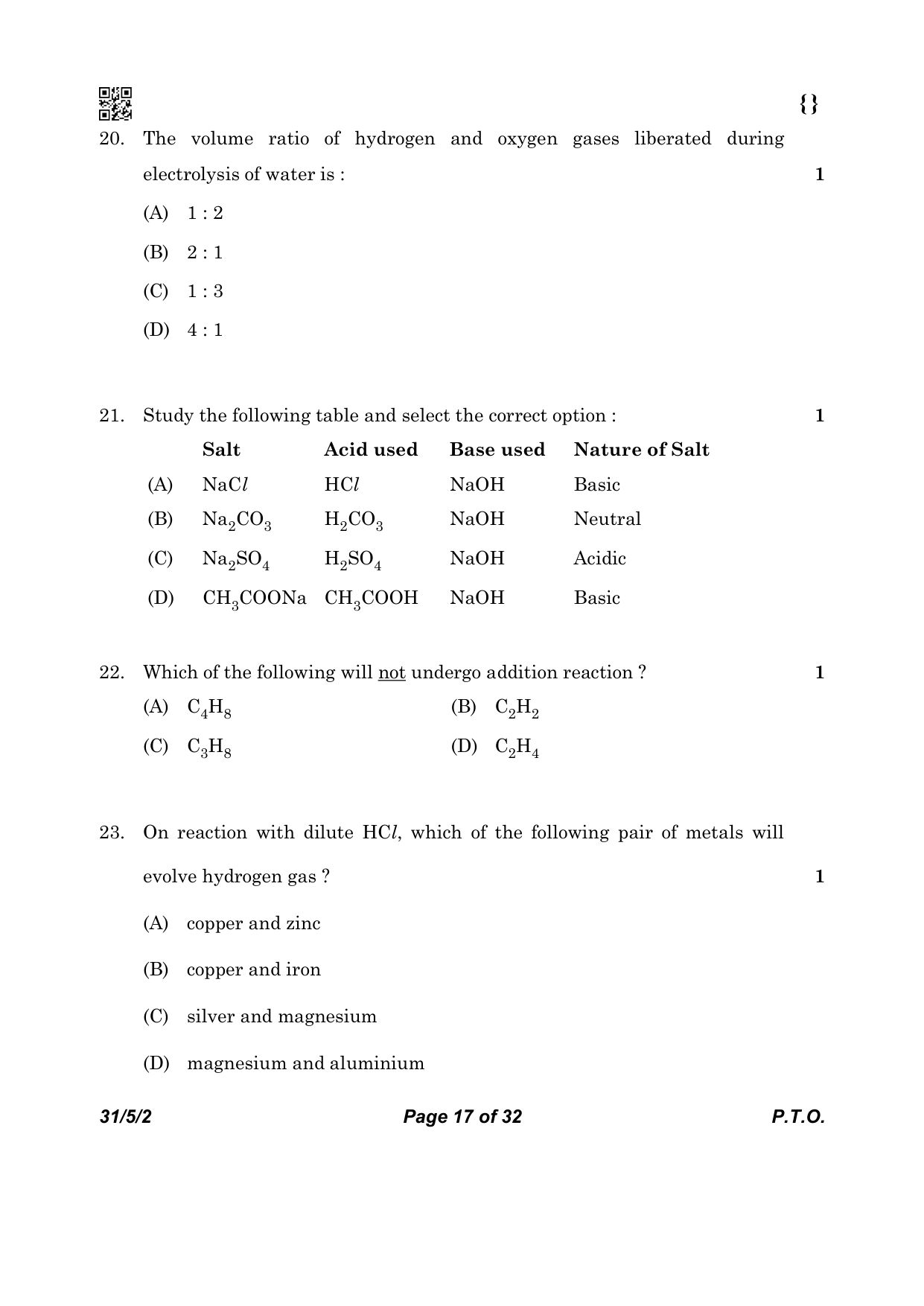
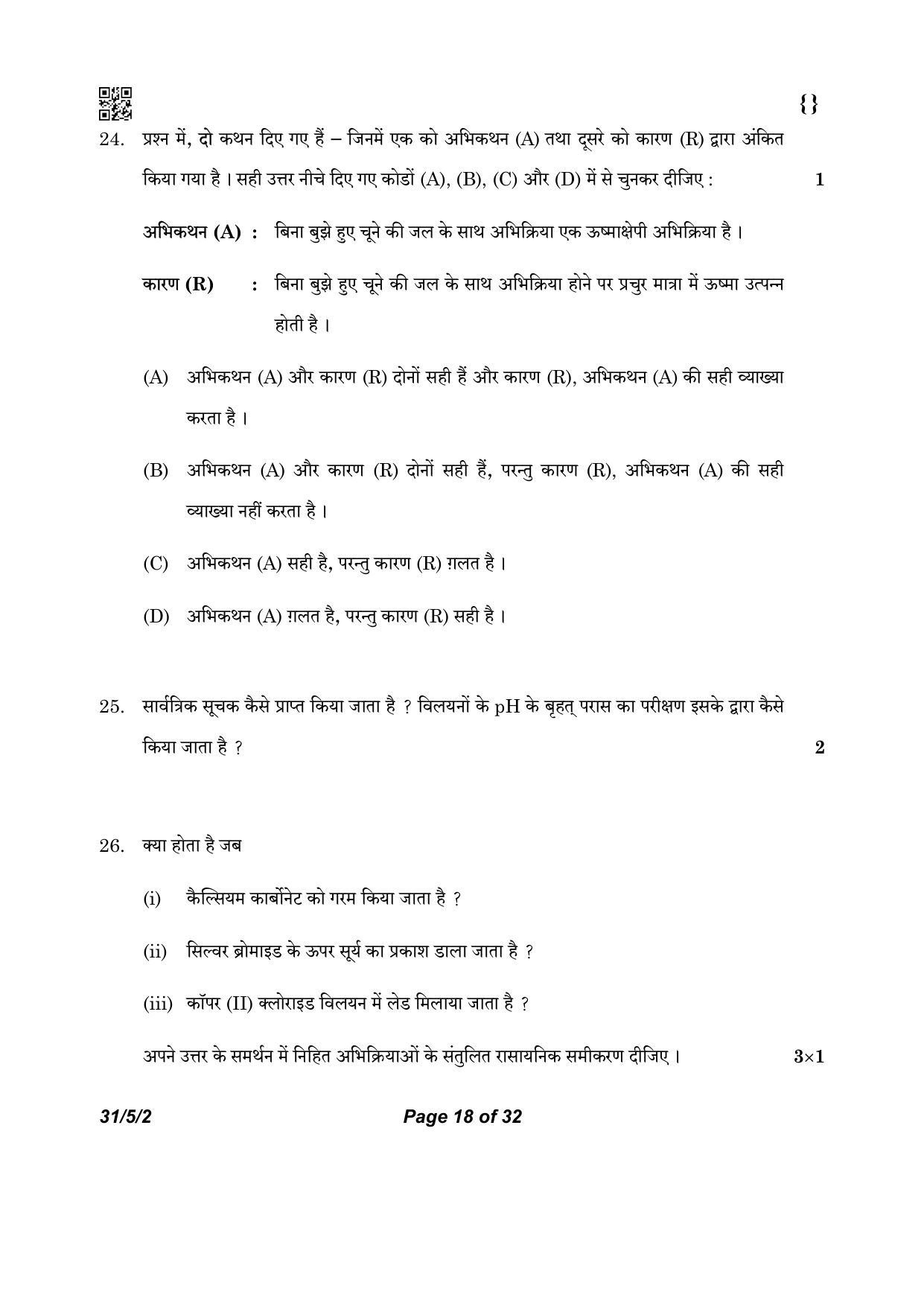
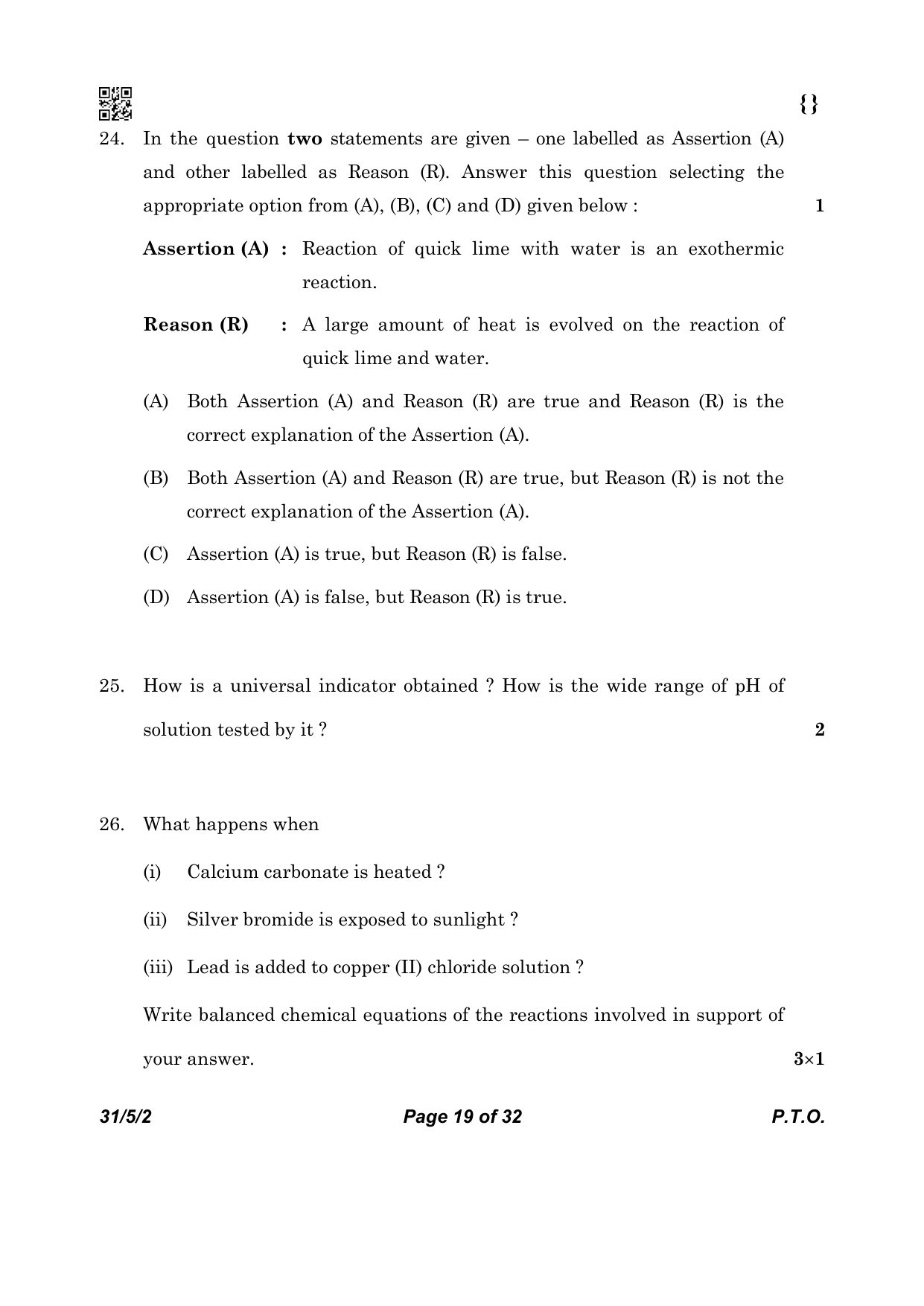
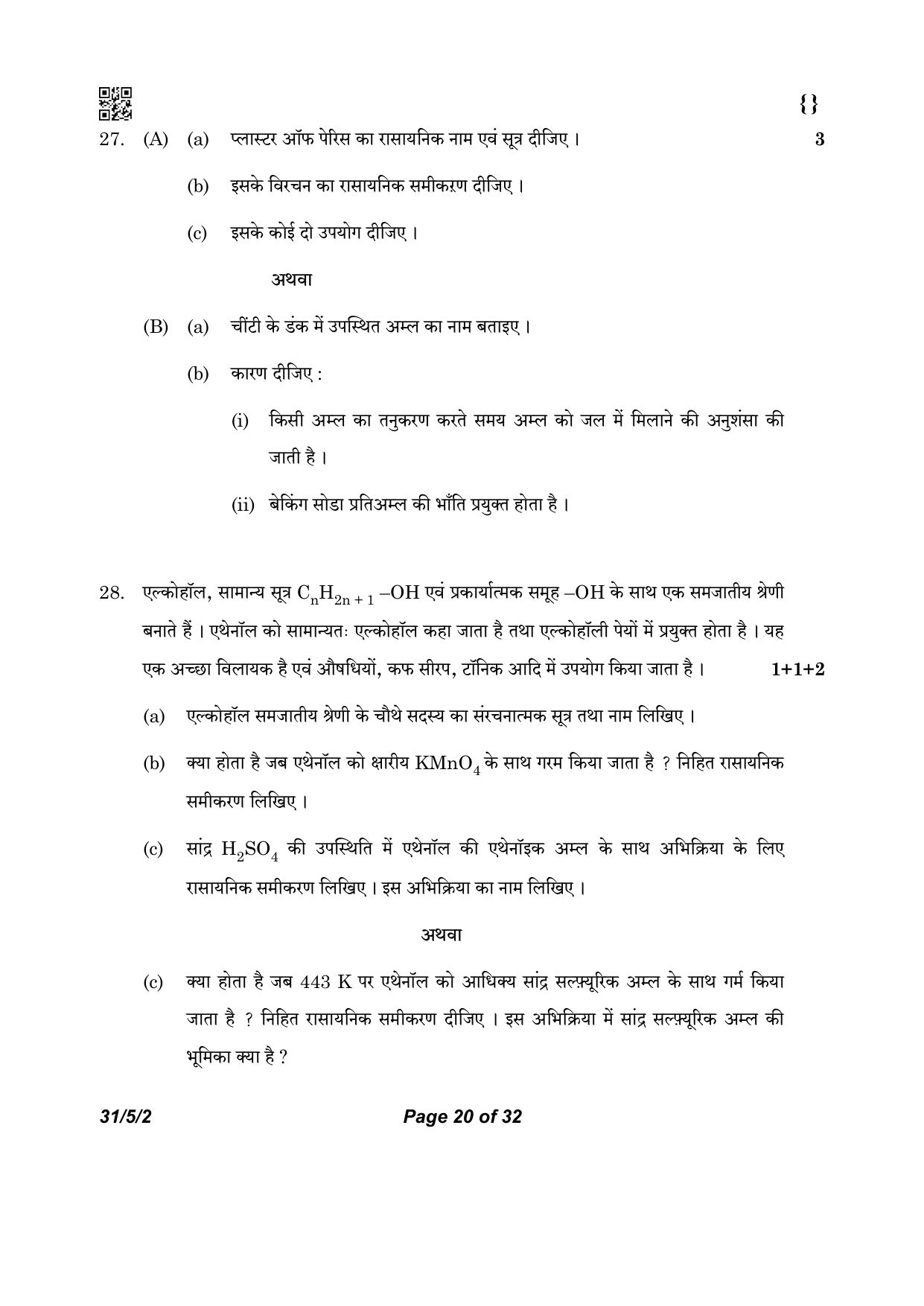
This is the CBSE Class 10 Science board paper from 2026, Q.P. code 31/5/2 (Series KL5NM, Set 2), printed in Hindi and English. It carries 80 marks over three hours and has 39 compulsory questions in three sections that must be answered separately: Biology for 30 marks, Chemistry for 25 and Physics for 25. The paper mixes multiple-choice, very short, short and long answers with assertion-reason items and case-based questions of 4 marks, each with three sub-parts. There is no overall choice. A separate paper is provided for visually impaired candidates. This copy has questions only.
- Exam
- CBSE Class 10
- Subject
- Science
- Year
- 2026
- Paper code
- 31/5/2
- Maximum marks
- 80
- Time allowed
- 3 hours
- Questions
- 39
- Pages
- 32
- Answers included
- No, questions only
Paper pattern
Section A — Biology
30 marksQuestions 1–16, including one-mark MCQs, assertion-reason, a leaf diagram and a case on the kidneys
Section B — Chemistry
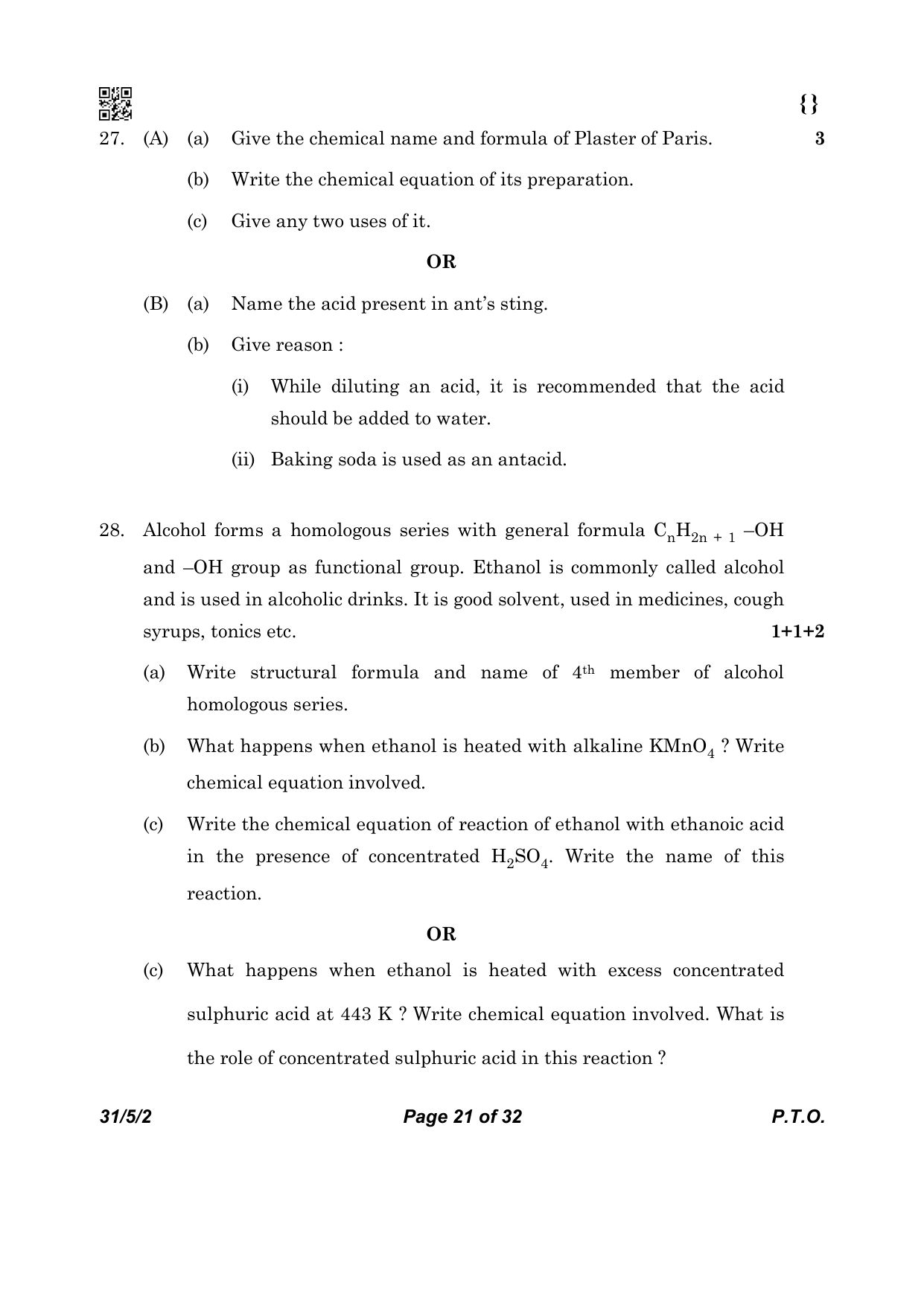
25 marksQuestions 17–29, from one-mark items on homologous series and acids to a longer question on alcohols
Section C — Physics
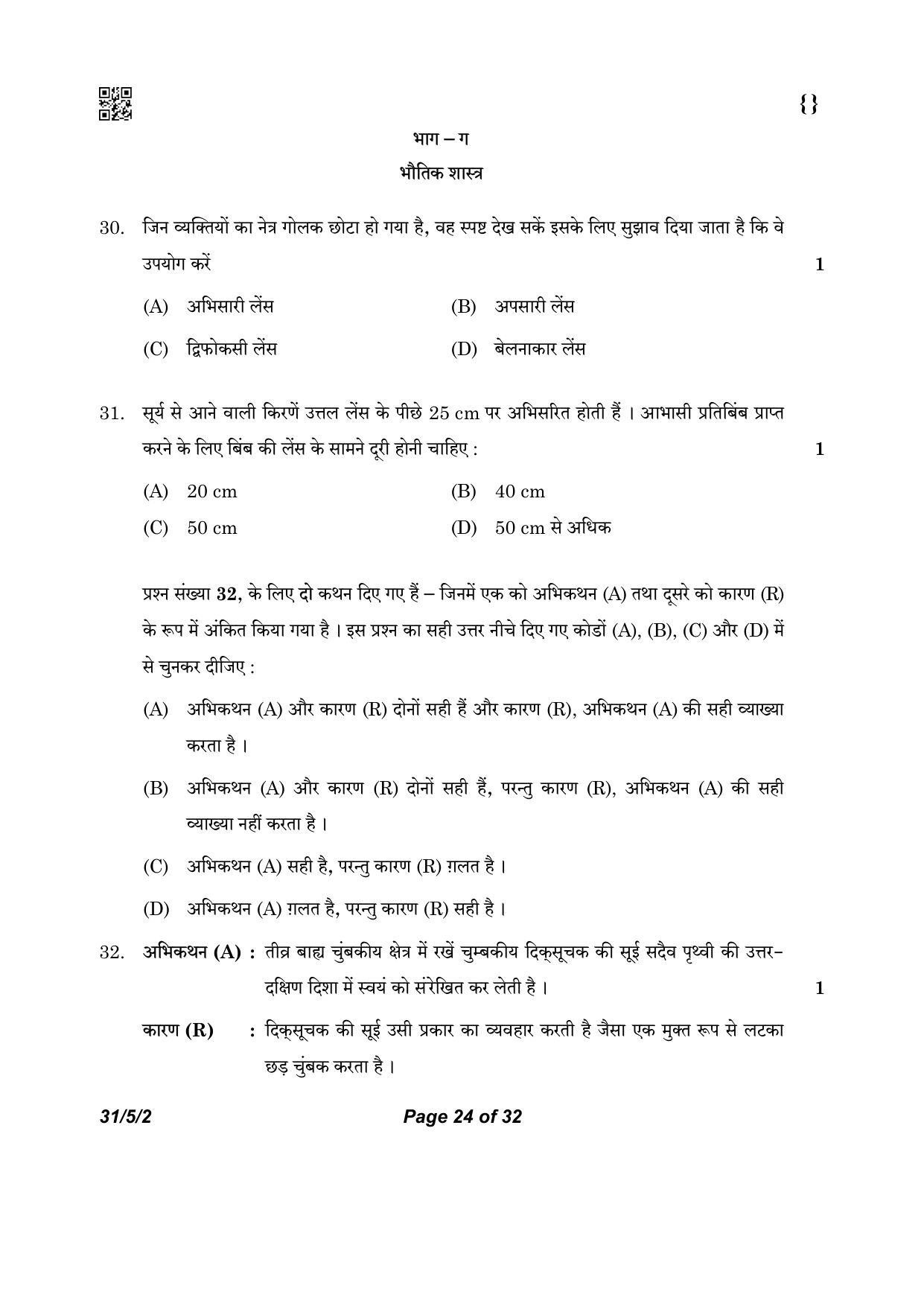
25 marksQuestions 30–39, including the eye, lenses, a compass assertion and a lens numerical
Topics covered
- How do organisms reproduce
- Life processes
- Our environment
- Carbon and its compounds
- Acids, bases and salts
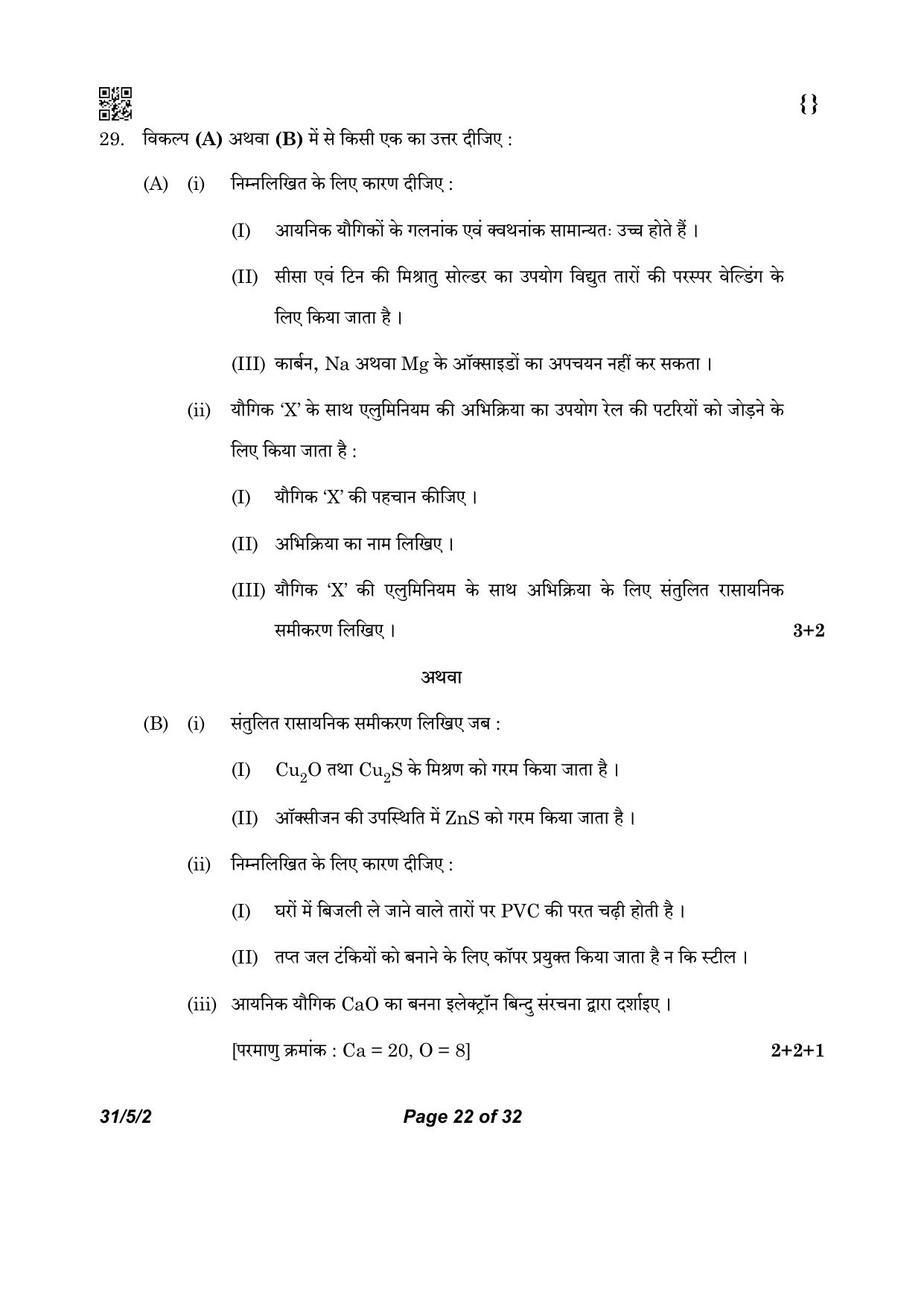
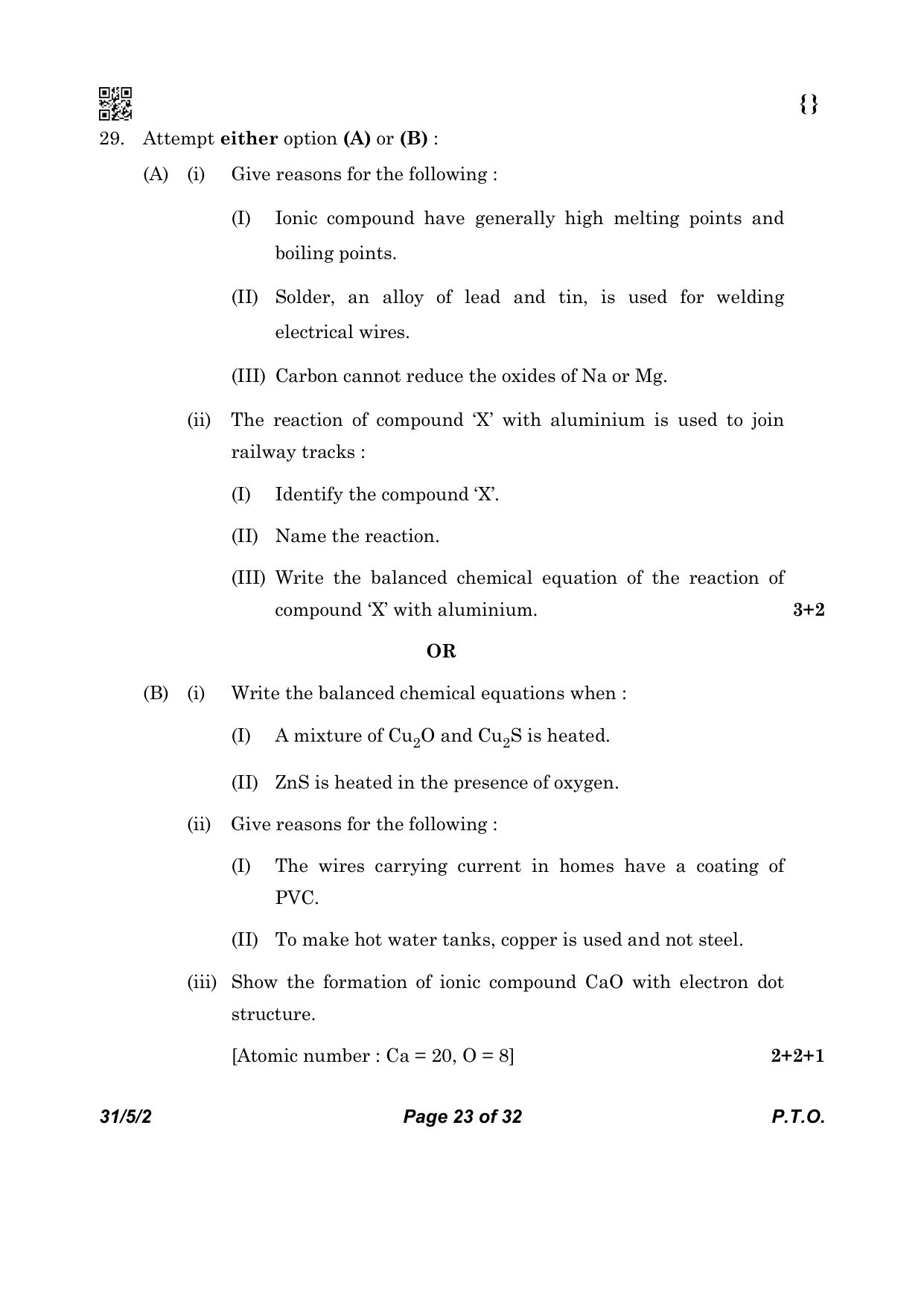
- Metals and non-metals
- The human eye
- Light: reflection and refraction
- Magnetic effects of current
Questions from this paper
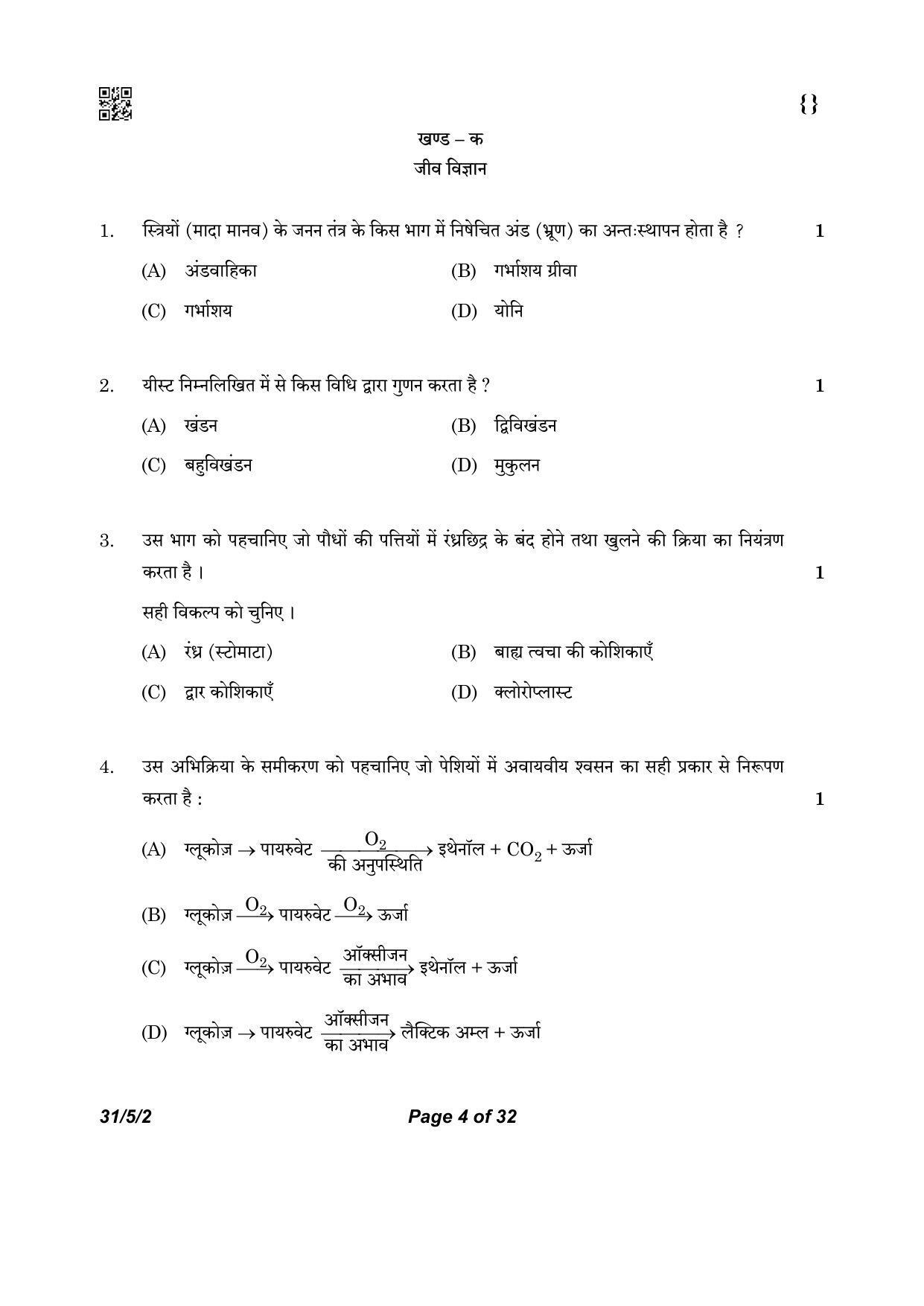
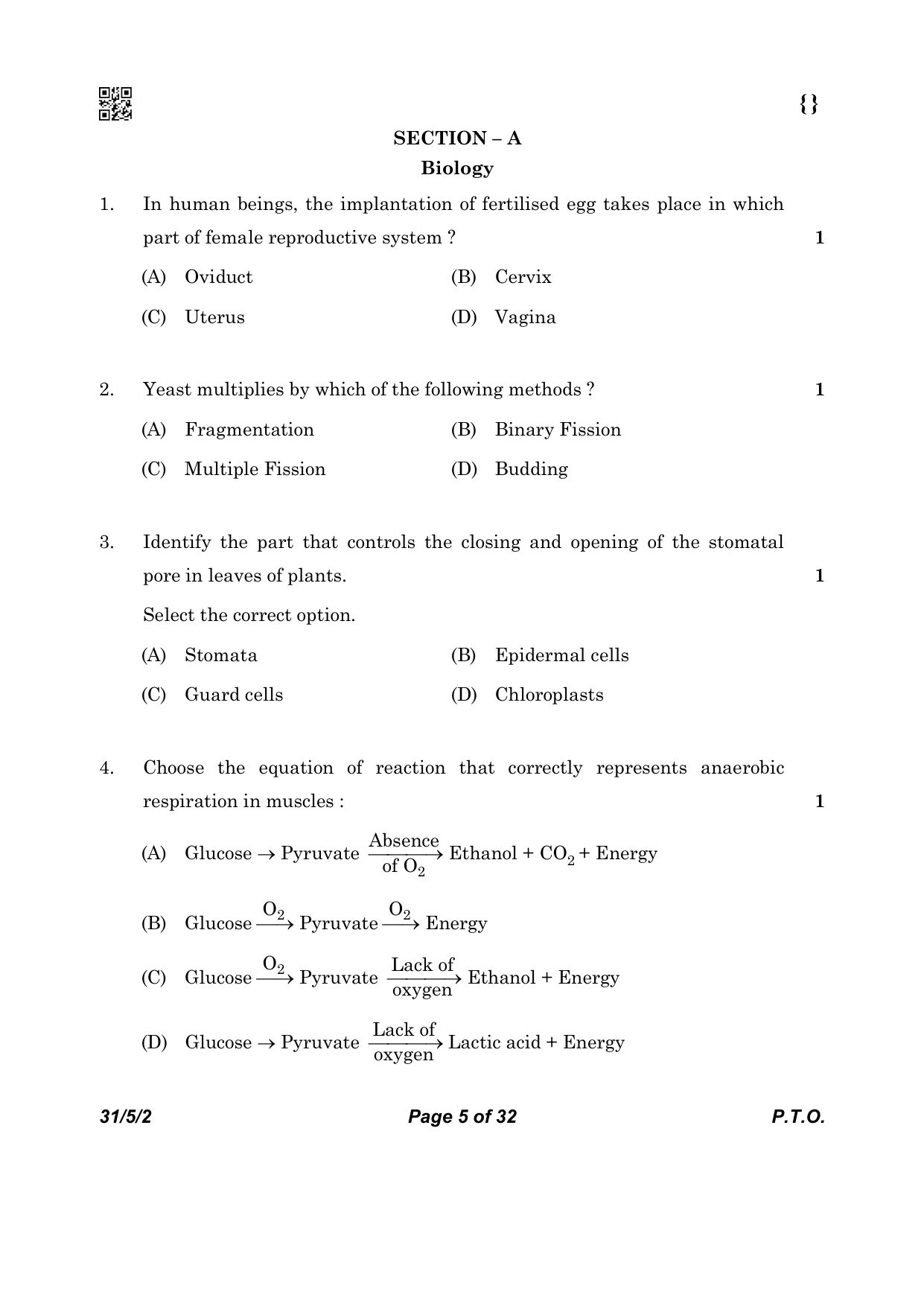
- In human beings, the implantation of a fertilised egg takes place in the oviduct, cervix, uterus or vagina.
- Yeast multiplies by fragmentation, binary fission, multiple fission or budding.
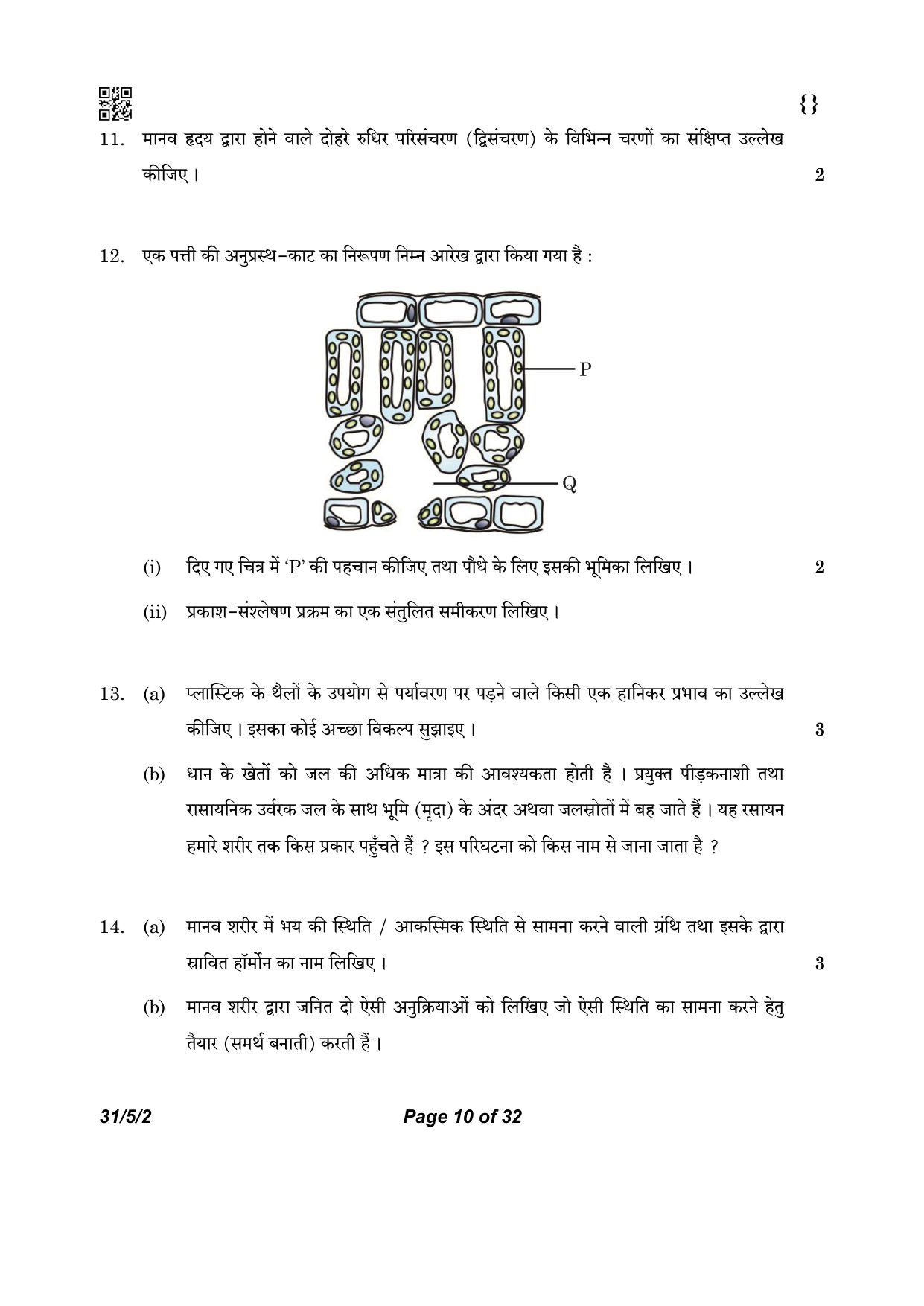
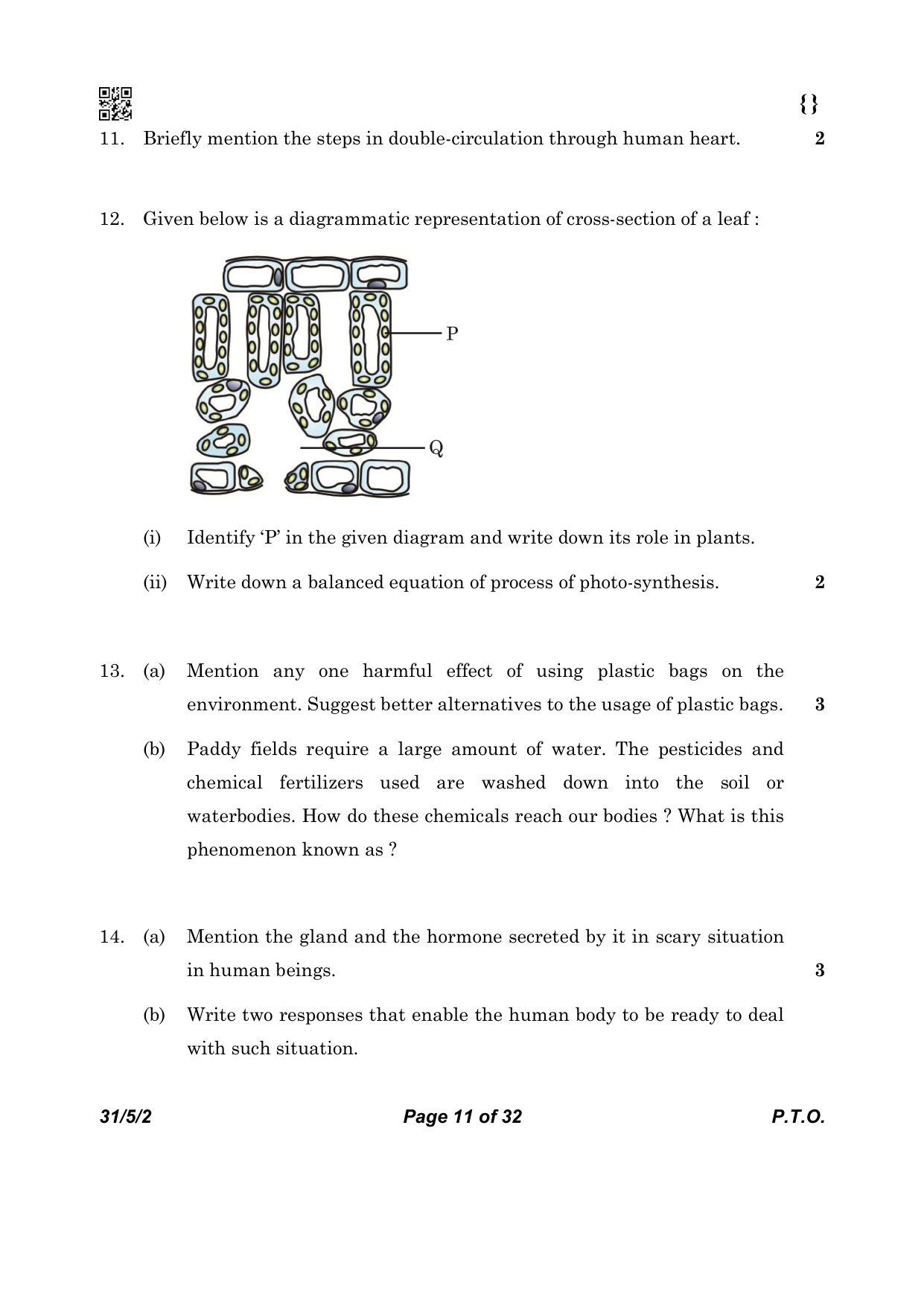
- Identify the part that controls the closing and opening of the stomatal pore in leaves.
- Which set does not belong to the same homologous series: CH₄ and C₄H₁₀, C₂H₆ and C₃H₈, C₃H₈ and C₅H₁₂, or C₄H₈ and C₅H₁₂?
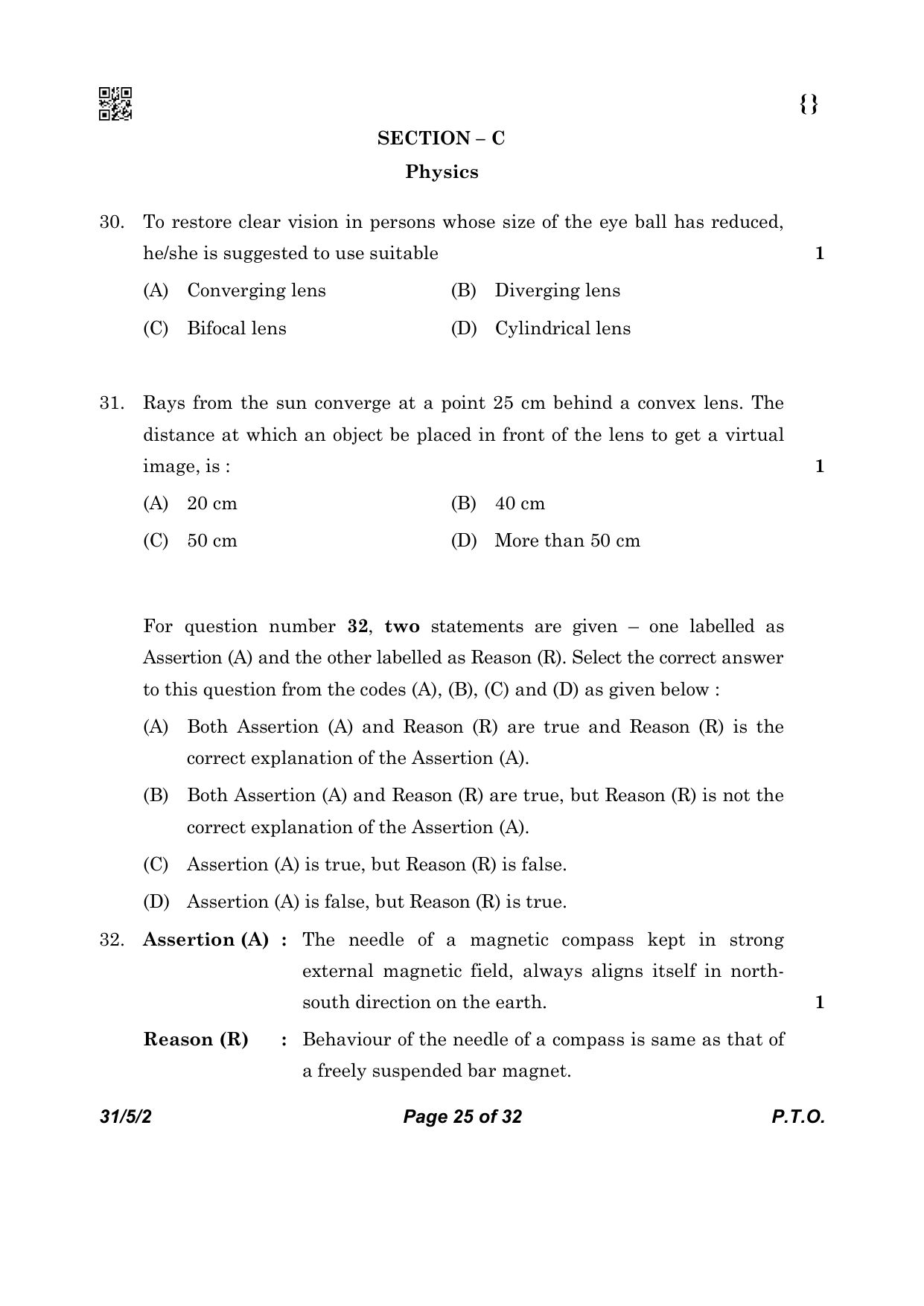
- To restore clear vision when the eyeball has become smaller, a person is advised to use a converging, diverging, bifocal or cylindrical lens.
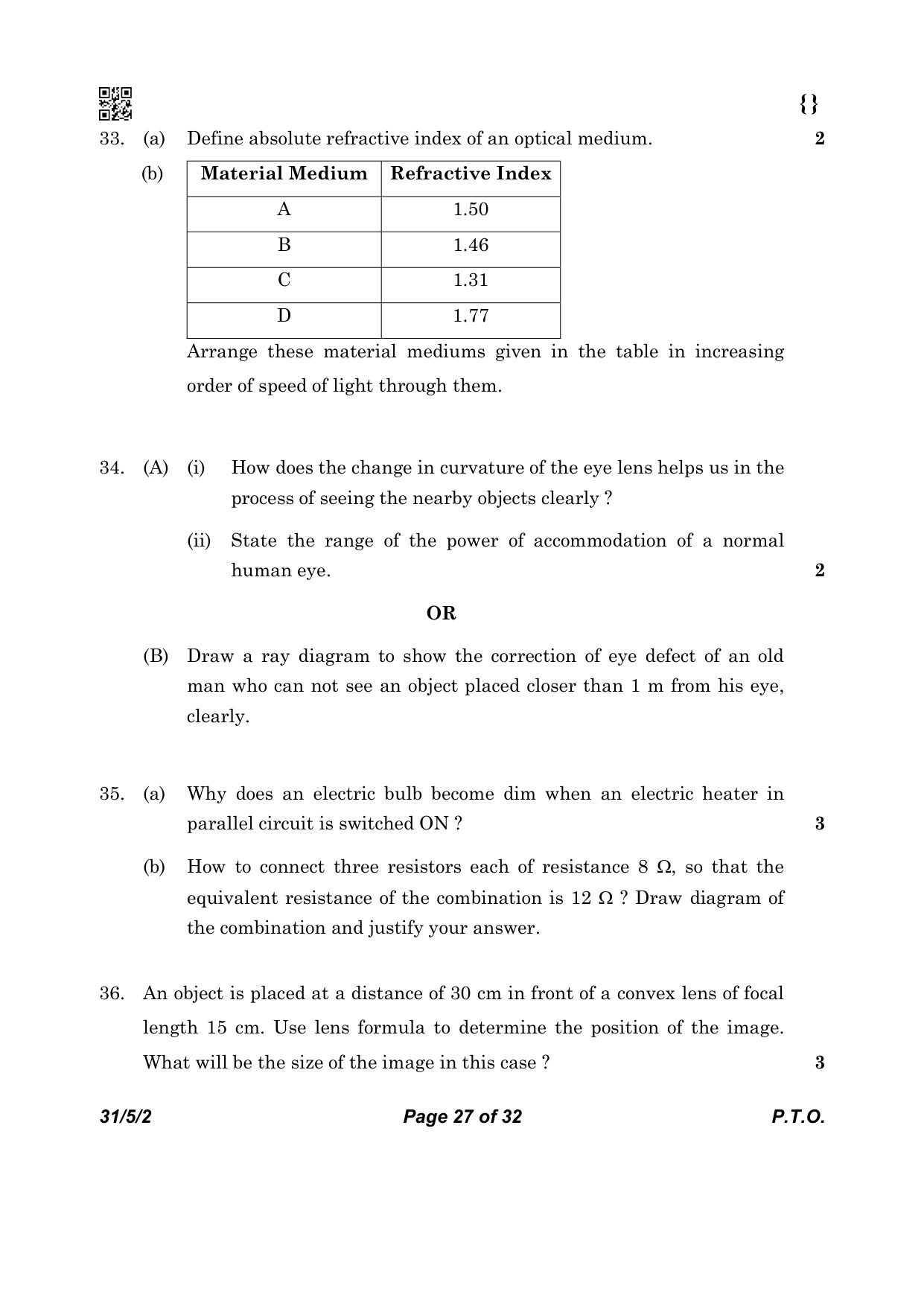
- An object is placed at a distance of 30 cm in front of a convex lens of a given focal length.
Free email alert
Get the 2027 CBSE Class 10 papers first
One email when the new CBSE Class 10 Science question papers are published here. No spam, unsubscribe any time.
What's next
Class 10 done next year?
A number of scholarships for Class 11–12 depend on your Class 10 marks.
Check eligibility