CBSE Class 10 Science Solved Question Paper 2020

CBSE
Science2020CBSE Class 10 Science 2020 board paper, code 31/5/1: 30 questions for 80 marks in 3 hours, with MCQs, case-based and assertion-reason items. Questions only.
About this paper
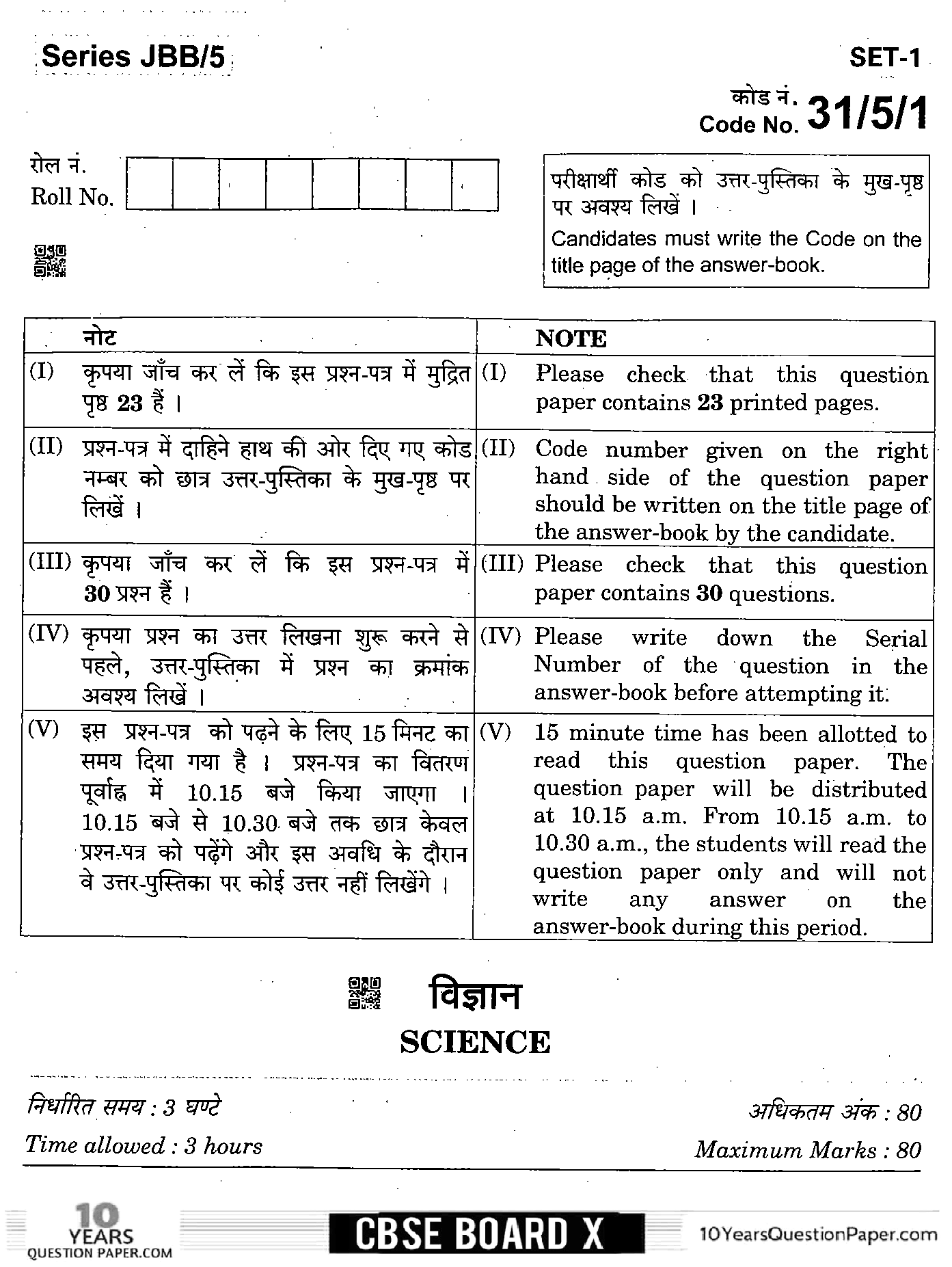
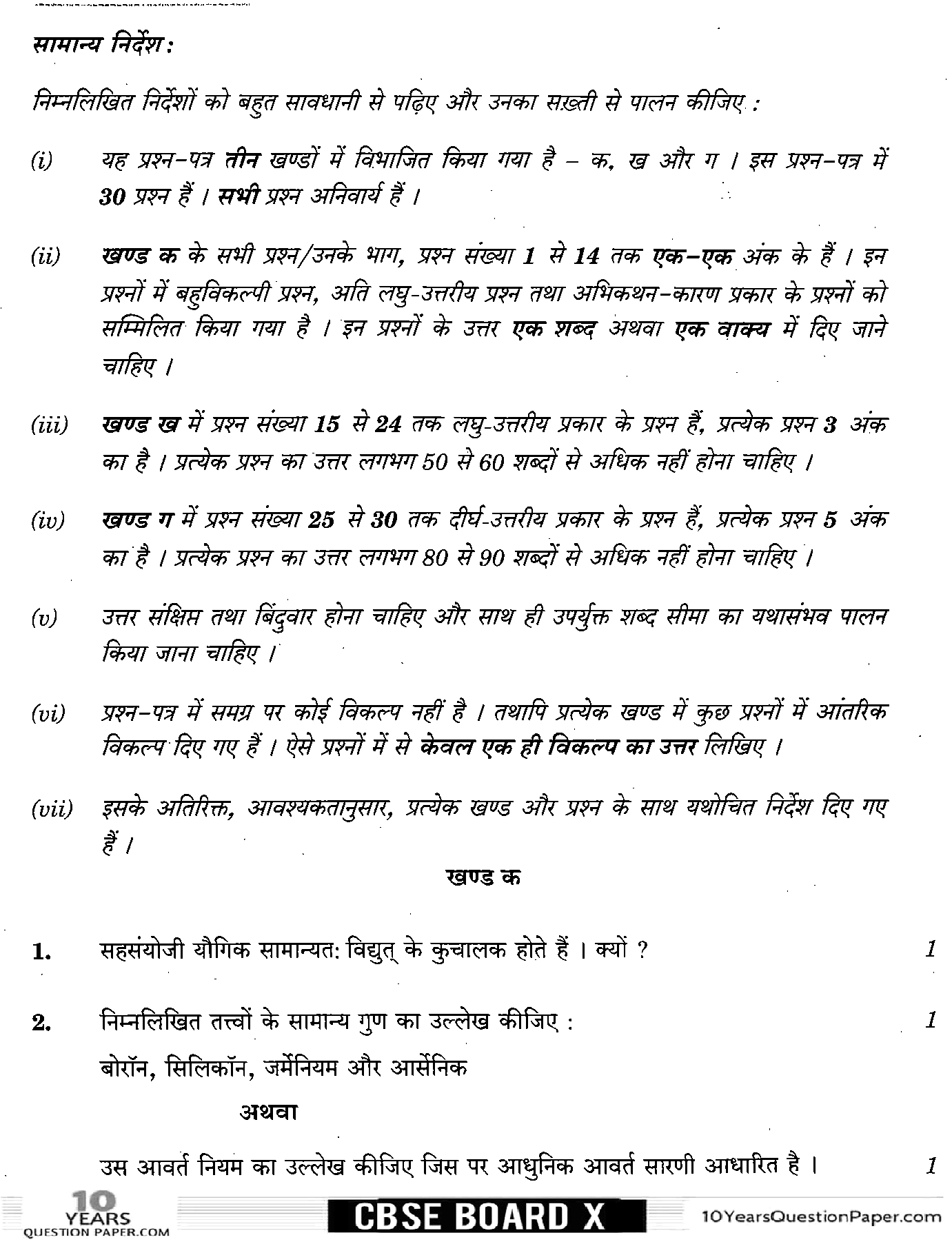
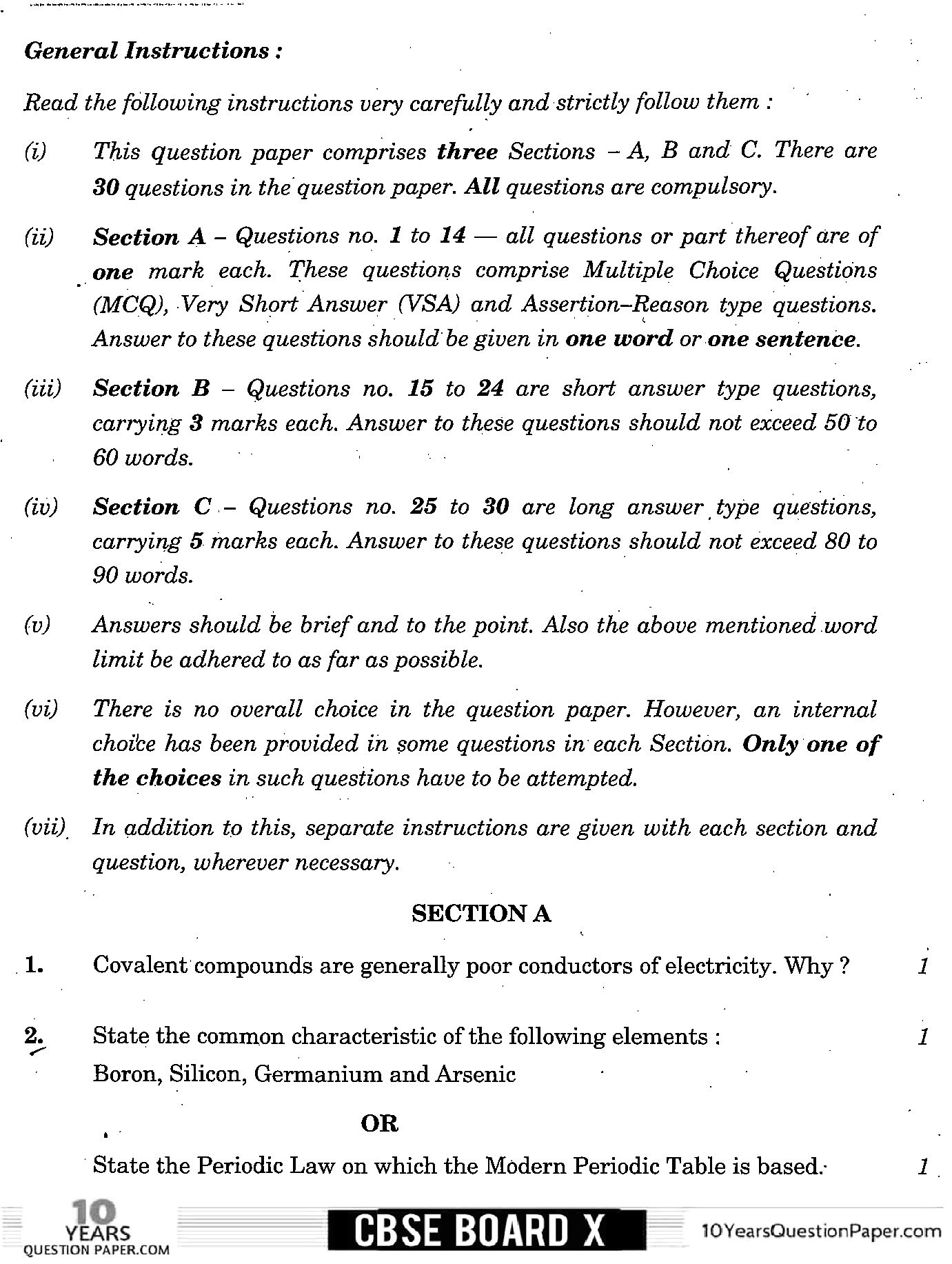
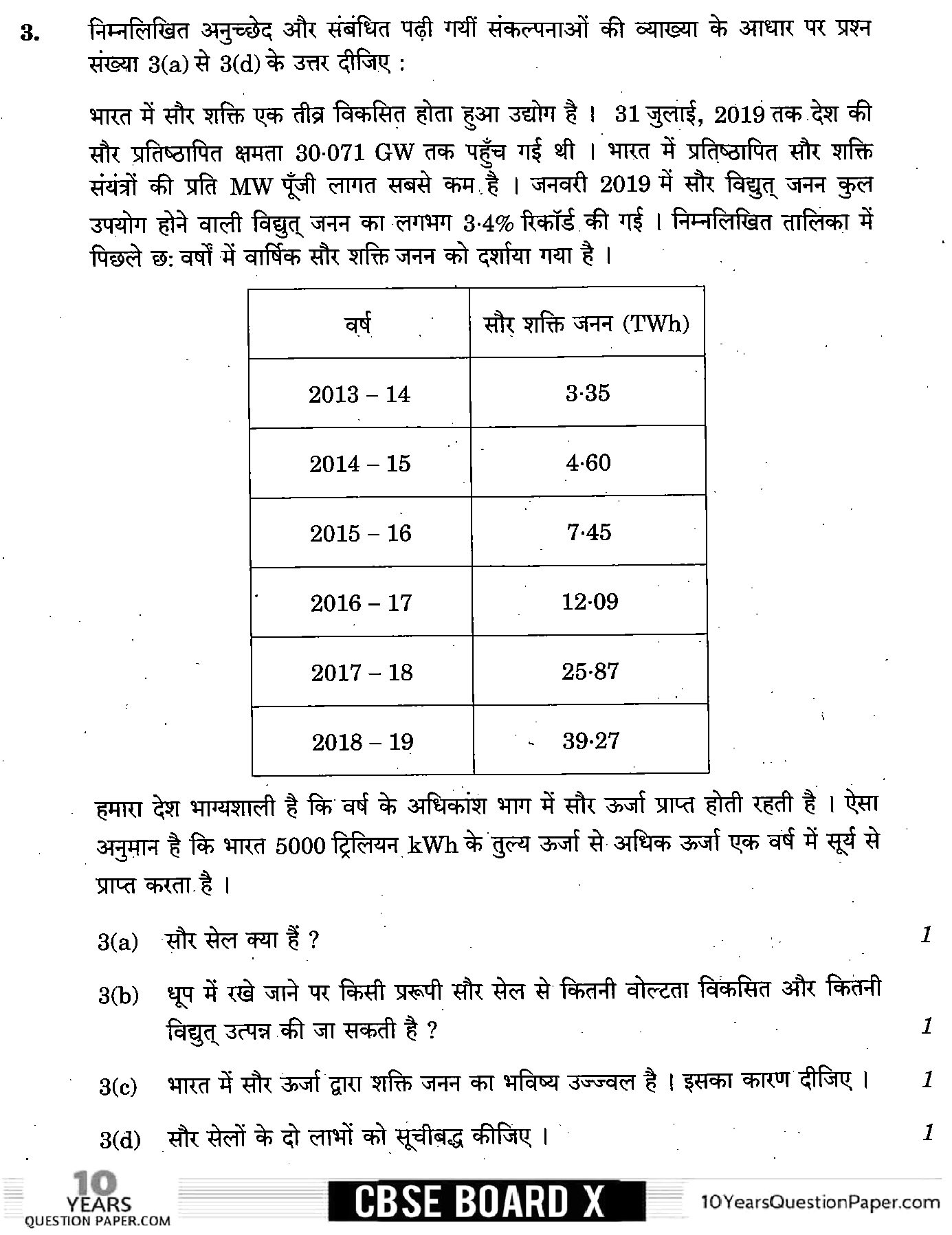
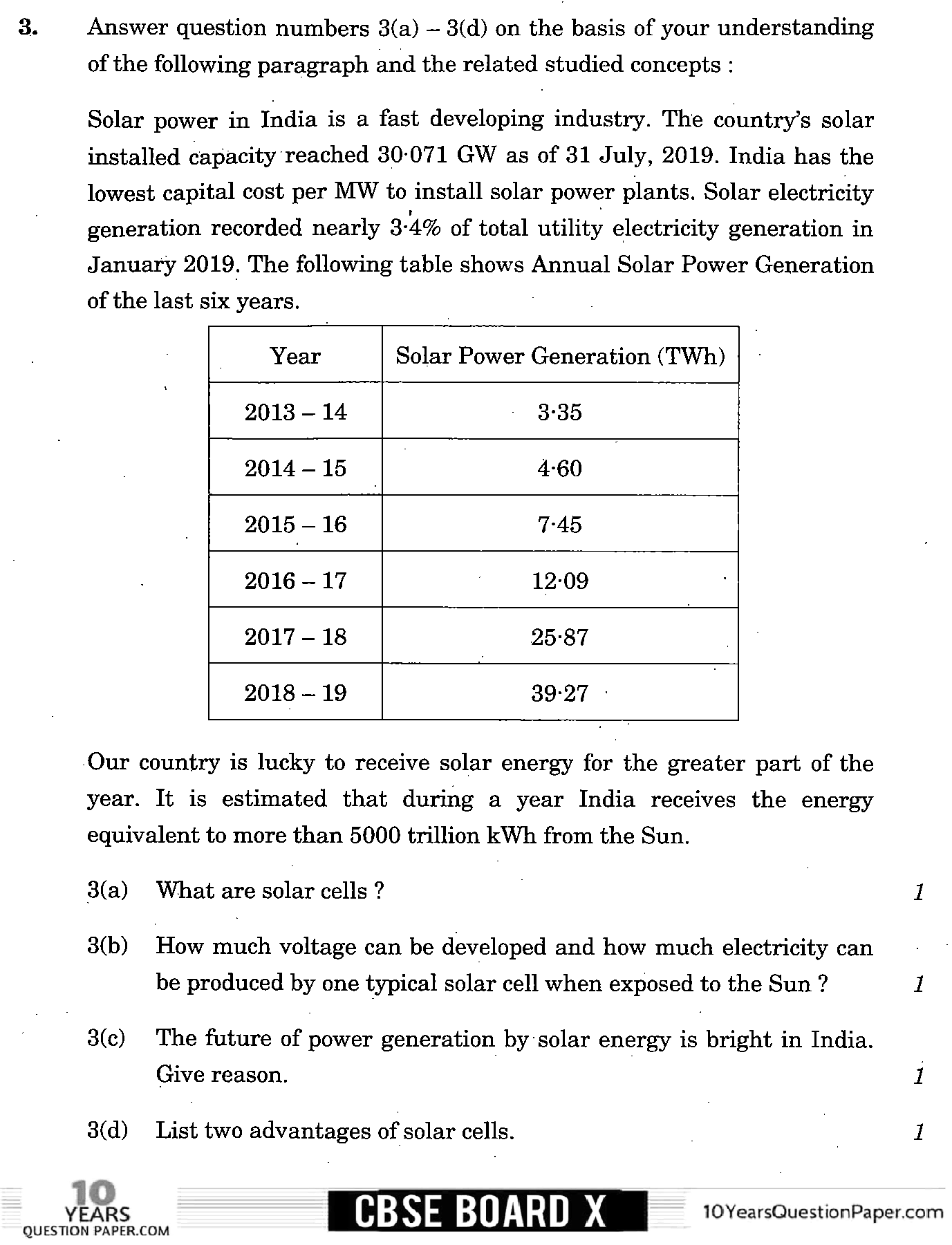
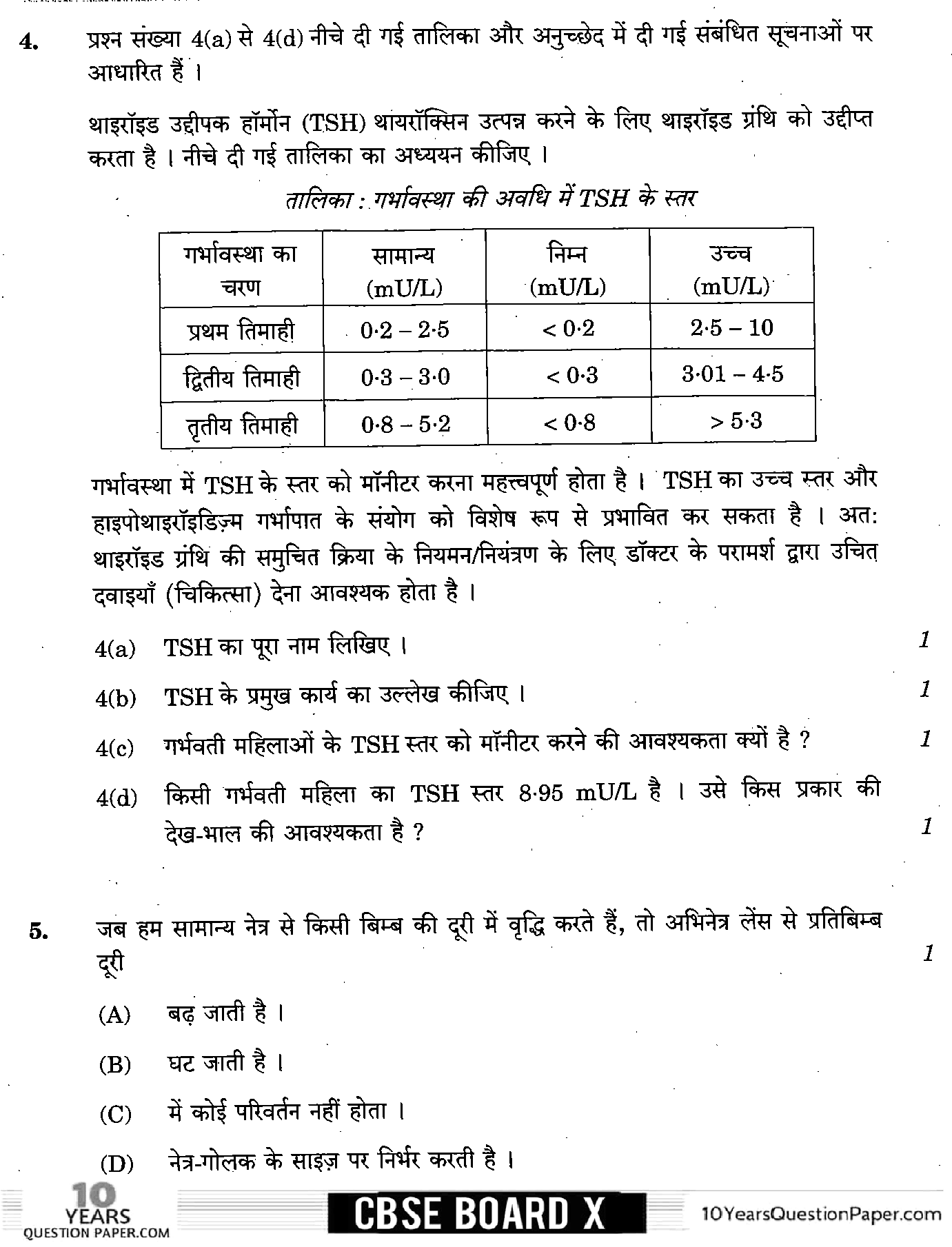
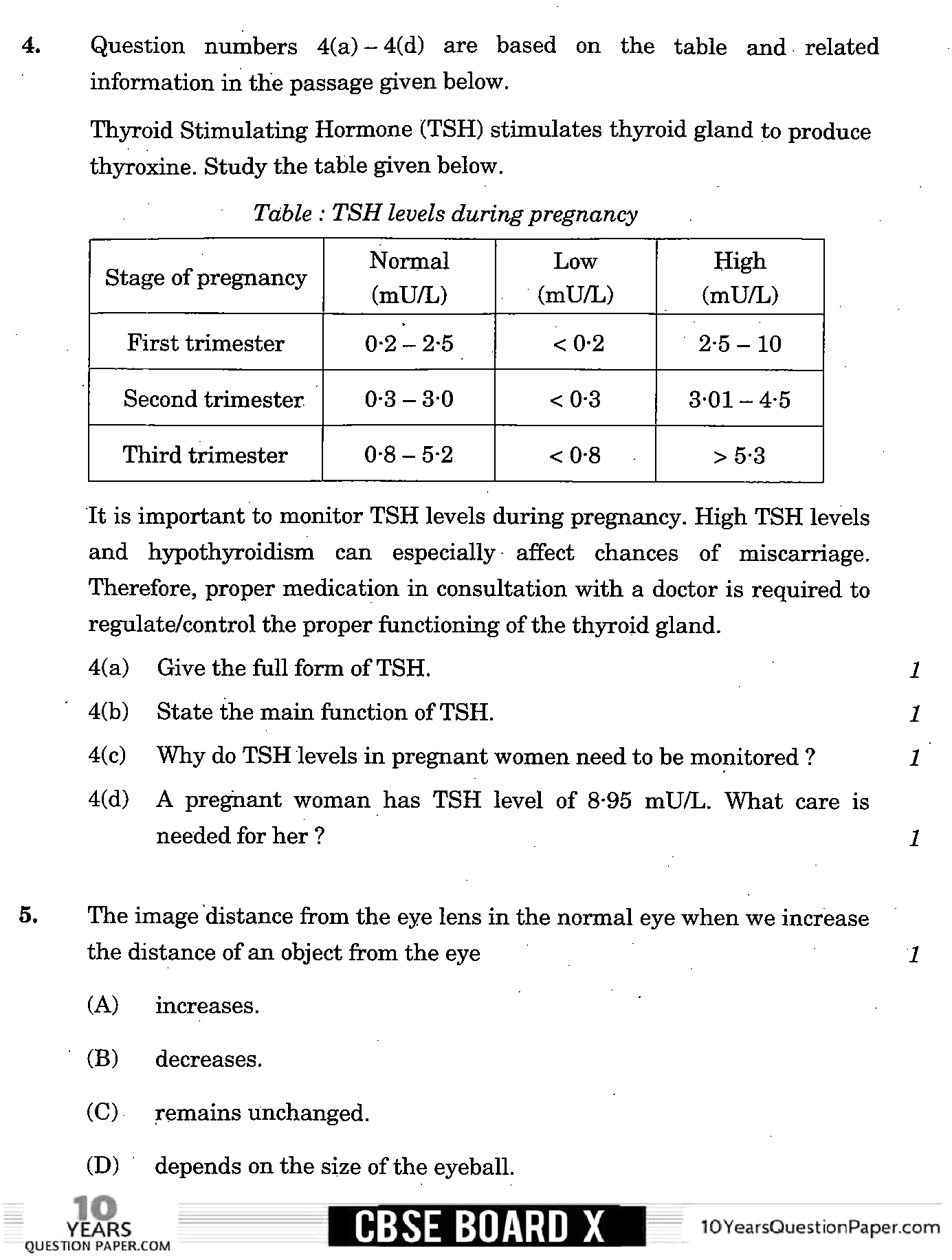
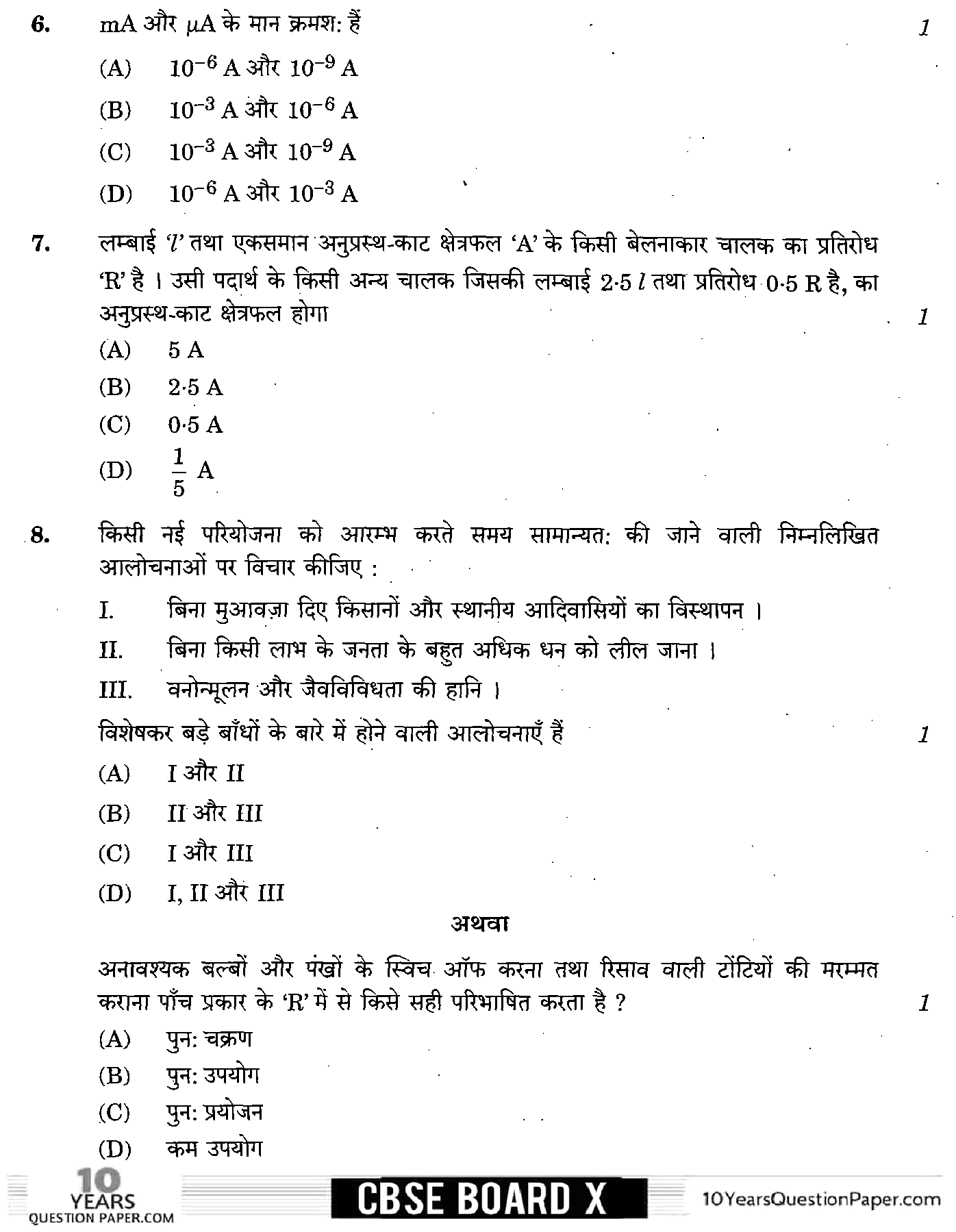
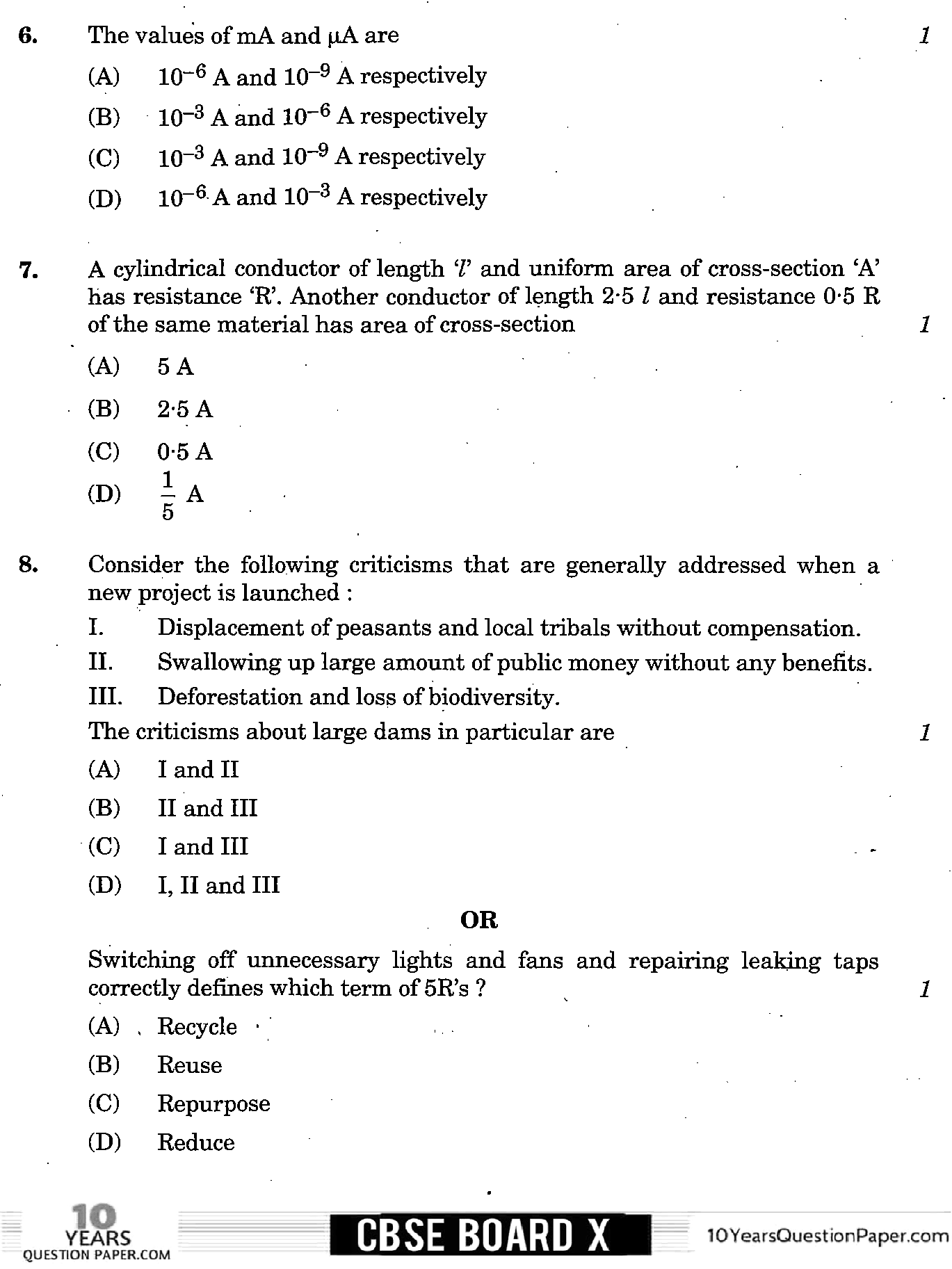
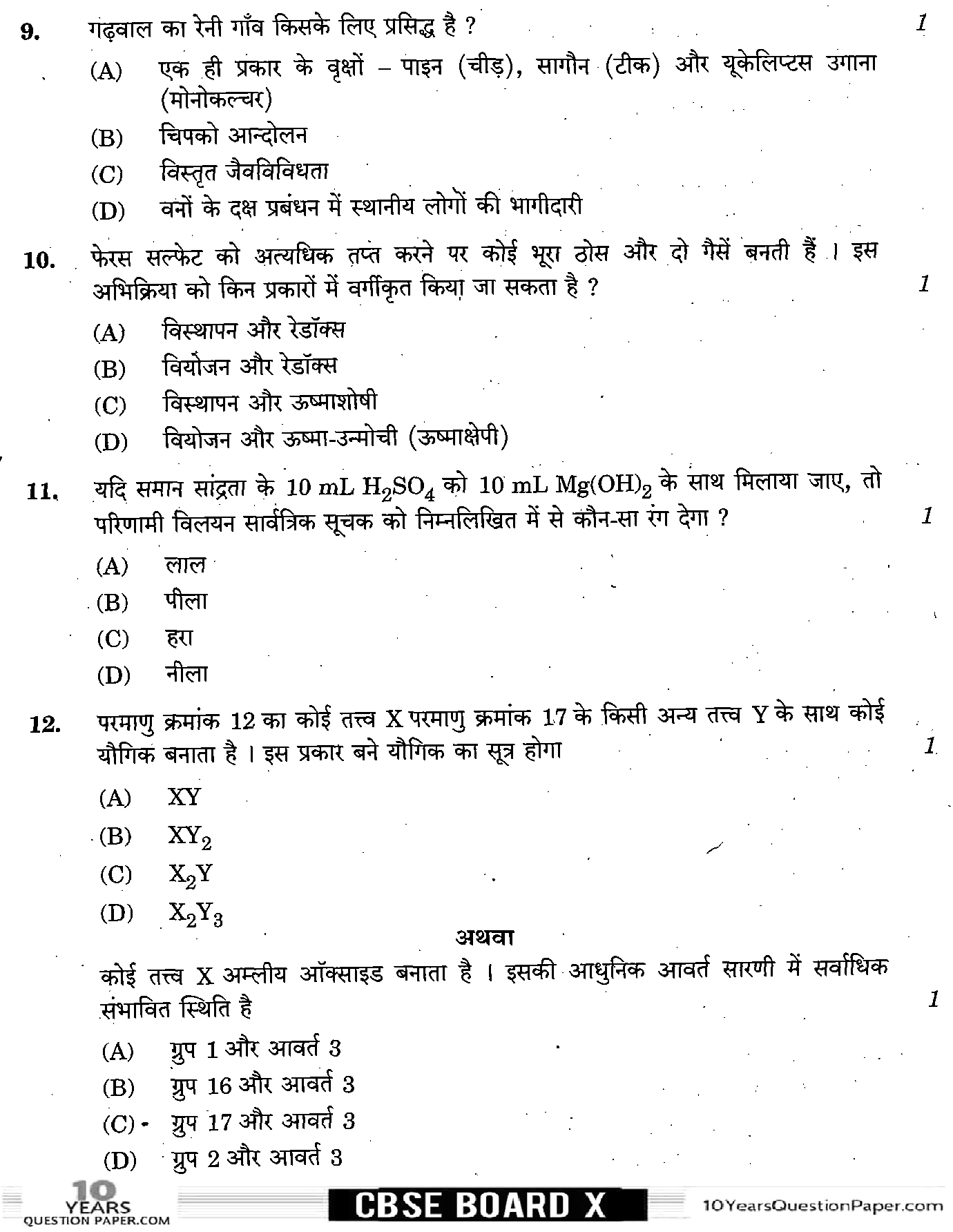
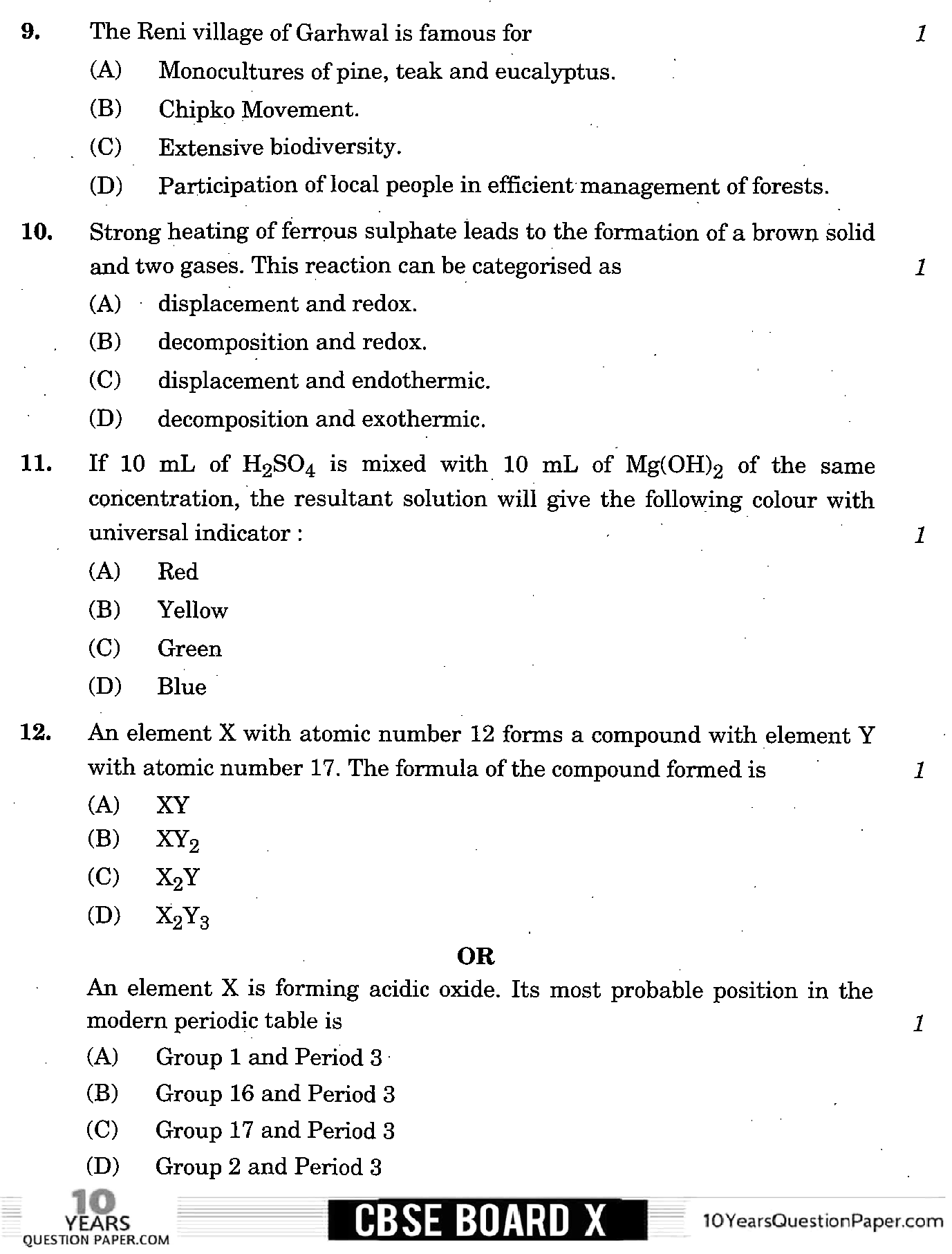
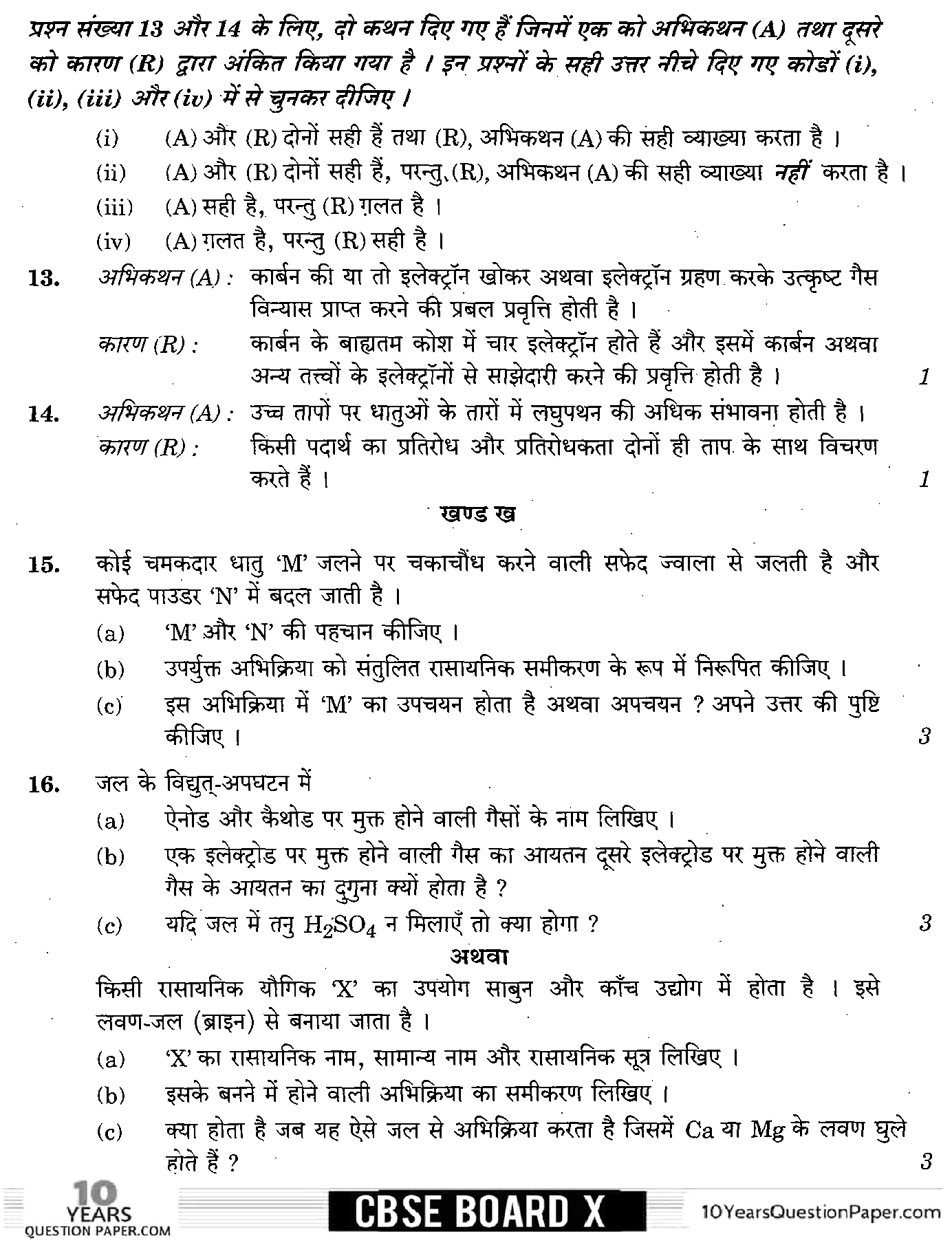
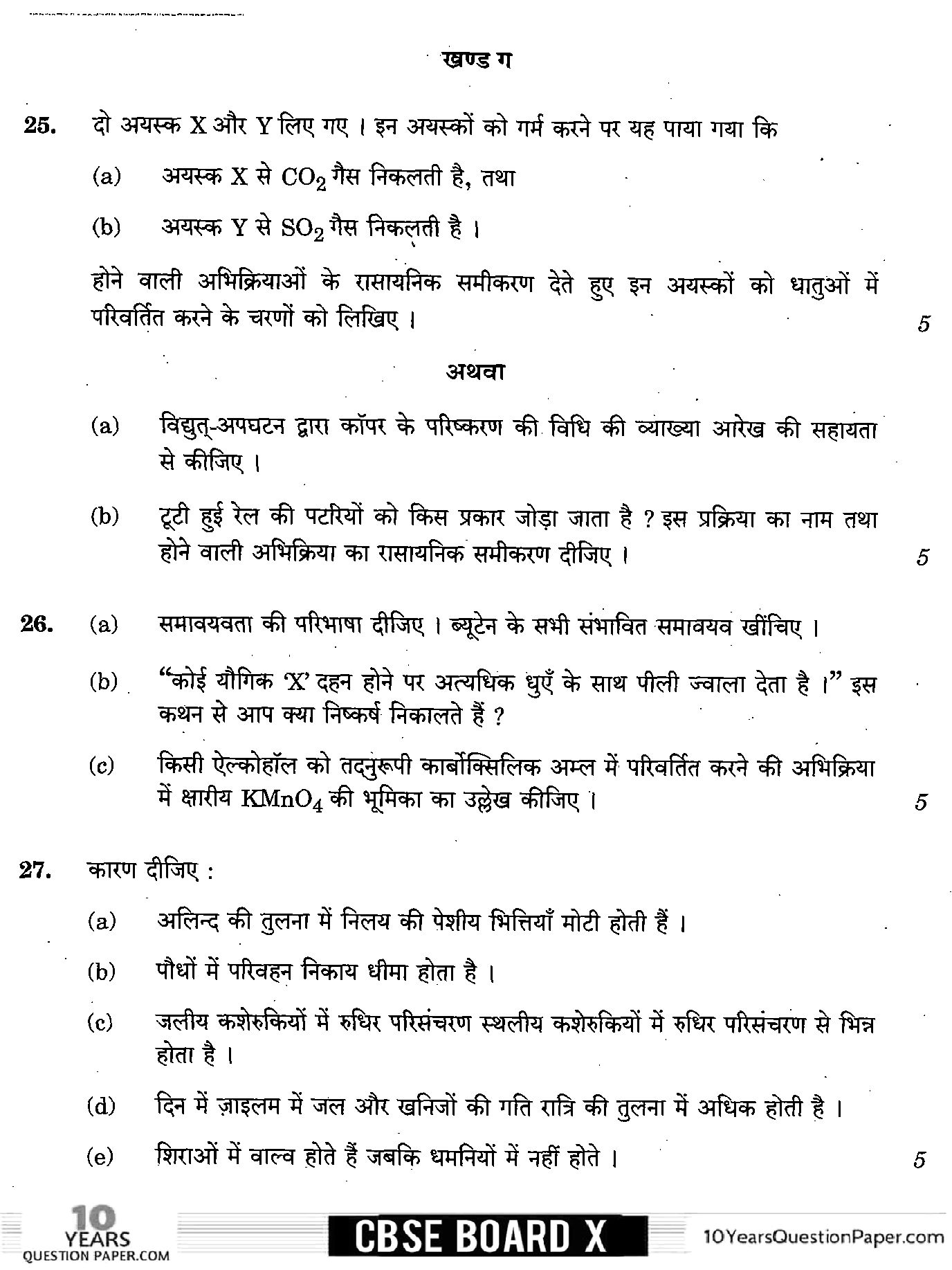
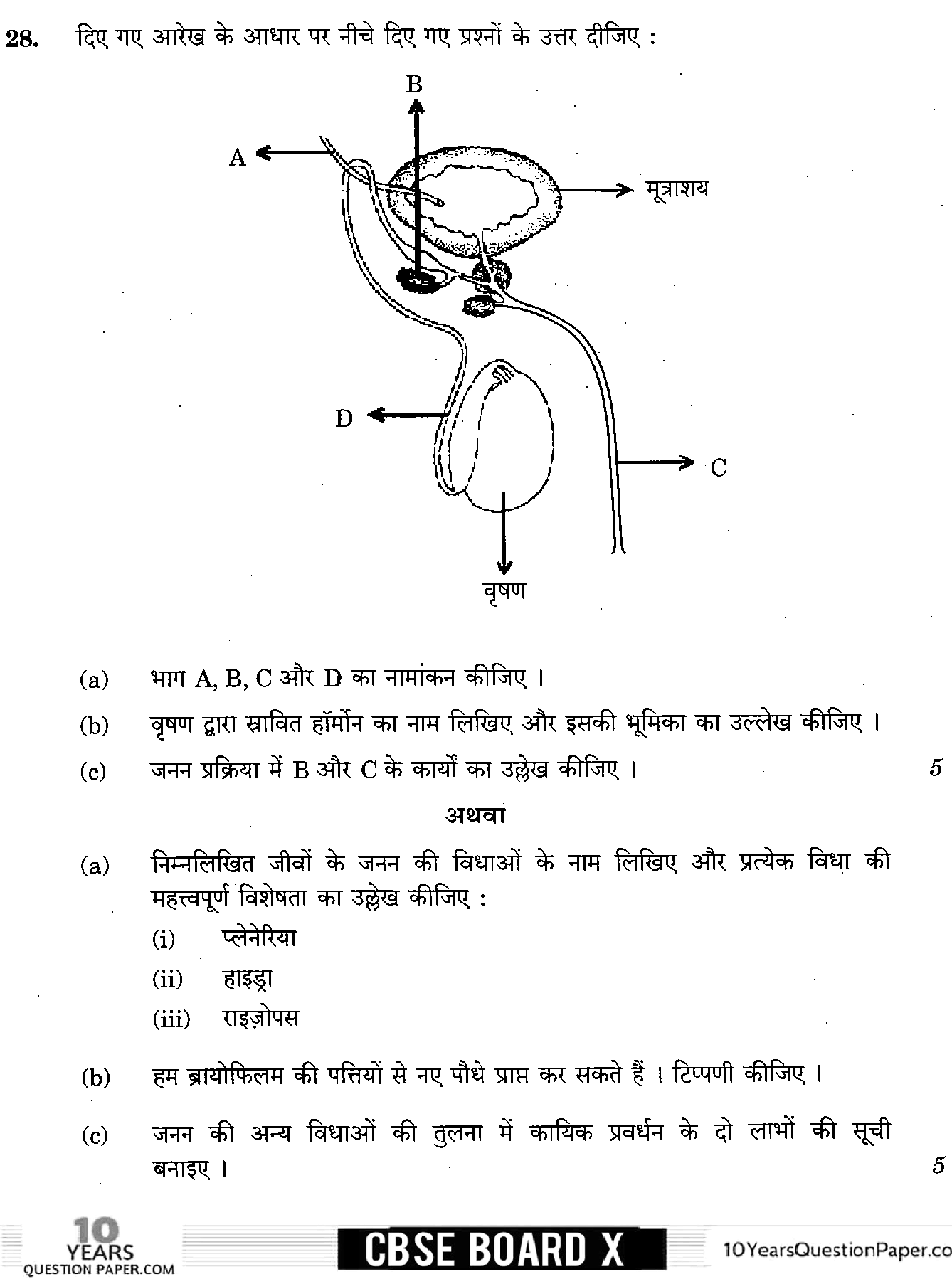
This is the CBSE Class 10 Science question paper from the 2020 board examination, code 31/5/1, Series JBB/5, Set 1, printed in Hindi and English. It carries 80 marks for three hours and has 30 compulsory questions in three sections. Section A mixes one-mark multiple-choice, very short answer and assertion–reason items with two data-based questions: one on India's annual solar power generation and one on TSH levels during pregnancy. Section B has three-mark short answers and Section C has five-mark long answers, with internal choices in some questions of every section. Chapters covered run from metals and carbon compounds to reproduction, heredity, light and electricity. This copy has questions only, without answers.
- Exam
- CBSE Class 10
- Subject
- Science
- Year
- 2020
- Paper code
- 31/5/1
- Maximum marks
- 80
- Time allowed
- 3 hours
- Questions
- 30
- Pages
- 23
- Answers included
- No, questions only
Paper pattern
Section A
20 marksQuestions 1–14, one mark per question or part: MCQs, very short answers, two four-part data-based questions and two assertion–reason items
Section B
30 marksQuestions 15–24, short answers of 50–60 words, three marks each; internal choice in some
Section C
30 marksQuestions 25–30, long answers of 80–90 words, five marks each; internal choice in some
Topics covered
- Chemical reactions and equations
- Metals and non-metals
- Carbon and its compounds
- Periodic classification of elements
- Life processes
- Control and coordination
- How do organisms reproduce
- Heredity and evolution
- Light: reflection and refraction
- Human eye and the colourful world
- Electricity and magnetic effects of current
- Sources of energy and natural resources
Questions from this paper
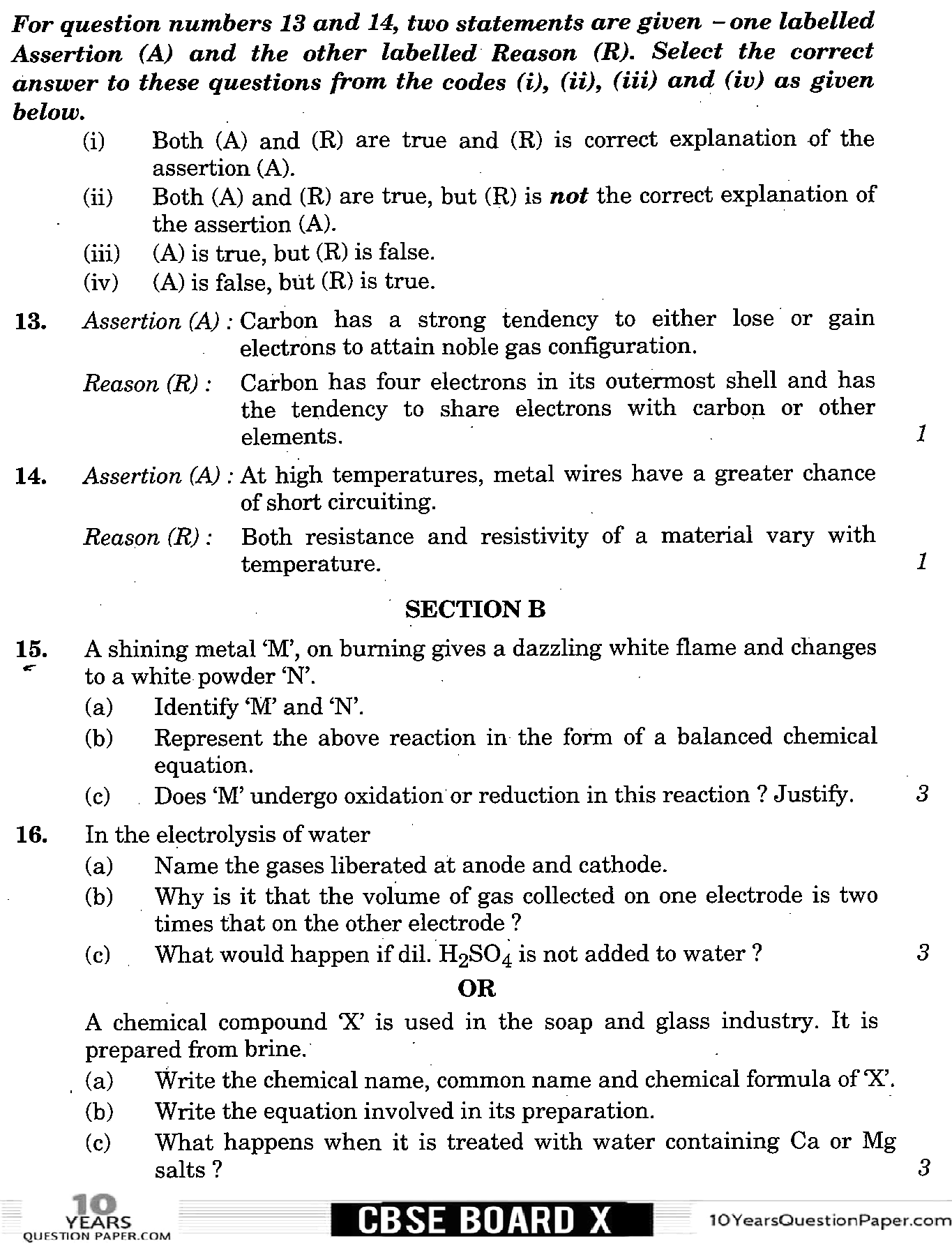
- A shining metal M, on burning, gives a dazzling white flame and changes to a white powder N. Identify M and N, write the balanced equation, and state whether M undergoes oxidation or reduction.
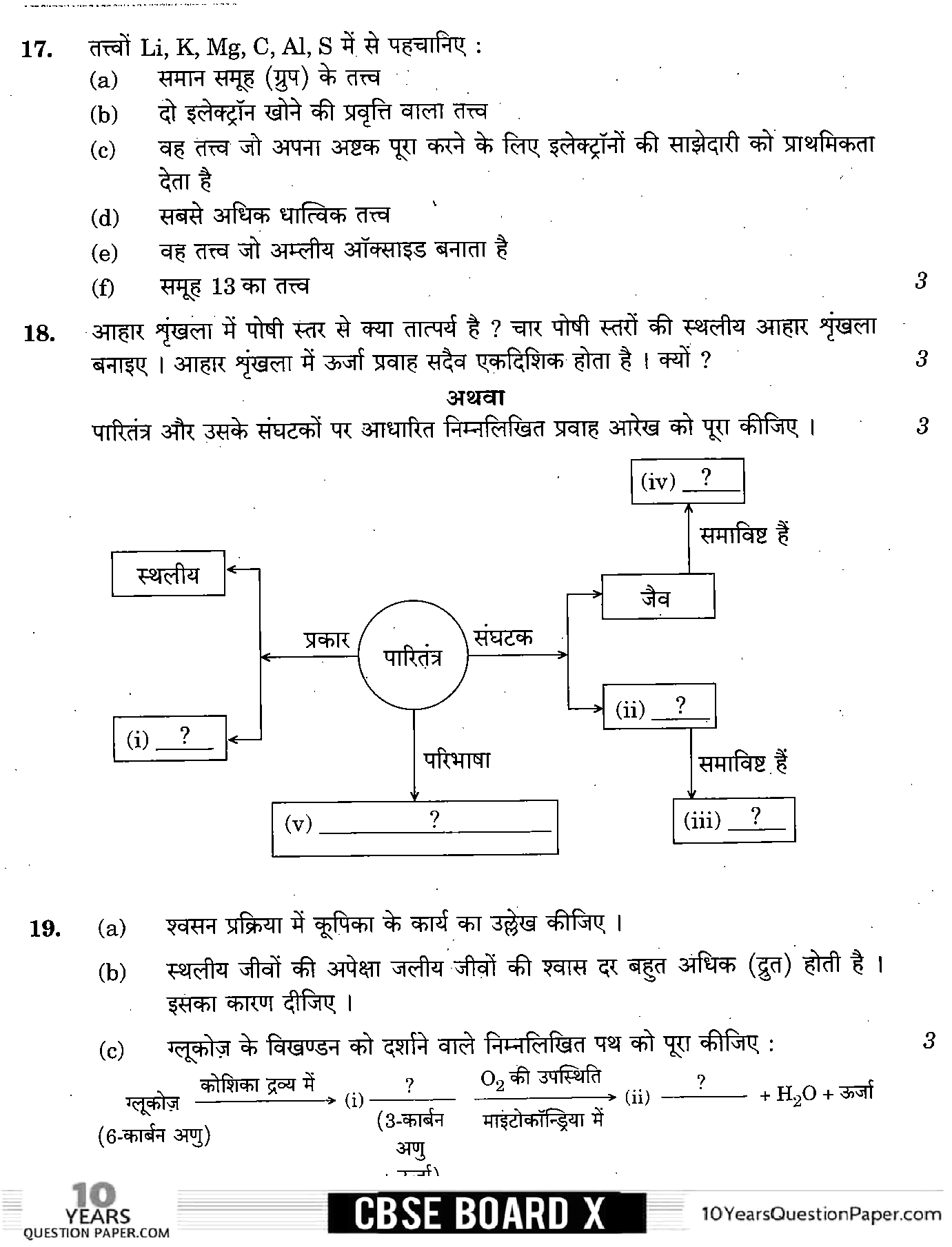
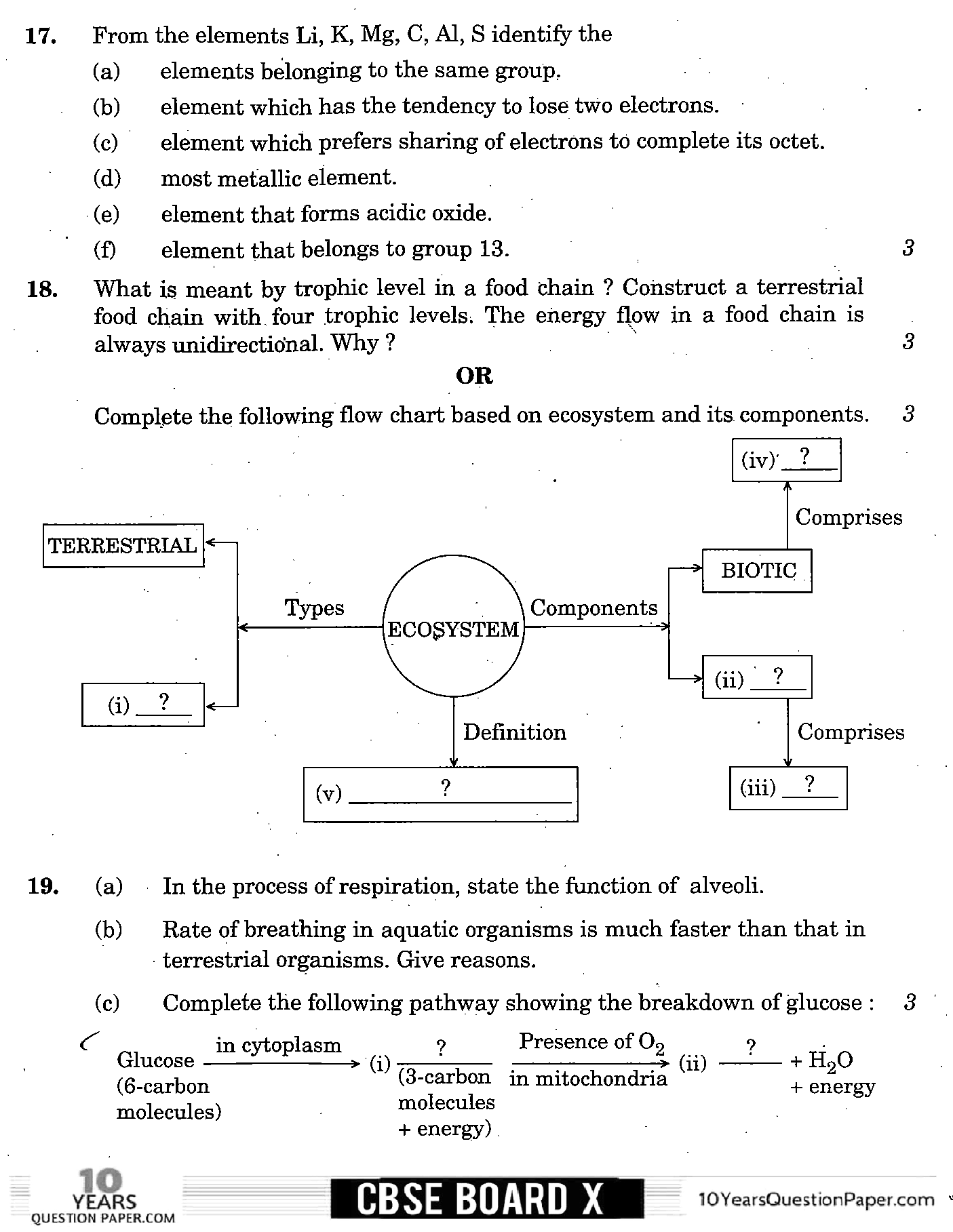
- What is meant by a trophic level in a food chain? Construct a terrestrial food chain with four trophic levels and explain why energy flow in a food chain is always unidirectional.
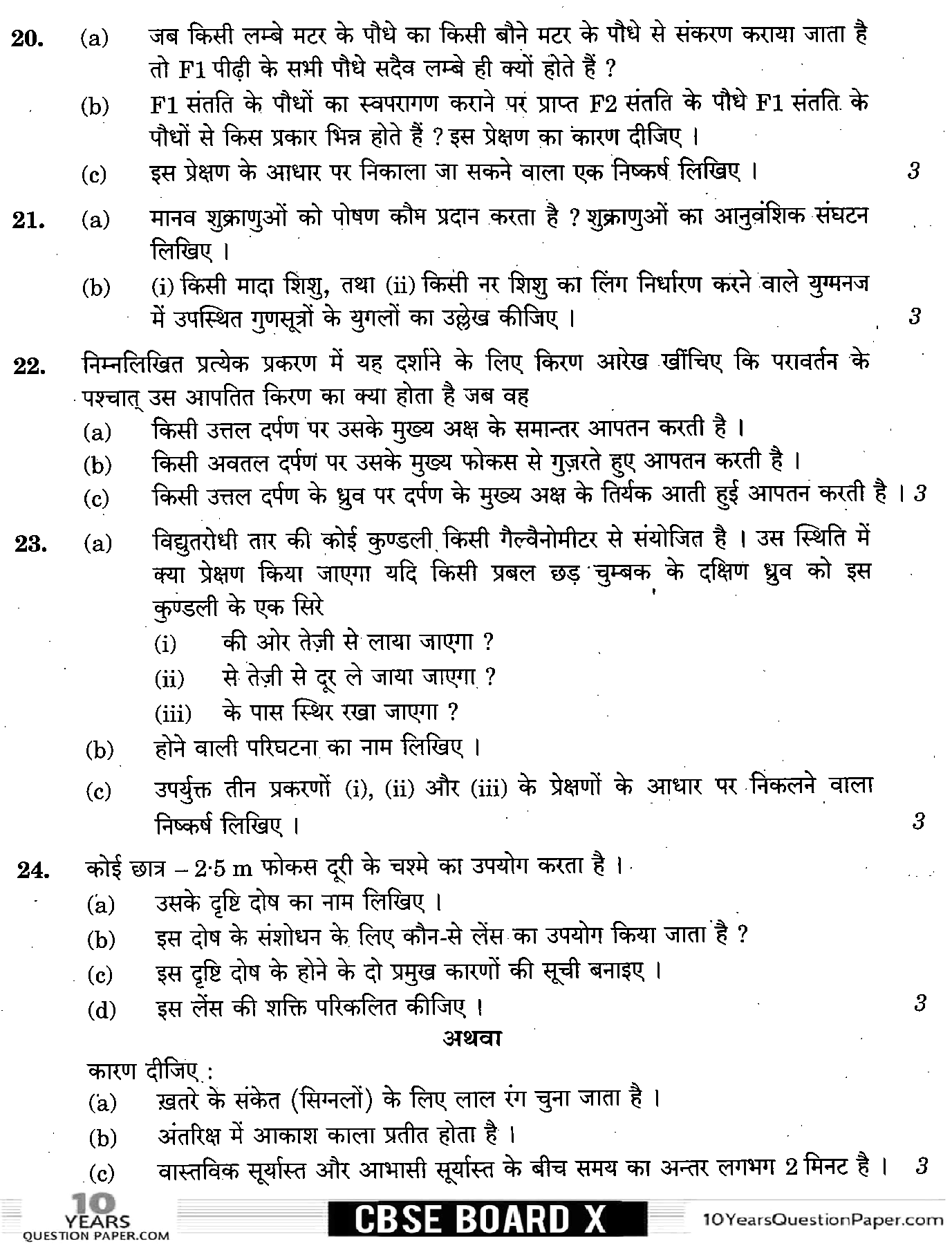
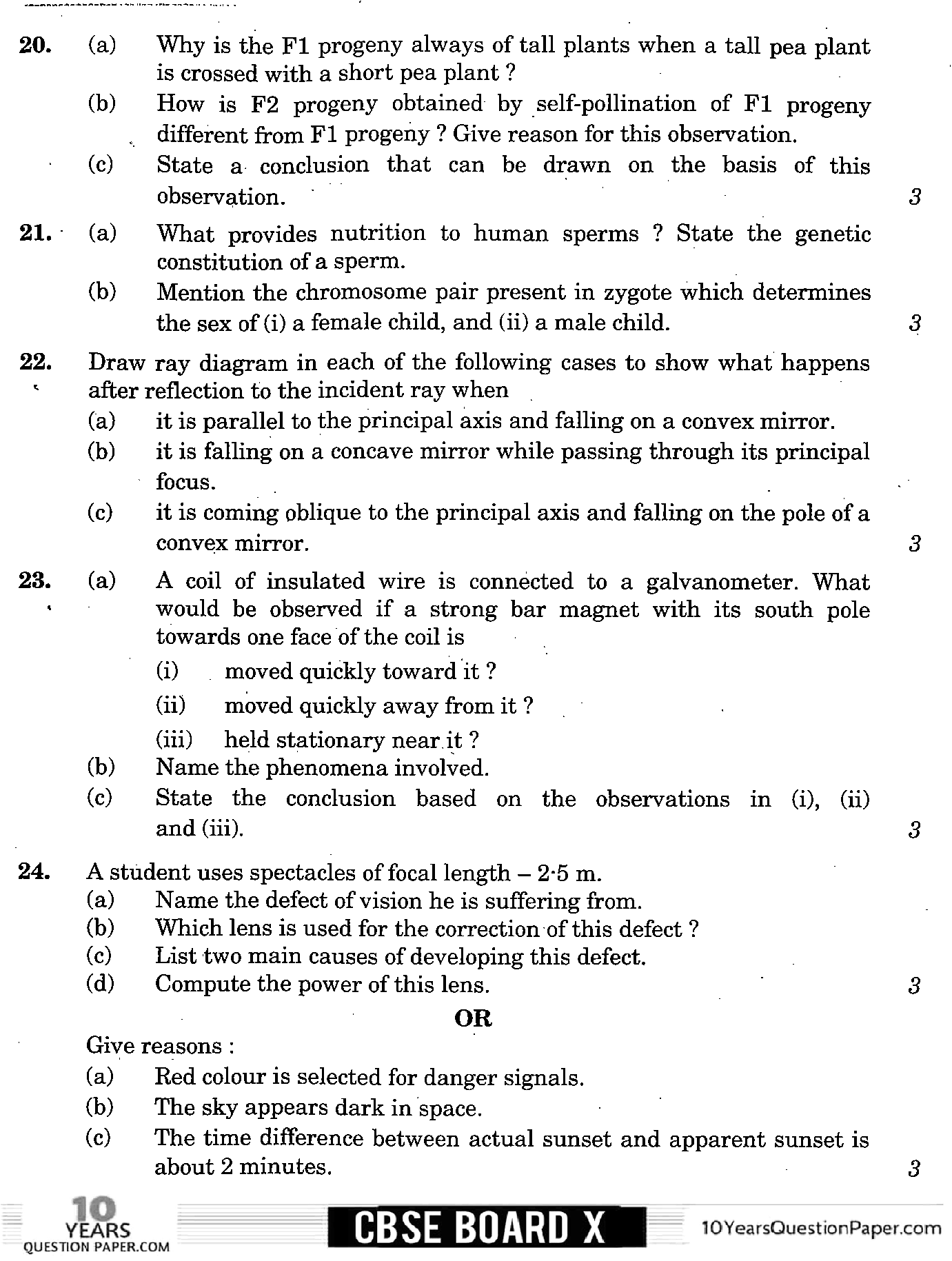
- Why is the F₁ progeny always of tall plants when a tall pea plant is crossed with a short pea plant?
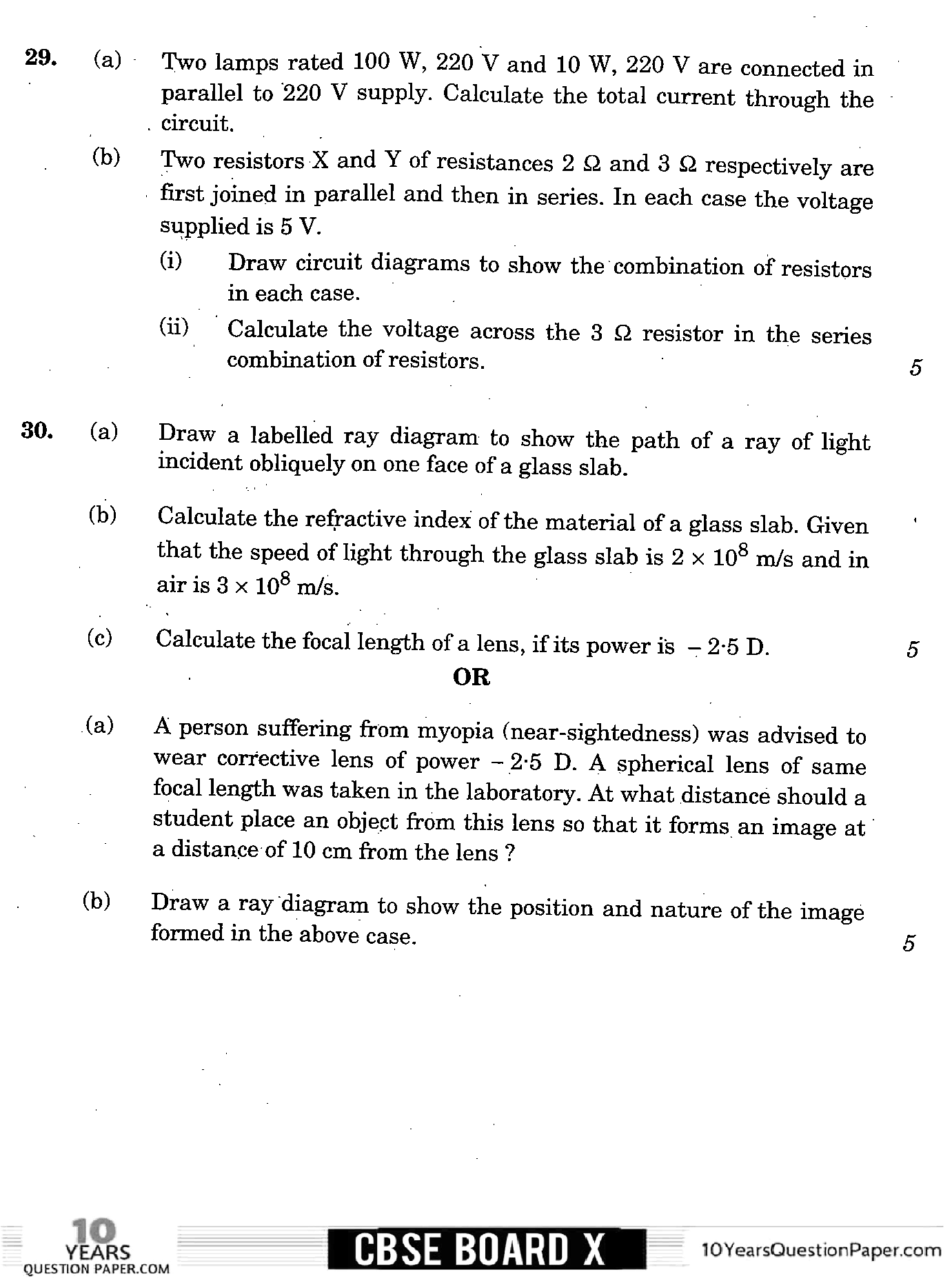
- A student uses spectacles of focal length −2.5 m. Name the defect of vision, the lens used to correct it, two main causes of the defect, and compute the power of the lens.
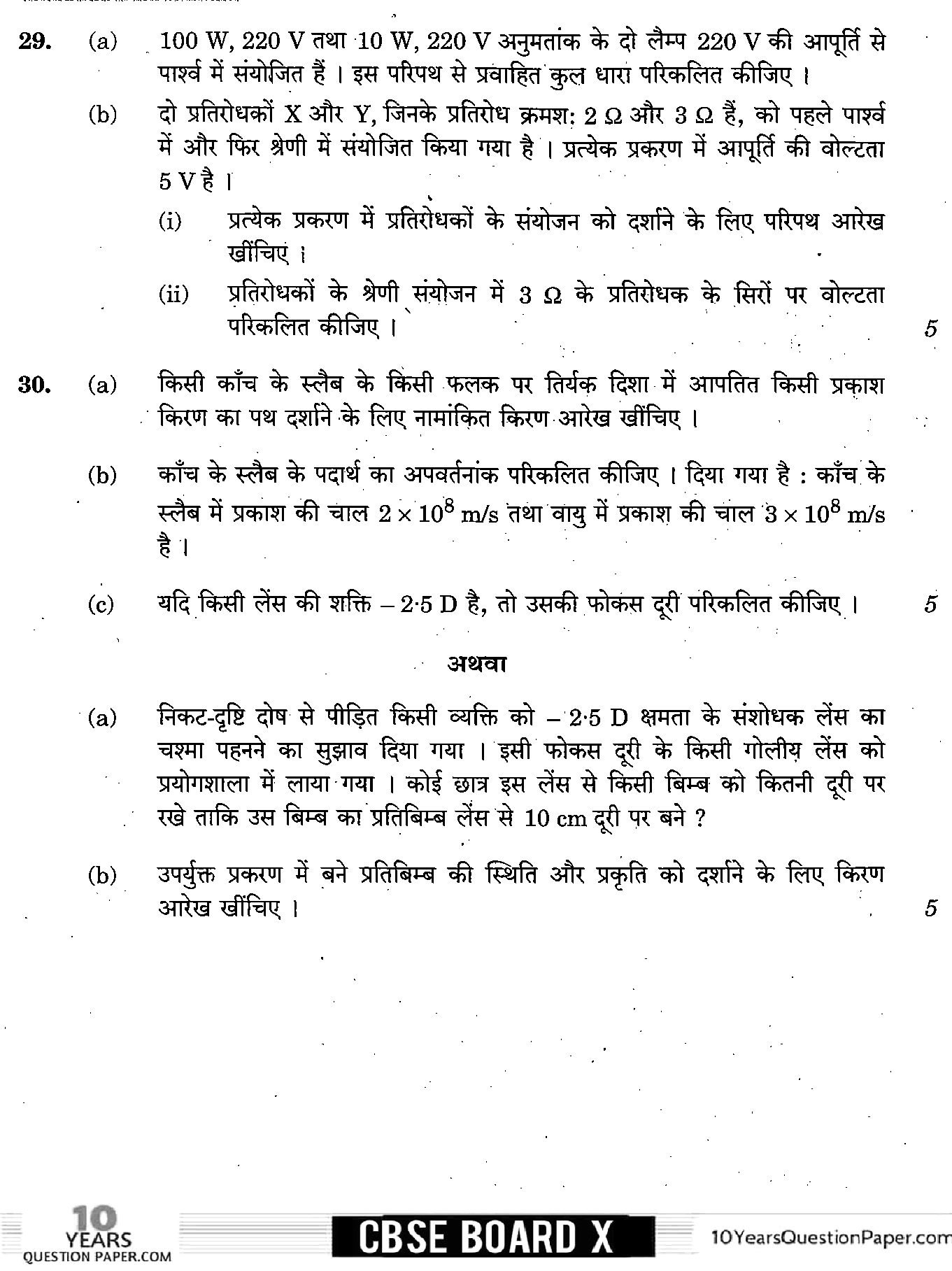
- Two lamps rated 100 W, 220 V and 10 W, 220 V are connected in parallel to a 220 V supply. Calculate the total current through the circuit.
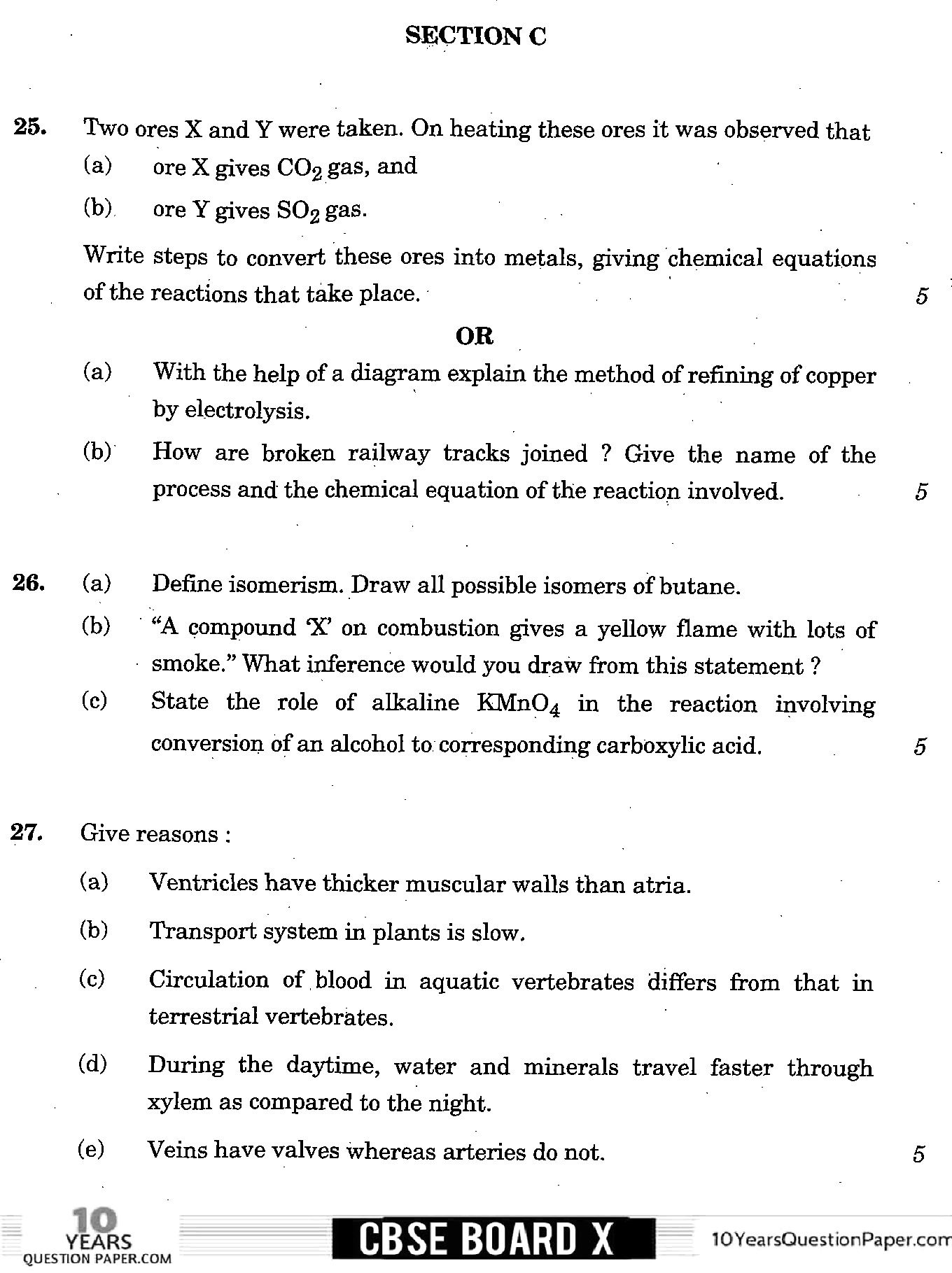
- Define isomerism and draw all possible isomers of butane.
Free email alert
Get the 2027 CBSE Class 10 papers first
One email when the new CBSE Class 10 Science question papers are published here. No spam, unsubscribe any time.
Download
- Format
- Size
- Unknown
- Pages
- 23
What's next
Class 10 done next year?
A number of scholarships for Class 11–12 depend on your Class 10 marks.
Check eligibility