CBSE 2019 Science Question Paper for Class 10

CBSE
Science2019CBSE Class 10 Science 2019 board paper, code 31/3/3: 27 questions for 80 marks in 3 hours, with five sections including practical skills. Questions only.
About this paper
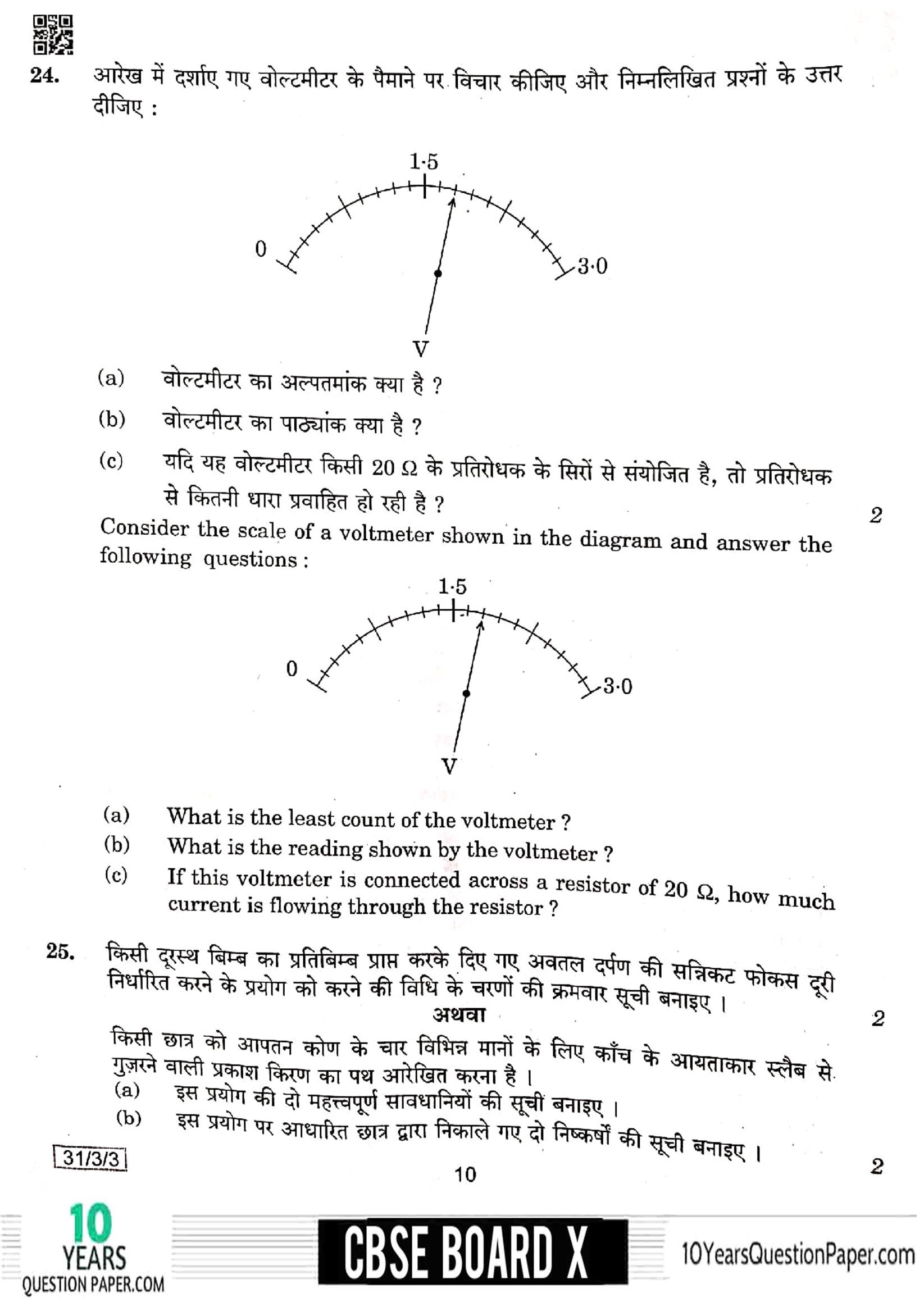
This is the CBSE Class 10 Science question paper from the 2019 board examination, code 31/3/3, Series JMS/3, Set 3. It carries 80 marks for three hours and has 27 compulsory questions in five sections, from one-mark answers in Section A to five-mark long answers in Section D. Section E has six two-mark questions on practical skills, such as reading a voltmeter scale, preparing a leaf peel mount and testing ethanoic acid. Internal choices are given in Sections B, C, D and E. The questions span physics, chemistry and biology chapters, including electricity, light, carbon compounds, metals, heredity and reproduction. This copy has questions only, without answers.
- Exam
- CBSE Class 10
- Subject
- Science
- Year
- 2019
- Paper code
- 31/3/3
- Maximum marks
- 80
- Time allowed
- 3 hours
- Questions
- 27
- Pages
- 11
- Answers included
- No, questions only
Paper pattern
Section A
2 marksQuestions 1–2, one mark each, answered in a word or a sentence
Section B
6 marksQuestions 3–5, two marks each, about 30 words; internal choice
Section C
30 marksQuestions 6–15, three marks each, about 50 words; internal choice
Section D
30 marksQuestions 16–21, five marks each, about 70 words; internal choice
Section E
12 marksQuestions 22–27, two marks each, based on practical skills; internal choice
Topics covered
- Chemical reactions and equations
- Acids, bases and salts
- Metals and non-metals
- Carbon and its compounds
- Periodic classification of elements
- Life processes
- Control and coordination
- How do organisms reproduce
- Heredity and evolution
- Human eye and the colourful world
- Electricity
- Magnetic effects of electric current
Questions from this paper
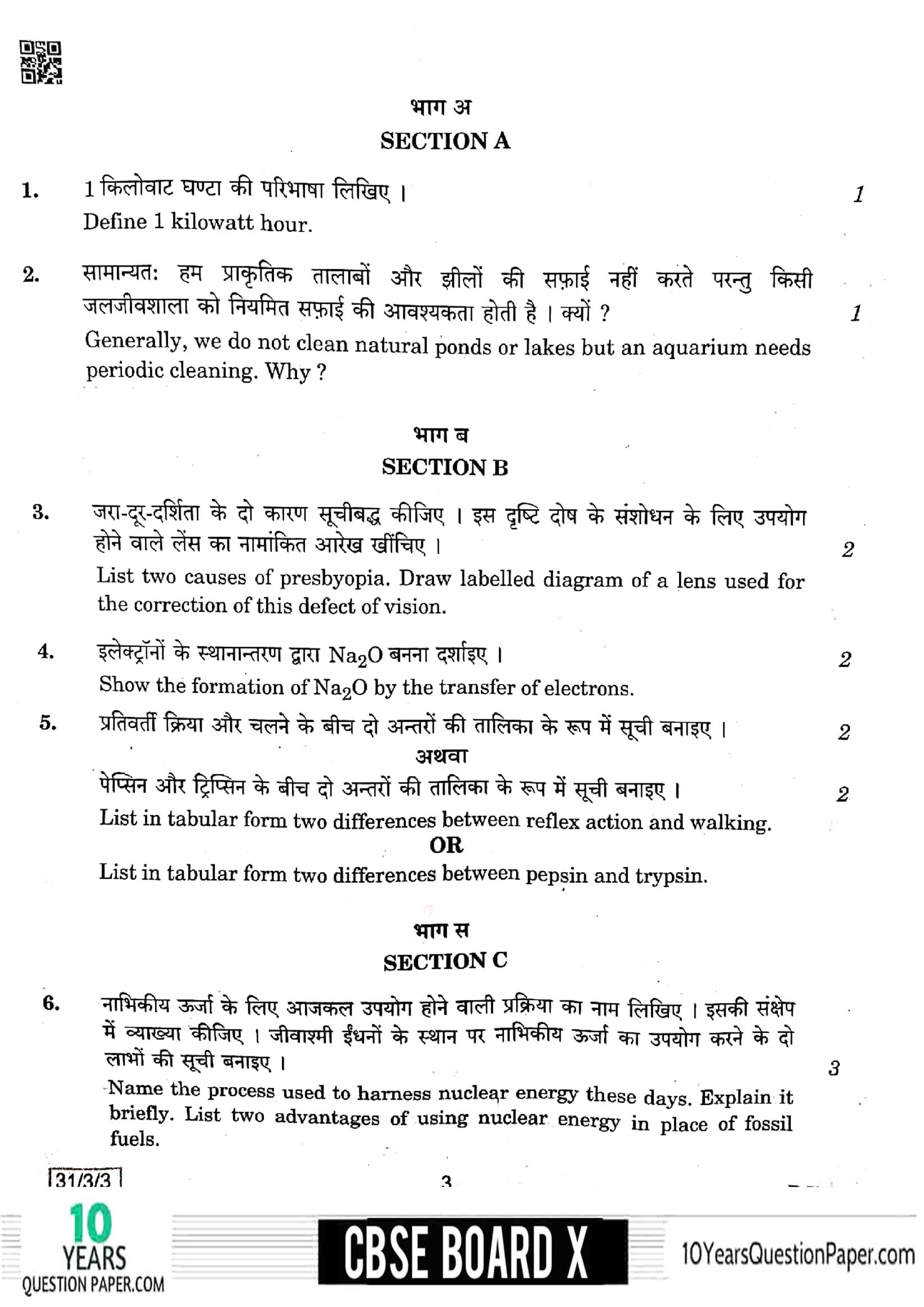
- List two causes of presbyopia. Draw a labelled diagram of a lens used for the correction of this defect of vision.
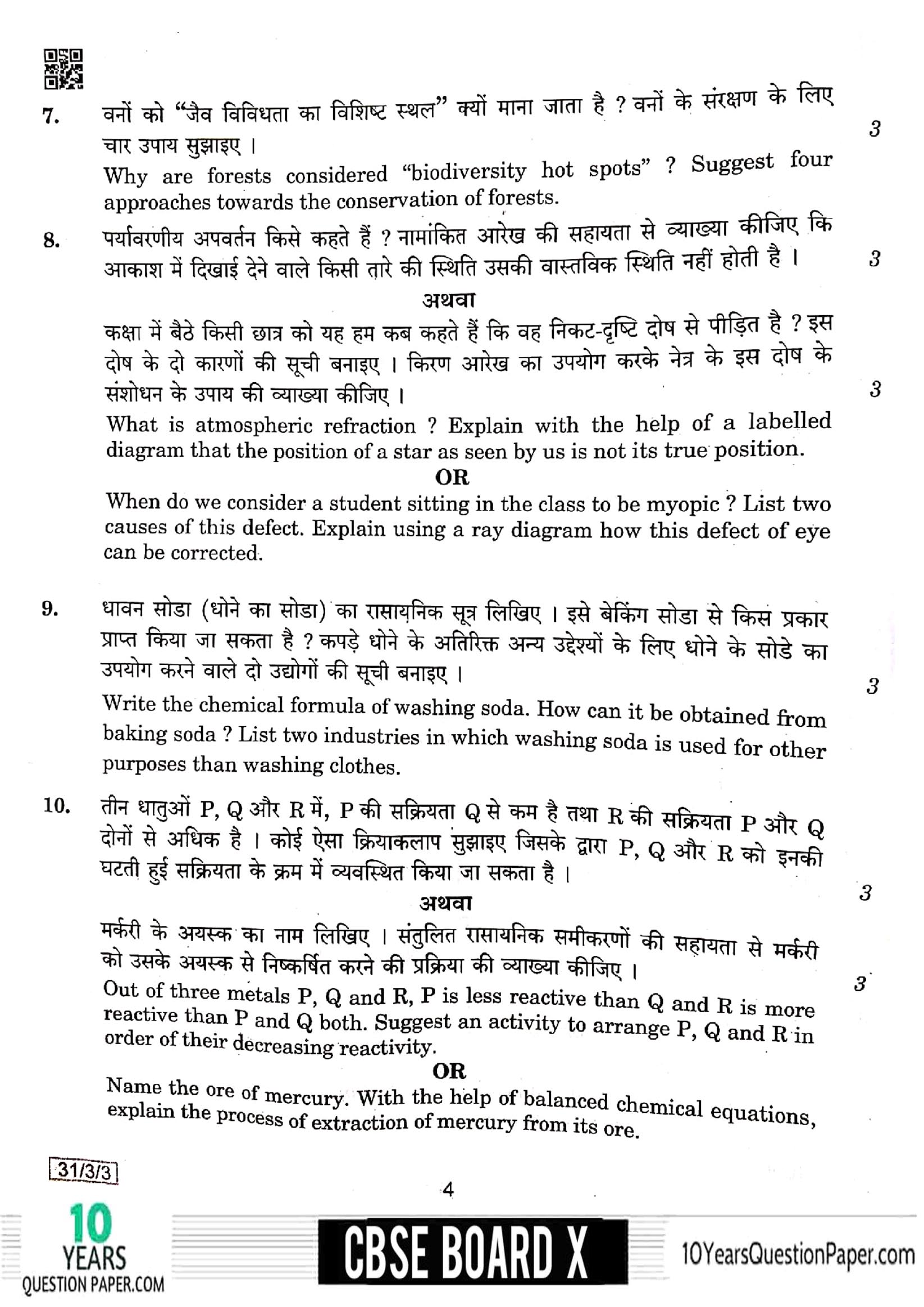
- Write the chemical formula of washing soda. How can it be obtained from baking soda? List two industries in which washing soda is used for purposes other than washing clothes.
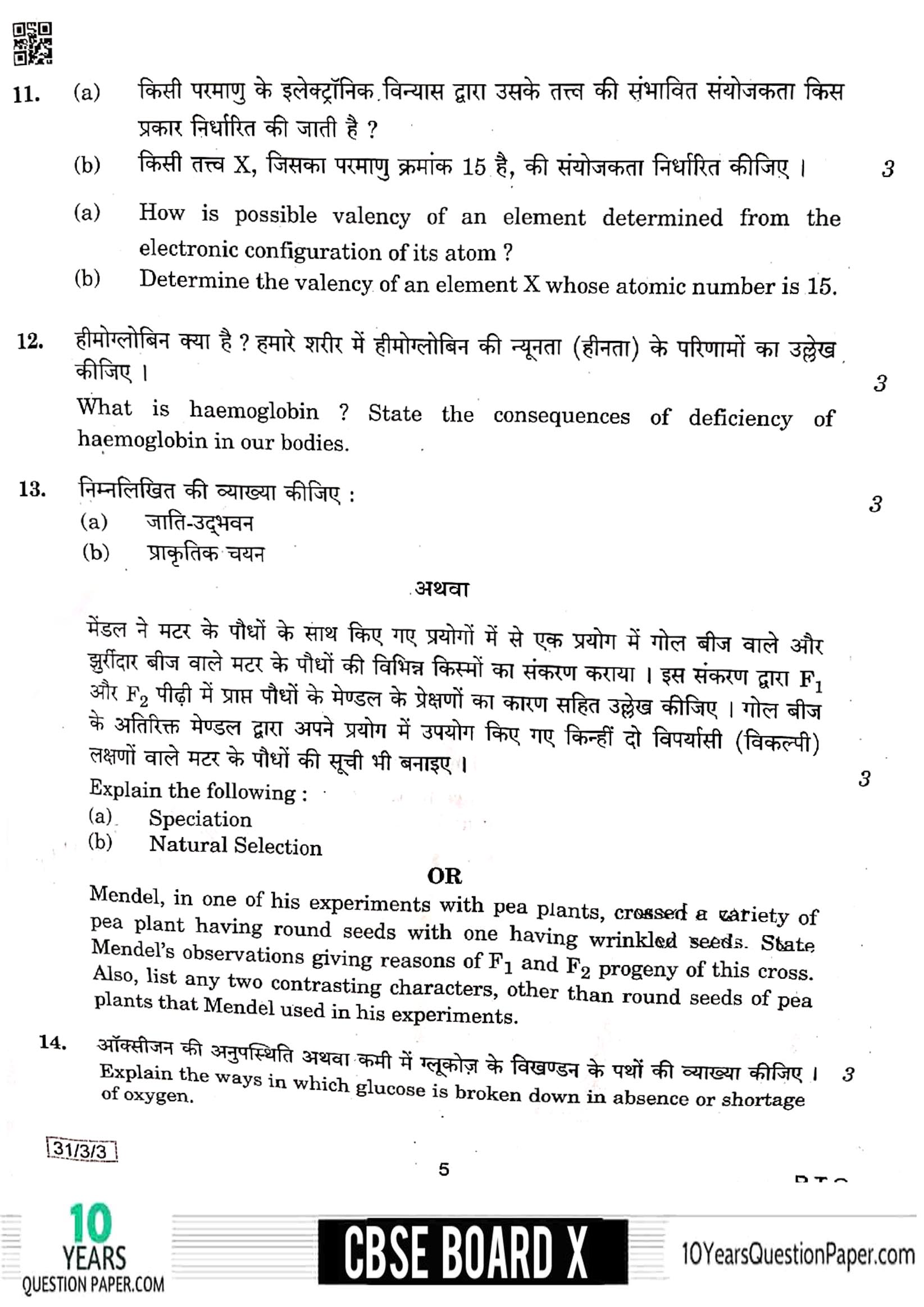
- What is haemoglobin? State the consequences of a deficiency of haemoglobin in our bodies.
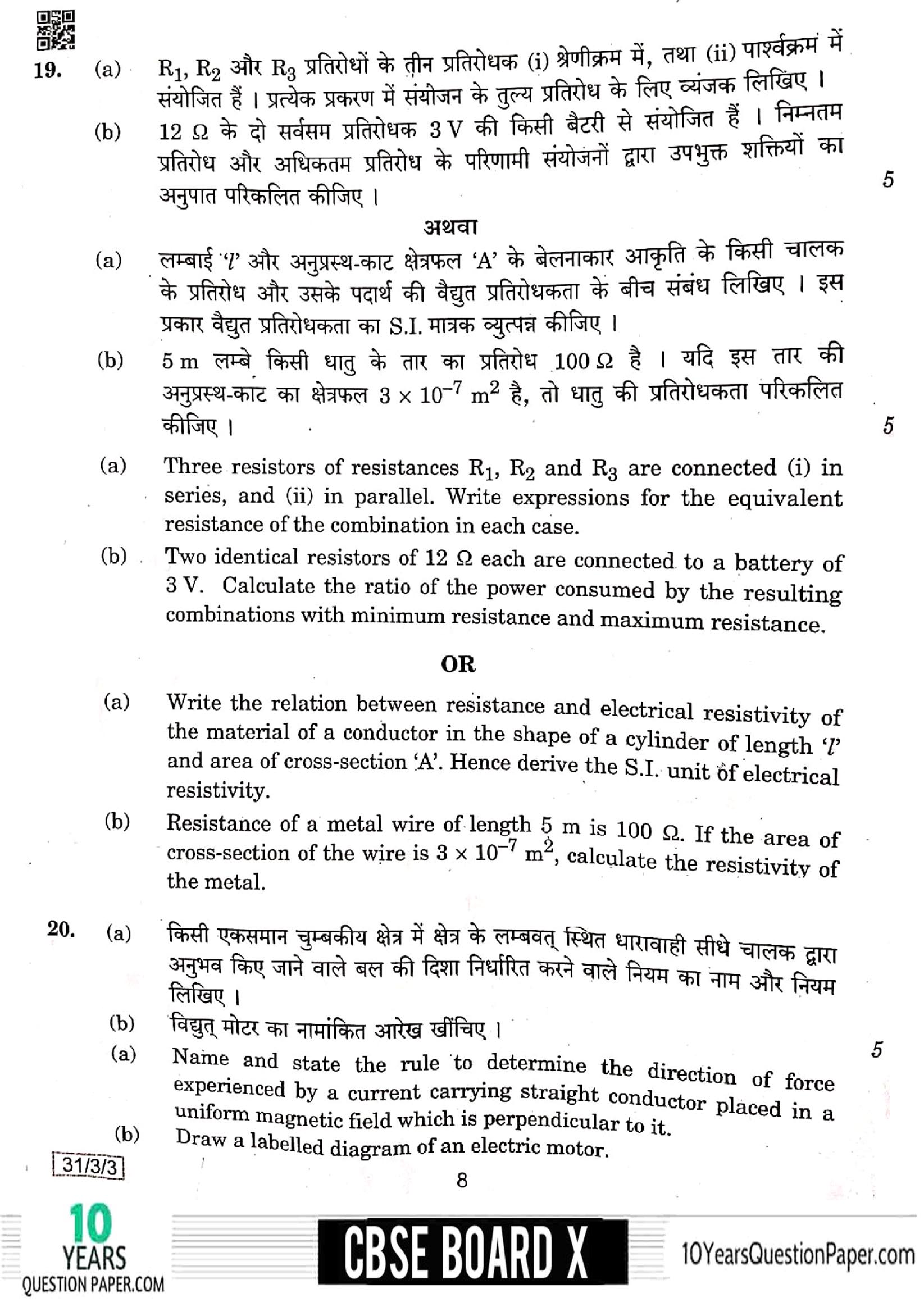
- Two identical resistors of 12 Ω each are connected to a battery of 3 V. Calculate the ratio of the power consumed by the resulting combinations with minimum resistance and maximum resistance.
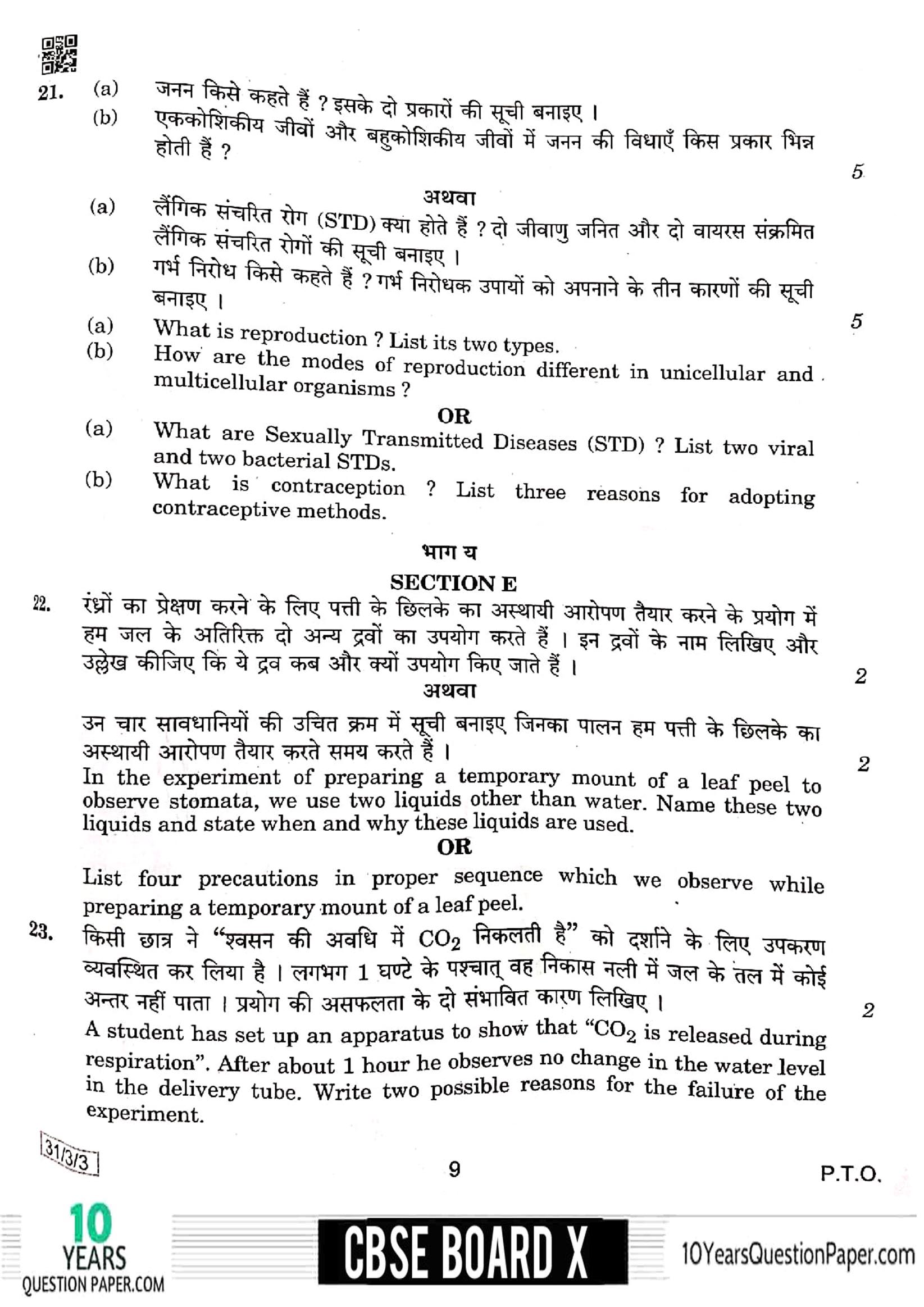
- What are sexually transmitted diseases (STDs)? List two viral and two bacterial STDs.
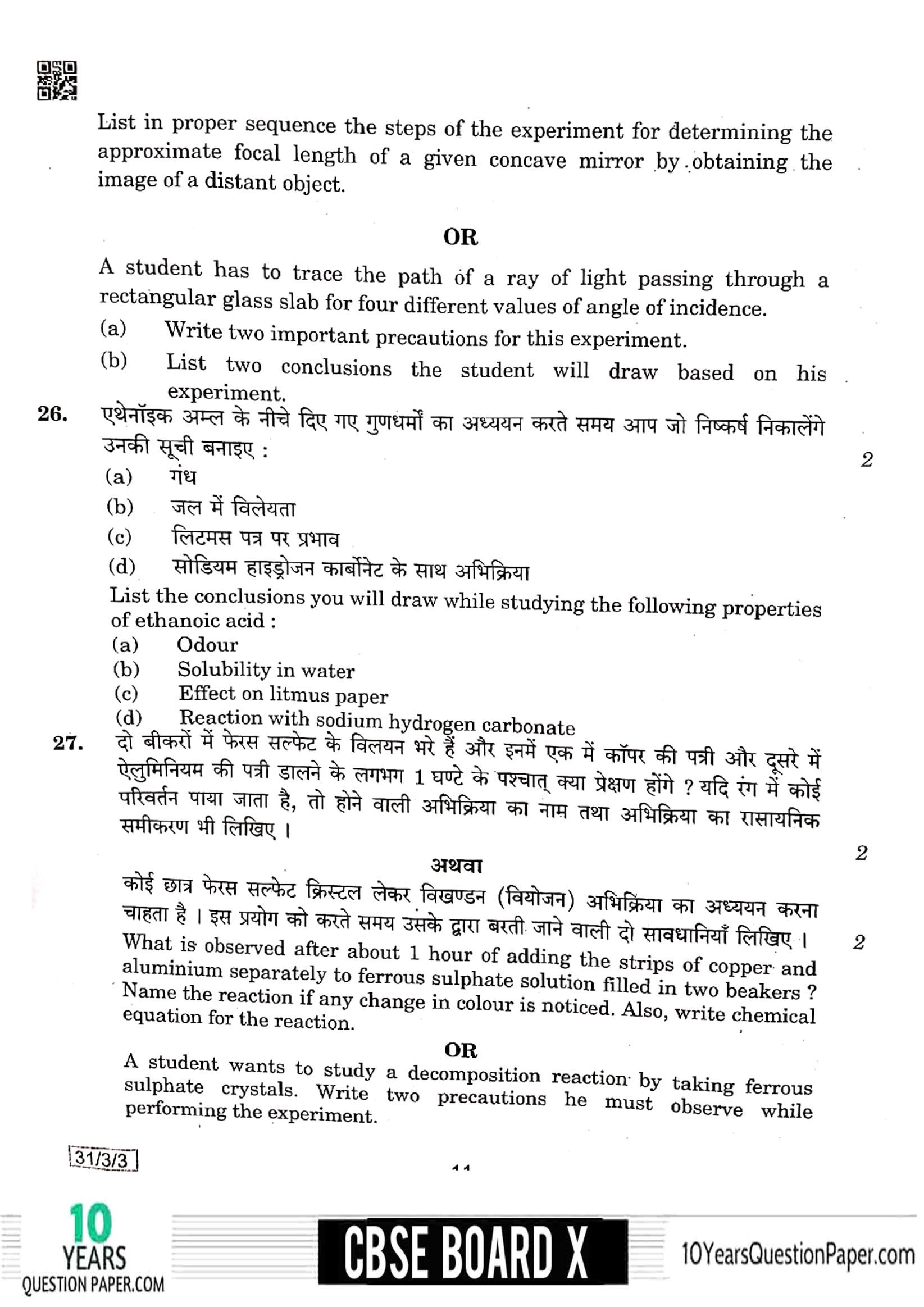
- What is observed about 1 hour after adding strips of copper and aluminium separately to ferrous sulphate solution in two beakers? Name the reaction if any change in colour is noticed, and write its chemical equation.
Free email alert
Get the 2027 CBSE Class 10 papers first
One email when the new CBSE Class 10 Science question papers are published here. No spam, unsubscribe any time.
Download
- Format
- Size
- Unknown
- Pages
- 11
What's next
Class 10 done next year?
A number of scholarships for Class 11–12 depend on your Class 10 marks.
Check eligibility