CBSE 2014 Chemistry Question Paper for Class 12

CBSE
Chemistry2014CBSE Class 12 Chemistry 2014 question paper (code 56/2): 30 questions for 70 marks in 3 hours, including a value-based question. Questions only, no solutions.
Practice these questions to improve your performance in the board examination.
About this paper
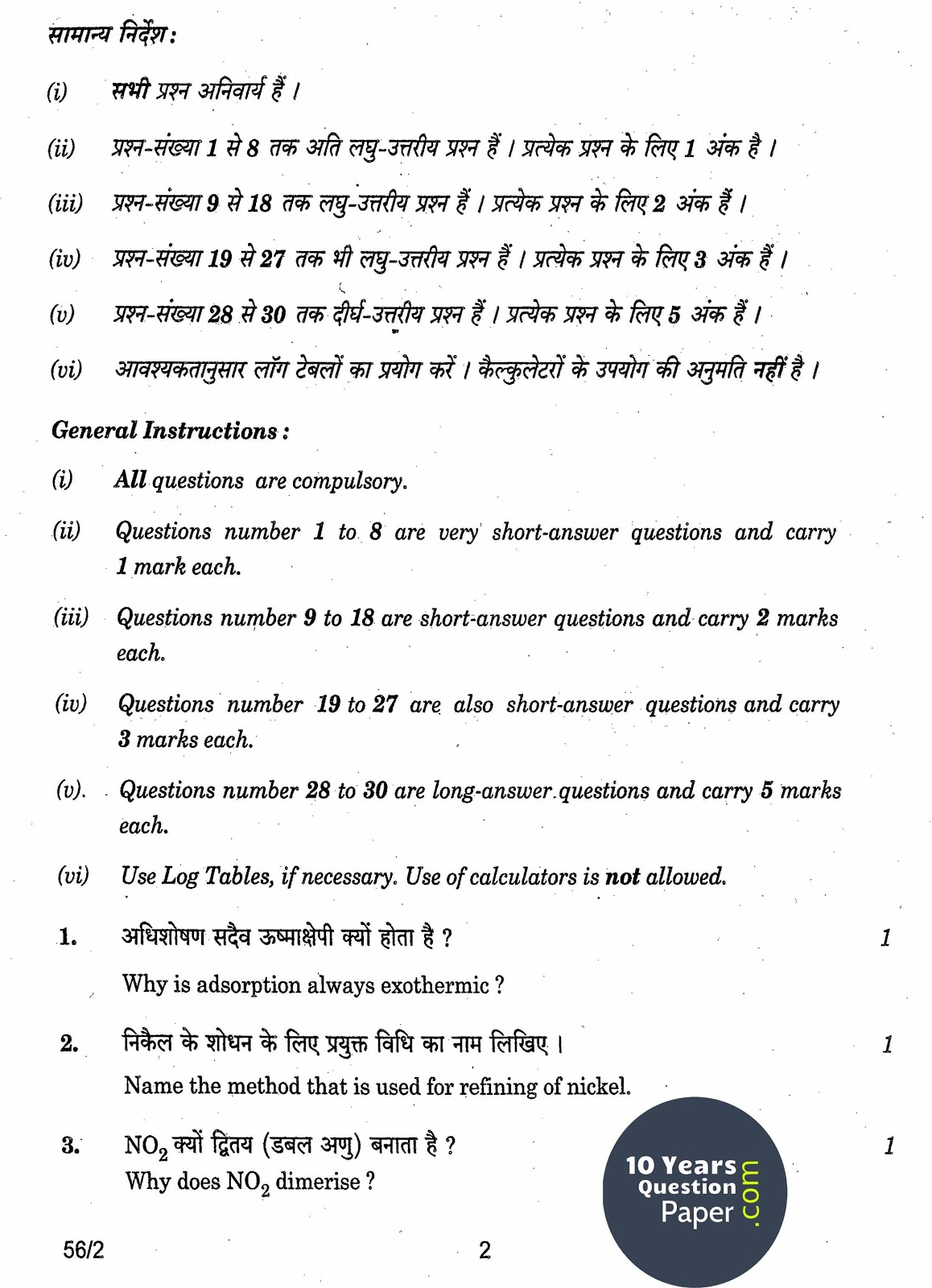
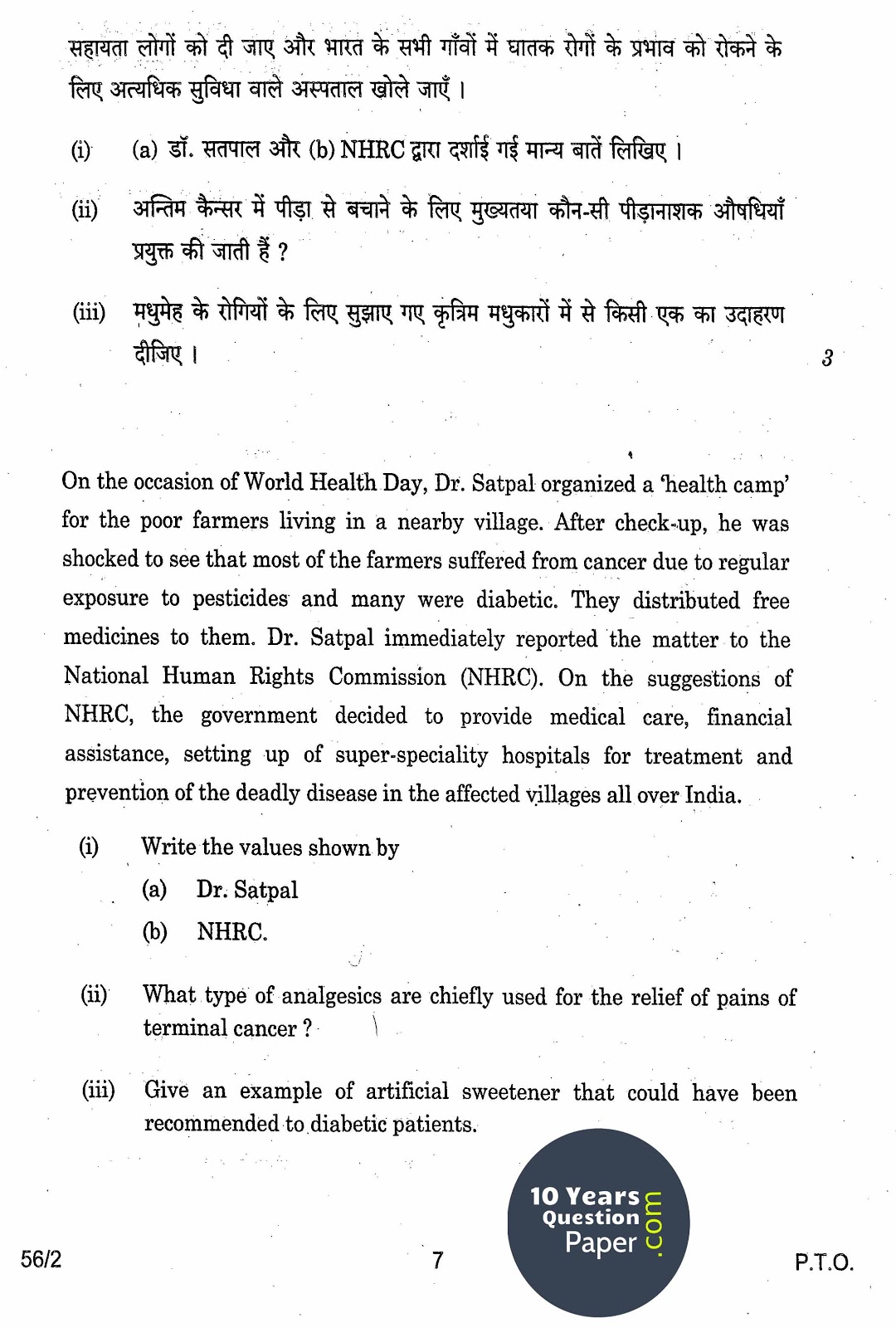
This is the CBSE Class 12 Chemistry (Theory) question paper code 56/2, Series OSR, from the 2014 board examination, printed in both Hindi and English. It carries 70 marks over three hours and has 30 compulsory questions: eight one-mark questions, ten two-mark questions, nine three-mark questions and three five-mark long answers. One three-mark question is value-based, about a doctor's health camp for farmers that uncovers cancer from pesticide exposure. Internal choices are given in one three-mark question and all three five-mark questions. Log tables may be used, but calculators are not allowed. This copy has the questions only, without answers.
- Exam
- CBSE Class 12
- Subject
- Chemistry
- Year
- 2014
- Paper code
- 56/2
- Maximum marks
- 70
- Time allowed
- 3 hours + 15 min reading
- Questions
- 30
- Pages
- 16
- Answers included
- No, questions only
Paper pattern
Questions 1–8
8 marksVery short answer questions, one mark each
Questions 9–18
20 marksShort answer questions, two marks each
Questions 19–27
27 marksShort answer questions, three marks each, including one value-based question; internal choice in one
Questions 28–30
15 marksLong answer questions, five marks each, each with an internal choice
Topics covered
- Solid state
- Solutions and colligative properties
- Electrochemistry
- Chemical kinetics
- Surface chemistry and emulsions
- Isolation of elements
- p-Block elements
- d- and f-Block elements
- Coordination compounds
- Haloalkanes, alcohols and phenols
- Aldehydes, ketones, carboxylic acids and amines
- Biomolecules, polymers and chemistry in everyday life
Questions from this paper
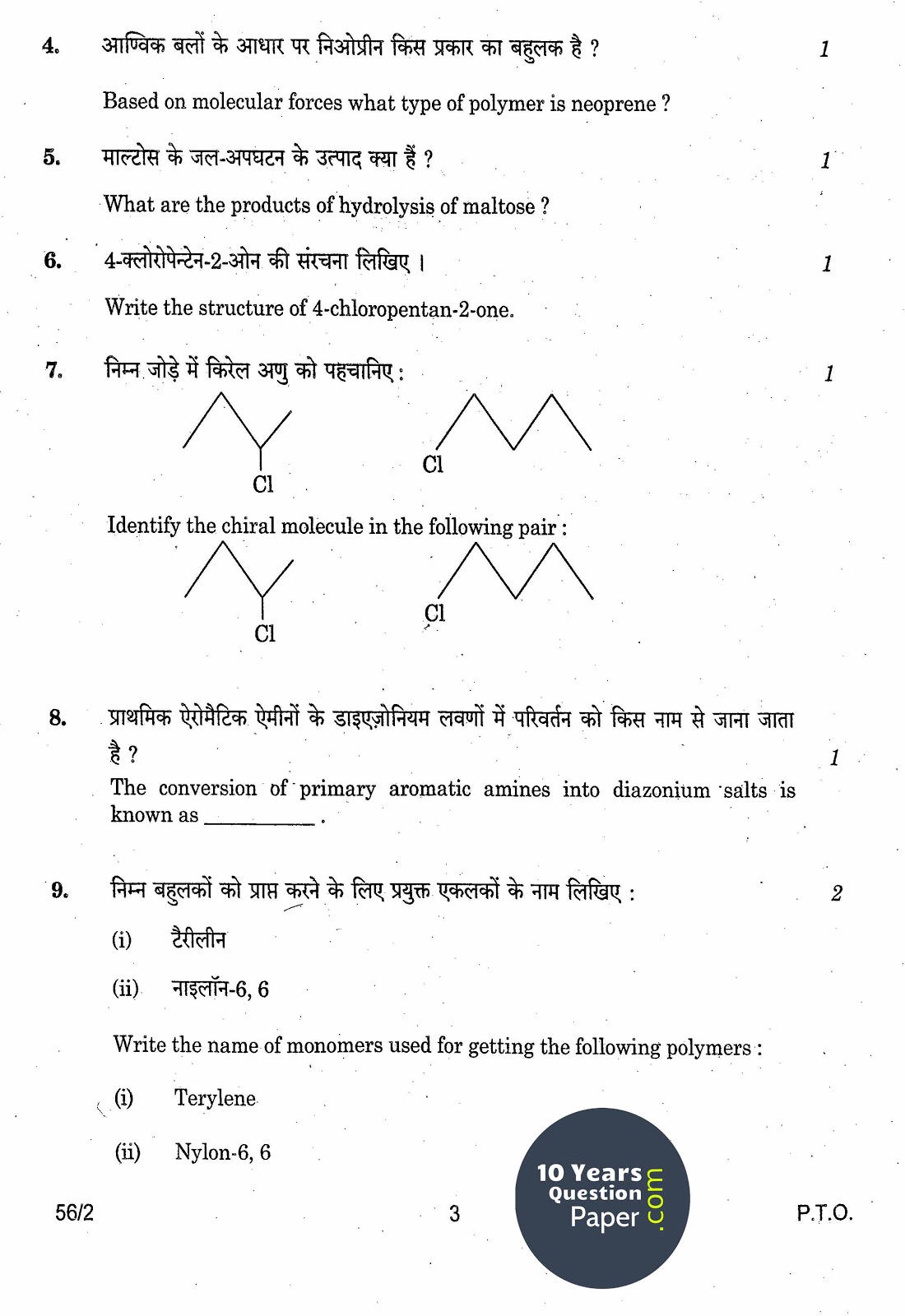
- Why is adsorption always exothermic?
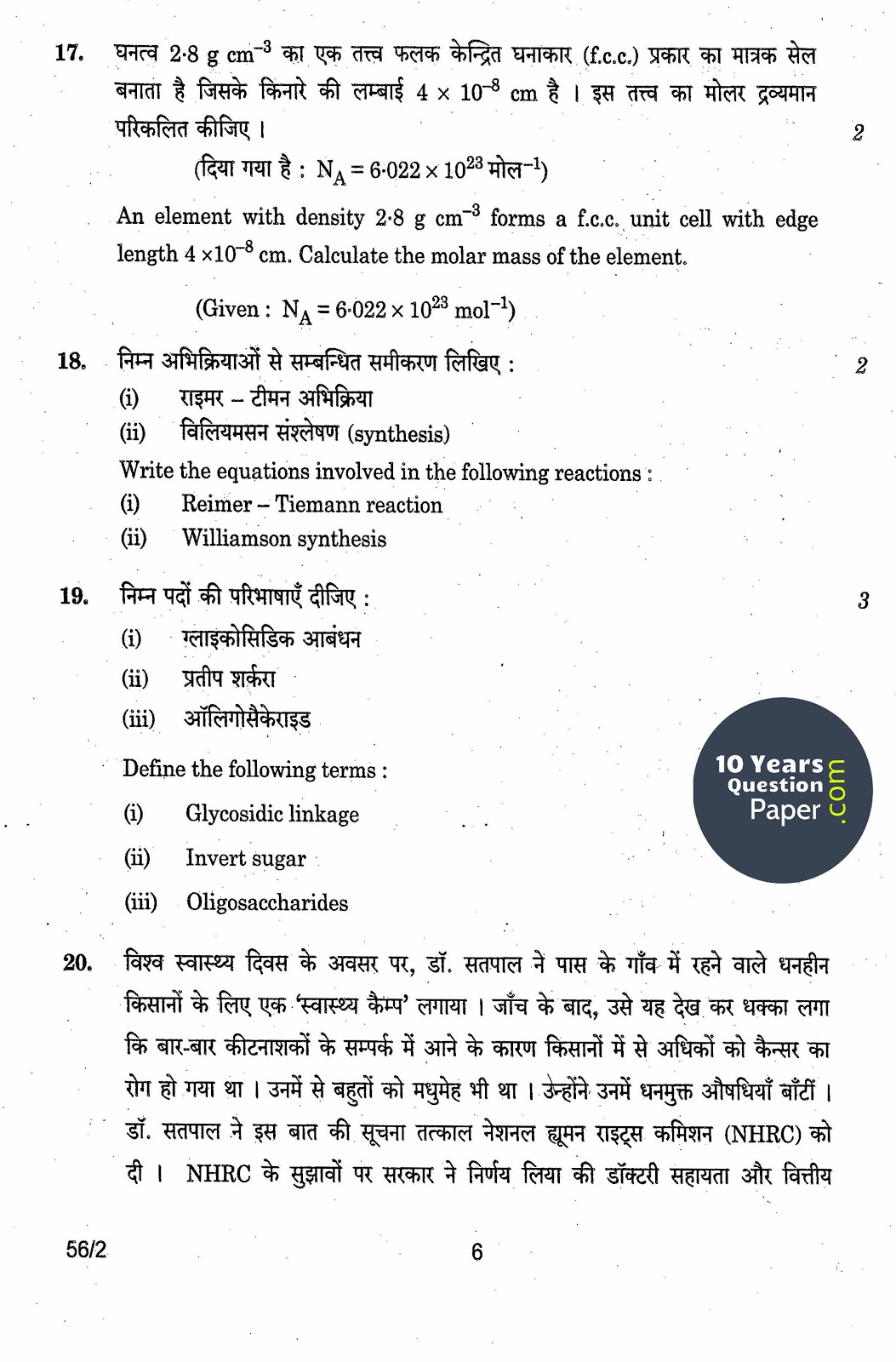
- An element with density 2.8 g cm⁻³ forms an f.c.c. unit cell with edge length 4 × 10⁻⁸ cm. Calculate the molar mass of the element. (Given: Nₐ = 6.022 × 10²³ mol⁻¹)
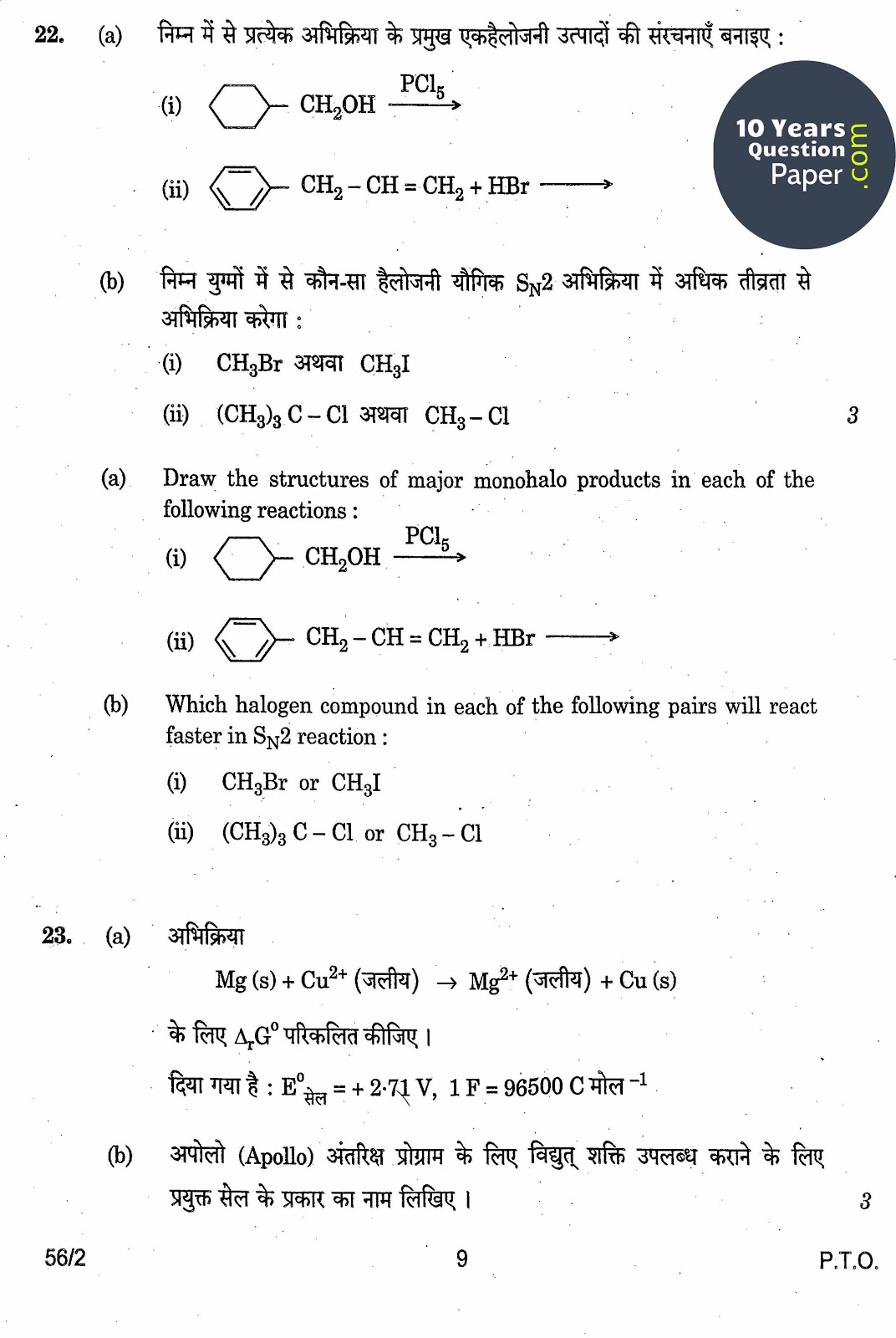
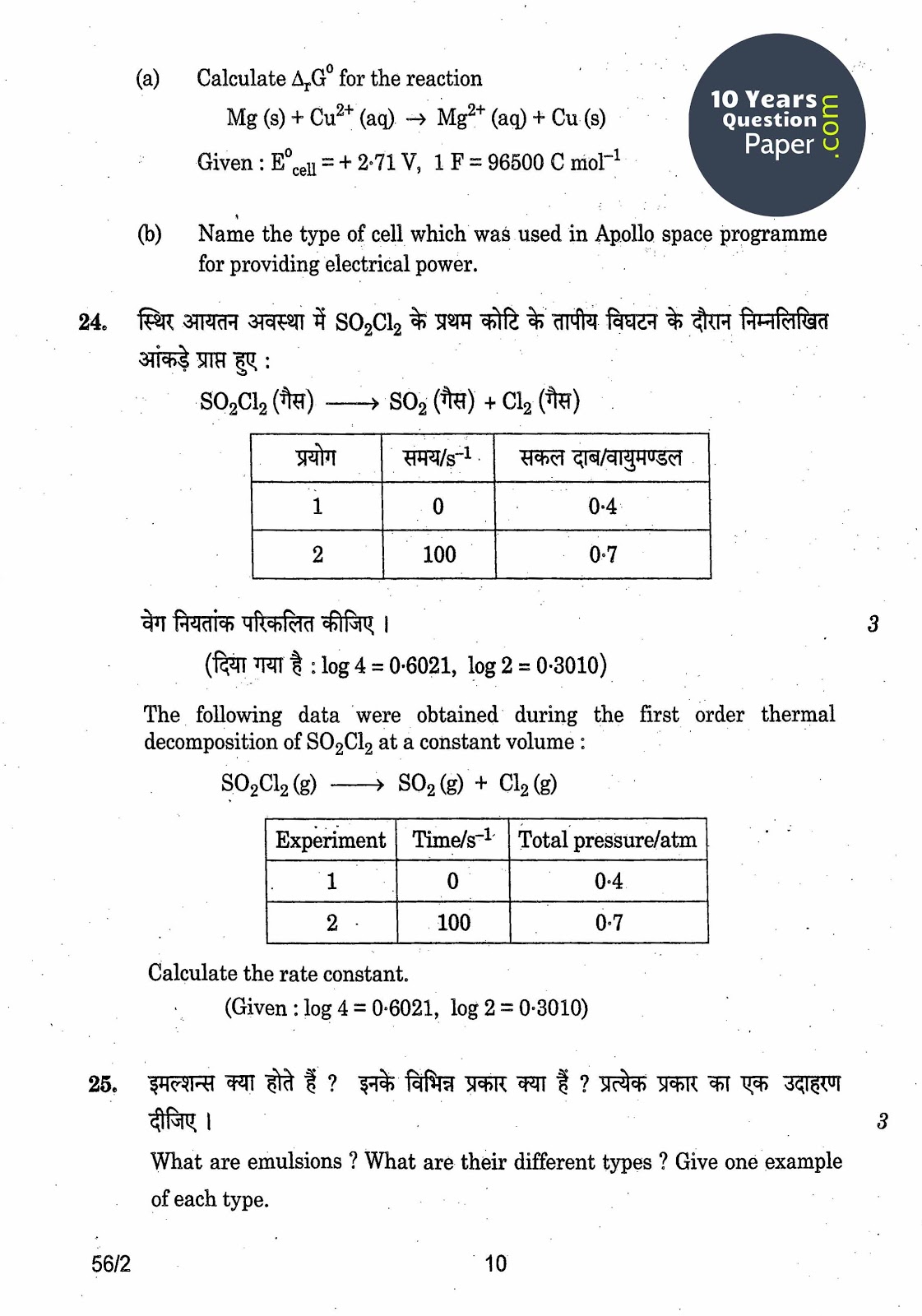
- Calculate ΔrG° for the reaction Mg(s) + Cu²⁺(aq) → Mg²⁺(aq) + Cu(s), given E°cell = +2.71 V and 1 F = 96500 C mol⁻¹.
- What are emulsions? What are their different types? Give one example of each type.
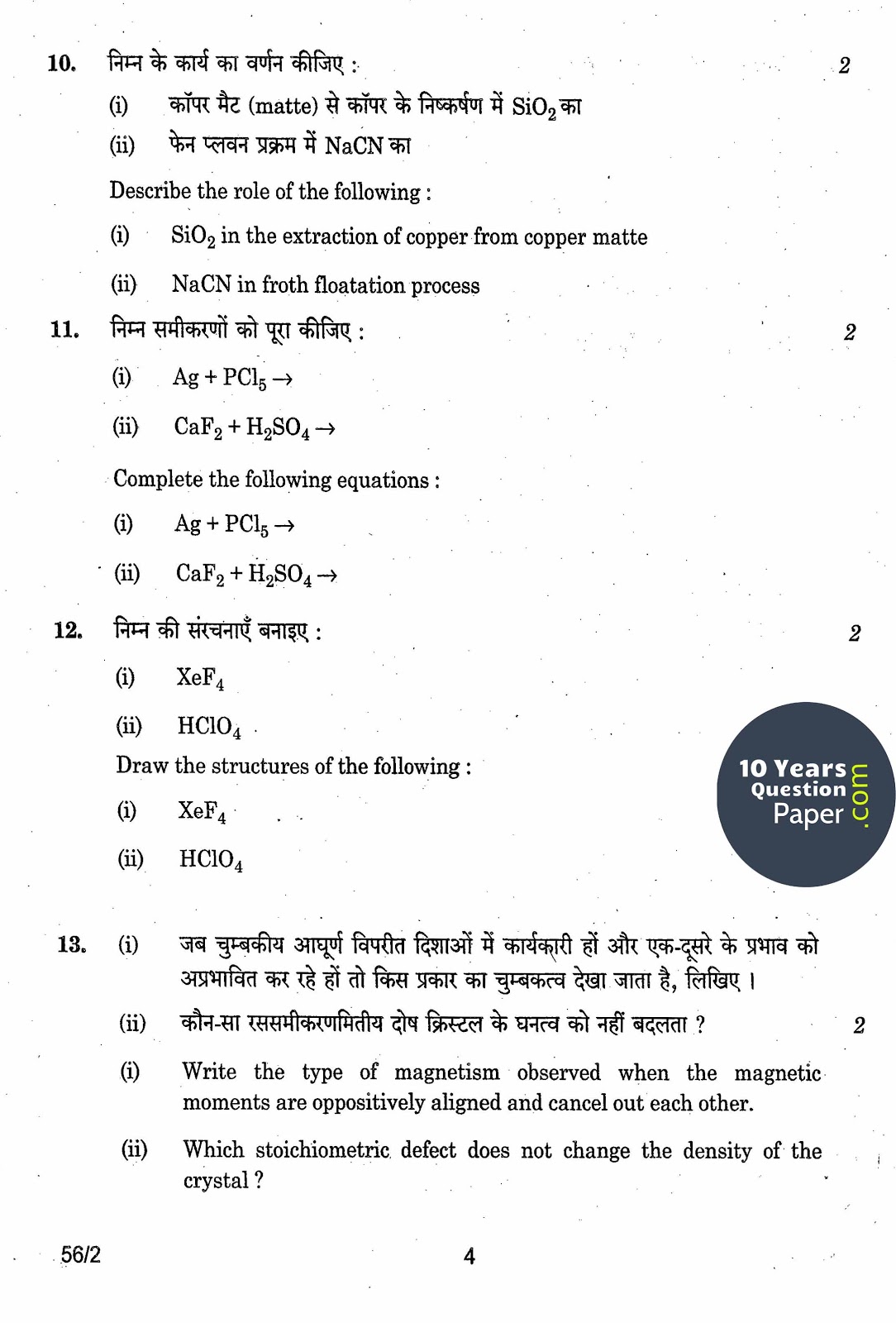
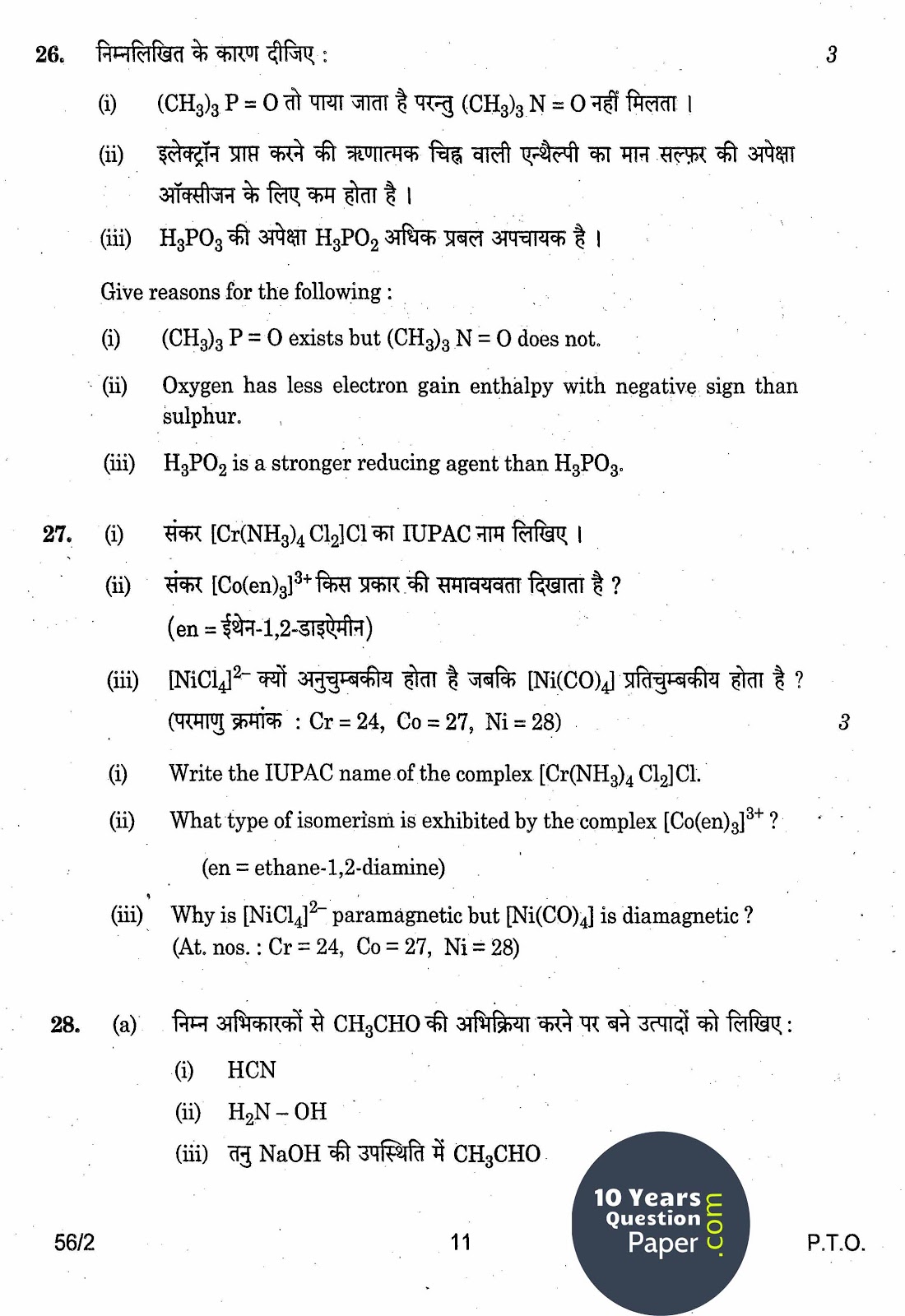
- Why is [NiCl₄]²⁻ paramagnetic but [Ni(CO)₄] diamagnetic? (At. no.: Ni = 28)
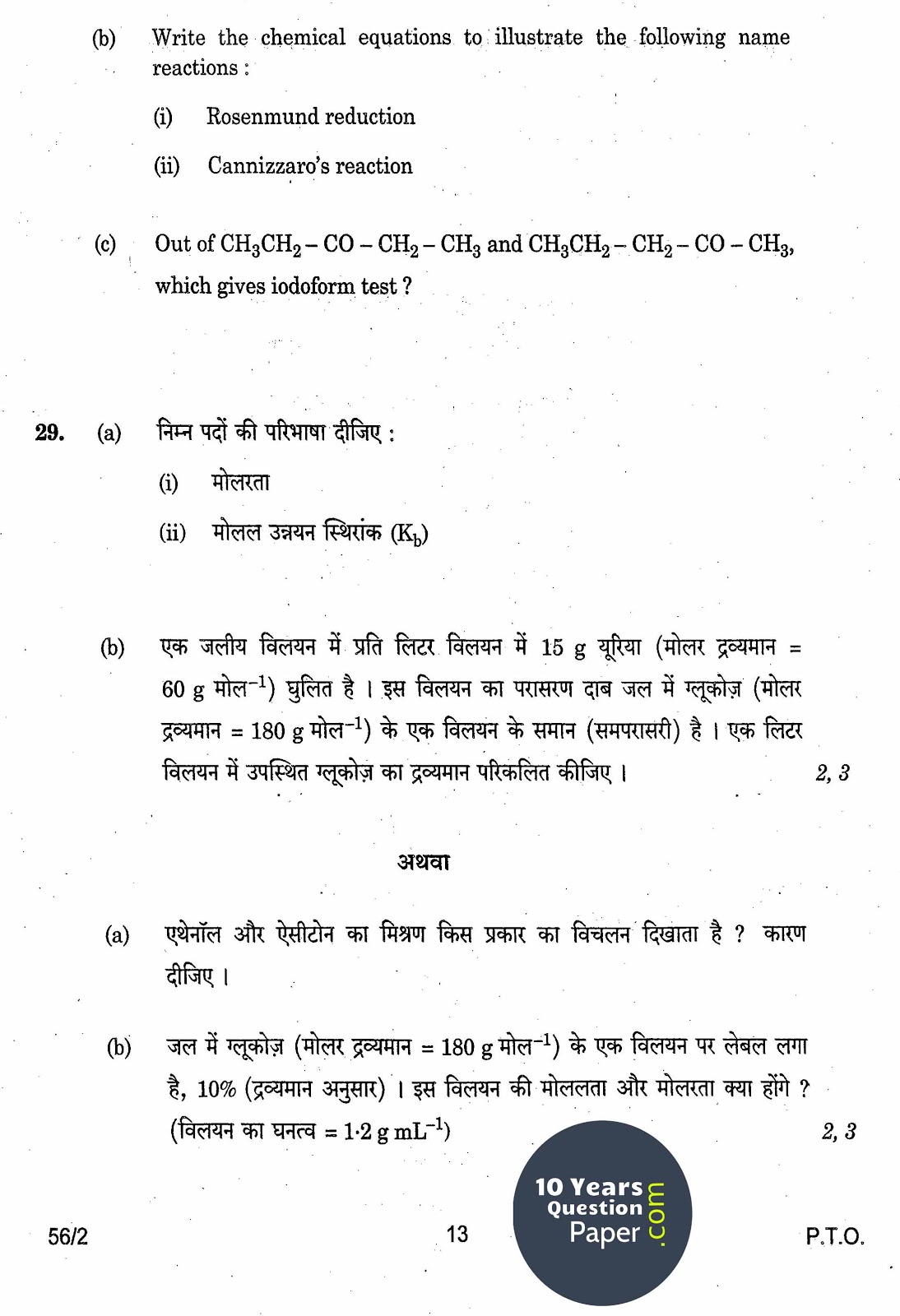
- A solution containing 15 g urea (molar mass = 60 g mol⁻¹) per litre is isotonic with a solution of glucose (molar mass = 180 g mol⁻¹) in water. Calculate the mass of glucose present in one litre of its solution.
Free email alert
Get the 2027 CBSE Class 12 papers first
One email when the new CBSE Class 12 Chemistry question papers are published here. No spam, unsubscribe any time.
What's next
Planning what comes after Class 12?
Compare college costs, education loans, and scholarships in one place.
See the cost breakdown