ISC 2025 Chemistry Question Paper for Class 12

ISC
Chemistry2025Download the official ISC Class 12 Chemistry question paper from the 2025 board examination conducted by CISCE (paper code 862A). Practise with the actual 2025 paper to revise for the final ISC examination.
Official question paper published by CISCE.
About this paper
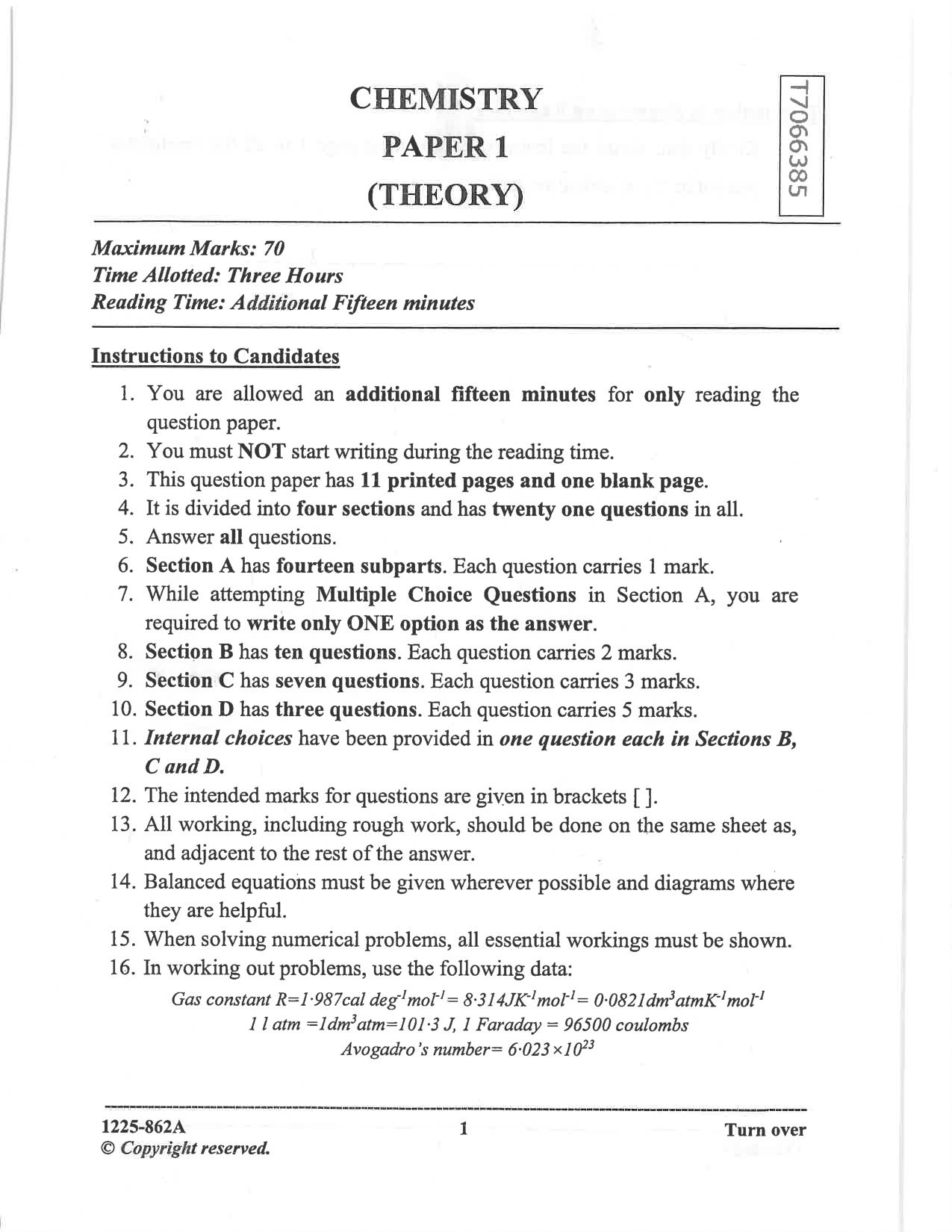
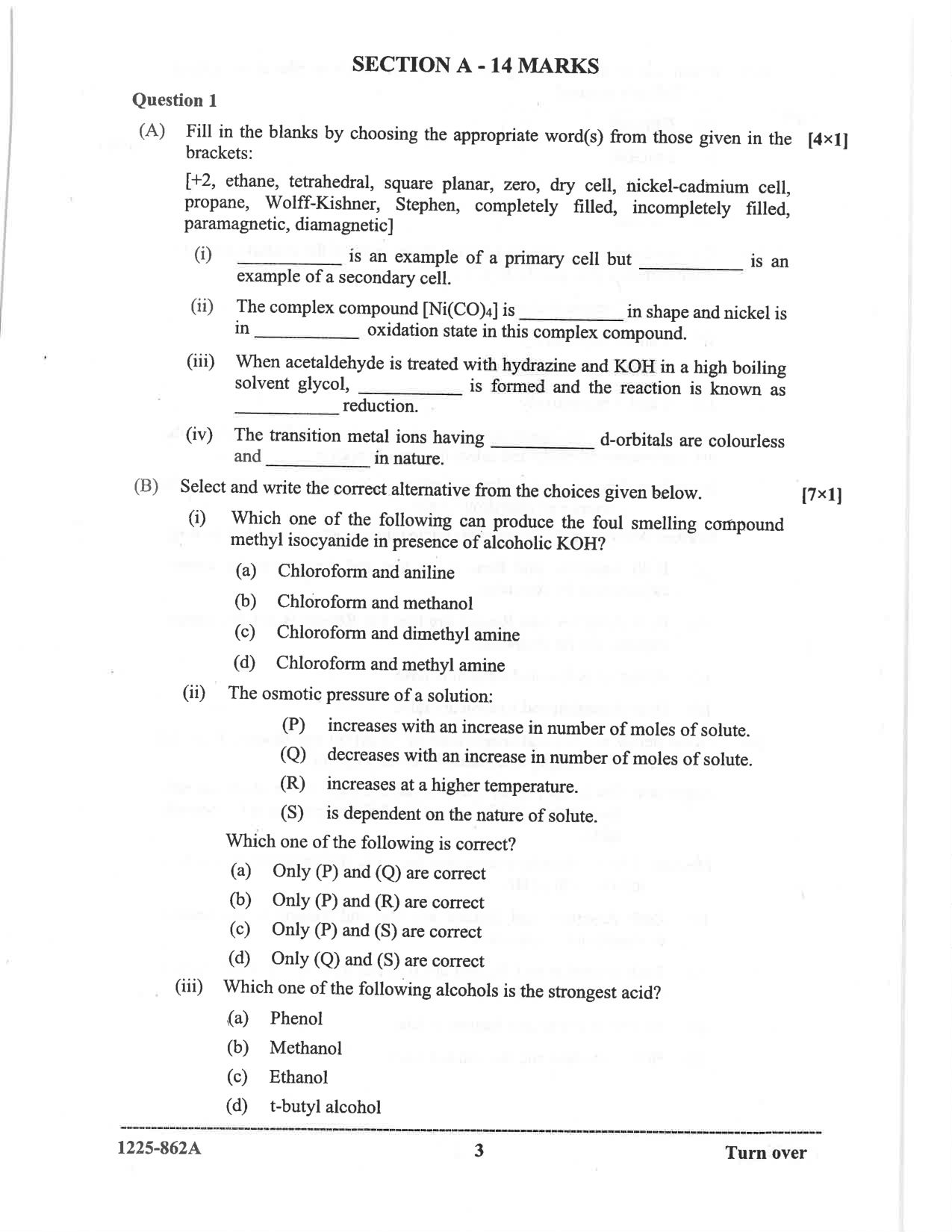
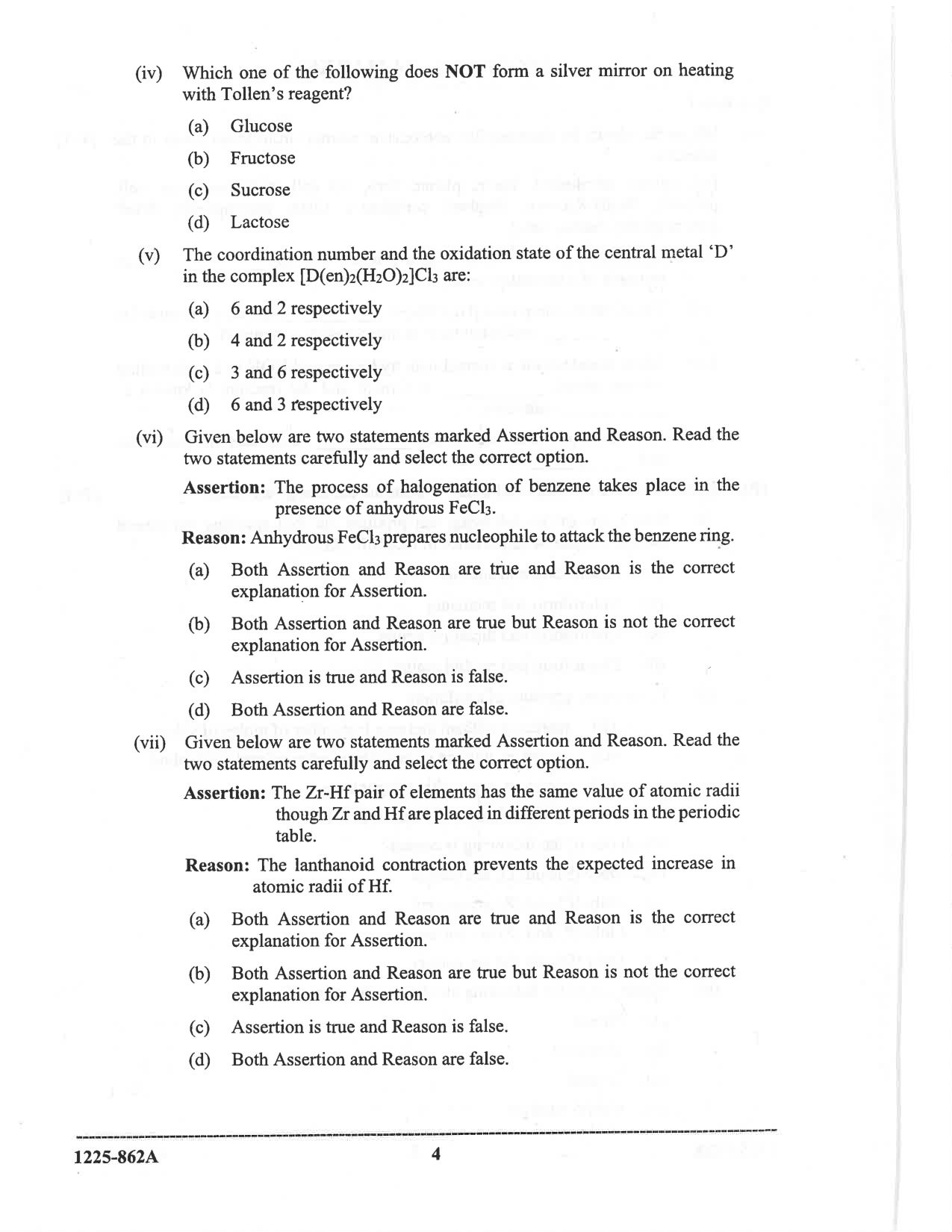
This is ISC Class 12 Chemistry Paper 1 (Theory), code 862A, from the 2025 board examination. It carries 70 marks over three hours, with fifteen minutes to read the paper, and has 21 compulsory questions in four sections. Section A is worth 14 marks: fill-in-the-blank items, multiple-choice questions including two assertion–reason items, and a passage on rate laws, order and molecularity. Ten questions carry two marks, seven carry three marks and three carry five marks, with an internal choice in one question each in Sections B, C and D. Section D includes a passage on phenol and picric acid and another on osmotic pressure, hypertonic solutions and reverse osmosis. A list of constants is printed. This copy has the questions only.
- Exam
- ISC Class 12
- Subject
- Chemistry
- Year
- 2025
- Paper code
- 862A
- Maximum marks
- 70
- Time allowed
- 3 hours + 15 min reading
- Questions
- 21
- Pages
- 12
- Answers included
- No, questions only
Paper pattern
Section A
14 marksQuestion 1 with 14 one-mark sub-parts: four fill-in-the-blanks, seven multiple-choice items (two assertion–reason) and three questions on a passage about order and molecularity
Section B
20 marksQuestions 2–11, two marks each; internal choice in one question
Section C
21 marksQuestions 12–18, three marks each; internal choice in one question
Section D
15 marksQuestions 19–21, five marks each, including two passage-based questions; internal choice in one question
Topics covered
- Electrochemistry
- Chemical kinetics
- Solutions and colligative properties
- Coordination compounds
- Crystal field theory
- d-block elements
- Haloalkanes and haloarenes
- Alcohols and phenols
- Aldehydes and carboxylic acids
- Amines
- Biomolecules
Questions from this paper
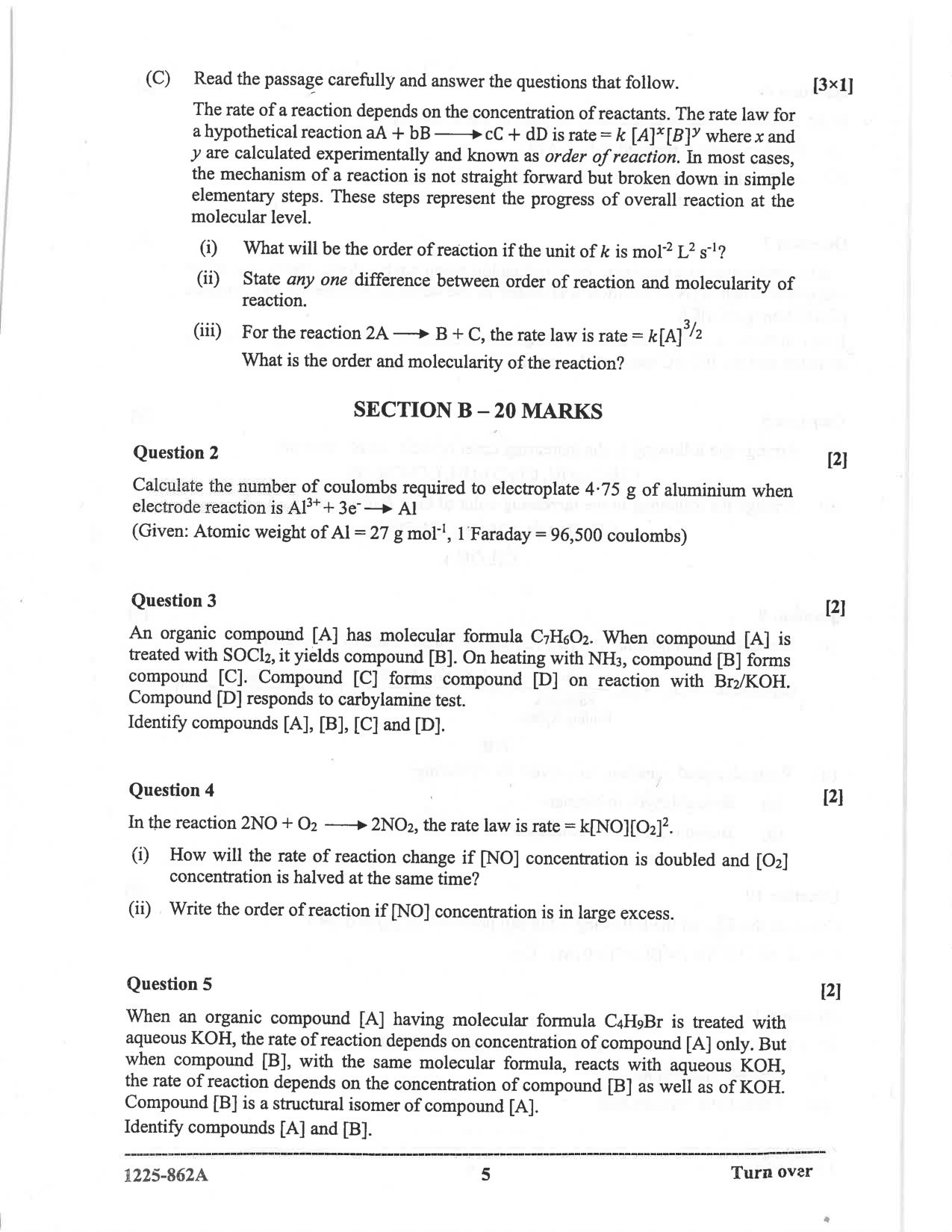
- Calculate the number of coulombs required to electroplate 4.75 g of aluminium by the electrode reaction Al3+ + 3e− → Al. (Atomic weight of Al = 27 g mol−1, 1 faraday = 96,500 coulombs.)
- For 2NO + O2 → 2NO2, the rate law is rate = k[NO]2[O2]. How does the rate change if the concentration of NO is doubled and that of O2 is halved at the same time?
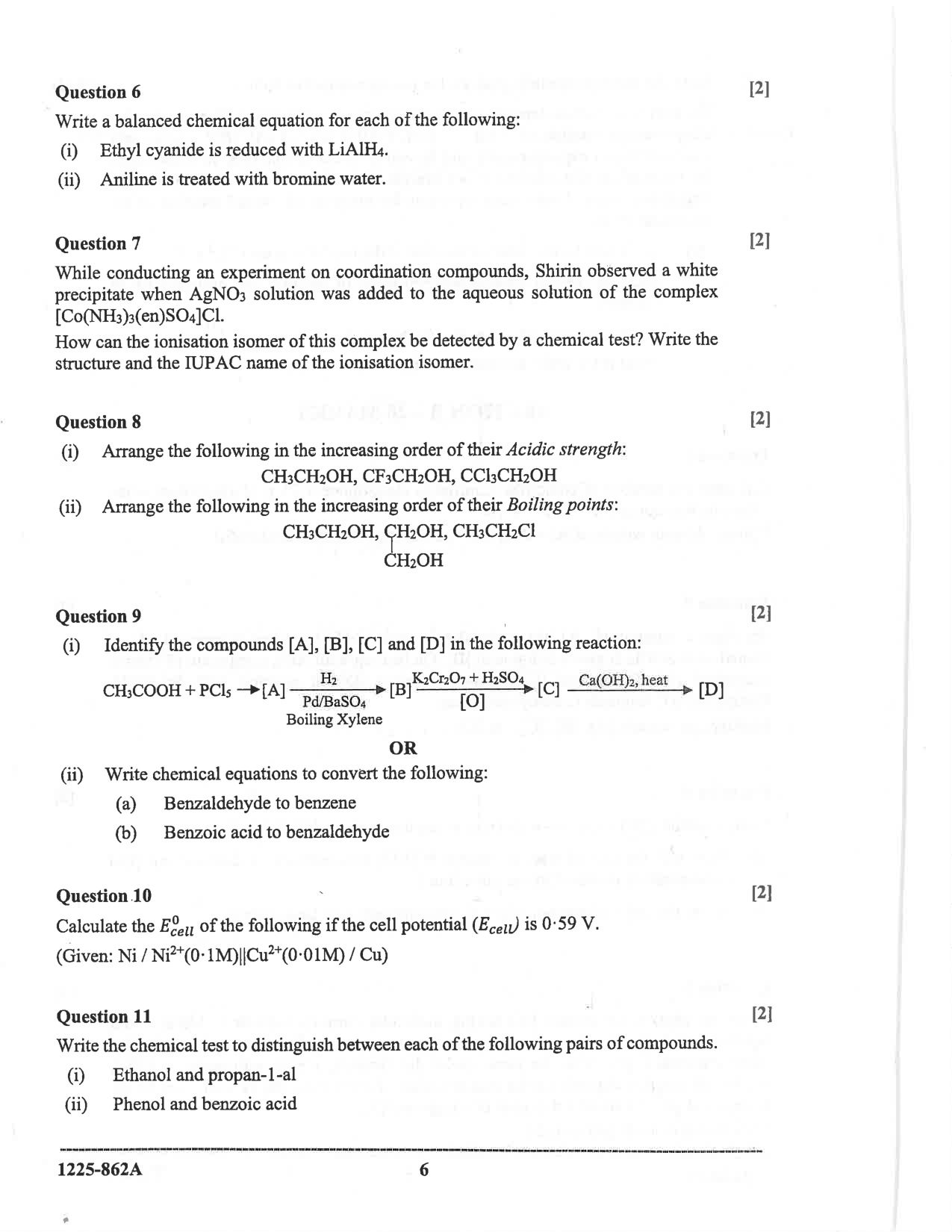
- Write a balanced equation for the reduction of ethyl cyanide with LiAlH4, and for the reaction of aniline with bromine water.
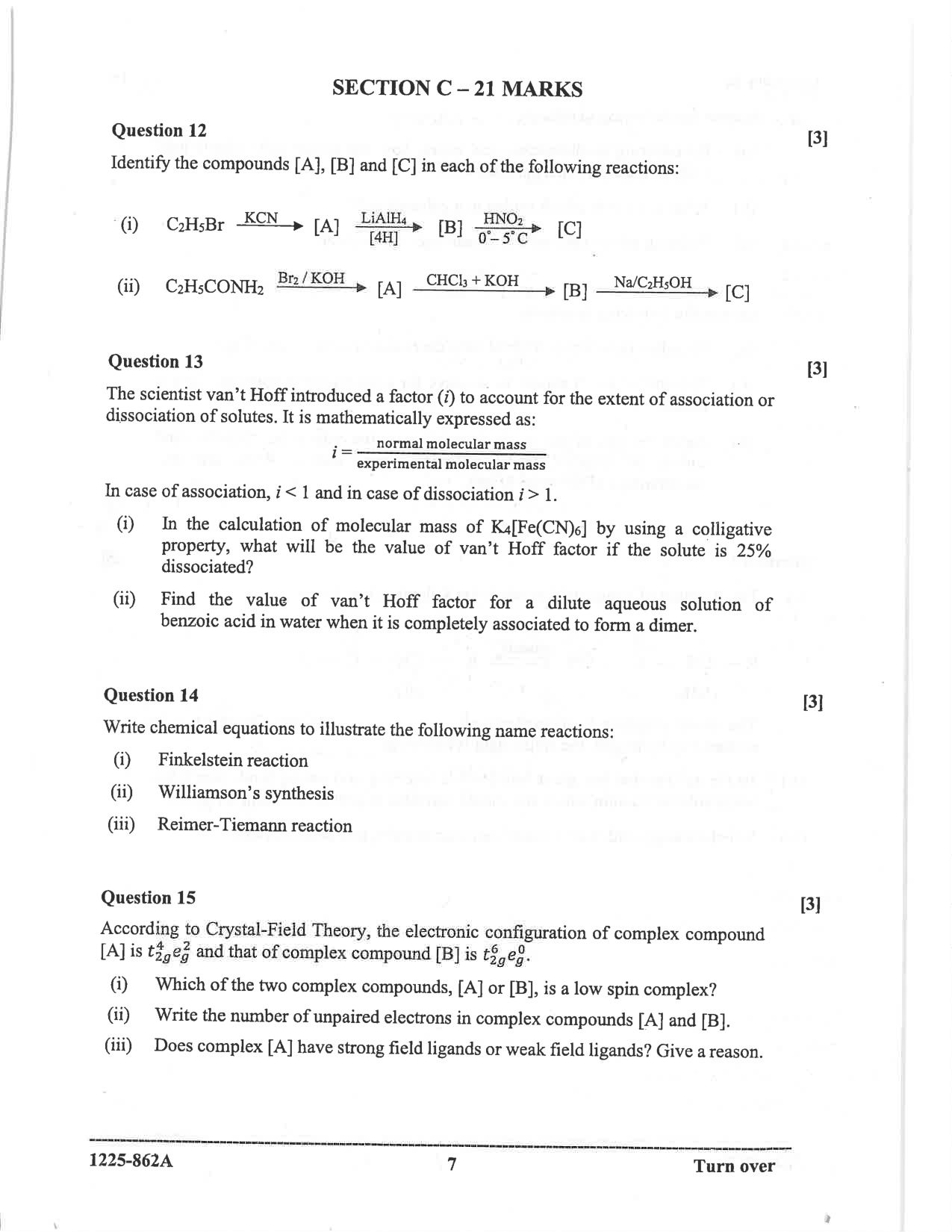
- In the calculation of the molecular mass of K4[Fe(CN)6] from a colligative property, what is the van't Hoff factor if the solute is 25% dissociated?
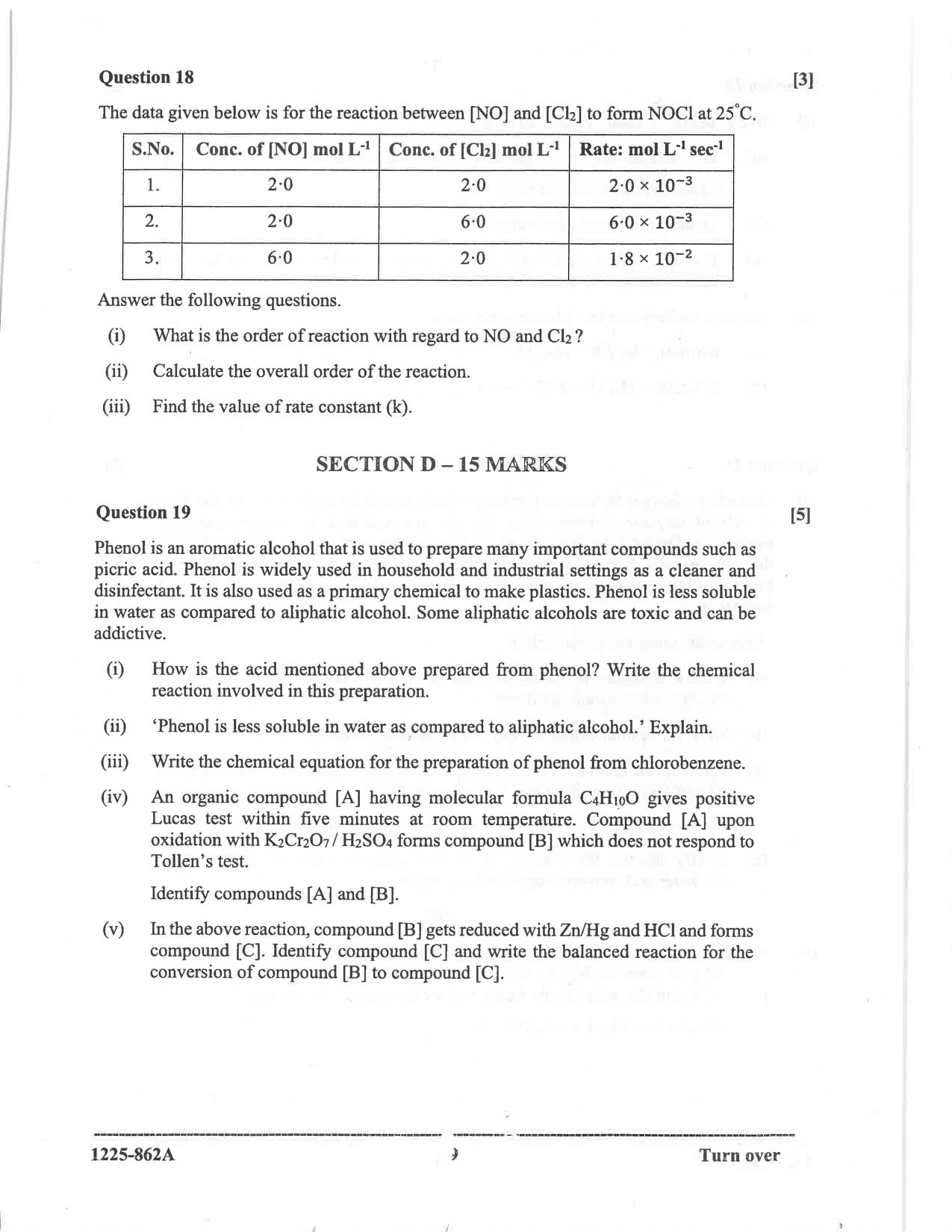
- How is picric acid prepared from phenol? Write the chemical reaction.
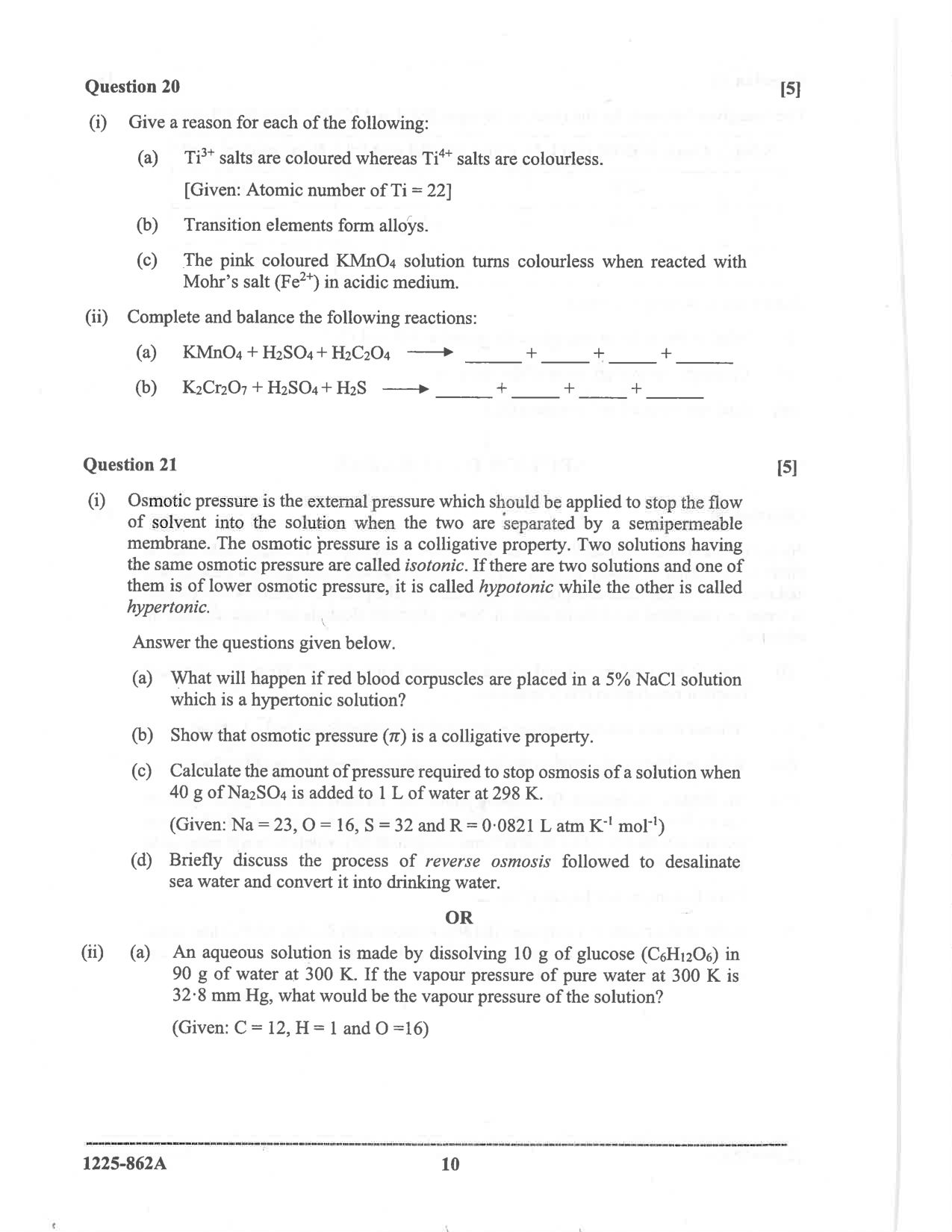
- What will happen if red blood corpuscles are placed in a 5% NaCl solution, which is hypertonic?
Free email alert
Get the 2027 ISC Class 12 papers first
One email when the new ISC Class 12 Chemistry question papers are published here. No spam, unsubscribe any time.
What's next
Engineering, medicine, or abroad after ISC?
See what a degree actually costs before you shortlist colleges.
See the cost breakdown