CBSE 2016 Hindi Question Paper for Class 12

CBSE
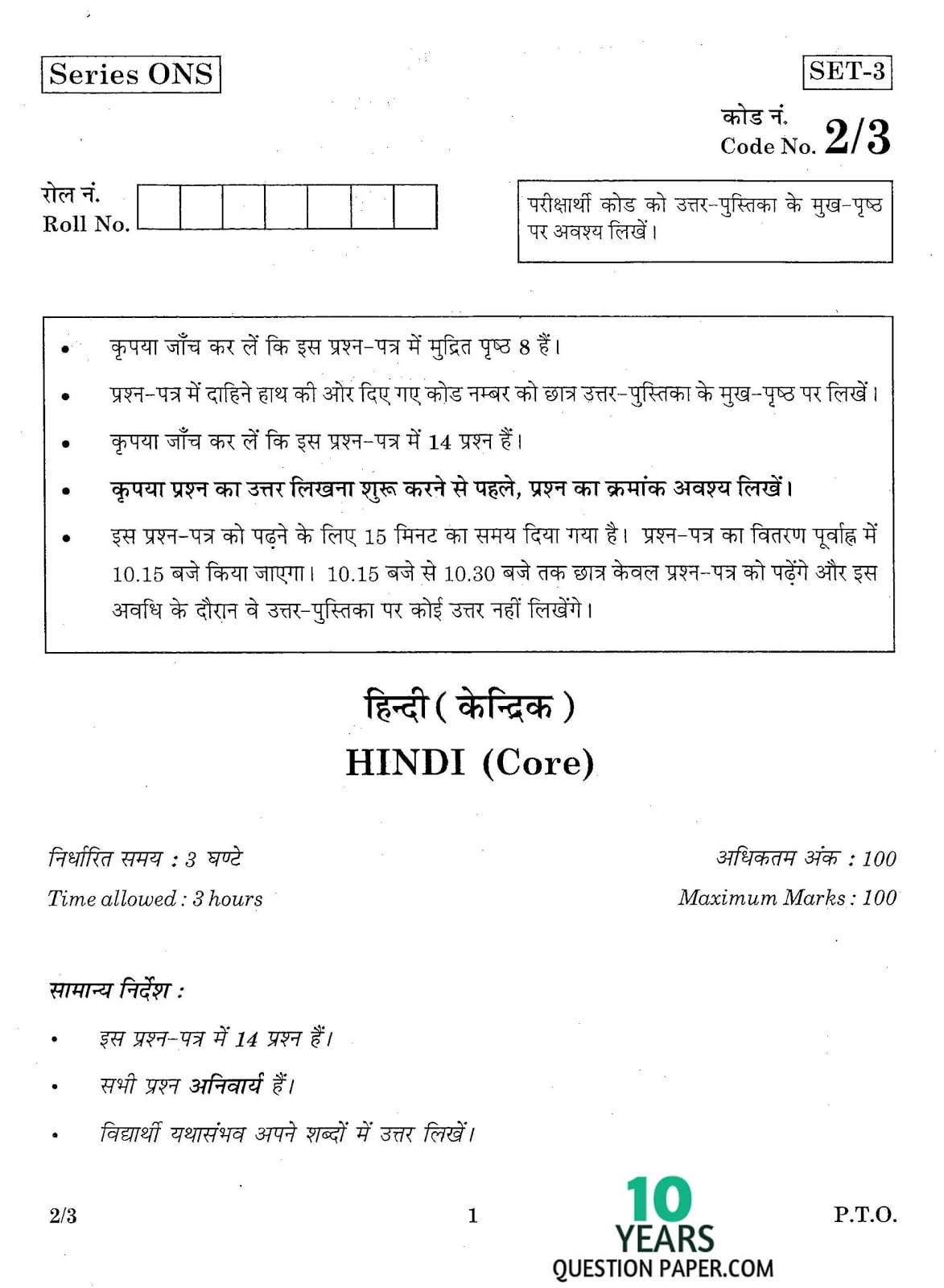
Hindi2016CBSE Class 12 Hindi Core question paper 2016 (code 2/3): reading, writing and Aroh-Vitan sections, 14 questions for 100 marks in 3 hours. Questions only.
Practice these questions to improve your performance in the board examination.
About this paper
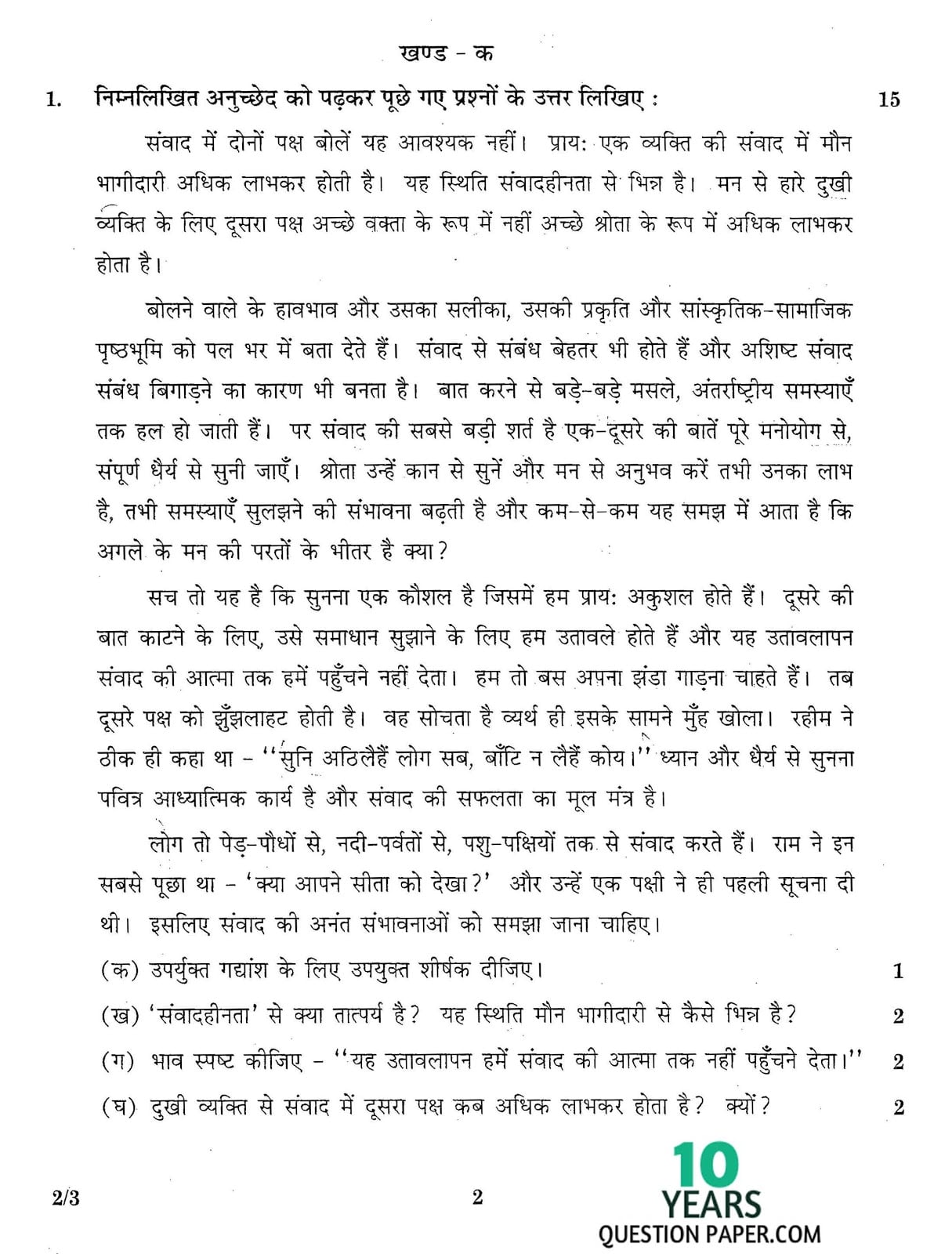
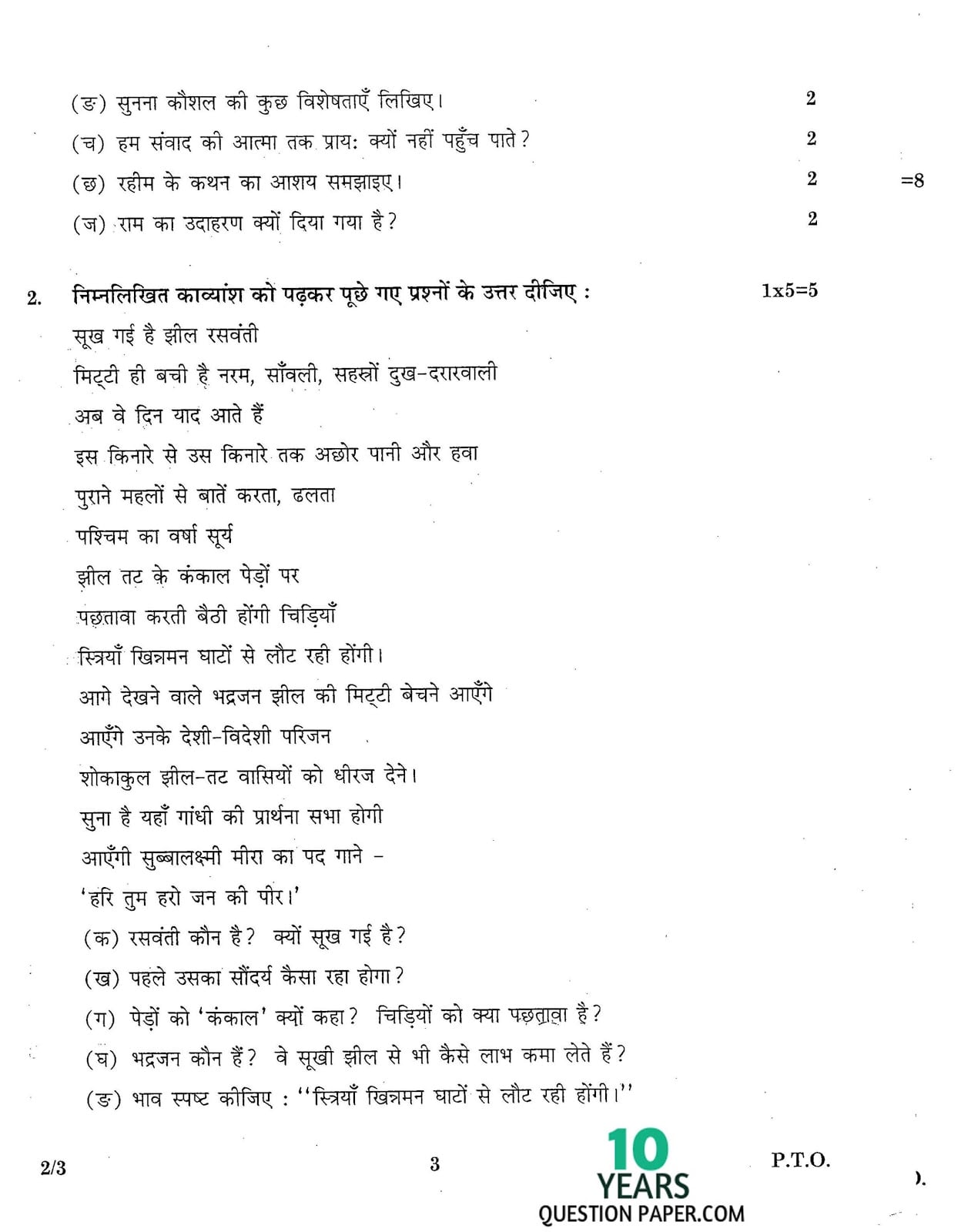
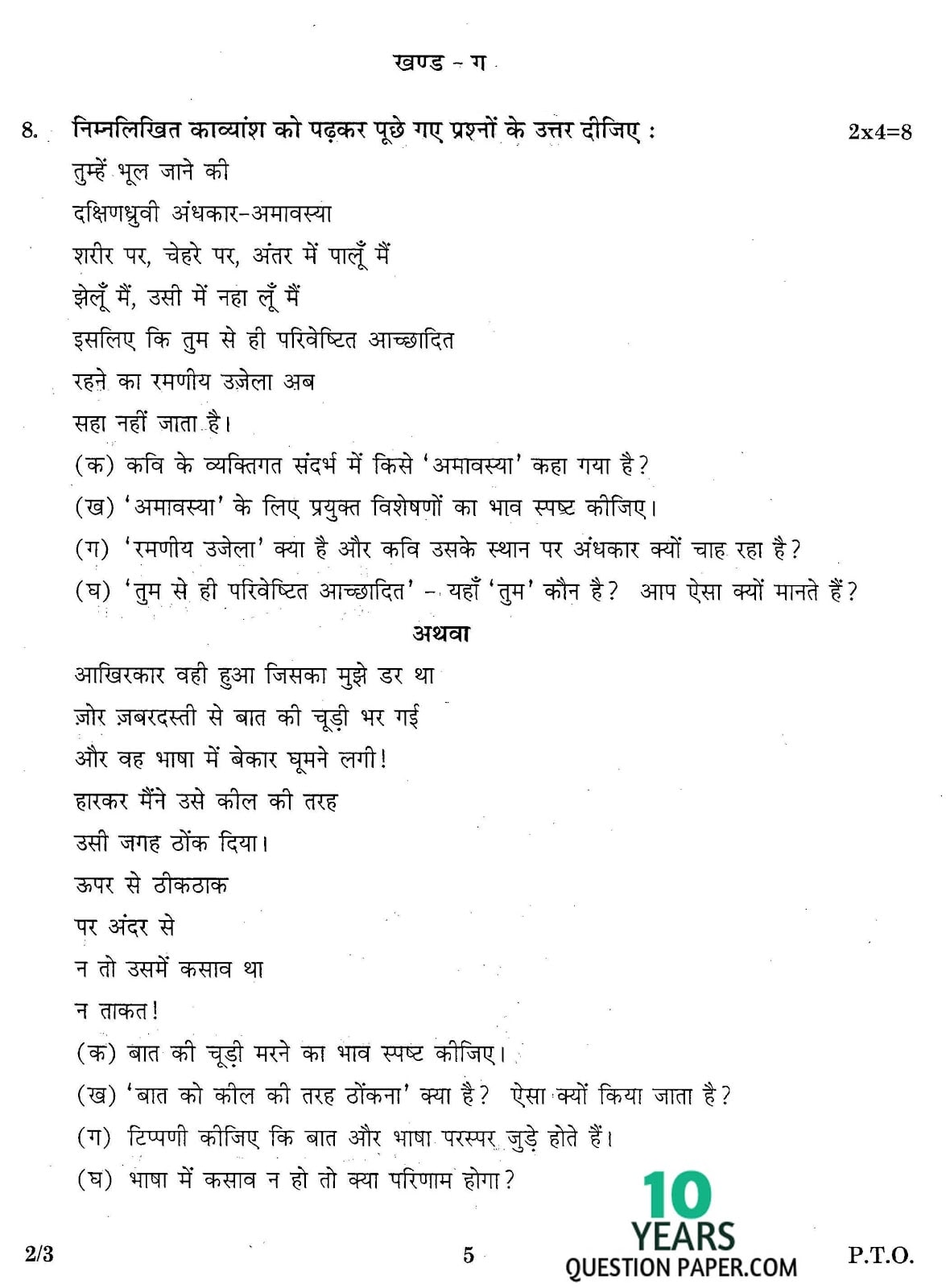
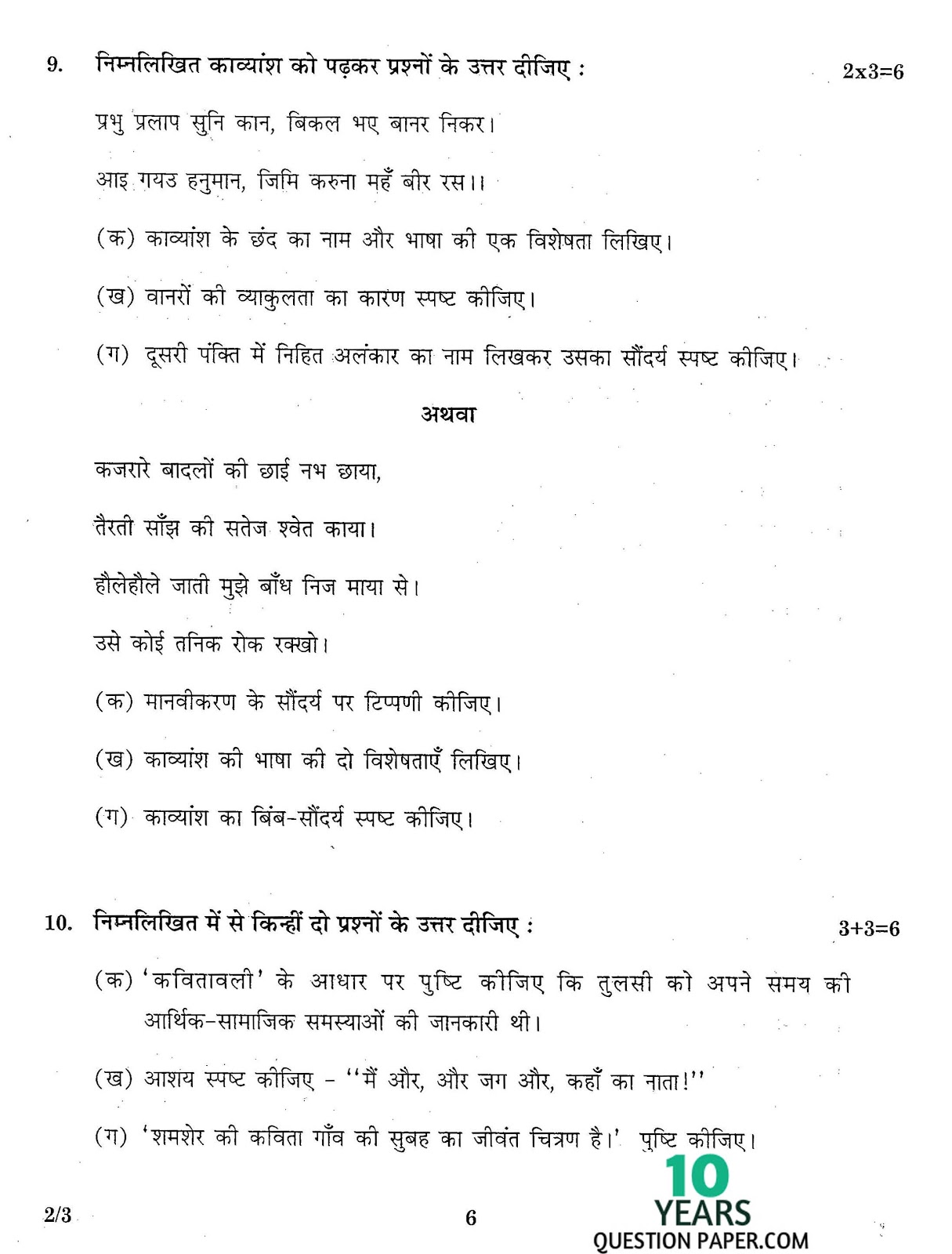
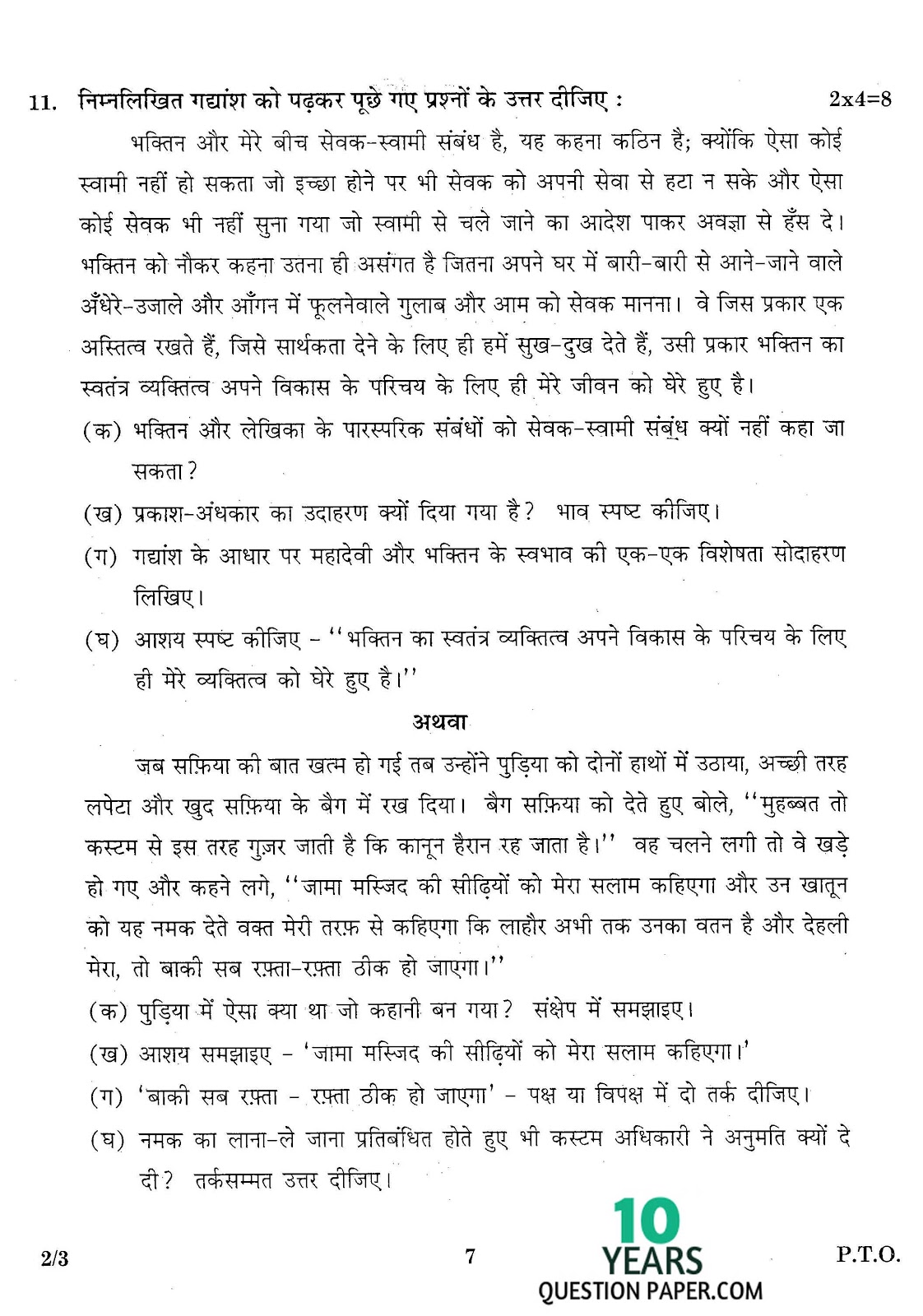
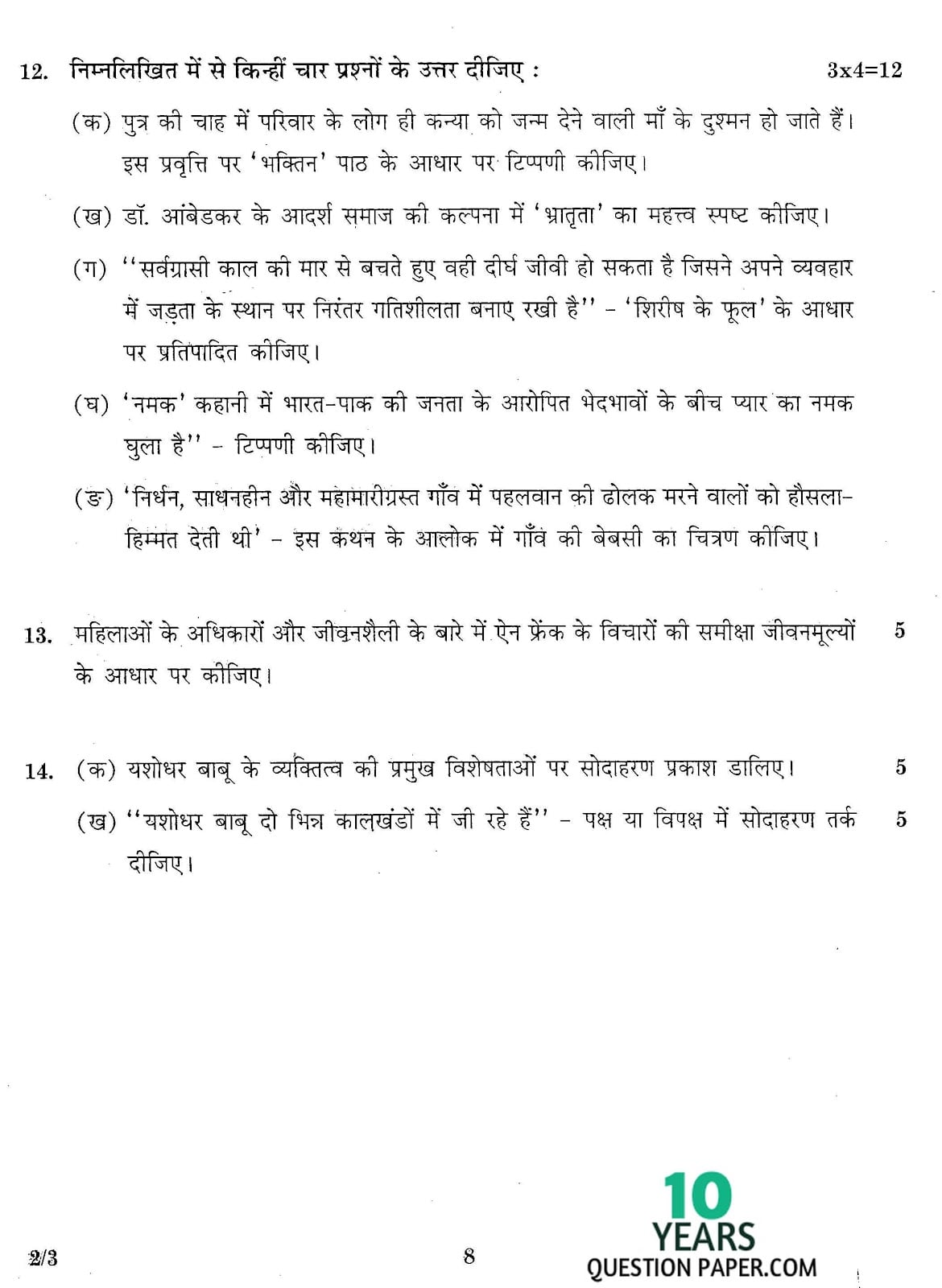
This is the CBSE Class 12 Hindi (Core) paper from the 2016 board examination, code 2/3 (Series ONS, Set 3). It carries 100 marks over three hours and has 14 compulsory questions in three sections, written entirely in Hindi; the questions below are translated from Hindi. Khand Ka is reading, with an unseen prose passage on listening as a skill in conversation and an unseen poem about a dried-up lake. Khand Kha covers writing and media: an essay, a formal letter, short questions on journalism, a feature and an article. Khand Ga covers the Aroh and Vitan textbooks, including Bhaktin, Namak, Shirish ke Phool, Kavitavali, Anne Frank's diary and Yashodhar Babu, with choices in several questions. This copy has the questions only, without solutions.
- Exam
- CBSE Class 12
- Subject
- Hindi
- Year
- 2016
- Paper code
- 2/3
- Maximum marks
- 100
- Time allowed
- 3 hours
- Questions
- 14
- Pages
- 8
- Answers included
- No, questions only
Paper pattern
Khand Ka (Section A)
20 marksQuestions 1–2: unseen prose passage (15 marks) and unseen poem (5 marks)
Khand Kha (Section B)
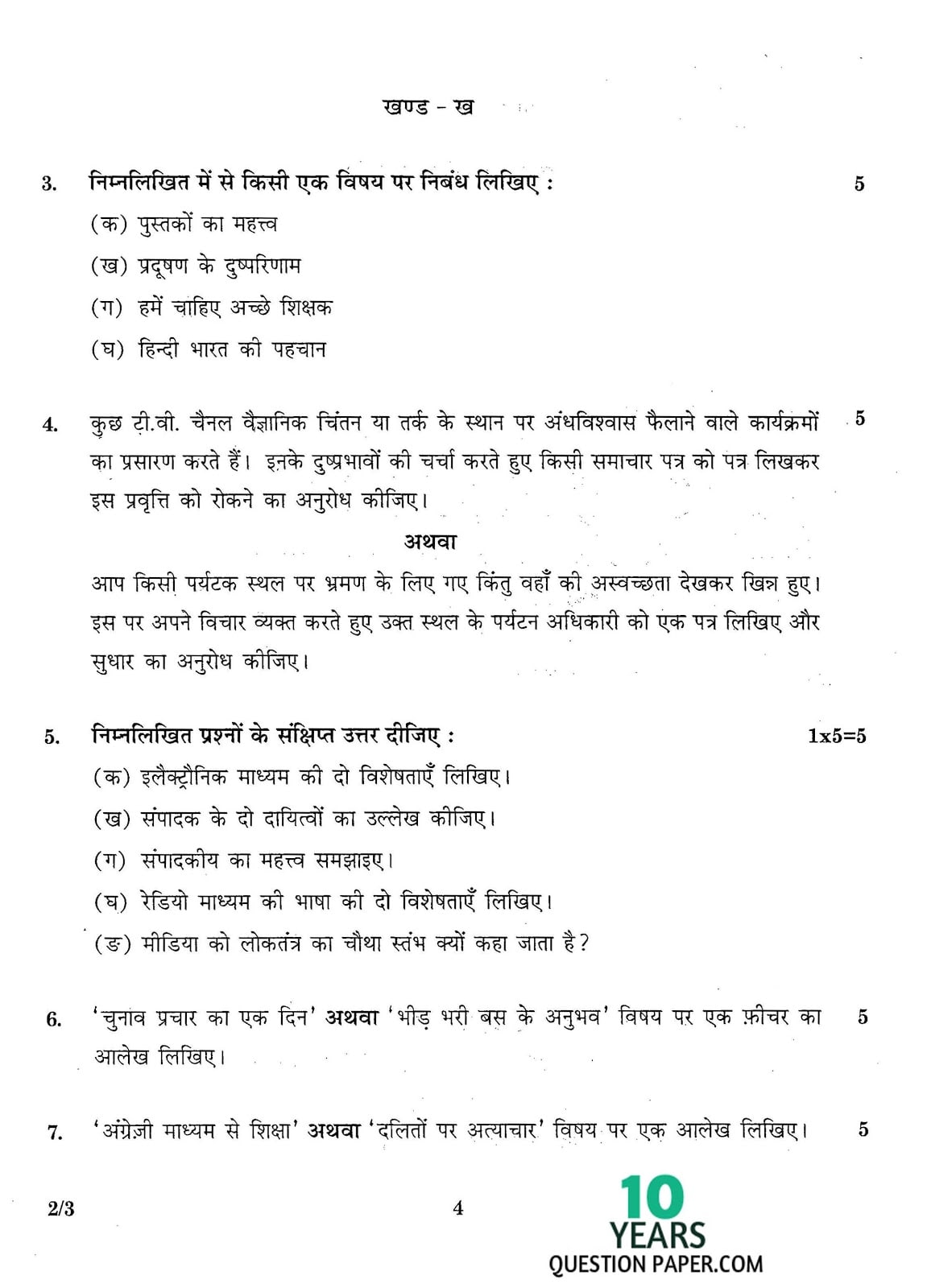
25 marksQuestions 3–7, five marks each: essay, formal letter, short questions on media, feature writing and article writing
Khand Ga (Section C)
55 marksQuestions 8–14: poetry extracts and short answers from Aroh, a prose extract, four of five short answers, and questions on the Vitan supplementary reader
Topics covered
- Unseen passage and unseen poem
- Essay writing
- Formal letter writing
- Mass media and journalism
- Feature and article writing
- Aroh poetry: Kavitavali, Laxman Murchha, Atmaparichay, Usha
- Bhaktin
- Namak
- Shirish ke Phool
- Pahalwan ki Dholak
- Shram Vibhajan aur Jati Pratha
- Vitan: Silver Wedding and Diary ke Panne
Questions from this paper
- Some TV channels broadcast programmes that spread superstition instead of scientific thinking or reason. Write a letter to a newspaper discussing their harmful effects and requesting that this trend be stopped.
- Why is the media called the fourth pillar of democracy?
- On the basis of 'Kavitavali', show that Tulsidas was aware of the economic and social problems of his time.
- Explain the importance of 'fraternity' in Dr. Ambedkar's idea of an ideal society.
- Review Anne Frank's views on women's rights and way of life in the light of human values.
- "Yashodhar Babu is living in two different periods of time." Give arguments with examples for or against this statement.
Free email alert
Get the 2027 CBSE Class 12 papers first
One email when the new CBSE Class 12 Hindi question papers are published here. No spam, unsubscribe any time.
What's next
Planning what comes after Class 12?
Compare college costs, education loans, and scholarships in one place.
See the cost breakdown