CBSE 2016 Economics Question Paper for Class 12

CBSE
Economics2016CBSE Class 12 Economics question paper 2016 (code 58/1): 30 questions for 100 marks in 3 hours, micro and macroeconomics sections. Questions only.
Practice these questions to improve your performance in the board examination.
About this paper
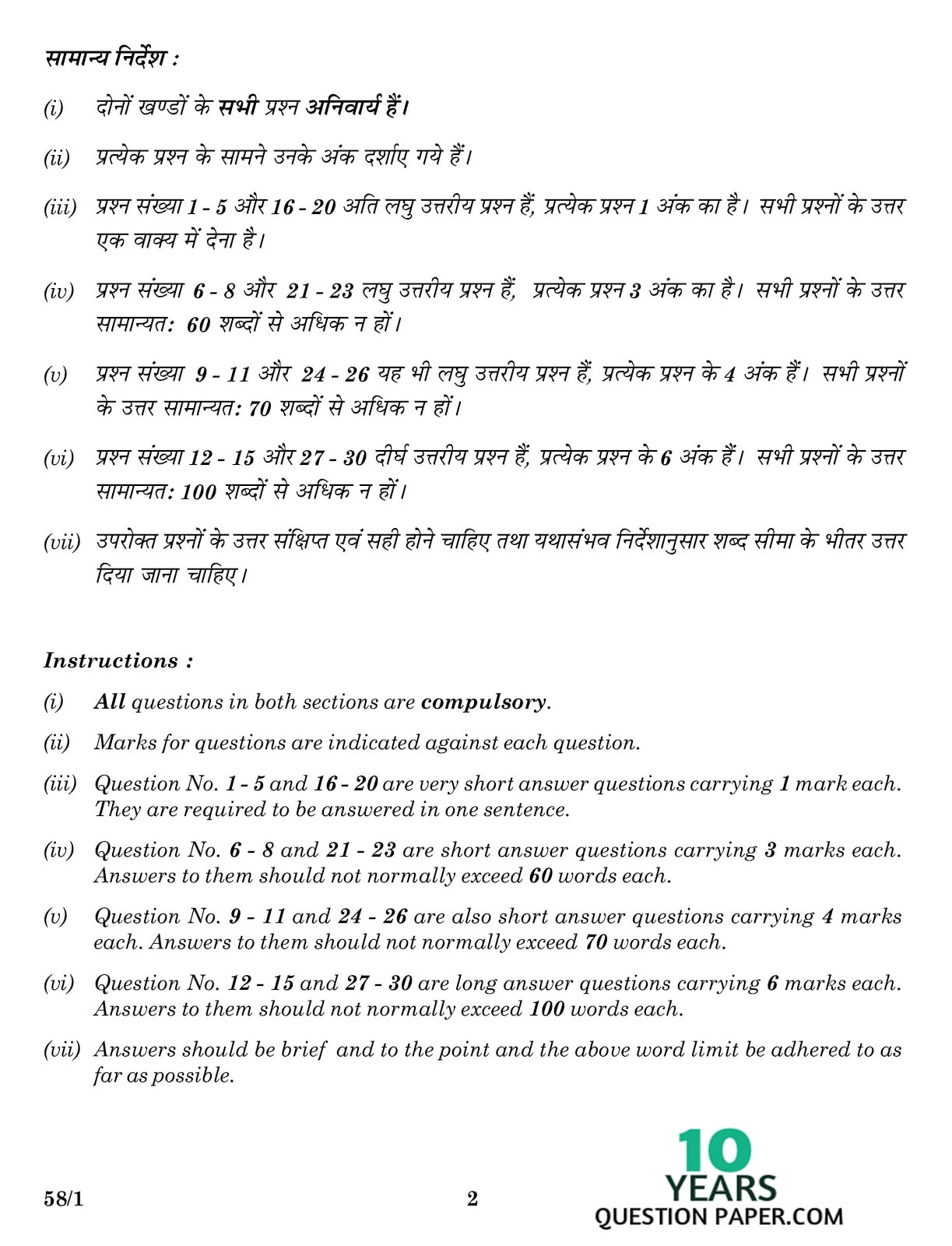
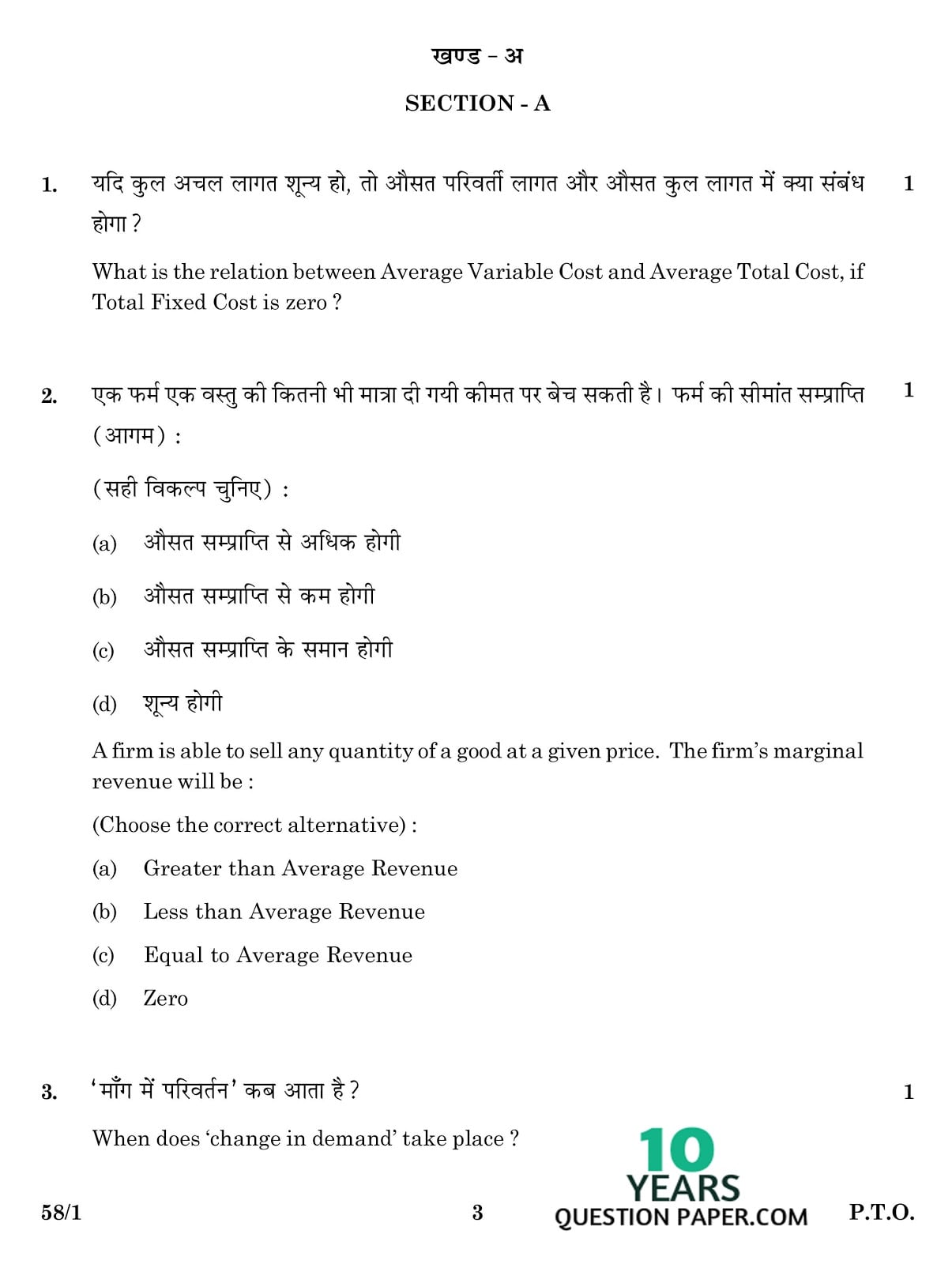
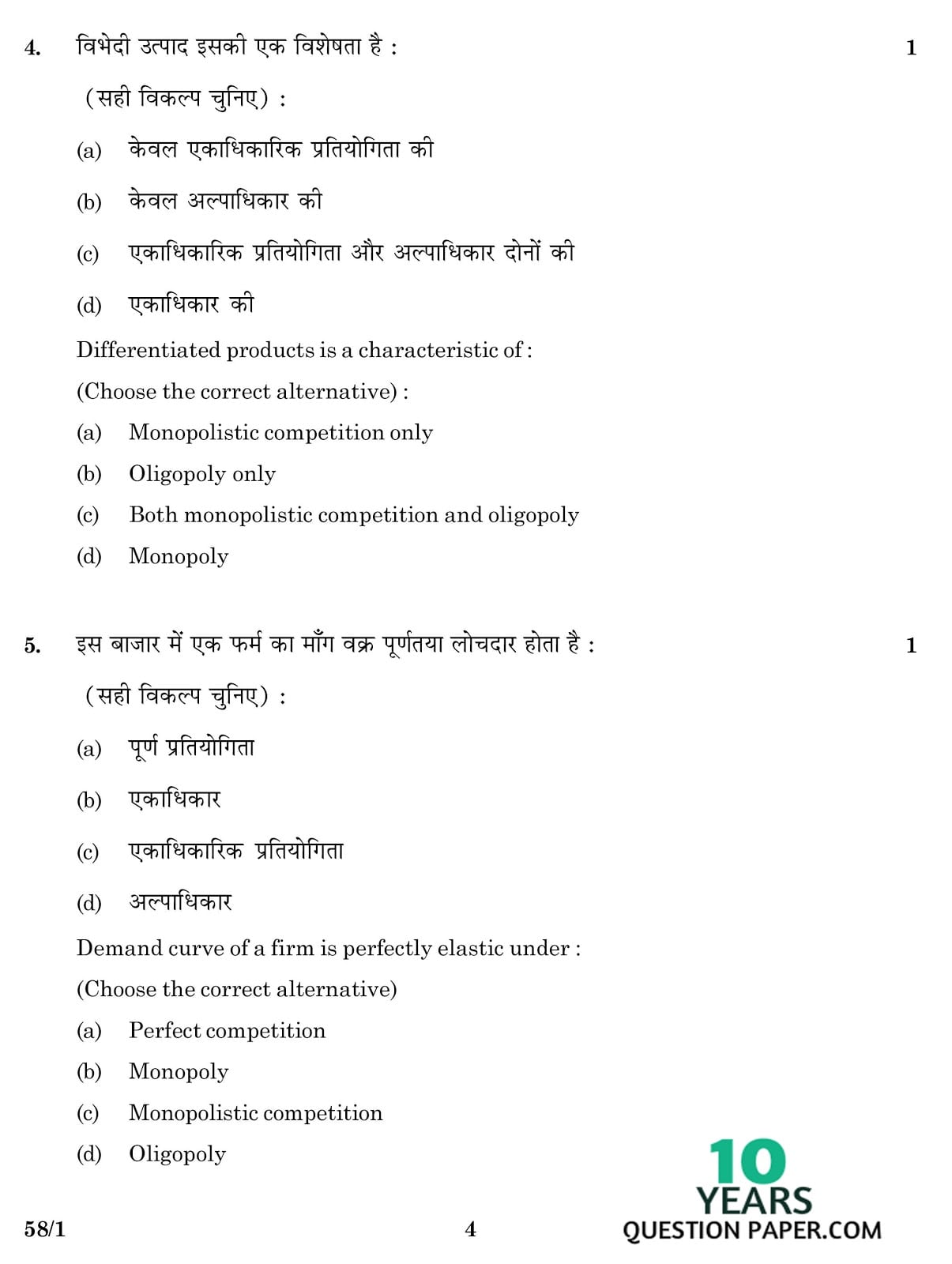
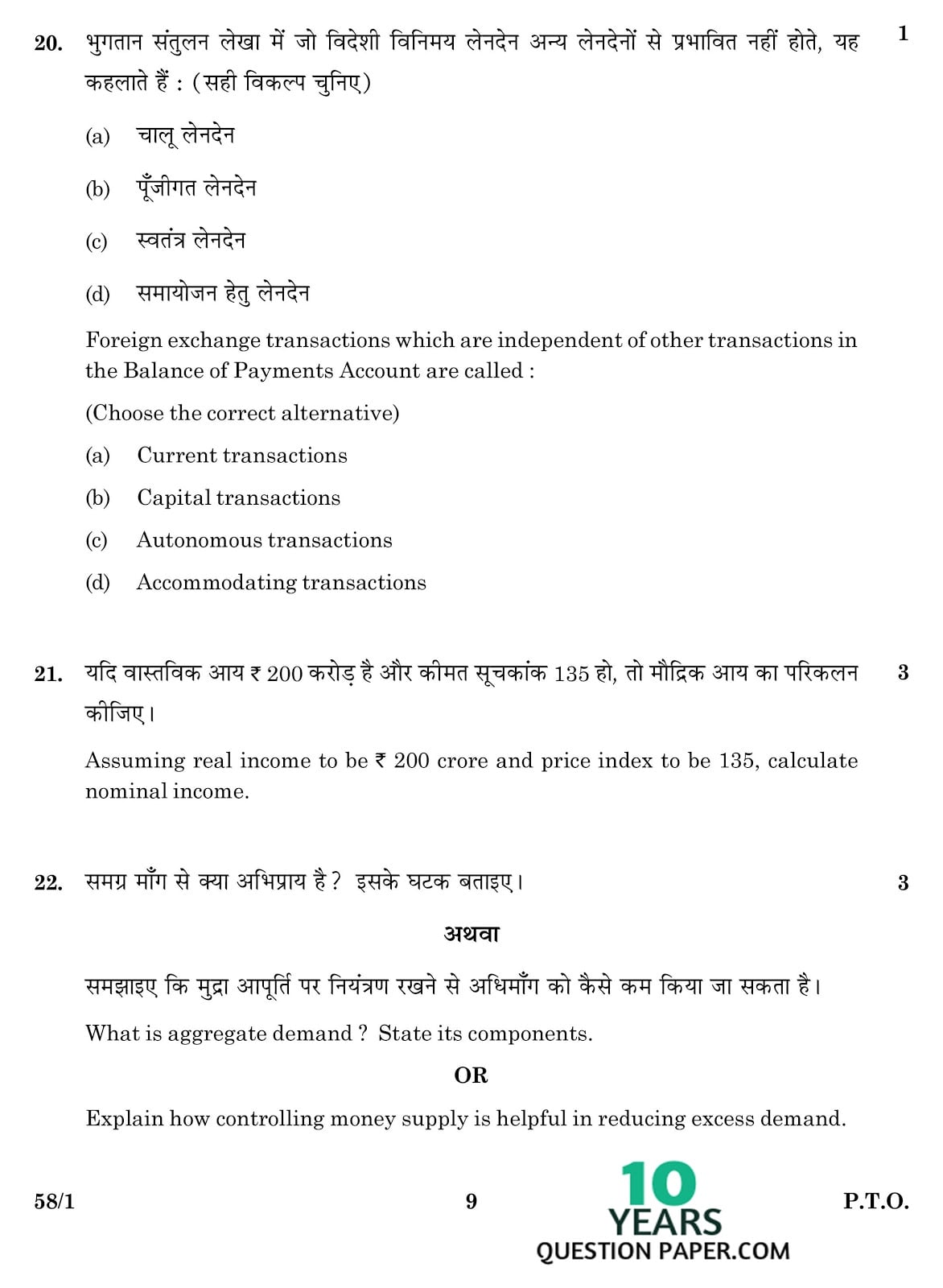
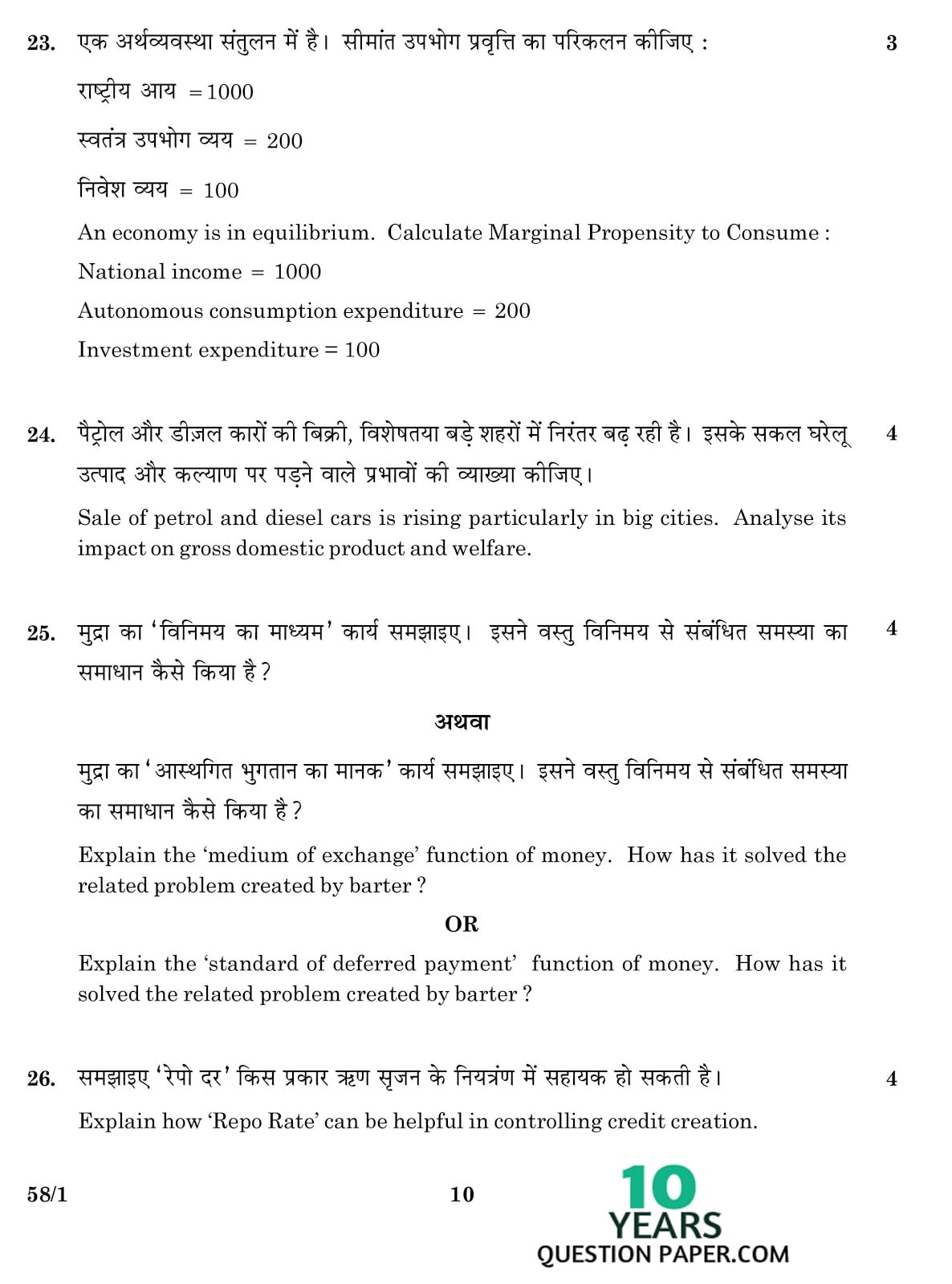
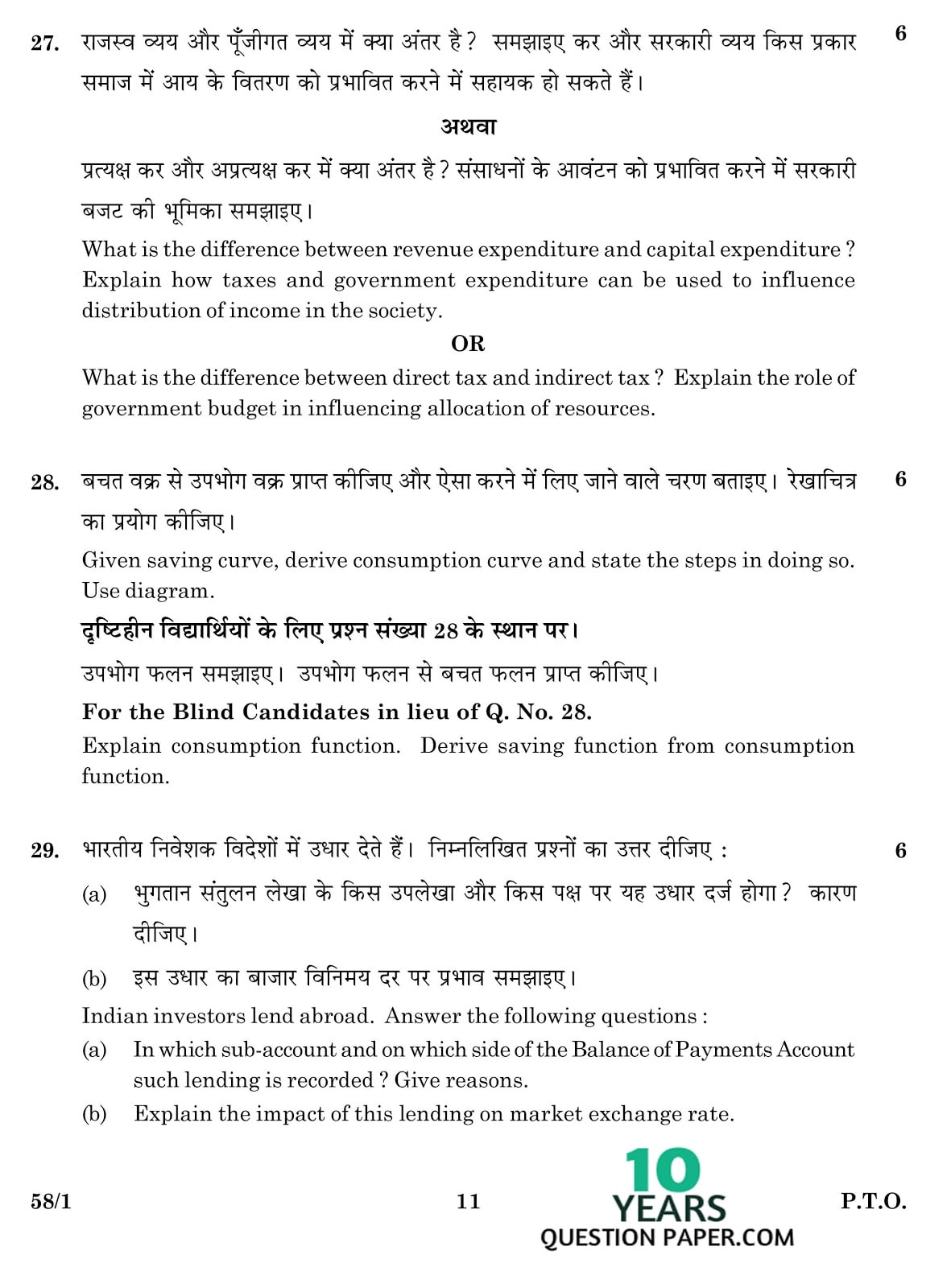
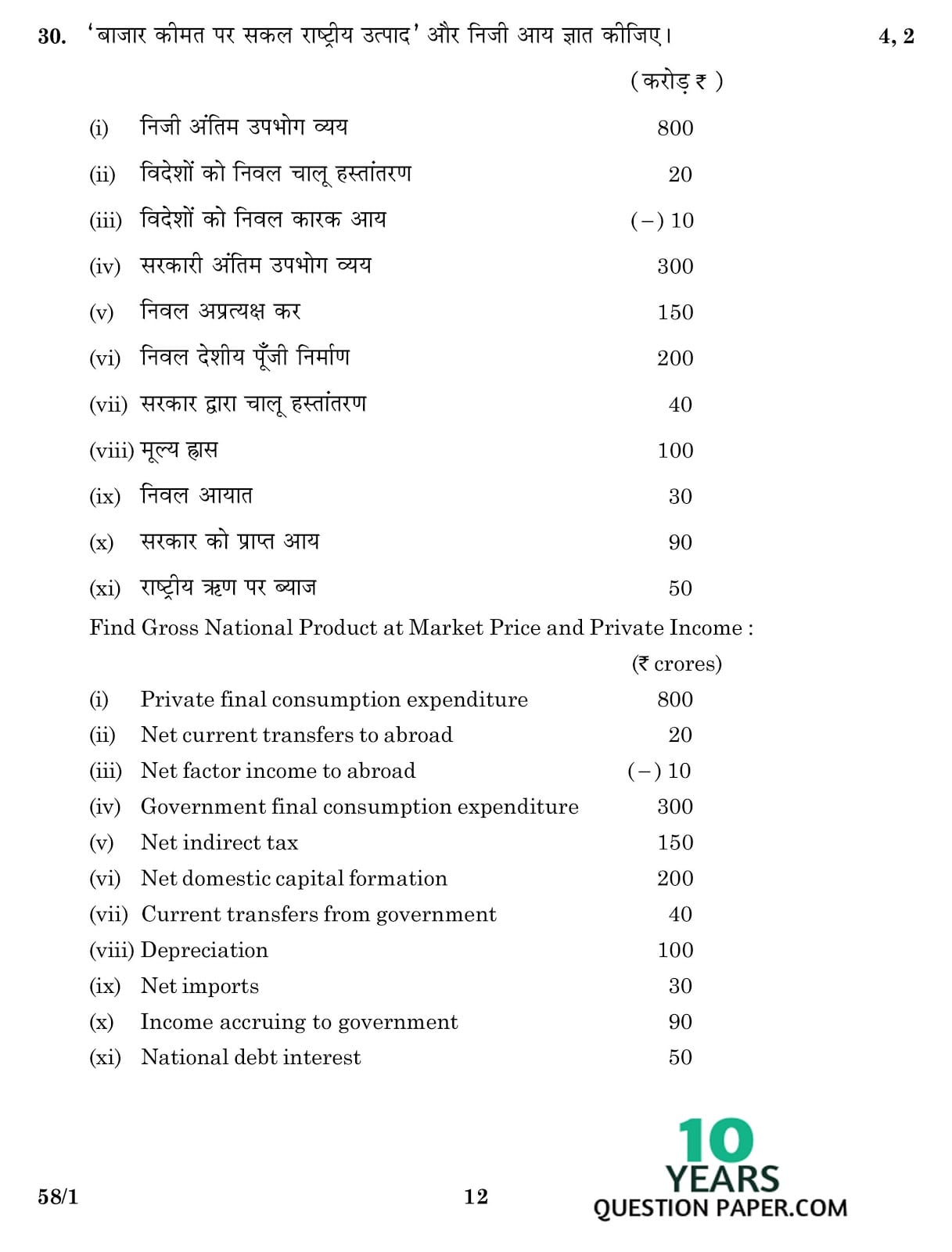
This is the CBSE Class 12 Economics paper from the 2016 board examination, code 58/1 (Series ONS, Set 1). It carries 100 marks over three hours and has 30 compulsory questions, printed in Hindi and English. Section A covers microeconomics and Section B covers macroeconomics; each has five one-mark questions, several of them multiple choice, followed by three-mark, four-mark and six-mark answers with word limits. Internal choices appear in several questions, and alternatives are given for blind candidates in place of the diagram-based Questions 14 and 28. One question asks students to analyse how rising sales of petrol and diesel cars in big cities affect GDP and welfare. This copy has the questions only, without solutions.
- Exam
- CBSE Class 12
- Subject
- Economics
- Year
- 2016
- Paper code
- 58/1
- Maximum marks
- 100
- Time allowed
- 3 hours
- Questions
- 30
- Pages
- 12
- Answers included
- No, questions only
Paper pattern
Section A
50 marksMicroeconomics, Questions 1–15: five 1-mark, three 3-mark, three 4-mark and four 6-mark questions
Section B
50 marksMacroeconomics, Questions 16–30: five 1-mark, three 3-mark, three 4-mark and four 6-mark questions
Topics covered
- Central problems of an economy
- Consumer equilibrium and indifference curves
- Demand and price elasticity
- Supply and elasticity of supply
- Cost and production
- Market forms and price controls
- National income accounting
- Money and credit creation
- Aggregate demand and income determination
- Government budget
- Balance of payments and exchange rate
Questions from this paper
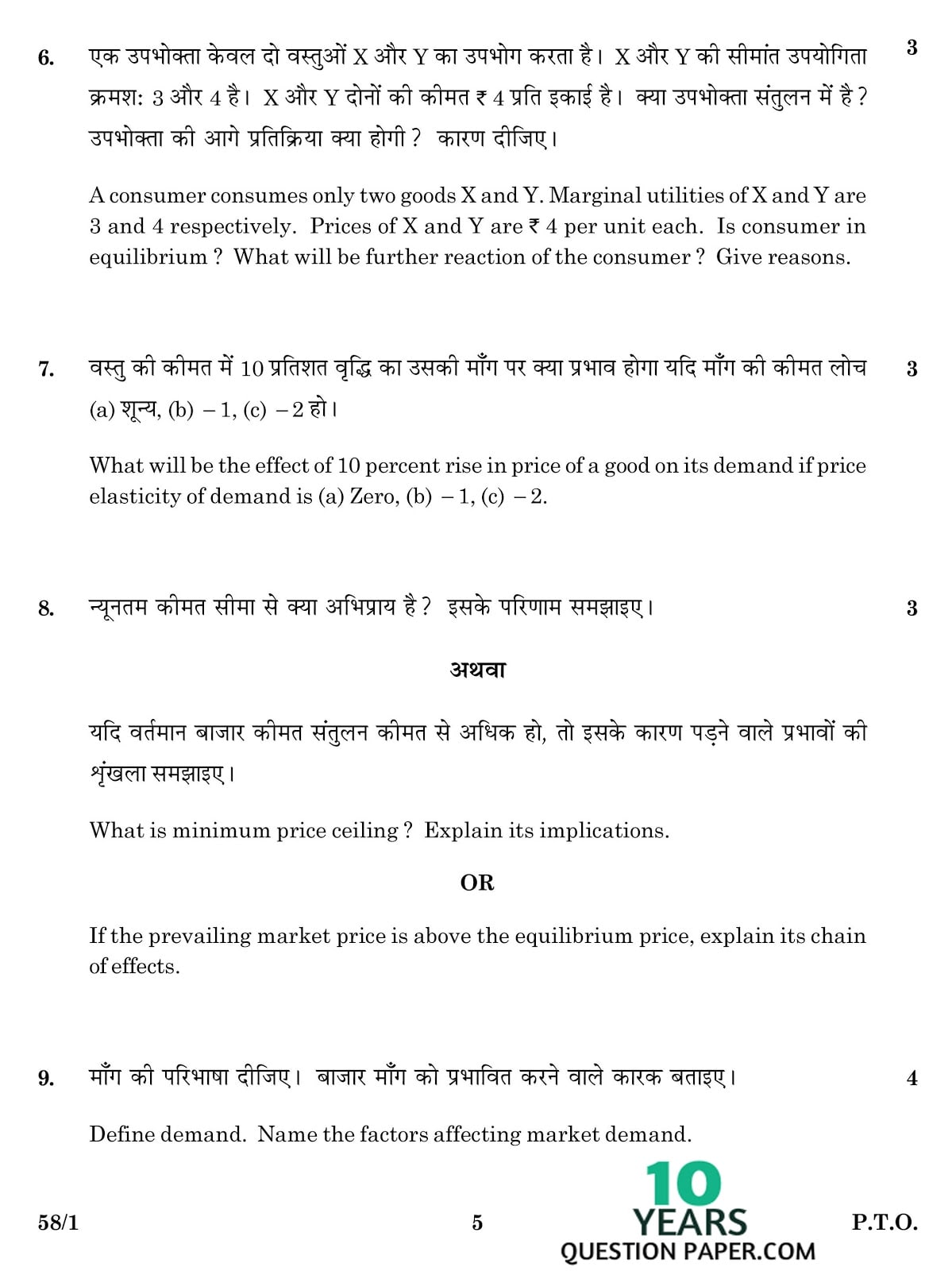
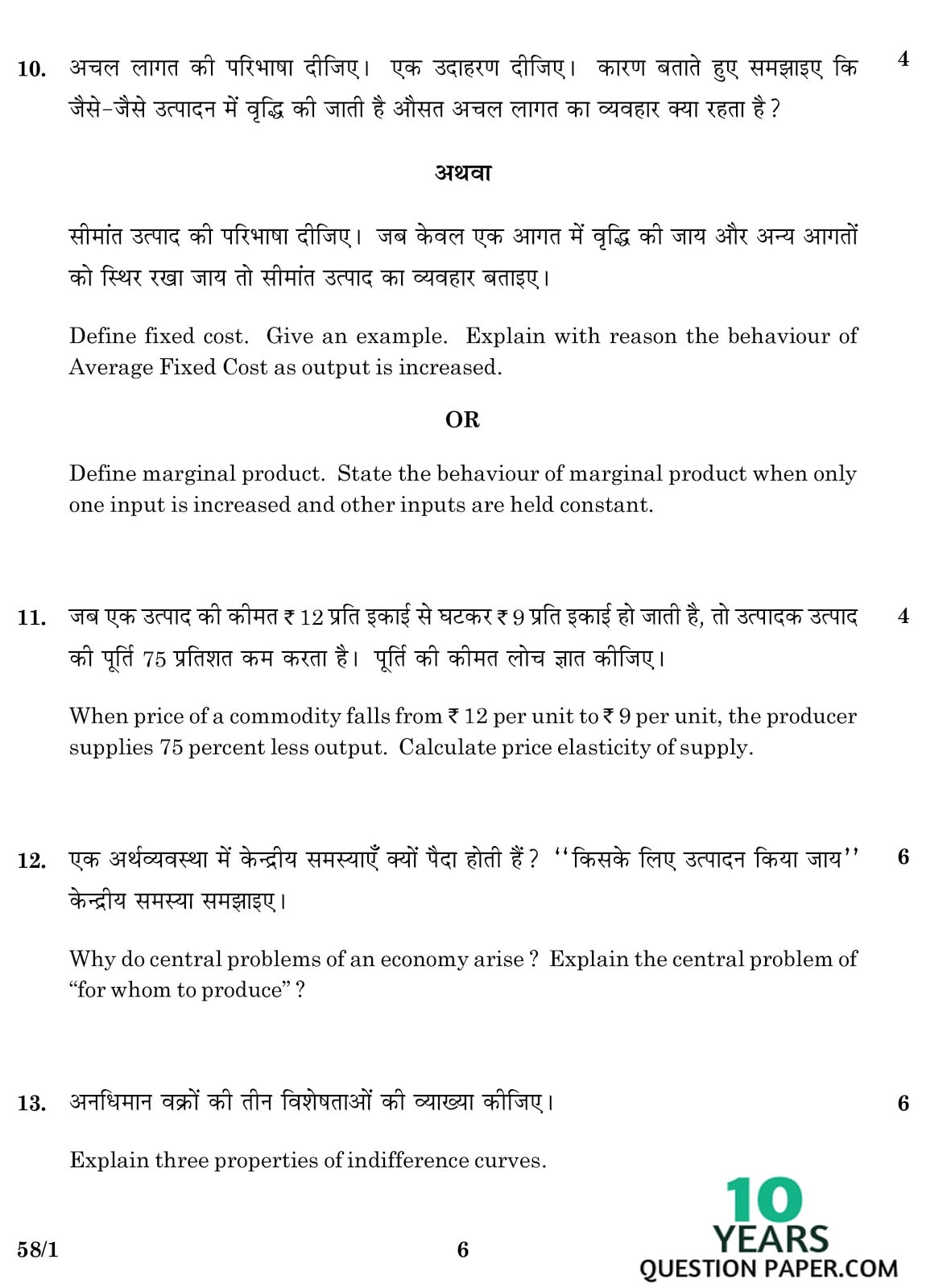
- When the price of a commodity falls from ₹12 per unit to ₹9 per unit, the producer supplies 75 percent less output. Calculate the price elasticity of supply.
- A consumer consumes only two goods X and Y. The marginal utilities of X and Y are 3 and 4 respectively, and the prices of X and Y are ₹4 per unit each. Is the consumer in equilibrium? What will be the further reaction of the consumer? Give reasons.
- Explain three properties of indifference curves.
- Sale of petrol and diesel cars is rising, particularly in big cities. Analyse its impact on gross domestic product and welfare.
- Explain how the repo rate can be helpful in controlling credit creation.
- Indian investors lend abroad. In which sub-account and on which side of the Balance of Payments Account is such lending recorded? Explain the impact of this lending on the market exchange rate.
Free email alert
Get the 2027 CBSE Class 12 papers first
One email when the new CBSE Class 12 Economics question papers are published here. No spam, unsubscribe any time.
What's next
Planning what comes after Class 12?
Compare college costs, education loans, and scholarships in one place.
See the cost breakdown