CBSE 2016 Chemistry Question Paper for Class 12

CBSE
Chemistry2016CBSE Class 12 Chemistry 2016 question paper (code 56/1/C): 26 questions for 70 marks in 3 hours, with a 4-mark value-based question. Questions only, no answers.
Practice these questions to improve your performance in the board examination.
About this paper
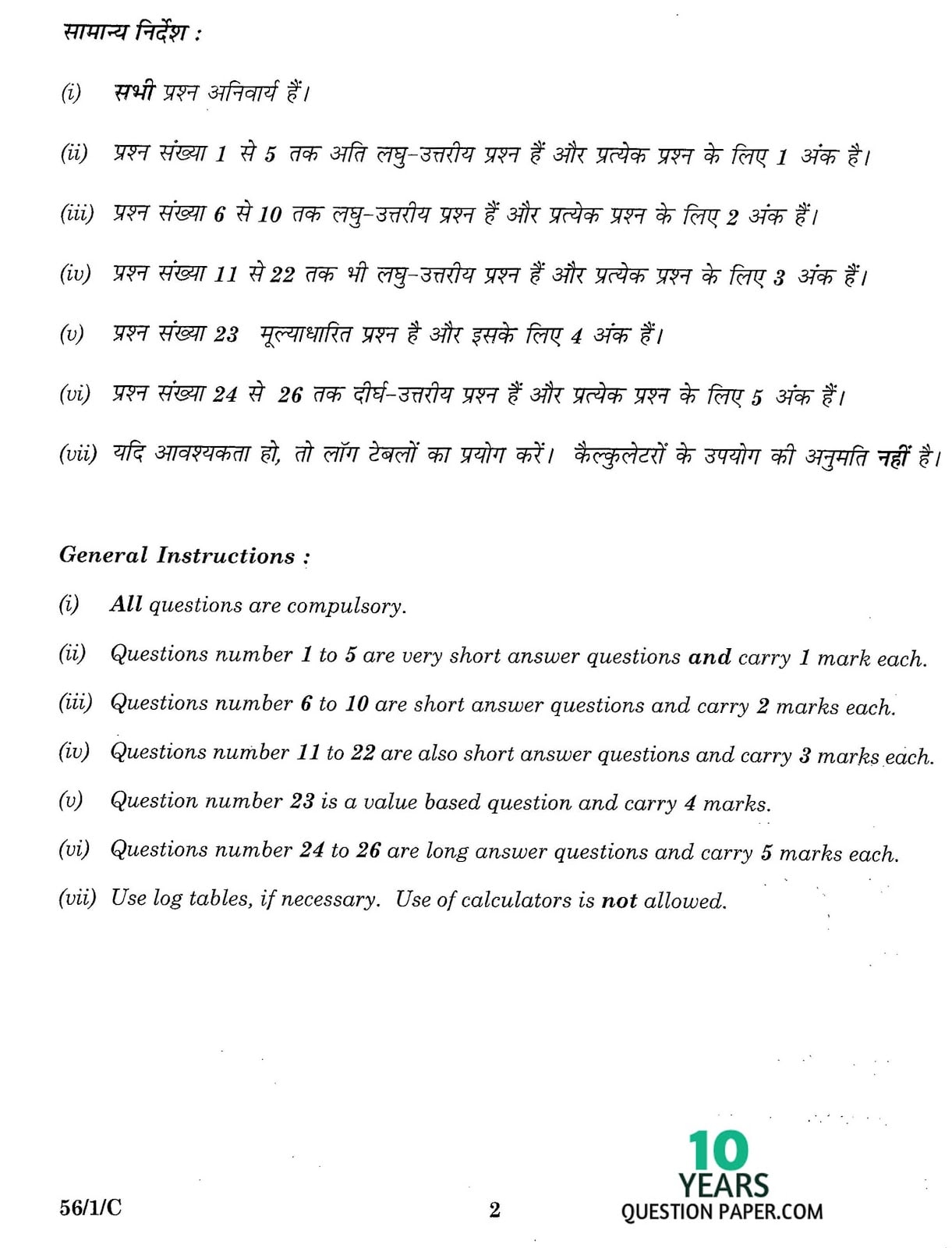
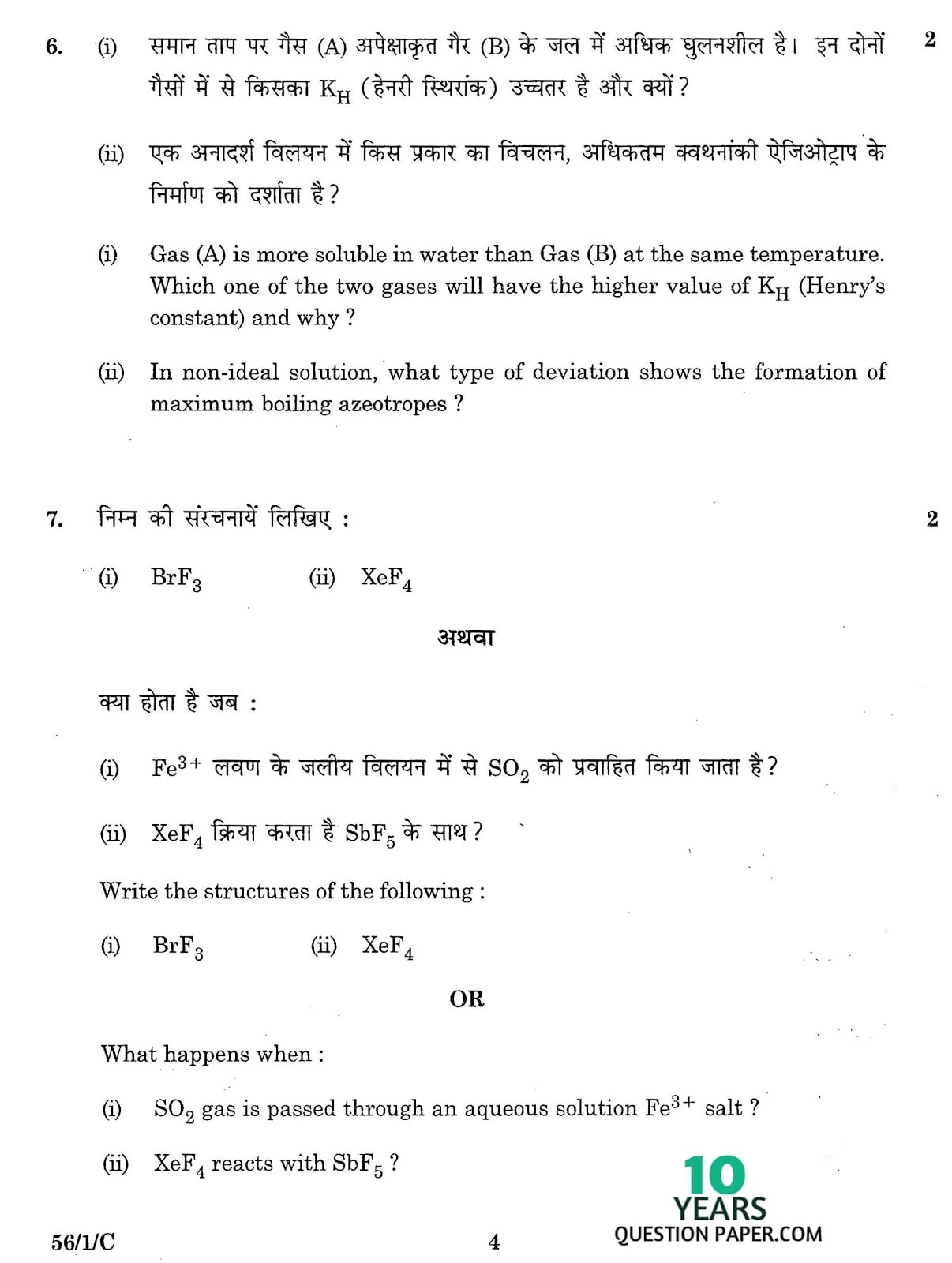
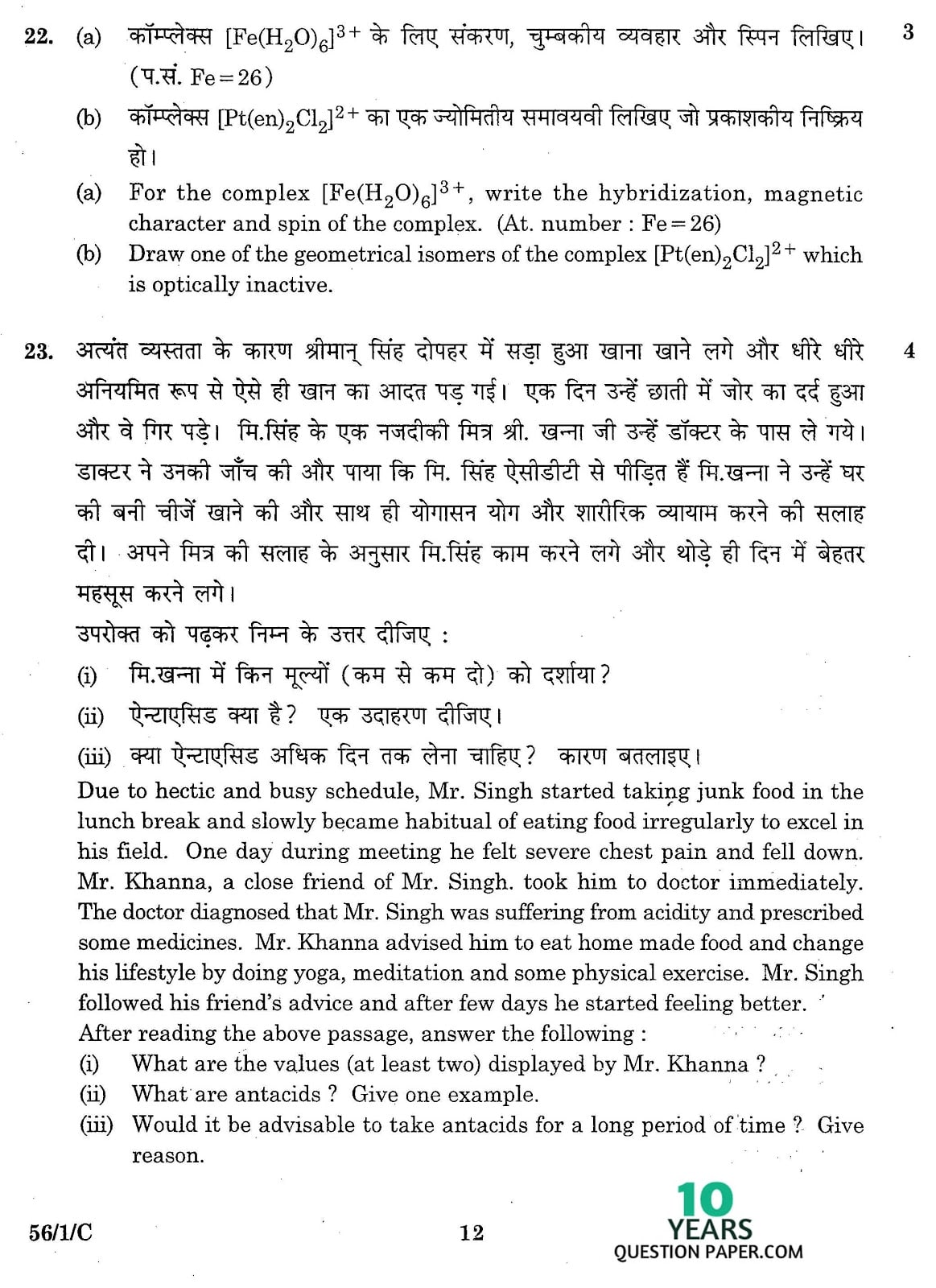
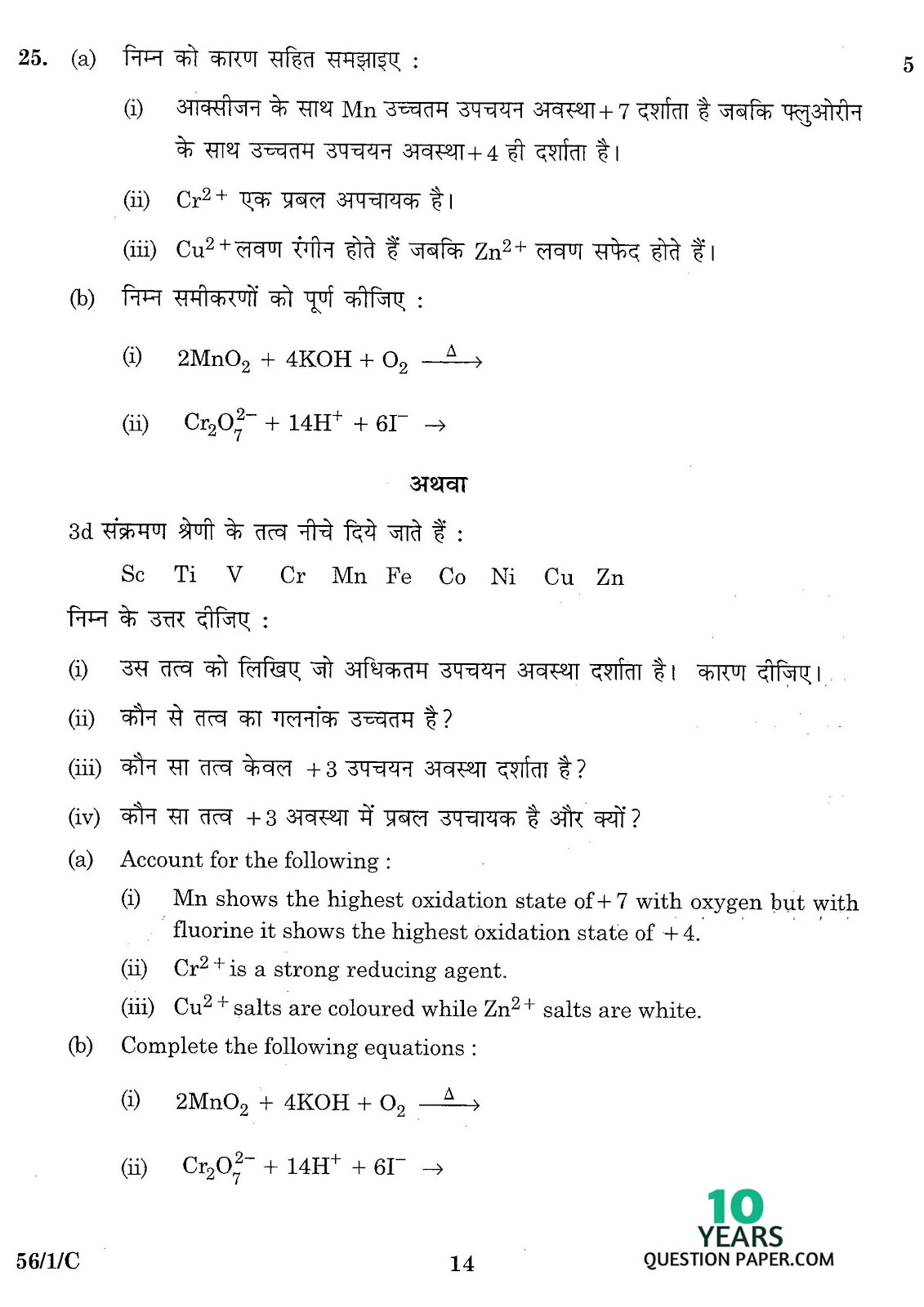
This is the CBSE Class 12 Chemistry (Theory) question paper code 56/1/C, Series ONS, Set 1, from the 2016 board examination. It carries 70 marks over three hours and has 26 compulsory questions: five one-mark questions, five two-mark questions, twelve three-mark questions, one four-mark value-based question and three five-mark long answers. The value-based question follows an office worker whose junk-food habit leads to acidity, and asks about antacids. Internal choices are given in one two-mark question, one three-mark question and all three long answers, and one long-answer choice is built around the 3d transition series from Sc to Zn. Log tables may be used, but calculators are not allowed. This copy has the questions only, without answers.
- Exam
- CBSE Class 12
- Subject
- Chemistry
- Year
- 2016
- Paper code
- 56/1/C
- Maximum marks
- 70
- Time allowed
- 3 hours + 15 min reading
- Questions
- 26
- Pages
- 17
- Answers included
- No, questions only
Paper pattern
Questions 1–5
5 marksVery short answer questions, one mark each
Questions 6–10
10 marksShort answer questions, two marks each; internal choice in one
Questions 11–22
36 marksShort answer questions, three marks each; internal choice in one
Question 23
4 marksValue-based question
Questions 24–26
15 marksLong answer questions, five marks each, each with an internal choice
Topics covered
- Solid state
- Solutions and colligative properties
- Electrochemistry and conductance
- Chemical kinetics
- Surface chemistry and colloids
- Isolation of elements
- p-Block elements
- d- and f-Block elements
- Coordination compounds
- Haloalkanes, alcohols, phenols and ethers
- Aldehydes, ketones, carboxylic acids and amines
- Biomolecules, polymers and chemistry in everyday life
Questions from this paper
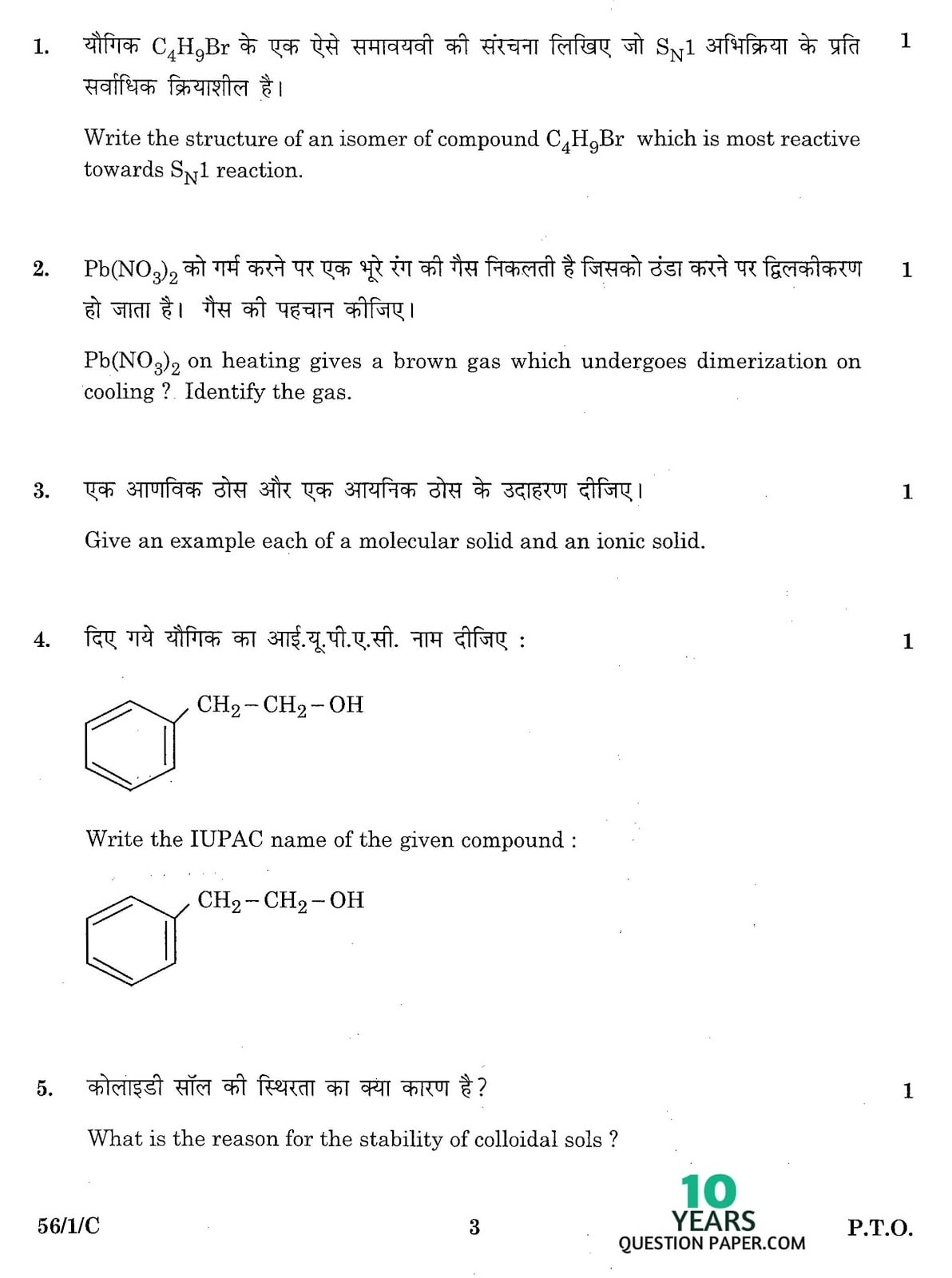
- Give an example each of a molecular solid and an ionic solid.
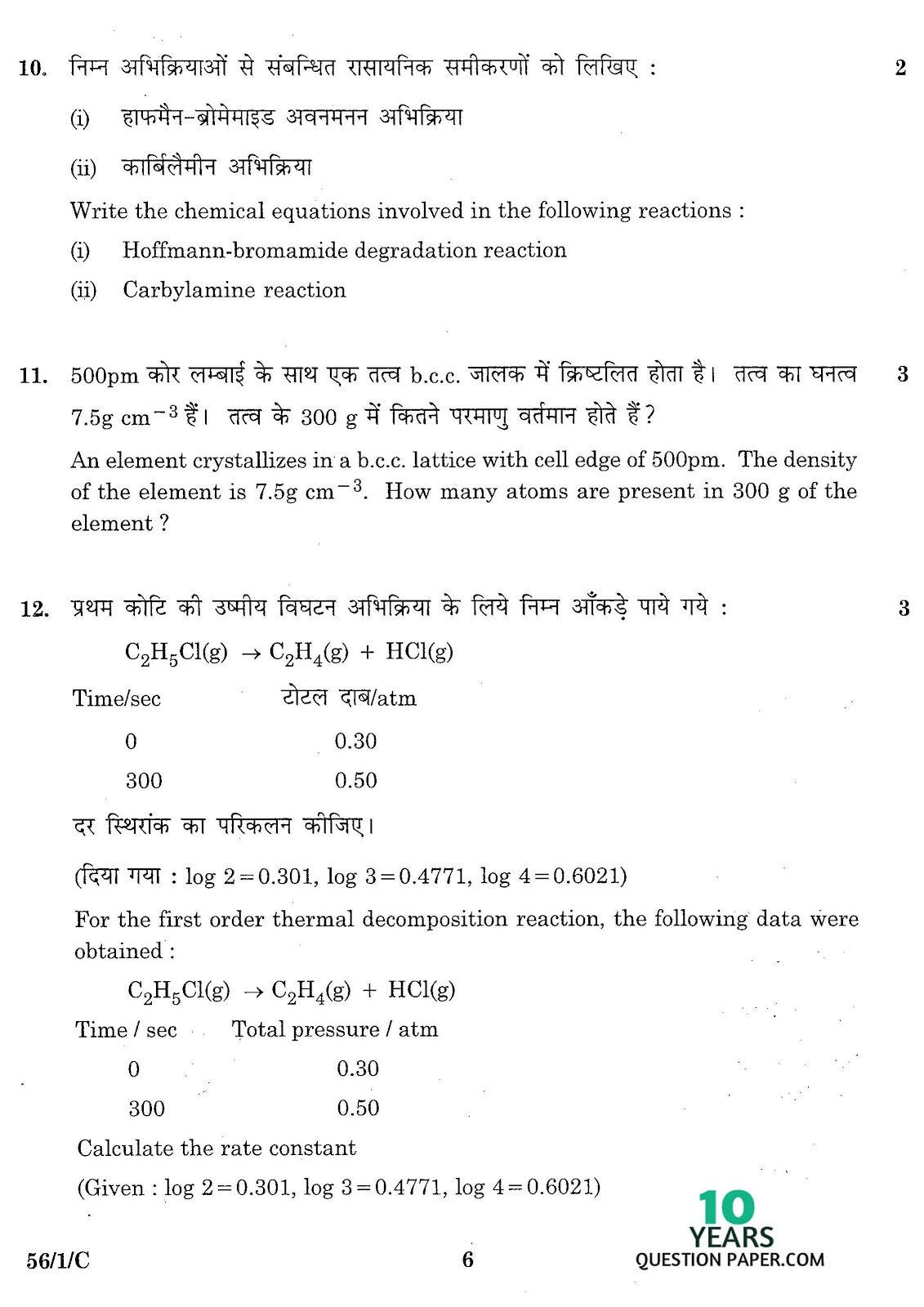
- An element crystallises in a b.c.c. lattice with a cell edge of 500 pm. The density of the element is 7.5 g cm⁻³. How many atoms are present in 300 g of the element?
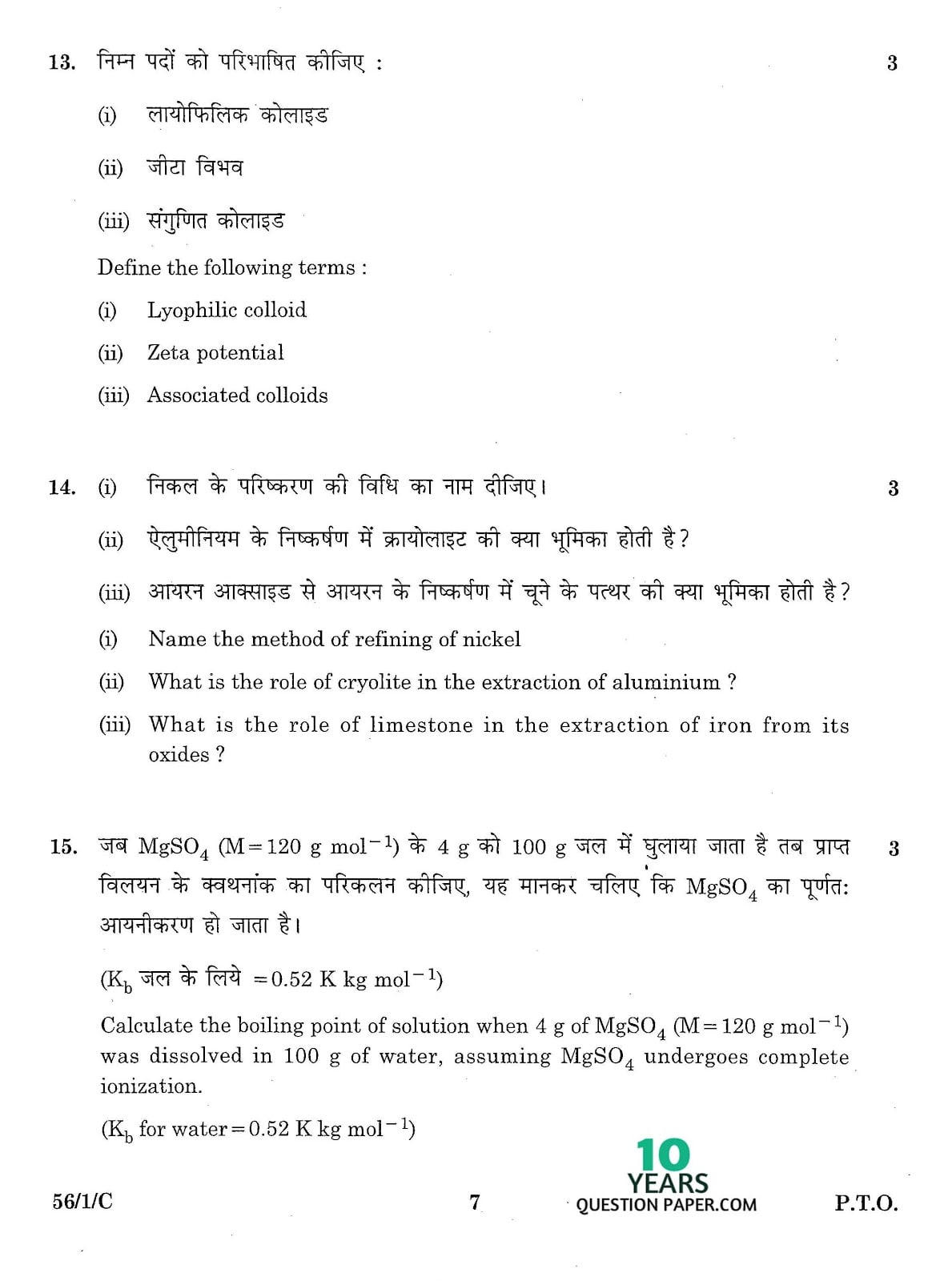
- Calculate the boiling point of the solution when 4 g of MgSO₄ (M = 120 g mol⁻¹) is dissolved in 100 g of water, assuming MgSO₄ undergoes complete ionisation. (Kb for water = 0.52 K kg mol⁻¹)
- What is the role of cryolite in the extraction of aluminium?
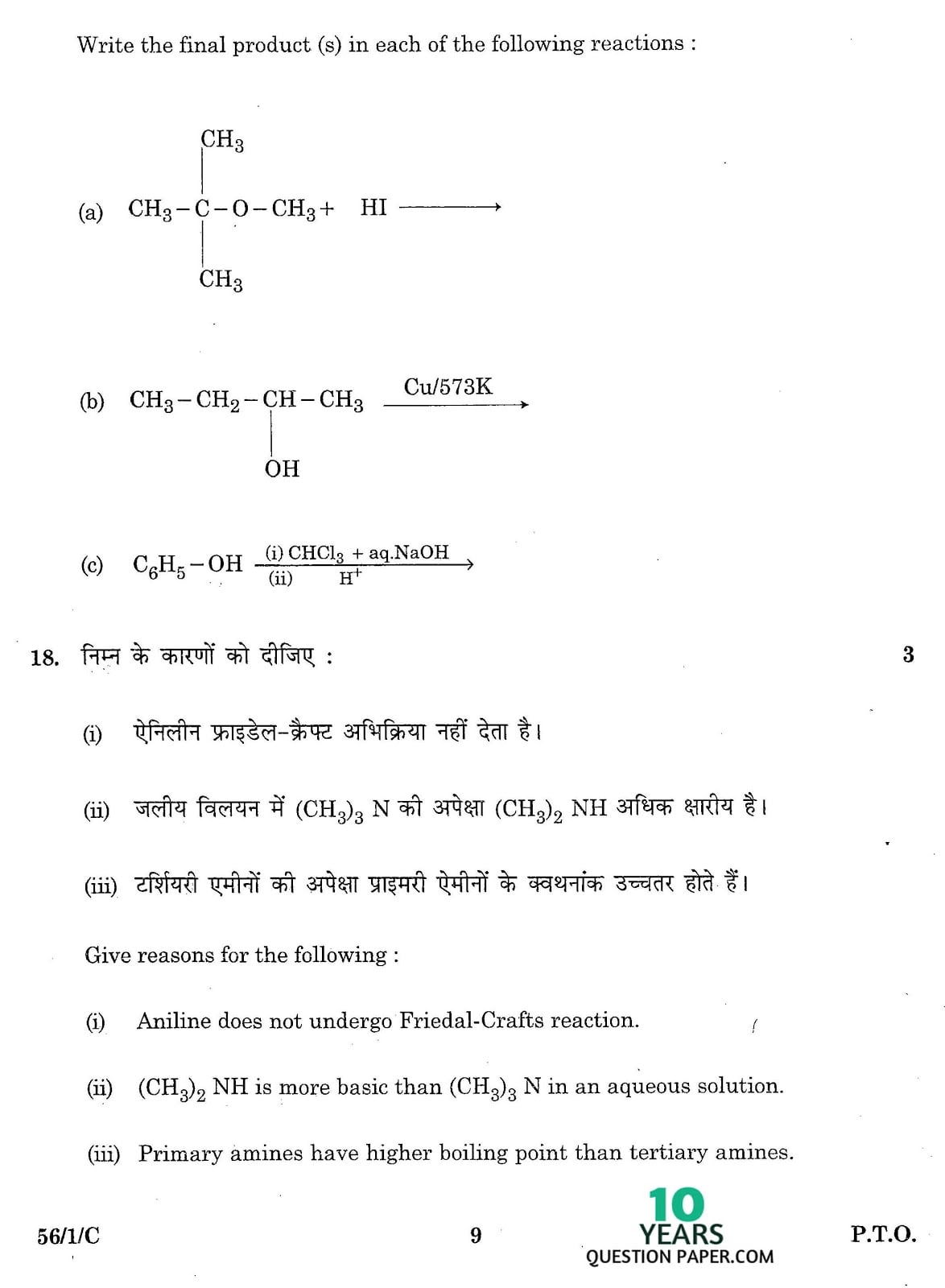
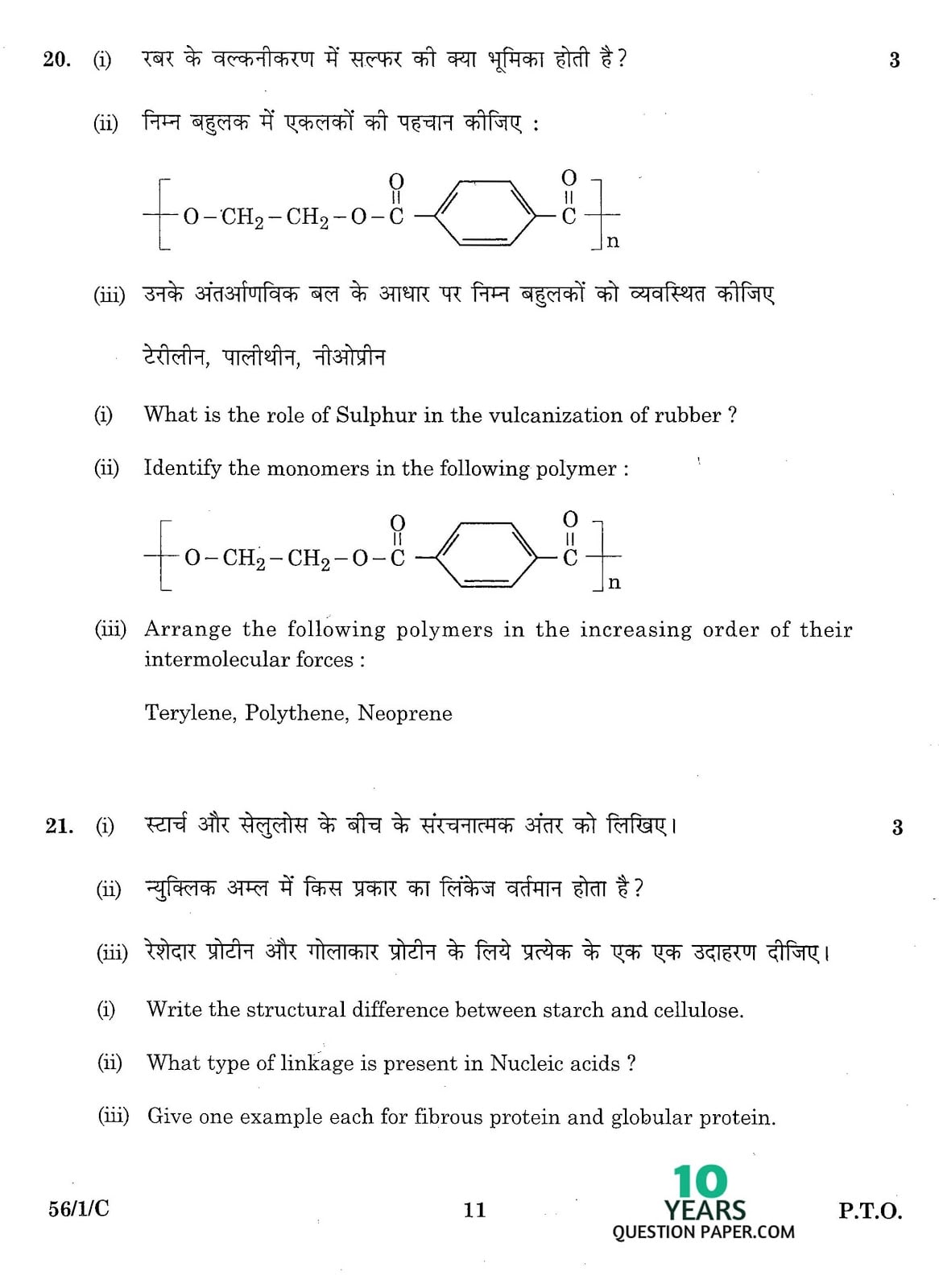
- Write the structural difference between starch and cellulose.
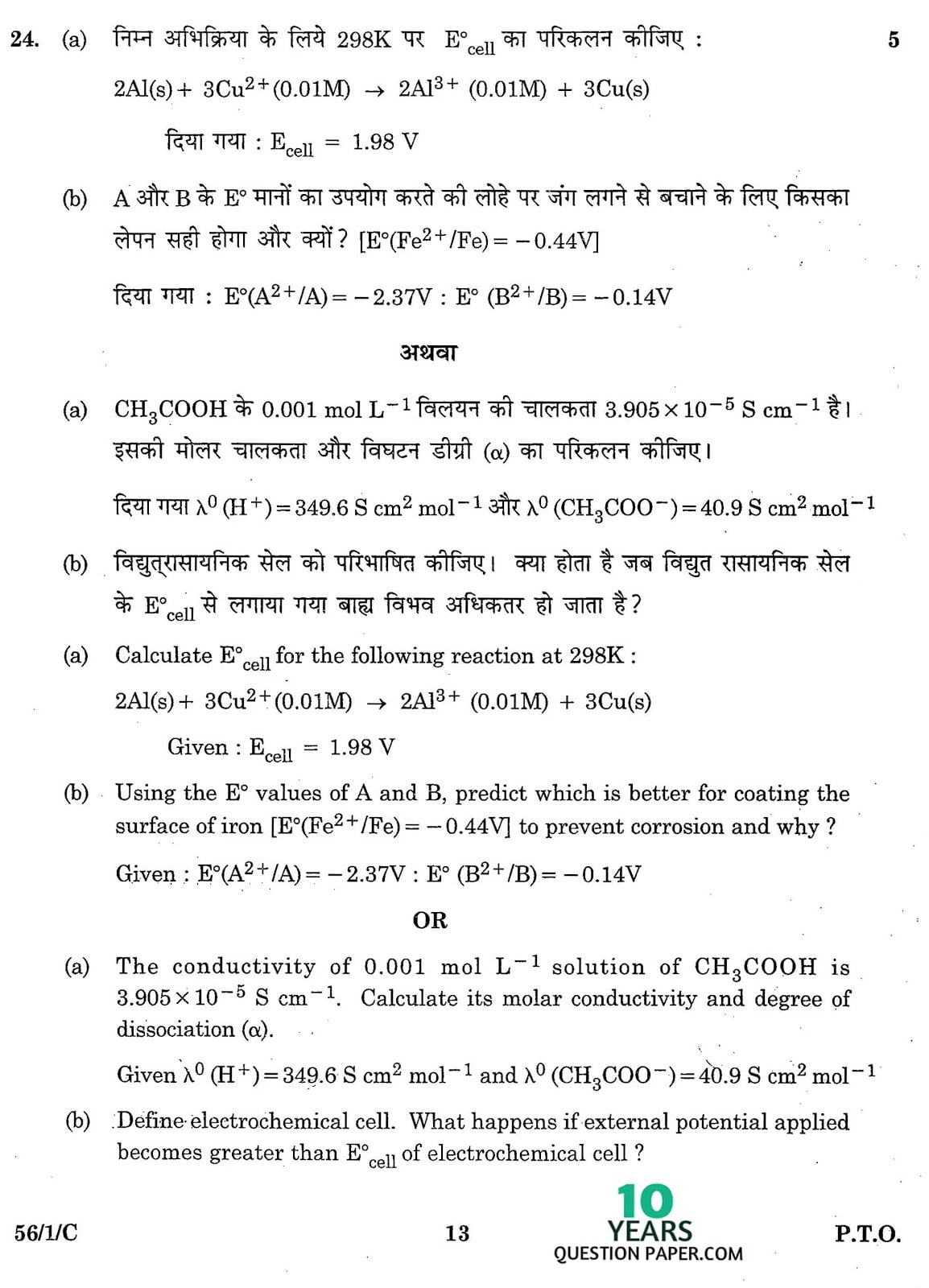
- The conductivity of a 0.001 mol L⁻¹ solution of CH₃COOH is 3.905 × 10⁻⁵ S cm⁻¹. Calculate its molar conductivity and degree of dissociation (α), given λ°(H⁺) = 349.6 S cm² mol⁻¹ and λ°(CH₃COO⁻) = 40.9 S cm² mol⁻¹.
Free email alert
Get the 2027 CBSE Class 12 papers first
One email when the new CBSE Class 12 Chemistry question papers are published here. No spam, unsubscribe any time.
What's next
Planning what comes after Class 12?
Compare college costs, education loans, and scholarships in one place.
See the cost breakdown