ICSE Class 10 Biology Question Paper 2024 with Solutions

ICSE
Biology2024Download the official ICSE Class 10 Biology Question Paper 2024 with step-by-step solutions prepared by subject matter experts. Solving previous years' ICSE Class X board papers helps students understand question formats, marking distributions, and high-frequency topics to score top marks in board examinations. Access the free PDF download above with complete answer keys.
About this paper
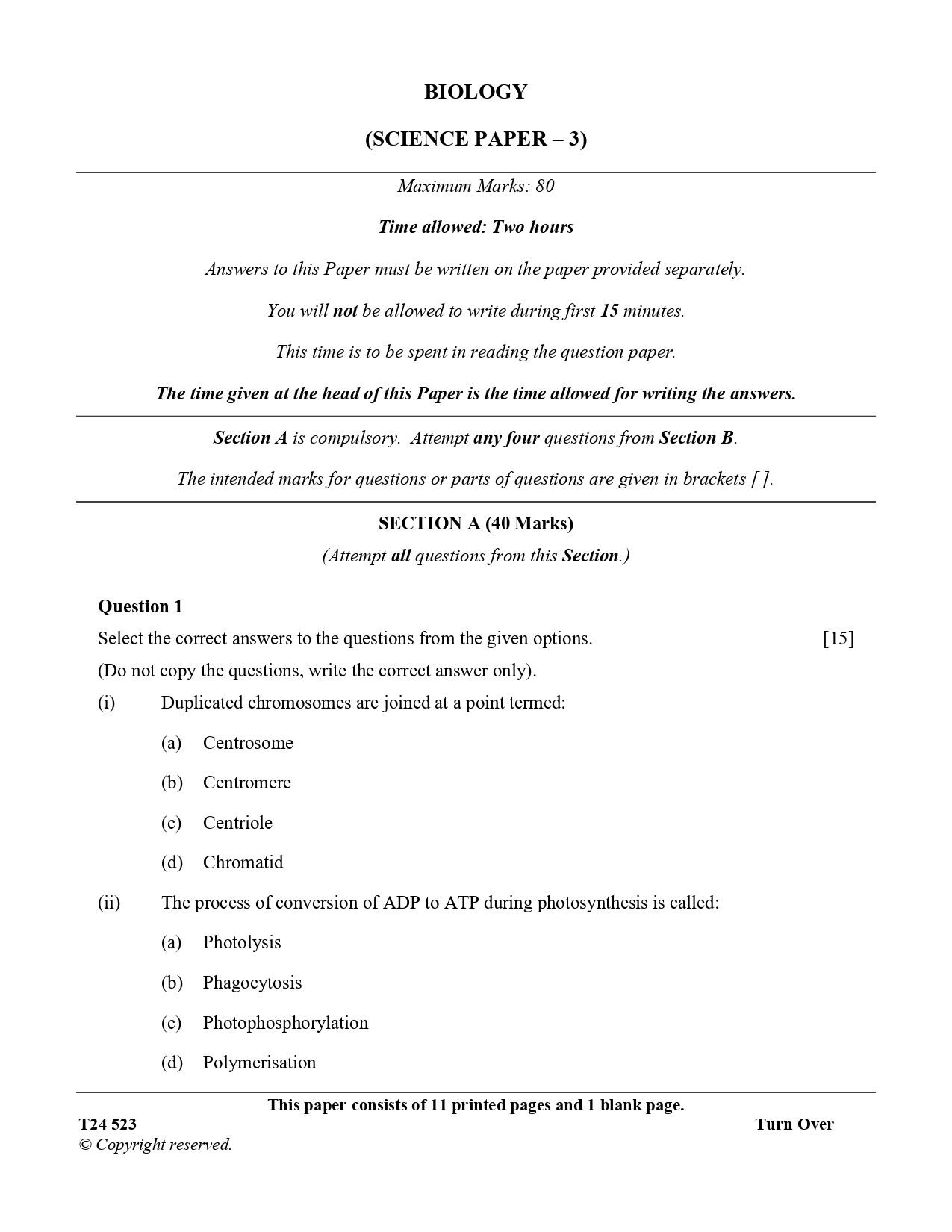
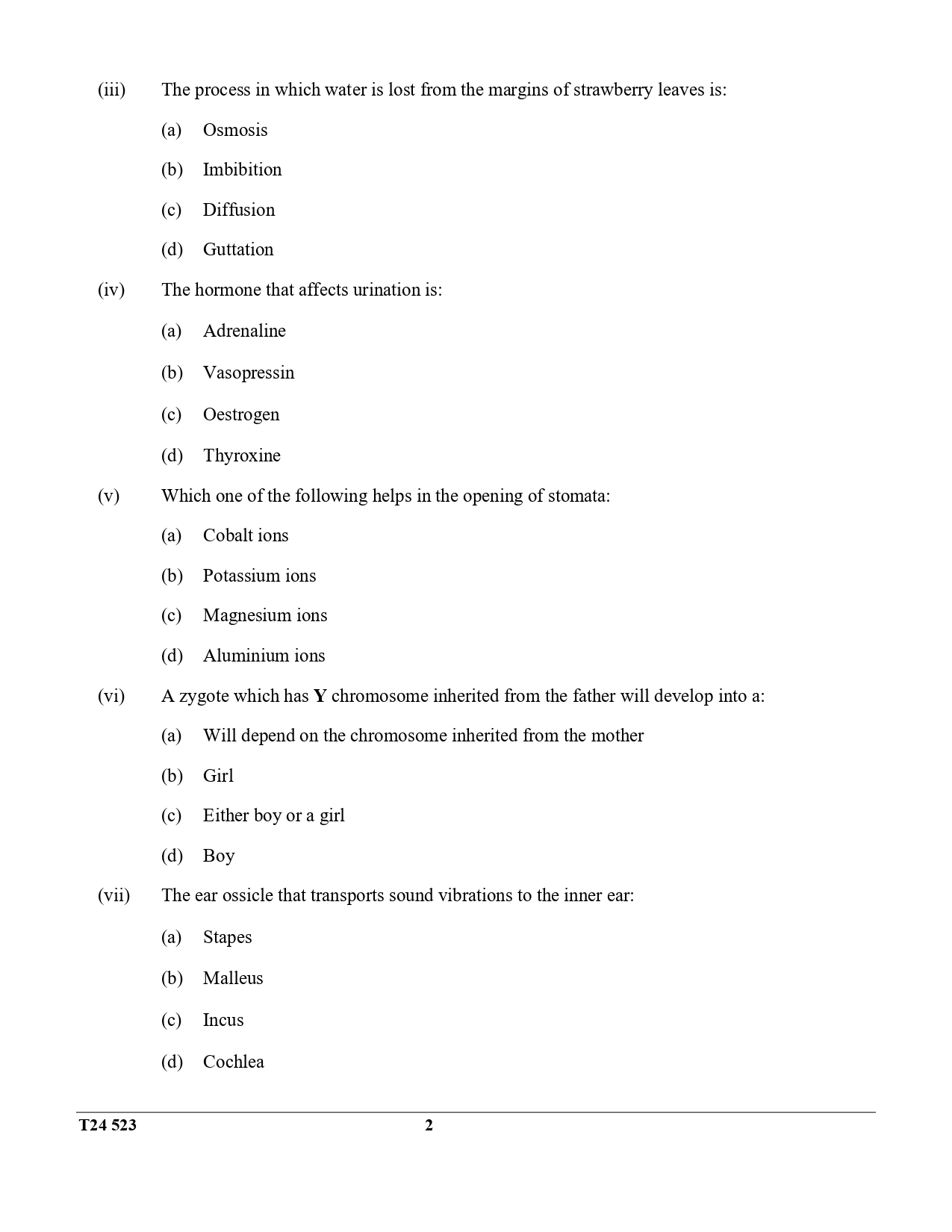
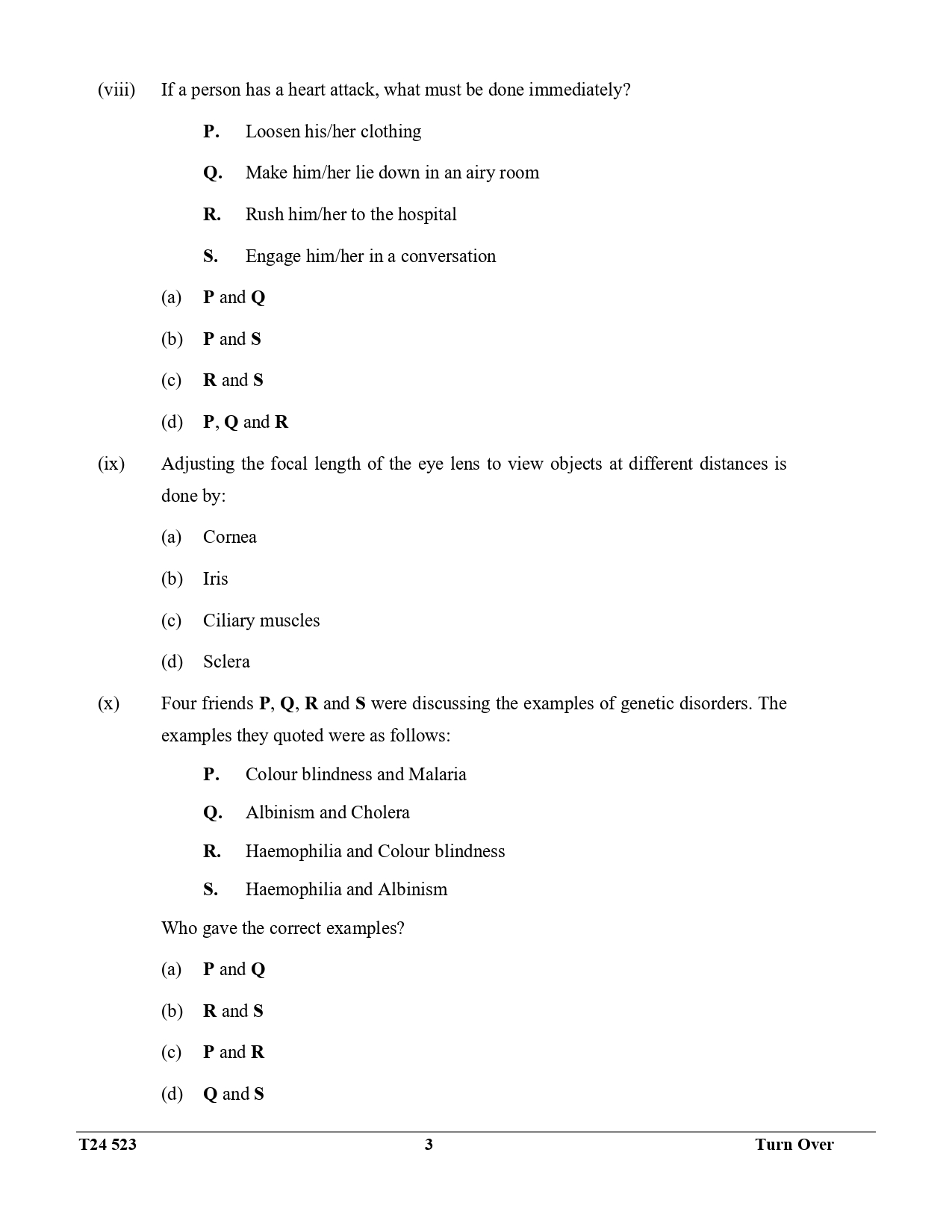
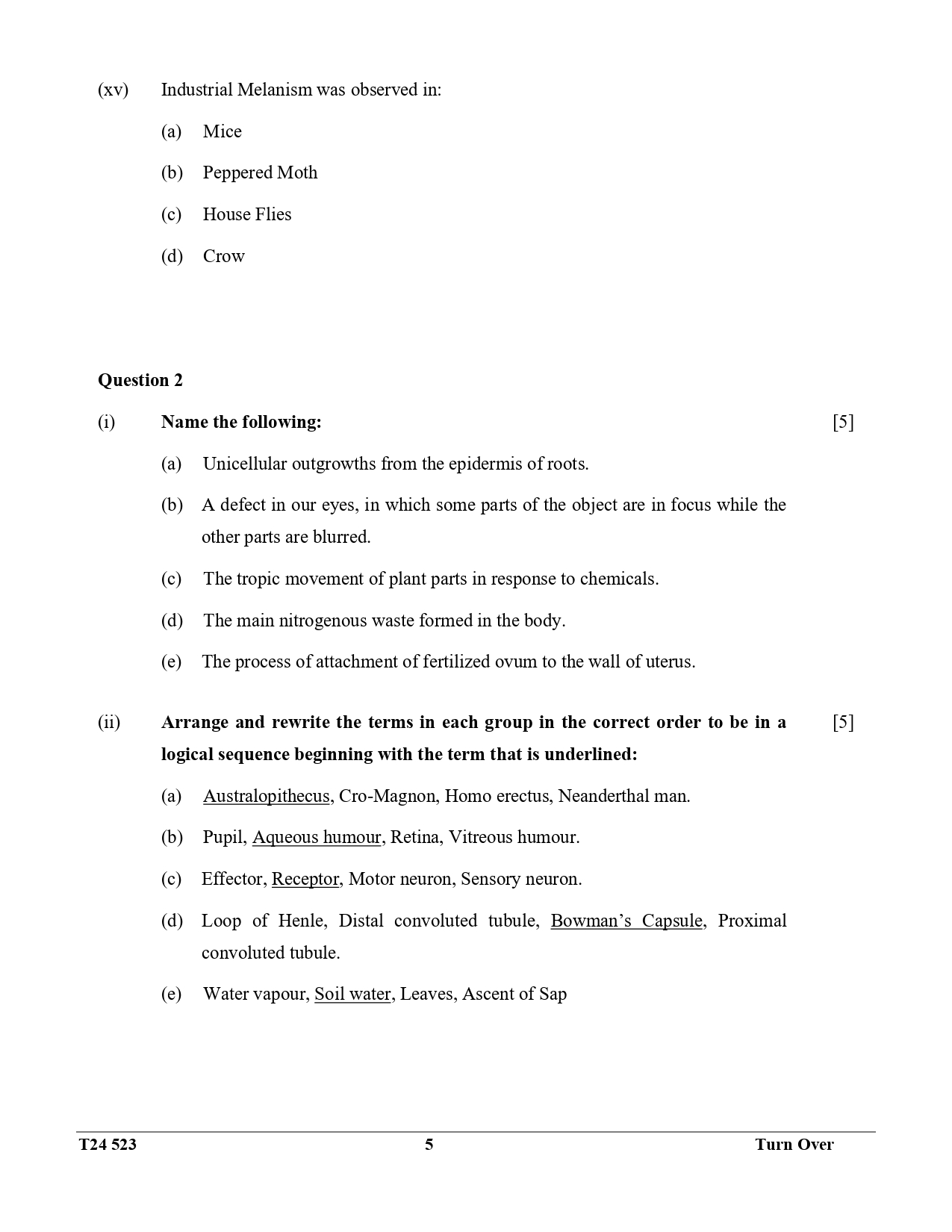
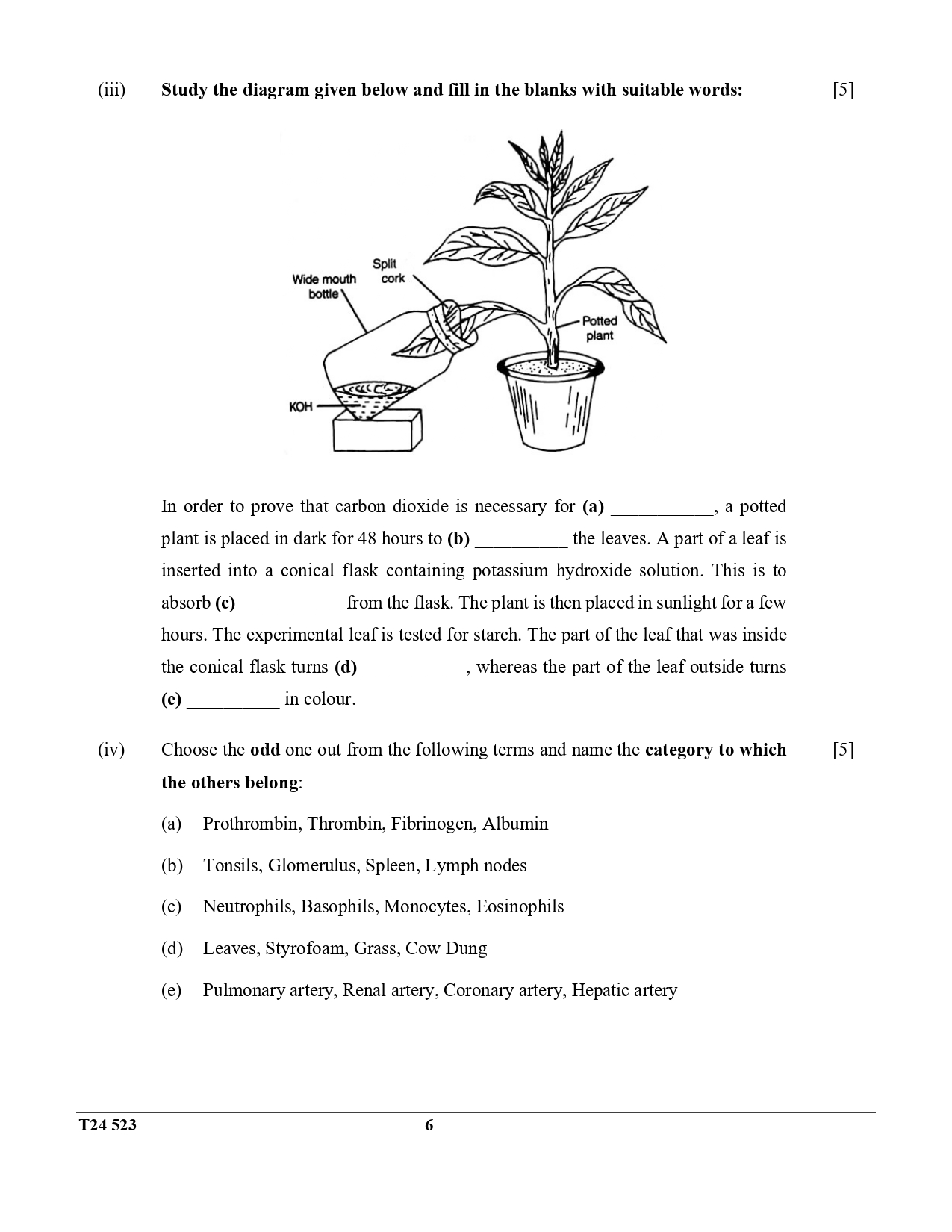
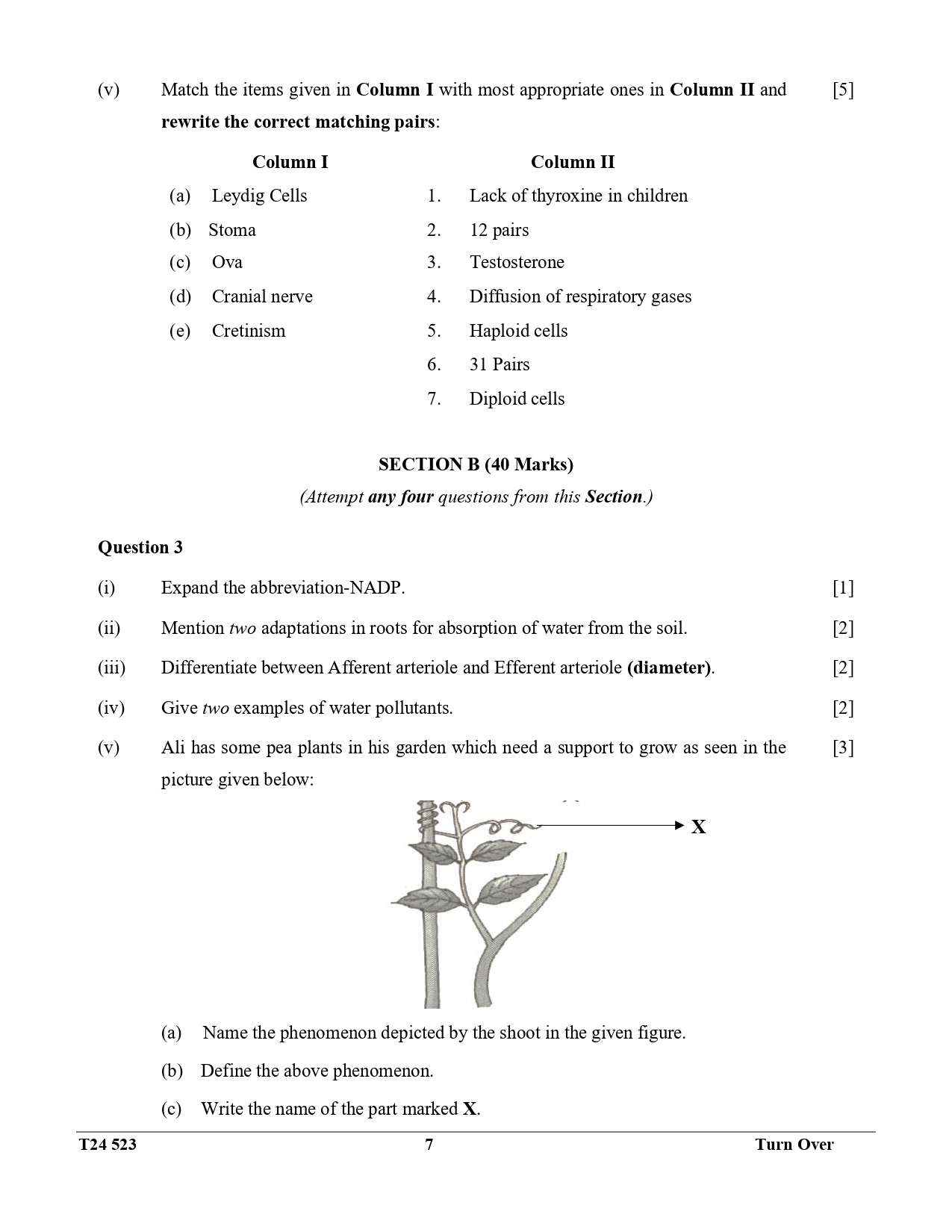
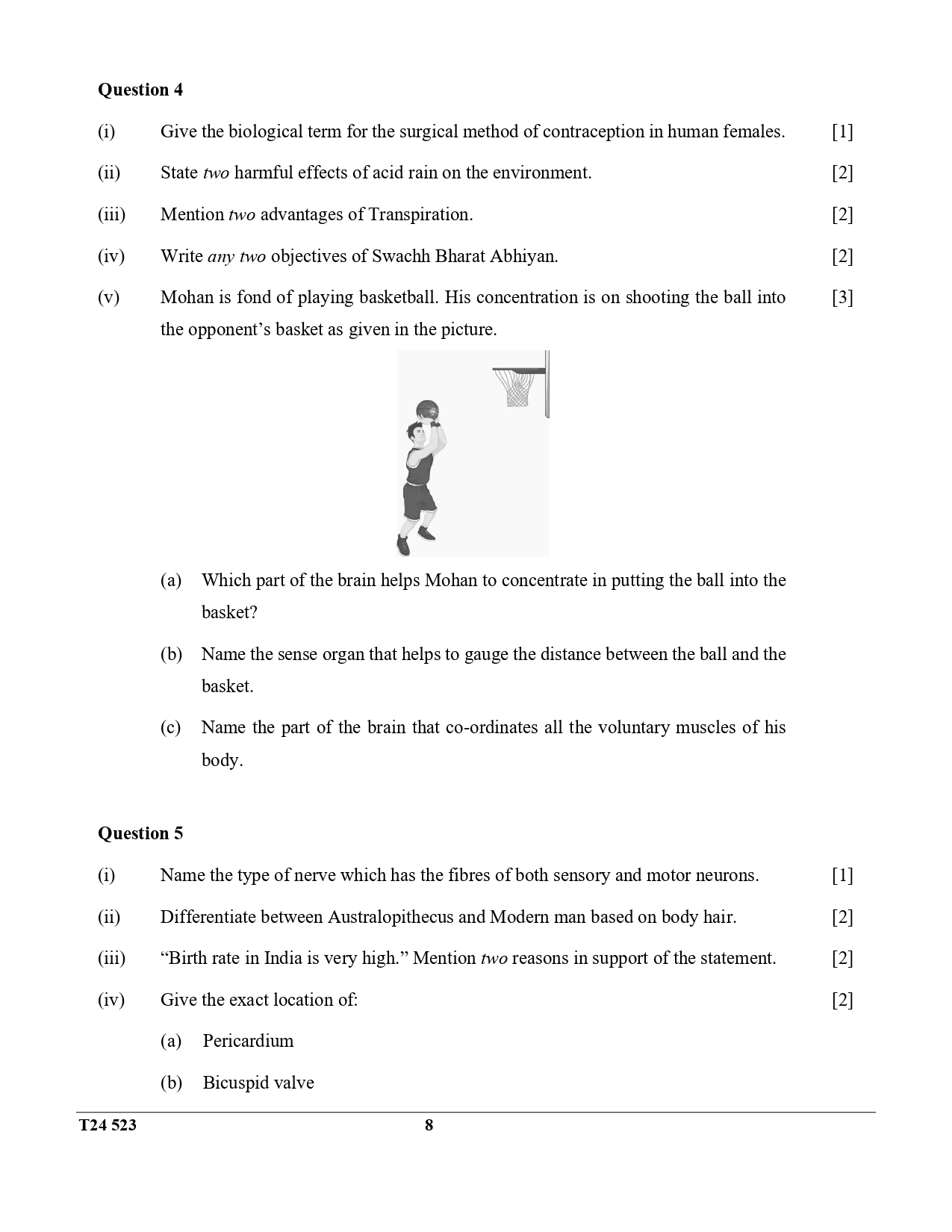
This is the official ICSE Class 10 Biology (Science Paper 3) question paper from the 2024 examination, paper code T24 523. It carries 80 marks, with two hours of writing time plus 15 minutes of reading time. Section A (40 marks) is compulsory: Question 1 has 15 one-mark multiple-choice questions, including an assertion–reason item, and Question 2 has five parts on naming, logical sequences, a passage on the potassium hydroxide experiment showing carbon dioxide is needed for photosynthesis, odd one out and matching. In Section B candidates attempt any four of Questions 3–8, worth 10 marks each, which end with situation-based items such as a basketball player's brain and eyes and a student who cannot see the blackboard clearly. The paper has questions only, without answers.
- Exam
- ICSE Class 10
- Subject
- Biology
- Year
- 2024
- Paper code
- T24 523
- Maximum marks
- 80
- Time allowed
- 2 hours + 15 min reading
- Questions
- 8
- Pages
- 11
- Answers included
- No, questions only
Paper pattern
Section A – Question 1
15 marks15 multiple-choice questions, one mark each, including an assertion–reason item
Section A – Question 2
25 marksFive five-mark parts: naming, logical sequences, fill in the blanks, odd one out and matching
Section B
40 marksQuestions 3–8, attempt any four; each 10 marks, split into five parts of one to three marks
Topics covered
- Cell cycle and cell division
- Genetics and Mendel's laws
- Evolution
- Photosynthesis
- Transpiration and absorption by roots
- Plant movements
- Circulatory system and blood
- Excretory system
- Nervous system and the brain
- Sense organs: eye and ear
- Endocrine system
- Pollution and population
Questions from this paper
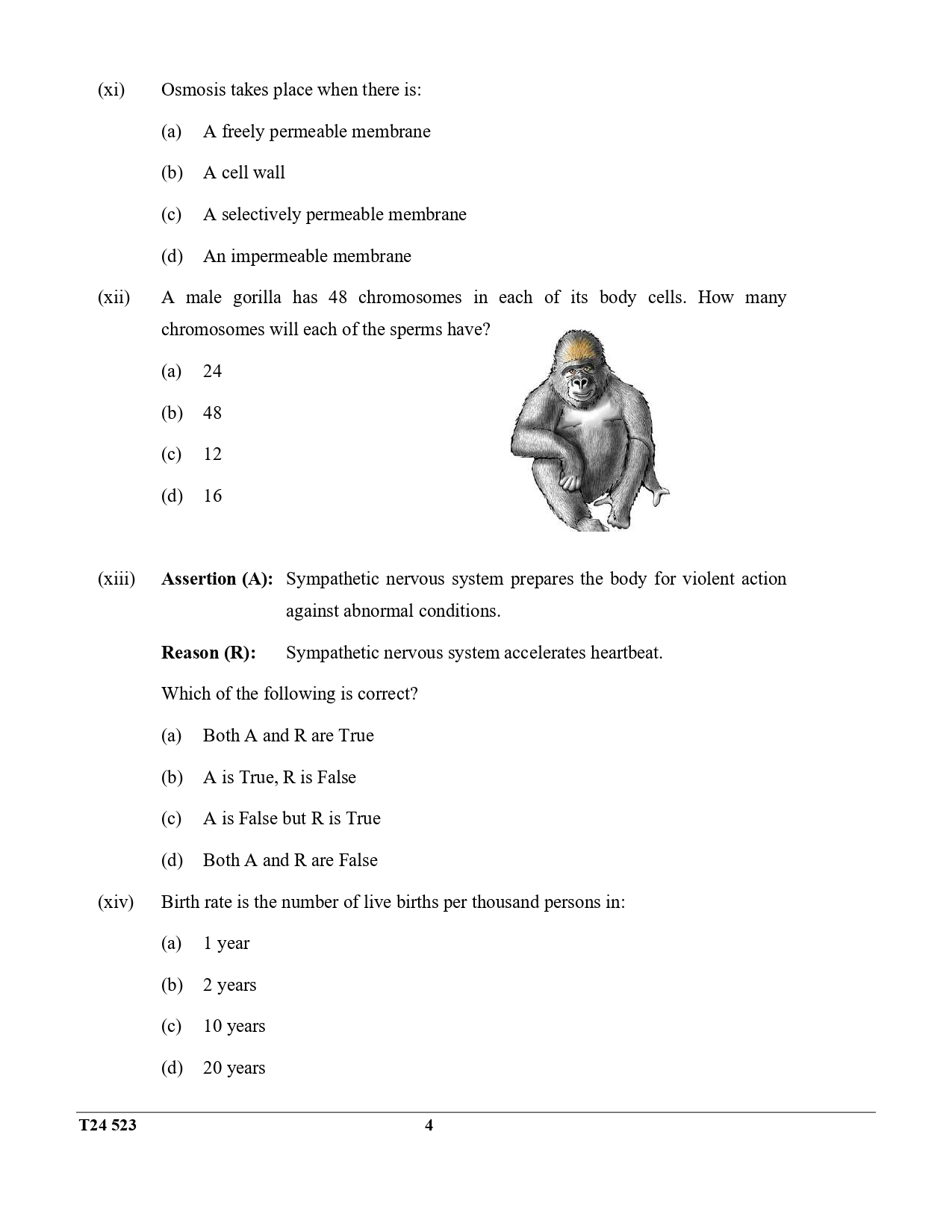
- A male gorilla has 48 chromosomes in each of its body cells. How many chromosomes will each of its sperms have?
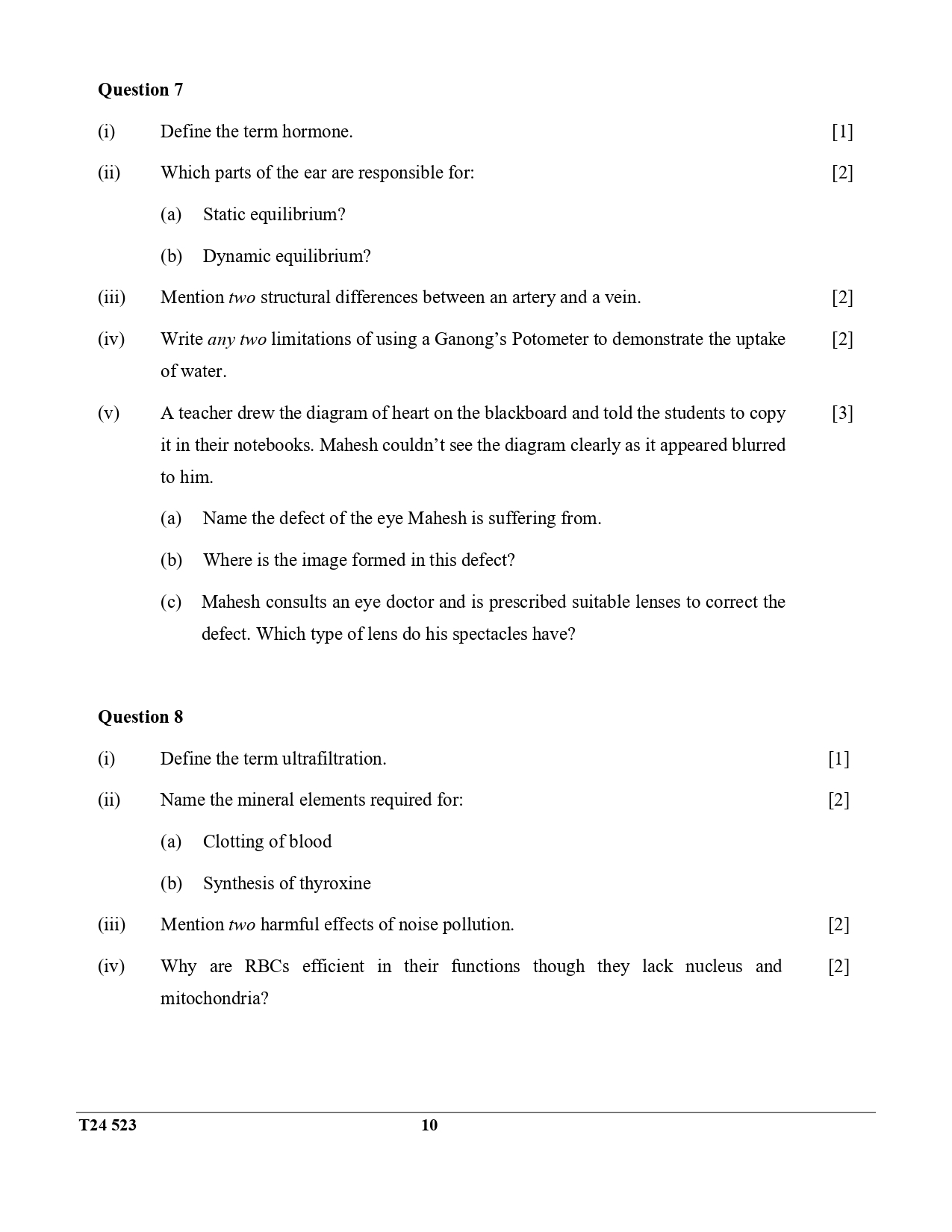
- Differentiate between the afferent arteriole and the efferent arteriole on the basis of diameter.
- Mention two advantages of transpiration.
- Carbon monoxide is dangerous when inhaled in excess. Comment on the statement.
- Why are RBCs efficient in their functions even though they lack a nucleus and mitochondria?
- Write any two limitations of using a Ganong's potometer to demonstrate the uptake of water.
What's next
Class 10 done next year?
A number of scholarships for Class 11–12 depend on your Class 10 marks.
Check eligibility