ICSE Class 10 History & Civics (H.C.G. Paper 1) Question Paper 2024 with Solutions

ICSE
History Civics2024Download the official ICSE Class 10 History & Civics Question Paper 2024 with step-by-step solutions prepared by subject matter experts. Practicing the 2024 ICSE H.C.G. Paper 1 helps students master Union Parliament, Union Executive, the Judiciary, the Indian National Movement, Contemporary World History (World Wars, UN, and Non-Aligned Movement), and CISCE picture-study questions. Access the free PDF download above with complete answer keys.
About this paper
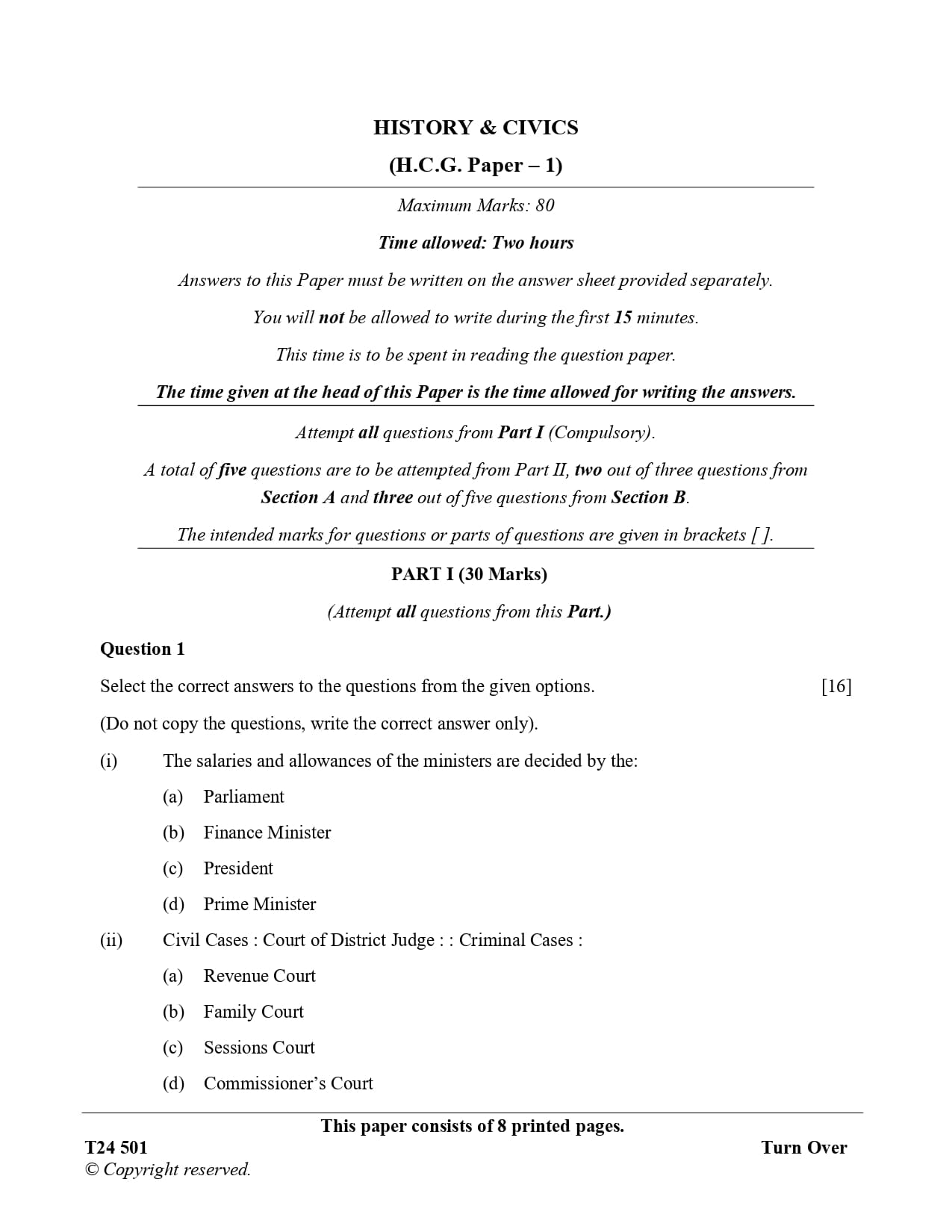
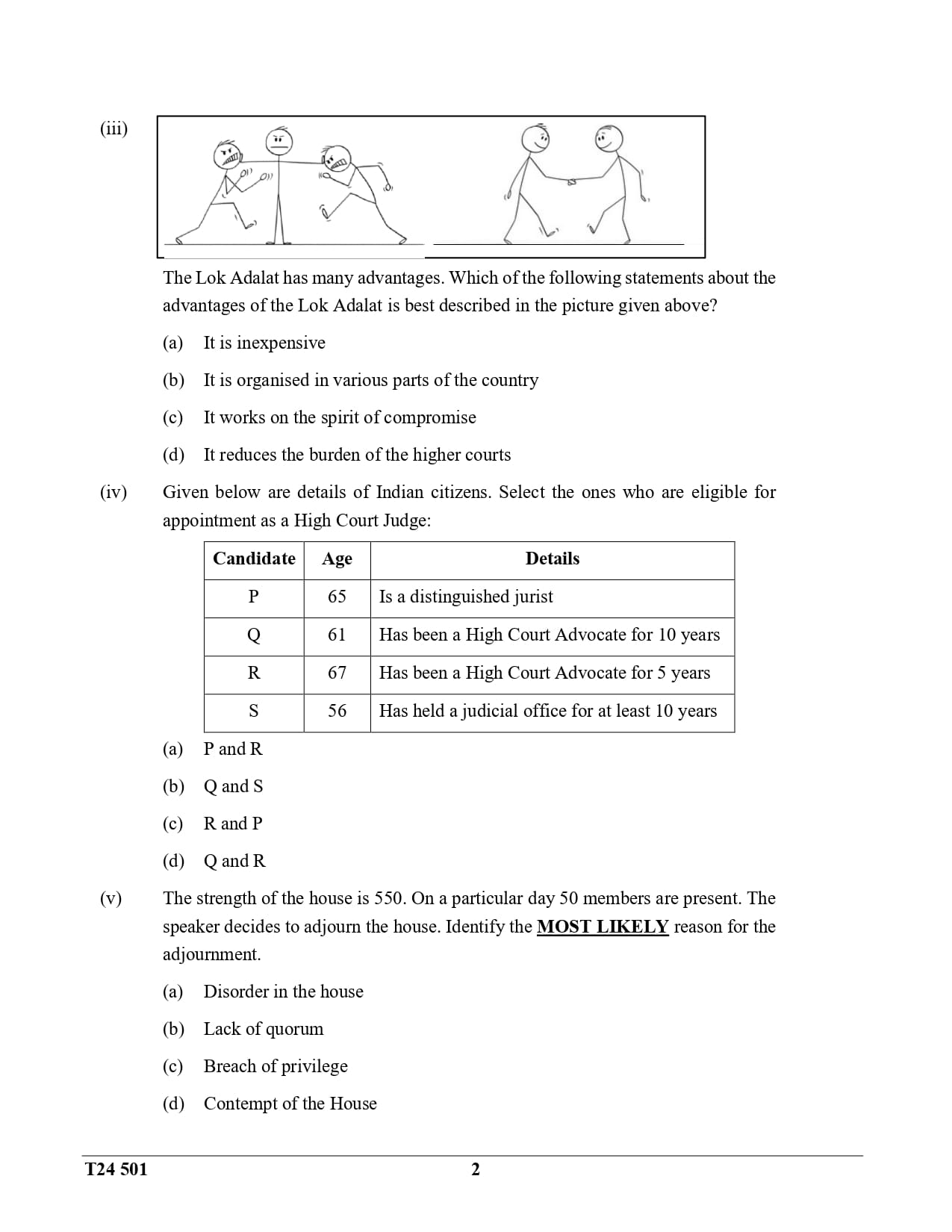
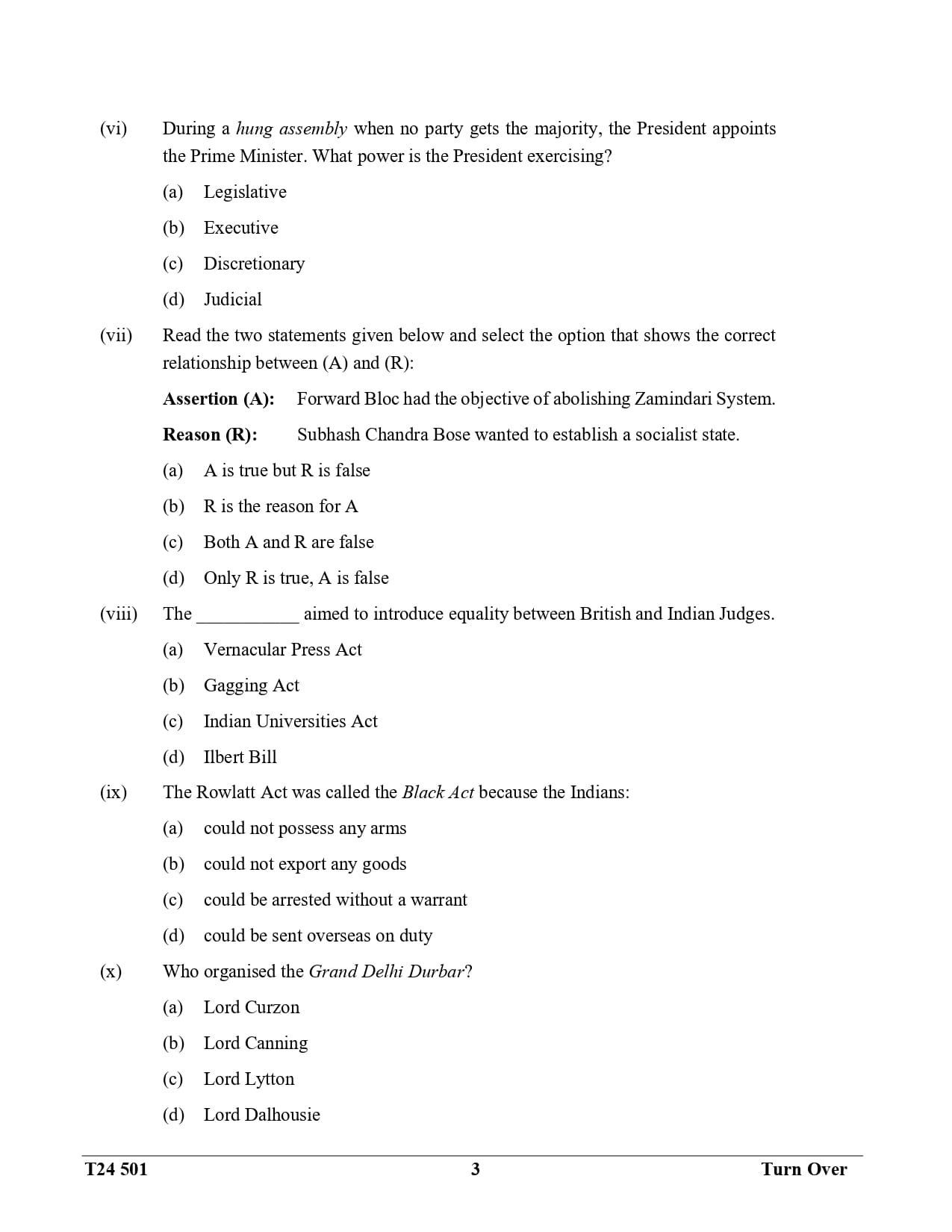
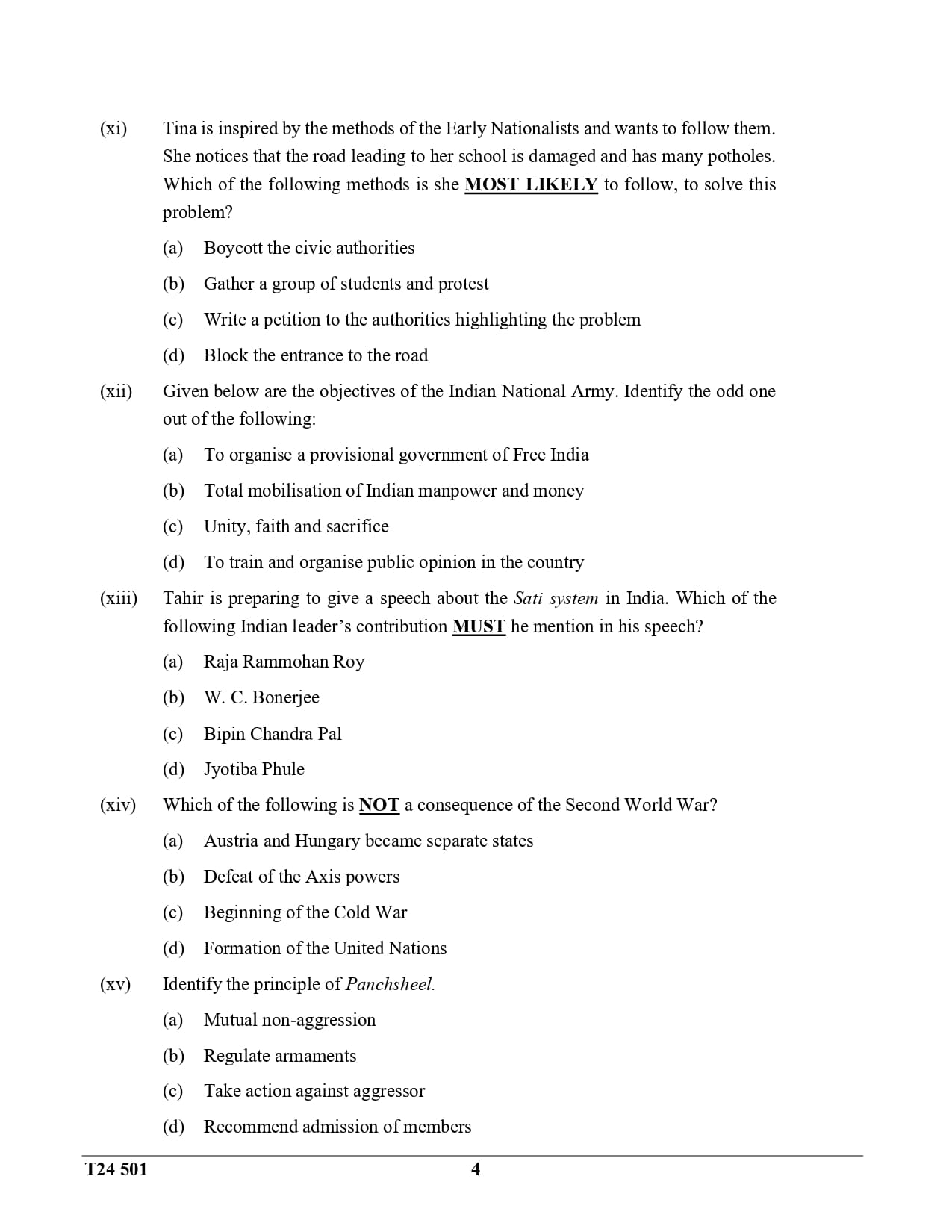
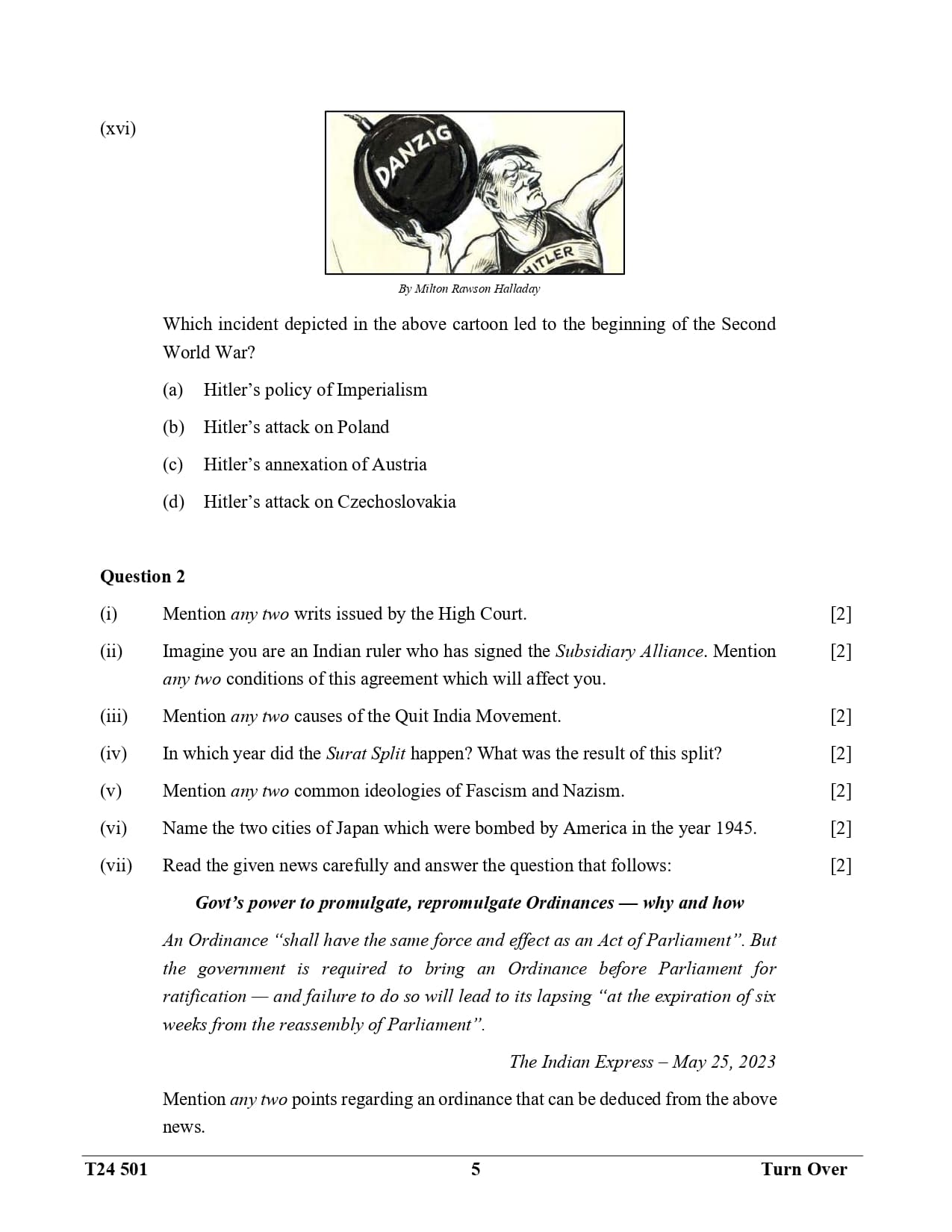
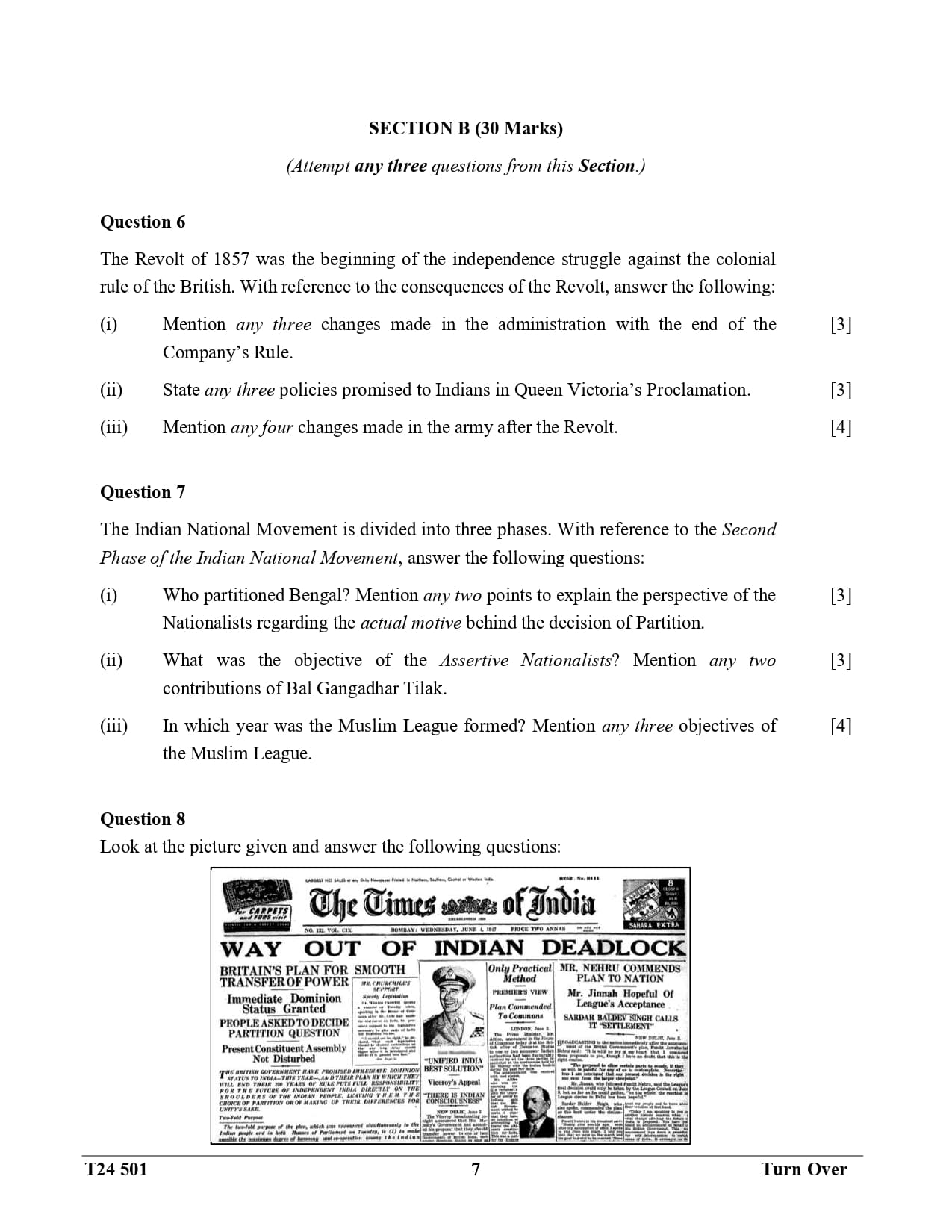
This is the ICSE Class 10 History & Civics paper (H.C.G. Paper 1), set by CISCE for the 2024 board examination. It carries 80 marks for two hours of writing, after 15 minutes of reading time. Part I (30 marks) is compulsory: Question 1 has sixteen one-mark multiple-choice items, including an assertion–reason item, a picture of the Lok Adalat and a Danzig cartoon, and Question 2 has seven two-mark short answers, one based on an Indian Express report on ordinances. In Part II, students answer two of three Civics questions on the Parliament, the Union Executive and the Supreme Court, and three of five History questions. Some History questions are based on a newspaper front page about the transfer of power and a 1920 Guardian editorial on the Treaty of Versailles. This copy has the questions only, without answers.
- Exam
- ICSE Class 10
- Subject
- History Civics
- Year
- 2024
- Paper code
- T24 501
- Maximum marks
- 80
- Time allowed
- 2 hours + 15 min reading
- Questions
- 10
- Pages
- 8
- Answers included
- No, questions only
Paper pattern
Part I
30 marksCompulsory: Question 1 with 16 one-mark multiple-choice items and Question 2 with 7 two-mark short answers
Part II, Section A
20 marksCivics: attempt any two of Questions 3–5, ten marks each
Part II, Section B
30 marksHistory: attempt any three of Questions 6–10, ten marks each
Topics covered
- The Union Parliament
- The Prime Minister and Council of Ministers
- The President
- The Supreme Court and High Courts
- Lok Adalats and subordinate courts
- The Revolt of 1857 and its consequences
- Early and Assertive Nationalists
- Partition of Bengal and the Muslim League
- Quit India Movement and the Indian National Army
- Mountbatten Plan and the Indian Independence Act
- First World War and the Treaty of Versailles
- Second World War, Fascism and Nazism
- United Nations and the Non-Aligned Movement
Questions from this paper
- The Rajya Sabha is called a Permanent House. Explain this statement.
- What is meant by the term Original Jurisdiction? Mention any three cases which come under this jurisdiction.
- Imagine you are an Indian ruler who has signed the Subsidiary Alliance. Mention any two conditions of this agreement which will affect you.
- State any three policies promised to Indians in Queen Victoria's Proclamation.
- Who partitioned Bengal? Mention any two points to explain the perspective of the Nationalists regarding the actual motive behind the decision of Partition.
- Name any two founders of the Non-Aligned Movement and mention any two of its objectives.
What's next
Class 10 done next year?
A number of scholarships for Class 11–12 depend on your Class 10 marks.
Check eligibility