ICSE Class 10 Biology Question Paper 2026 with Solutions

ICSE
Biology2026Download the official ICSE Class 10 Biology Question Paper 2026 with step-by-step solutions prepared by subject matter experts. Solving previous years' ICSE Class X board papers helps students understand question formats, marking distributions, and high-frequency topics to score top marks in board examinations. Access the free PDF download above with complete answer keys.
About this paper
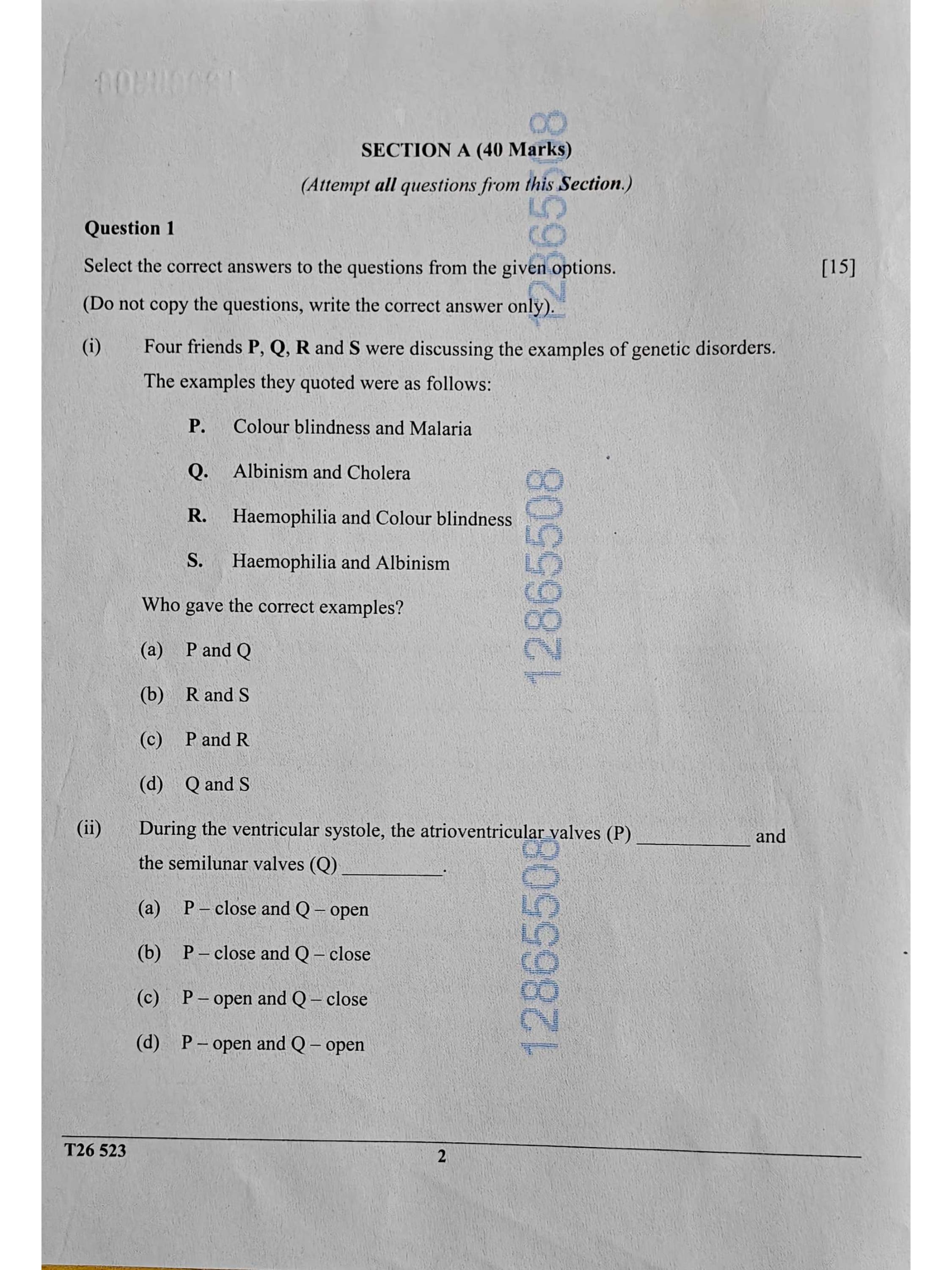
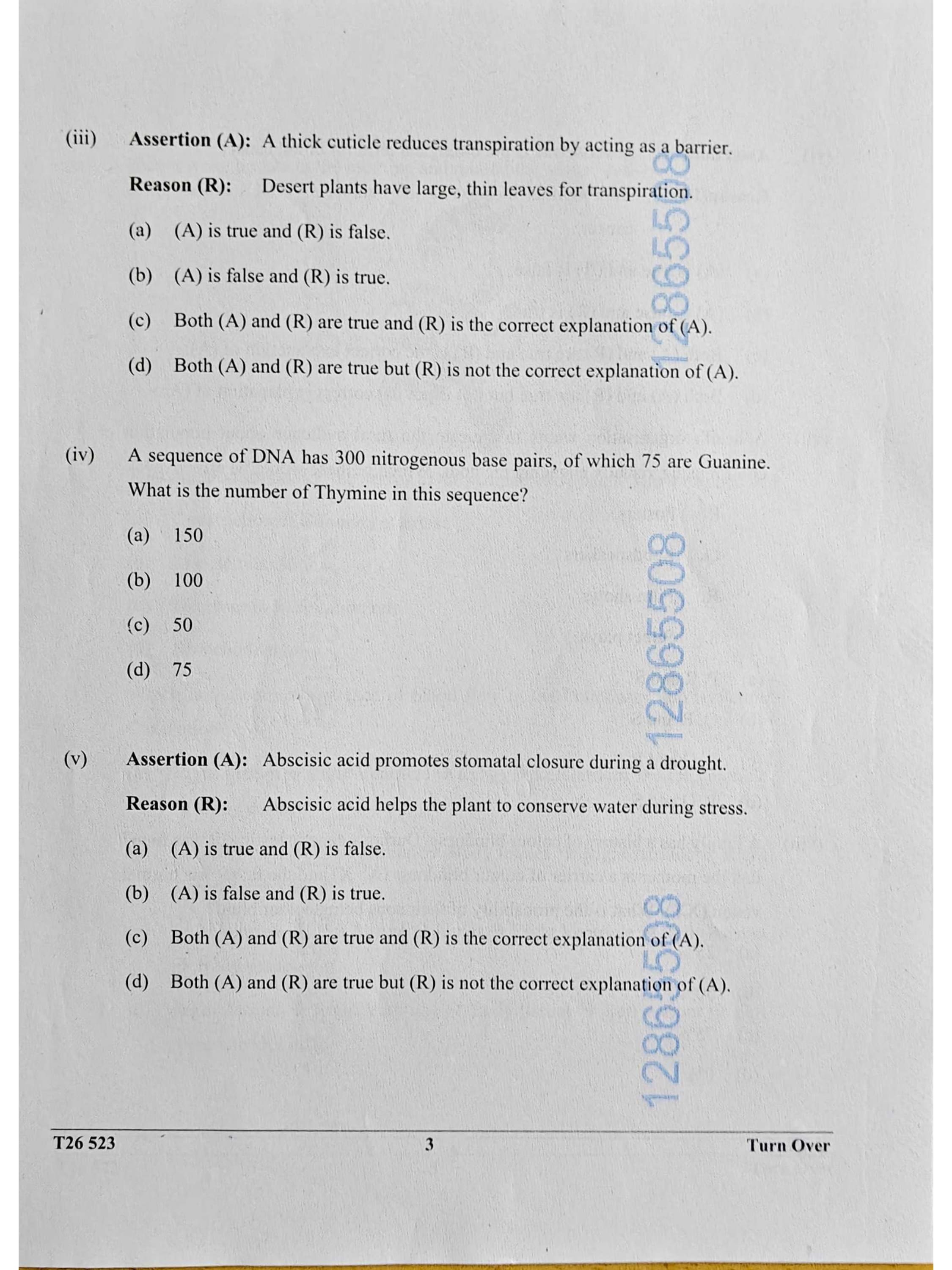
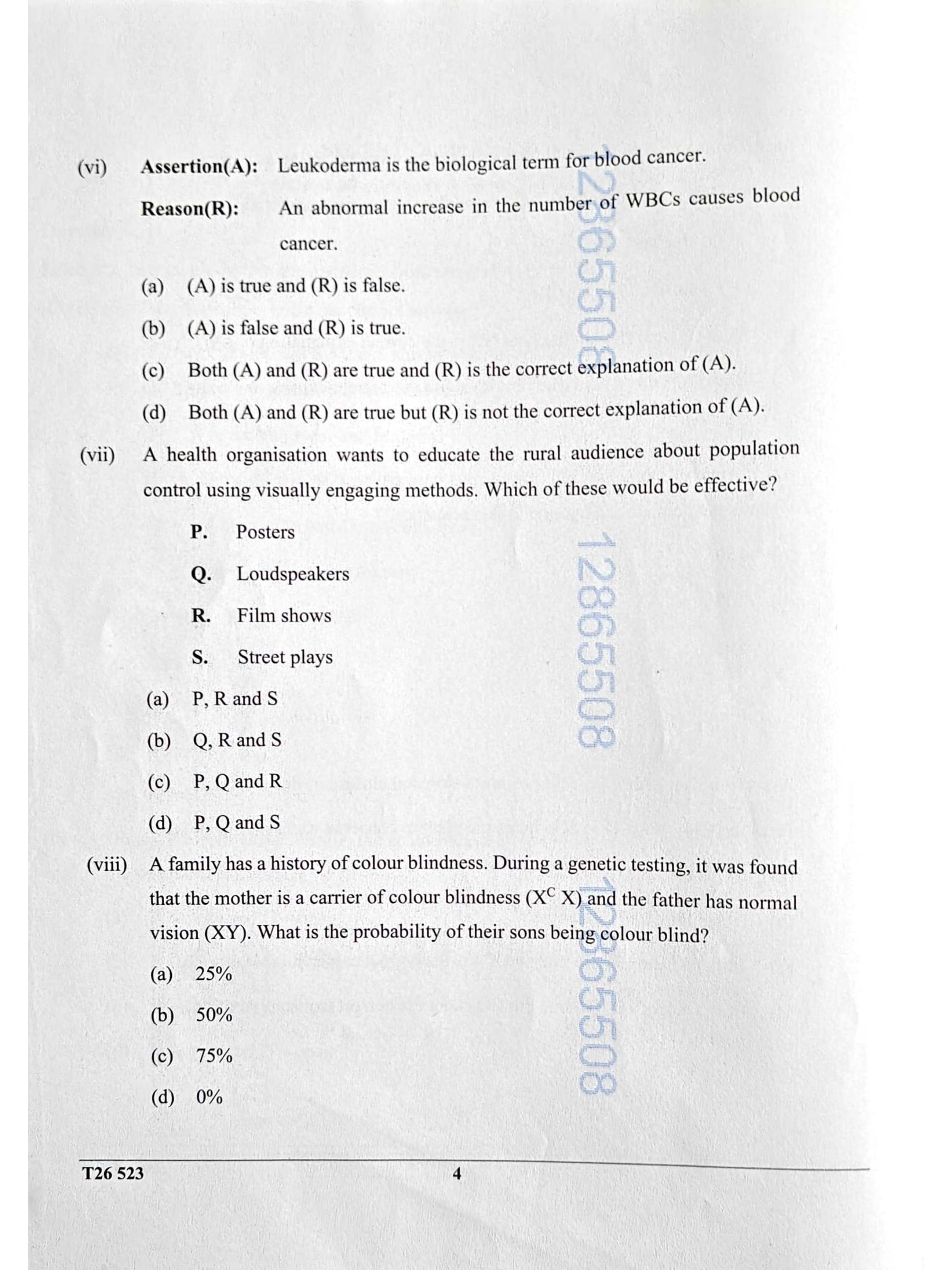
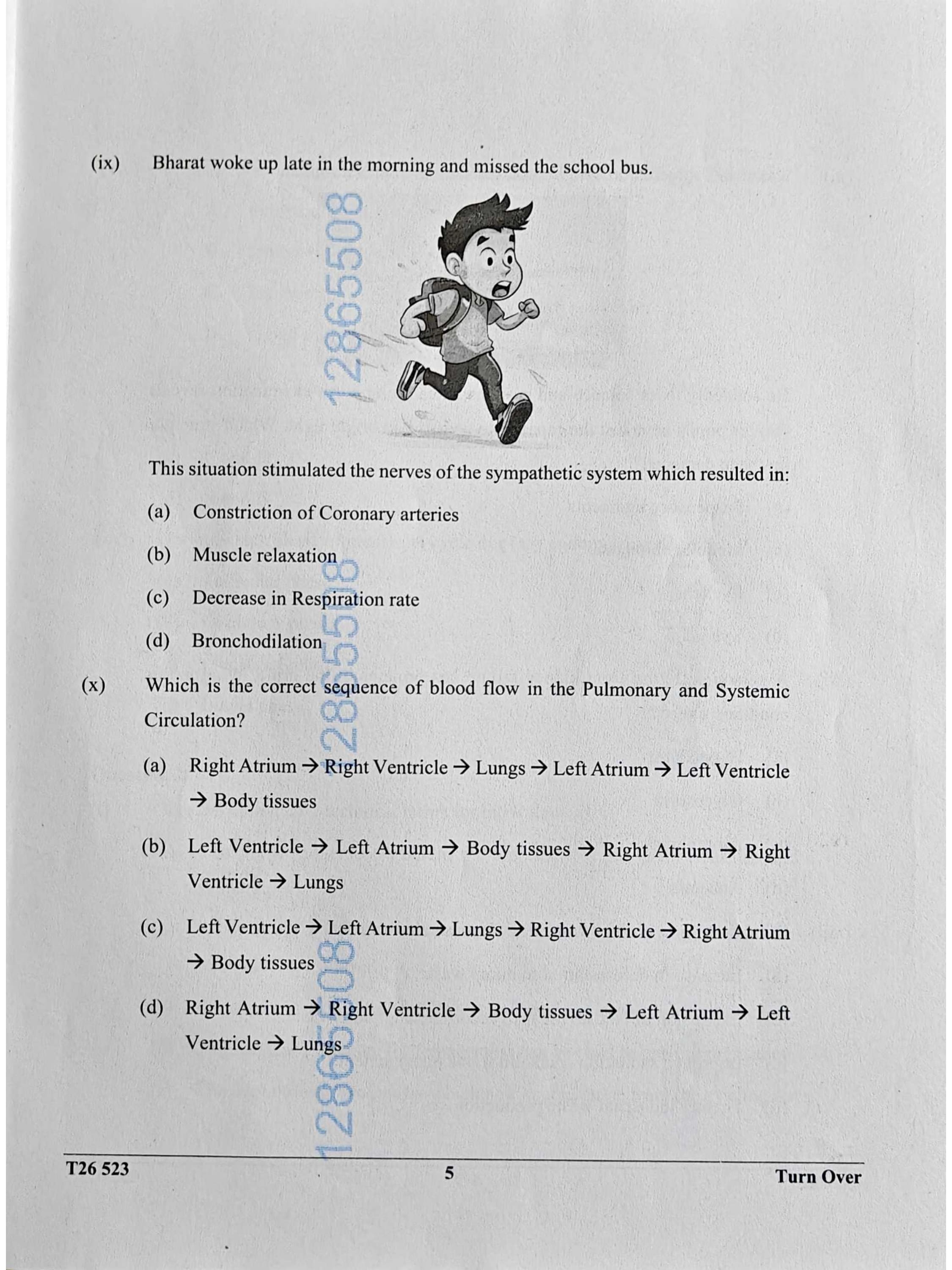
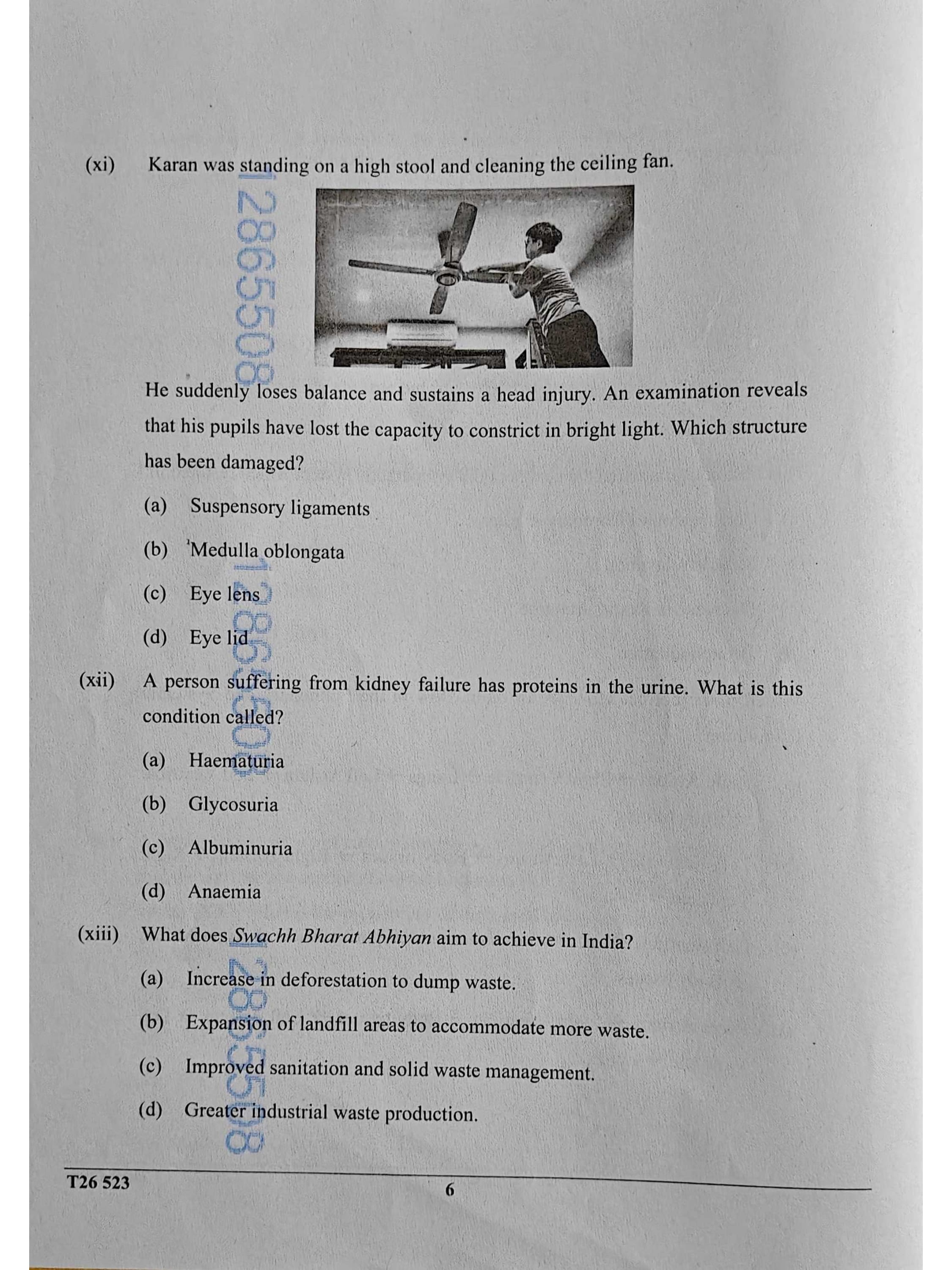
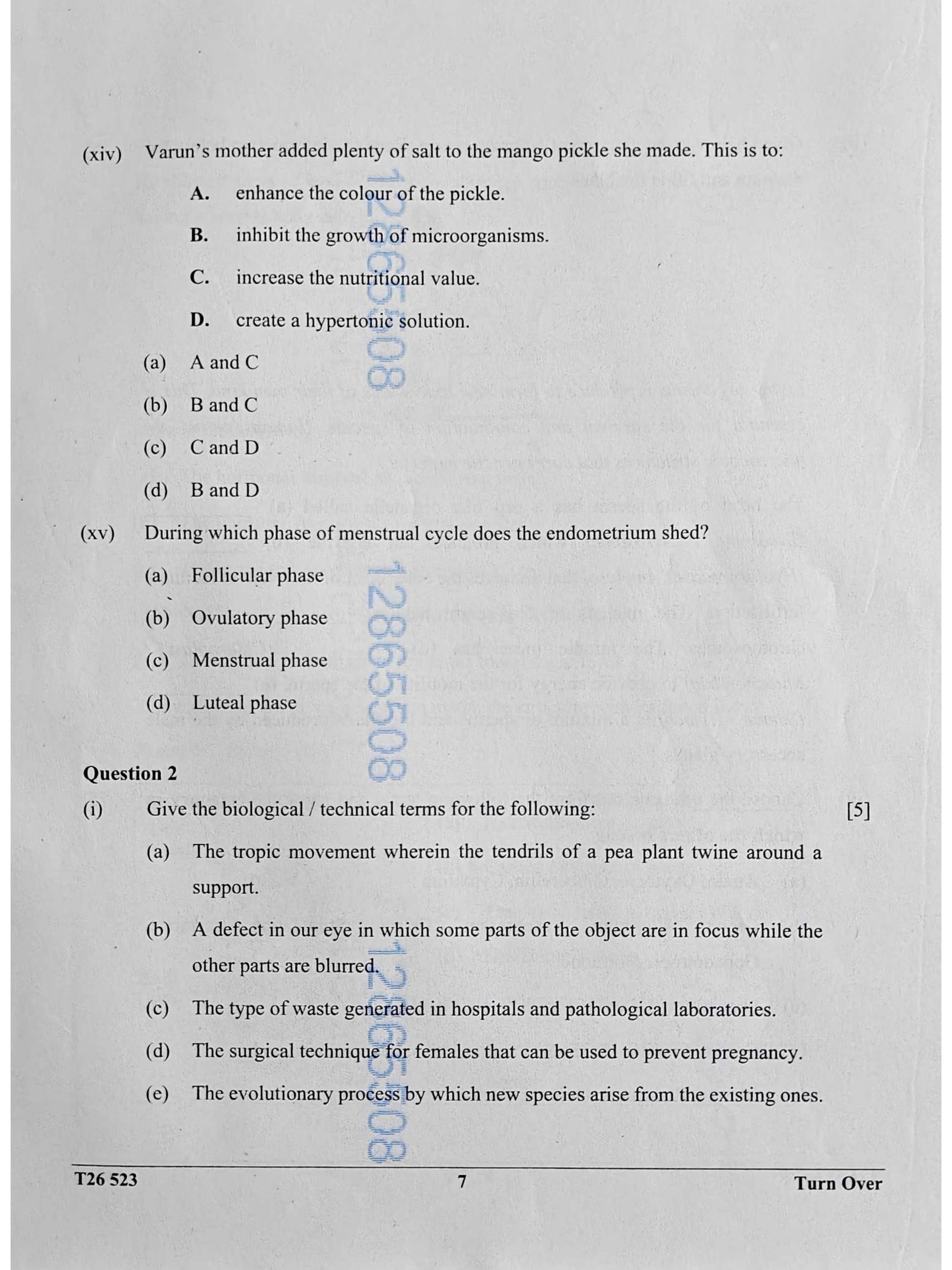
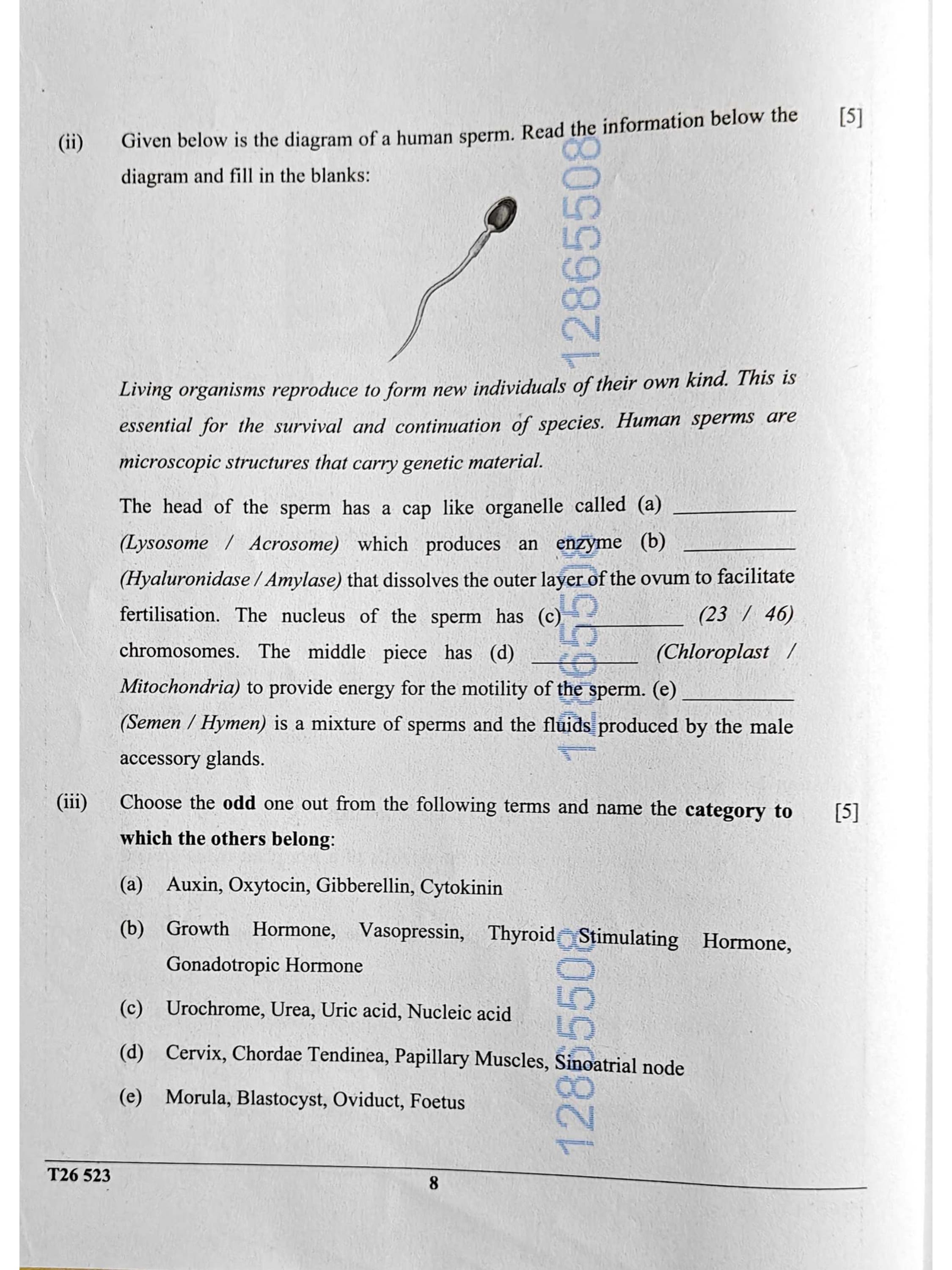
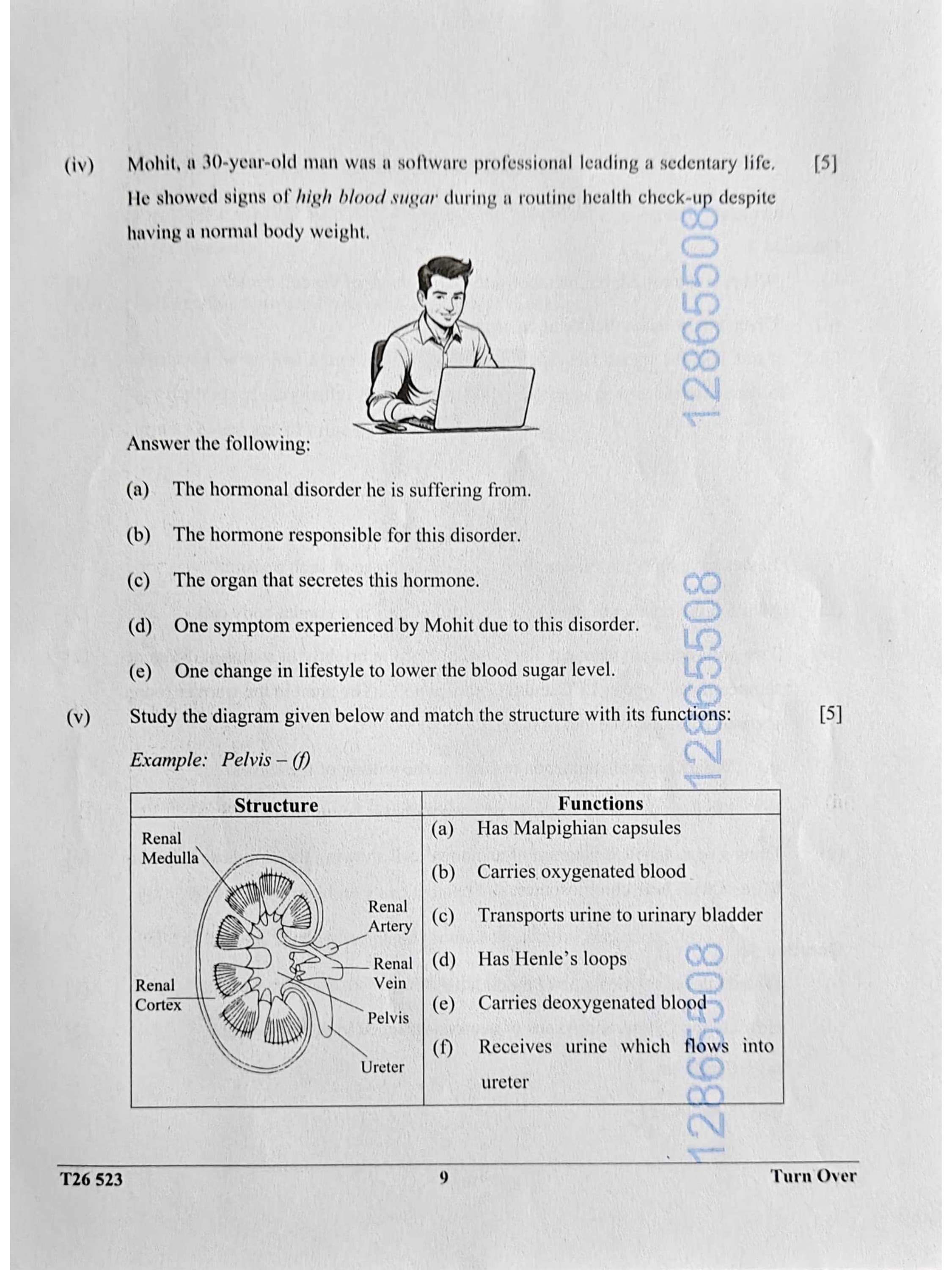
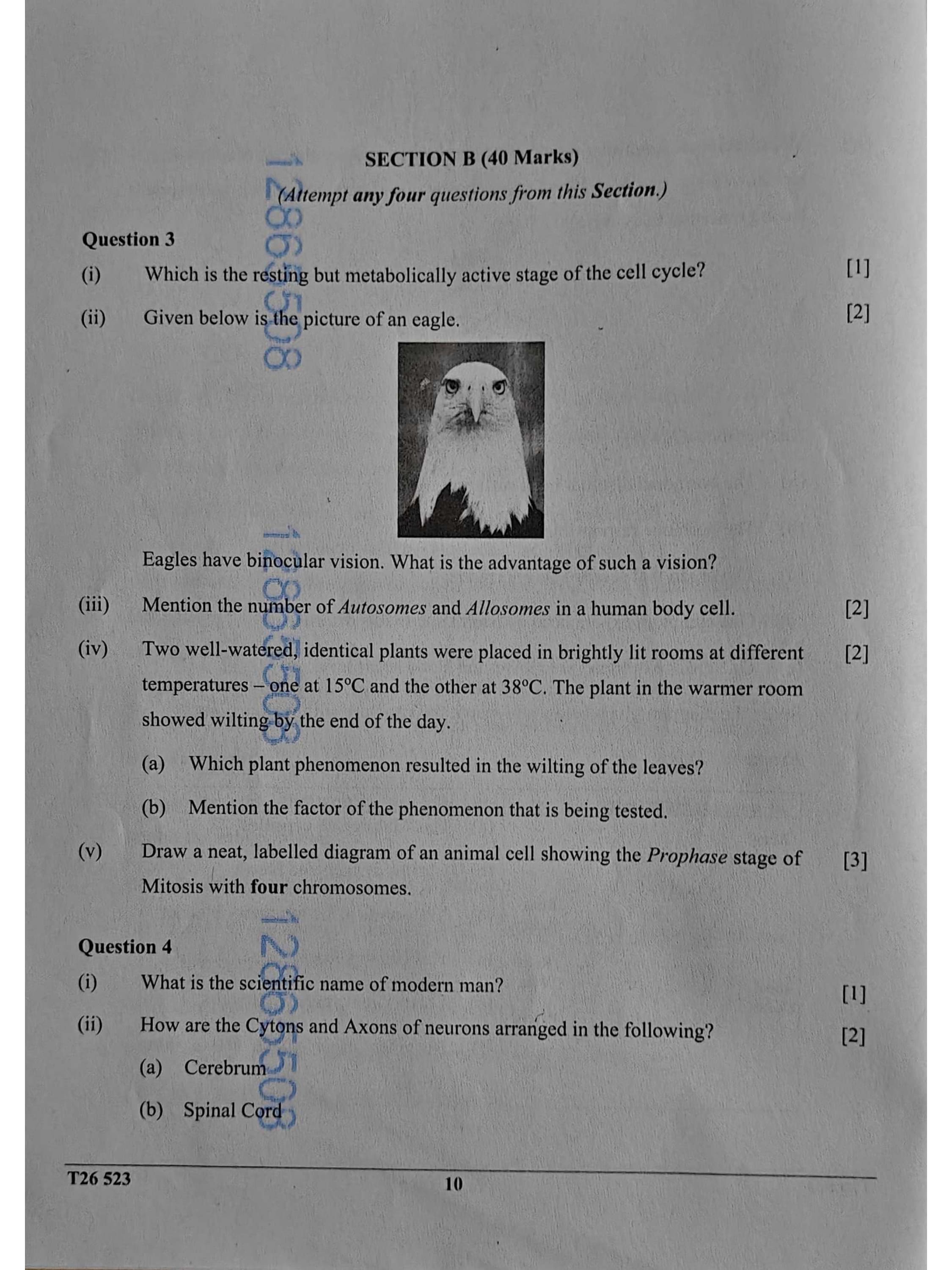
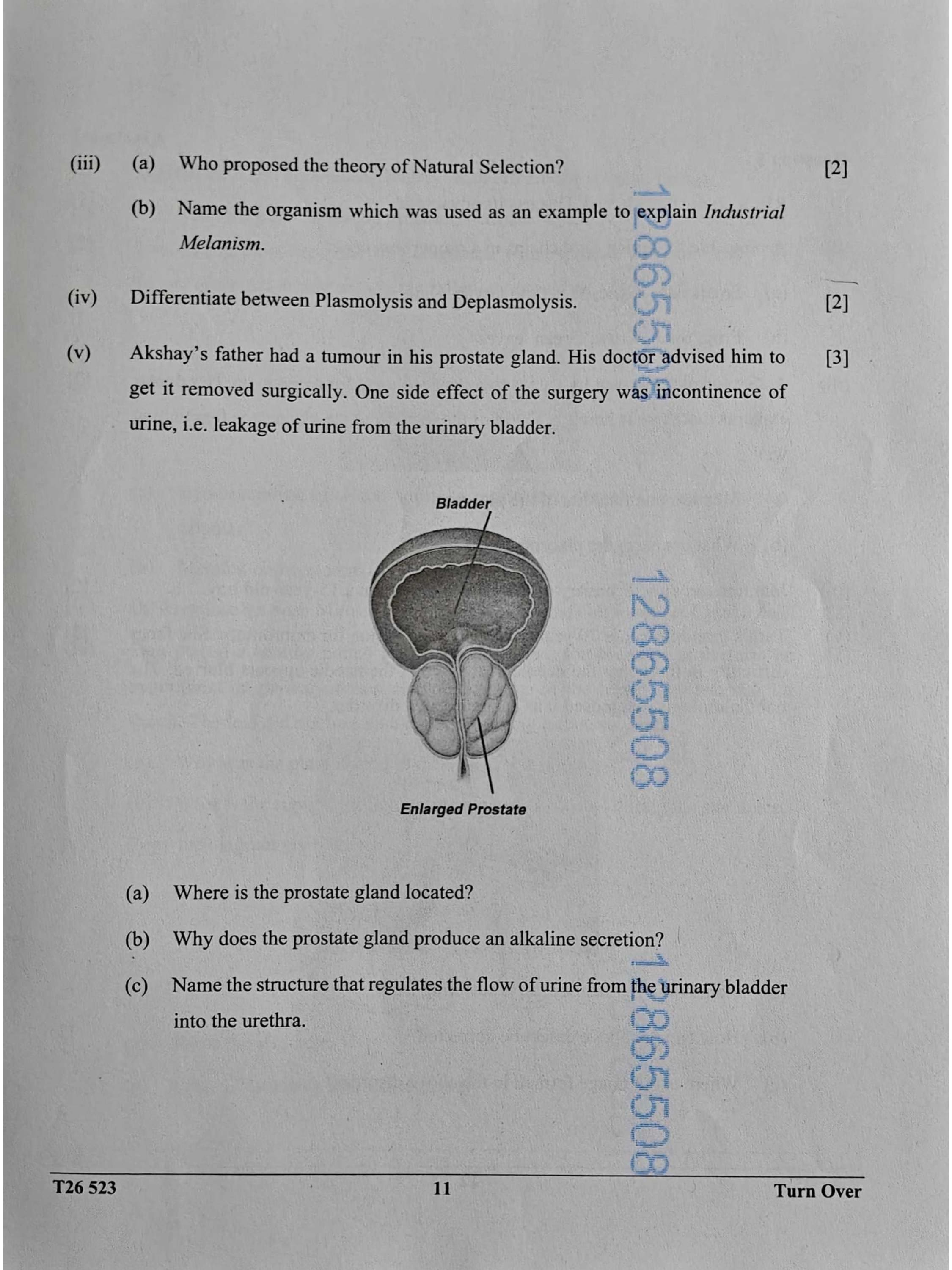
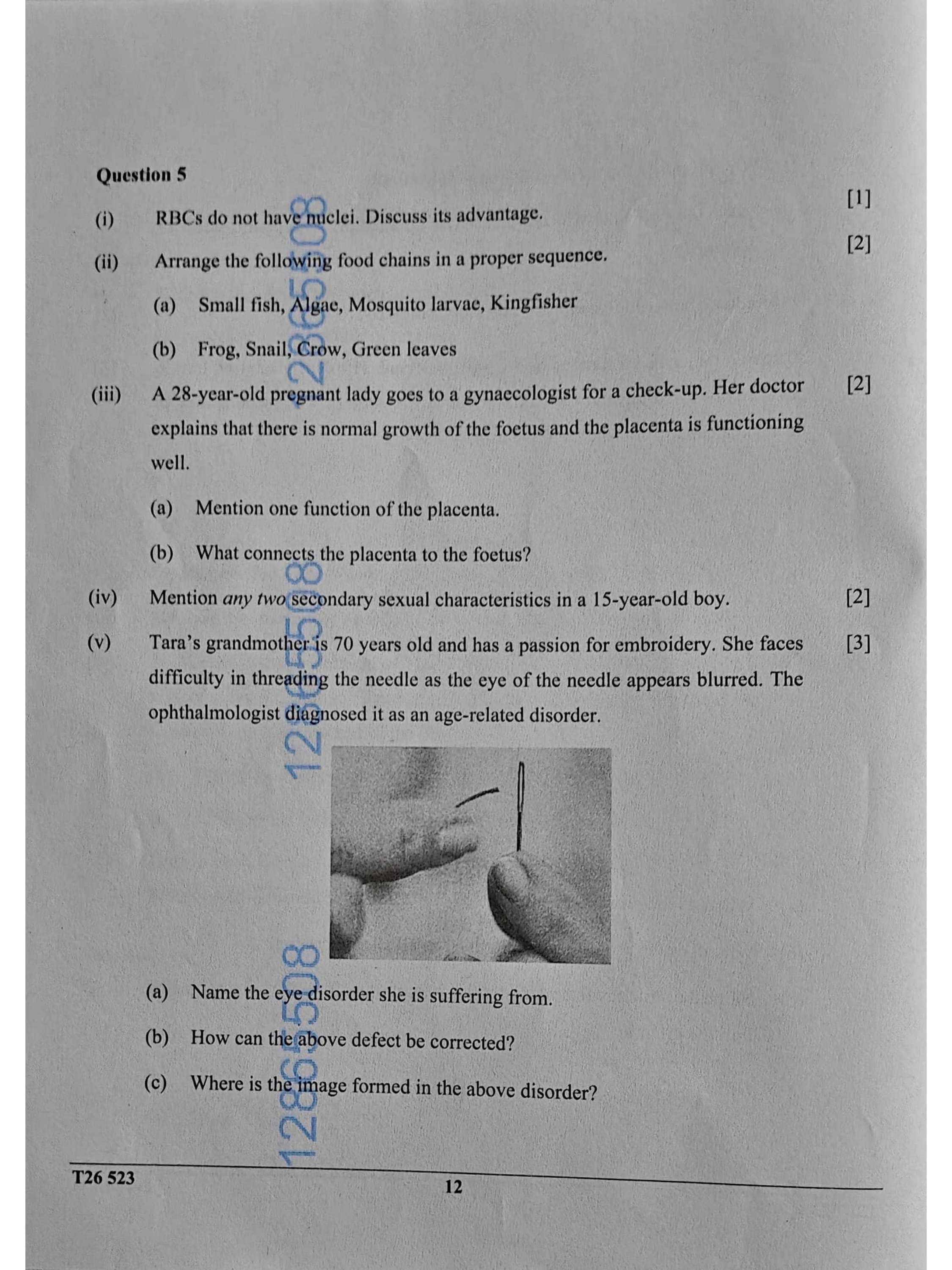
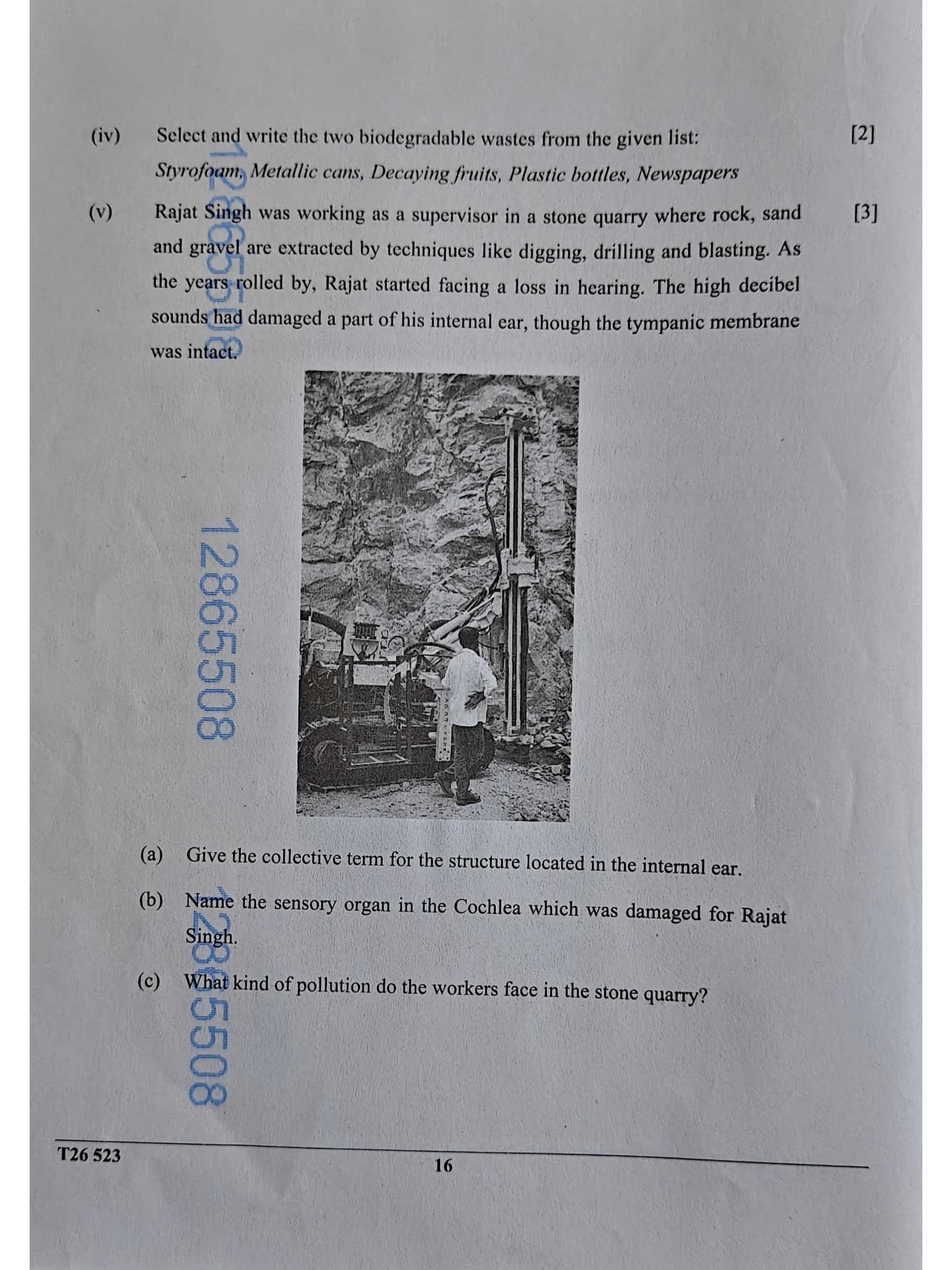
This is the ICSE Class 10 Biology (Science Paper 3) question paper from the 2026 examination, paper code T26 523. It carries 80 marks, with two hours of writing time plus 15 minutes of reading time. Section A (40 marks) is compulsory: Question 1 has 15 one-mark multiple-choice questions, including assertion–reason items and short scenarios, and Question 2 has five parts covering technical terms, a passage on the human sperm, odd one out, a case on high blood sugar and a kidney diagram to match. In Section B candidates attempt any four of Questions 3–8, worth 10 marks each, many built on real-life cases such as an enlarged prostate, age-related blurred vision, shrinking urban greenery and hearing loss in a stone quarry. The paper has questions only, without answers.
- Exam
- ICSE Class 10
- Subject
- Biology
- Year
- 2026
- Paper code
- T26 523
- Maximum marks
- 80
- Time allowed
- 2 hours + 15 min reading
- Questions
- 8
- Pages
- 16
- Answers included
- No, questions only
Paper pattern
Section A – Question 1
15 marks15 multiple-choice questions, one mark each, including assertion–reason items
Section A – Question 2
25 marksFive five-mark parts: technical terms, fill in the blanks, odd one out, a case study and matching
Section B
40 marksQuestions 3–8, attempt any four; each 10 marks, split into five parts of one to three marks
Topics covered
- Cell cycle and cell division
- Genetics and DNA
- Evolution
- Photosynthesis
- Transpiration and plant hormones
- Circulatory system and blood
- Excretory system
- Nervous system
- Sense organs: eye and ear
- Endocrine system
- Human reproduction
- Pollution and population
Questions from this paper
- A sequence of DNA has 300 nitrogenous base pairs, of which 75 are guanine. What is the number of thymine in this sequence?
- Mention the number of autosomes and allosomes in a human body cell.
- How are the cytons and axons of neurons arranged in the cerebrum and in the spinal cord?
- RBCs do not have nuclei. Discuss its advantage.
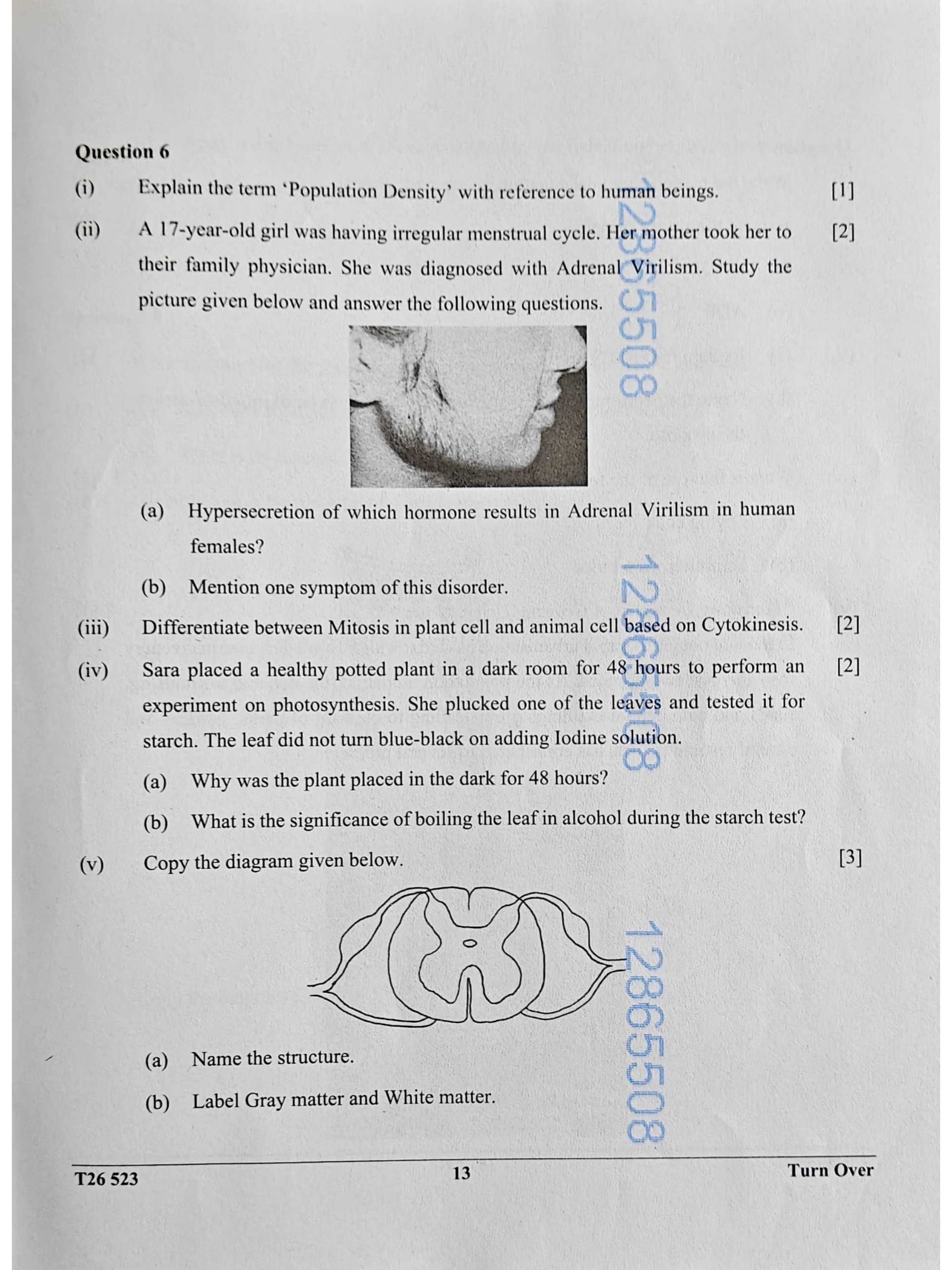
- Differentiate between mitosis in a plant cell and an animal cell on the basis of cytokinesis.
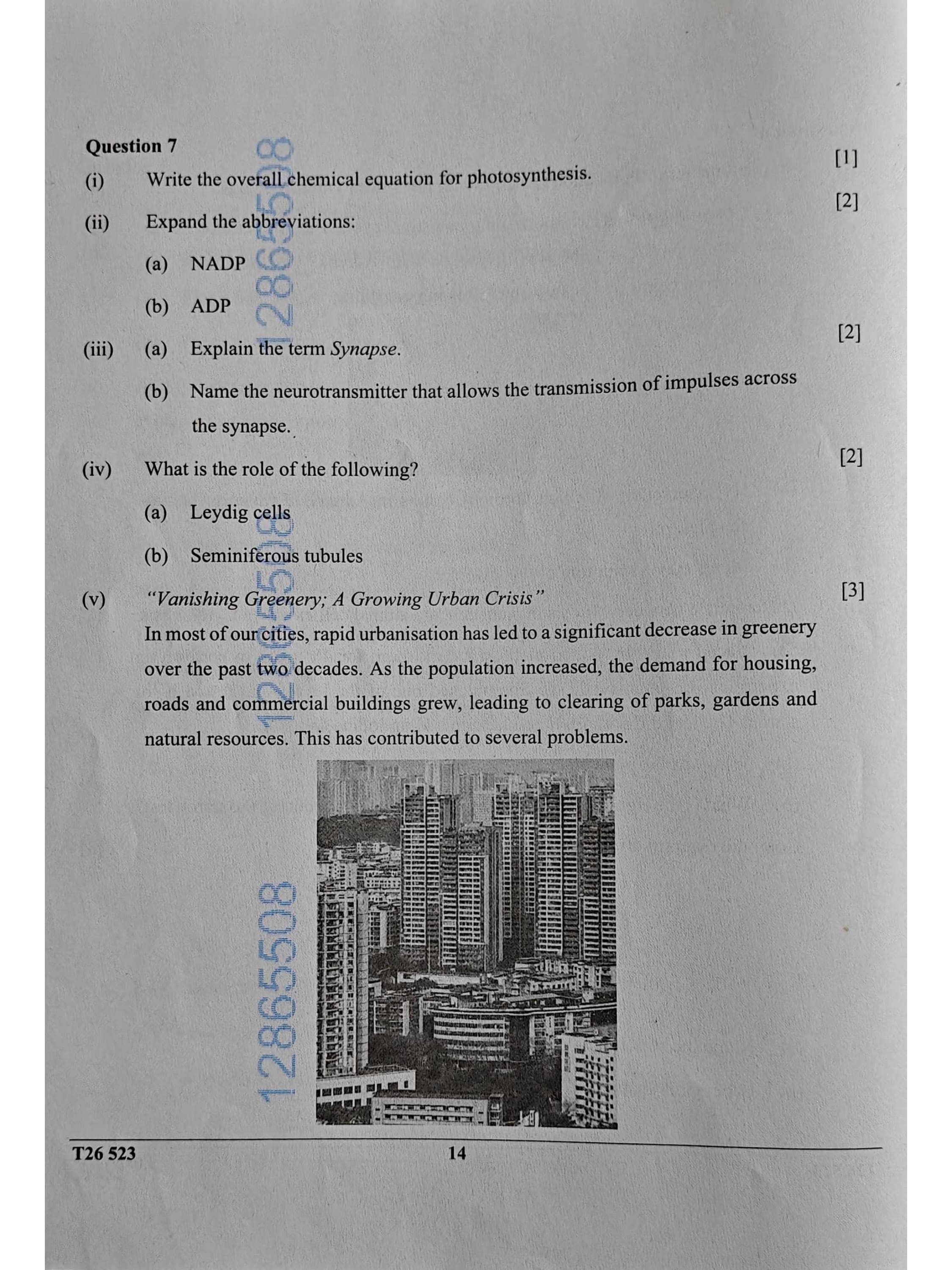
- Select the two biodegradable wastes from the following list: Styrofoam, metallic cans, decaying fruits, plastic bottles, newspapers.
What's next
Class 10 done next year?
A number of scholarships for Class 11–12 depend on your Class 10 marks.
Check eligibility