CBSE 2015 Economics Question Paper for Class 12

CBSE
Economics2015CBSE Class 12 Economics question paper 2015 (code 58/1/1): 29 questions for 100 marks in 3 hours, micro and macroeconomics sections. Questions only.
Practice these questions to improve your performance in the board examination.
About this paper
This is the CBSE Class 12 Economics paper from the 2015 board examination, code 58/1/1 (Series SSO/1, Set 1). It carries 100 marks over three hours and has 29 compulsory questions, printed in Hindi and English. Section A covers microeconomics and Section B covers macroeconomics; each moves from one-mark questions, several of them multiple choice, through three- and four-mark short answers to six-mark long answers with word limits. Internal choices are given in several questions, and alternative questions are provided for blind candidates in place of the diagram-based Questions 8 and 12. Some questions refer to current schemes such as the Swachh Bharat Mission and Jan-Dhan Yojana. This copy has the questions only, without solutions.
- Exam
- CBSE Class 12
- Subject
- Economics
- Year
- 2015
- Paper code
- 58/1/1
- Maximum marks
- 100
- Time allowed
- 3 hours
- Questions
- 29
- Pages
- 15
- Answers included
- No, questions only
Paper pattern
Section A
50 marksMicroeconomics, Questions 1–14: three 1-mark, five 3-mark, two 4-mark and four 6-mark questions
Section B
50 marksMacroeconomics, Questions 15–29: five 1-mark, three 3-mark, three 4-mark and four 6-mark questions
Topics covered
- Consumer equilibrium and indifference curves
- Production possibilities curve
- Price elasticity of demand
- Law of variable proportions
- Cost and revenue
- Market equilibrium and price ceiling
- National income accounting
- Money and central banking
- Income determination and multiplier
- Government budget
- Balance of payments and foreign exchange
Questions from this paper
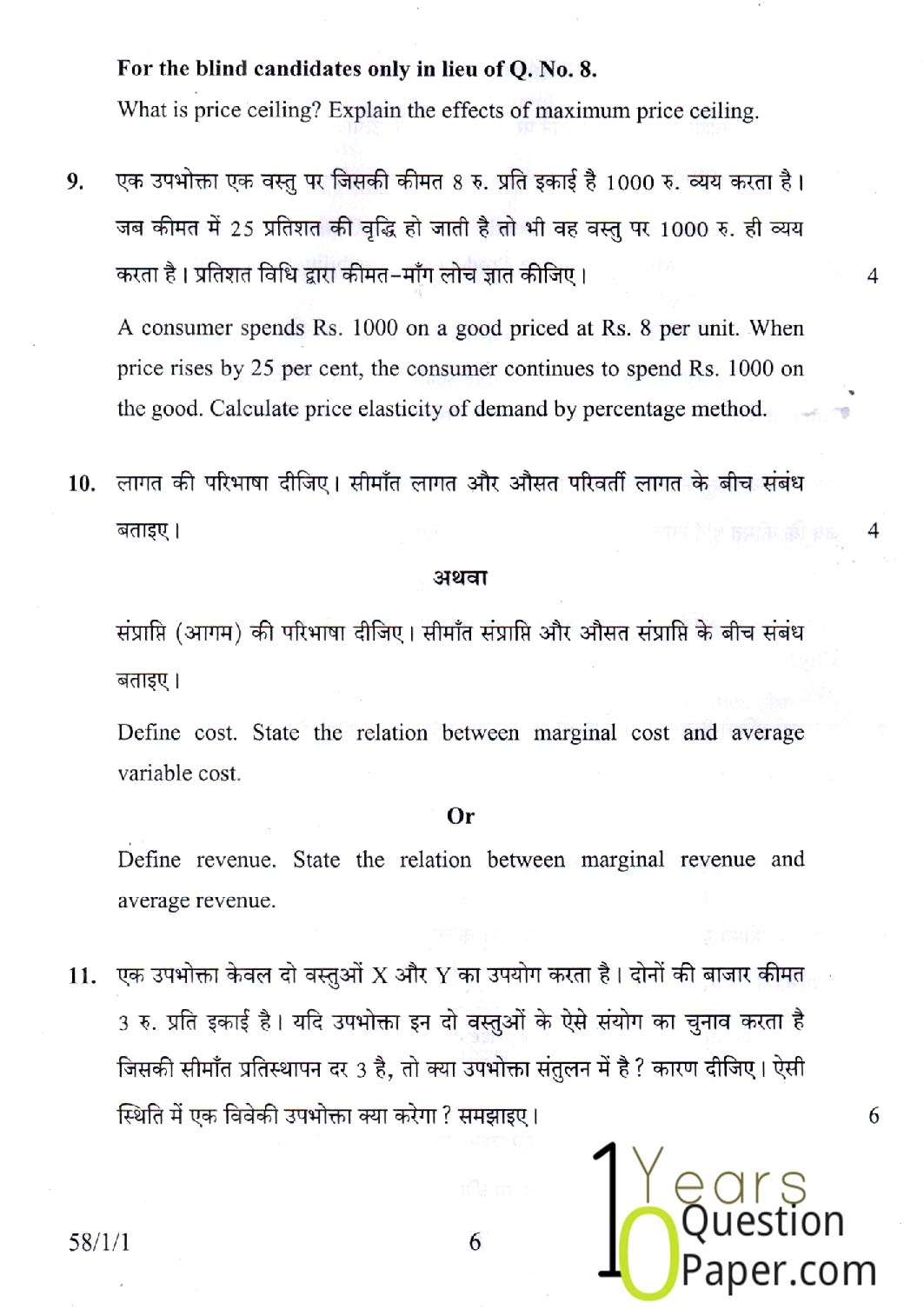
- A consumer spends Rs. 1000 on a good priced at Rs. 8 per unit. When the price rises by 25 per cent, the consumer continues to spend Rs. 1000 on the good. Calculate the price elasticity of demand by the percentage method.
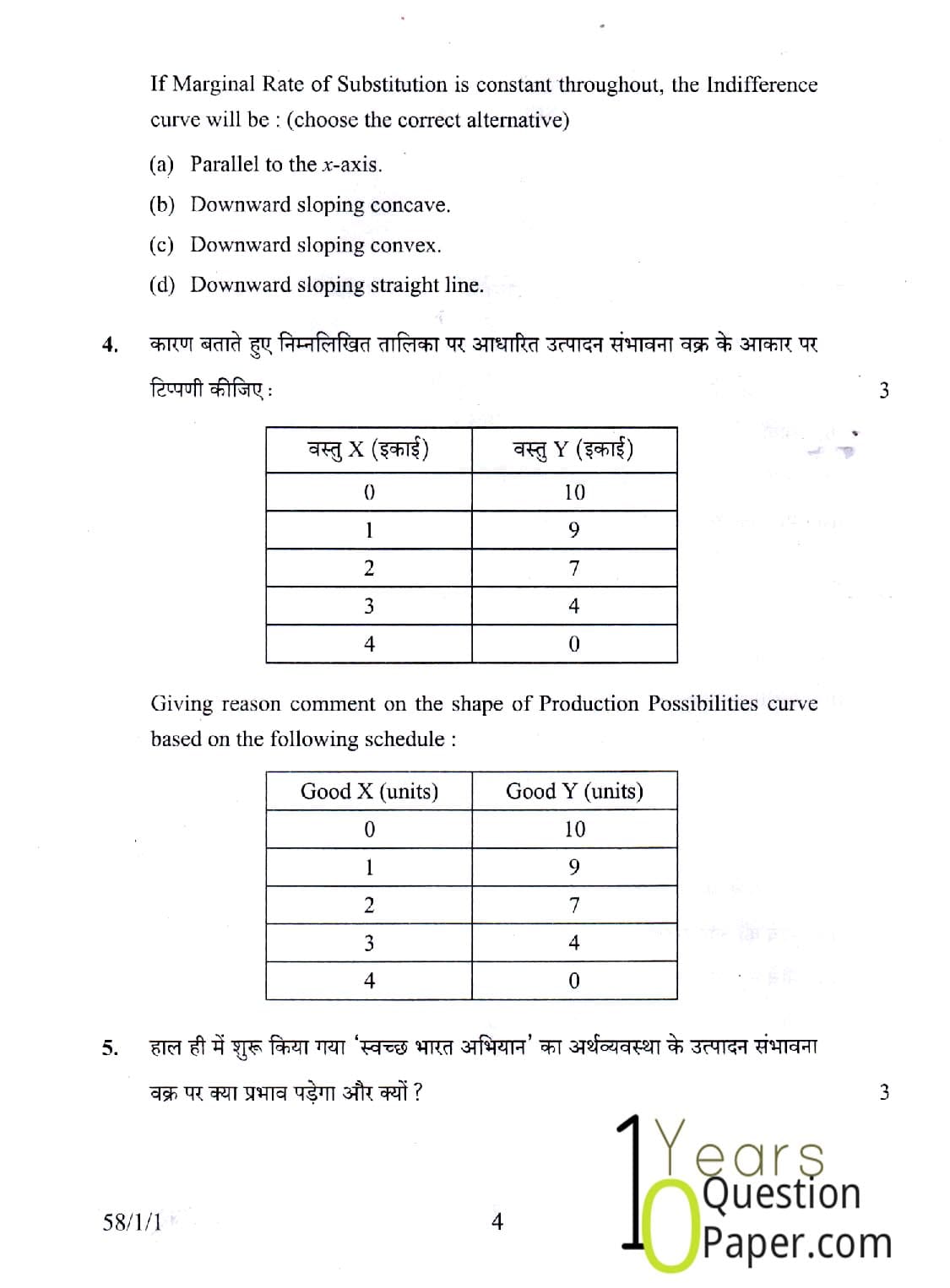
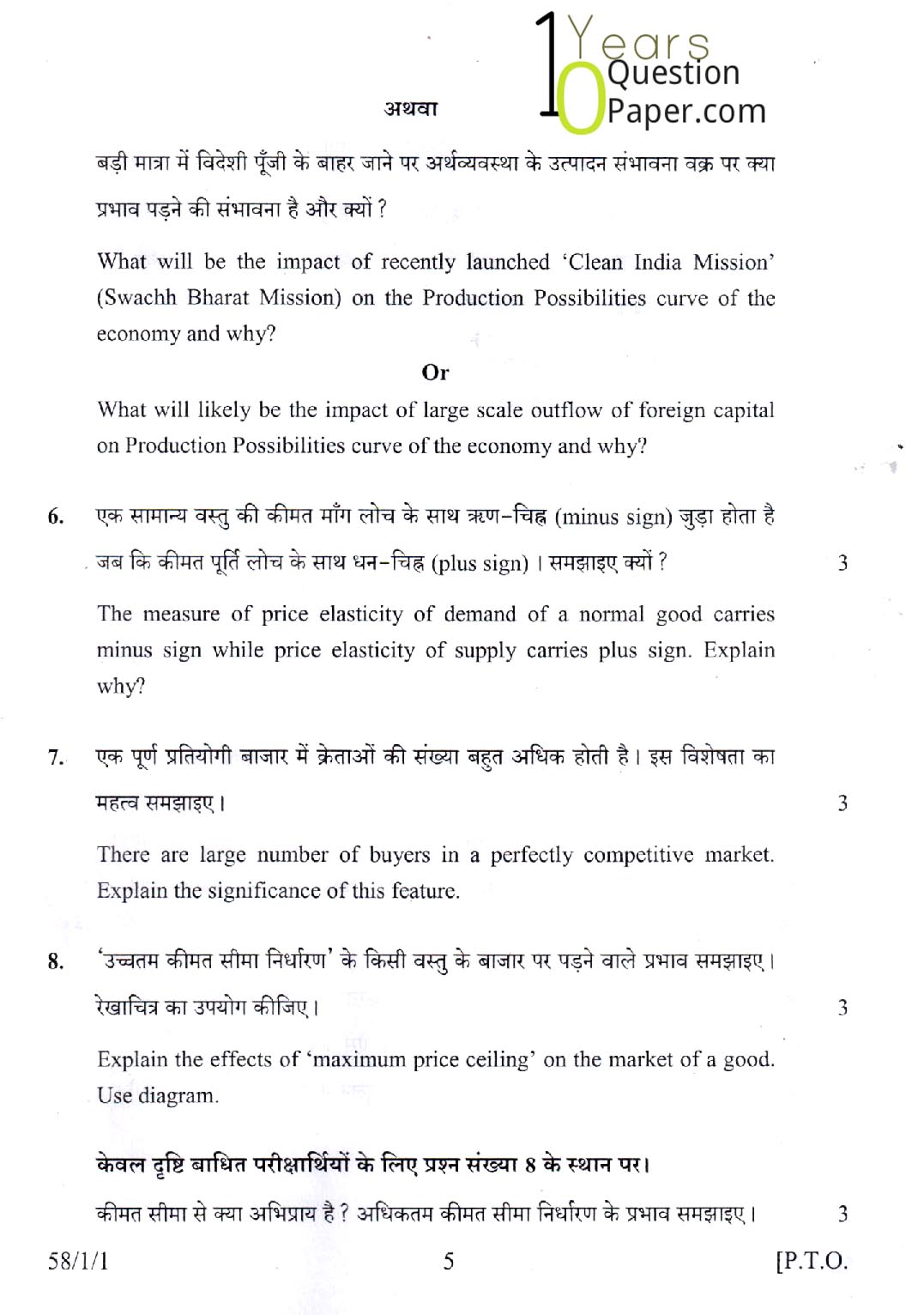
- What will be the impact of the recently launched Clean India Mission (Swachh Bharat Mission) on the production possibilities curve of the economy, and why?
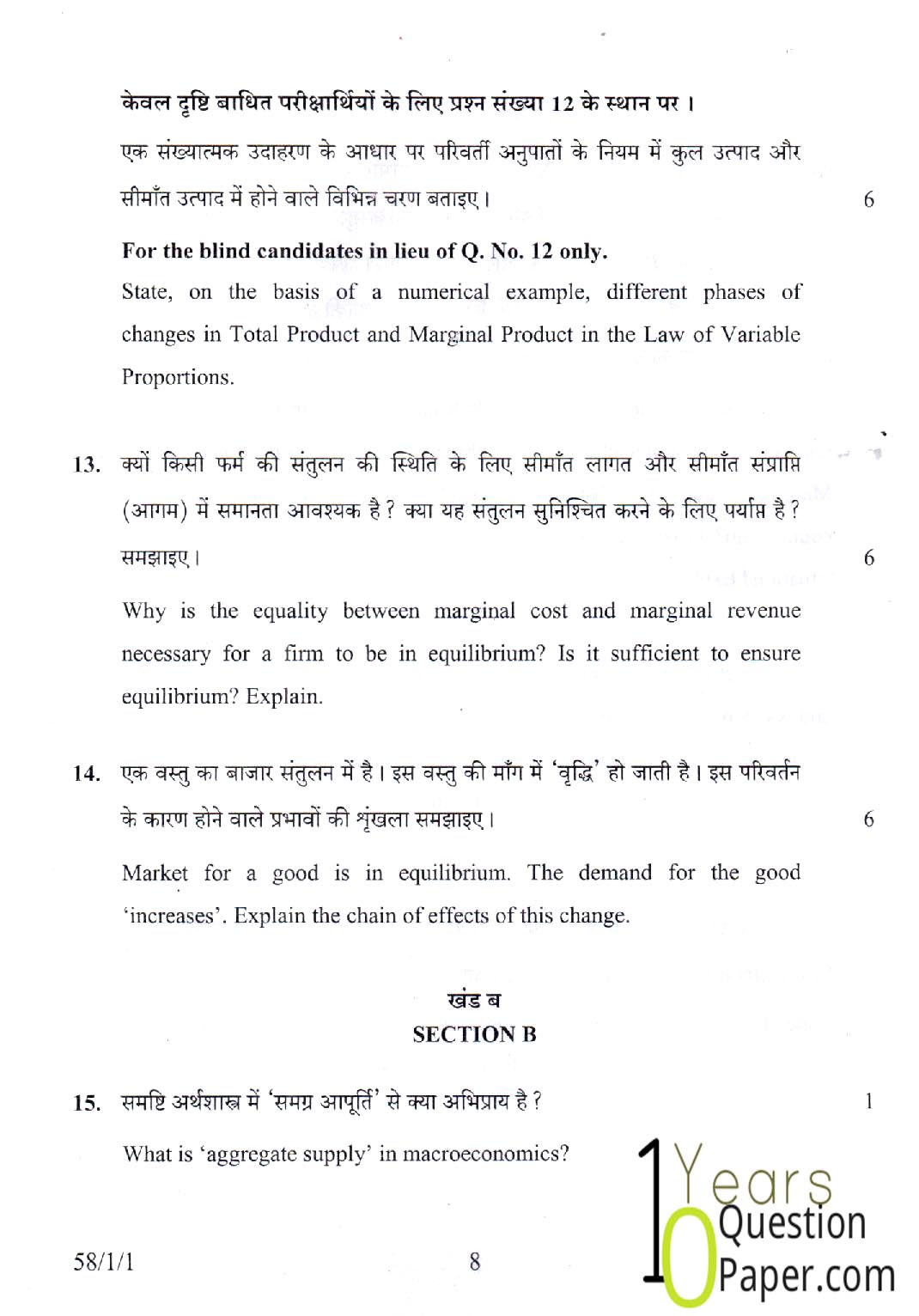
- Why is the equality between marginal cost and marginal revenue necessary for a firm to be in equilibrium? Is it sufficient to ensure equilibrium? Explain.
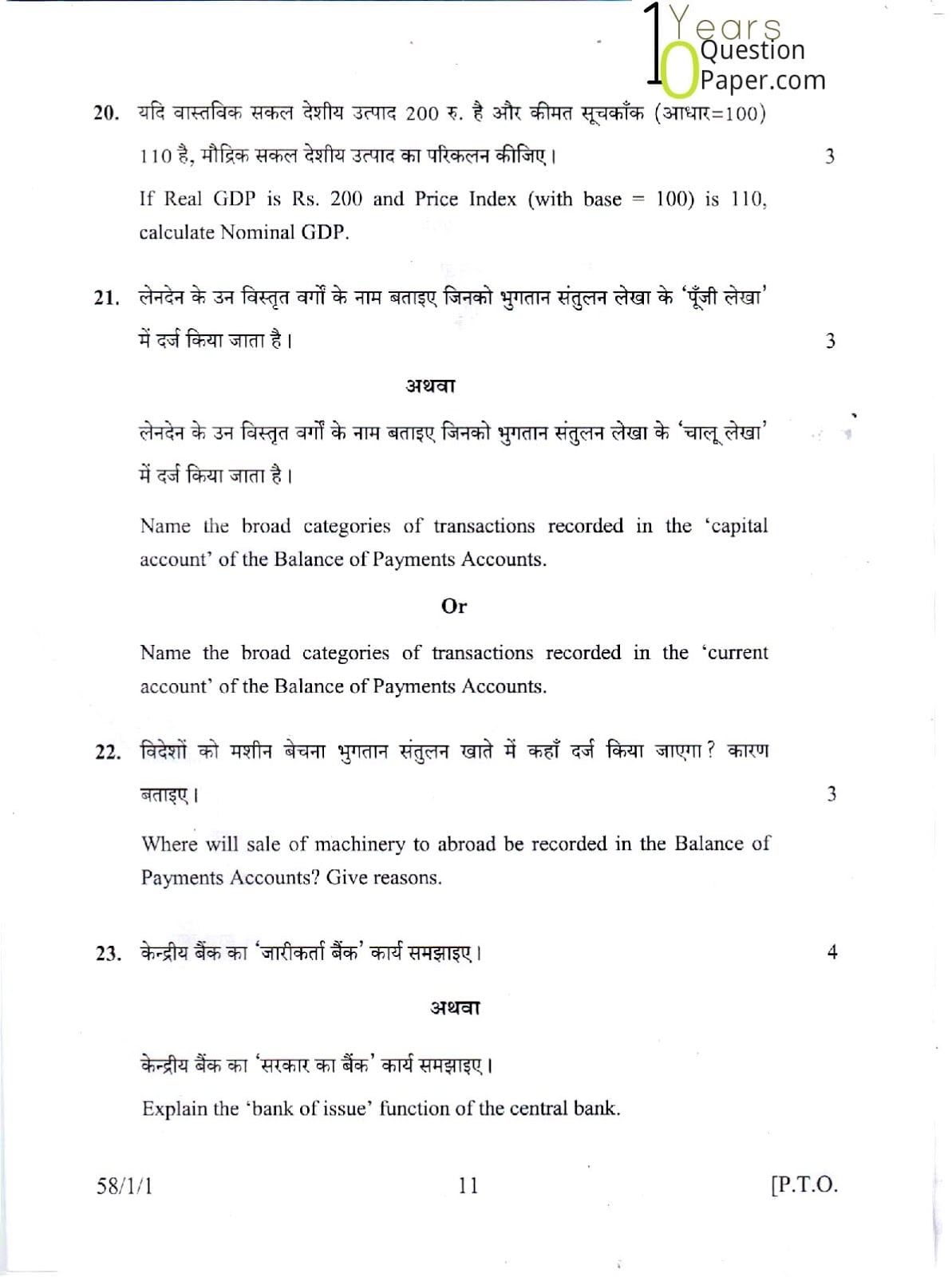
- If Real GDP is Rs. 200 and the Price Index (with base = 100) is 110, calculate Nominal GDP.
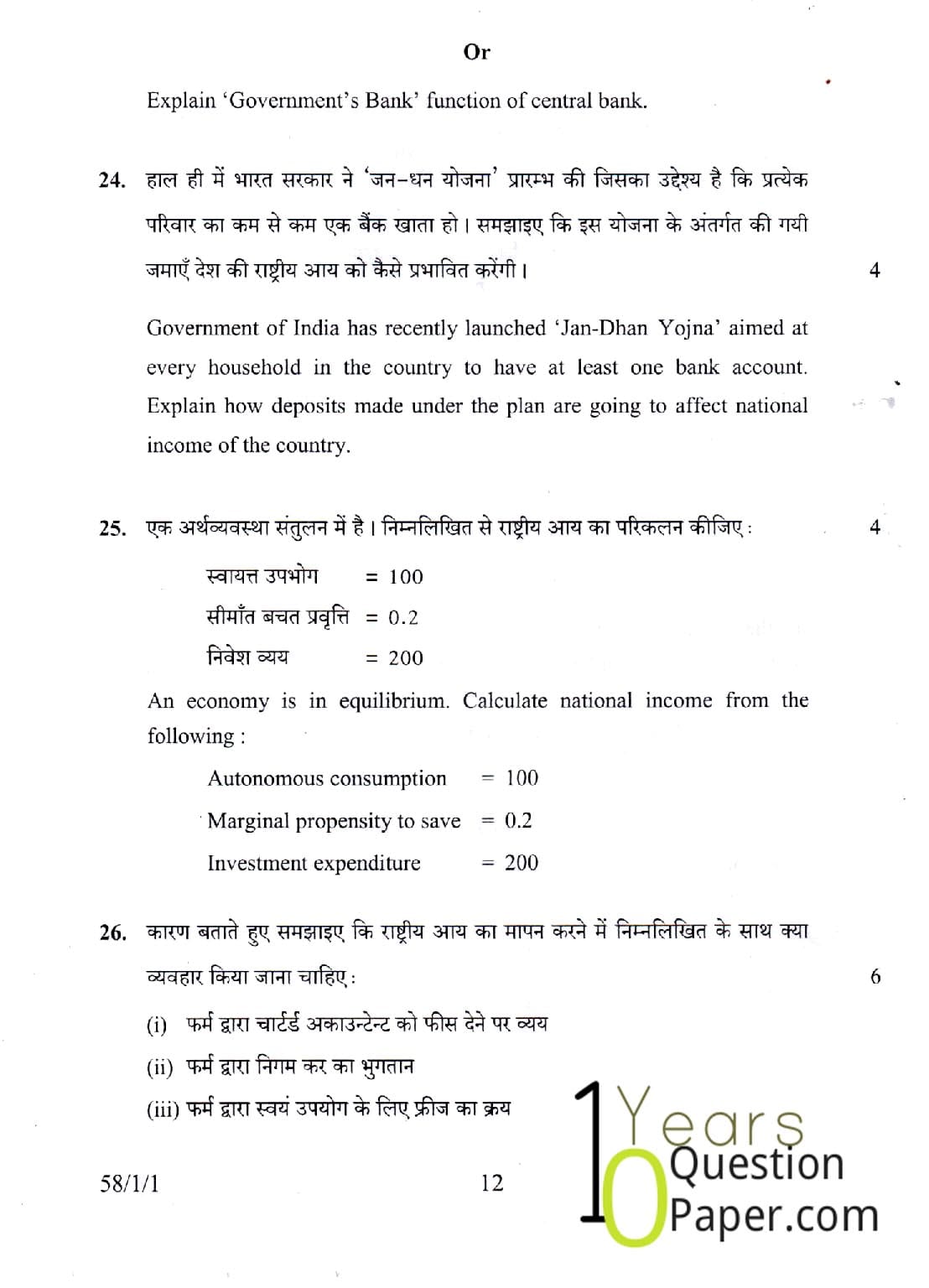
- The Government of India has recently launched 'Jan-Dhan Yojana', aimed at every household in the country having at least one bank account. Explain how deposits made under the plan are going to affect the national income of the country.
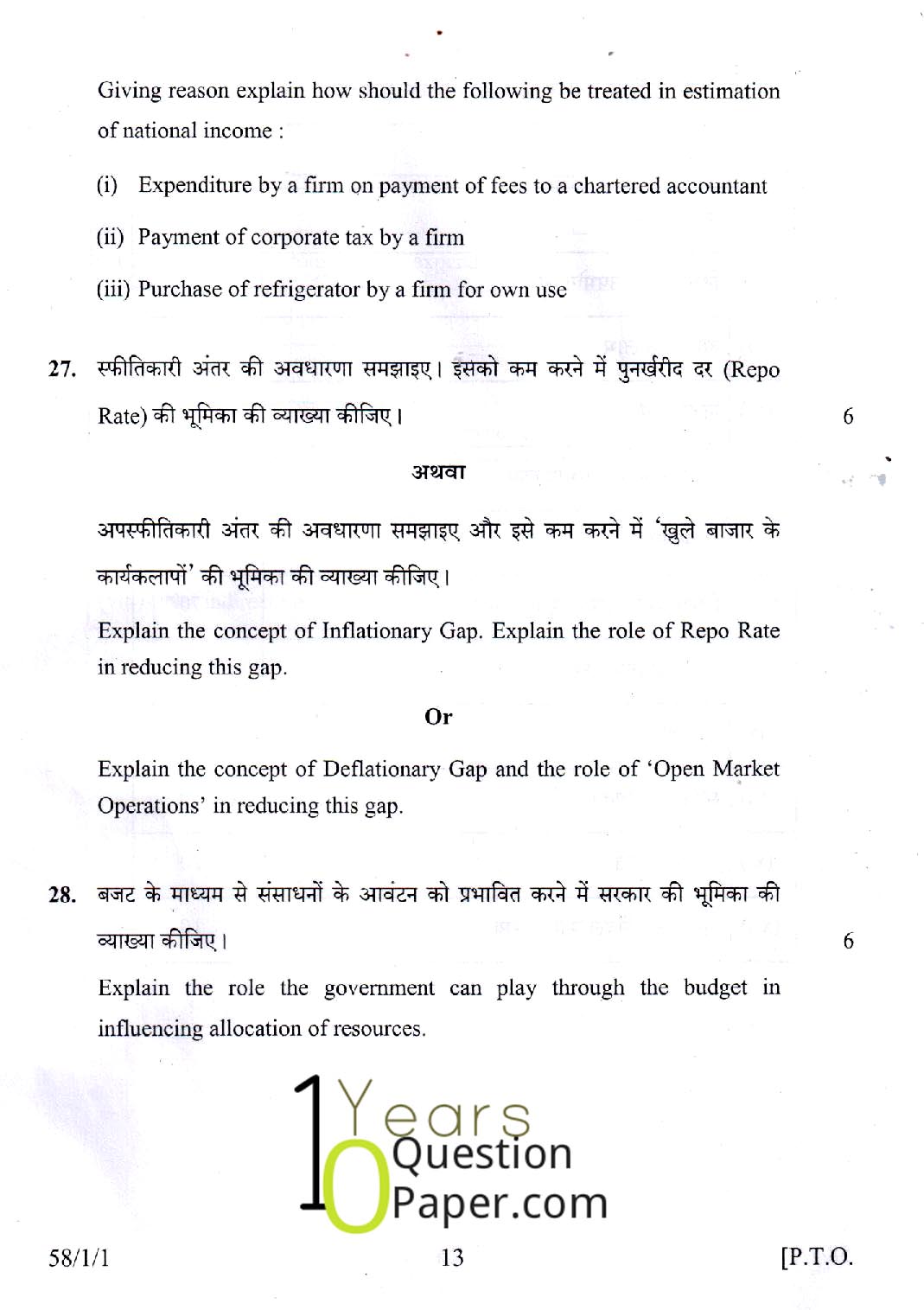
- Explain the concept of inflationary gap and the role of the repo rate in reducing this gap.
Free email alert
Get the 2027 CBSE Class 12 papers first
One email when the new CBSE Class 12 Economics question papers are published here. No spam, unsubscribe any time.
What's next
Planning what comes after Class 12?
Compare college costs, education loans, and scholarships in one place.
See the cost breakdown