CBSE 2015 Biology Question Paper for Class 12

CBSE
Biology2015CBSE Class 12 Biology question paper from the 2015 board exam (code 57/1/1): 26 questions in five sections for 70 marks in 3 hours, questions only, no answers.
Practice these questions to improve your performance in the board examination.
About this paper
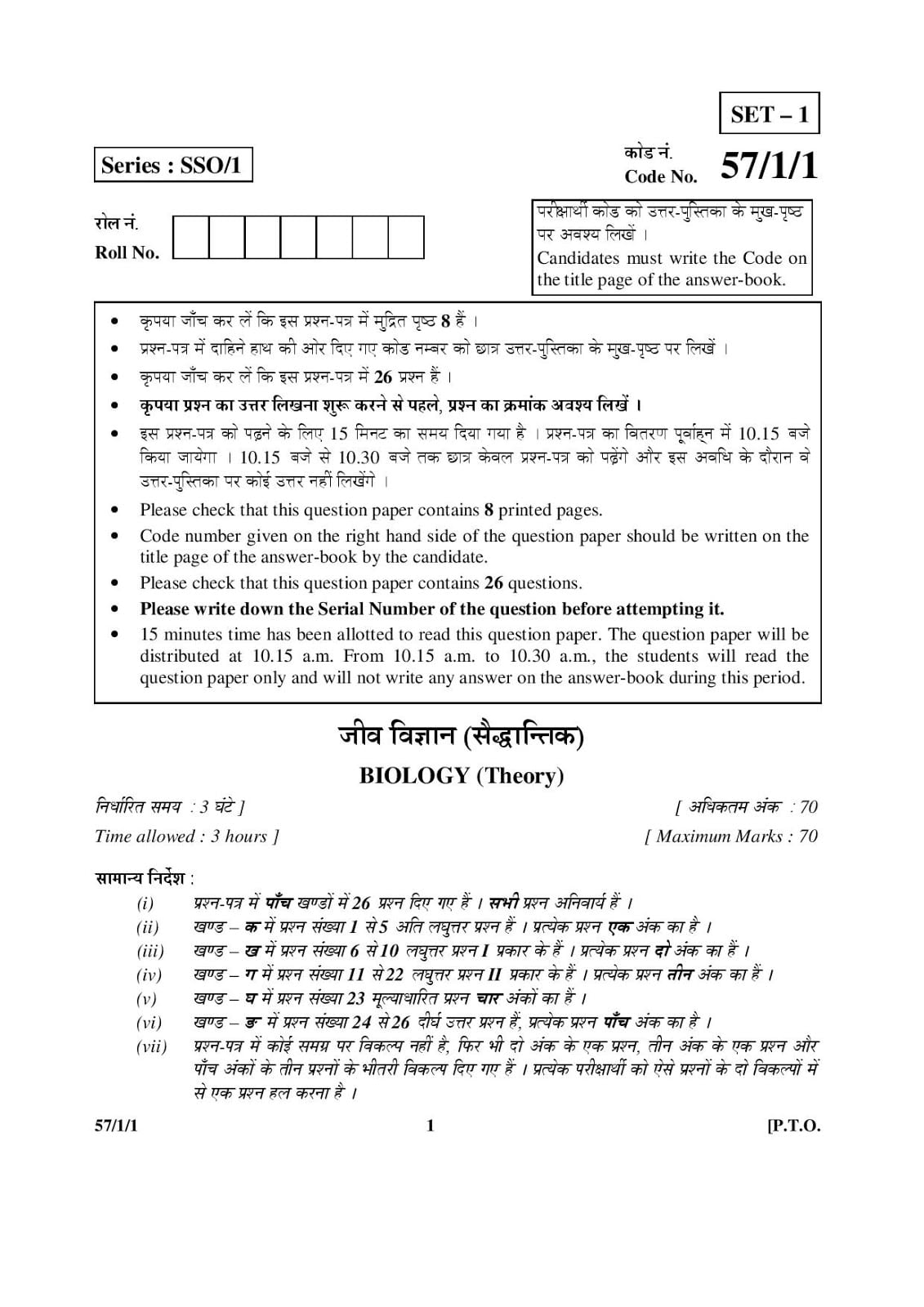
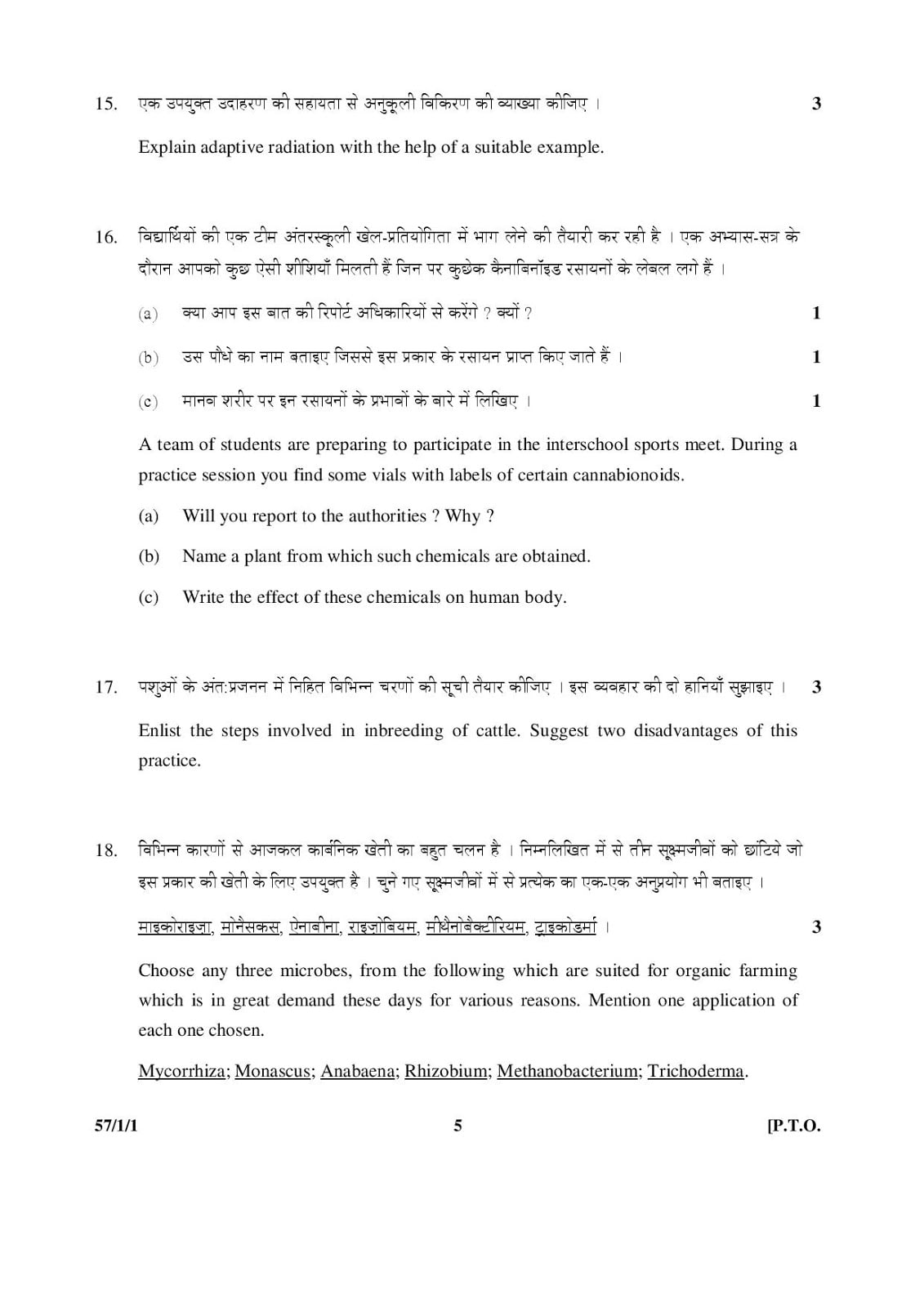
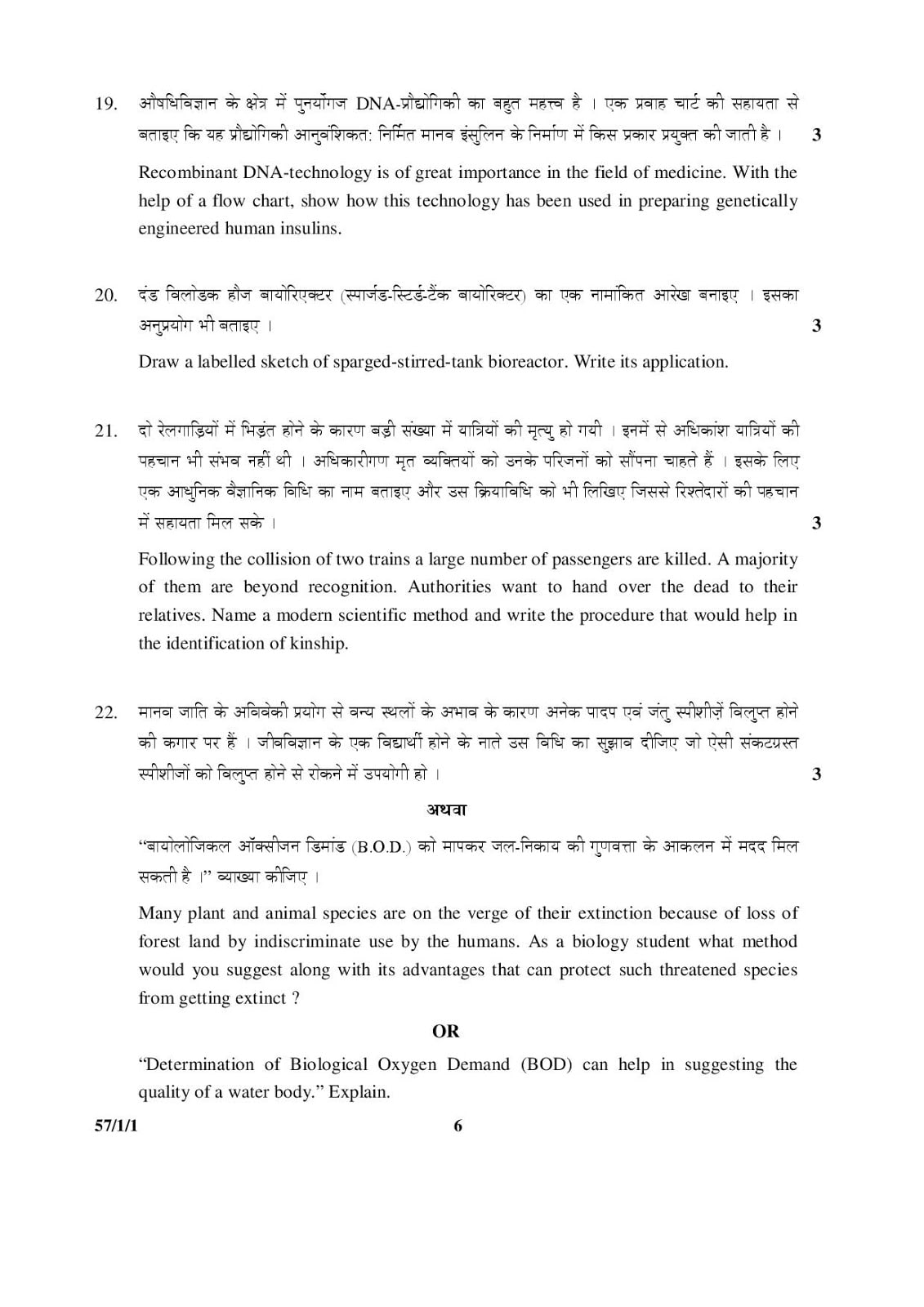
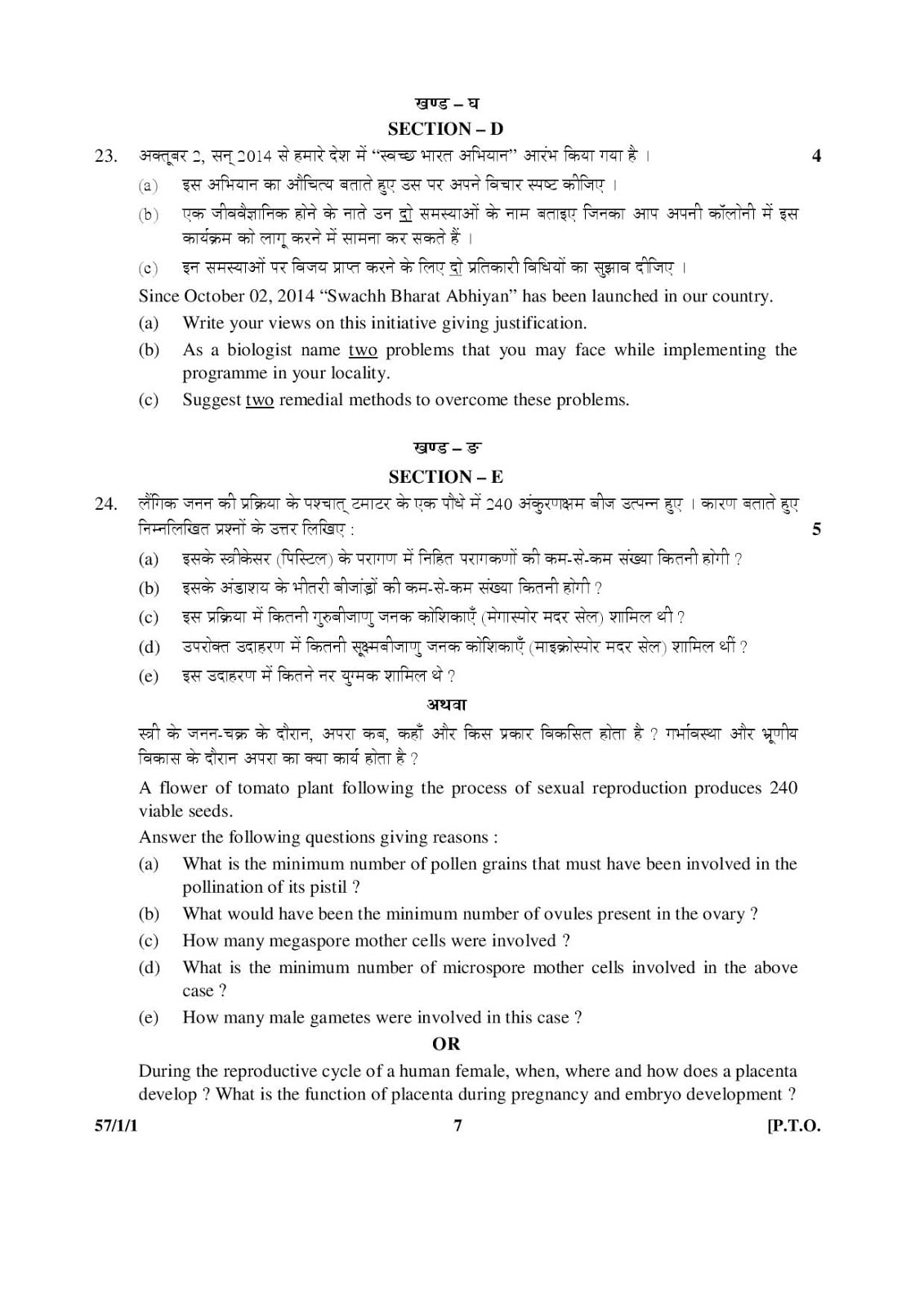
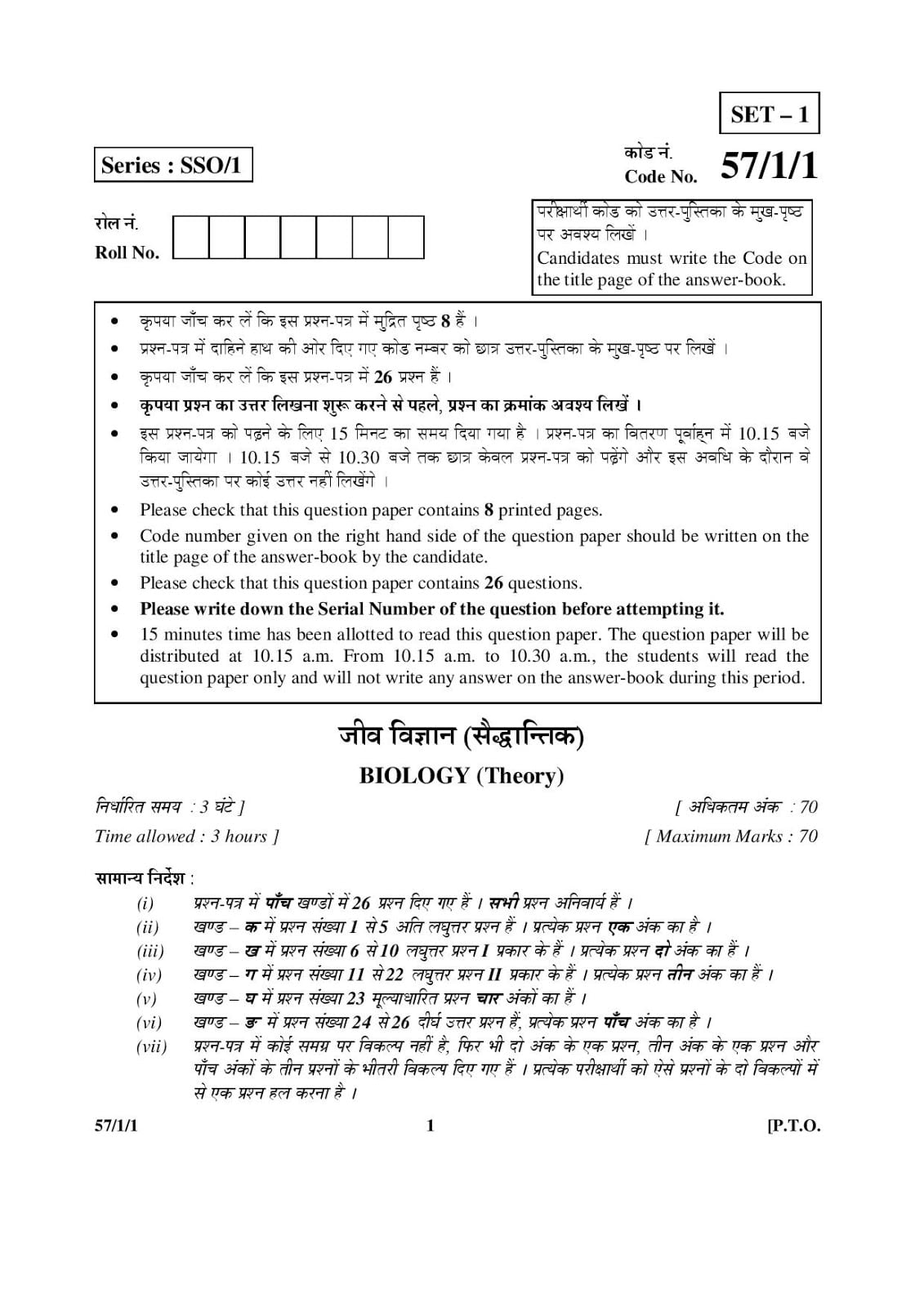
This is the CBSE Class 12 Biology (Theory) question paper code 57/1/1 (Series SSO/1, Set 1) from the 2015 board examination. It carries 70 marks over three hours and has 26 compulsory questions in five sections, from one-mark very short answers to three five-mark long answers. Section D is a four-mark value-based question on the Swachh Bharat Abhiyan, asking for your views, two problems in carrying it out locally and two remedies. Other questions are set in everyday situations, such as cannabinoid vials found before a school sports meet and identifying the victims of a train collision. Internal choices are given in one two-mark question, one three-mark question and all three five-mark questions. This copy has the questions only, without answers.
- Exam
- CBSE Class 12
- Subject
- Biology
- Year
- 2015
- Paper code
- 57/1/1
- Maximum marks
- 70
- Time allowed
- 3 hours
- Questions
- 26
- Pages
- 9
- Answers included
- No, questions only
Paper pattern
Section A
5 marksQuestions 1–5, very short answers, one mark each
Section B
10 marksQuestions 6–10, short answers, two marks each; internal choice in one
Section C
36 marksQuestions 11–22, short answers, three marks each; internal choice in one
Section D
4 marksQuestion 23, value-based question on the Swachh Bharat Abhiyan
Section E
15 marksQuestions 24–26, long answers, five marks each, each with an internal choice
Topics covered
- Reproduction in flowering plants
- Human reproduction and reproductive health
- Principles of inheritance and variation
- Molecular basis of inheritance
- Evolution
- Human health and disease
- Strategies for enhancement in food production
- Microbes in human welfare
- Biotechnology and its applications
- Biodiversity and conservation
- Ecosystem and population
Questions from this paper
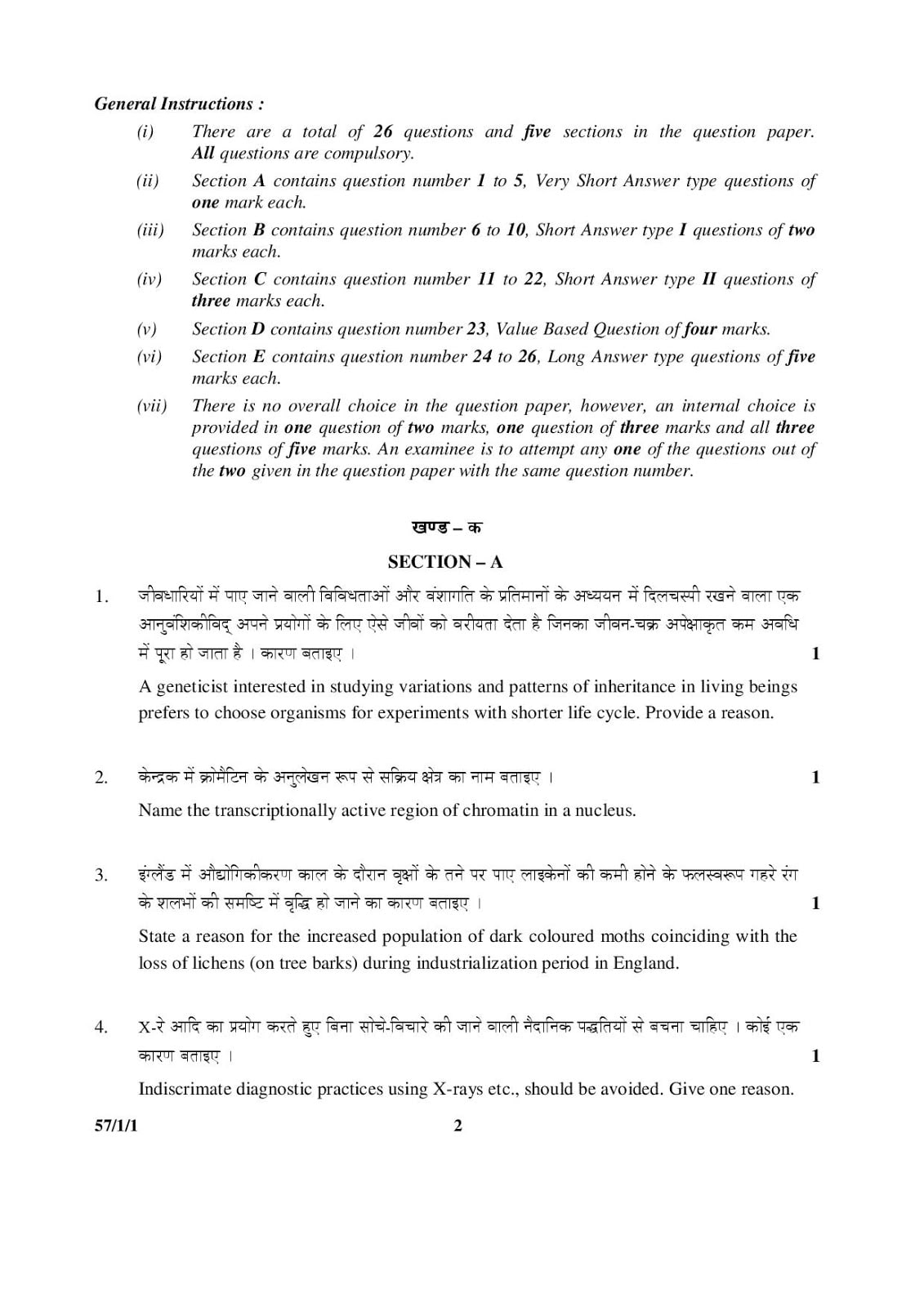
- Name the transcriptionally active region of chromatin in a nucleus.
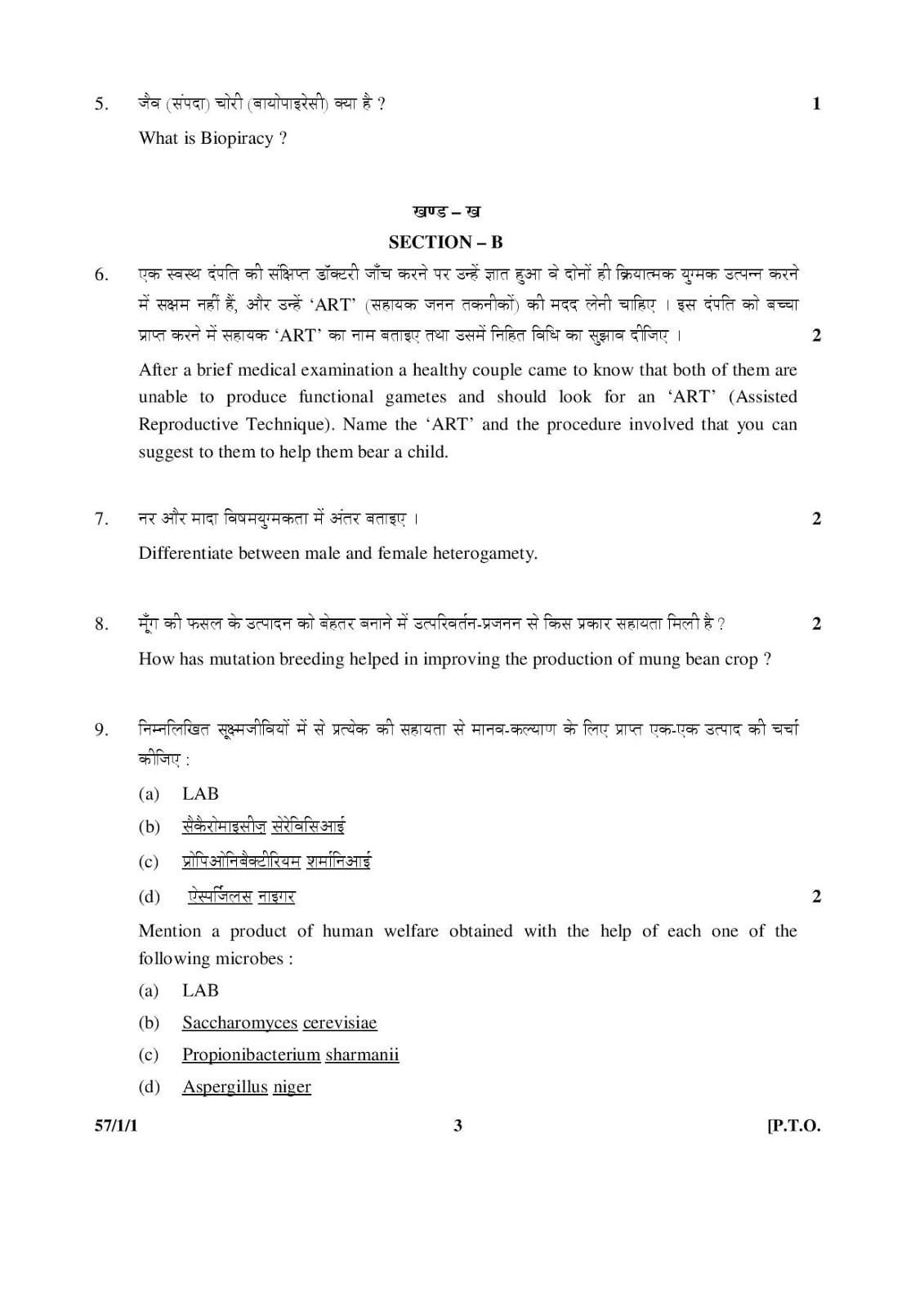
- How has mutation breeding helped in improving the production of the mung bean crop?
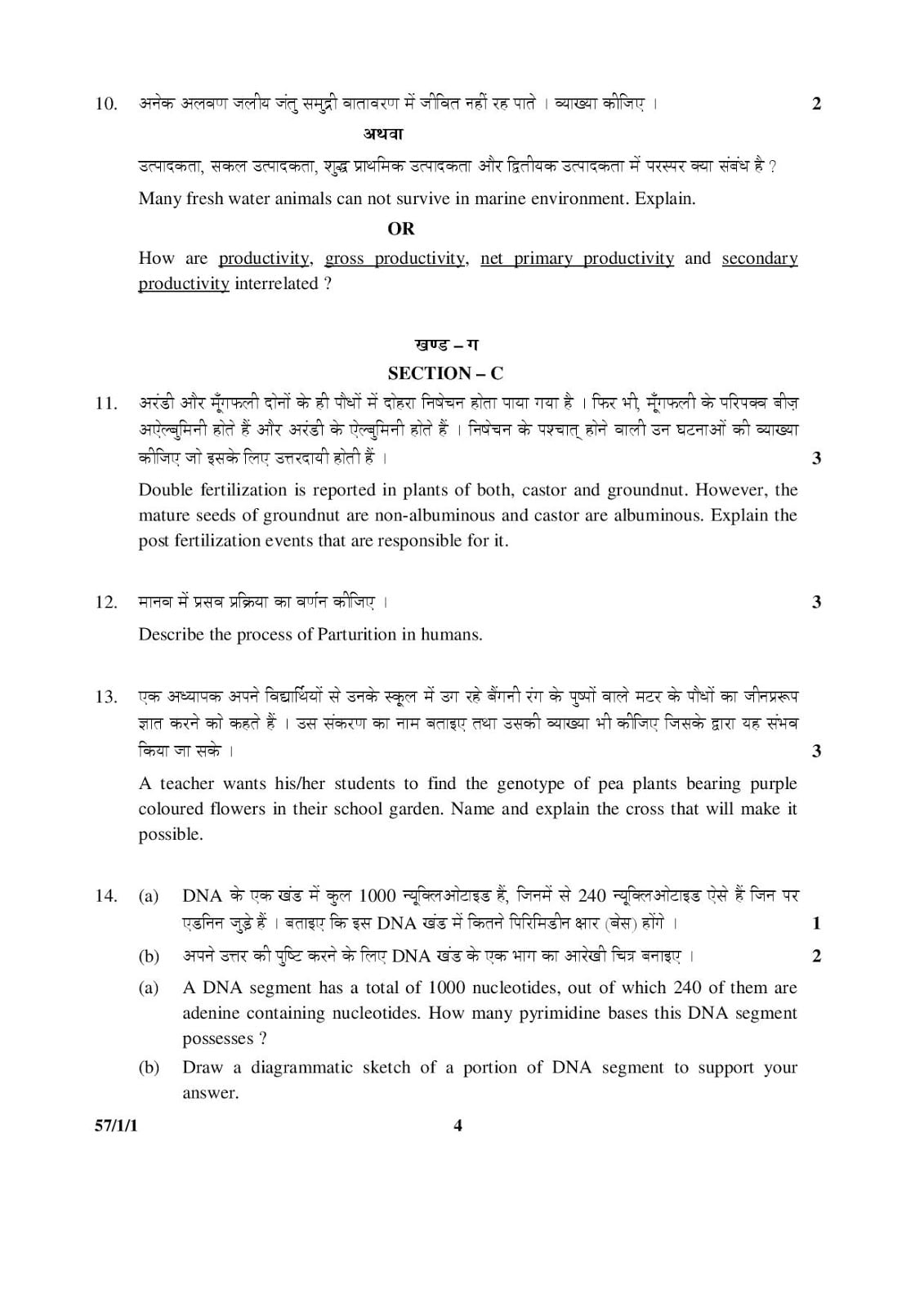
- A DNA segment has a total of 1000 nucleotides, 240 of which contain adenine. How many pyrimidine bases does this DNA segment possess? Draw a diagrammatic sketch of a portion of the segment to support your answer.
- After a collision of two trains, many of the passengers killed are beyond recognition. Name a modern scientific method, and write its procedure, that would help identify their kinship so the bodies can be handed to relatives.
- A flower of a tomato plant produces 240 viable seeds. What is the minimum number of pollen grains that must have been involved in the pollination of its pistil? Give a reason.
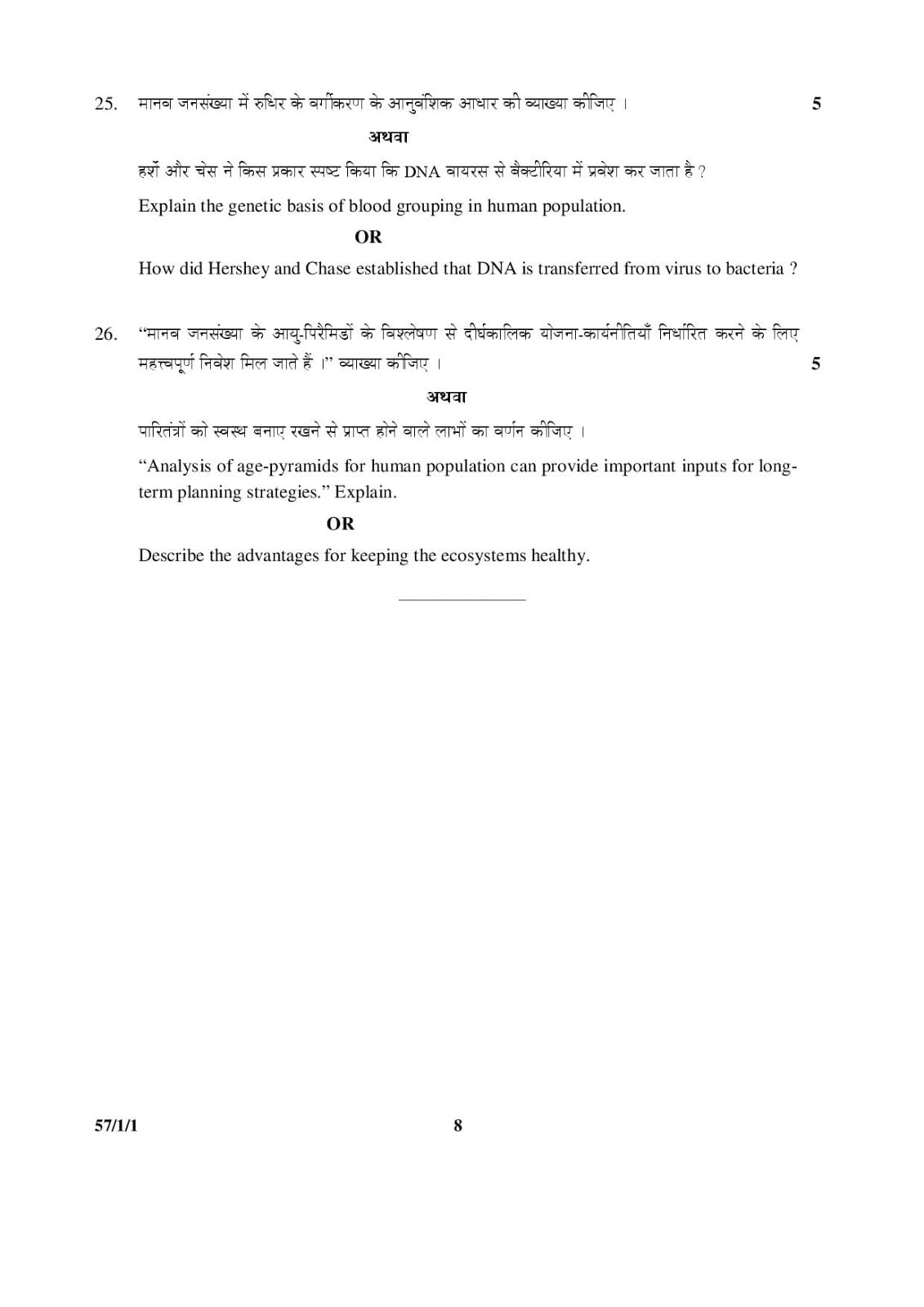
- Explain the genetic basis of blood grouping in the human population.
Free email alert
Get the 2027 CBSE Class 12 papers first
One email when the new CBSE Class 12 Biology question papers are published here. No spam, unsubscribe any time.
What's next
Planning what comes after Class 12?
Compare college costs, education loans, and scholarships in one place.
See the cost breakdown