CBSE 2017 Biology Question Paper for Class 12

CBSE
Biology2017CBSE Class 12 Biology question paper from the 2017 board exam (code 57/1, Set 1): 26 questions for 70 marks in 3 hours, questions only, no answers.
Practice these questions to improve your performance in the board examination.
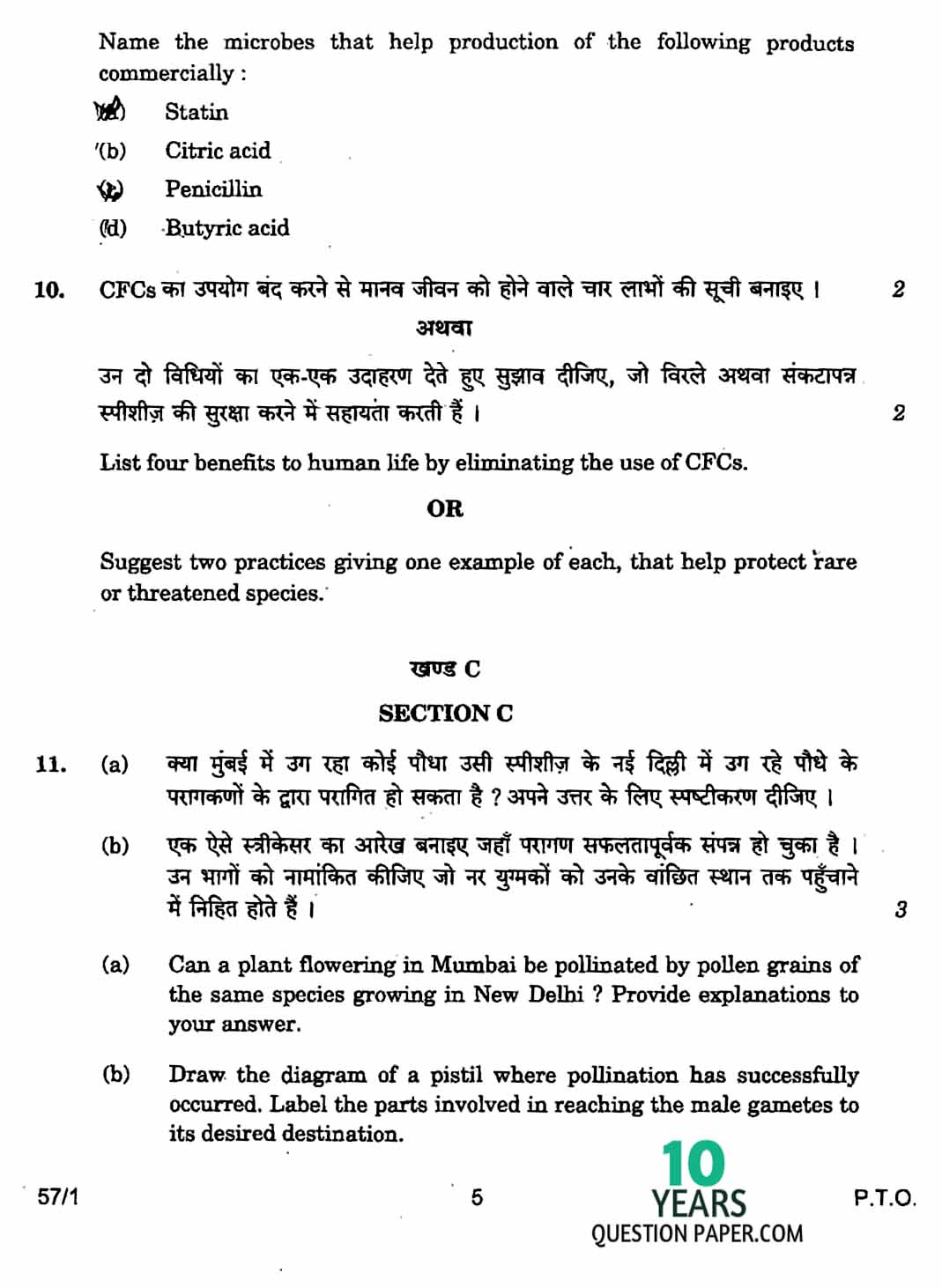
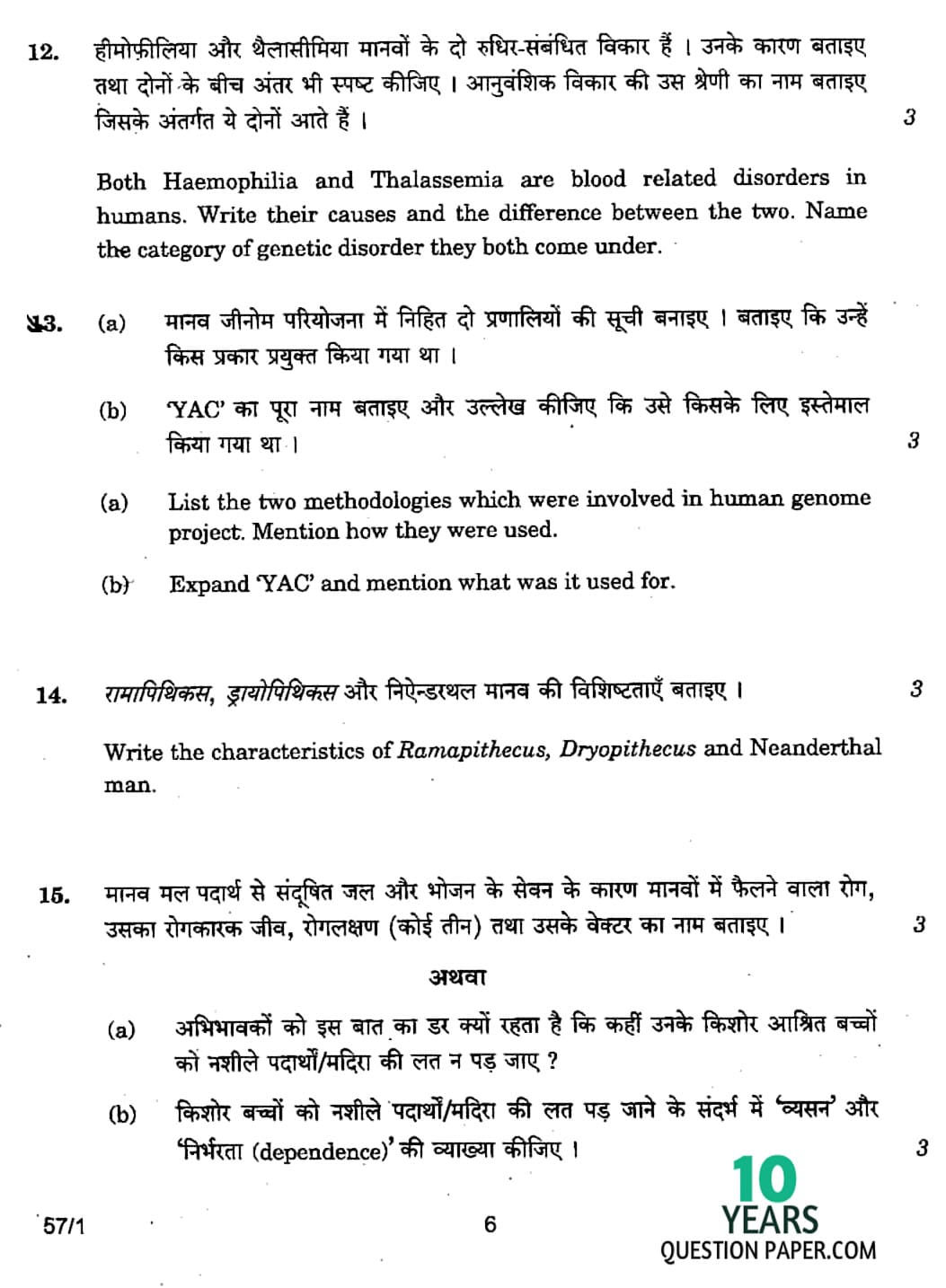
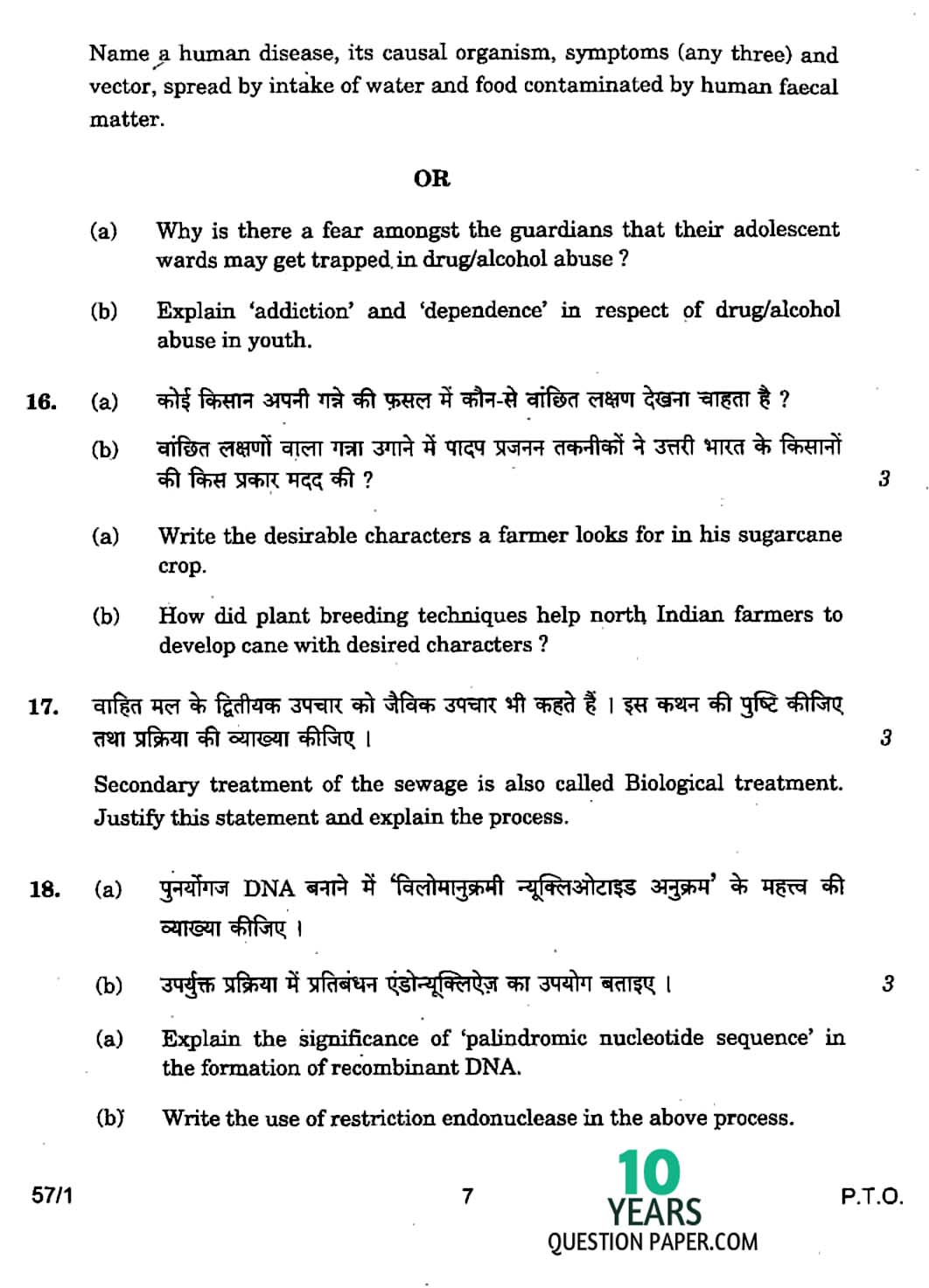
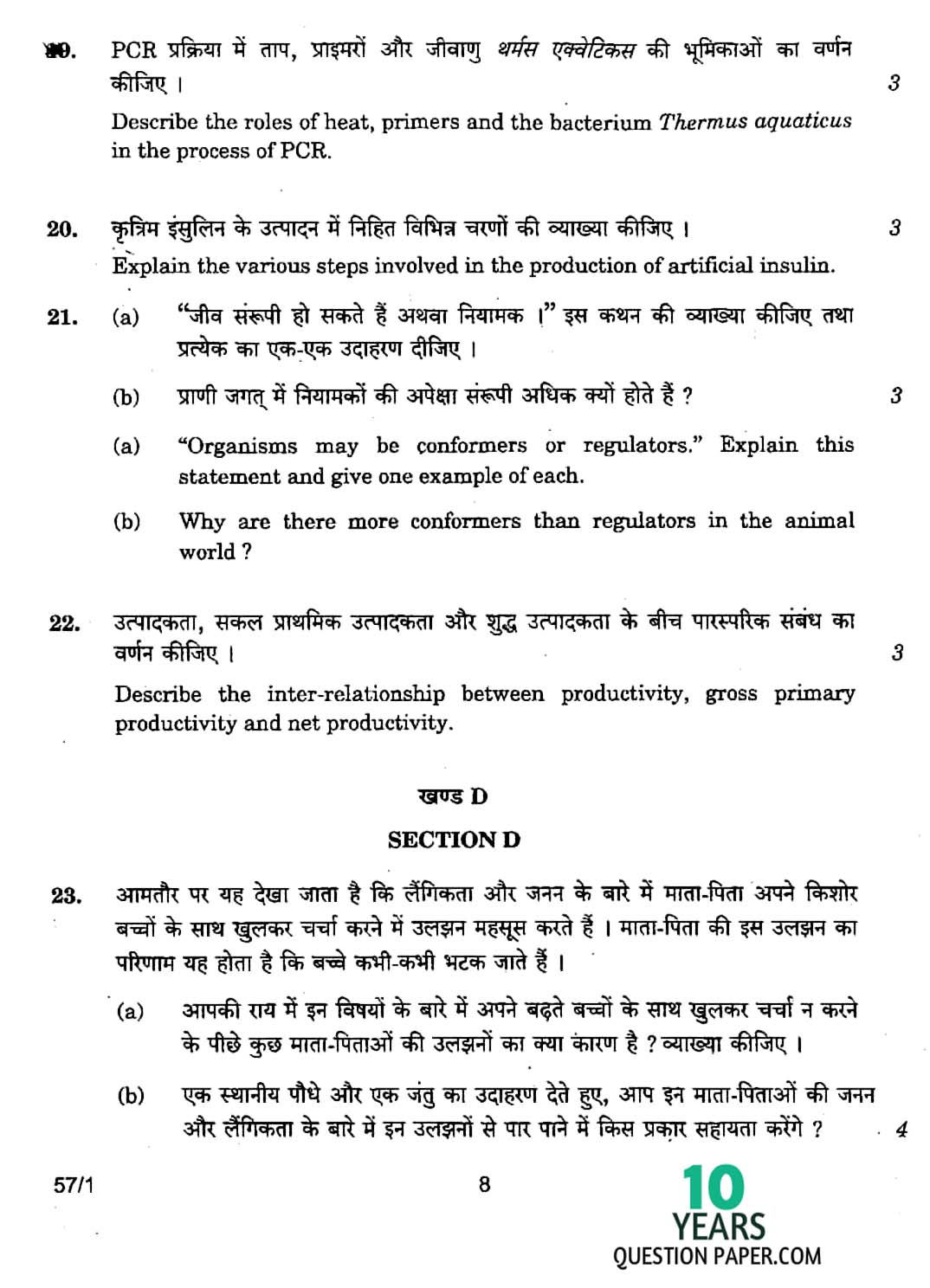
About this paper
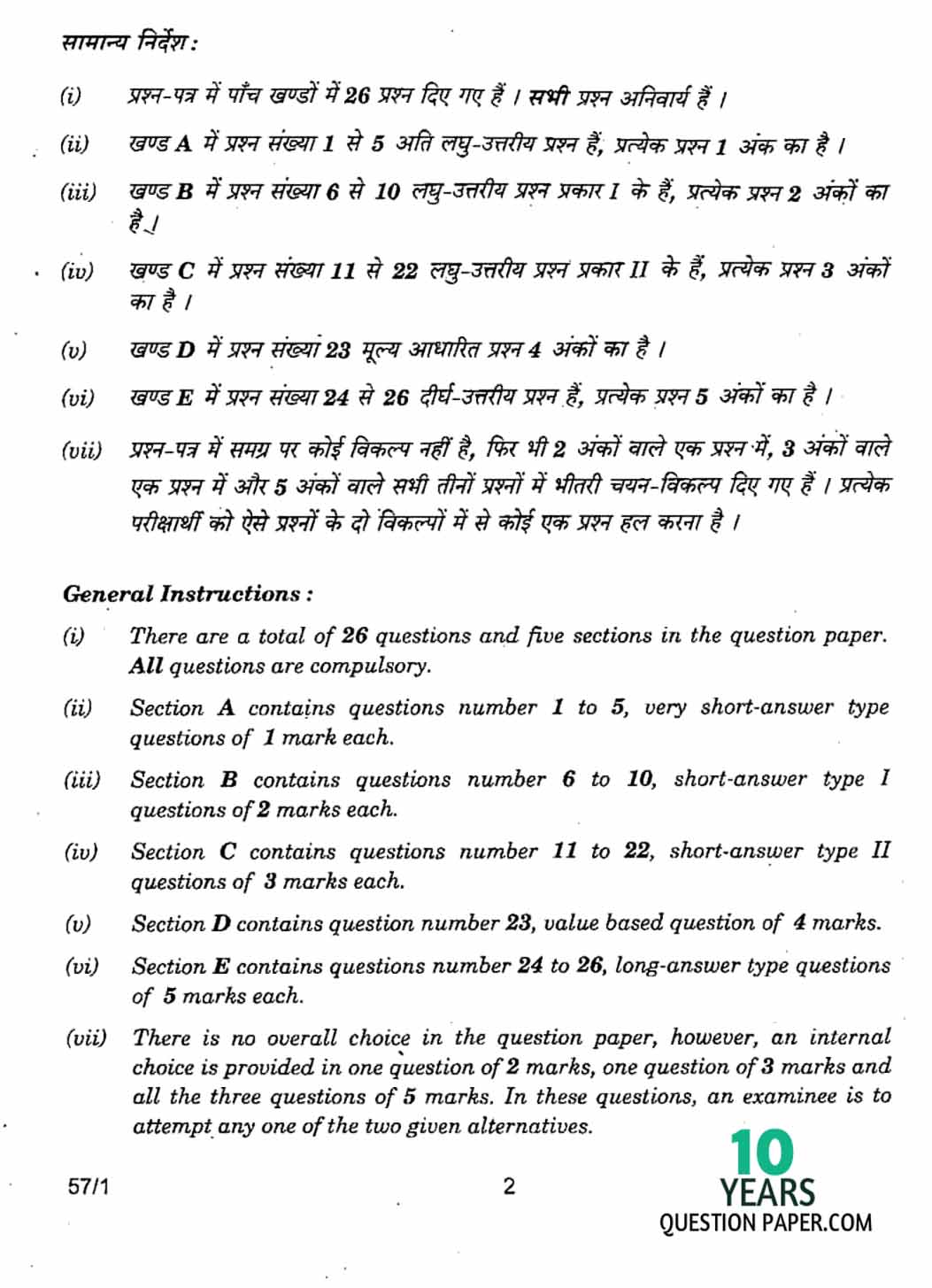
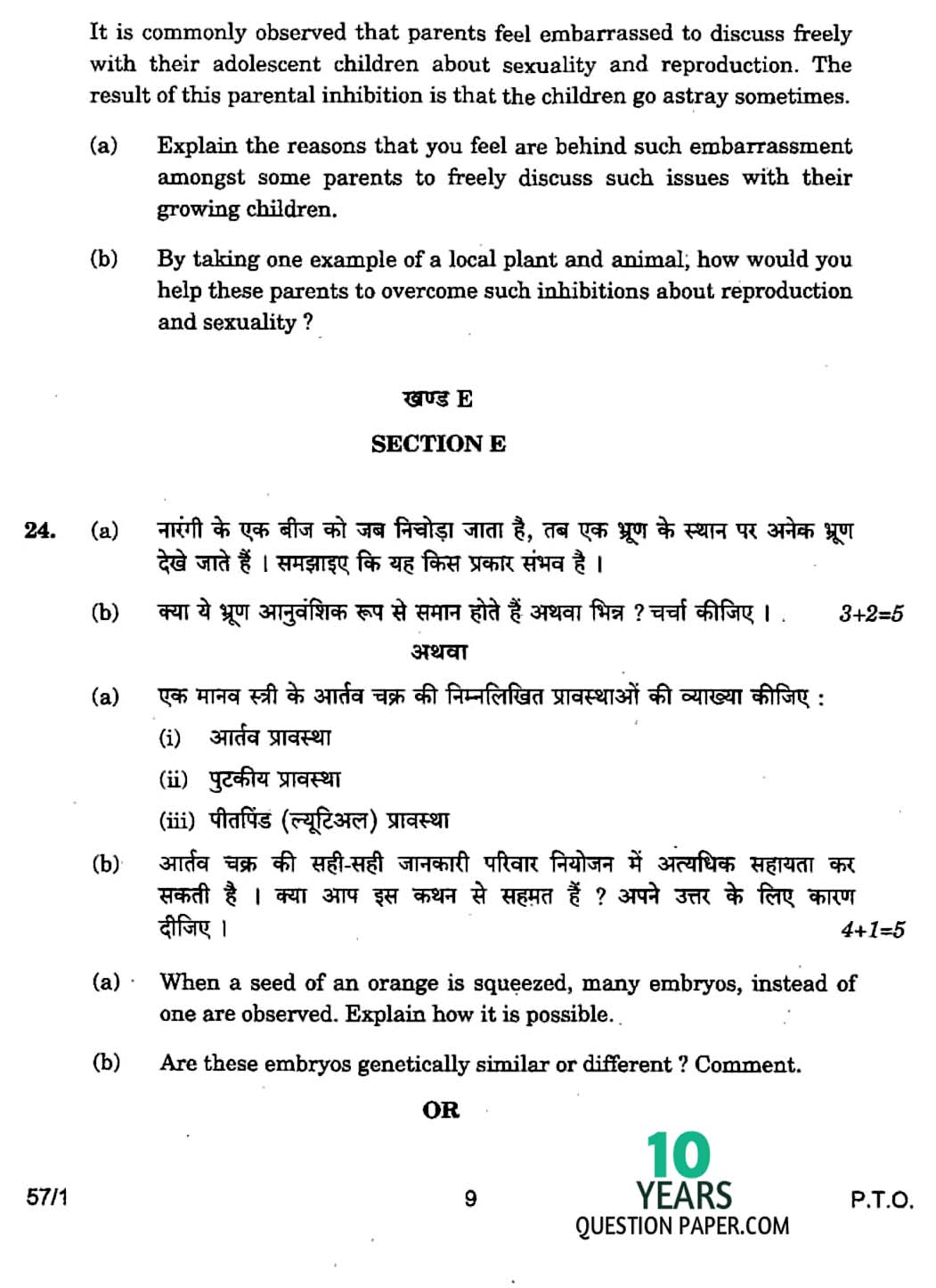
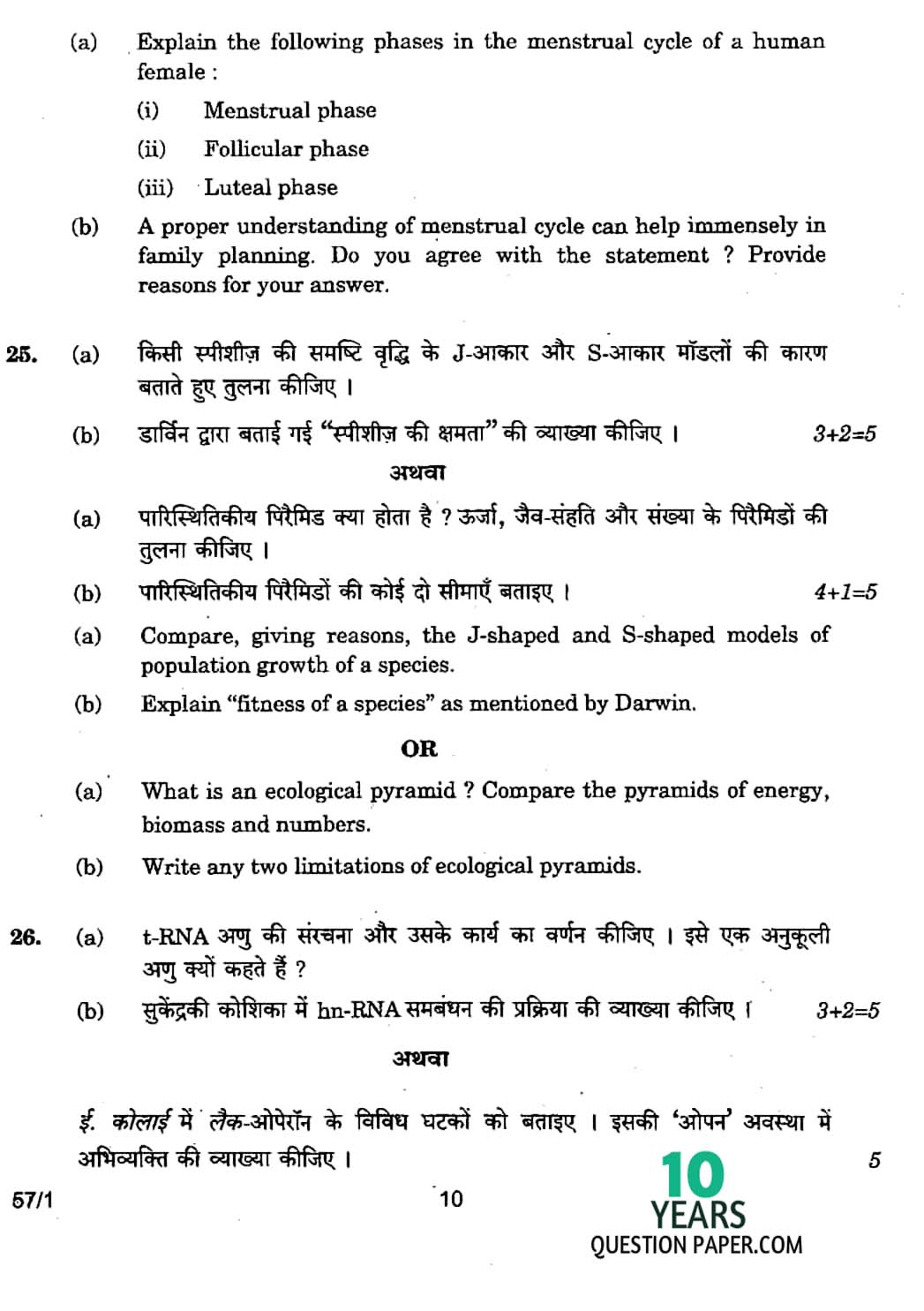
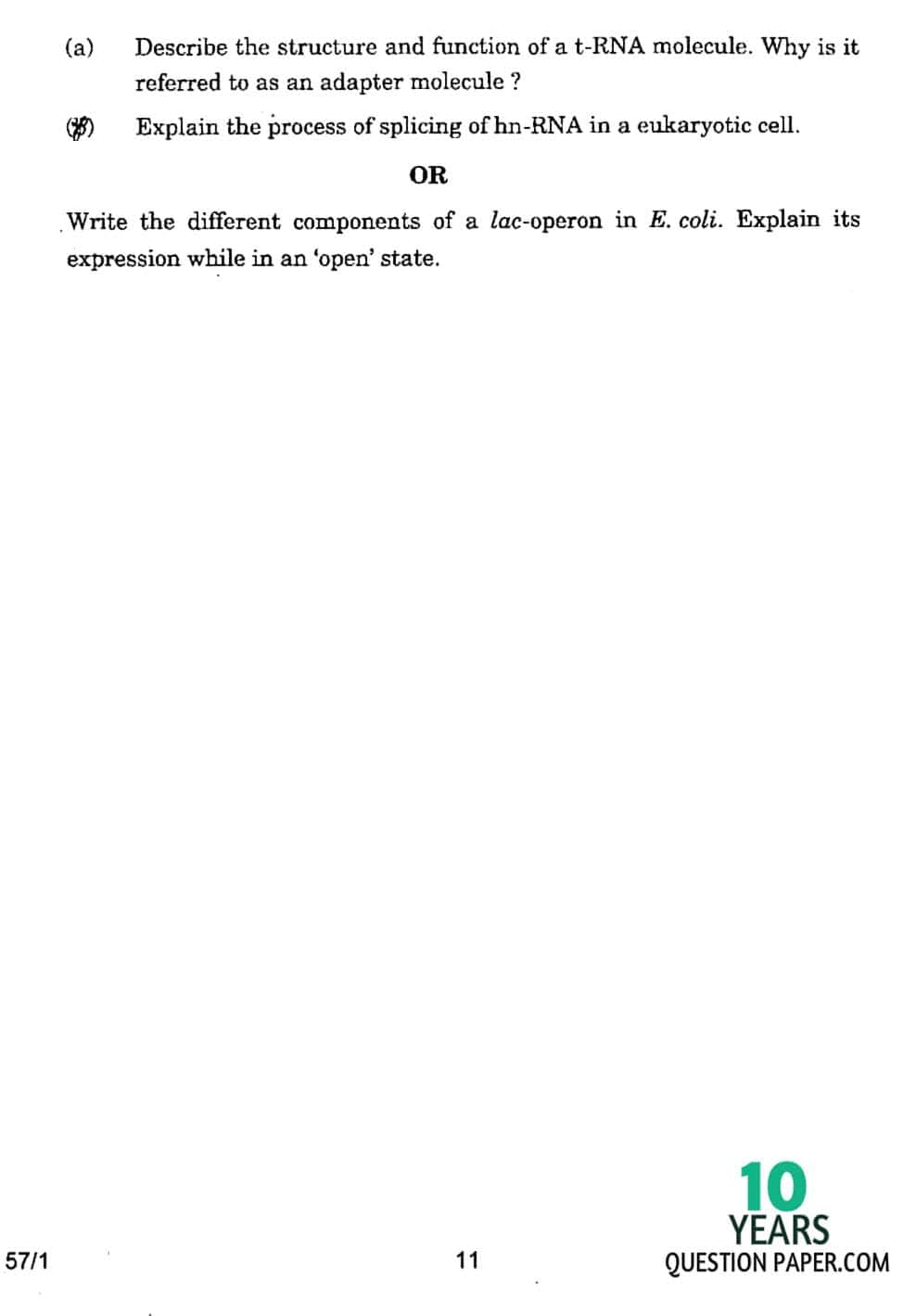
This is the CBSE Class 12 Biology (Theory) question paper code 57/1 (Series GBM, Set 1) from the 2017 board examination. It carries 70 marks over three hours and has 26 compulsory questions in five sections, from one-mark very short answers to three five-mark long answers. Section D is a four-mark value-based question about parents who feel embarrassed to discuss sexuality and reproduction with their adolescent children. Internal choices are given in one two-mark question, one three-mark question and all three five-mark questions; the long answers cover polyembryony or the menstrual cycle, population growth models or ecological pyramids, and tRNA structure or the lac operon. This copy has the questions only, without answers.
- Exam
- CBSE Class 12
- Subject
- Biology
- Year
- 2017
- Paper code
- 57/1
- Maximum marks
- 70
- Time allowed
- 3 hours
- Questions
- 26
- Pages
- 11
- Answers included
- No, questions only
Paper pattern
Section A
5 marksQuestions 1–5, very short answers, one mark each
Section B
10 marksQuestions 6–10, short answers, two marks each; internal choice in one
Section C
36 marksQuestions 11–22, short answers, three marks each; internal choice in one
Section D
4 marksQuestion 23, value-based question on discussing reproduction with adolescents
Section E
15 marksQuestions 24–26, long answers, five marks each, each with an internal choice
Topics covered
- Reproduction in flowering plants
- Human reproduction
- Principles of inheritance and variation
- Molecular basis of inheritance
- Evolution
- Human health and disease
- Strategies for enhancement in food production
- Microbes in human welfare
- Biotechnology principles and applications
- Organisms and populations
- Ecosystem
- Environmental issues
Questions from this paper
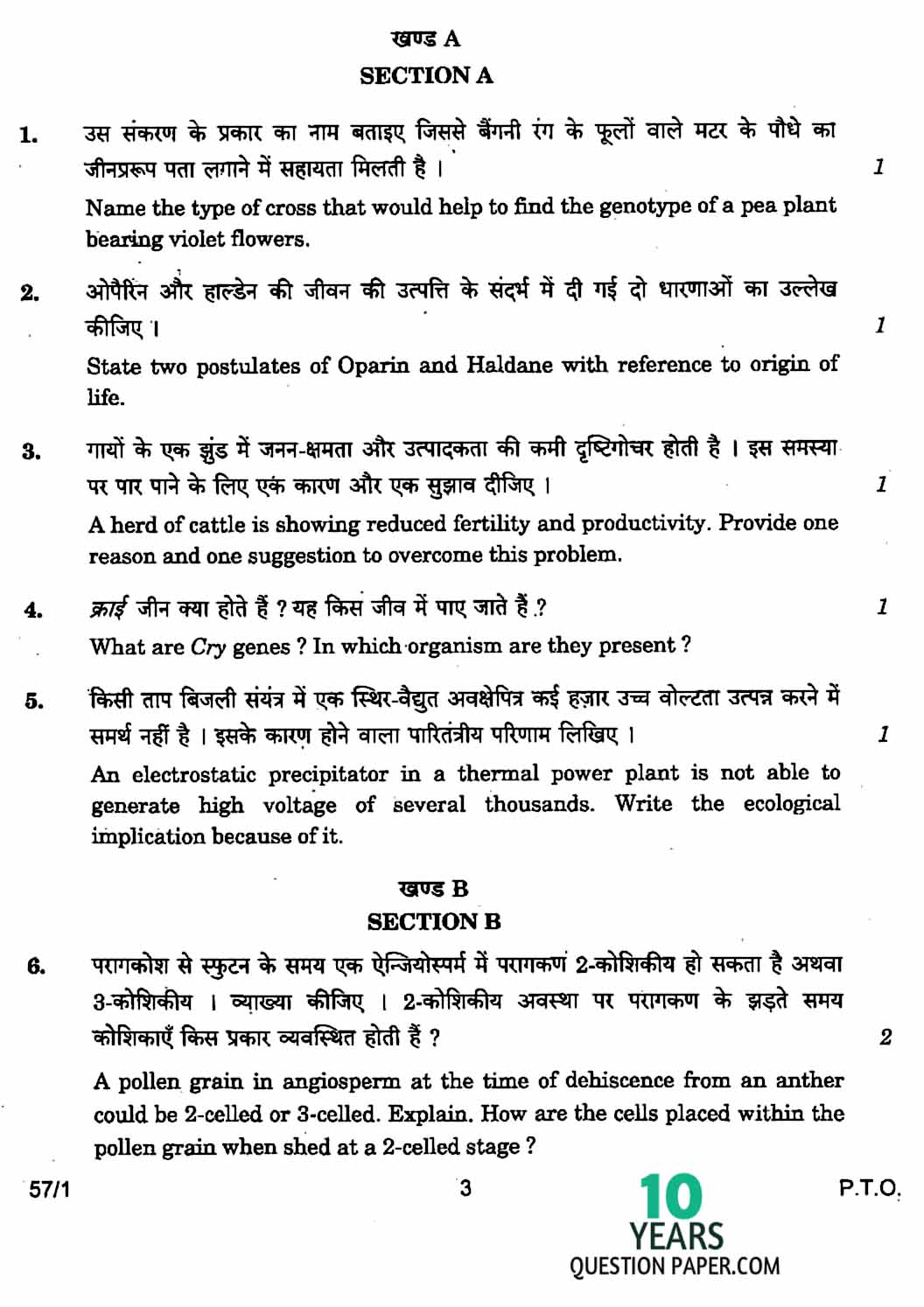
- State two postulates of Oparin and Haldane with reference to the origin of life.
- An electrostatic precipitator in a thermal power plant is not able to generate a high voltage of several thousand volts. Write the ecological implication of this.
- Both haemophilia and thalassemia are blood-related disorders in humans. Write their causes and the difference between the two, and name the category of genetic disorder they both come under.
- Describe the roles of heat, primers and the bacterium Thermus aquaticus in the process of PCR.
- When a seed of an orange is squeezed, many embryos are observed instead of one. Explain how this is possible.
- Compare, giving reasons, the J-shaped and S-shaped models of population growth of a species.
Free email alert
Get the 2027 CBSE Class 12 papers first
One email when the new CBSE Class 12 Biology question papers are published here. No spam, unsubscribe any time.
What's next
Planning what comes after Class 12?
Compare college costs, education loans, and scholarships in one place.
See the cost breakdown