CBSE 2017 Biology Solved Paper for Class 12

CBSE
Biology2017CBSE 2017 Biology solved question paper for class 12 - prepared by our expert teachers download and view previous year CBSE Biology 2017 question and solve them to make sure you are well prepared.
Practice these questions to improve your performance in the board examination.
About this paper
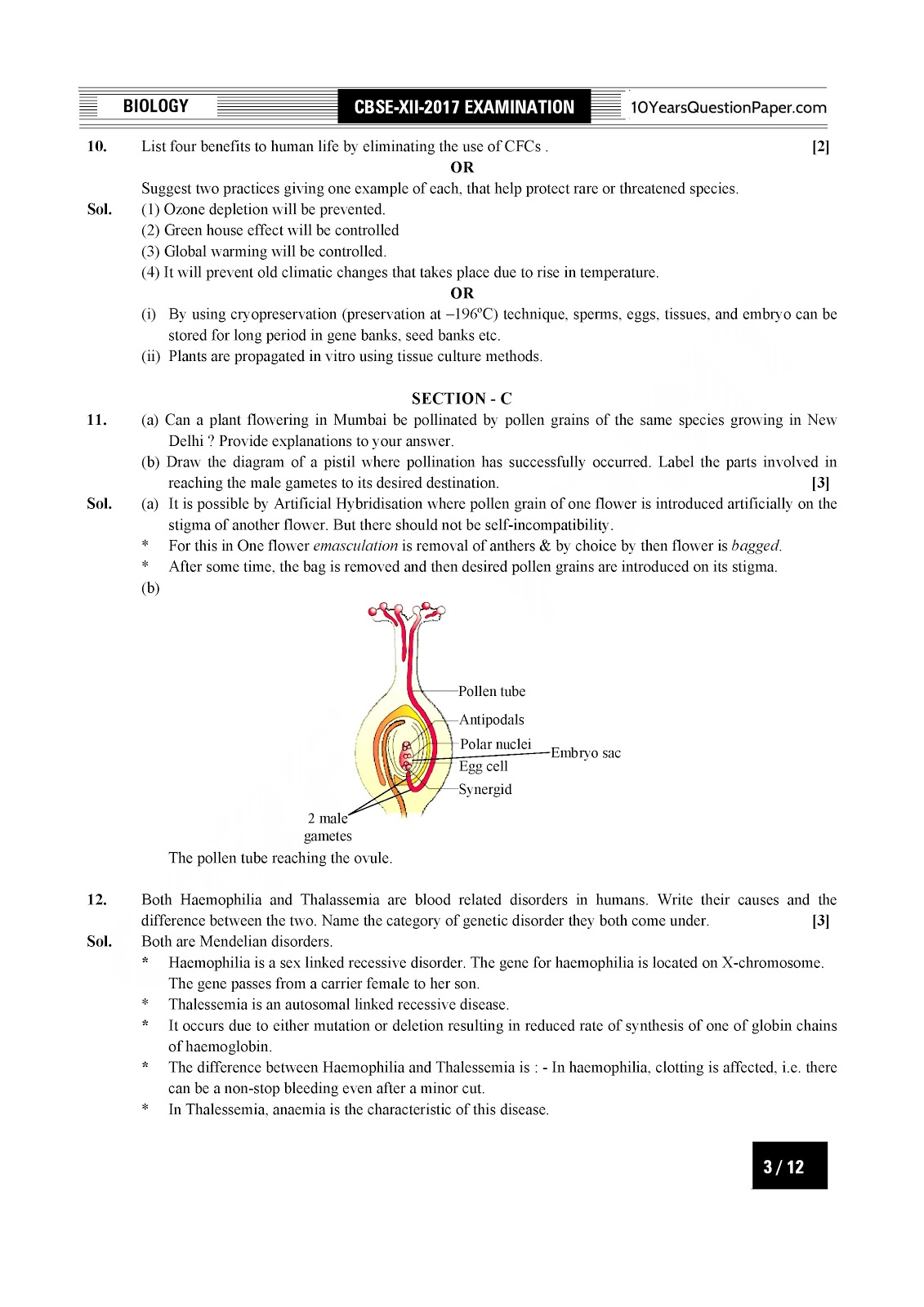
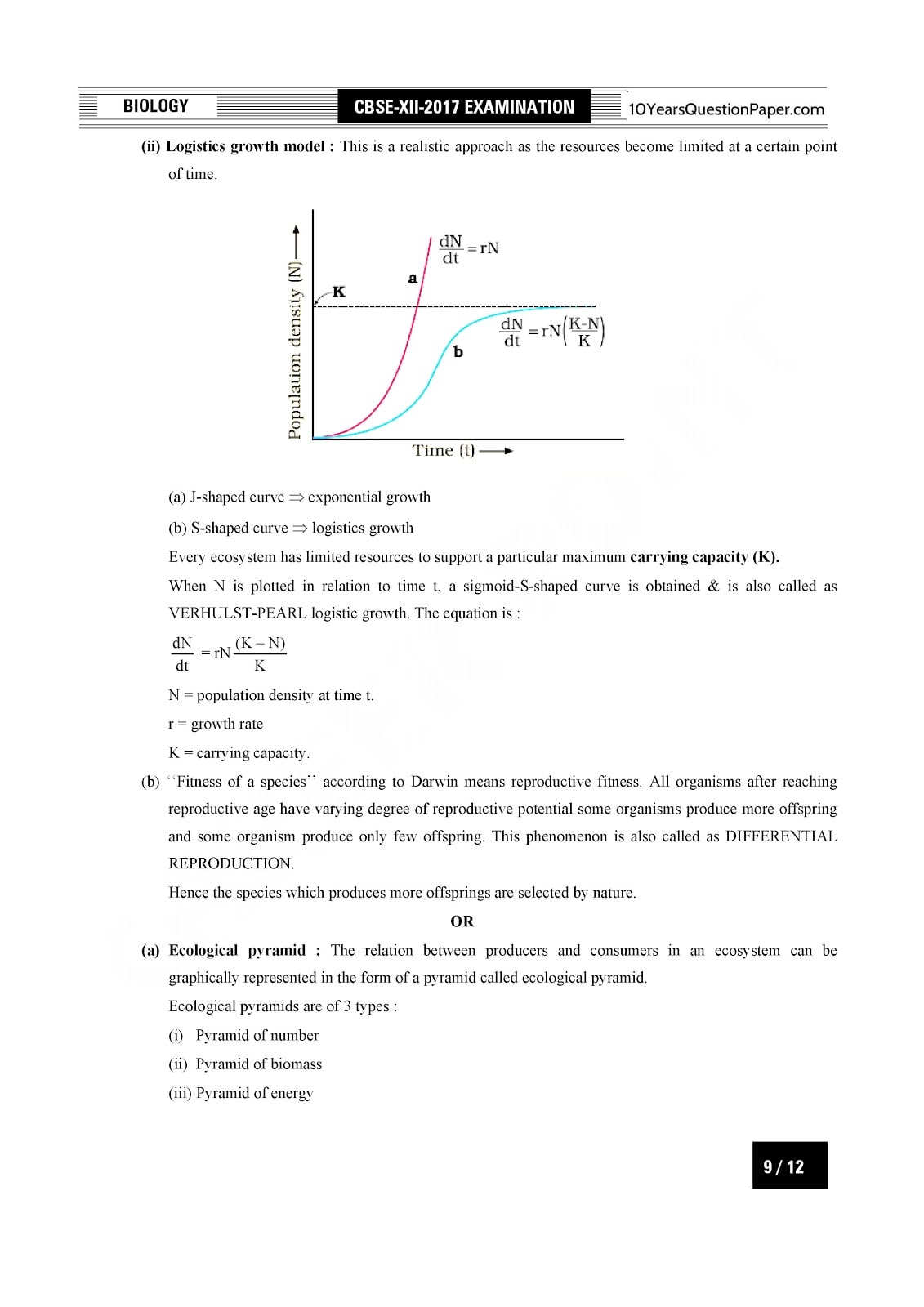
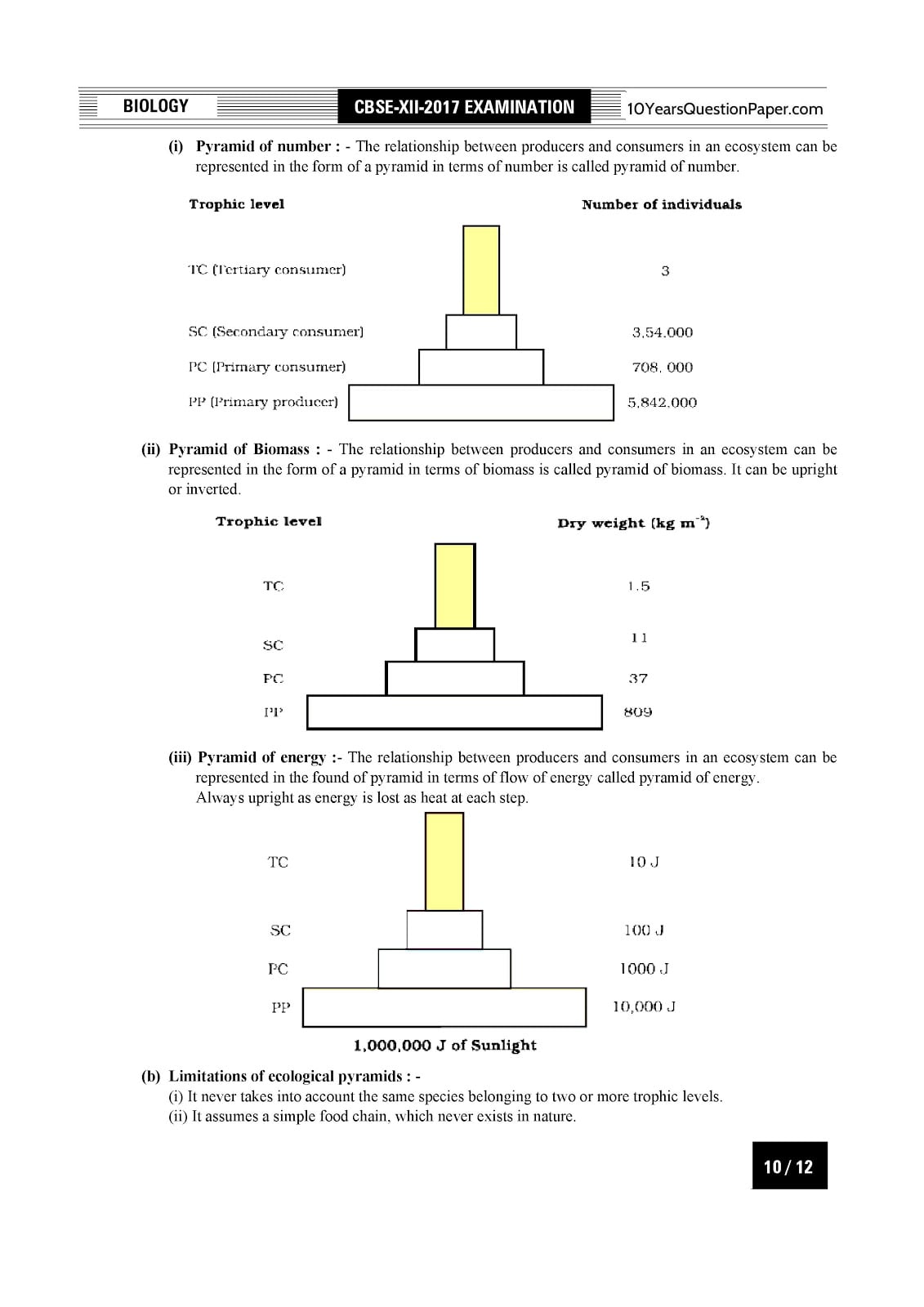
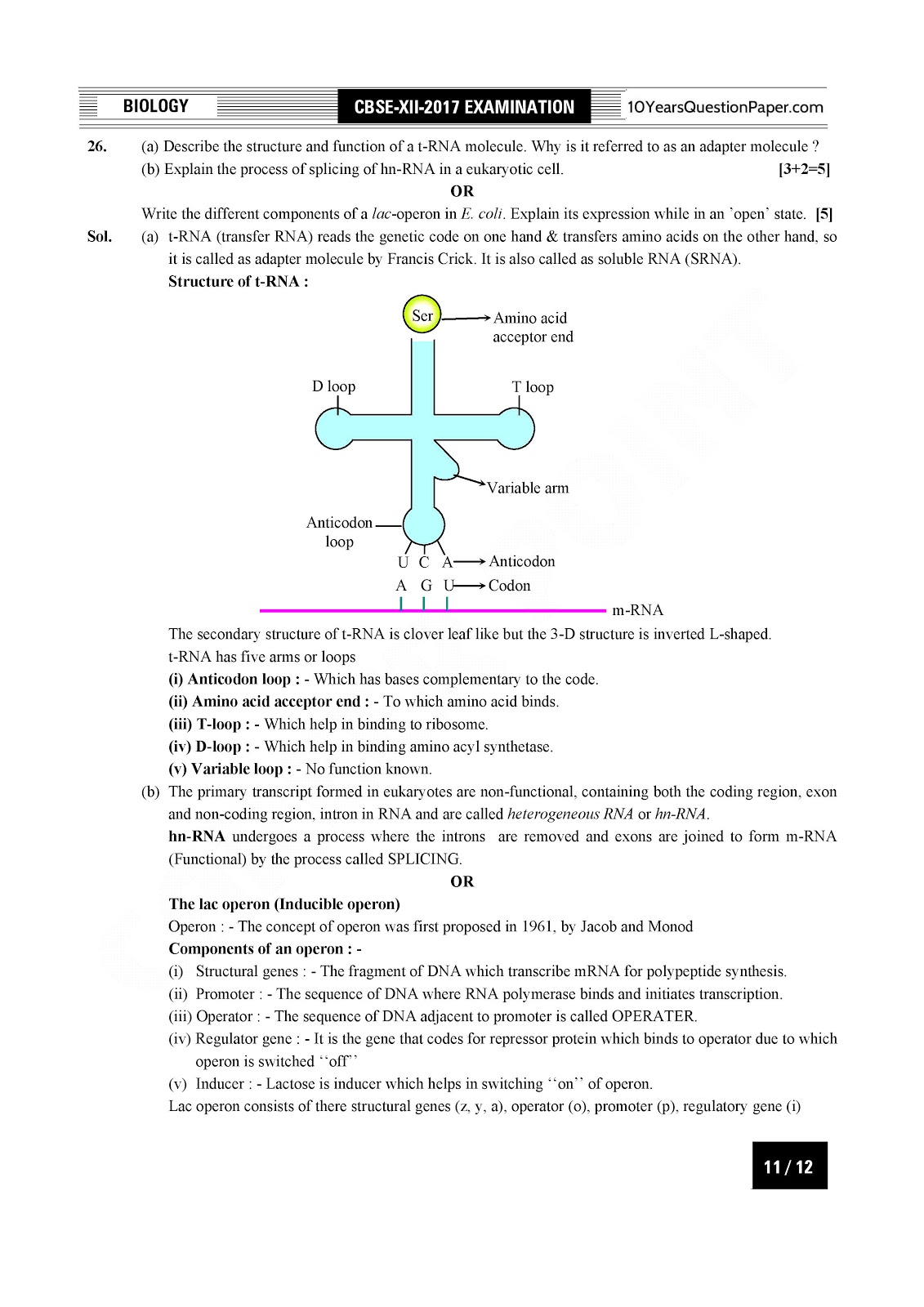
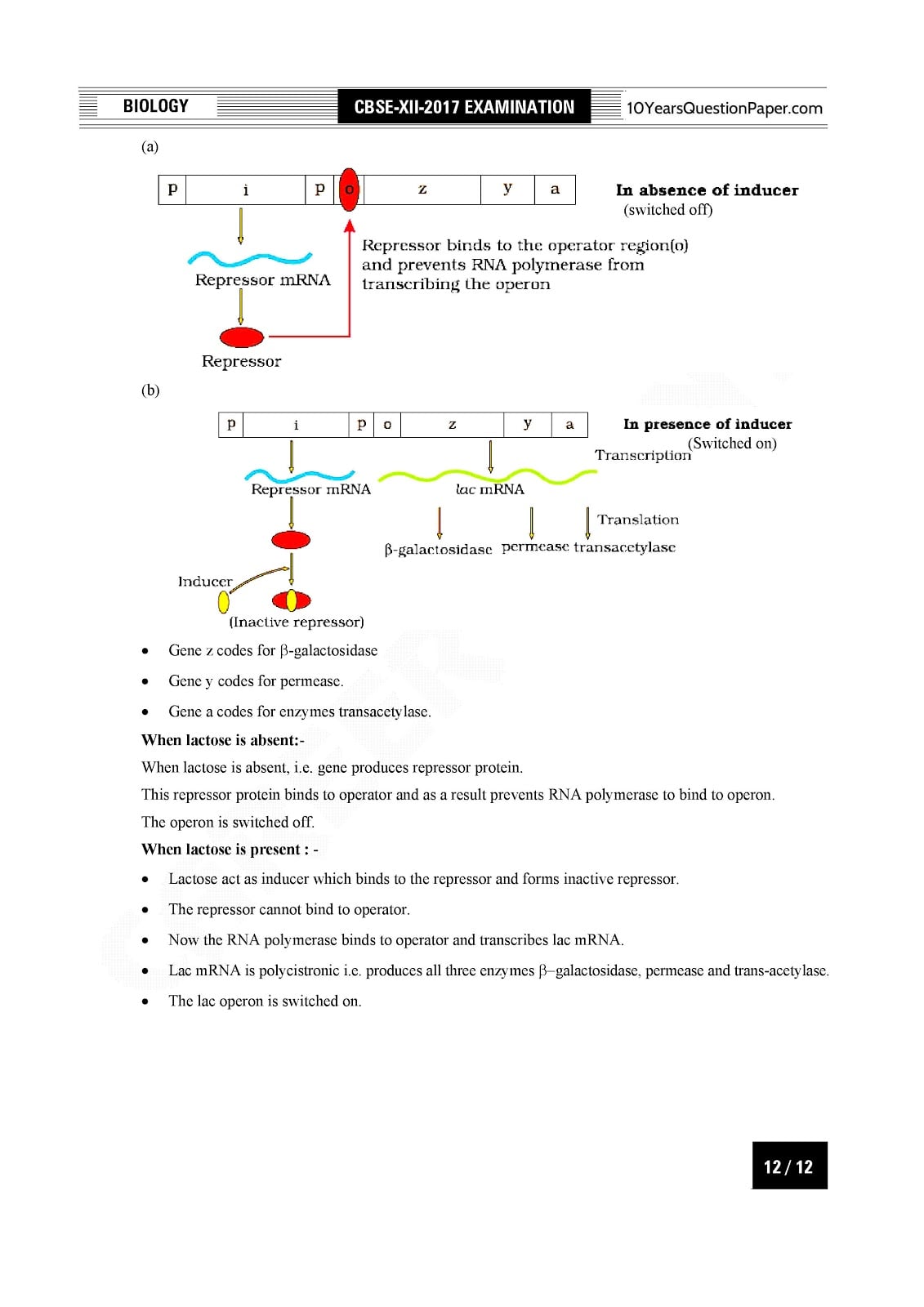
This is the CBSE Class 12 Biology paper code 57/1 (Series GBM, Set 1) from the 2017 board examination, with a written solution under every question. It carries 70 marks over three hours and has 26 compulsory questions in five sections, from one-mark very short answers to three five-mark long answers, plus a four-mark value-based question on parents discussing reproduction with adolescents. Answers for both alternatives are given wherever there is an internal choice, and several include labelled diagrams, such as a pistil after pollination, a tRNA molecule, population growth curves, ecological pyramids and the lac operon. It is useful for checking how much detail a two-, three- or five-mark answer needs.
- Exam
- CBSE Class 12
- Subject
- Biology
- Year
- 2017
- Paper code
- 57/1
- Maximum marks
- 70
- Time allowed
- 3 hours
- Questions
- 26
- Pages
- 12
- Answers included
- Yes
Paper pattern
Section A
5 marksQuestions 1–5, very short answers, one mark each
Section B
10 marksQuestions 6–10, short answers, two marks each; internal choice in one
Section C
36 marksQuestions 11–22, short answers, three marks each; internal choice in one
Section D
4 marksQuestion 23, value-based question
Section E
15 marksQuestions 24–26, long answers, five marks each, each with an internal choice
Topics covered
- Reproduction in flowering plants
- Human reproduction
- Principles of inheritance and variation
- Molecular basis of inheritance
- Evolution
- Human health and disease
- Strategies for enhancement in food production
- Microbes in human welfare
- Biotechnology principles and applications
- Organisms and populations
- Ecosystem
- Environmental issues
Questions from this paper
- Name the type of cross that would help to find the genotype of a pea plant bearing violet flowers.
- What are Cry genes? In which organism are they present?
- Name the microbes that help in the commercial production of statin, citric acid, penicillin and butyric acid.
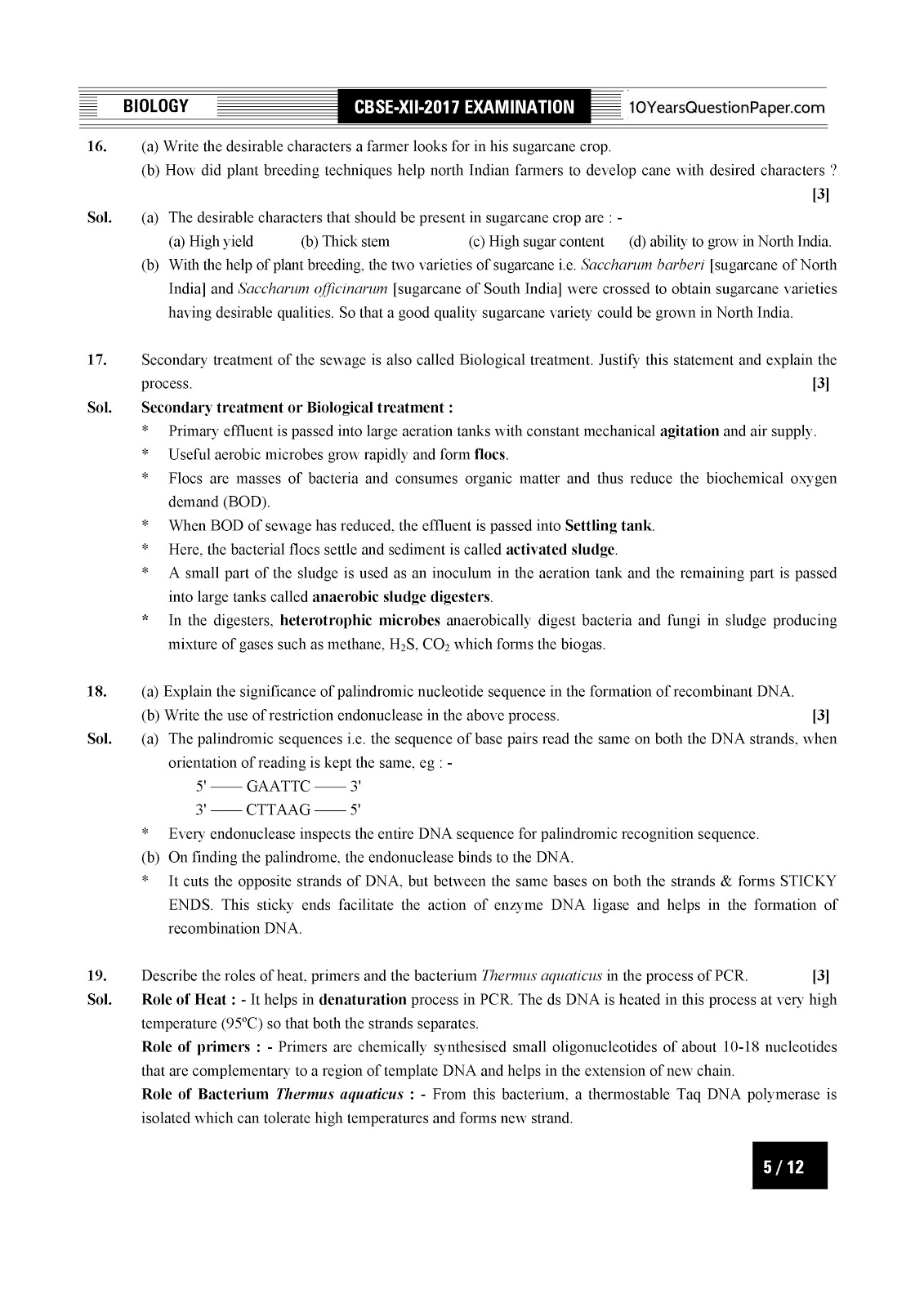
- Secondary treatment of sewage is also called biological treatment. Justify this statement and explain the process.
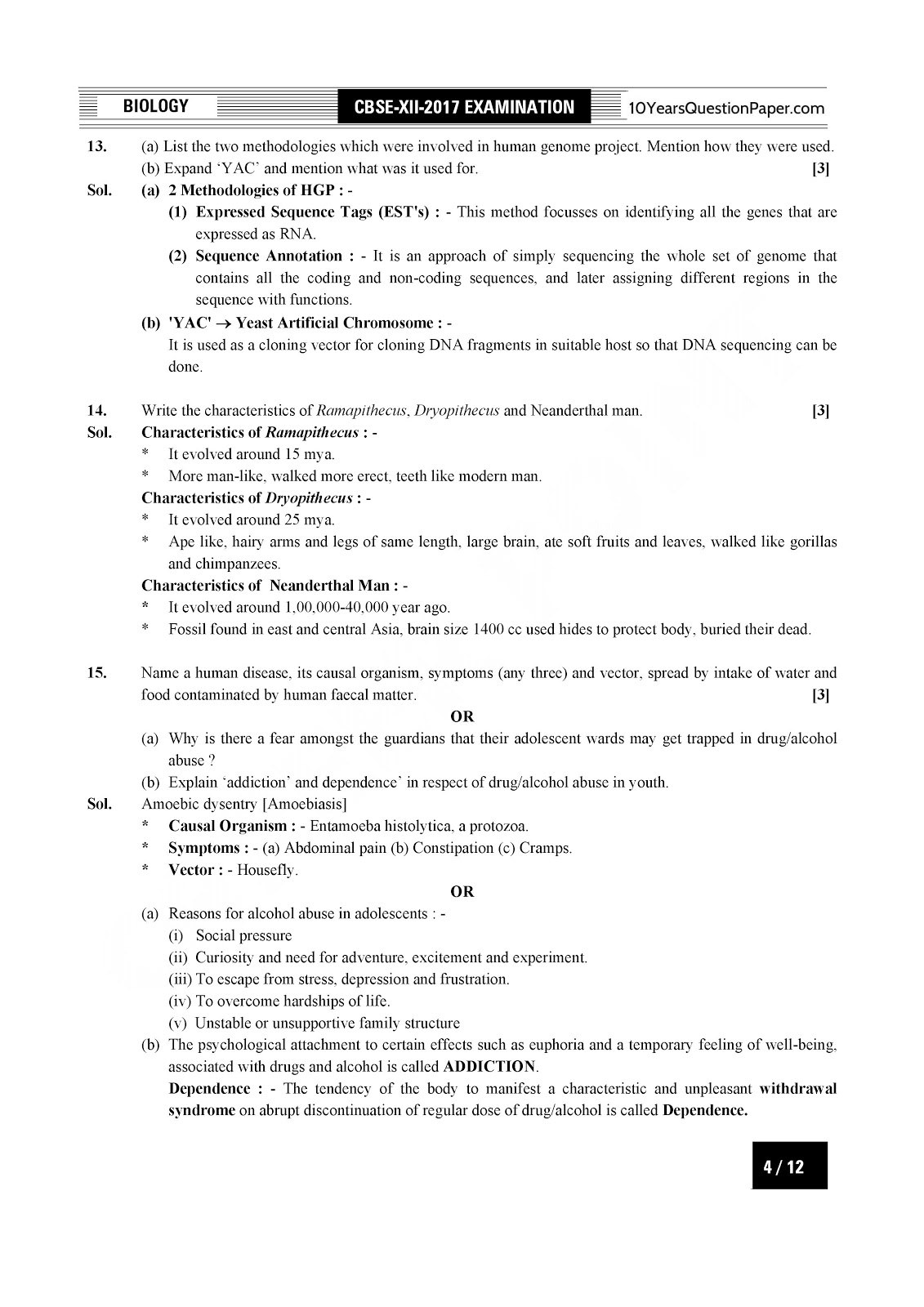
- Write the characteristics of Ramapithecus, Dryopithecus and Neanderthal man.
- Describe the structure and function of a tRNA molecule. Why is it referred to as an adapter molecule?
Free email alert
Get the 2027 CBSE Class 12 papers first
One email when the new CBSE Class 12 Biology question papers are published here. No spam, unsubscribe any time.
What's next
Planning what comes after Class 12?
Compare college costs, education loans, and scholarships in one place.
See the cost breakdown