CBSE 2017 Economics Question Paper for Class 12

CBSE
Economics2017CBSE Class 12 Economics question paper 2017 (code 58/3): 30 questions for 100 marks in 3 hours, micro and macroeconomics sections. Questions only.
Practice these questions to improve your performance in the board examination.
About this paper
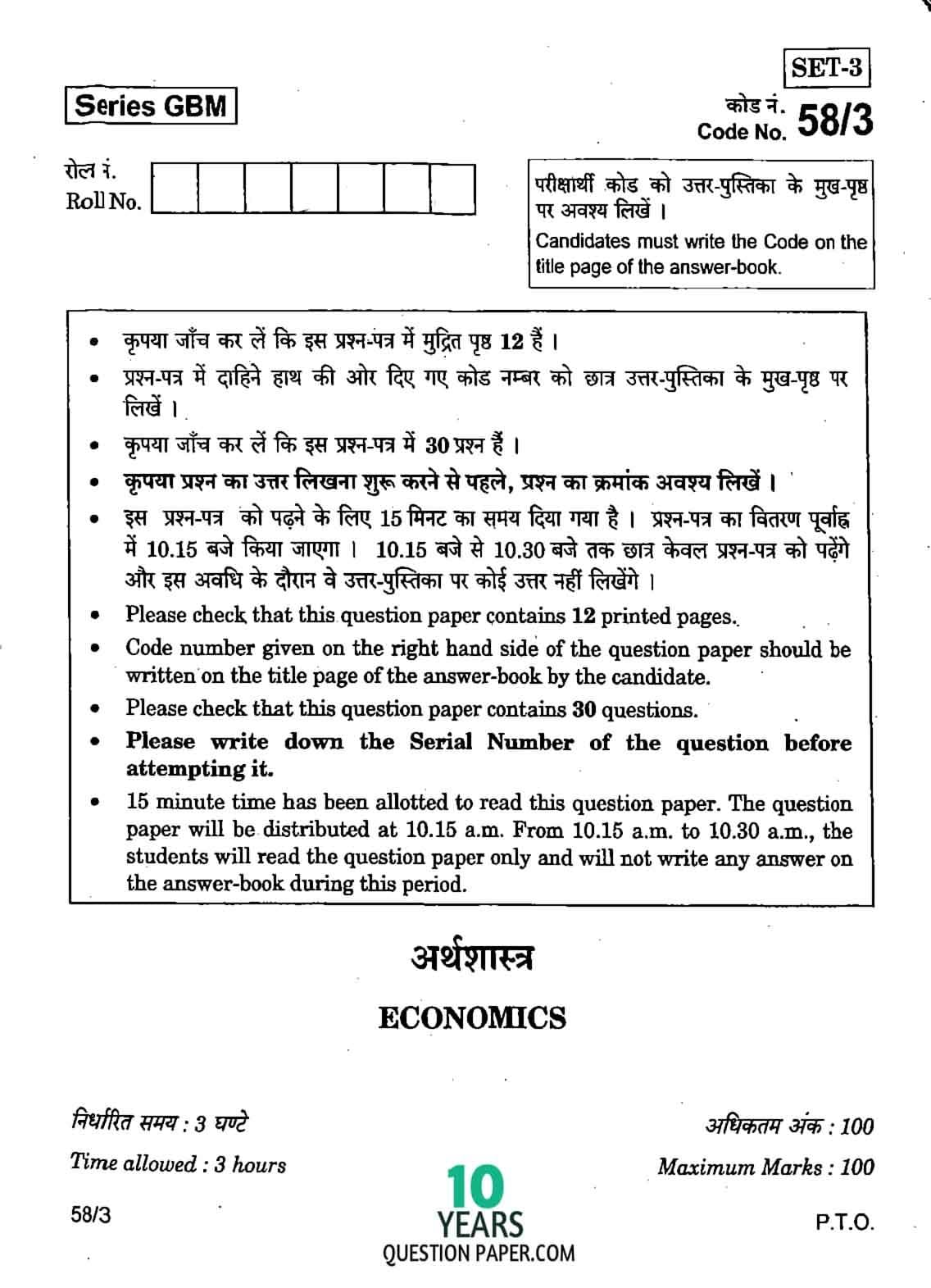
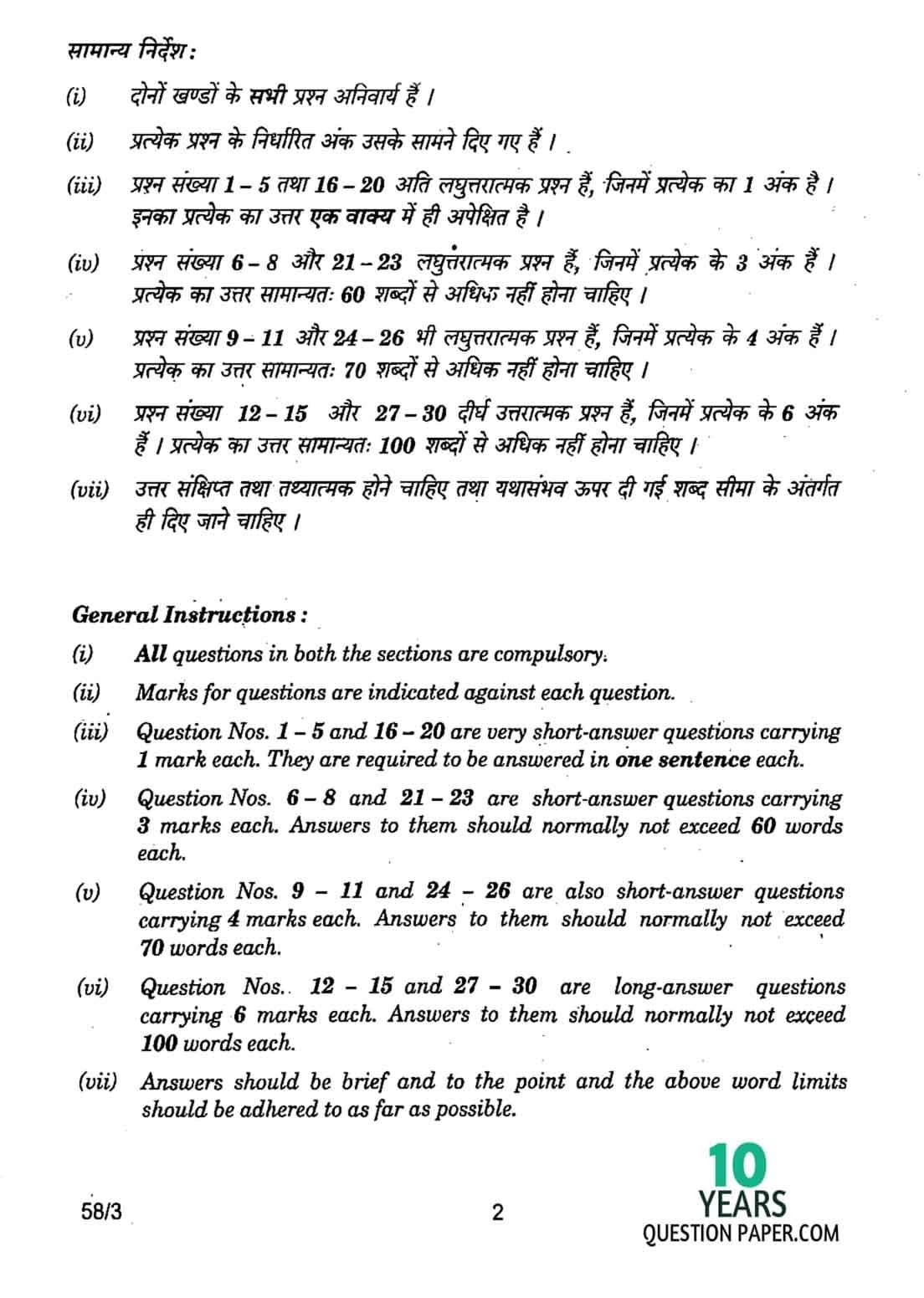
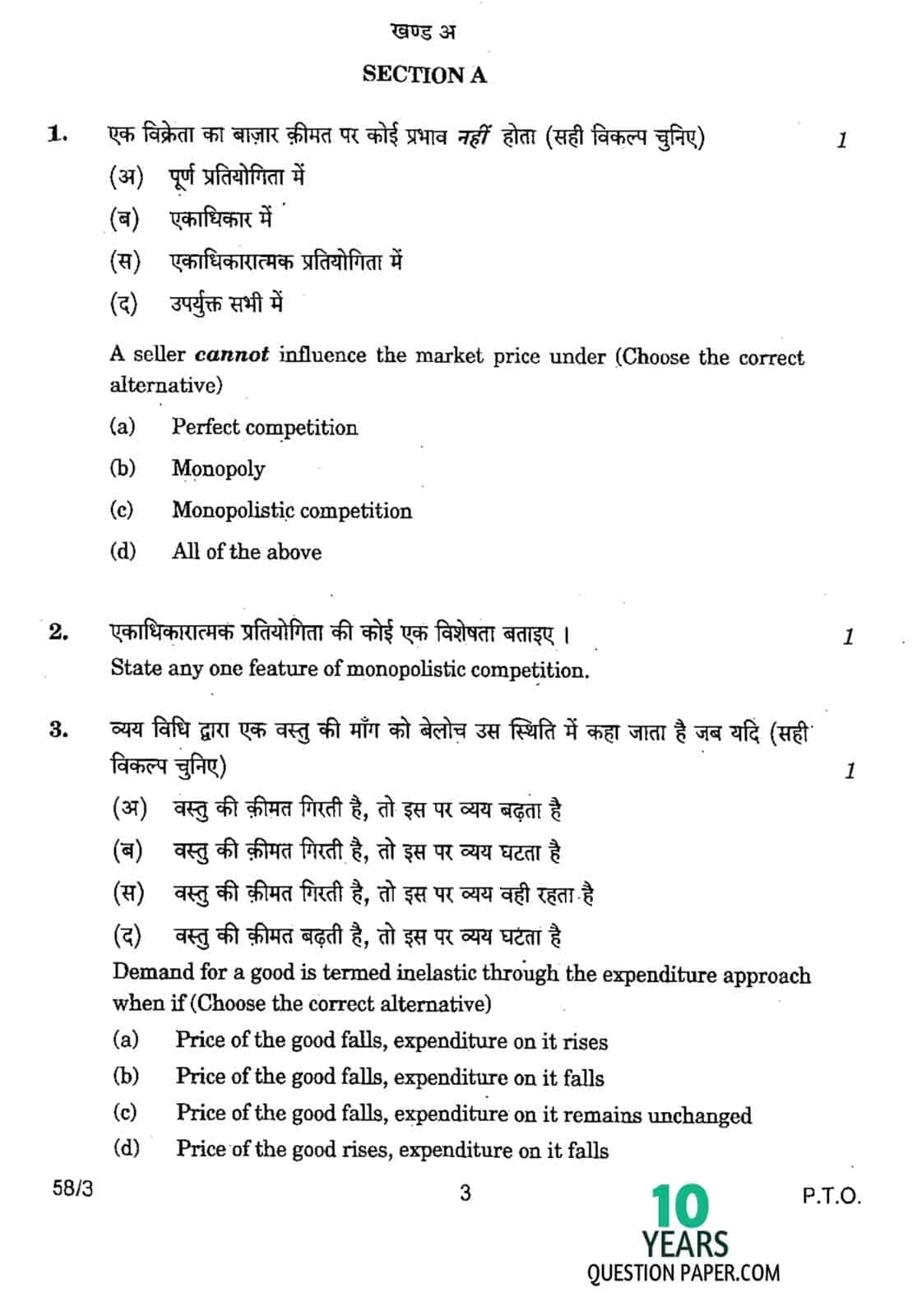
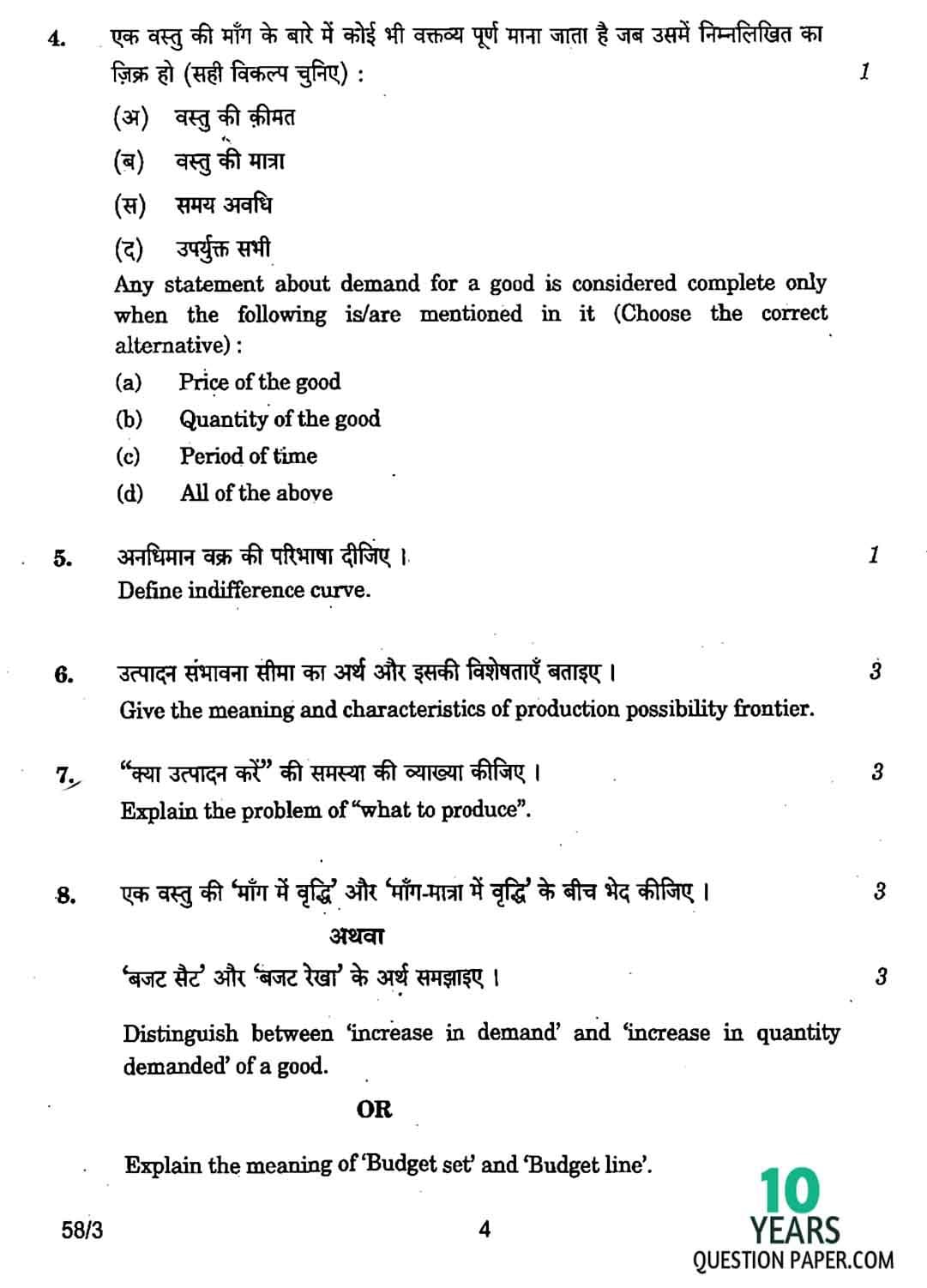
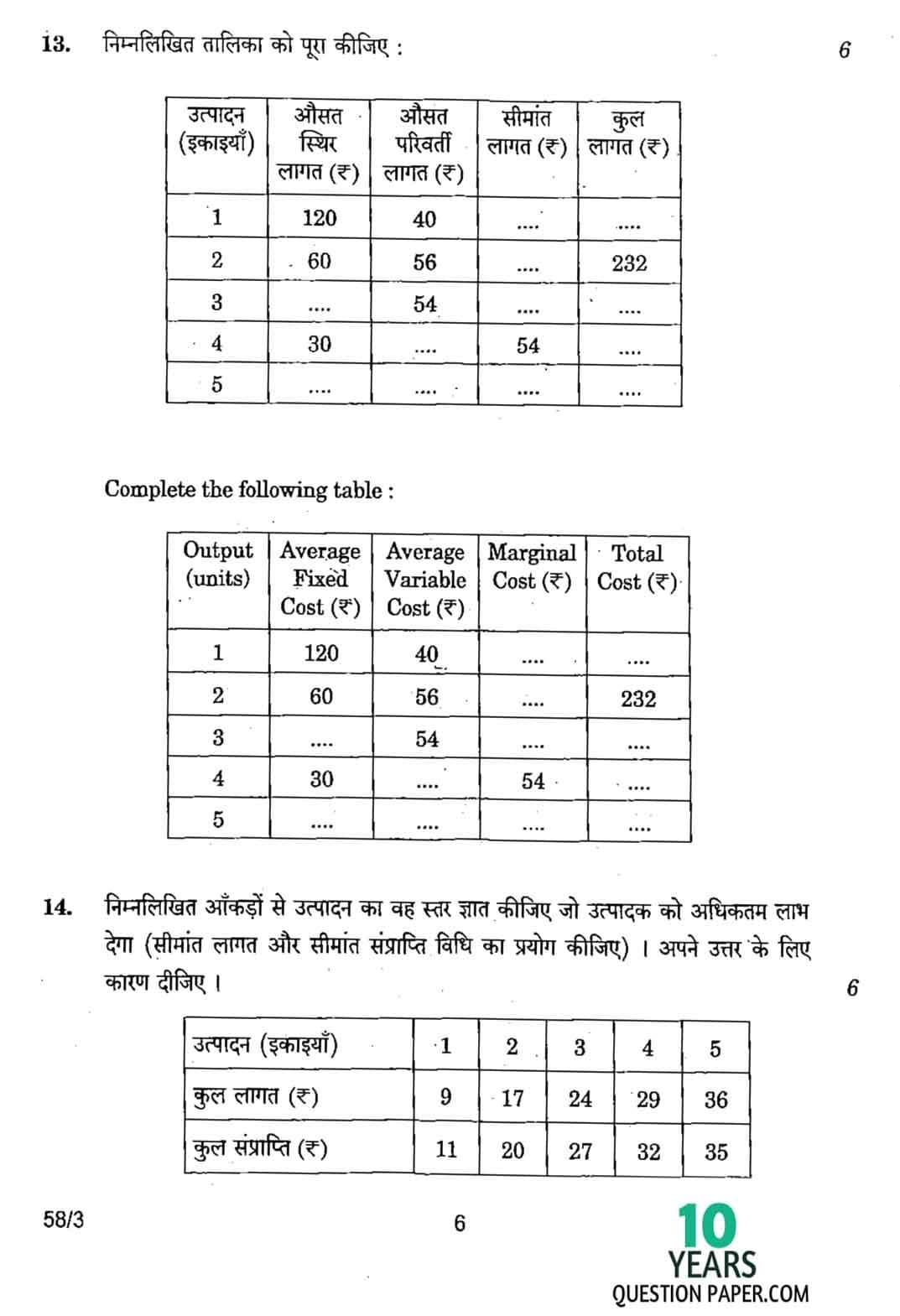
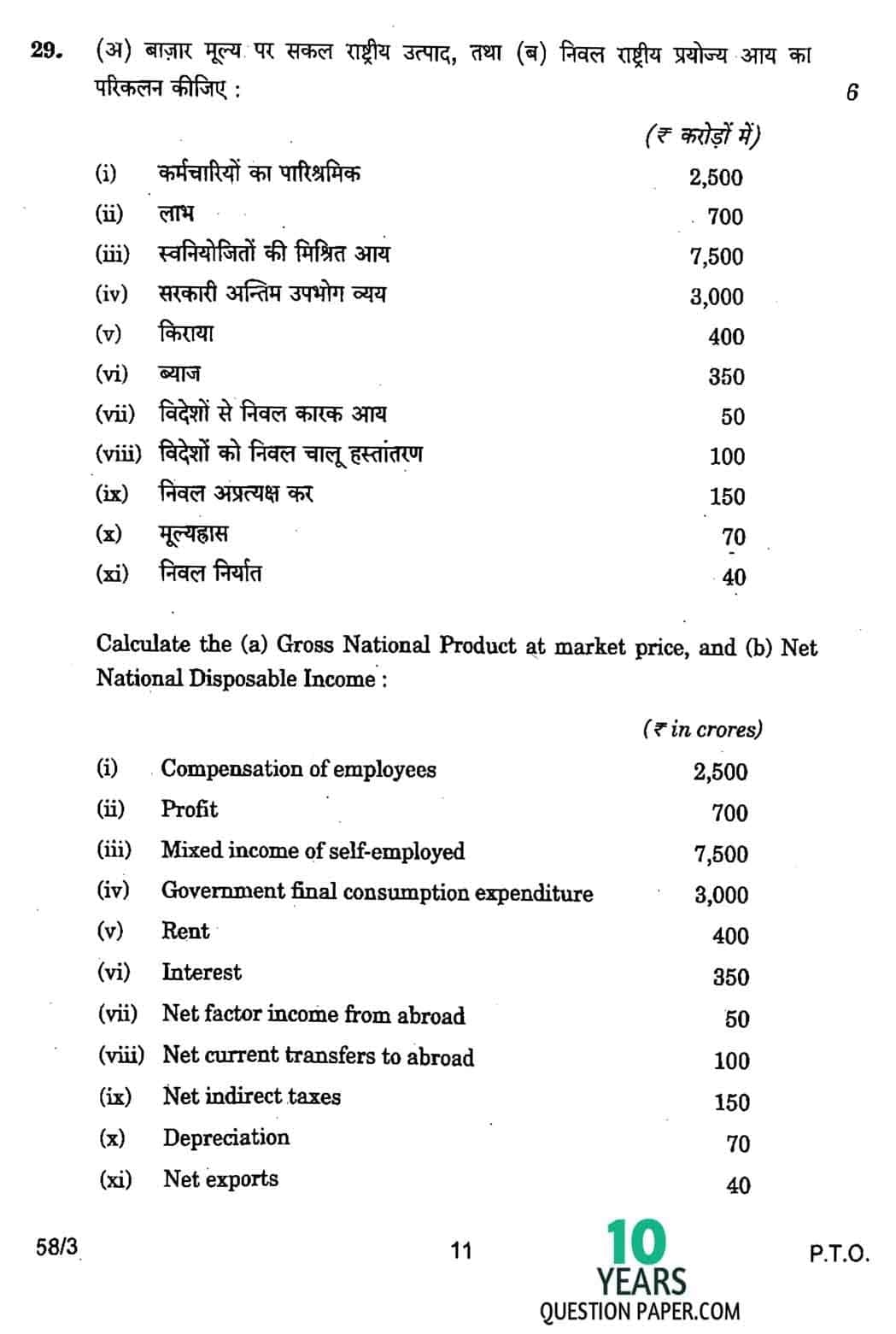
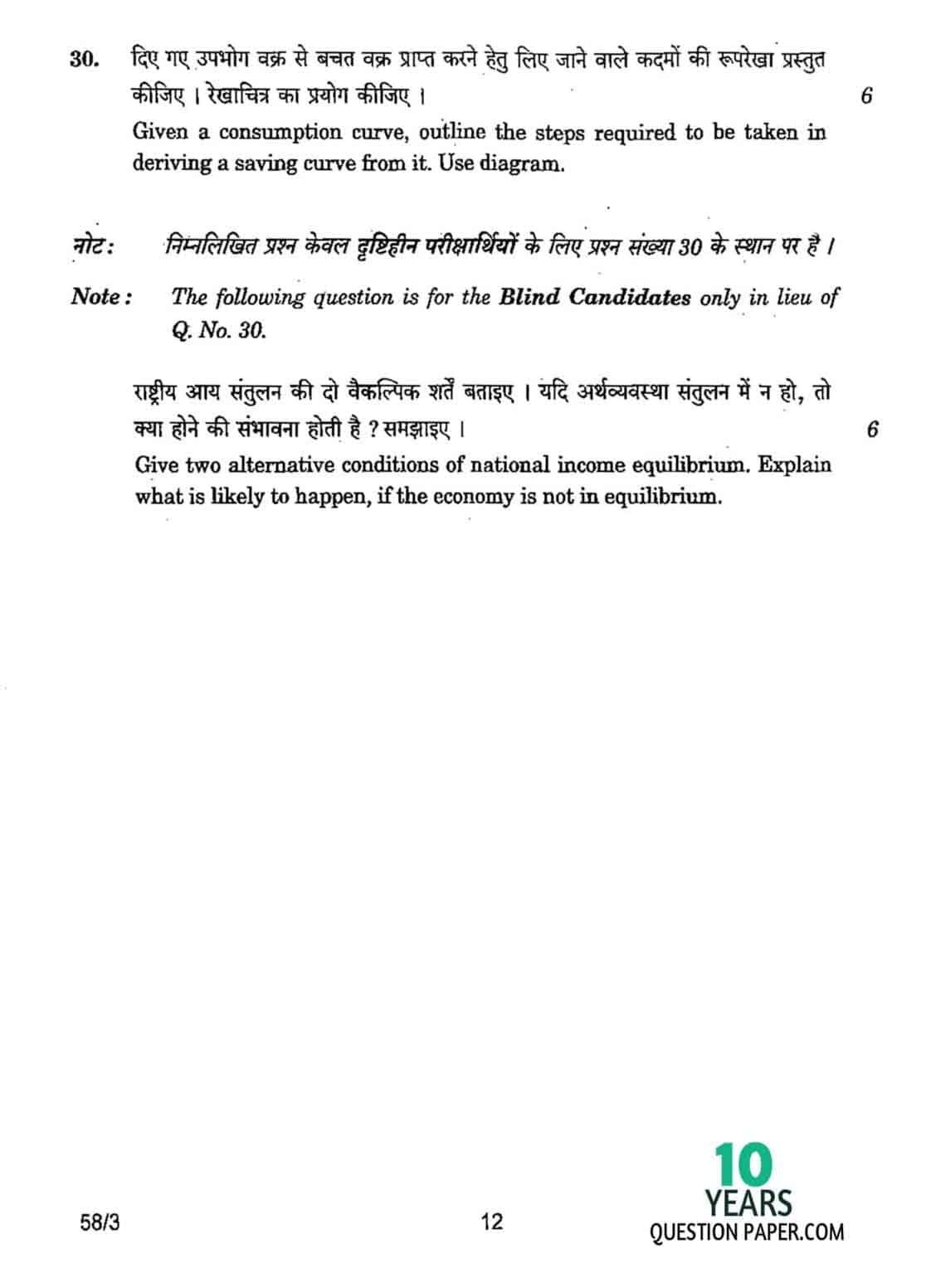
This is the CBSE Class 12 Economics paper from the 2017 board examination, code 58/3 (Series GBM, Set 3). It carries 100 marks over three hours and has 30 compulsory questions, printed in Hindi and English. Section A covers microeconomics and Section B covers macroeconomics; each opens with five one-mark questions, several of them multiple choice, and builds up through three- and four-mark answers to six-mark long answers with word limits. Numerical work includes completing a cost table, finding the profit-maximising output by the marginal cost and marginal revenue approach, and calculating GNP at market price and net national disposable income. Internal choices appear in several questions, with an alternative for blind candidates in place of the diagram-based Question 30. This copy has the questions only, without solutions.
- Exam
- CBSE Class 12
- Subject
- Economics
- Year
- 2017
- Paper code
- 58/3
- Maximum marks
- 100
- Time allowed
- 3 hours
- Questions
- 30
- Pages
- 12
- Answers included
- No, questions only
Paper pattern
Section A
50 marksMicroeconomics, Questions 1–15: five 1-mark, three 3-mark, three 4-mark and four 6-mark questions
Section B
50 marksMacroeconomics, Questions 16–30: five 1-mark, three 3-mark, three 4-mark and four 6-mark questions
Topics covered
- Central problems and production possibility frontier
- Consumer equilibrium and indifference curves
- Demand and price elasticity of demand
- Supply and production function
- Cost and producer's equilibrium
- Market forms: perfect competition and oligopoly
- National income accounting
- Money and banking
- Income determination and propensity to save
- Government budget
- Balance of payments and exchange rate
Questions from this paper
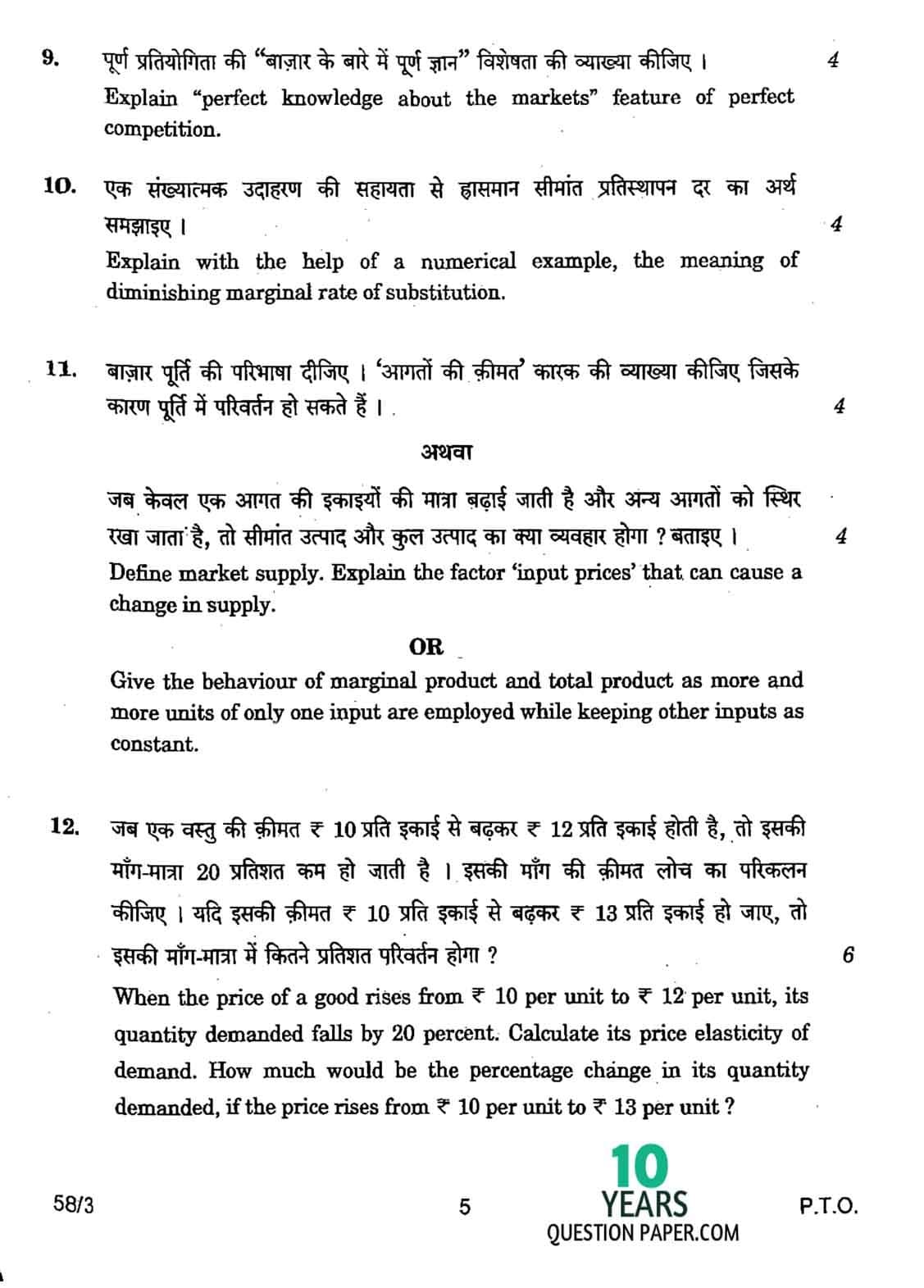
- When the price of a good rises from ₹10 per unit to ₹12 per unit, its quantity demanded falls by 20 percent. Calculate its price elasticity of demand. What would be the percentage change in its quantity demanded if the price rises from ₹10 per unit to ₹13 per unit?
- Explain, with the help of a numerical example, the meaning of diminishing marginal rate of substitution.
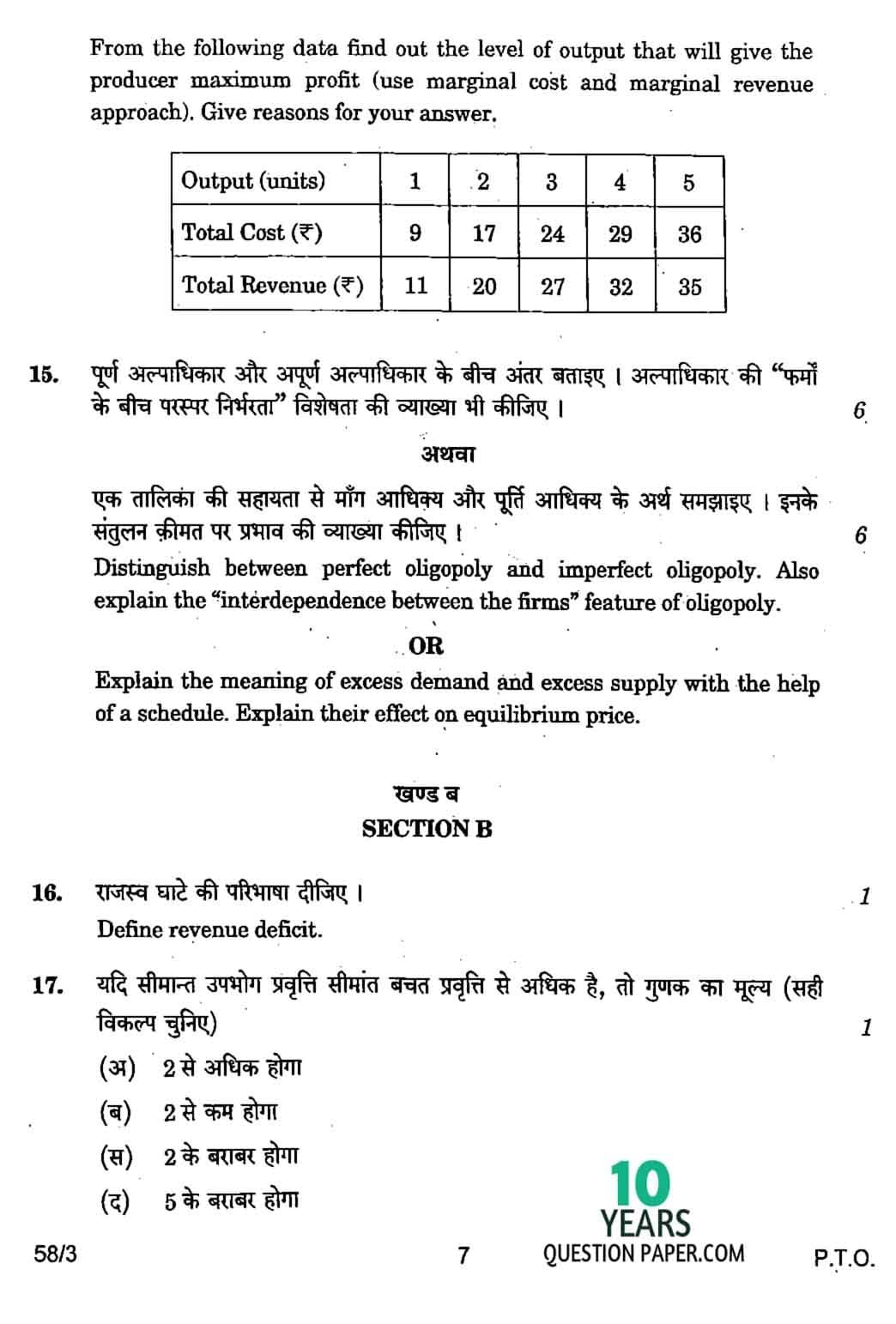
- Distinguish between perfect oligopoly and imperfect oligopoly. Also explain the 'interdependence between the firms' feature of oligopoly.
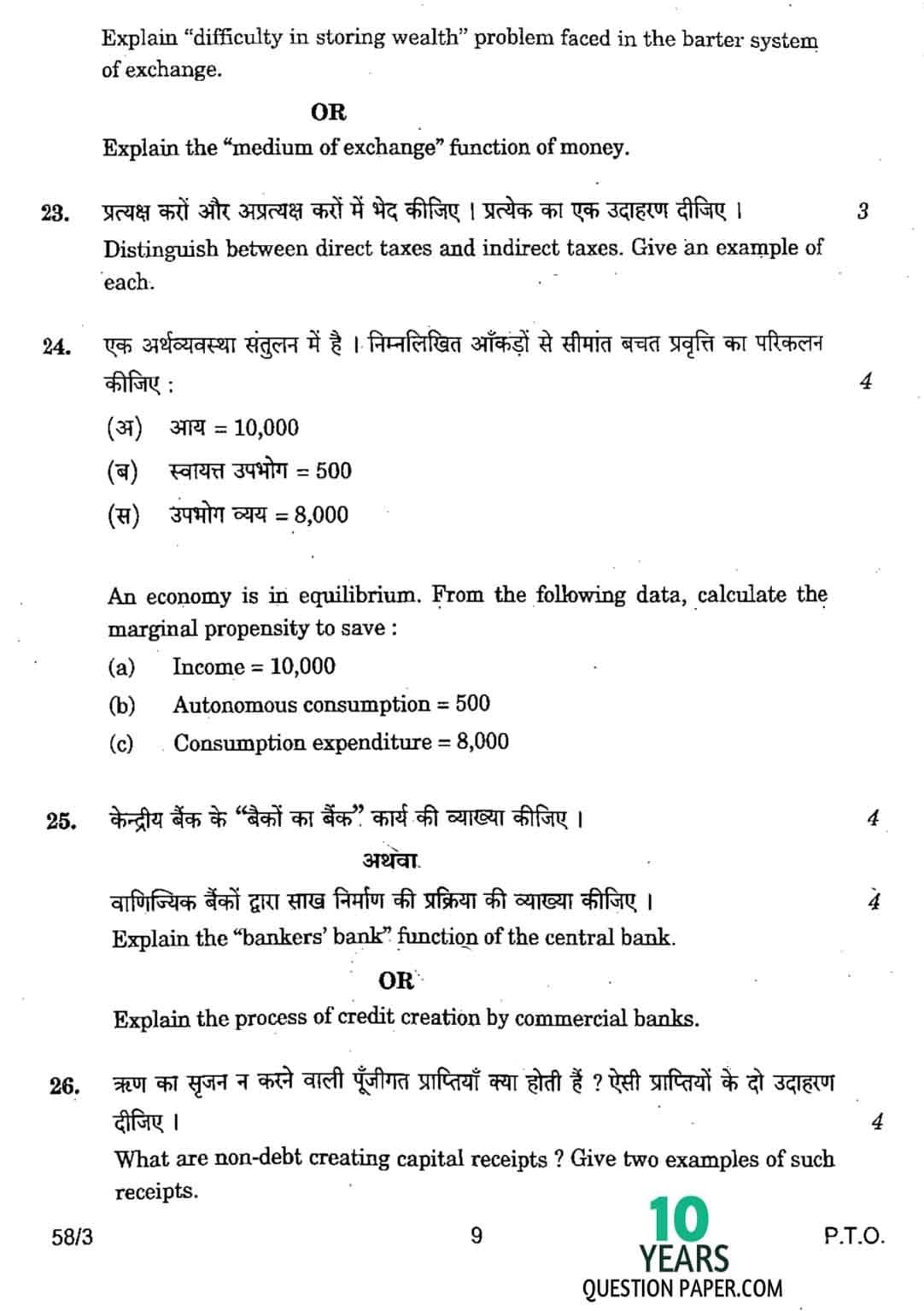
- An economy is in equilibrium. Calculate the marginal propensity to save from the following data: income = 10,000, autonomous consumption = 500 and consumption expenditure = 8,000.
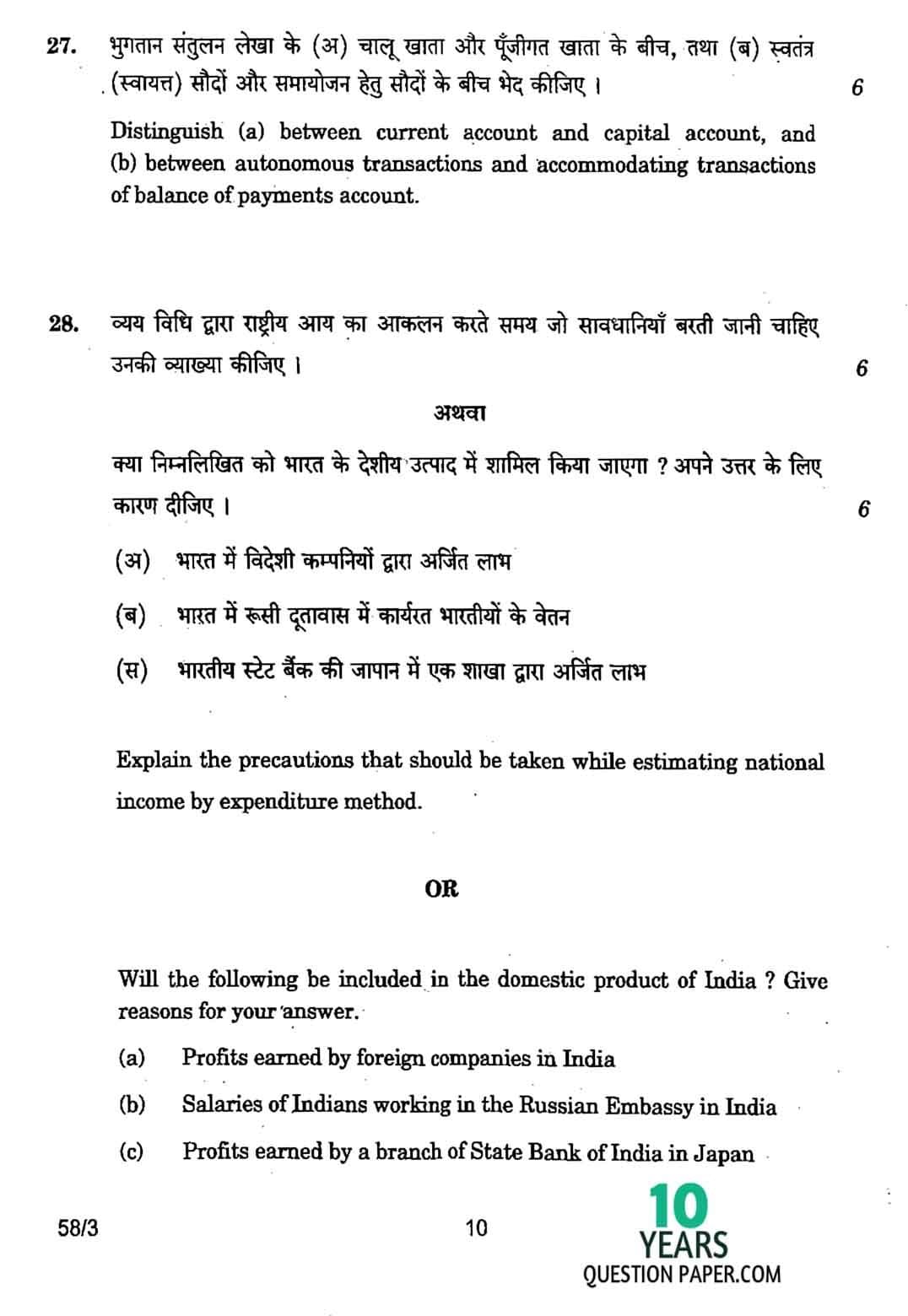
- What are non-debt creating capital receipts? Give two examples of such receipts.
- Will profits earned by a branch of State Bank of India in Japan be included in the domestic product of India? Give reasons for your answer.
Free email alert
Get the 2027 CBSE Class 12 papers first
One email when the new CBSE Class 12 Economics question papers are published here. No spam, unsubscribe any time.
What's next
Planning what comes after Class 12?
Compare college costs, education loans, and scholarships in one place.
See the cost breakdown