ICSE Class 10 Chemistry Question Paper 2026 with Solutions

ICSE
Chemistry2026Download the official ICSE Class 10 Chemistry Question Paper 2026 with step-by-step solutions prepared by subject matter experts. Solving previous years' ICSE Class X board papers helps students master chemical equations, observation-based problems, and numerical calculations to score top marks in board examinations. Access the free PDF download above with complete answer keys.
About this paper
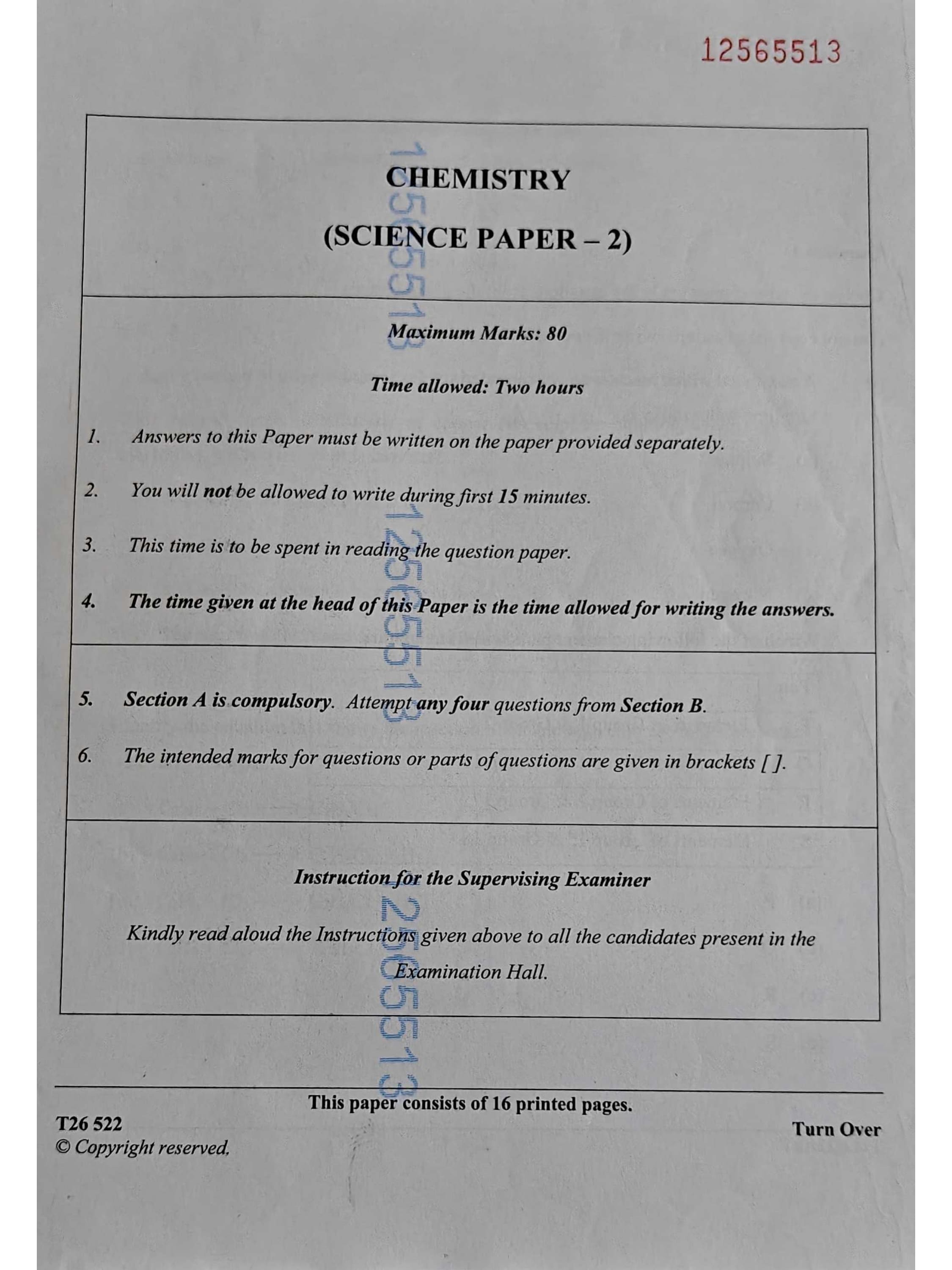
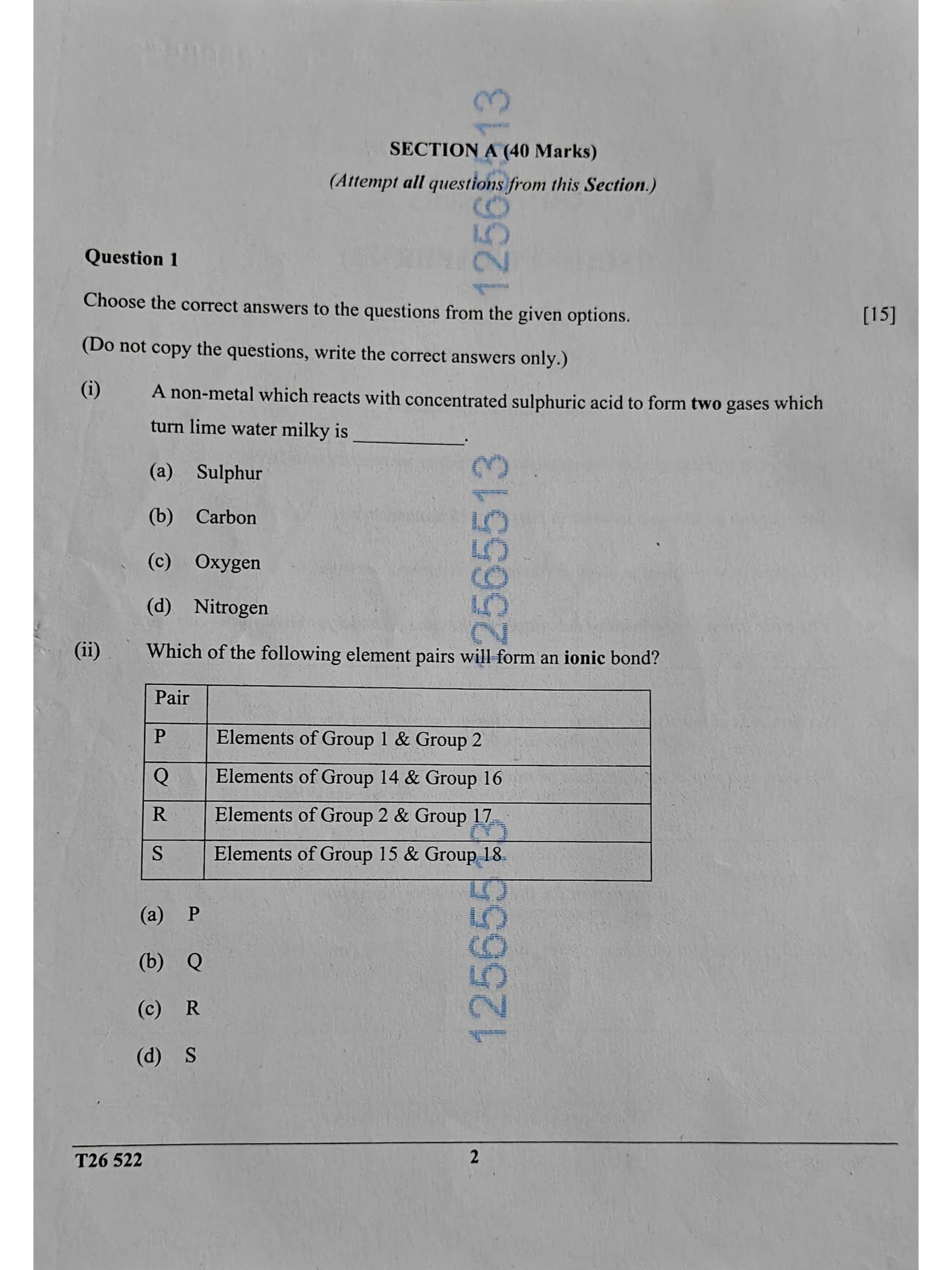
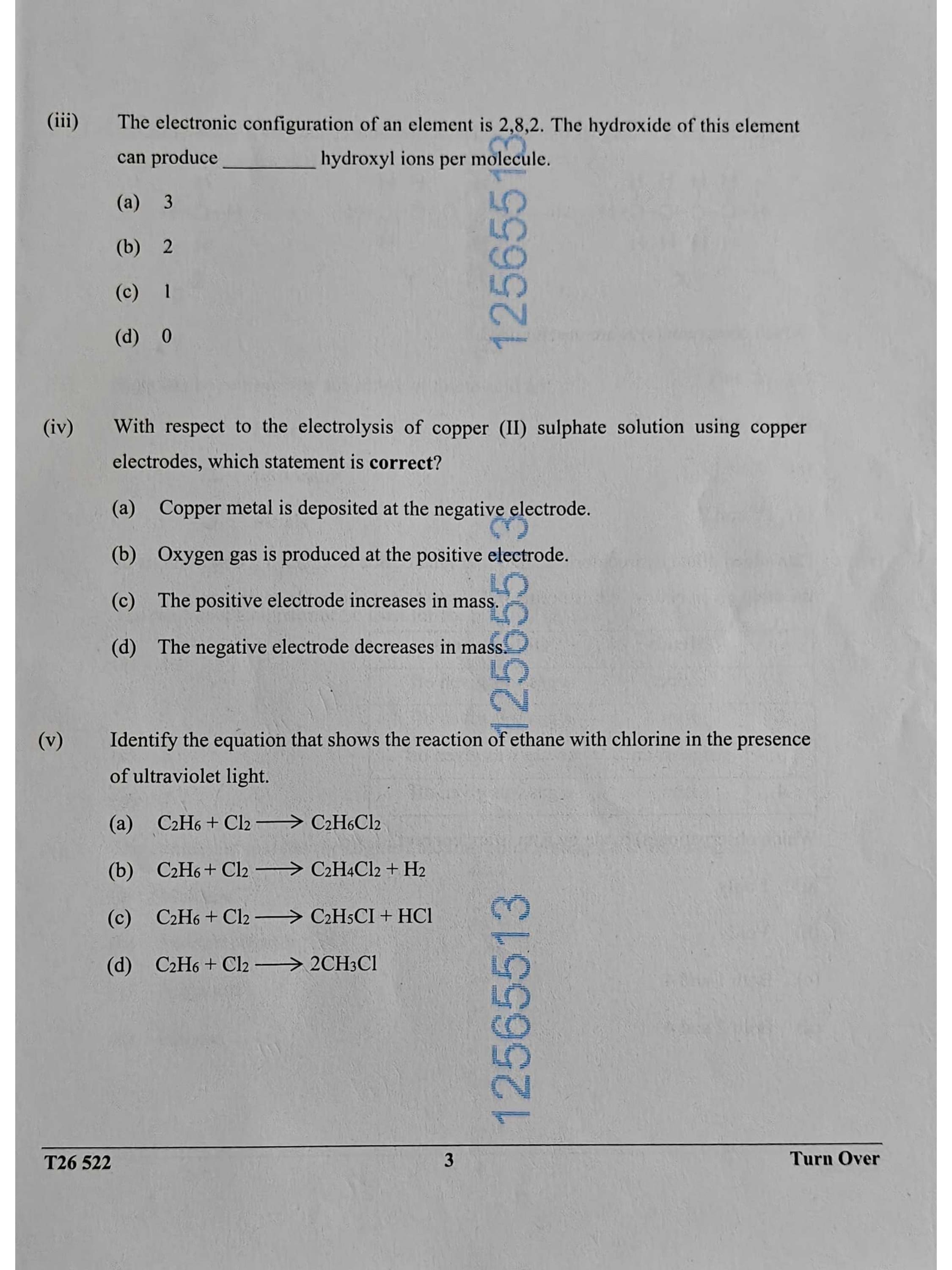
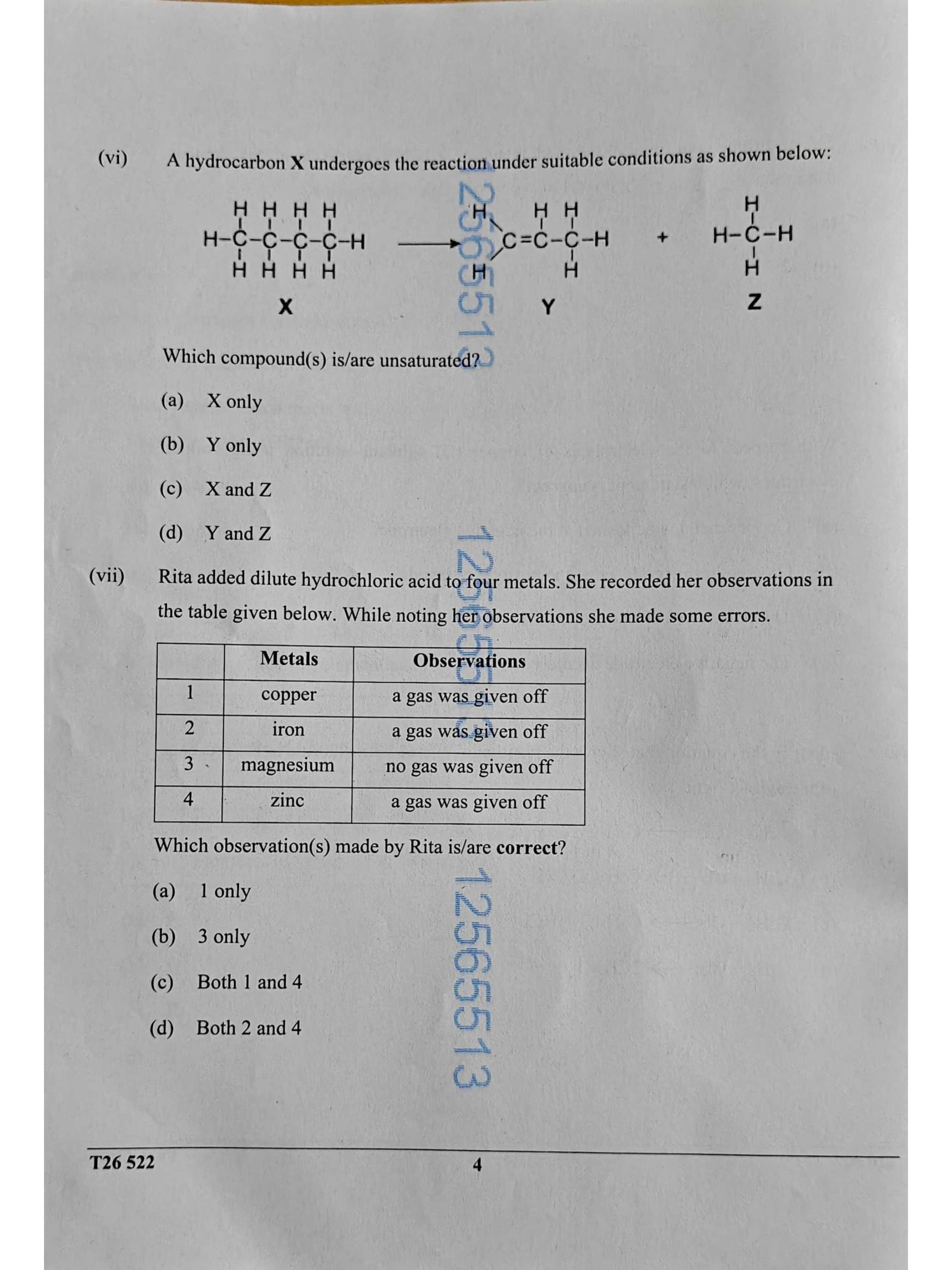
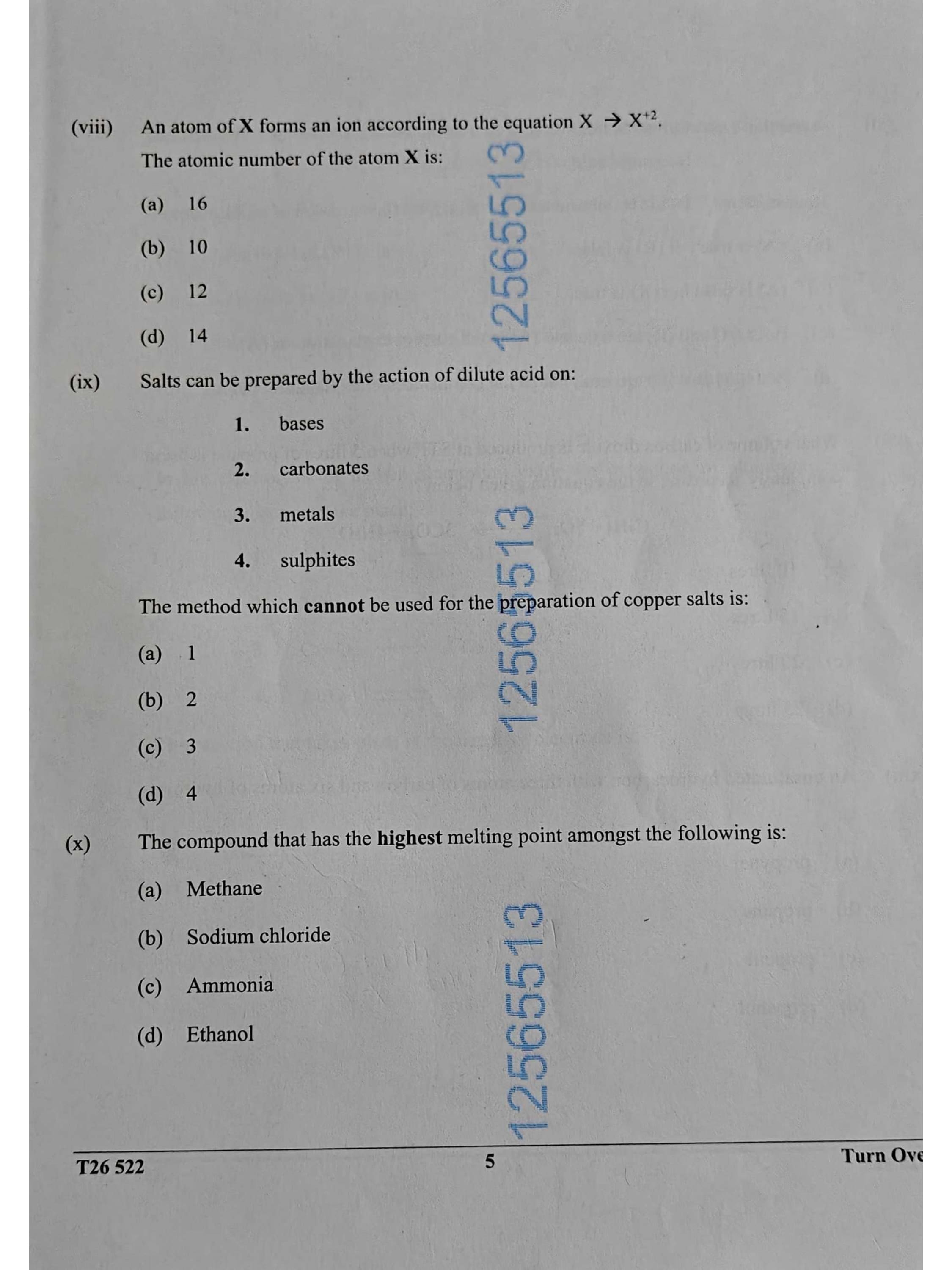
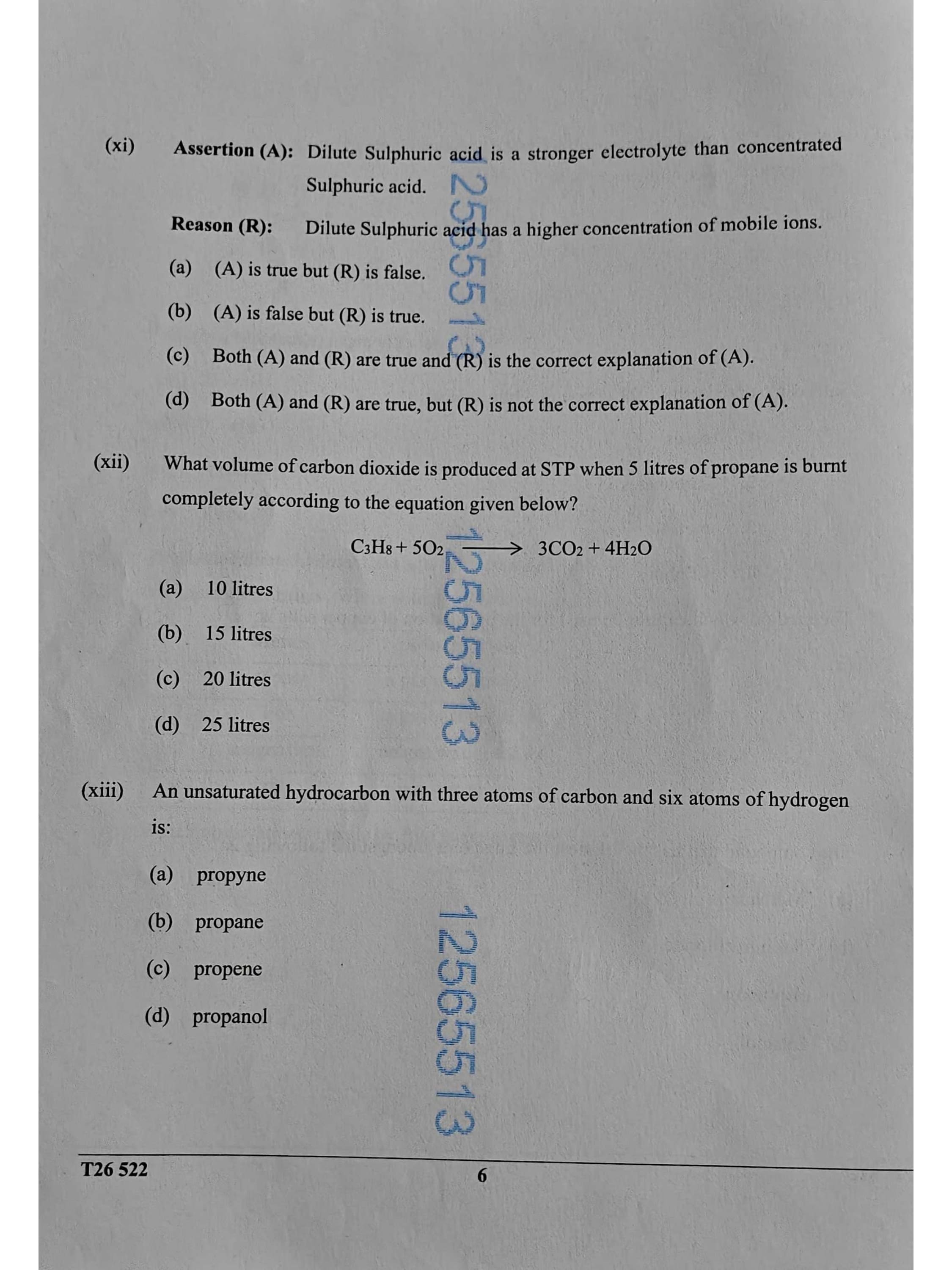
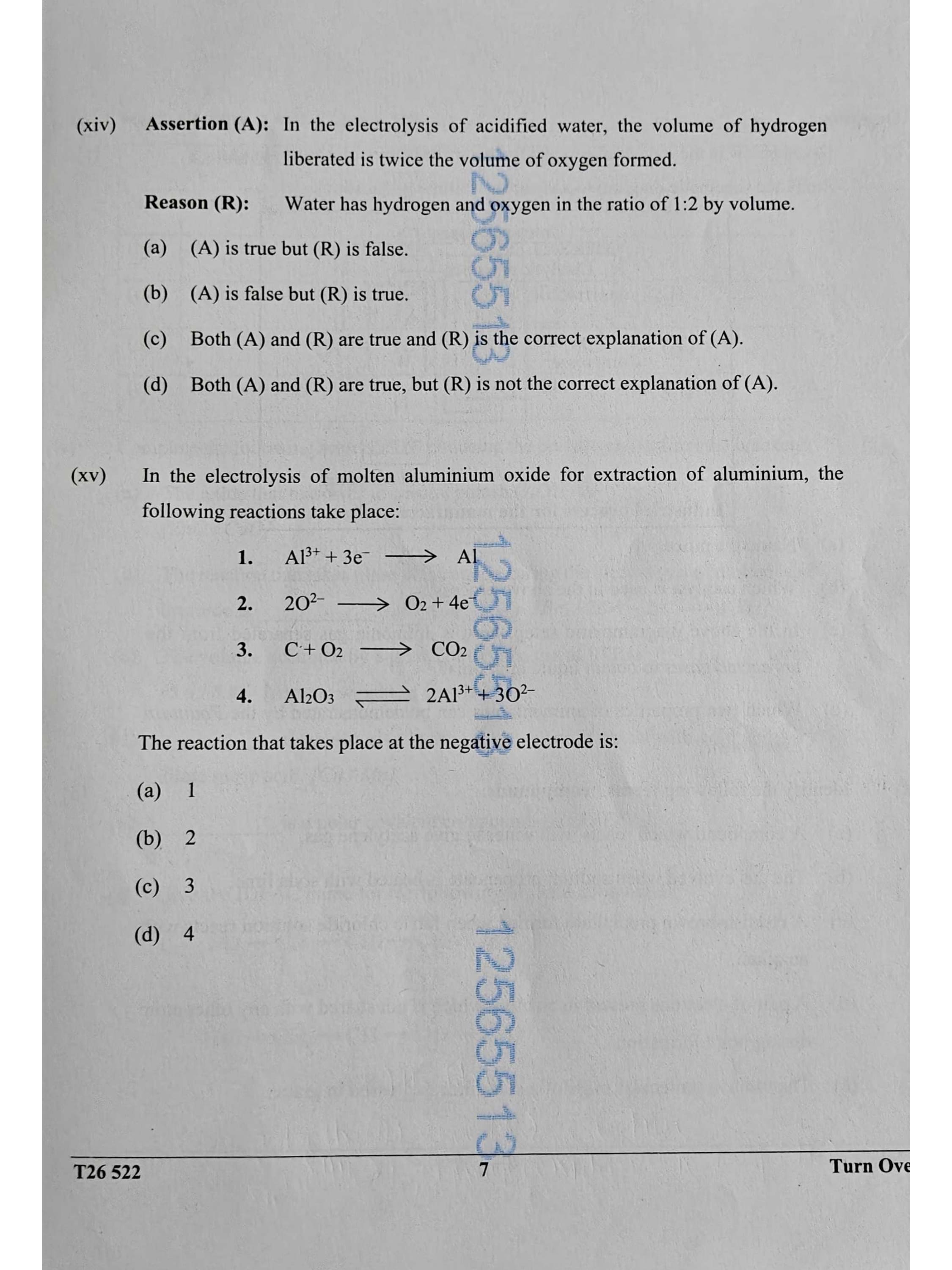
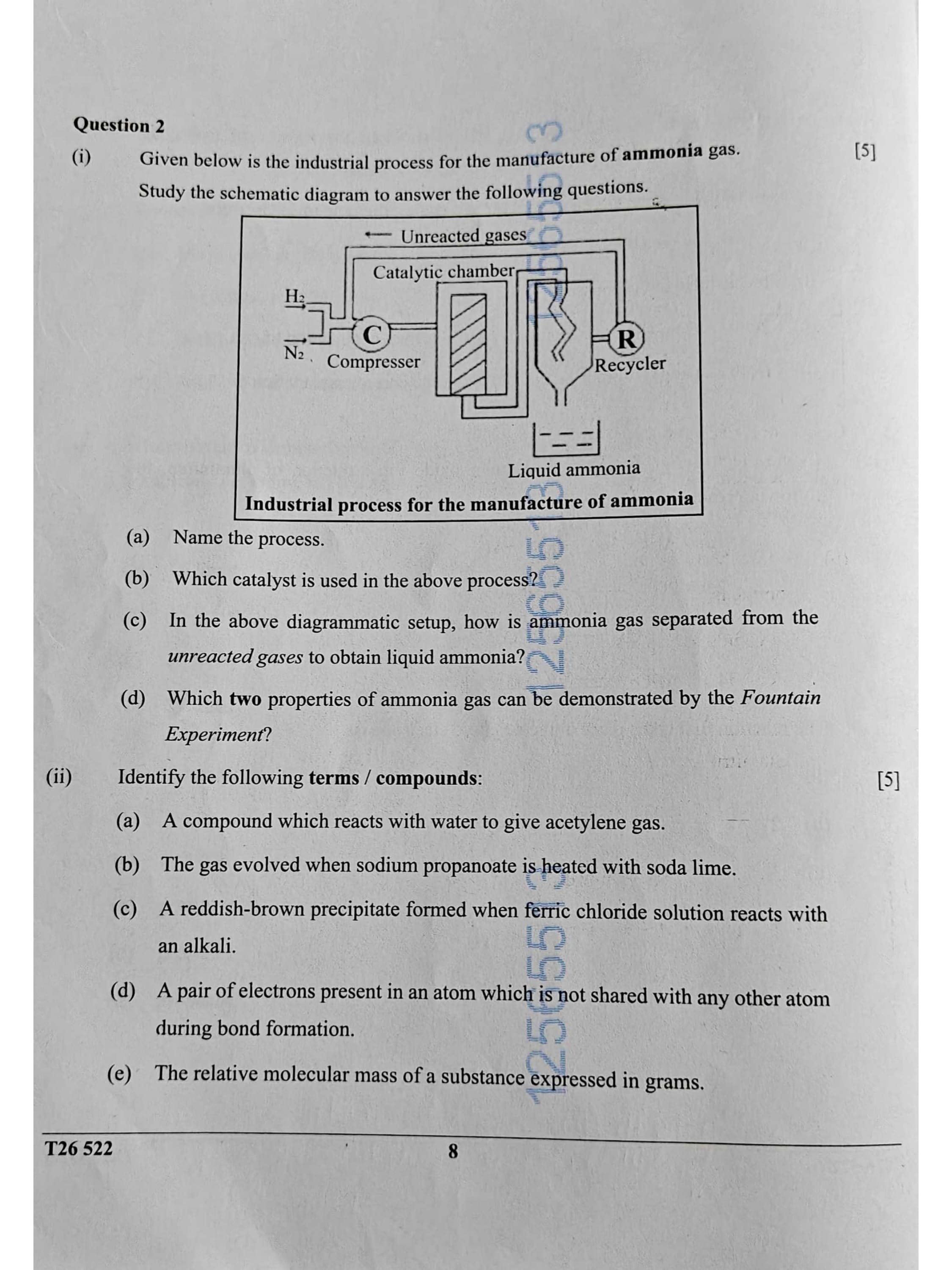
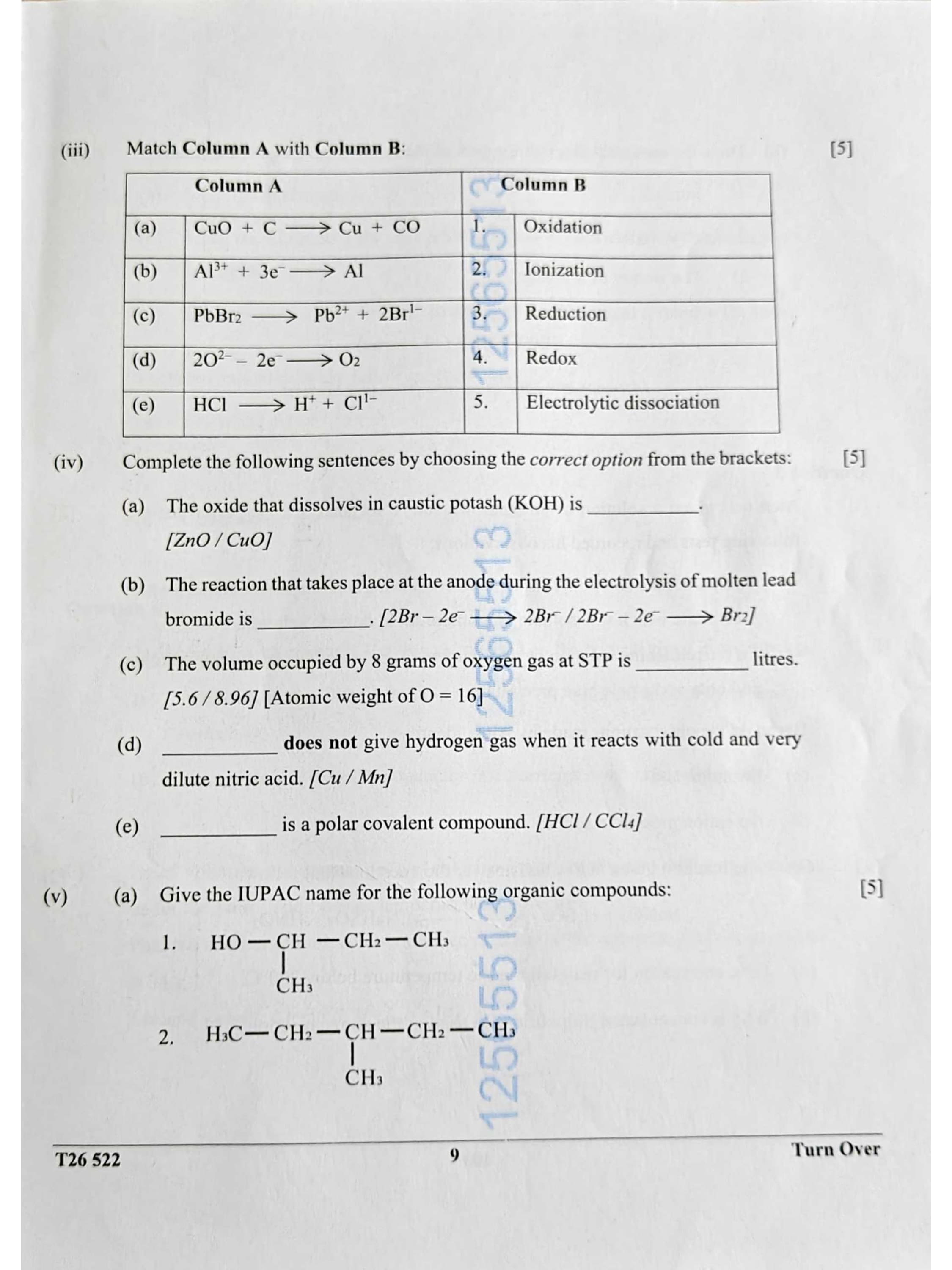
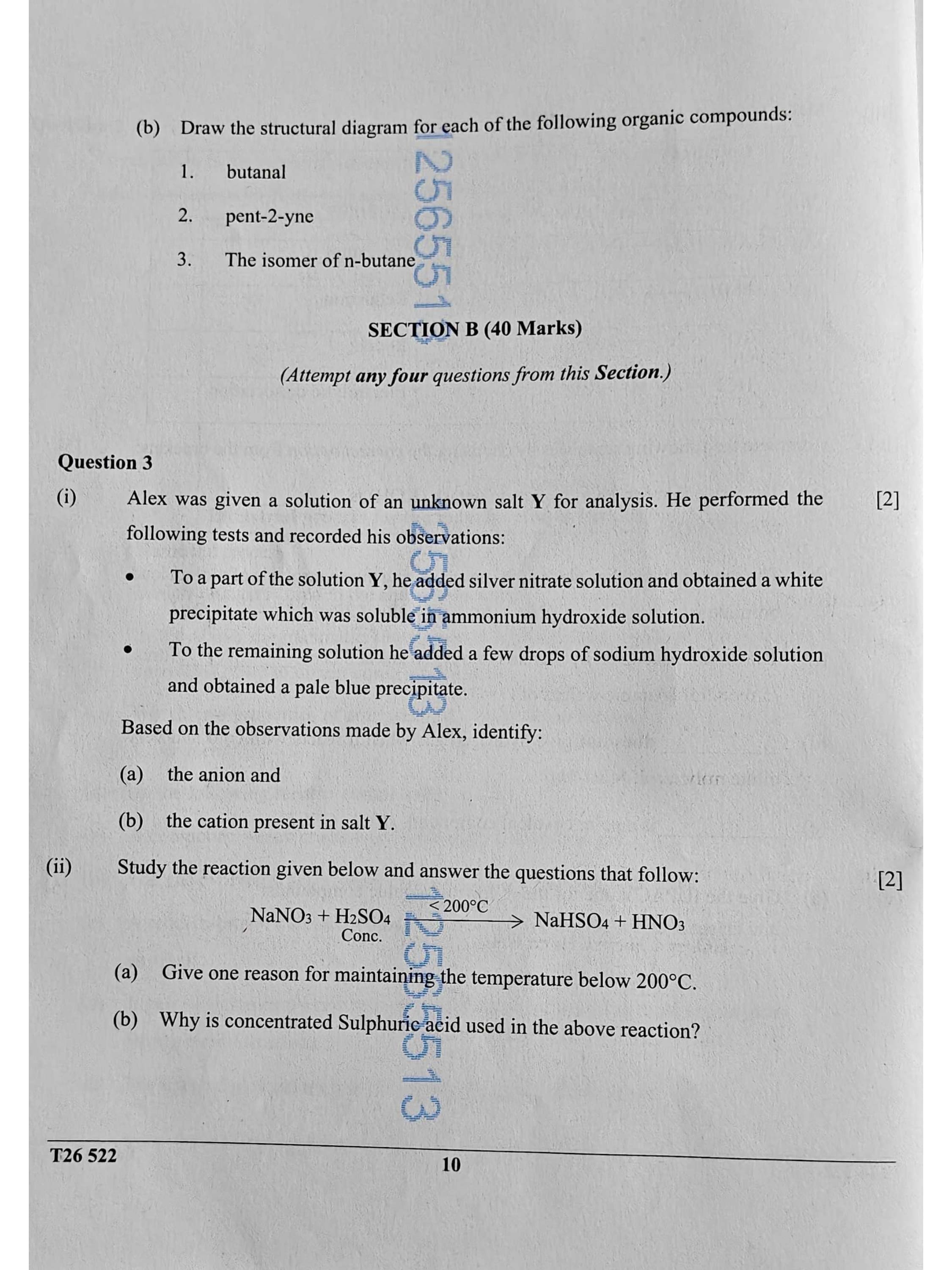
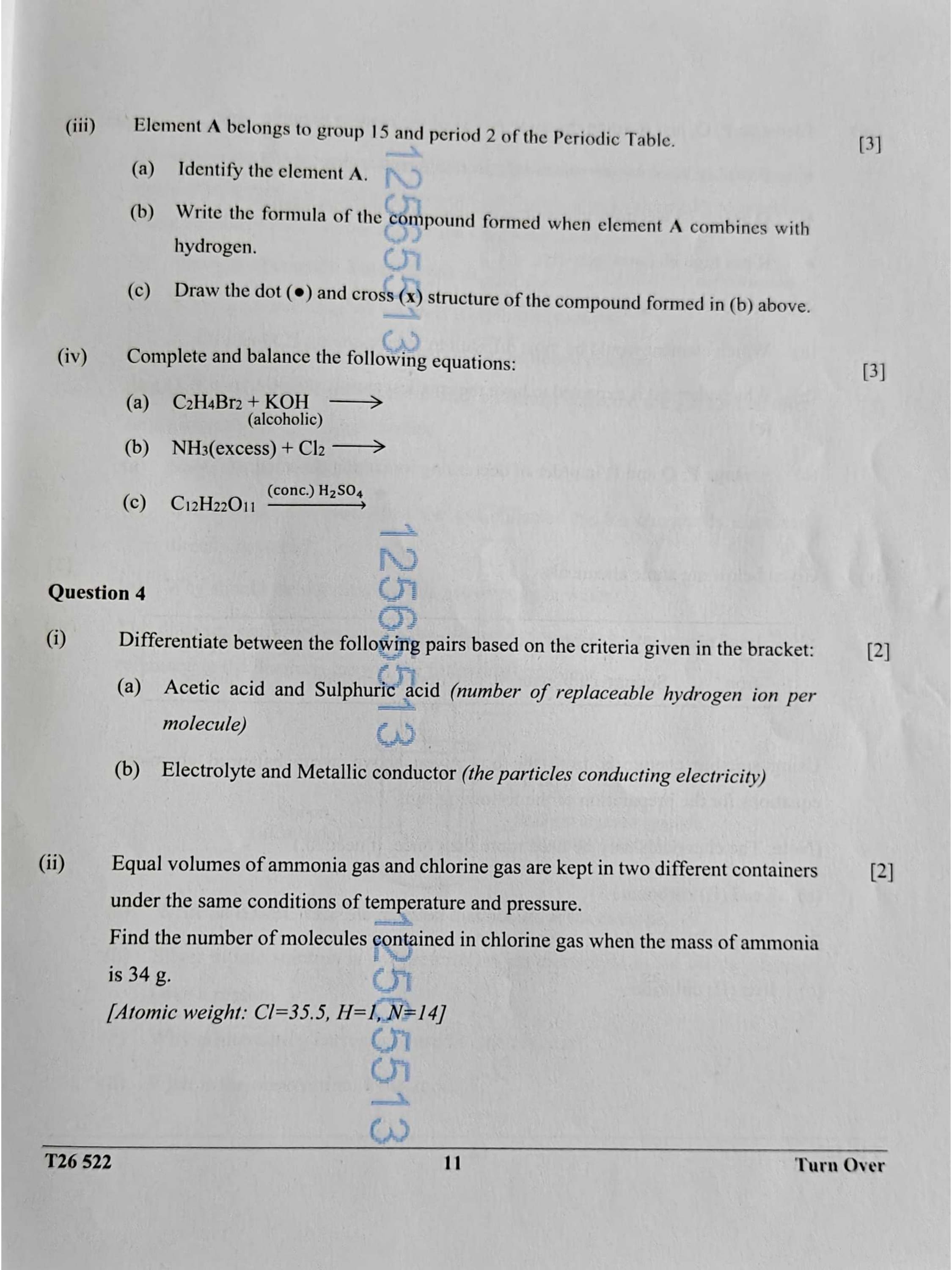
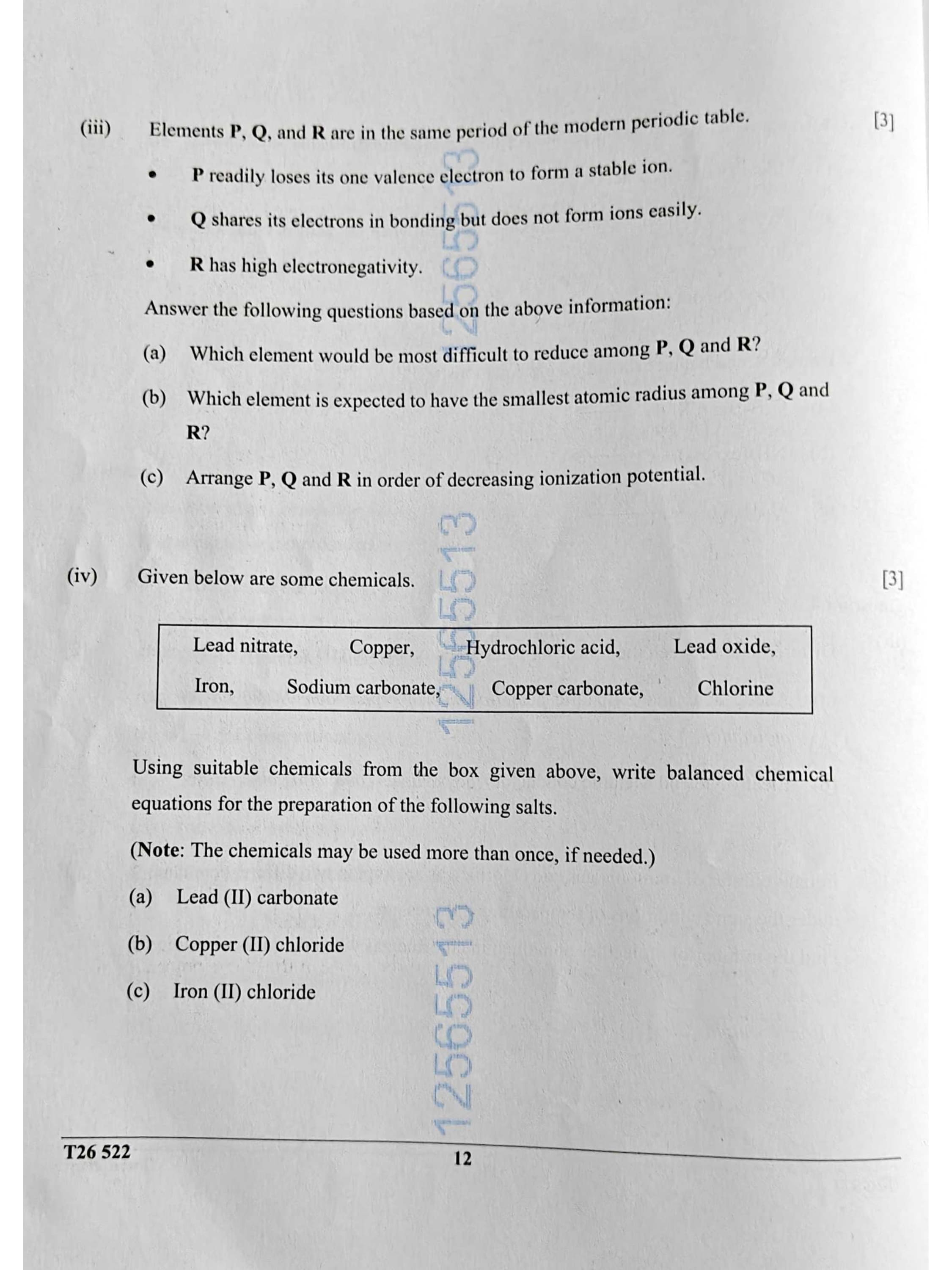
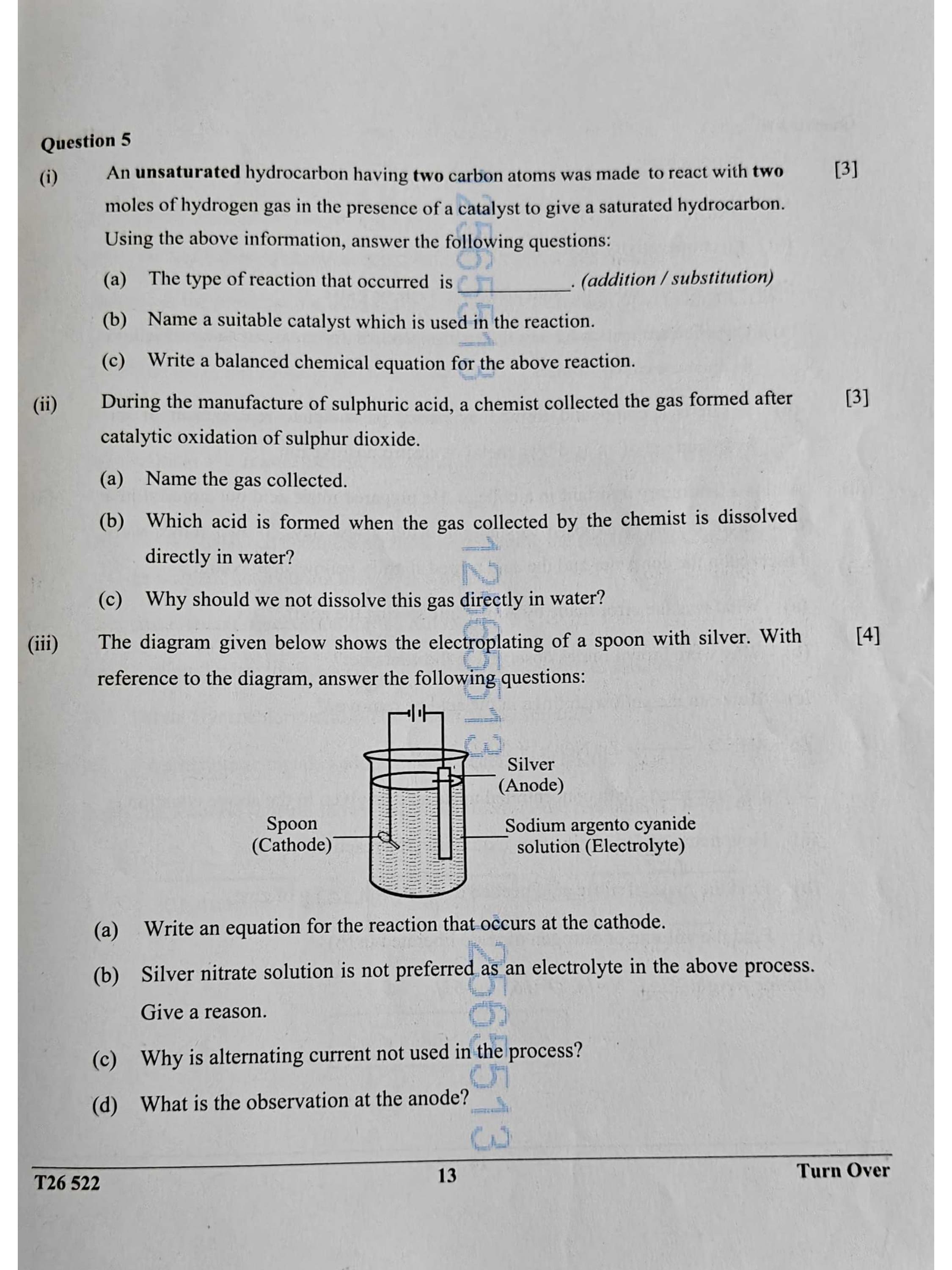
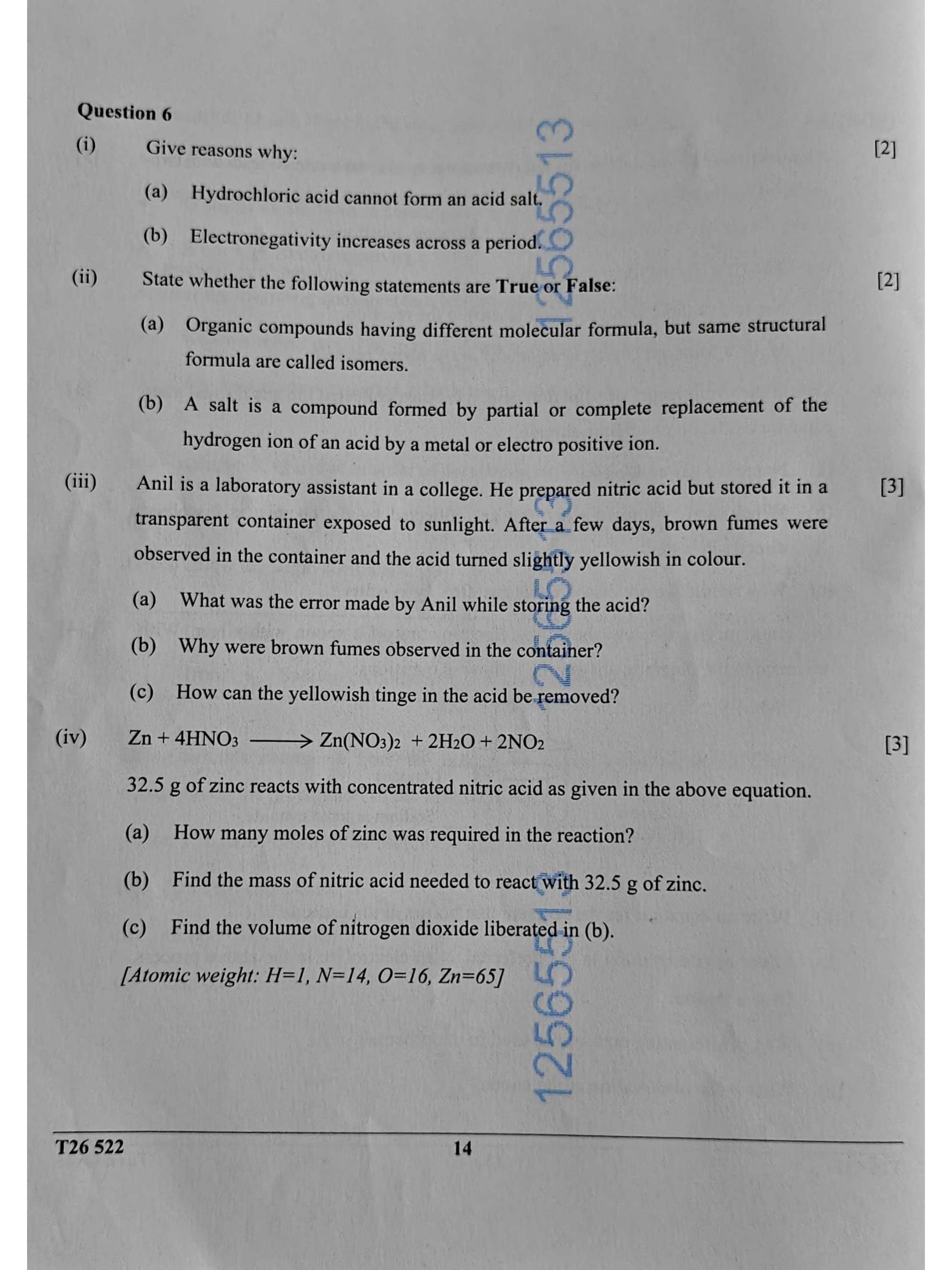
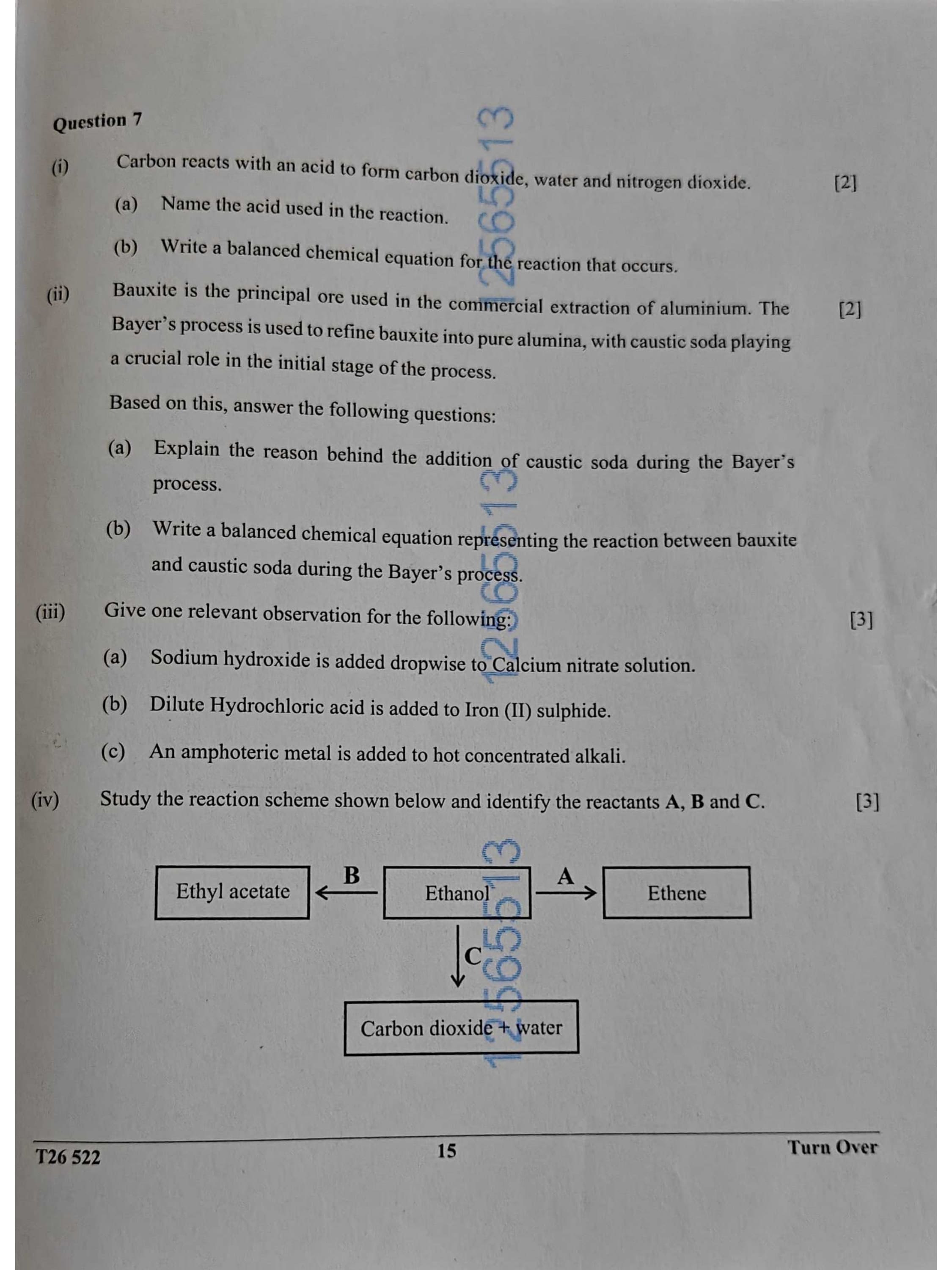
This is the official ICSE Class 10 Chemistry (Science Paper 2) question paper from the 2026 examination, paper code T26 522. It carries 80 marks, with two hours of writing time plus 15 minutes of reading time. Section A (40 marks) is compulsory: Question 1 has 15 one-mark multiple-choice questions, including two assertion–reason items and Rita's table of metals reacting with dilute hydrochloric acid, and Question 2 opens with a schematic diagram of the industrial manufacture of ammonia. In Section B candidates attempt any four of Questions 3–8, worth 10 marks each, including Alex's salt analysis, a diagram of electroplating a spoon with silver, Anil's badly stored nitric acid and a mole problem on zinc and nitric acid. The paper has questions only, without answers.
- Exam
- ICSE Class 10
- Subject
- Chemistry
- Year
- 2026
- Paper code
- T26 522
- Maximum marks
- 80
- Time allowed
- 2 hours + 15 min reading
- Questions
- 8
- Pages
- 16
- Answers included
- No, questions only
Paper pattern
Section A – Question 1
15 marks15 multiple-choice questions, one mark each, including two assertion–reason items
Section A – Question 2
25 marksFive five-mark parts: an ammonia-manufacture diagram, terms, matching, sentence completion, and organic names and structures
Section B
40 marksQuestions 3–8, attempt any four; 10 marks each
Topics covered
- Periodic table and periodic properties
- Chemical bonding
- Acids, bases and salts
- Analytical chemistry
- Mole concept and stoichiometry
- Electrolysis and electroplating
- Metallurgy of aluminium
- Ammonia and the Haber process
- Nitric acid
- Sulphuric acid
- Organic chemistry
Questions from this paper
- In the industrial manufacture of ammonia, how is ammonia gas separated from the unreacted gases to obtain liquid ammonia?
- In the laboratory preparation of nitric acid from sodium nitrate and concentrated sulphuric acid, give one reason for keeping the temperature below 200 °C.
- Equal volumes of ammonia and chlorine are kept in two containers under the same conditions of temperature and pressure. Find the number of molecules in the chlorine when the mass of ammonia is 34 g.
- In the electroplating of a spoon with silver, why is silver nitrate solution not preferred as the electrolyte, and why is alternating current not used?
- 32.5 g of zinc reacts with concentrated nitric acid as Zn + 4HNO₃ → Zn(NO₃)₂ + 2H₂O + 2NO₂. Find the mass of nitric acid needed and the volume of nitrogen dioxide liberated. [H = 1, N = 14, O = 16, Zn = 65]
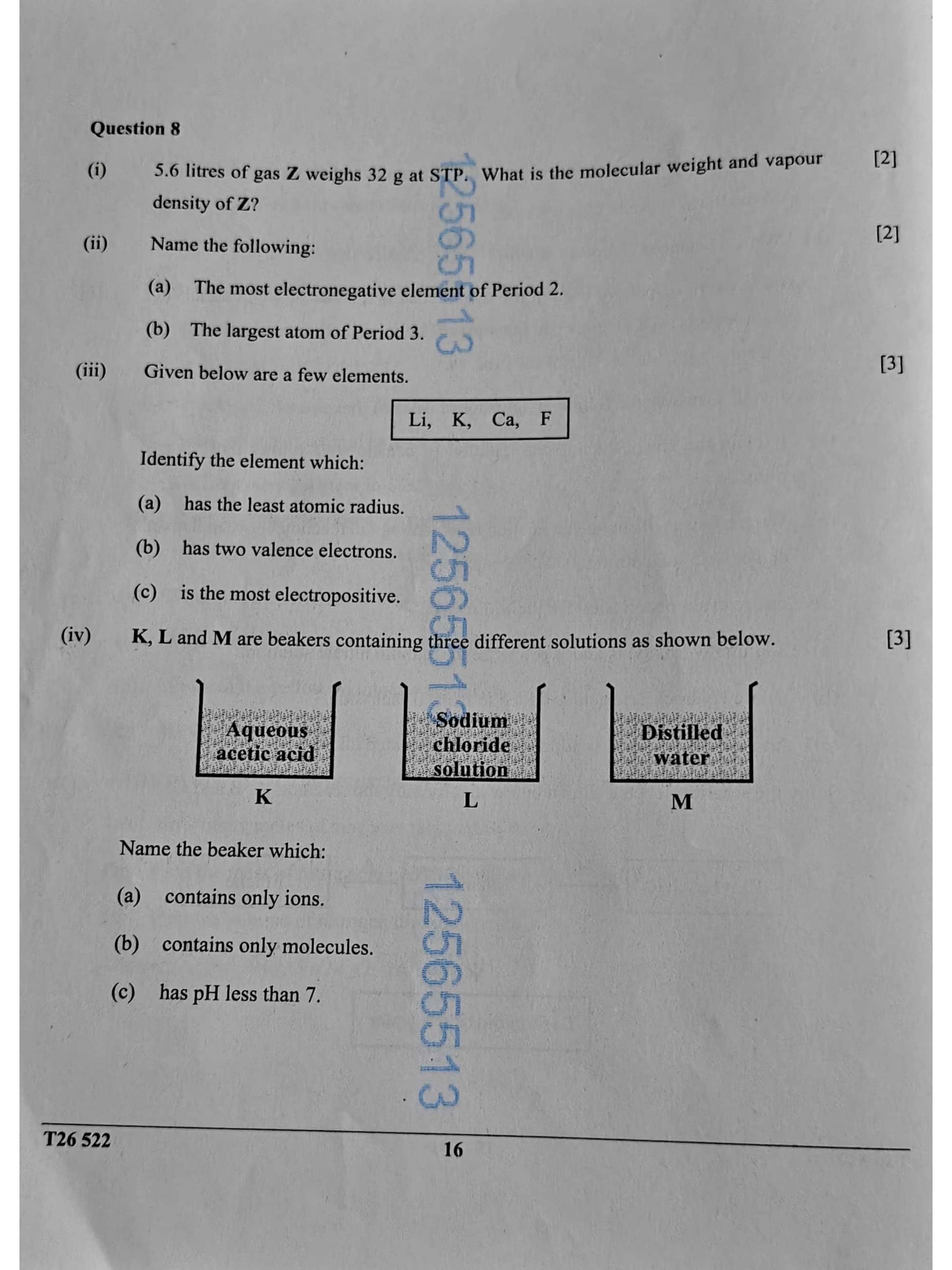
- 5.6 litres of gas Z weighs 32 g at STP. What is the molecular weight and vapour density of Z?
What's next
Class 10 done next year?
A number of scholarships for Class 11–12 depend on your Class 10 marks.
Check eligibility