ICSE Class 10 Physics (Science Paper 1) Question Paper 2026 with Solutions

ICSE
Physics2026Download the official ICSE Class 10 Physics Question Paper 2026 with step-by-step solutions prepared by subject matter experts. Practicing the 2026 ICSE Science Paper 1 helps students master force, work, energy, machines, light refraction, lenses, spectrum, sound, current electricity, electromagnetism, calorimetry, and radioactivity according to official CISCE marking schemes. Access the free PDF download above with complete answer keys.
About this paper
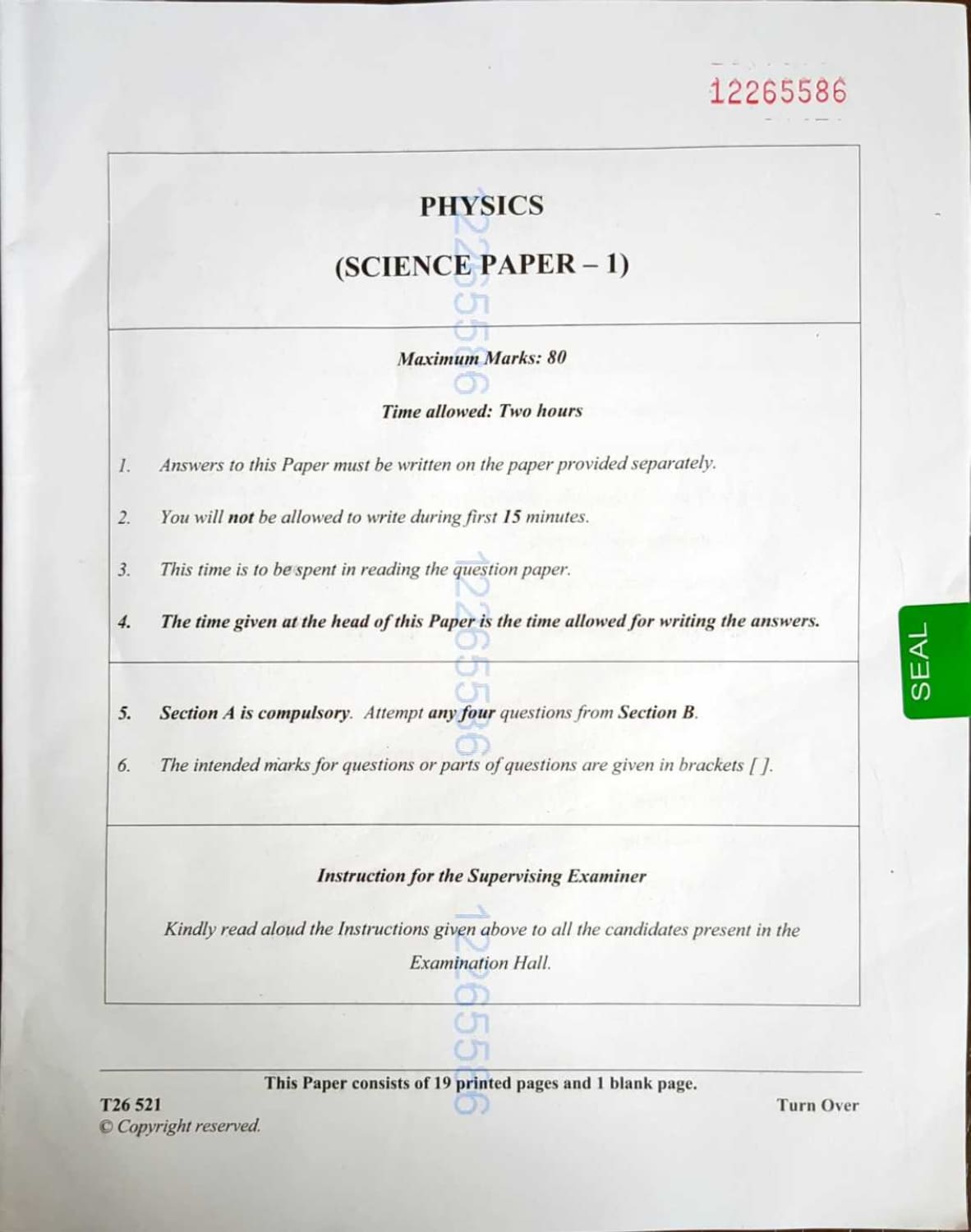
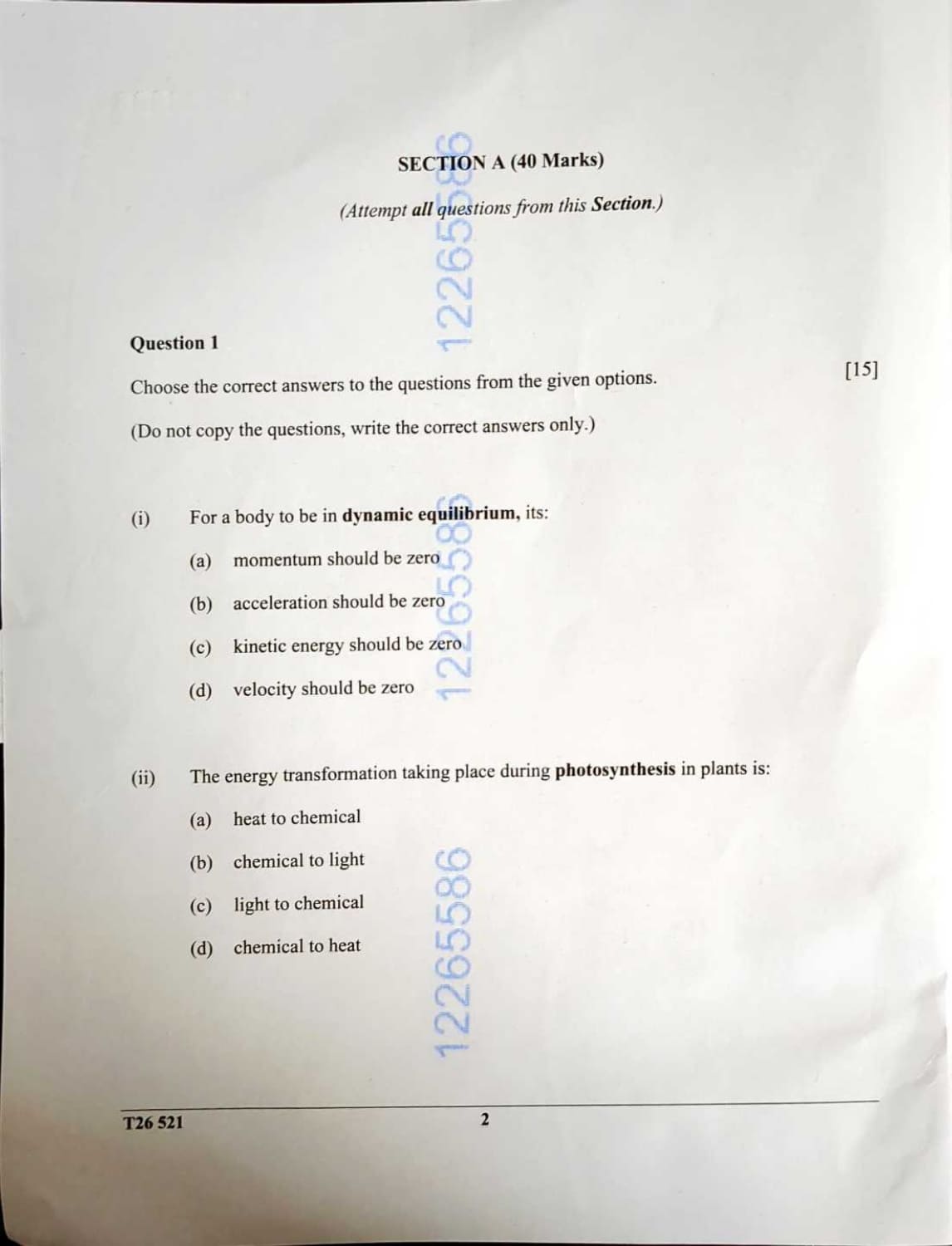
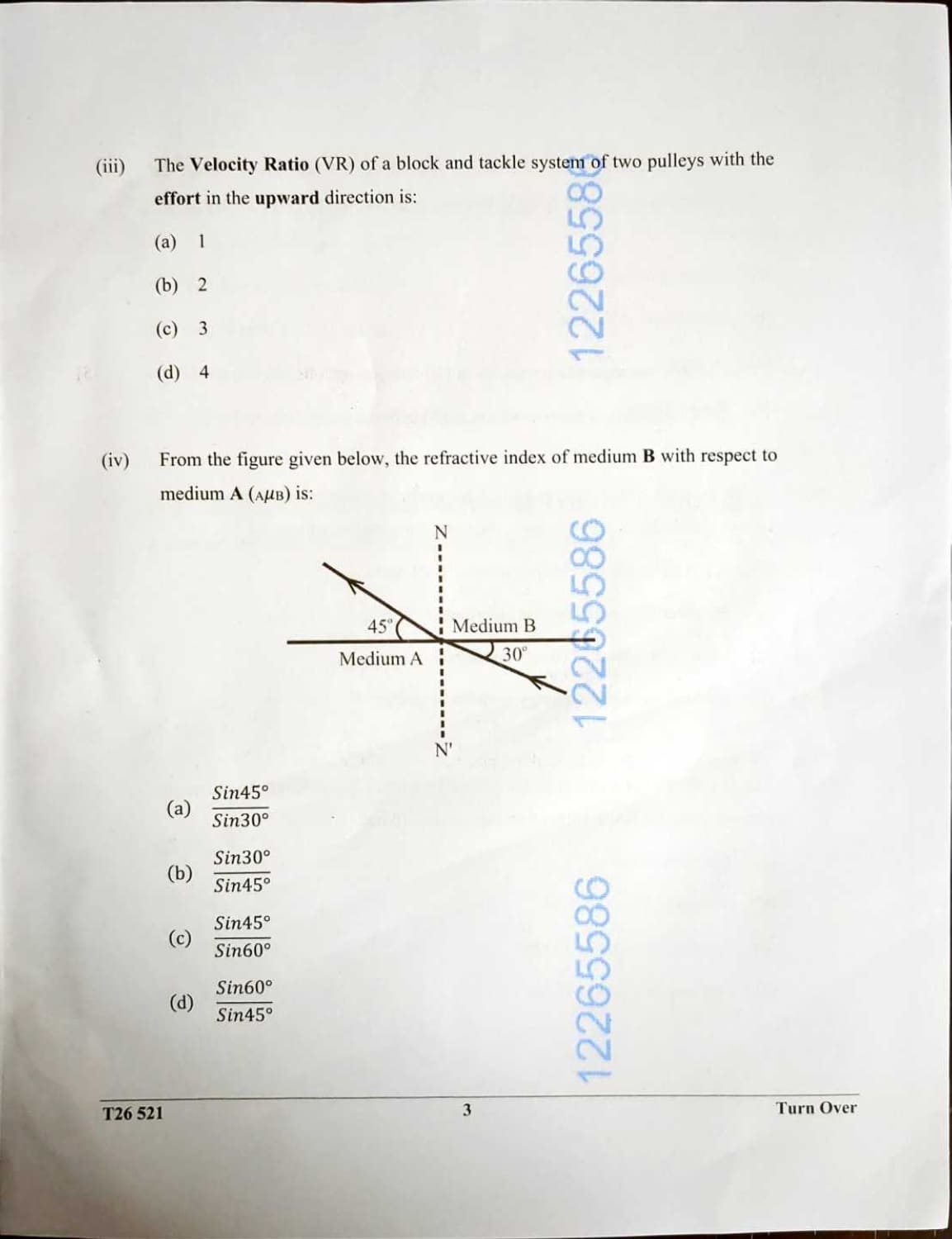
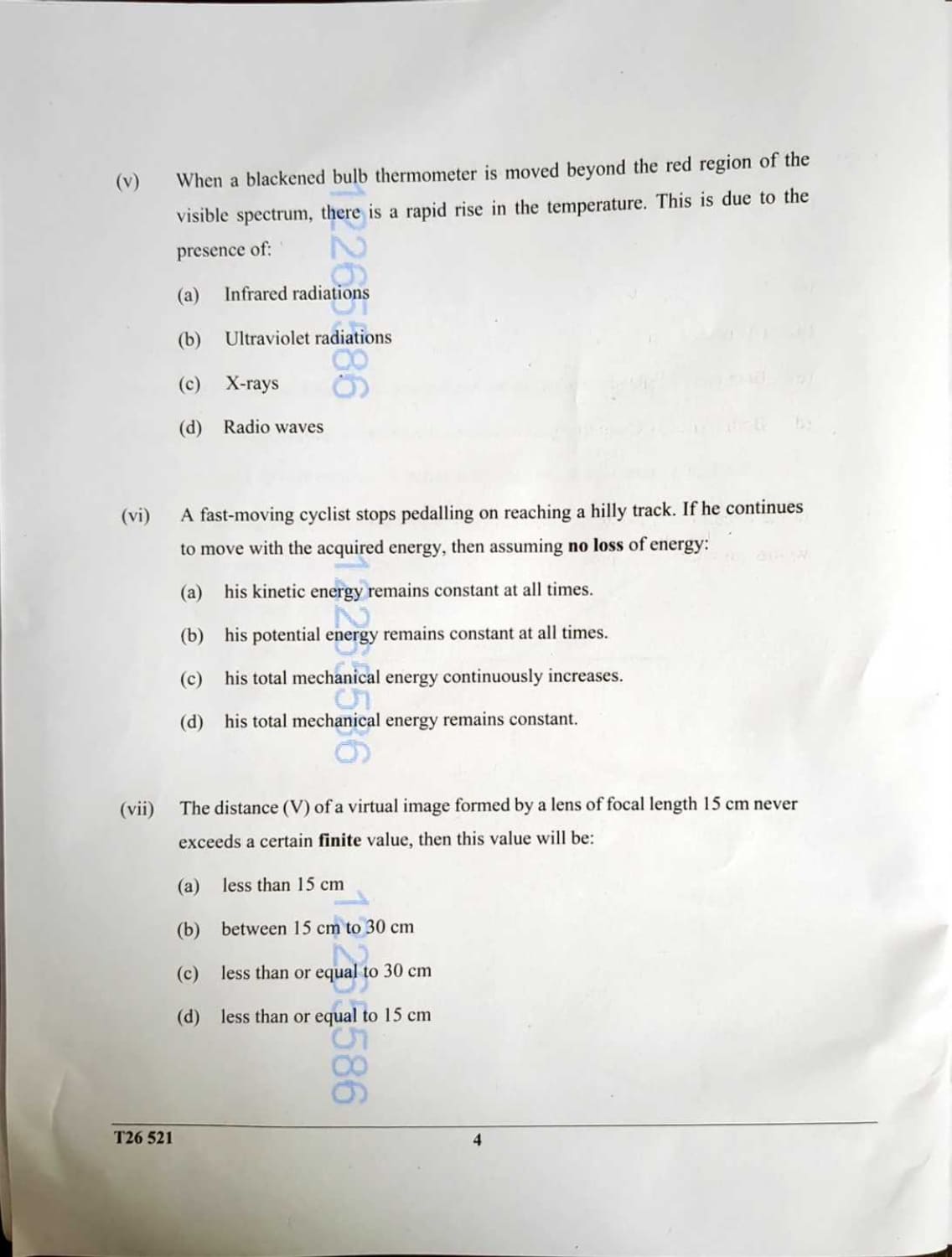
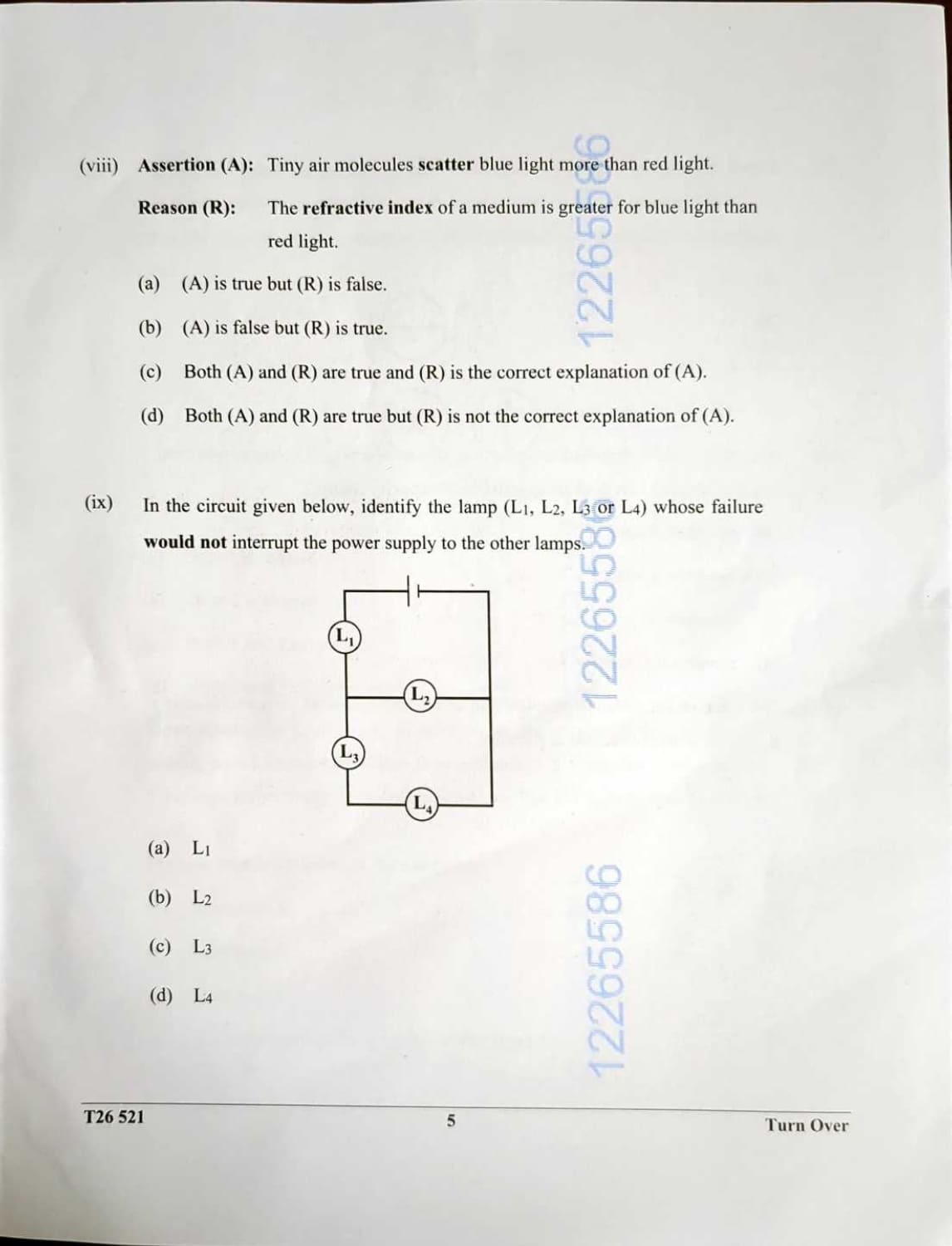
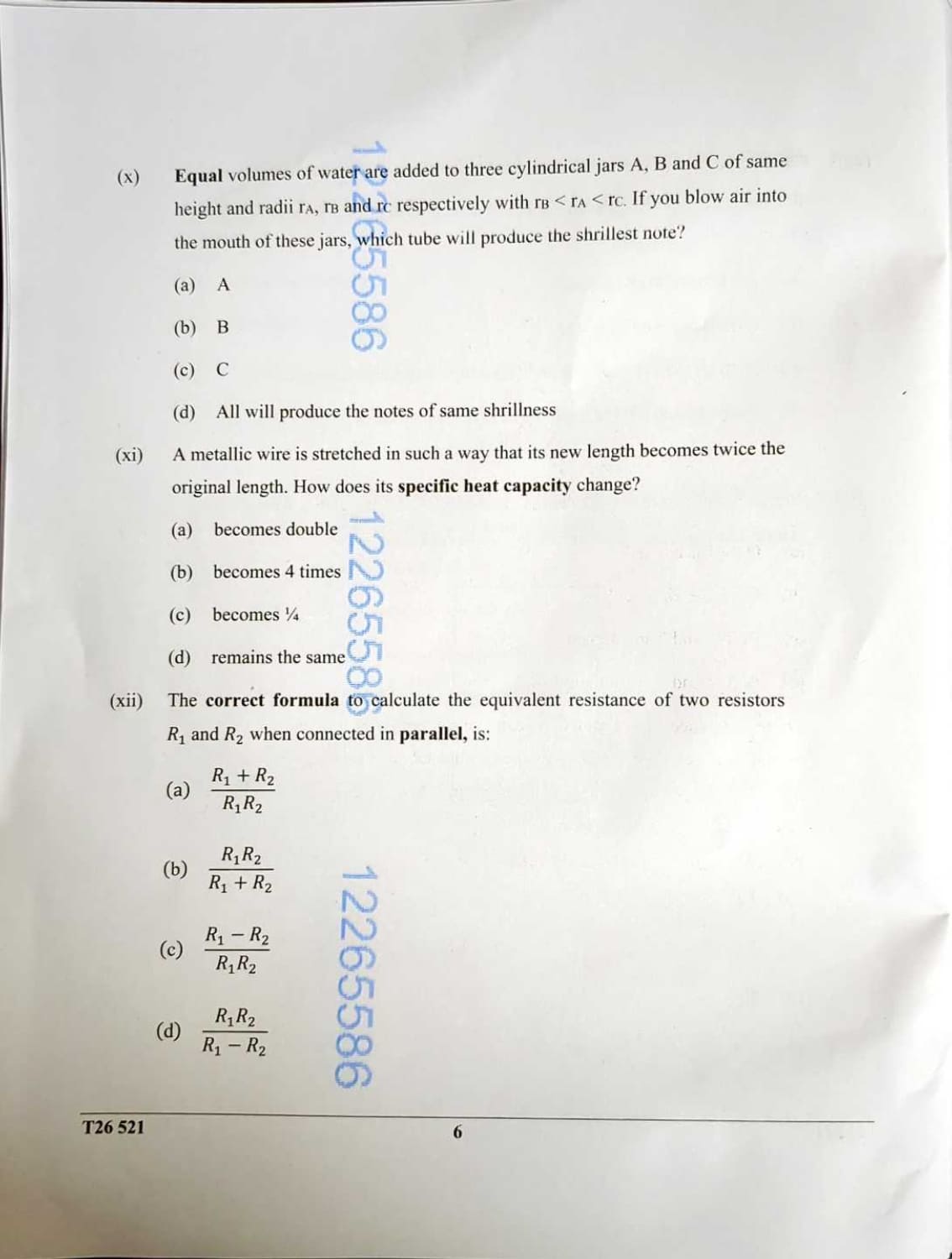
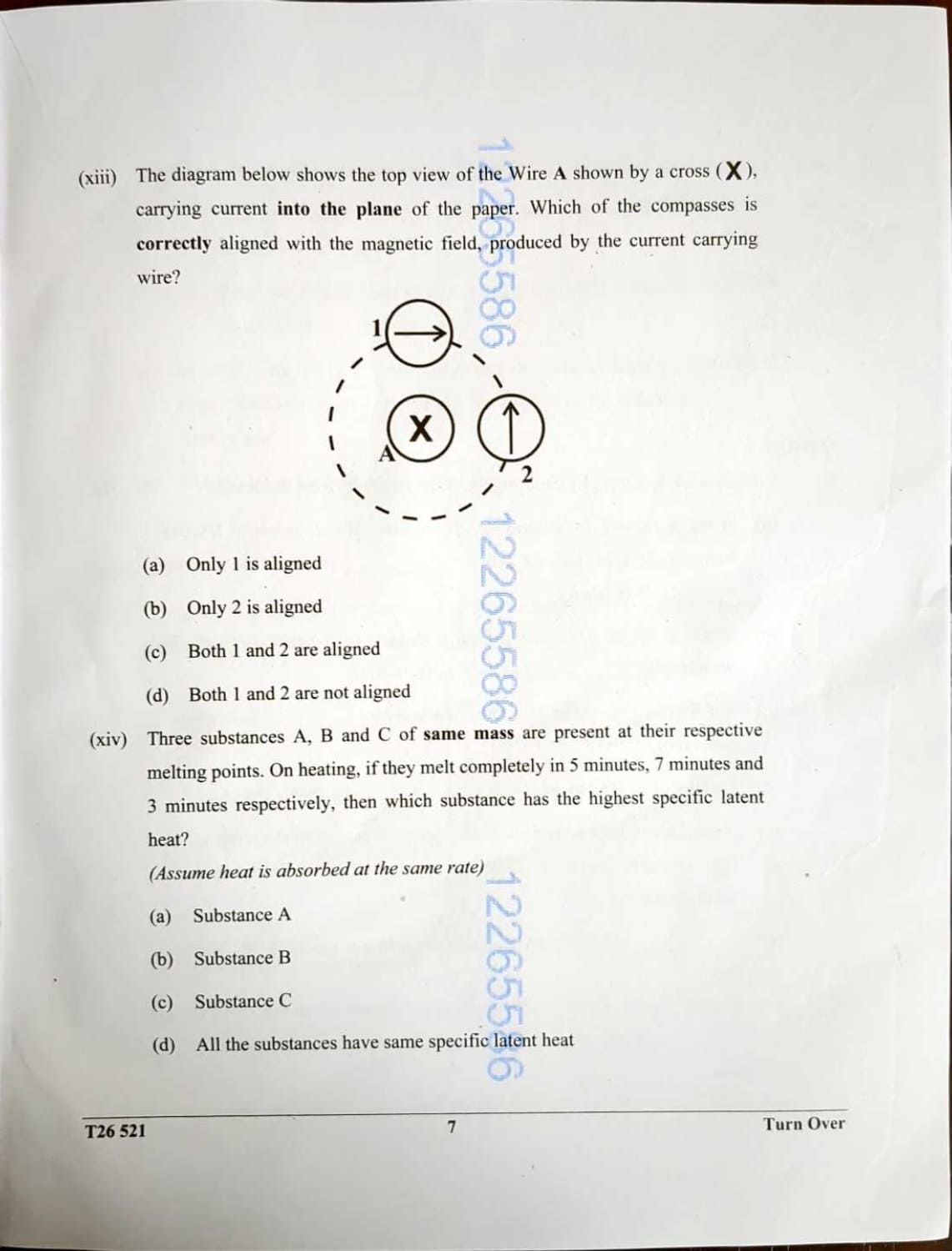
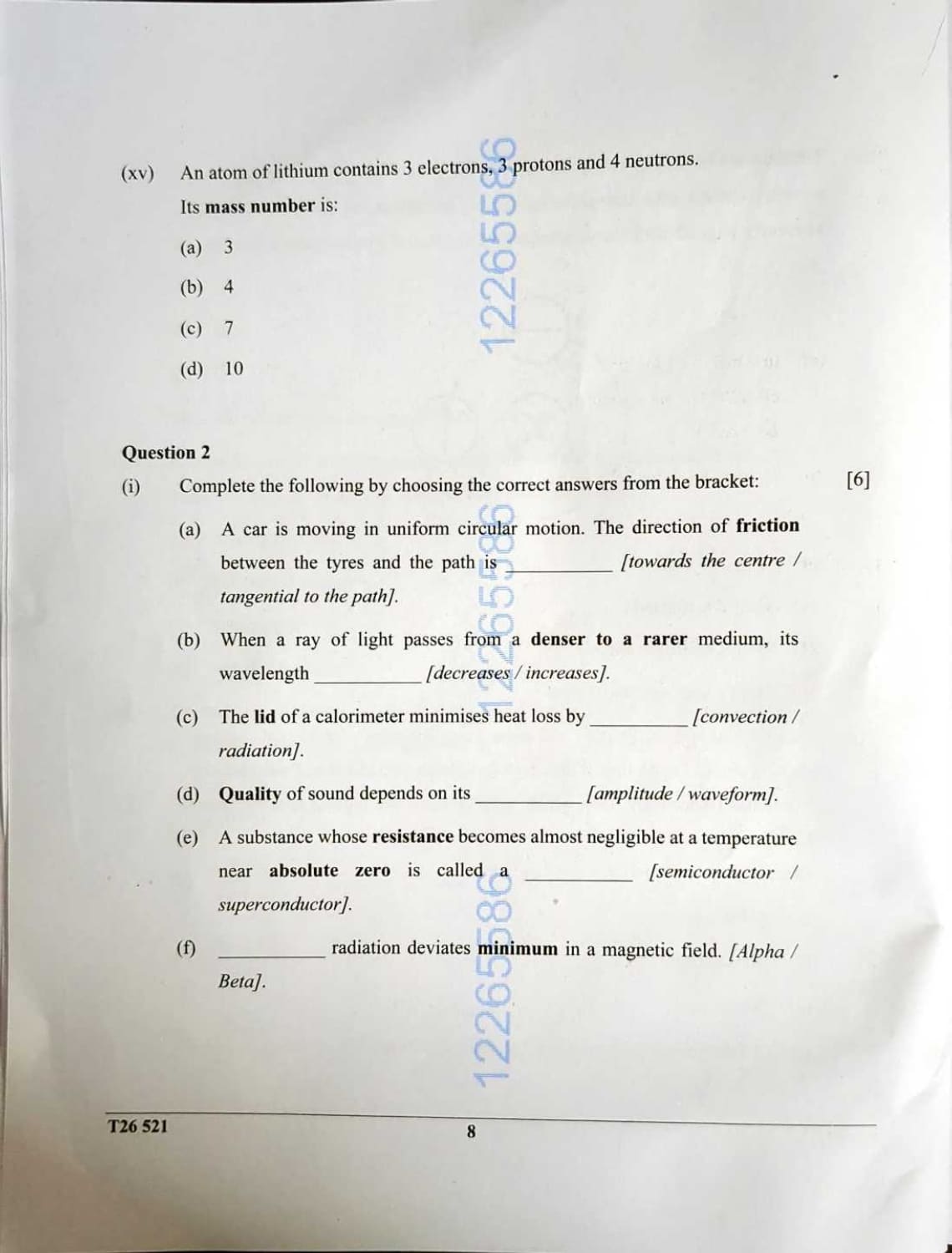
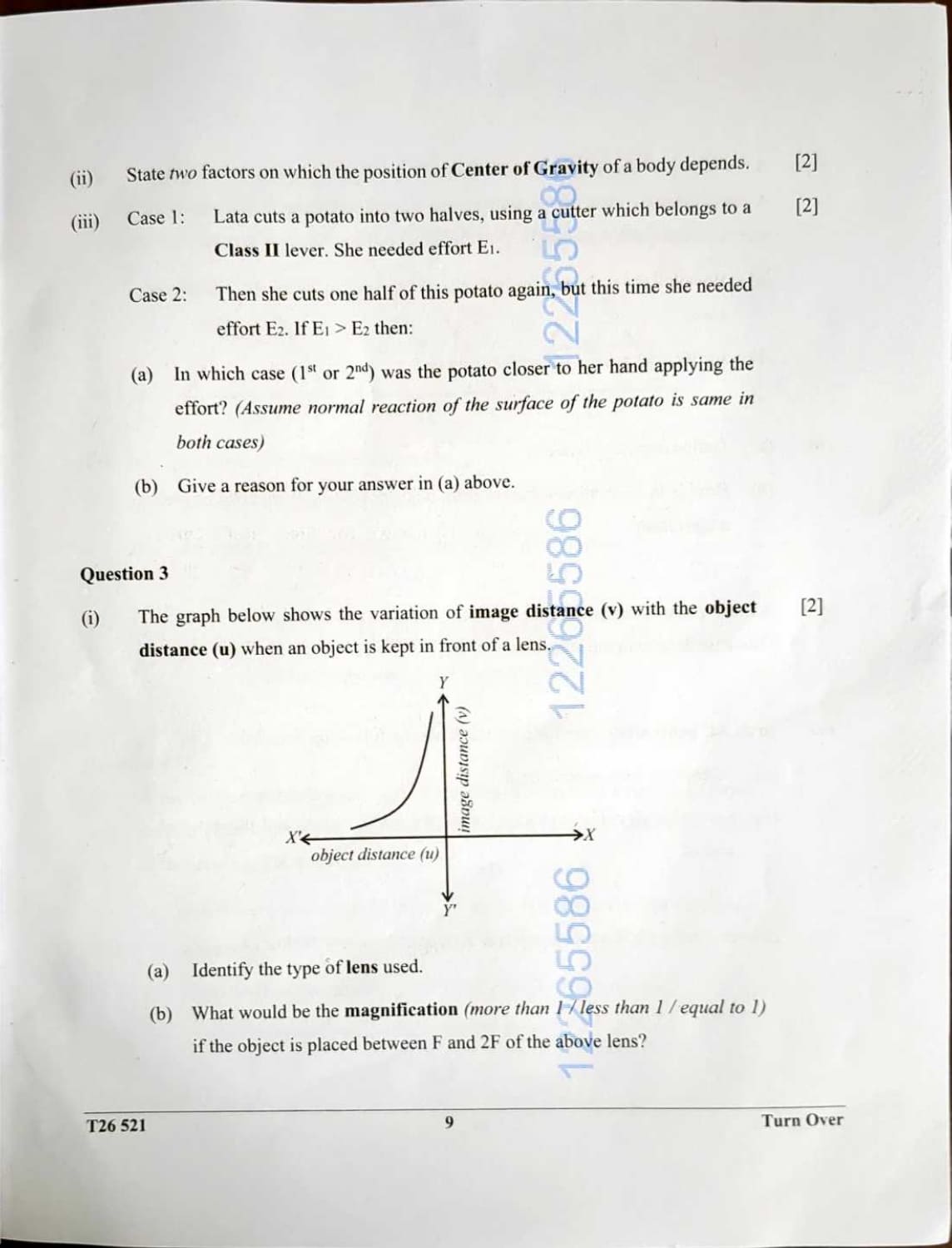
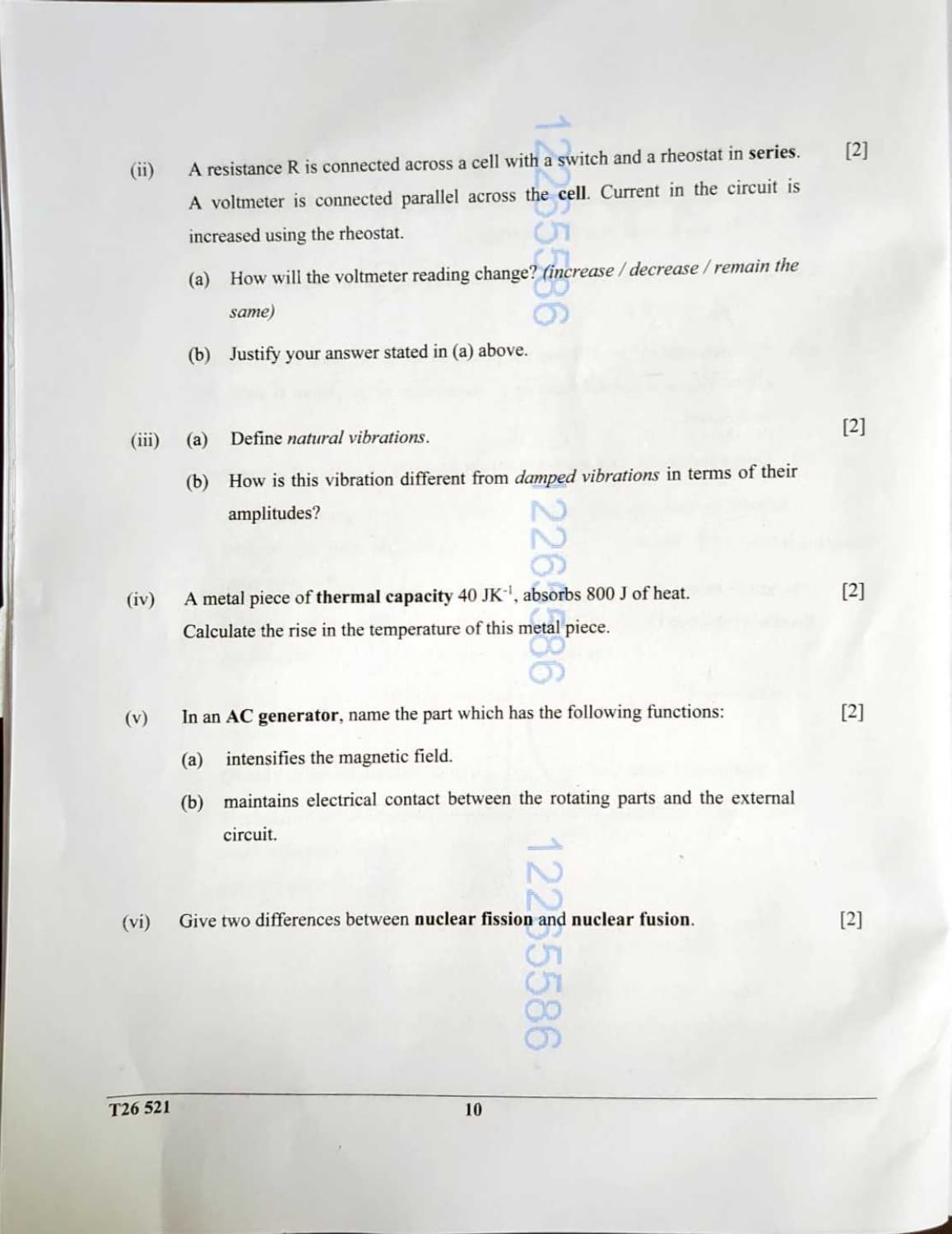
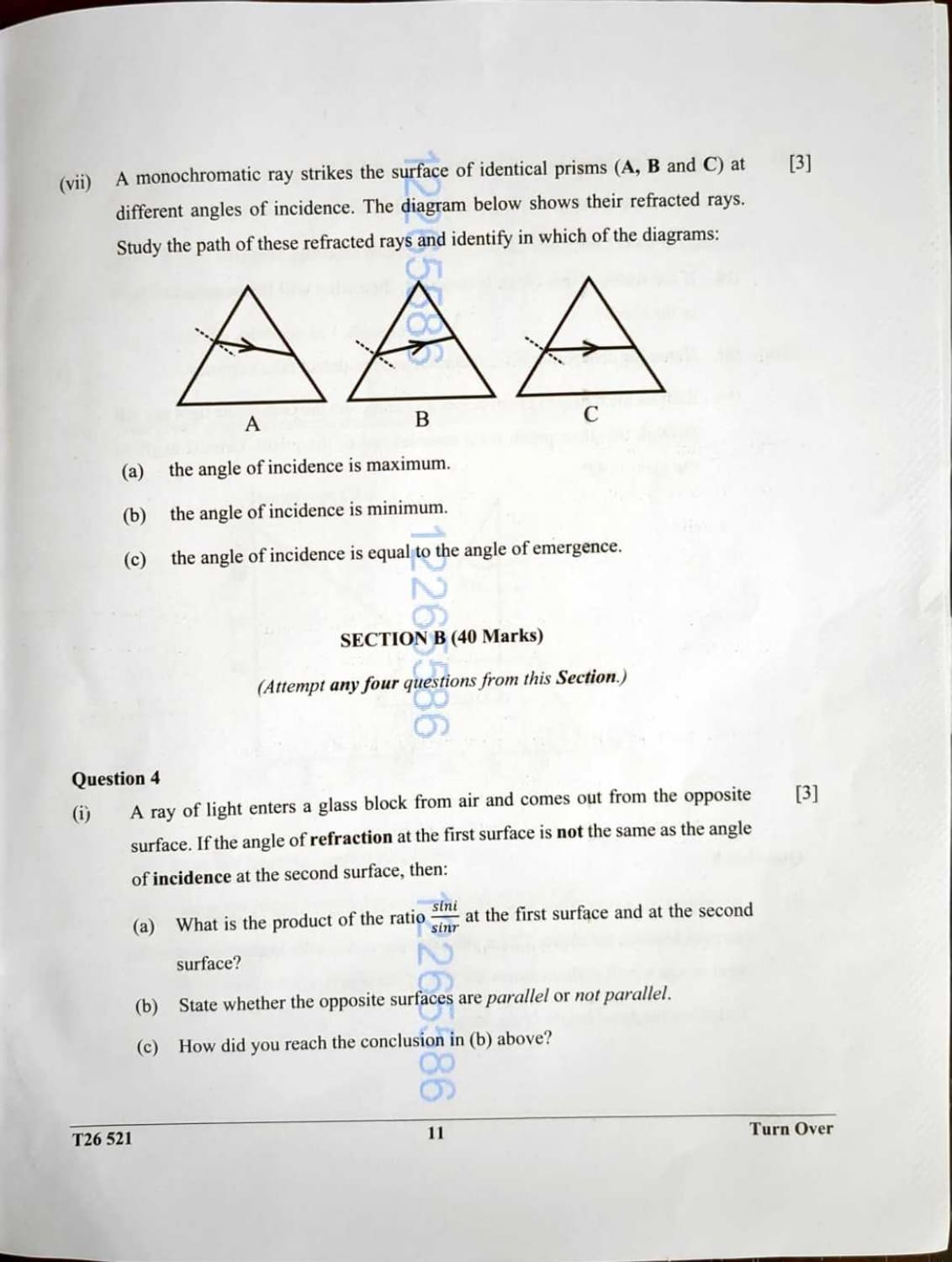
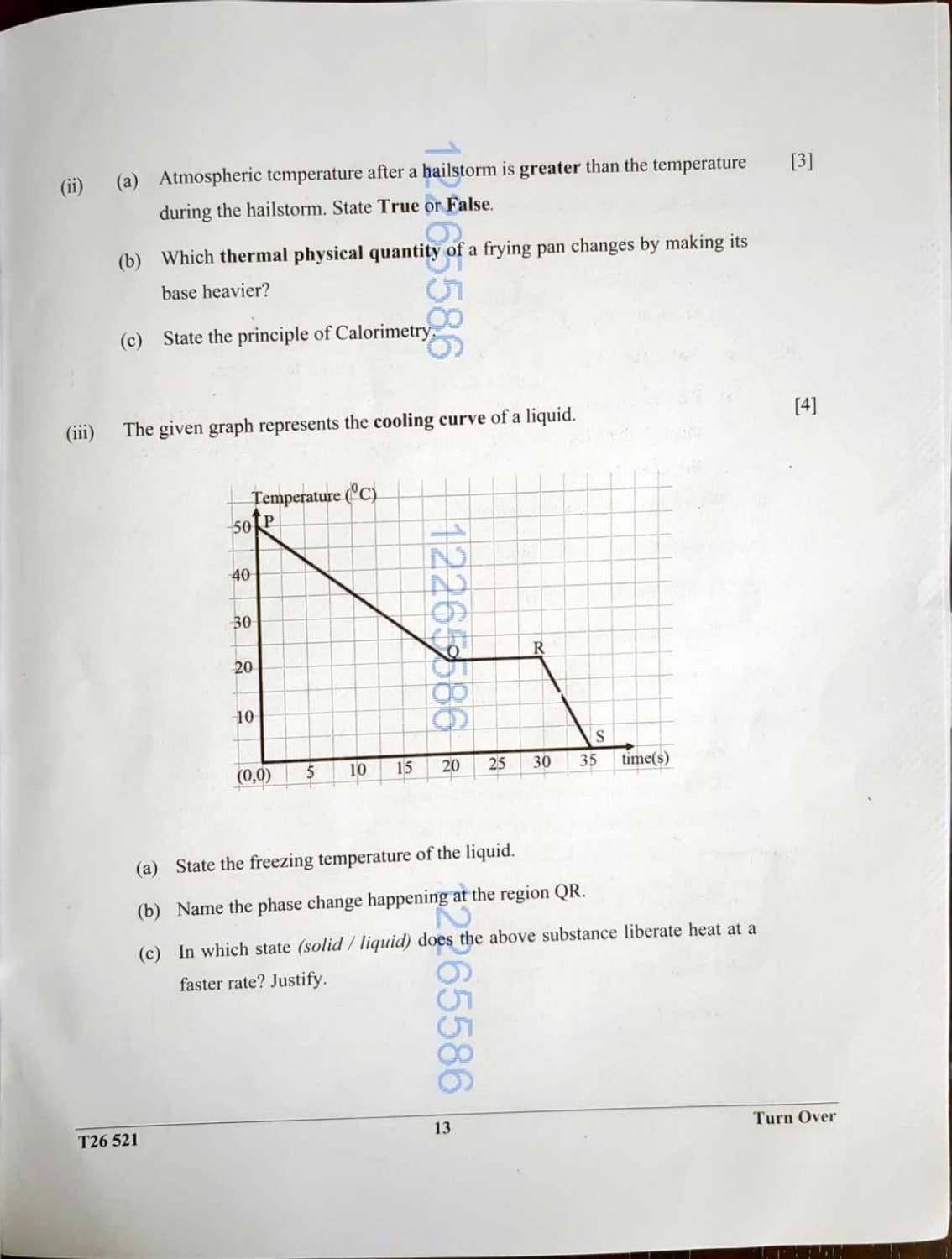
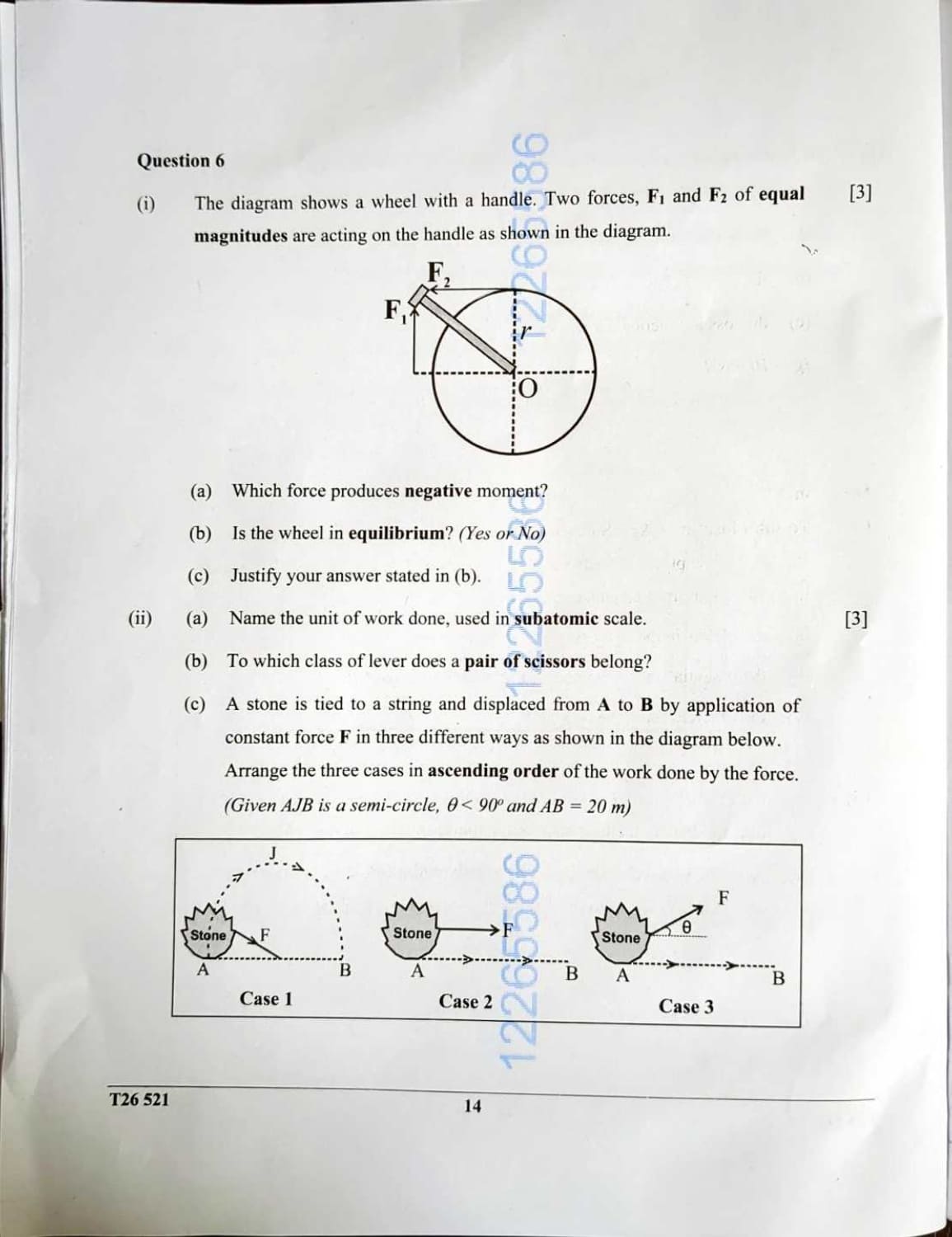
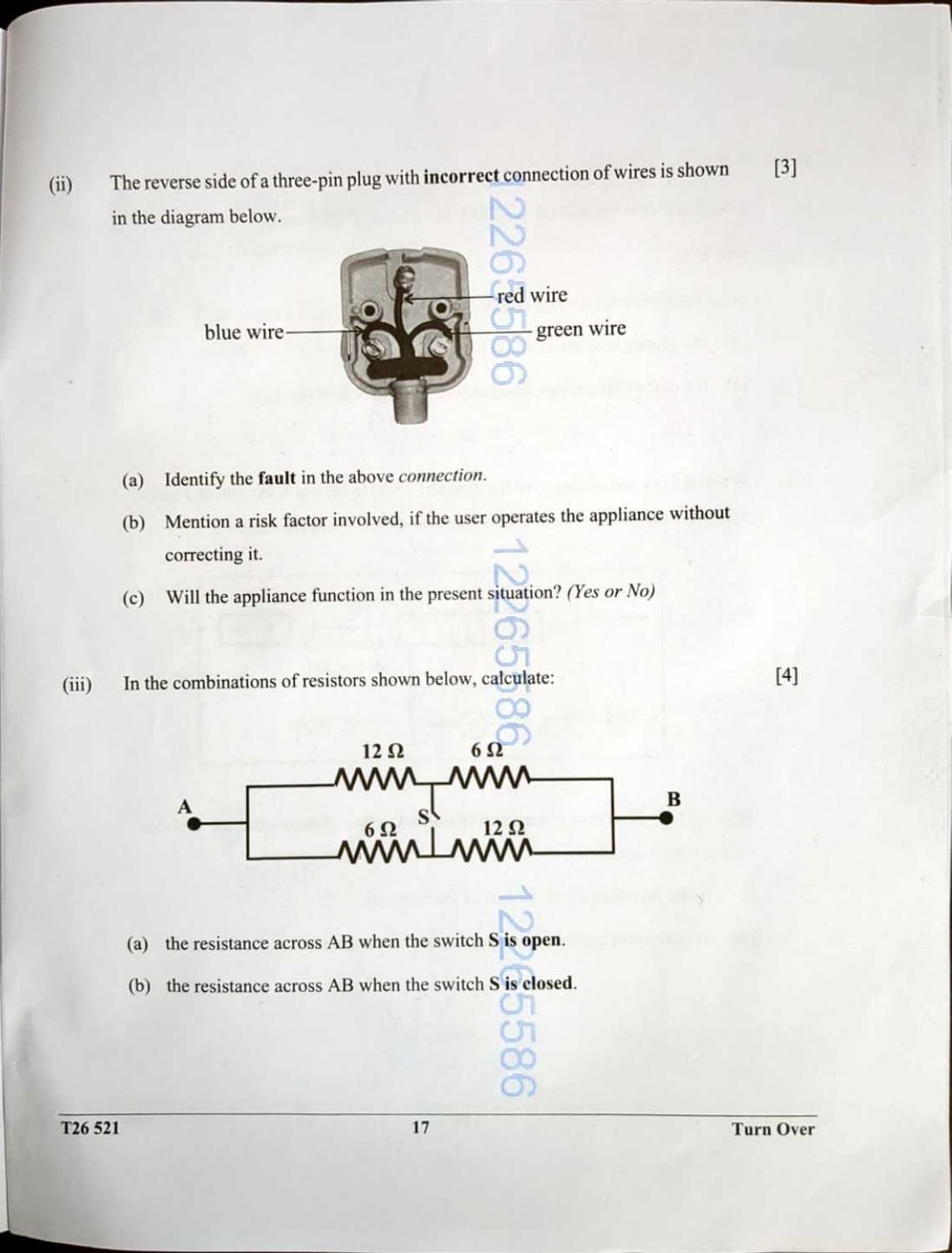
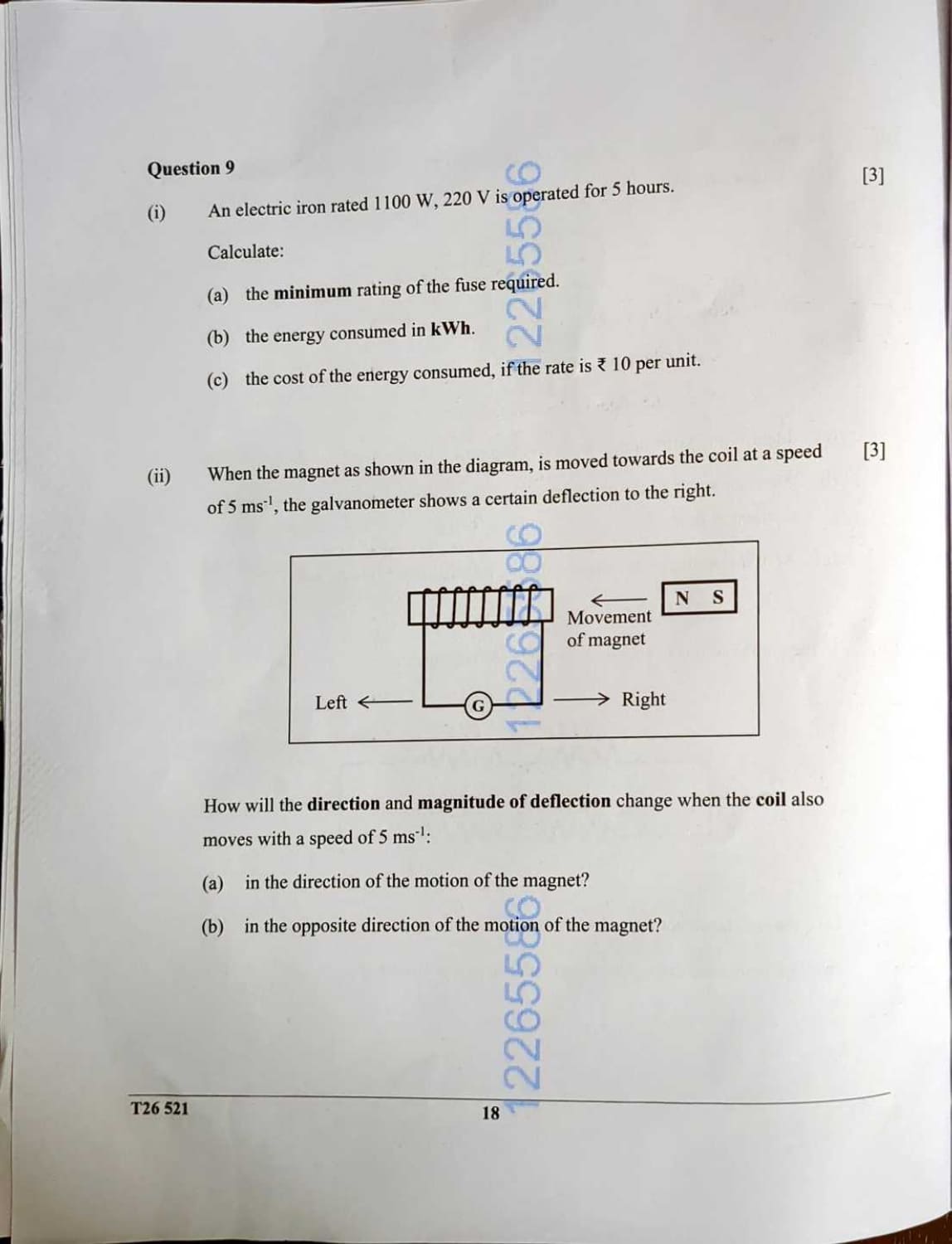
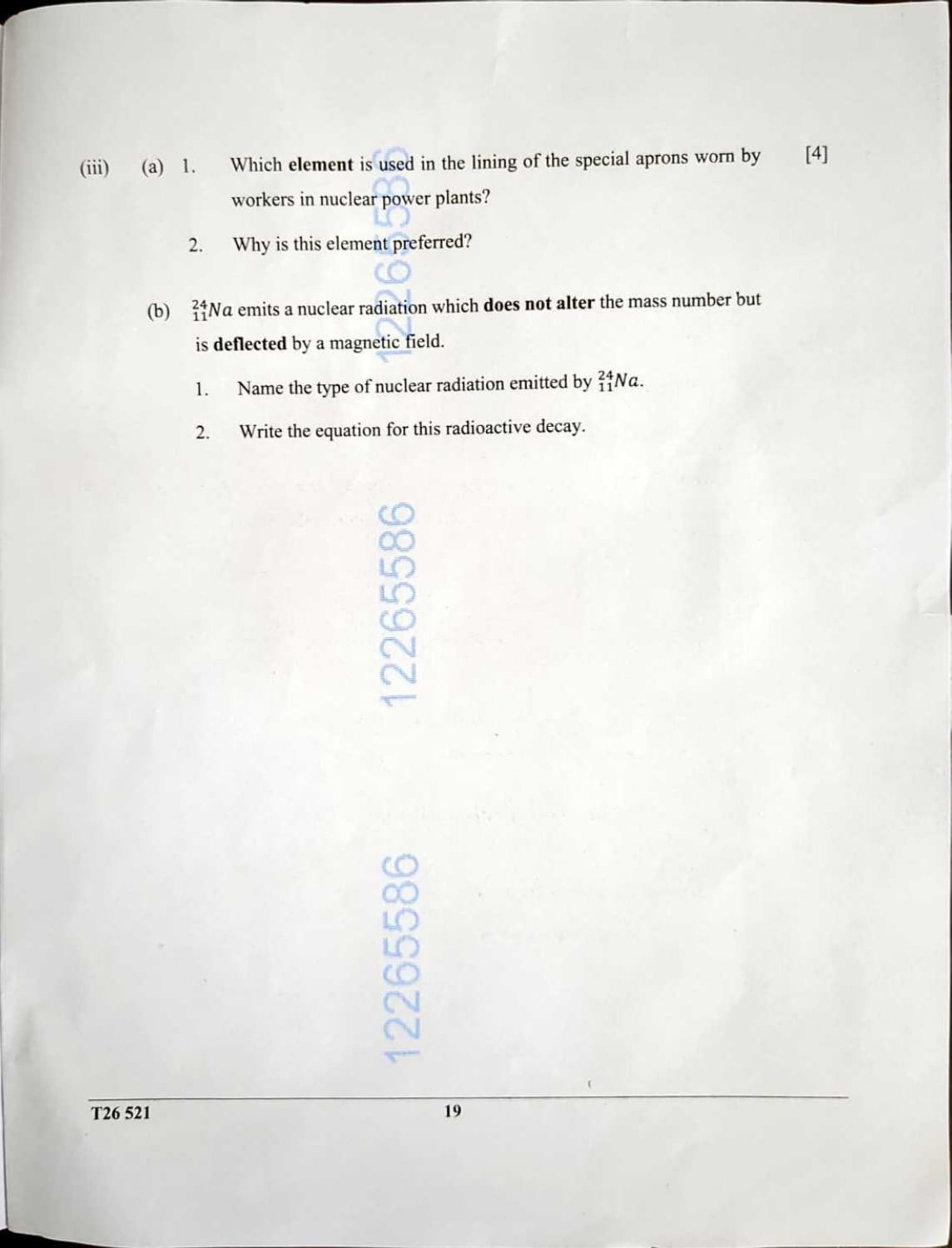
This is the ICSE Class 10 Physics question paper, Science Paper 1, from the 2026 examination, code T26 521. It is marked out of 80, with two hours to write after 15 minutes of reading, and the supervising examiner is asked to read the instructions aloud. Section A (40 marks) is compulsory. Question 1 has 15 multiple-choice items, including an assertion–reason item on why the sky scatters blue light. Question 2 has six completions from brackets and a class I lever. Question 3 covers natural vibrations, heat capacity and fission and fusion. Section B, Questions 4 to 9, asks for any four, including glass of refractive index 1.8, a ball dropped from 45 m and an iron rated 1100 W. This copy has the questions only.
- Exam
- ICSE Class 10
- Subject
- Physics
- Year
- 2026
- Paper code
- T26 521
- Maximum marks
- 80
- Time allowed
- 2 hours + 15 min reading
- Questions
- 9
- Pages
- 16
- Answers included
- No, questions only
Paper pattern
Section A – Question 1
15 marks15 multiple-choice questions, one mark each, including one assertion–reason item
Section A – Questions 2 and 3
25 marksSix completions from brackets, then short answers on centre of gravity, levers, lenses, sound, heat, the a.c. generator and the nucleus
Section B
40 marksQuestions 4–9, attempt any four; each is built from three-, three- and four-mark parts
Topics covered
- Equilibrium, work and energy
- Centre of gravity and levers
- Pulleys and machines
- Refraction, prisms and lenses
- Sound, echoes and natural vibrations
- Current electricity and household wiring
- Electromagnetic induction and the a.c. generator
- Heat capacity and change of state
- Calorimetry
- Nuclear fission, fusion and radioactivity
Questions from this paper
- A metal piece of thermal capacity 40 J K⁻¹ absorbs 800 J of heat. Calculate the rise in its temperature.
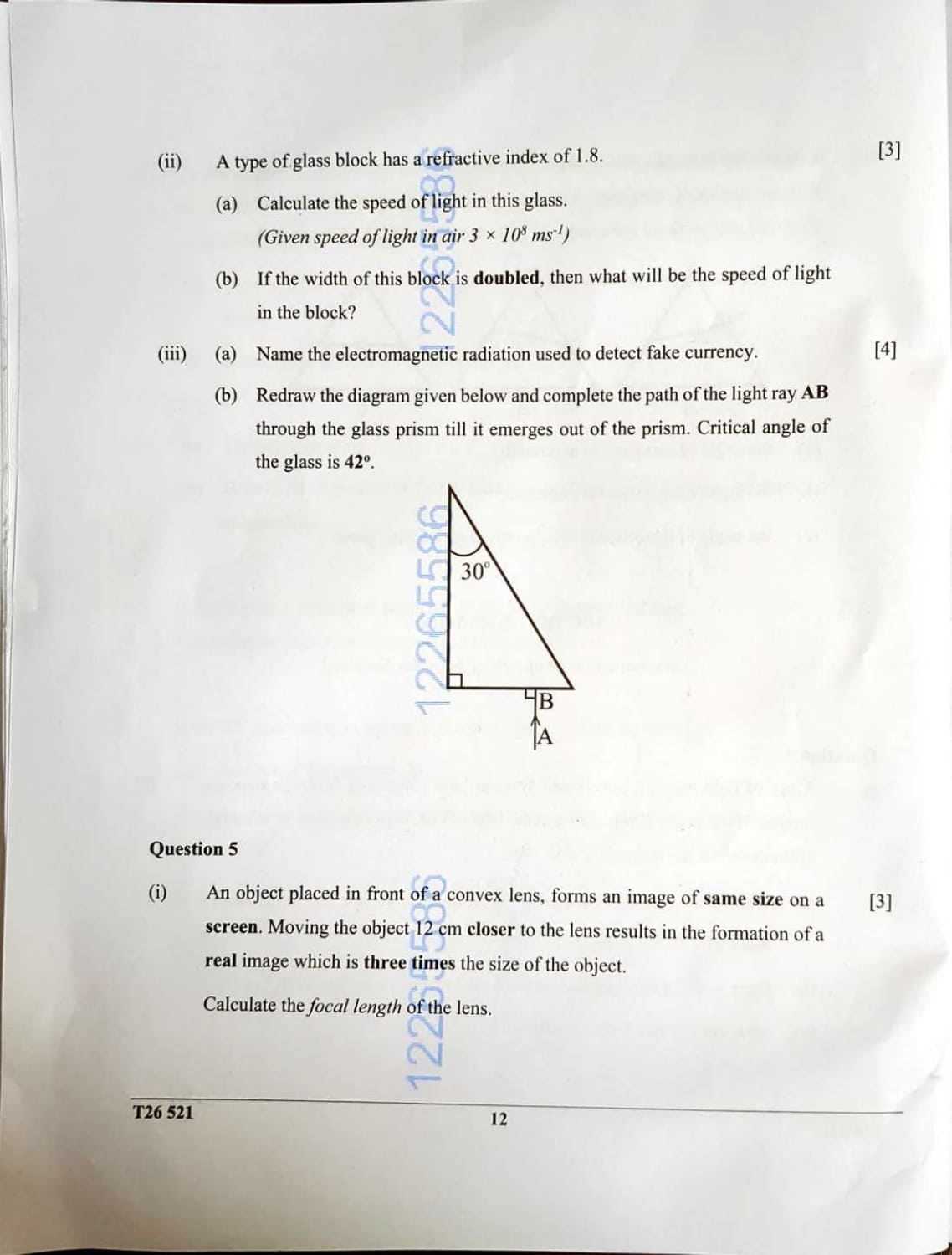
- A glass block has refractive index 1.8. Calculate the speed of light in this glass, taking the speed of light in air as 3 × 10⁸ m s⁻¹.
- An object in front of a convex lens forms an image of the same size on a screen. Moving the object 12 cm closer forms a real image three times the size of the object. Calculate the focal length of the lens.
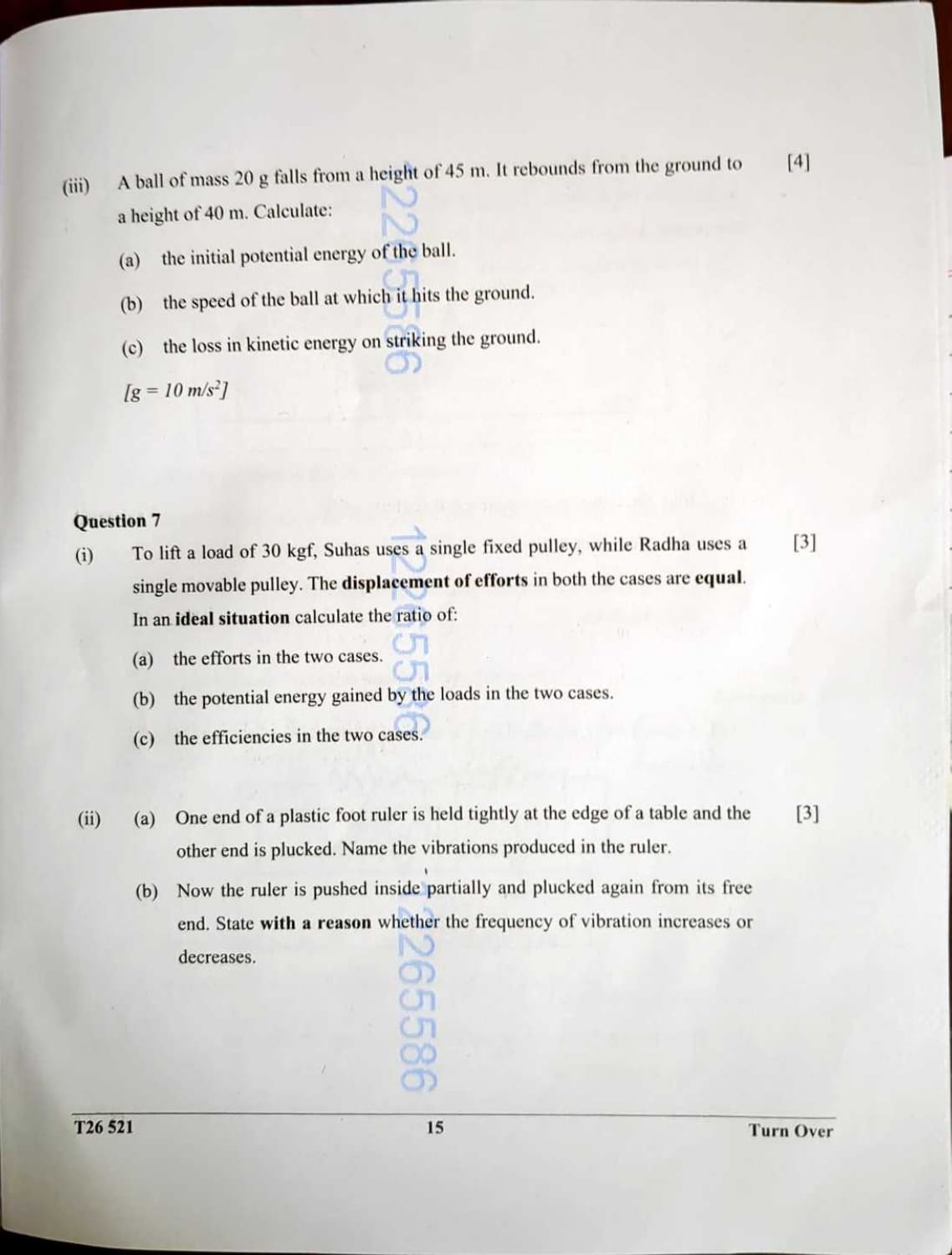
- A ball of mass 20 g falls from a height of 45 m and rebounds to 40 m. Calculate its initial potential energy and the loss in kinetic energy on striking the ground. Take g = 10 m/s².
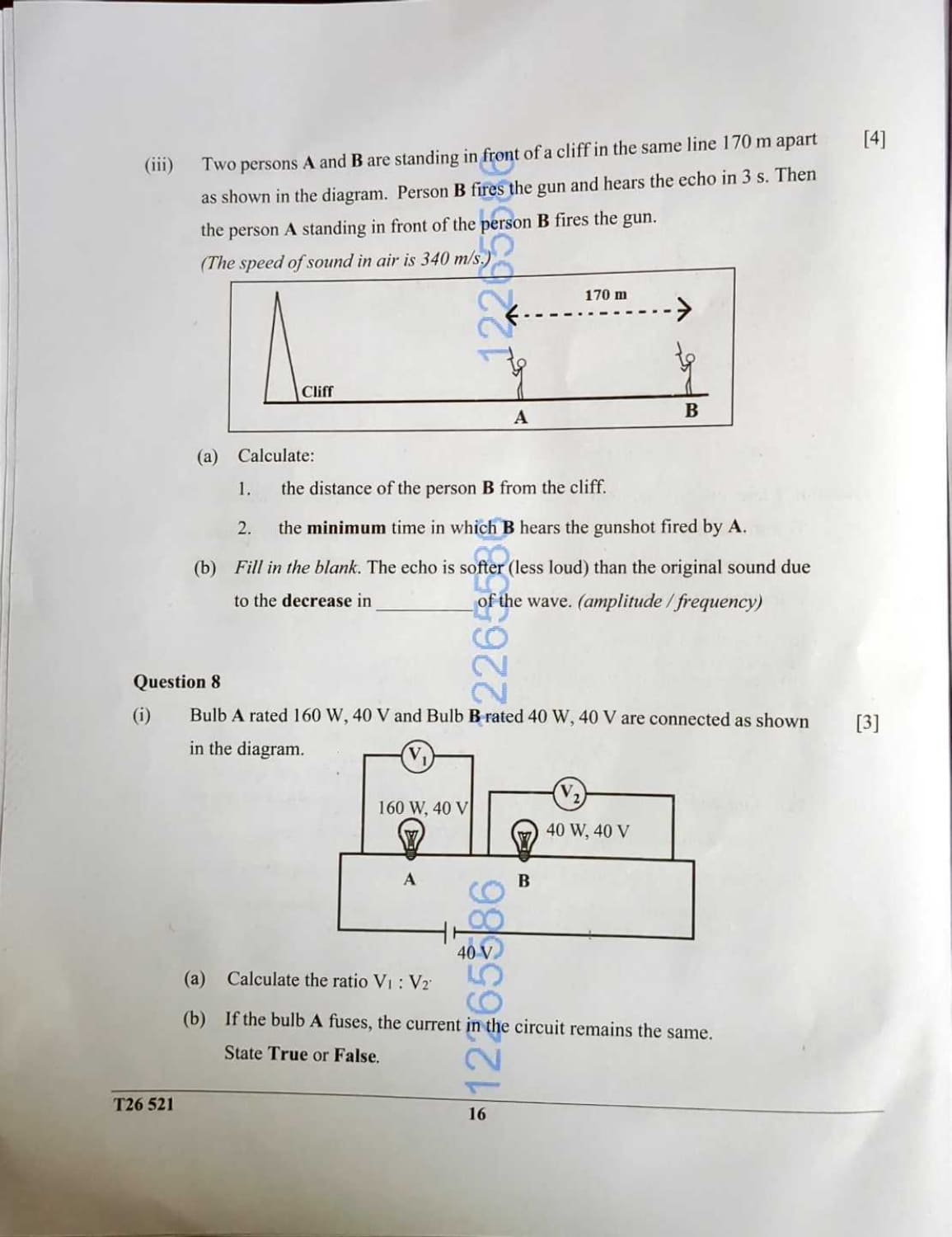
- Two persons A and B stand in line 170 m apart in front of a cliff. B fires a gun and hears the echo in 3 s. The speed of sound in air is 340 m/s. Find B's distance from the cliff.
- An electric iron rated 1100 W, 220 V is used for 5 hours. Calculate the energy consumed in kWh and its cost at ₹10 per unit.
What's next
Class 10 done next year?
A number of scholarships for Class 11–12 depend on your Class 10 marks.
Check eligibility