ICSE Class 10 History & Civics (H.C.G. Paper 1) Question Paper 2026 with Solutions

ICSE
History Civics2026Download the official ICSE Class 10 History & Civics Question Paper 2026 with step-by-step solutions prepared by subject matter experts. Practicing the 2026 ICSE H.C.G. Paper 1 helps students master Union Parliament, Union Executive, the Judiciary, the Indian National Movement, Contemporary World History (World Wars, UN, and Non-Aligned Movement), and CISCE picture-study questions. Access the free PDF download above with complete answer keys.
About this paper
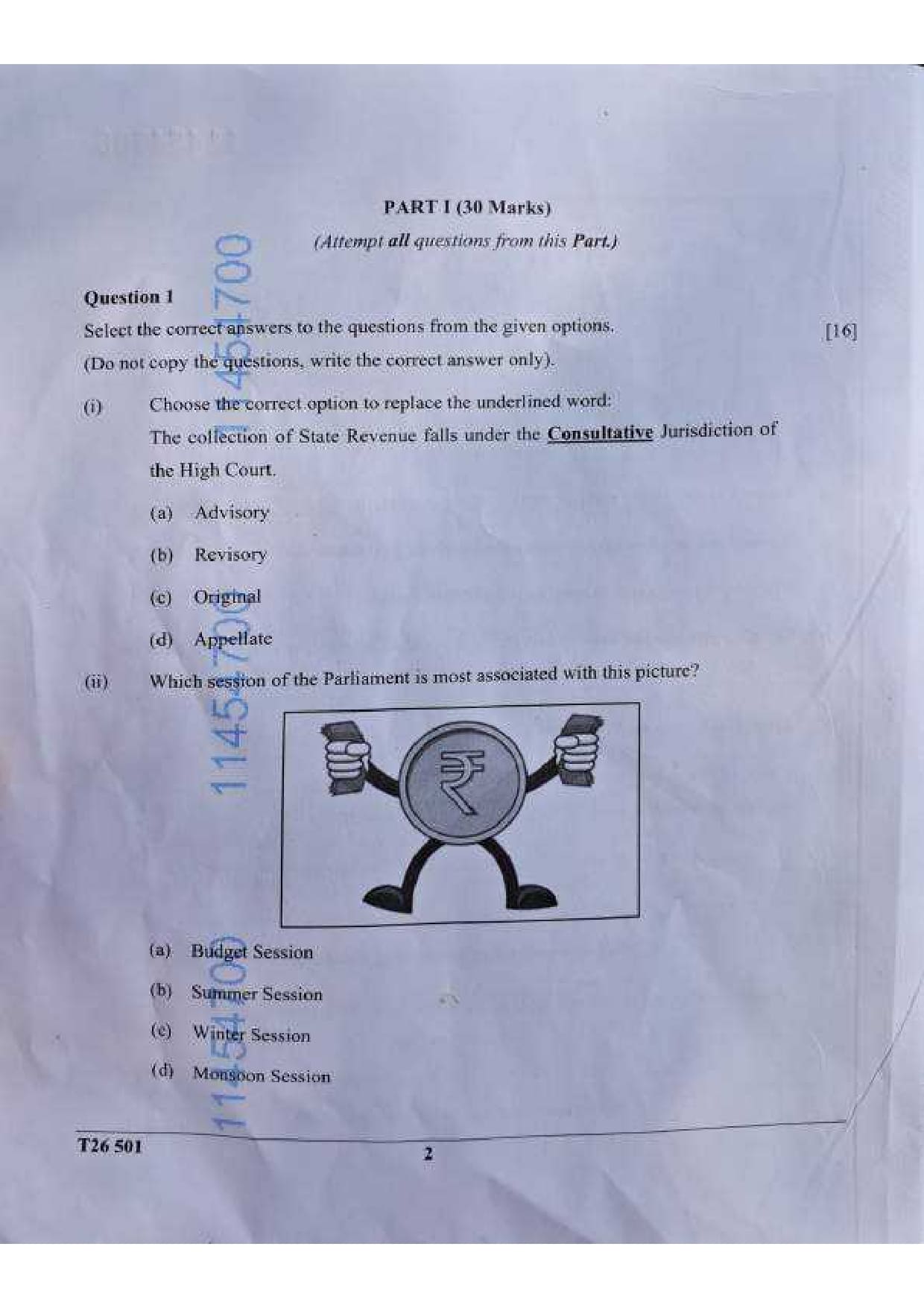
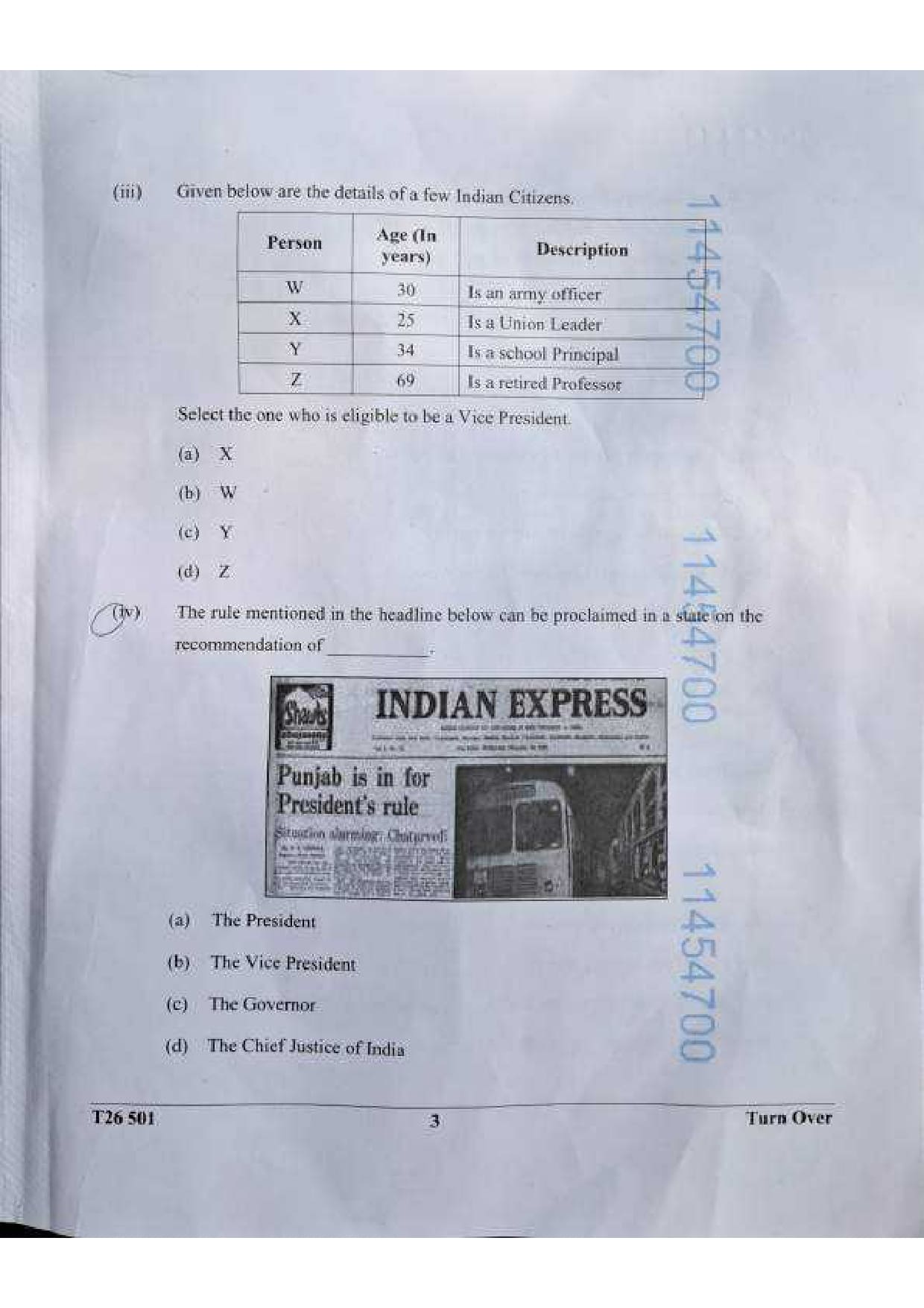
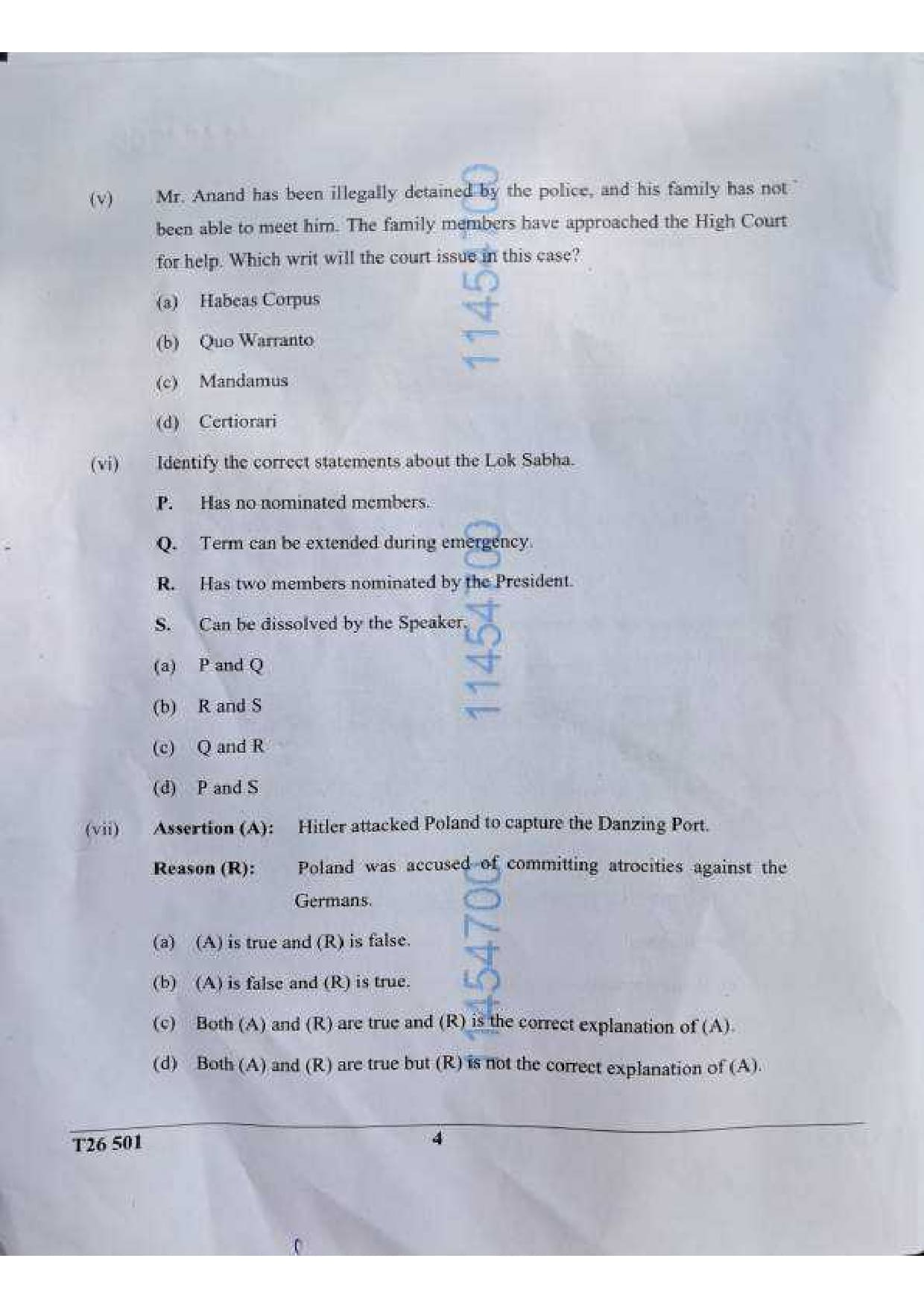
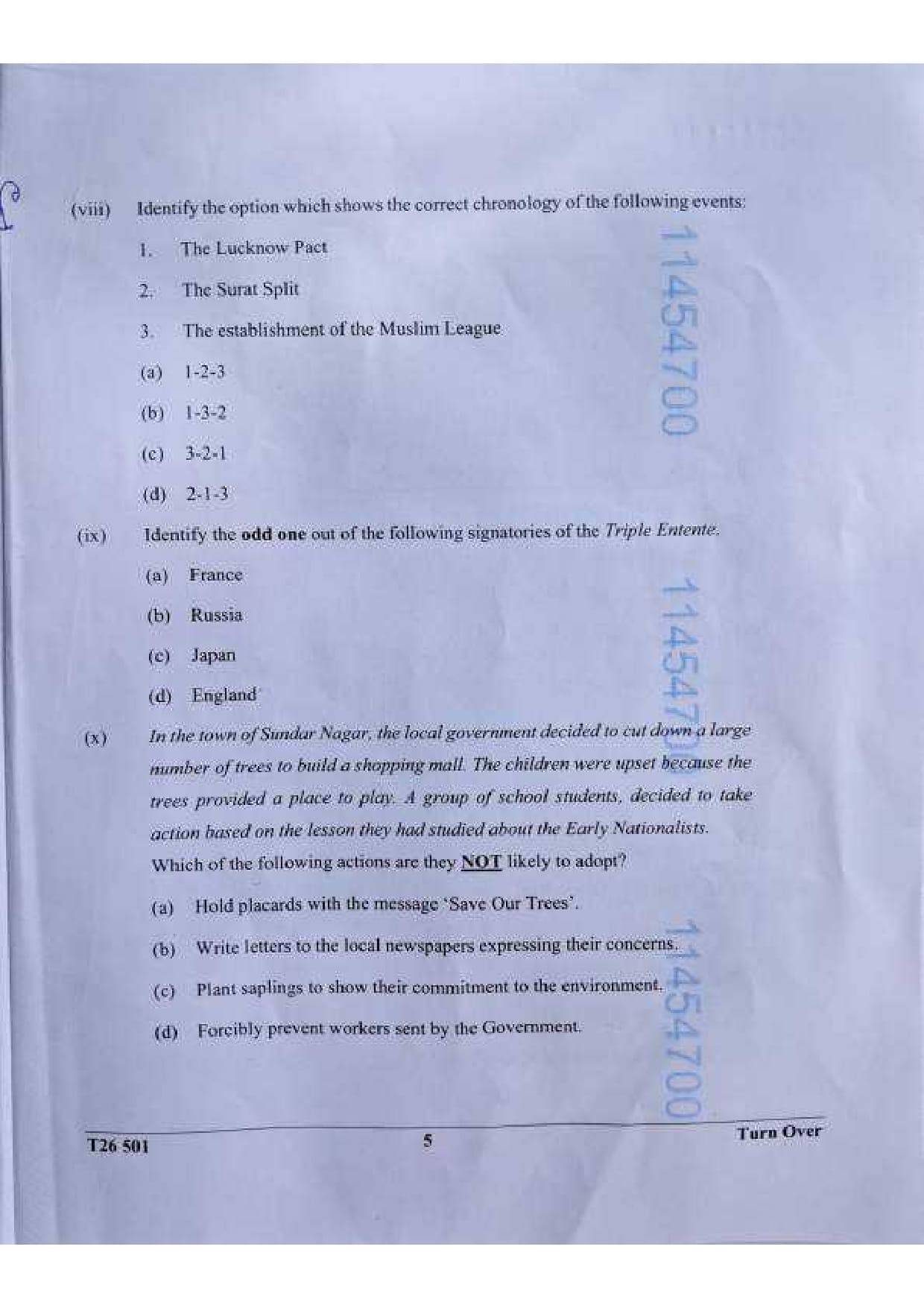
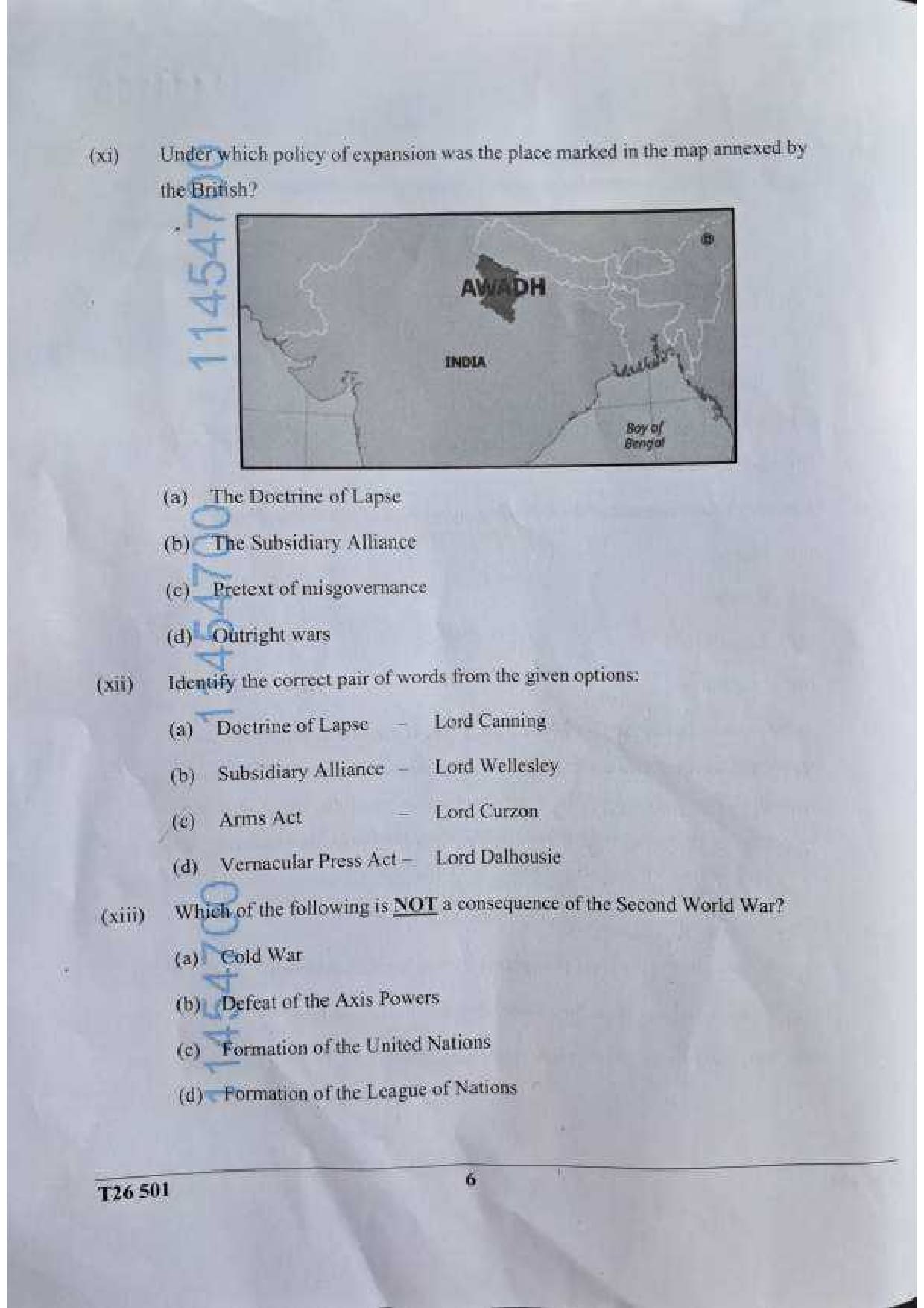
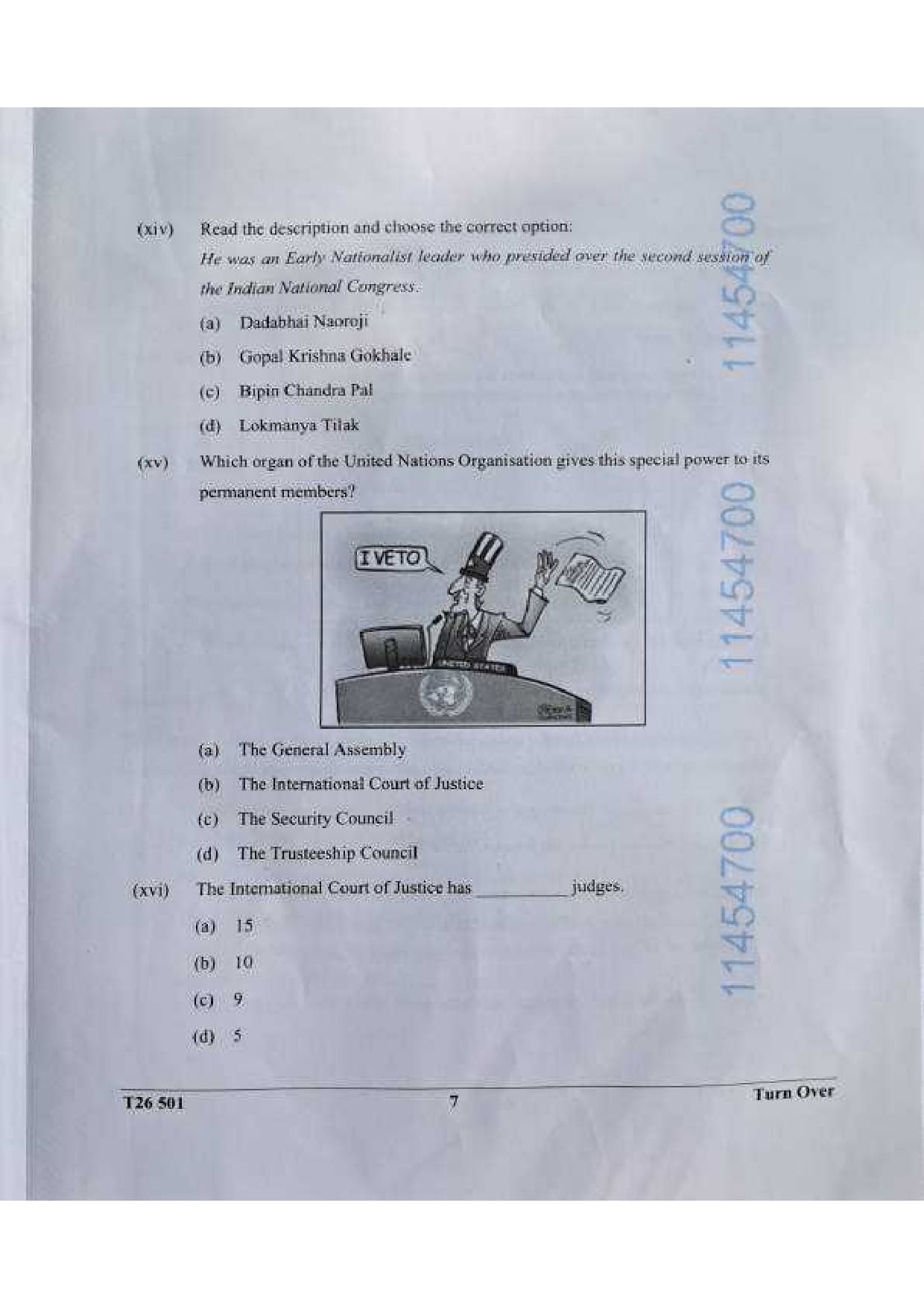
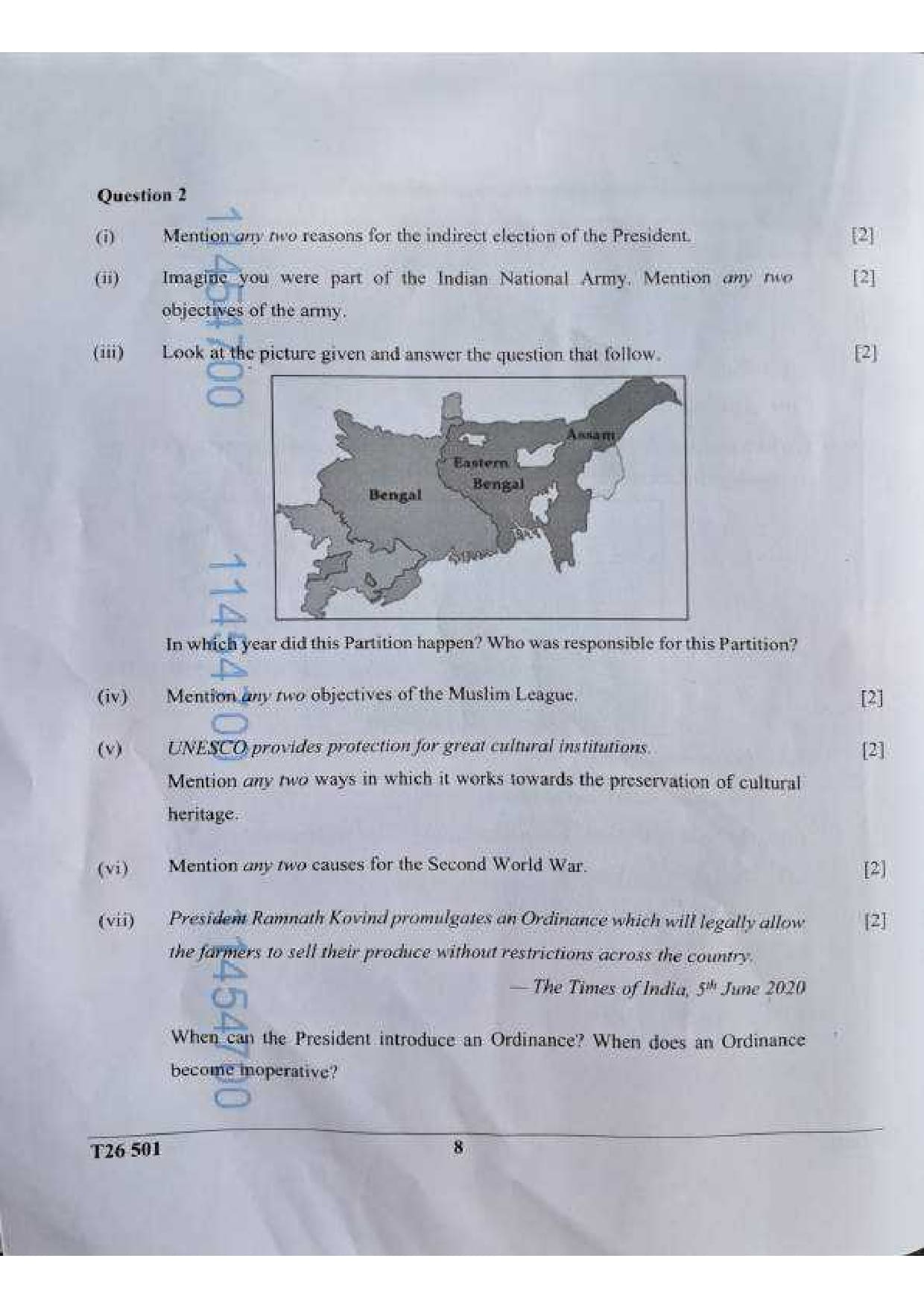
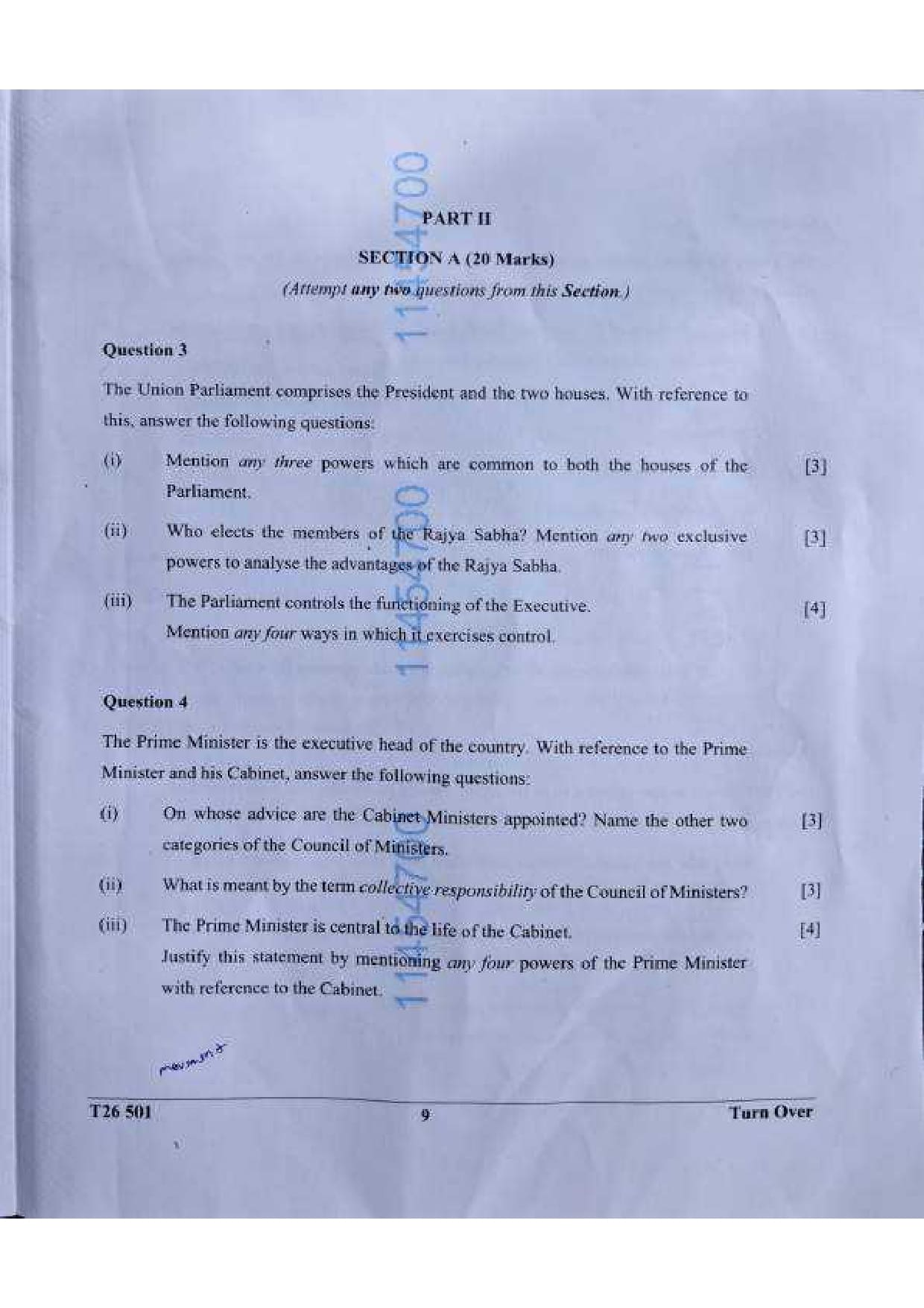
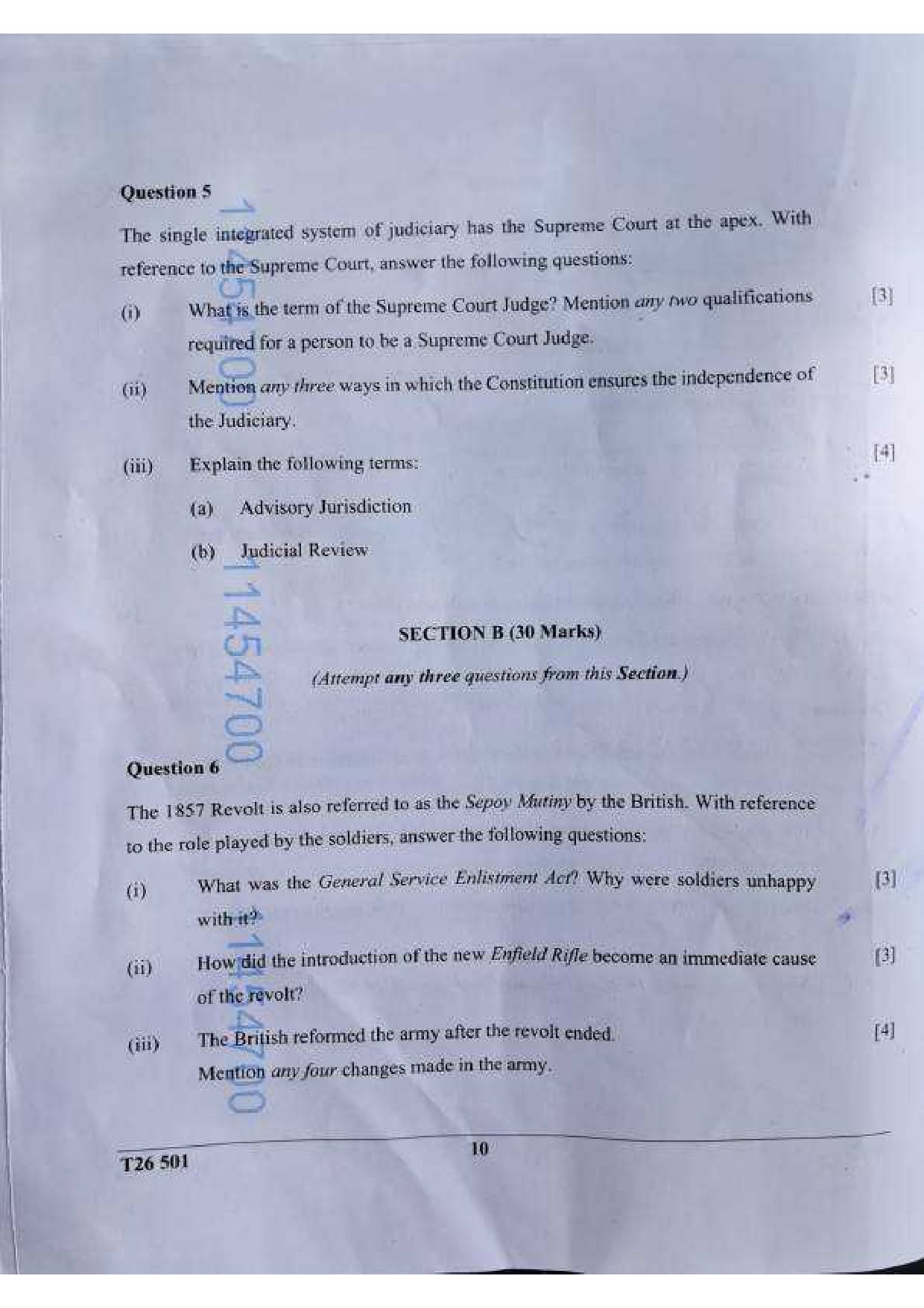
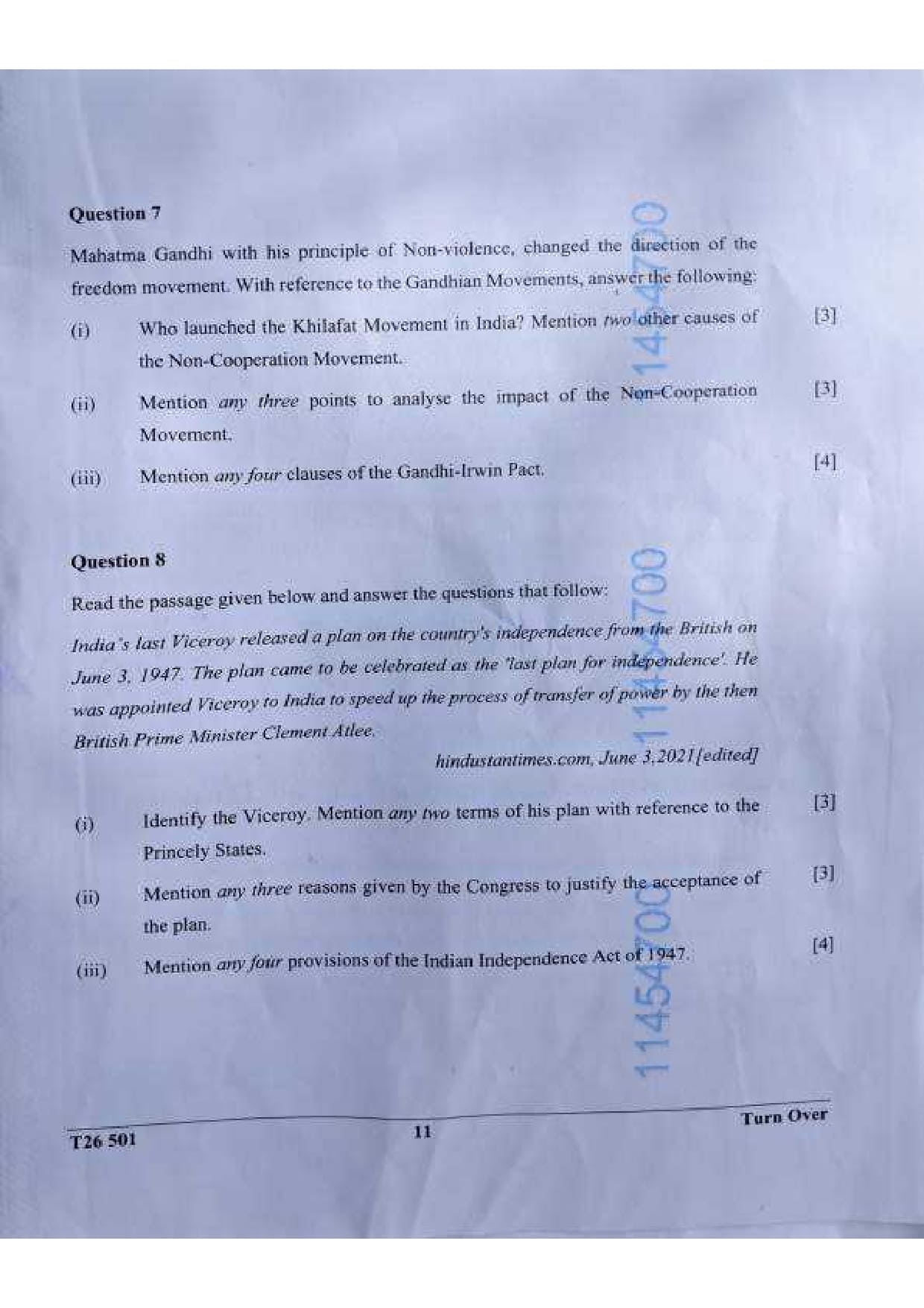
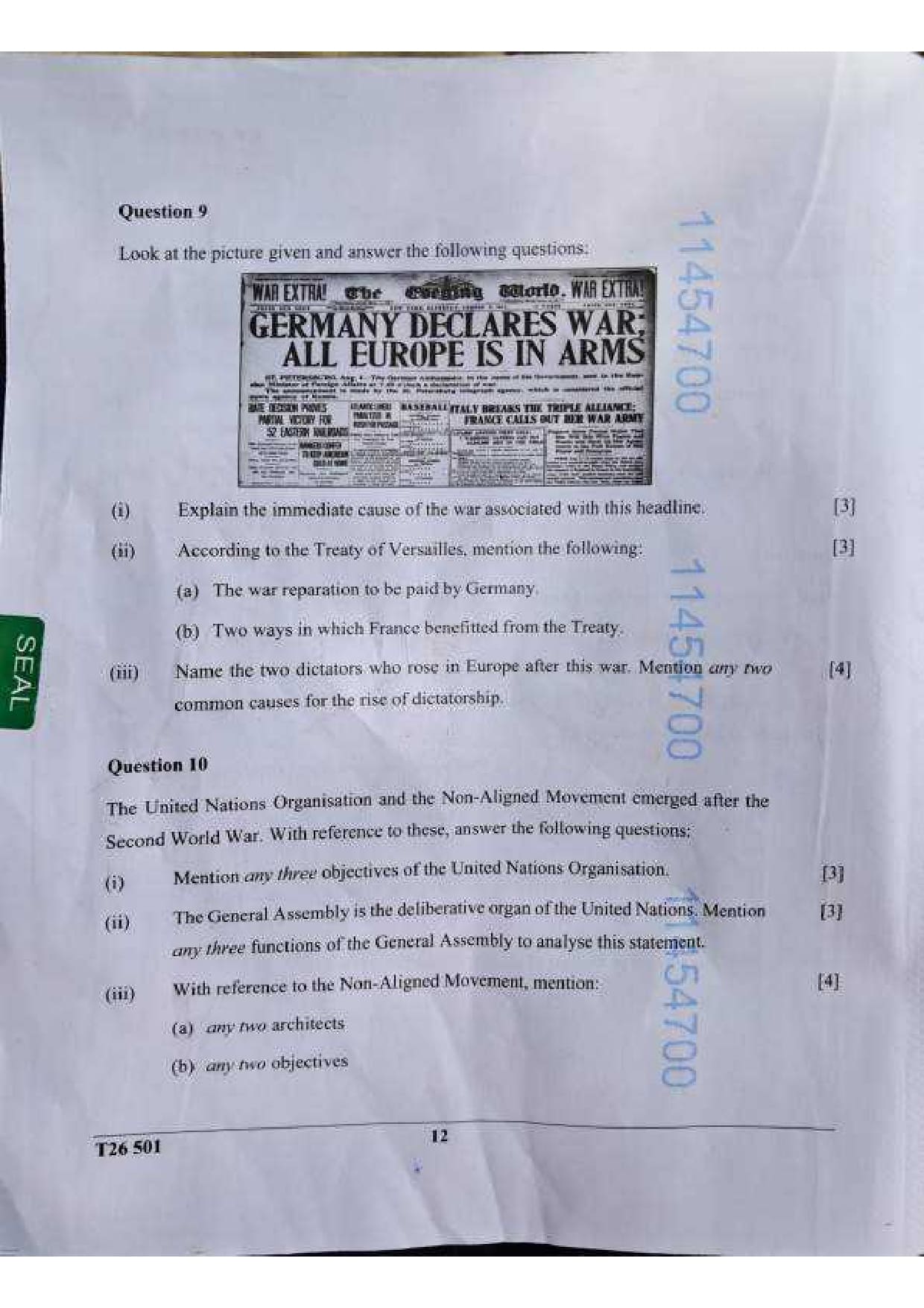
This is the ICSE Class 10 History & Civics paper (H.C.G. Paper 1, code T26 501) from the 2026 board examination, photographed from a printed copy. The cover page with the instructions is not included, but the part headings show Part I (30 marks) as compulsory and Part II split into a Civics section (20 marks, any two questions) and a History section (30 marks, any three questions). Question 1 has sixteen one-mark multiple-choice items, several based on pictures, a map and a newspaper headline on President's Rule, and Question 2 has seven two-mark short answers. History questions draw on a Hindustan Times passage on the 3 June 1947 plan and a newspaper front page on the outbreak of the First World War. This copy has the questions only, without answers.
- Exam
- ICSE Class 10
- Subject
- History Civics
- Year
- 2026
- Paper code
- T26 501
- Questions
- 10
- Pages
- 11
- Answers included
- No, questions only
Paper pattern
Part I
30 marksCompulsory: Question 1 with 16 one-mark multiple-choice items and Question 2 with 7 two-mark short answers
Part II, Section A
20 marksCivics: attempt any two of Questions 3–5, ten marks each
Part II, Section B
30 marksHistory: attempt any three of Questions 6–10, ten marks each
Topics covered
- The Union Parliament
- The President and Vice President
- The Prime Minister and Council of Ministers
- The Supreme Court and High Courts
- The Revolt of 1857
- Early Nationalists and the Partition of Bengal
- The Muslim League
- Gandhian movements and the Gandhi–Irwin Pact
- Mountbatten Plan and the Indian Independence Act
- First World War and the Treaty of Versailles
- Rise of dictatorships and the Second World War
- United Nations and the Non-Aligned Movement
Questions from this paper
- Mention any two reasons for the indirect election of the President.
- The Parliament controls the functioning of the Executive. Mention any four ways in which it exercises this control.
- What is meant by the term collective responsibility of the Council of Ministers?
- What was the General Service Enlistment Act? Why were soldiers unhappy with it?
- Mention any four clauses of the Gandhi–Irwin Pact.
- The General Assembly is the deliberative organ of the United Nations. Mention any three functions of the General Assembly.
Free email alert
Get the 2027 ICSE Class 10 papers first
One email when the new ICSE Class 10 History Civics question papers are published here. No spam, unsubscribe any time.
What's next
Class 10 done next year?
A number of scholarships for Class 11–12 depend on your Class 10 marks.
Check eligibility