ICSE 2016 Computer Applications Question Paper for Class 10

ICSE
Computer Applications2016ICSE Class 10 Computer Applications 2016 question paper (T16 861): 100 marks, 2 hours, Java theory and programs like BookFair and Niven numbers. Questions only.
Downloaded from www.cisce.org

About this paper
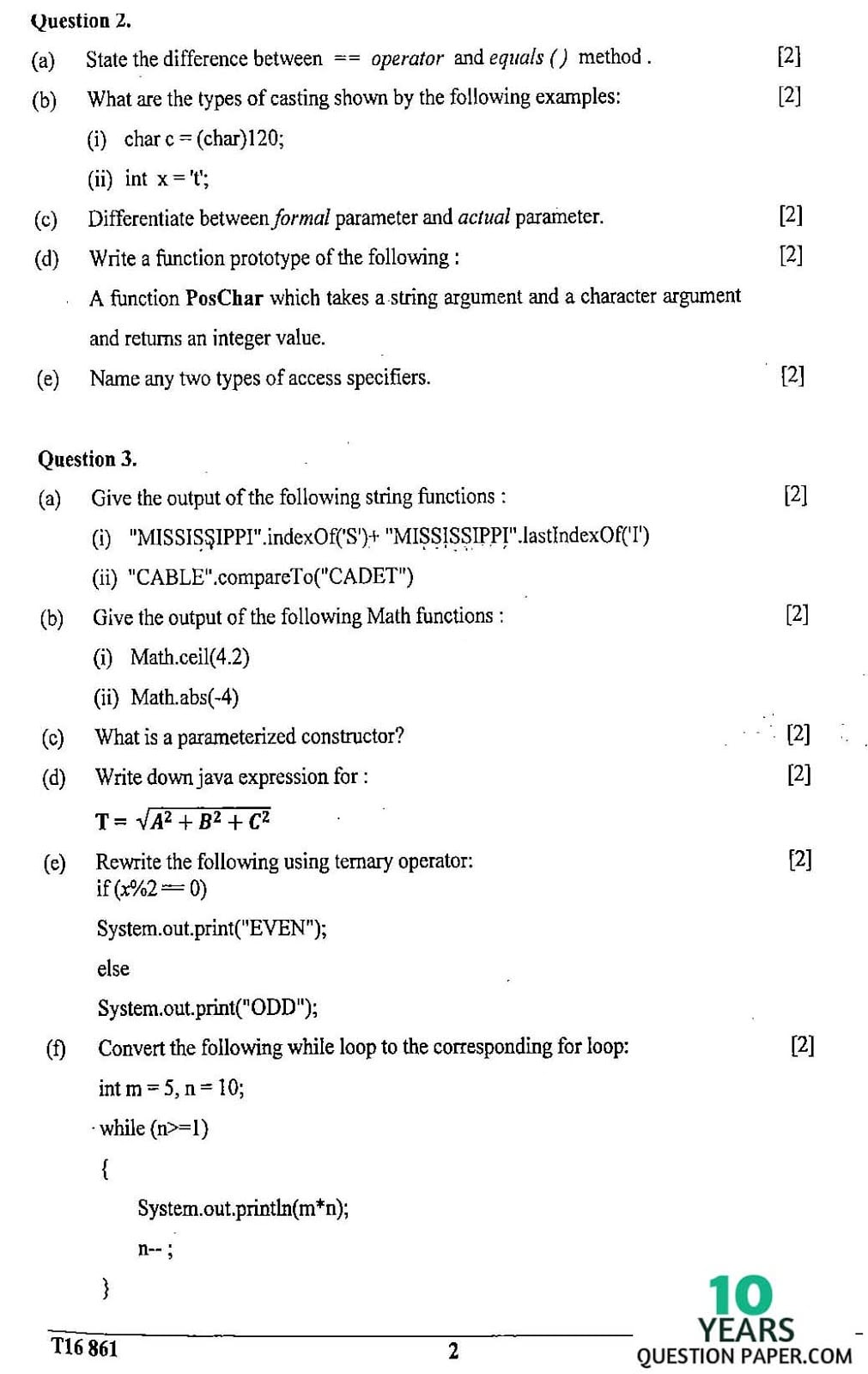
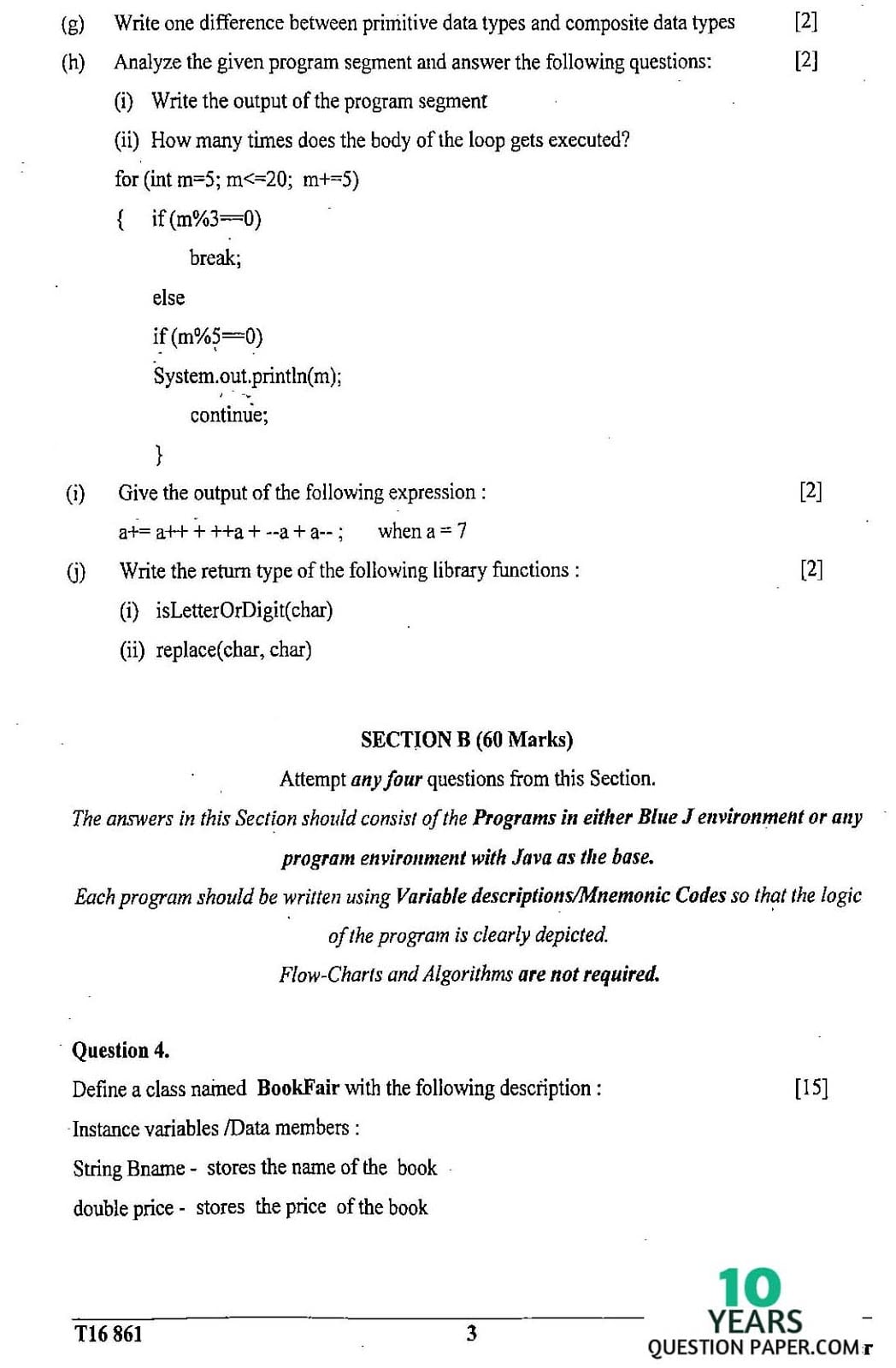
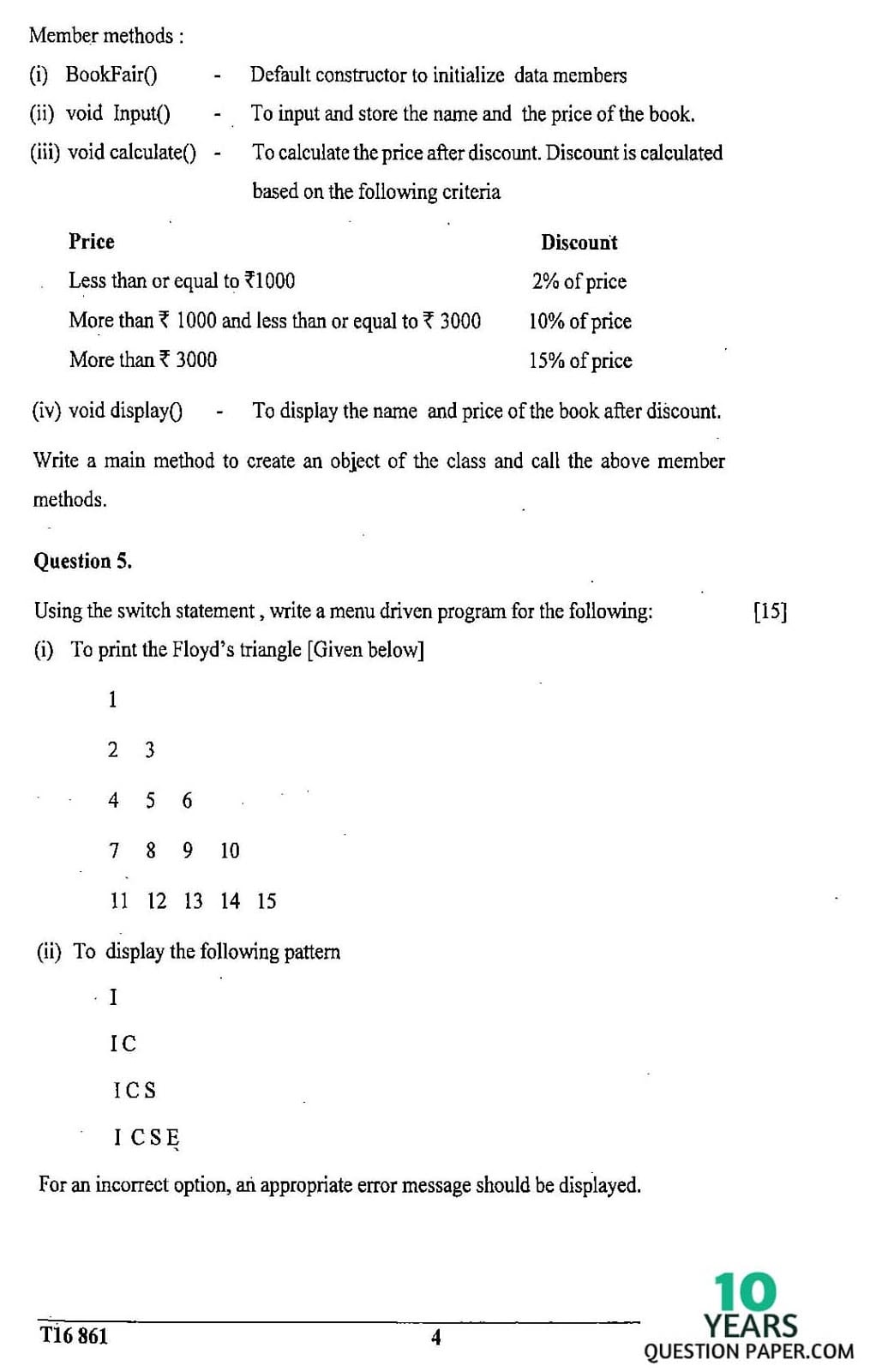
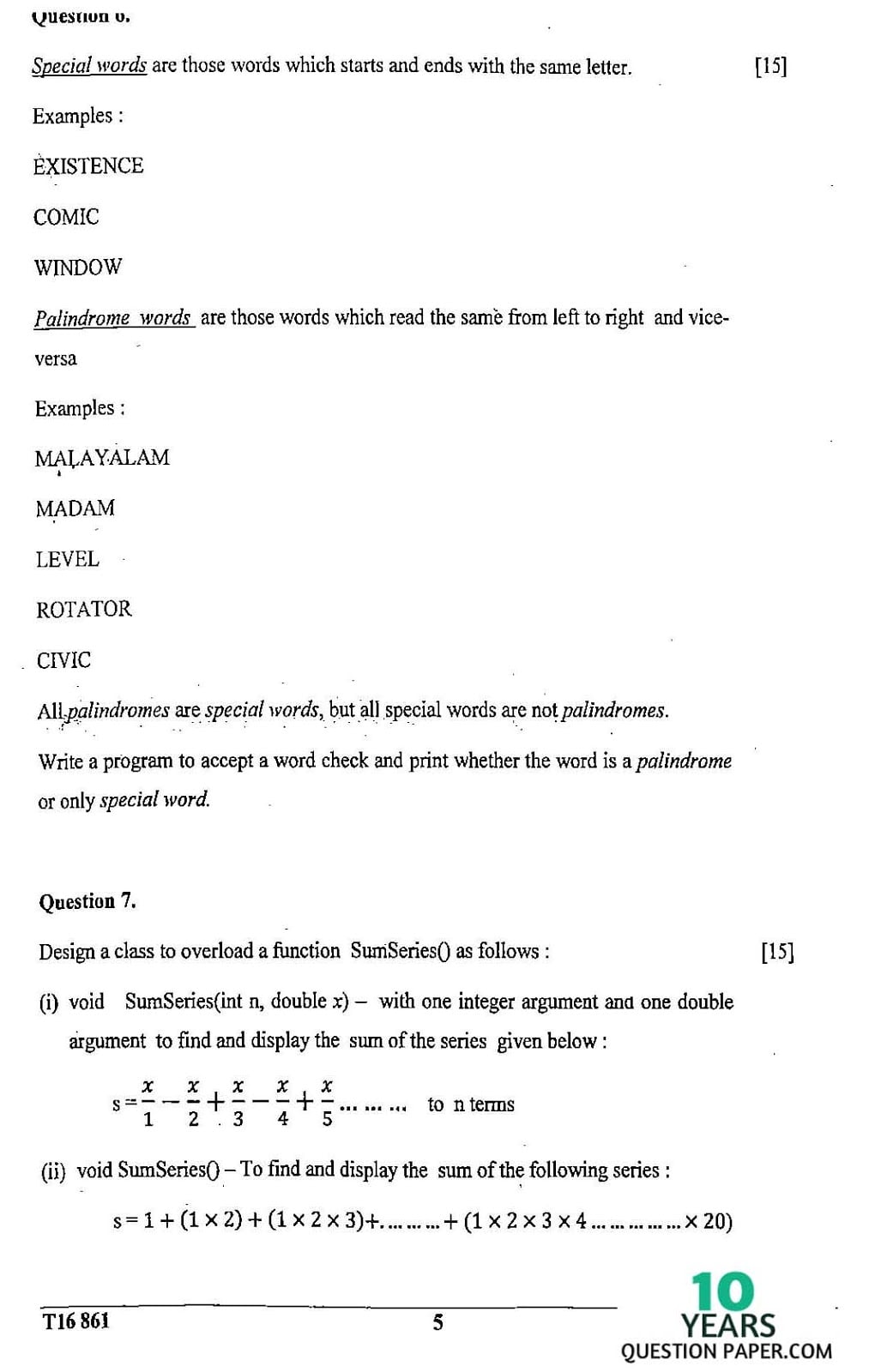
This is the ICSE Class 10 Computer Applications (Theory) paper for 2016, paper code T16 861. It is a two-hour paper with fifteen minutes of reading time, and its two sections carry 40 and 60 marks. Section A has three compulsory questions of two-mark parts on encapsulation, keywords, types of errors, type casting, formal and actual parameters, String and Math methods, the ternary operator and loop conversion. In Section B candidates write Java programs for any four of six questions: a BookFair discount class, Floyd's triangle and an ICSE letter pattern, palindrome and special words, overloading SumSeries(), Niven numbers, and searching arrays of the Seven Wonders and their countries. This copy has the questions only.
- Exam
- ICSE Class 10
- Subject
- Computer Applications
- Year
- 2016
- Paper code
- T16 861
- Maximum marks
- 100
- Time allowed
- 2 hours + 15 min reading
- Questions
- 9
- Pages
- 6
- Answers included
- No, questions only
Paper pattern
Section A
40 marksQuestions 1–3, all compulsory: twenty two-mark parts on Java concepts, expressions and output prediction
Section B
60 marksQuestions 4–9, attempt any four; each asks for a Java program
Topics covered
- Encapsulation and OOP concepts
- Keywords, packages and access specifiers
- Types of errors
- Type casting and data types
- Functions and parameters
- Constructors
- String and Math library methods
- Loops and jump statements
- Pattern programs
- Function overloading and series
- Arrays and searching
Questions from this paper
- Define encapsulation.
- State the difference between the == operator and the equals() method.
- Differentiate between formal parameters and actual parameters.
- Special words start and end with the same letter, and palindromes read the same in both directions. Write a program to accept a word and print whether it is a palindrome or only a special word.
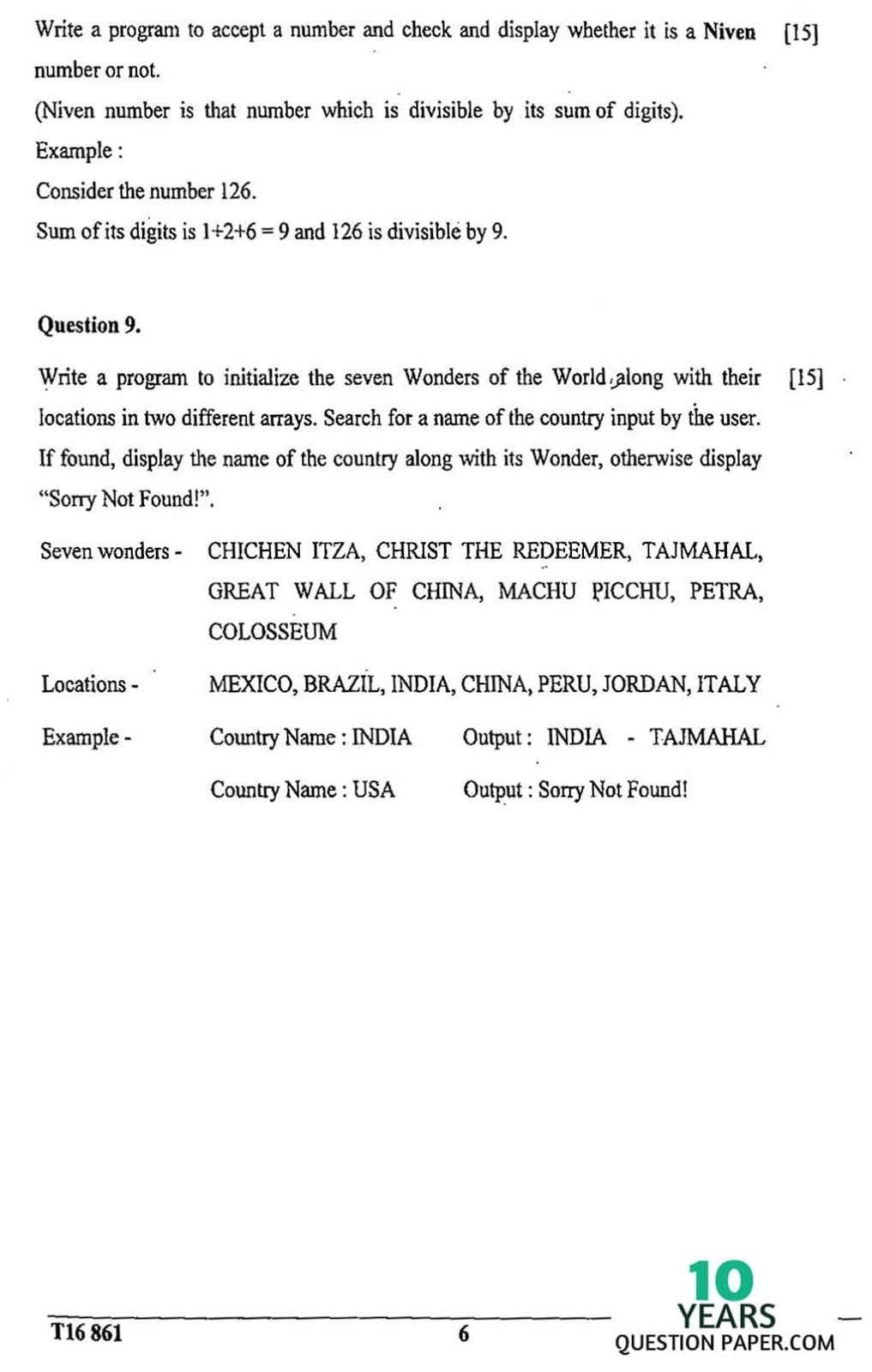
- Write a program to accept a number and check whether it is a Niven number, that is, a number divisible by the sum of its digits (for example, 126).
- Write a program to store the Seven Wonders of the World and their locations in two arrays, then search for a country entered by the user and display its Wonder, or "Sorry Not Found!".
Free email alert
Get the 2027 ICSE Class 10 papers first
One email when the new ICSE Class 10 Computer Applications question papers are published here. No spam, unsubscribe any time.
What's next
Class 10 done next year?
A number of scholarships for Class 11–12 depend on your Class 10 marks.
Check eligibility