ICSE 2016 Chemistry Question Paper for Class 10

ICSE
Chemistry2016ICSE Class 10 Chemistry 2016 question paper (code T16 522), questions only: 80 marks in 2 hours, Section I compulsory and any four questions from Section II.
Downloaded from www.cisce.org
About this paper
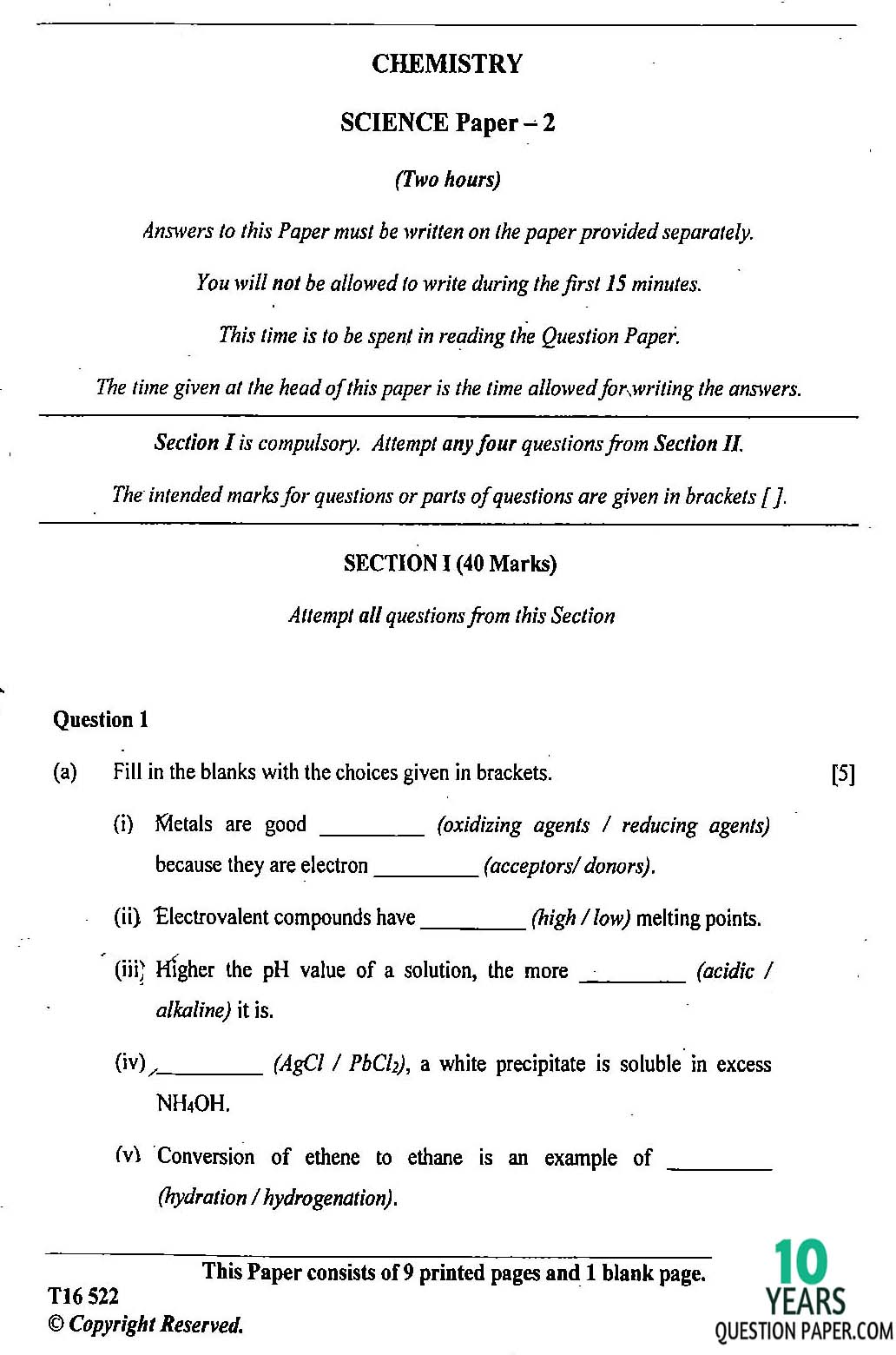
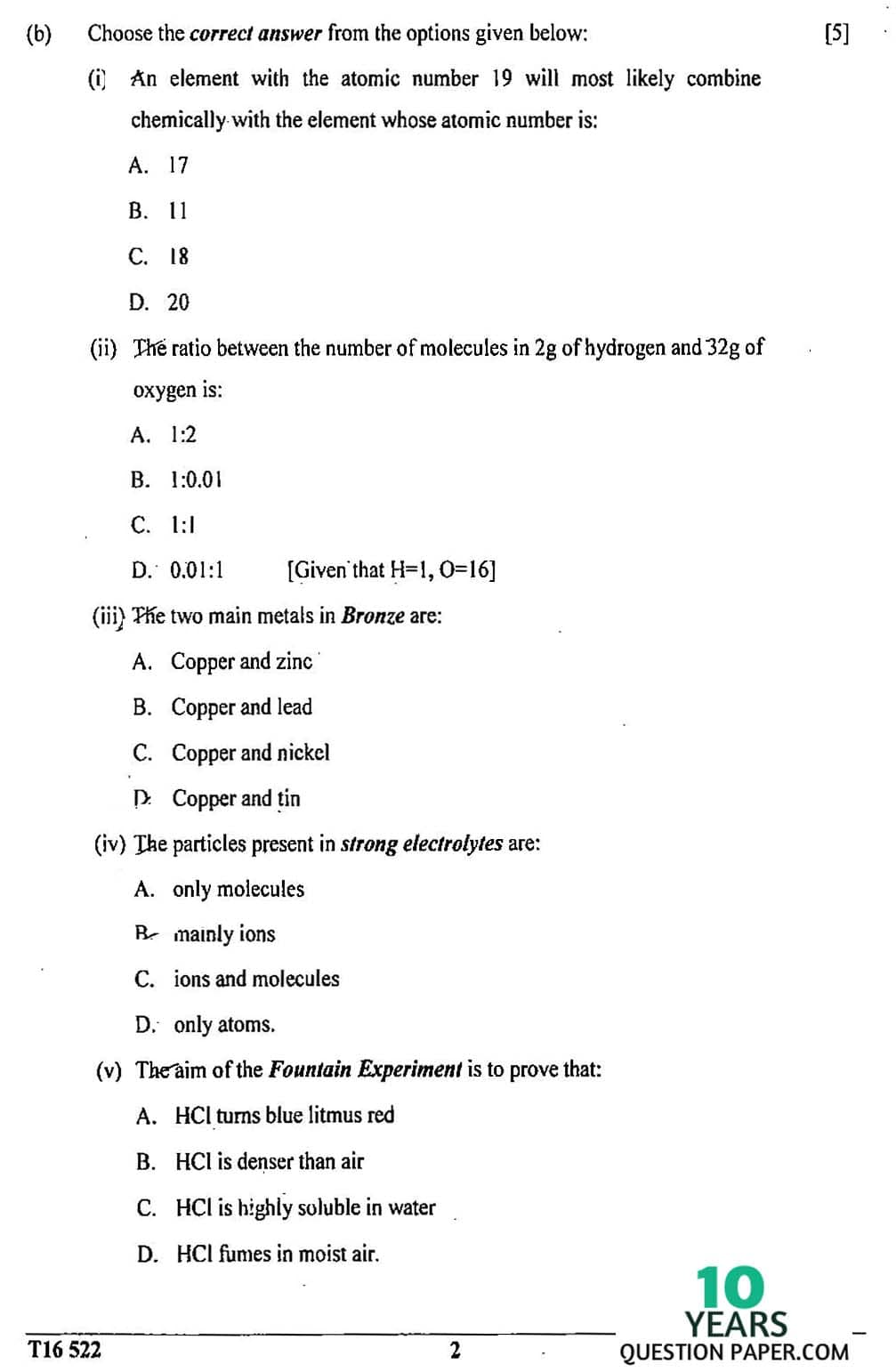
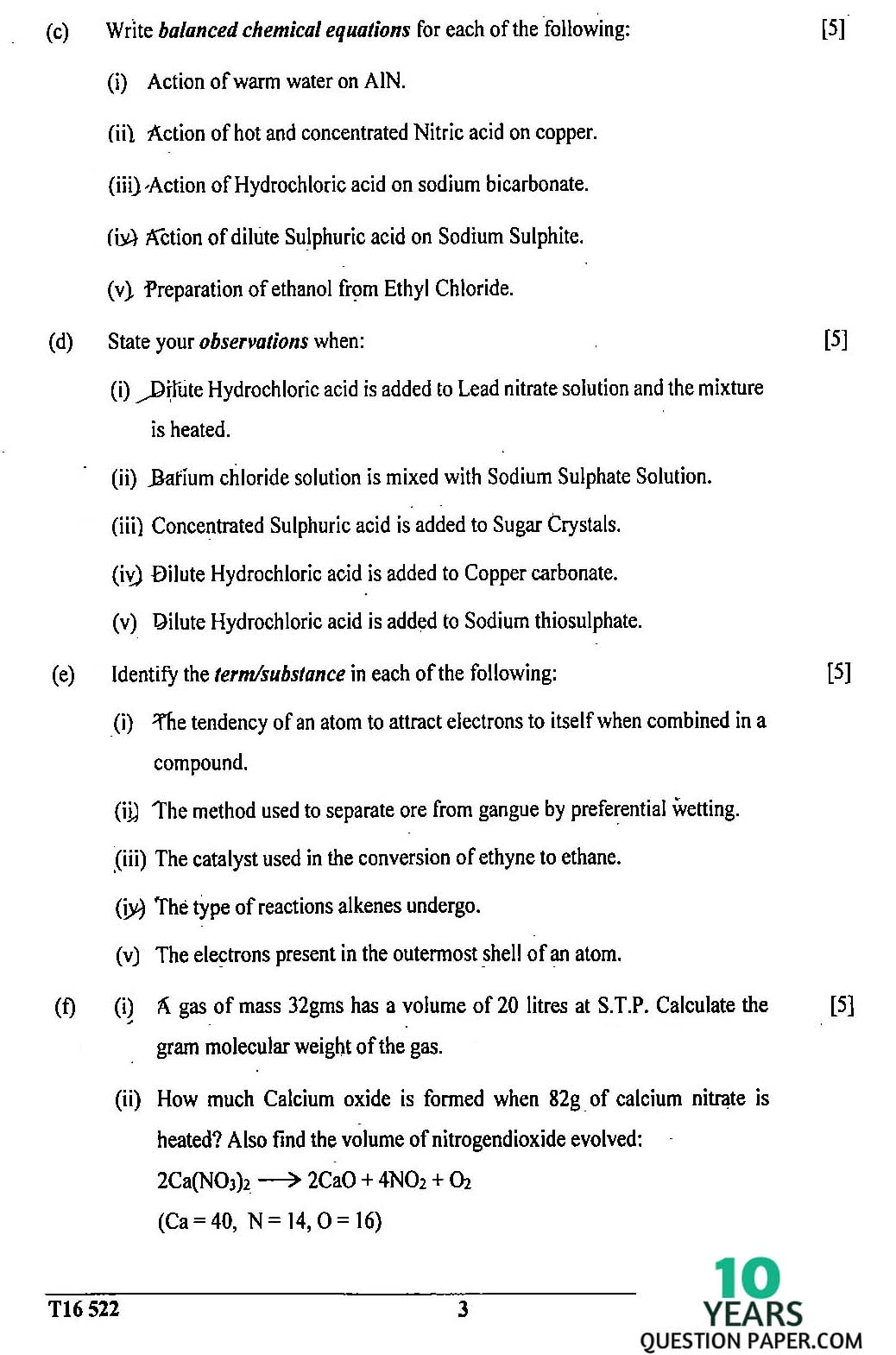
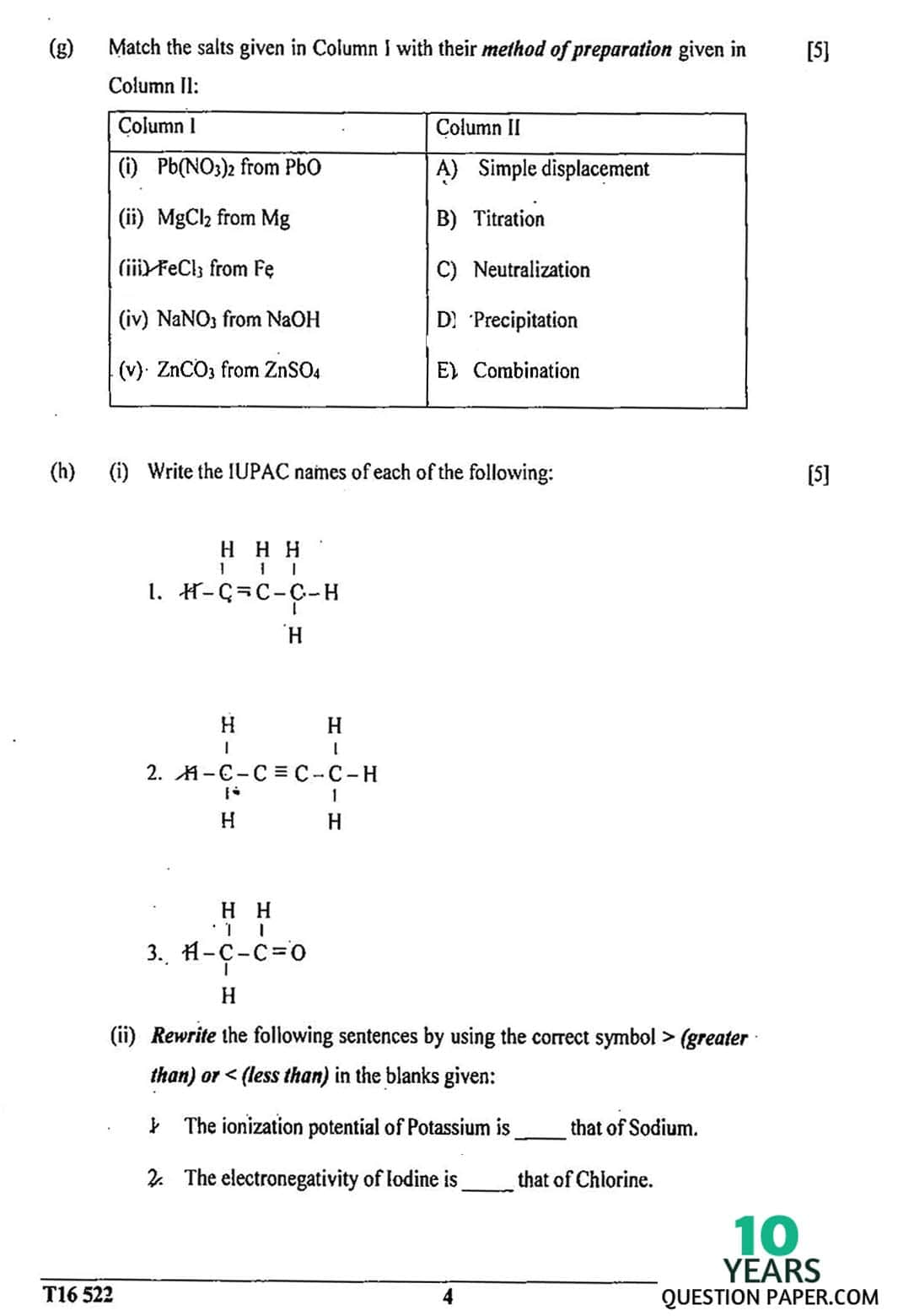
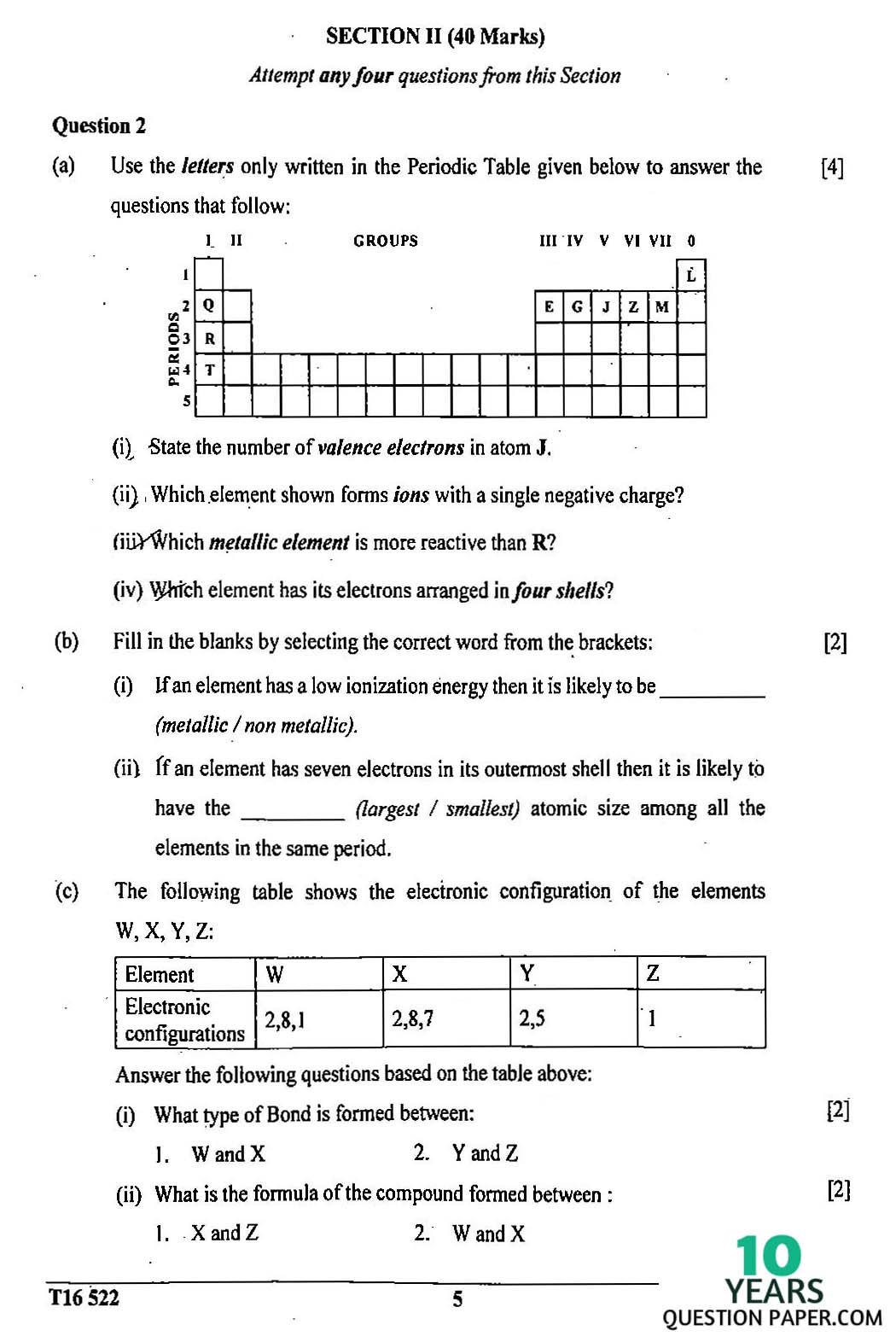
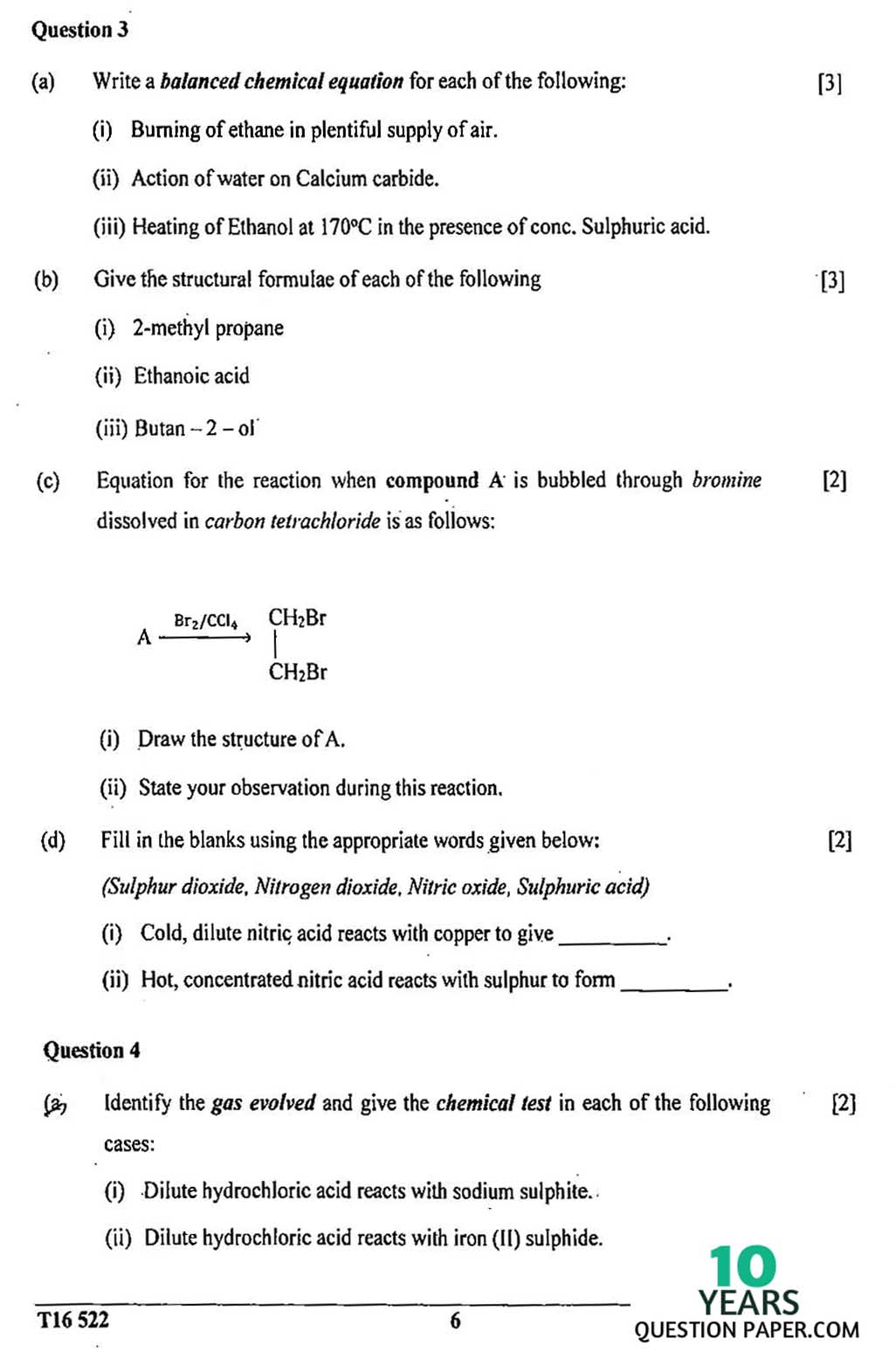
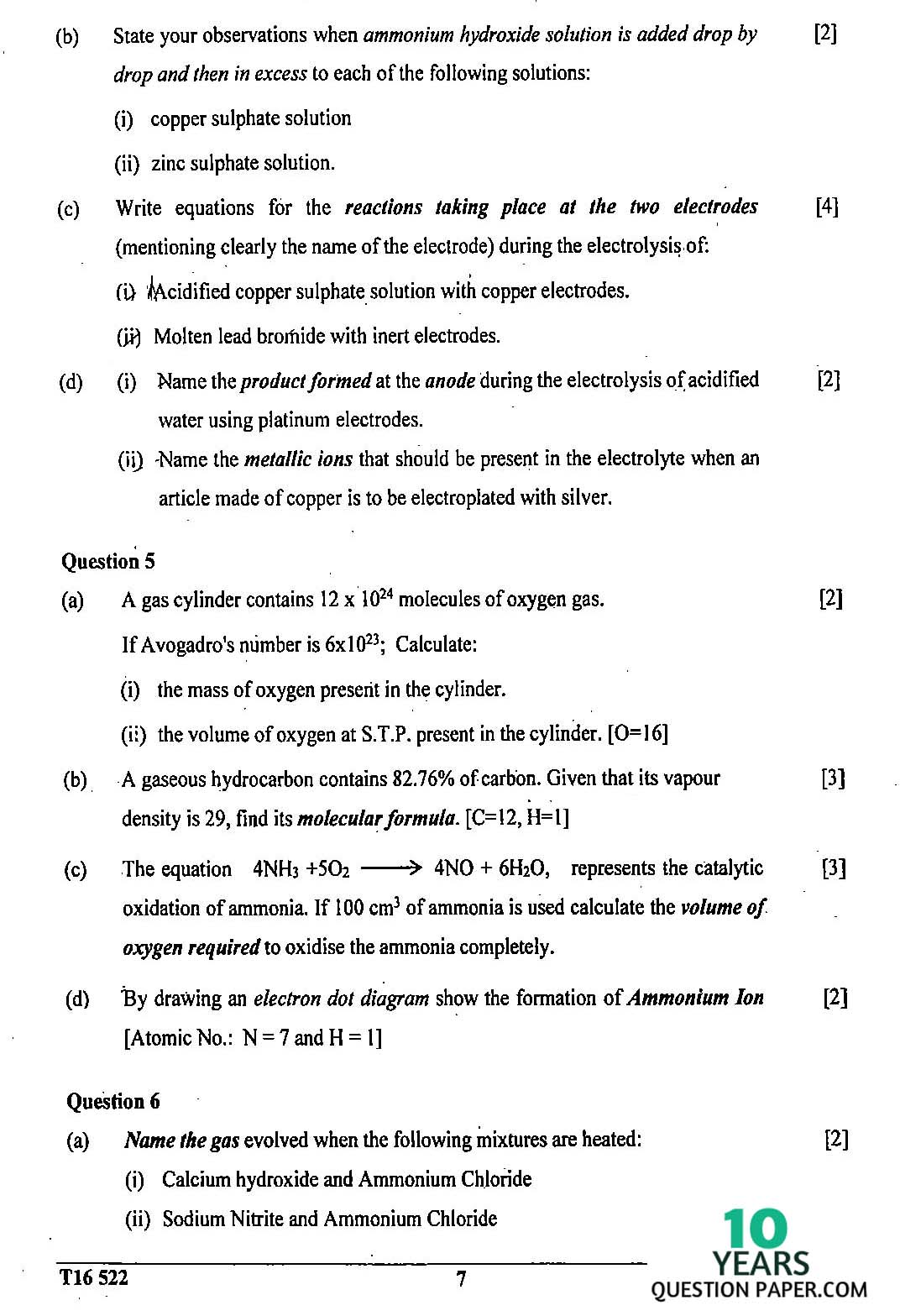
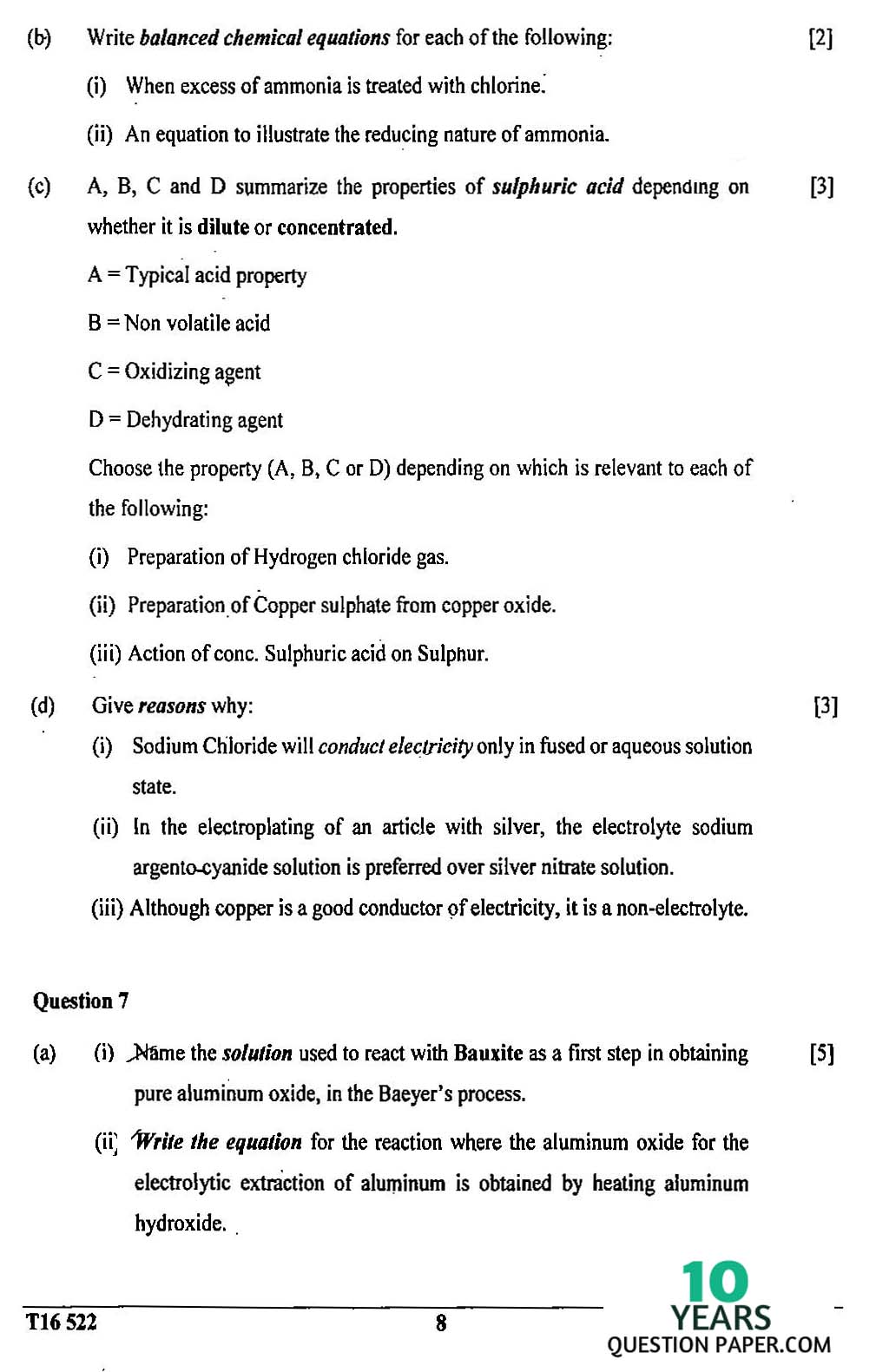
This is the official ICSE Class 10 Chemistry (Science Paper 2) question paper from the 2016 examination, paper code T16 522. Writing time is two hours, plus 15 minutes of reading time. Section I (40 marks) is compulsory: Question 1 has fill in the blanks, multiple choice, equations, observations, identifying terms, two calculations, matching salts with their methods of preparation, and IUPAC names. In Section II (40 marks) candidates attempt any four of Questions 2–7, which include a periodic table marked with letters, organic structural formulae, electrolysis and electroplating, mole calculations on a cylinder of oxygen, ammonia and sulphuric acid, and the extraction of aluminium. The paper has questions only, without answers.
- Exam
- ICSE Class 10
- Subject
- Chemistry
- Year
- 2016
- Paper code
- T16 522
- Maximum marks
- 80
- Time allowed
- 2 hours + 15 min reading
- Questions
- 7
- Pages
- 9
- Answers included
- No, questions only
Paper pattern
Section I
40 marksQuestion 1, compulsory, with eight five-mark parts (a)–(h)
Section II
40 marksQuestions 2–7, attempt any four; 10 marks each
Topics covered
- Periodic table and periodic properties
- Chemical bonding
- Mole concept and stoichiometry
- Electrolysis and electroplating
- Metallurgy of aluminium
- Analytical chemistry
- Preparation of salts
- Ammonia
- Nitric acid
- Sulphuric acid
- Organic chemistry and IUPAC names
Questions from this paper
- A gas of mass 32 g has a volume of 20 litres at S.T.P. Calculate the gram molecular weight of the gas.
- A gaseous hydrocarbon contains 82.76% of carbon. Given that its vapour density is 29, find its molecular formula. [C = 12, H = 1]
- State your observation when concentrated sulphuric acid is added to sugar crystals.
- Write a balanced chemical equation for the heating of ethanol at 170 °C in the presence of concentrated sulphuric acid.
- In the electroplating of an article with silver, why is sodium argentocyanide solution preferred over silver nitrate solution as the electrolyte?
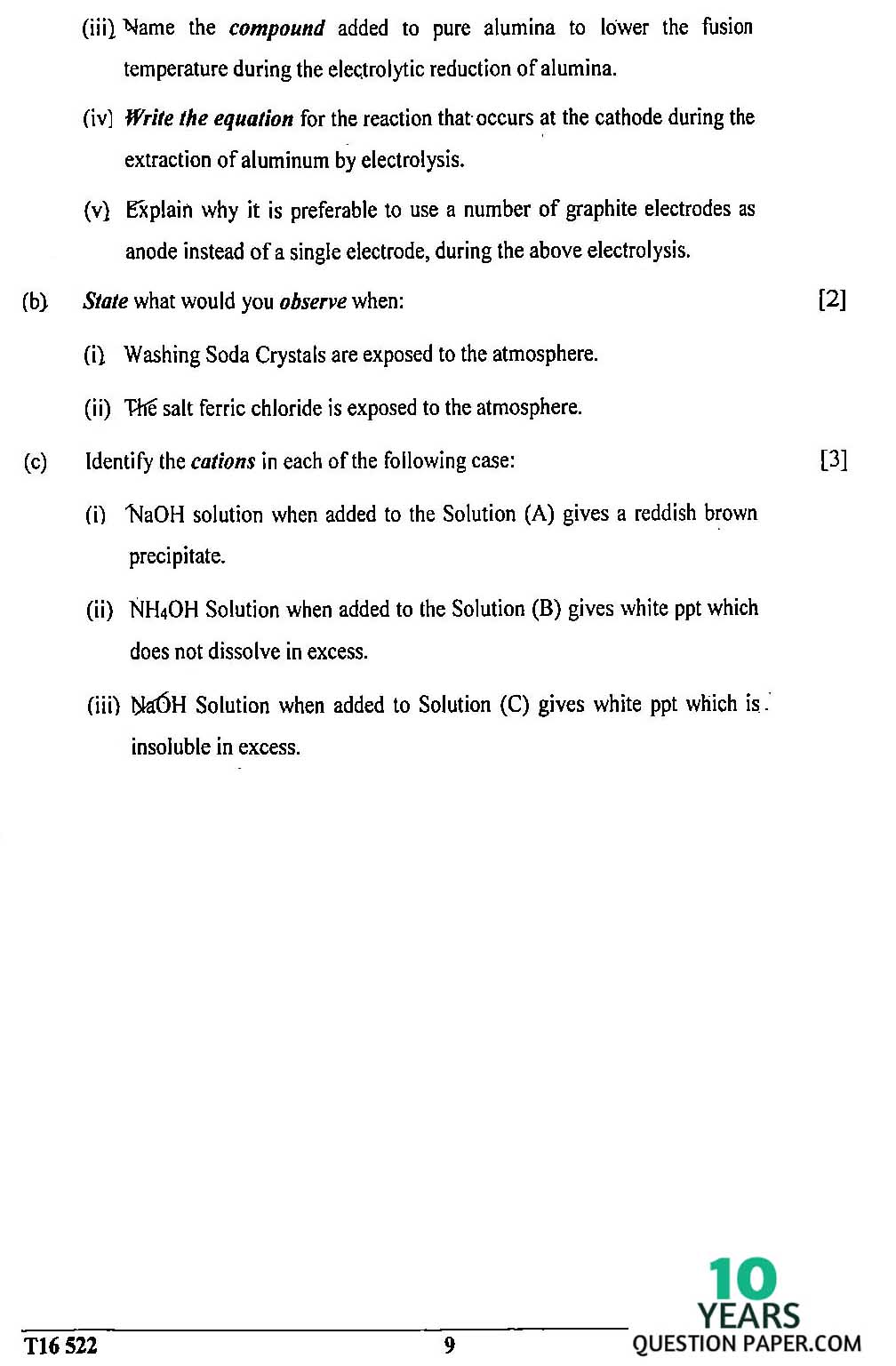
- During the electrolysis of alumina, why is it preferable to use a number of graphite electrodes as the anode instead of a single electrode?
Free email alert
Get the 2027 ICSE Class 10 papers first
One email when the new ICSE Class 10 Chemistry question papers are published here. No spam, unsubscribe any time.
What's next
Class 10 done next year?
A number of scholarships for Class 11–12 depend on your Class 10 marks.
Check eligibility