ICSE 2016 History & Civics Question Paper for Class 10

ICSE
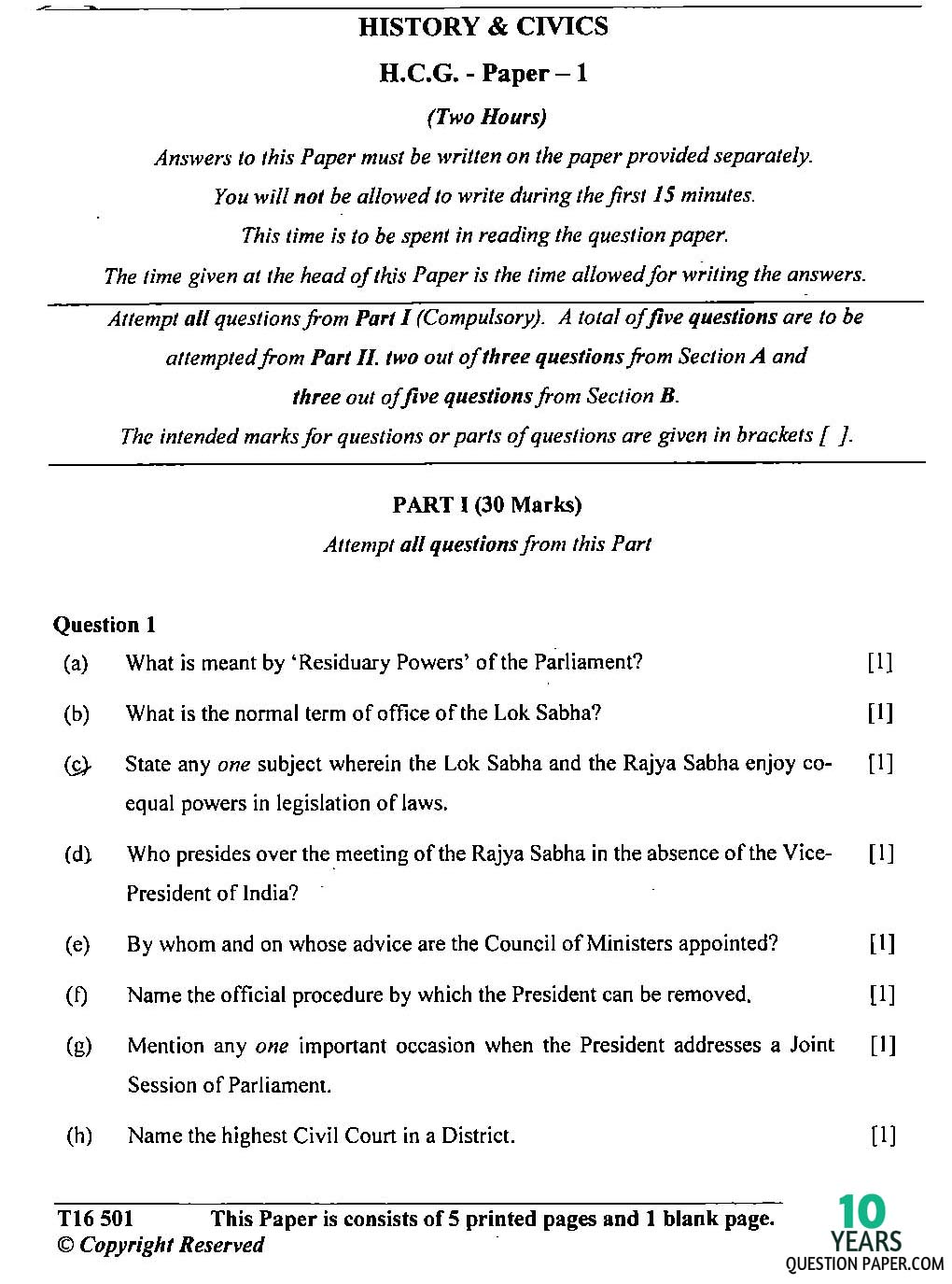
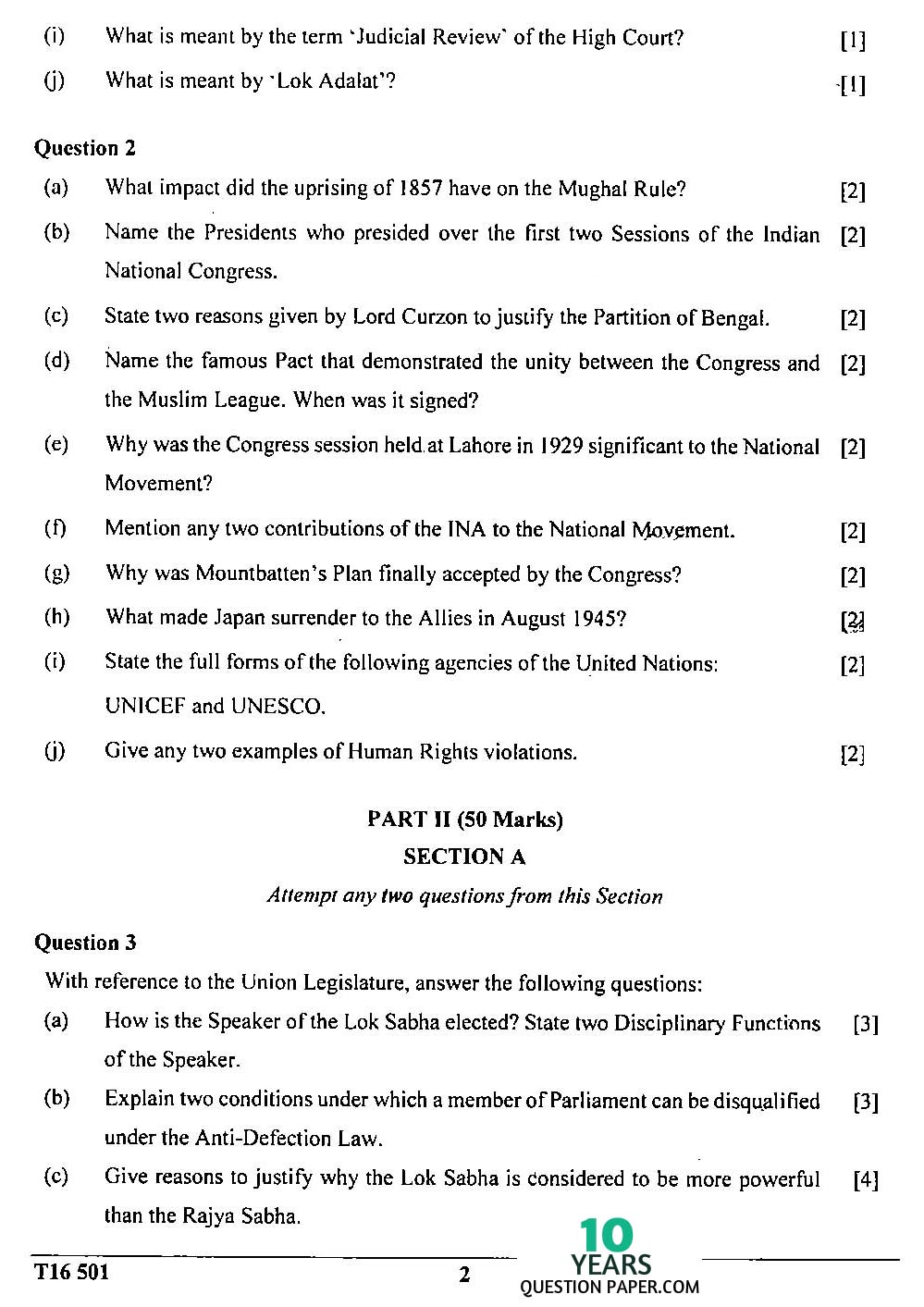
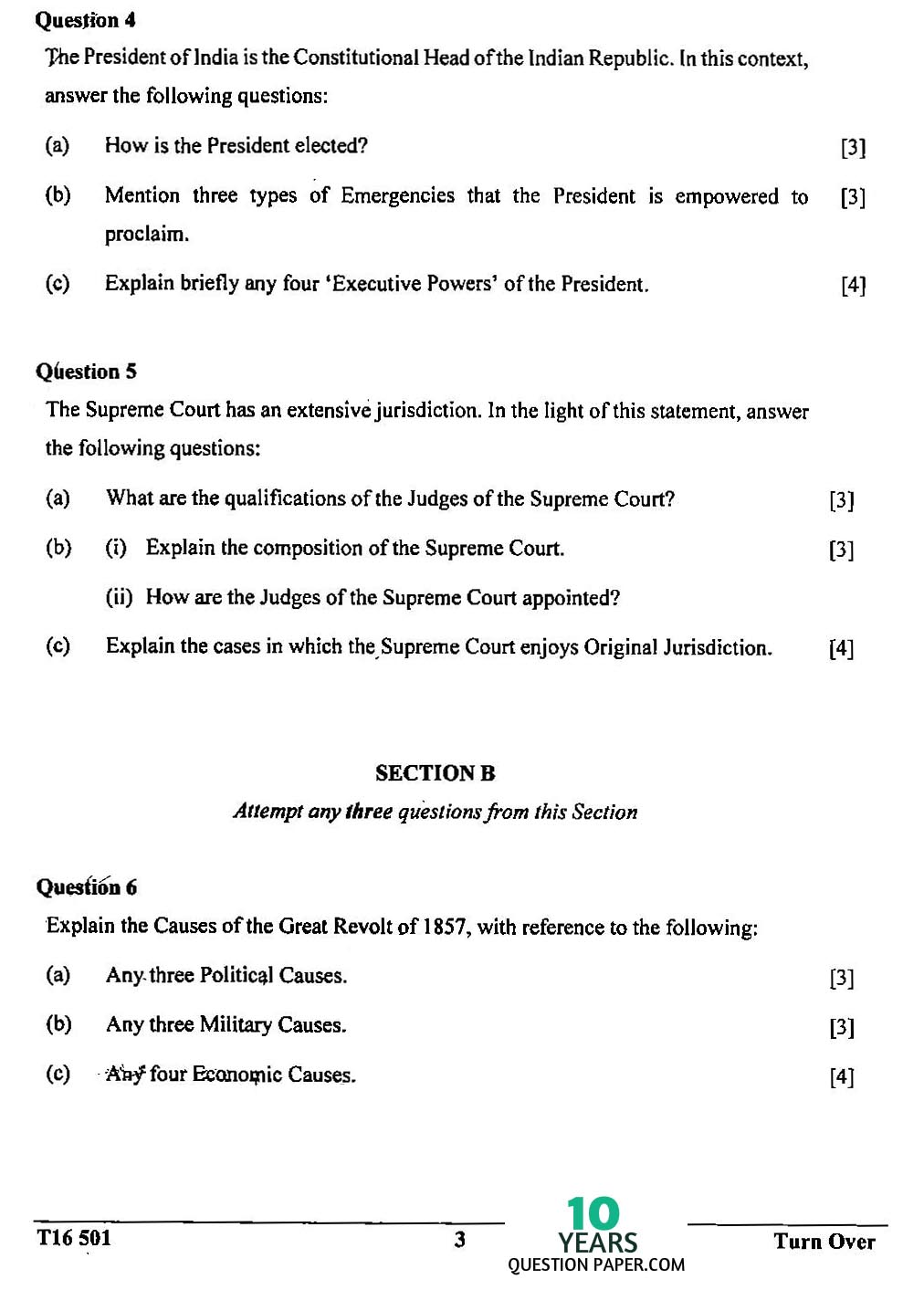
History Civics2016ICSE Class 10 History and Civics (H.C.G. Paper 1) 2016 question paper, code T16 501: 80 marks in 2 hours. Questions only.
Downloaded from www.cisce.org
About this paper
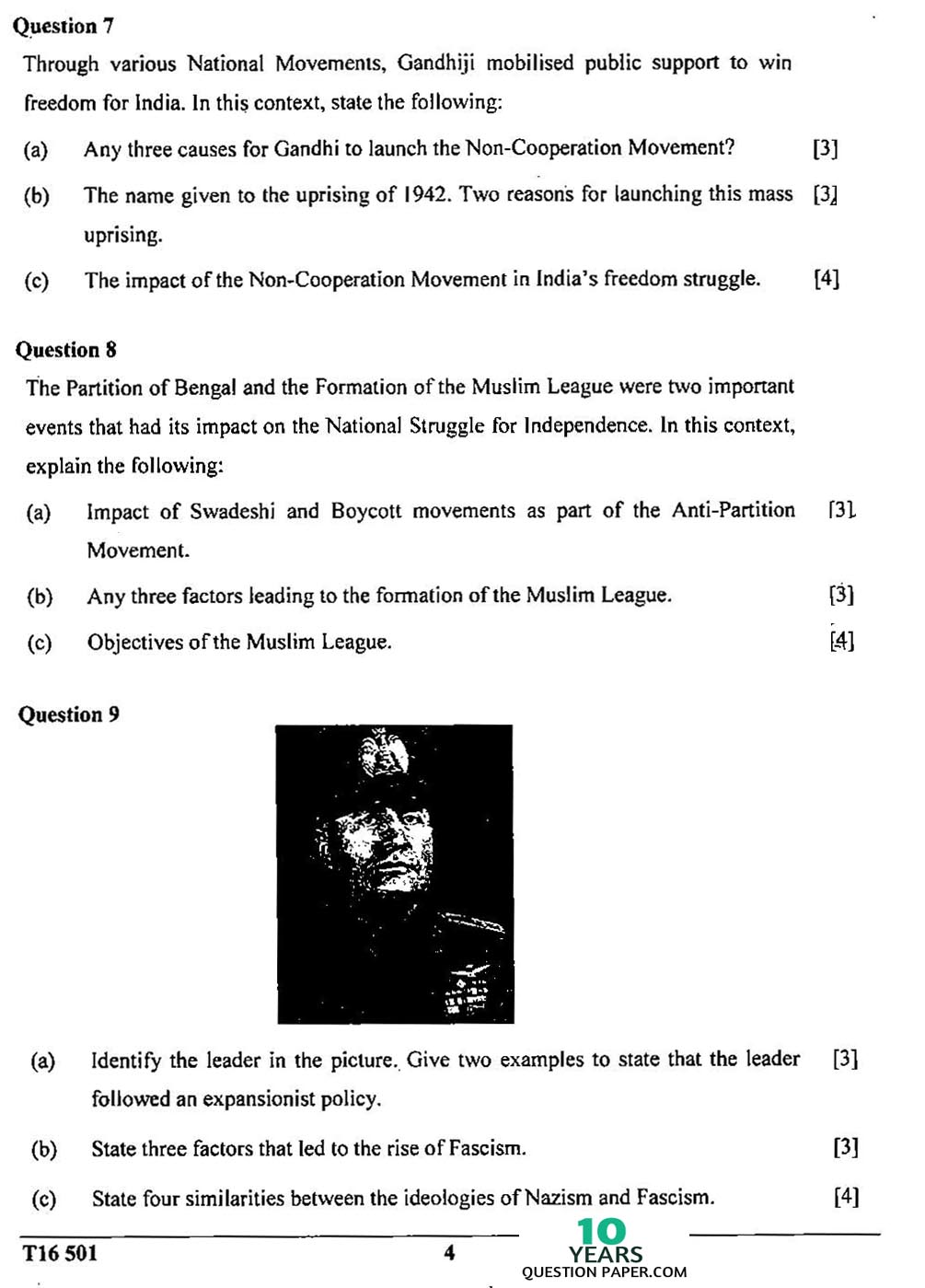
This is the ICSE Class 10 History and Civics paper (H.C.G. Paper 1, code T16 501) from the 2016 board examination. It carries 80 marks and is written in two hours, after fifteen minutes for reading. Part I is compulsory for 30 marks: ten one-mark civics questions and ten two-mark history questions. From Part II, candidates answer any two of three civics questions in Section A and any three of five history questions in Section B, each worth 10 marks. One Section B question uses a picture of a leader and asks about an expansionist policy, Fascism and Nazism. Other long answers cover Parliament, the President, the Supreme Court, the Revolt of 1857, Gandhi's movements and the United Nations. This copy contains the questions only.
- Exam
- ICSE Class 10
- Subject
- History Civics
- Year
- 2016
- Paper code
- T16 501
- Maximum marks
- 80
- Time allowed
- 2 hours + 15 min reading
- Questions
- 10
- Pages
- 5
- Answers included
- No, questions only
Paper pattern
Part I
30 marksCompulsory. Question 1: ten civics questions of 1 mark; Question 2: ten history questions of 2 marks
Part II, Section A
20 marksCivics: any two of Questions 3–5 on Parliament, the President and the Supreme Court, 10 marks each
Part II, Section B
30 marksHistory: any three of Questions 6–10, 10 marks each, including one picture question on Fascism
Topics covered
- Union Legislature and the Speaker
- Anti-defection law
- Election and powers of the President
- Supreme Court and judicial review
- Lok Adalats
- Revolt of 1857
- Partition of Bengal and the Muslim League
- Non-Cooperation and Quit India
- Mountbatten Plan
- Fascism and Nazism
- United Nations, WHO and the ICJ
Questions from this paper
- What is meant by the residuary powers of Parliament?
- Name the official procedure by which the President can be removed.
- State two reasons given by Lord Curzon to justify the Partition of Bengal.
- Explain two conditions under which a member of Parliament can be disqualified under the Anti-Defection Law.
- What made Japan surrender to the Allies in August 1945?
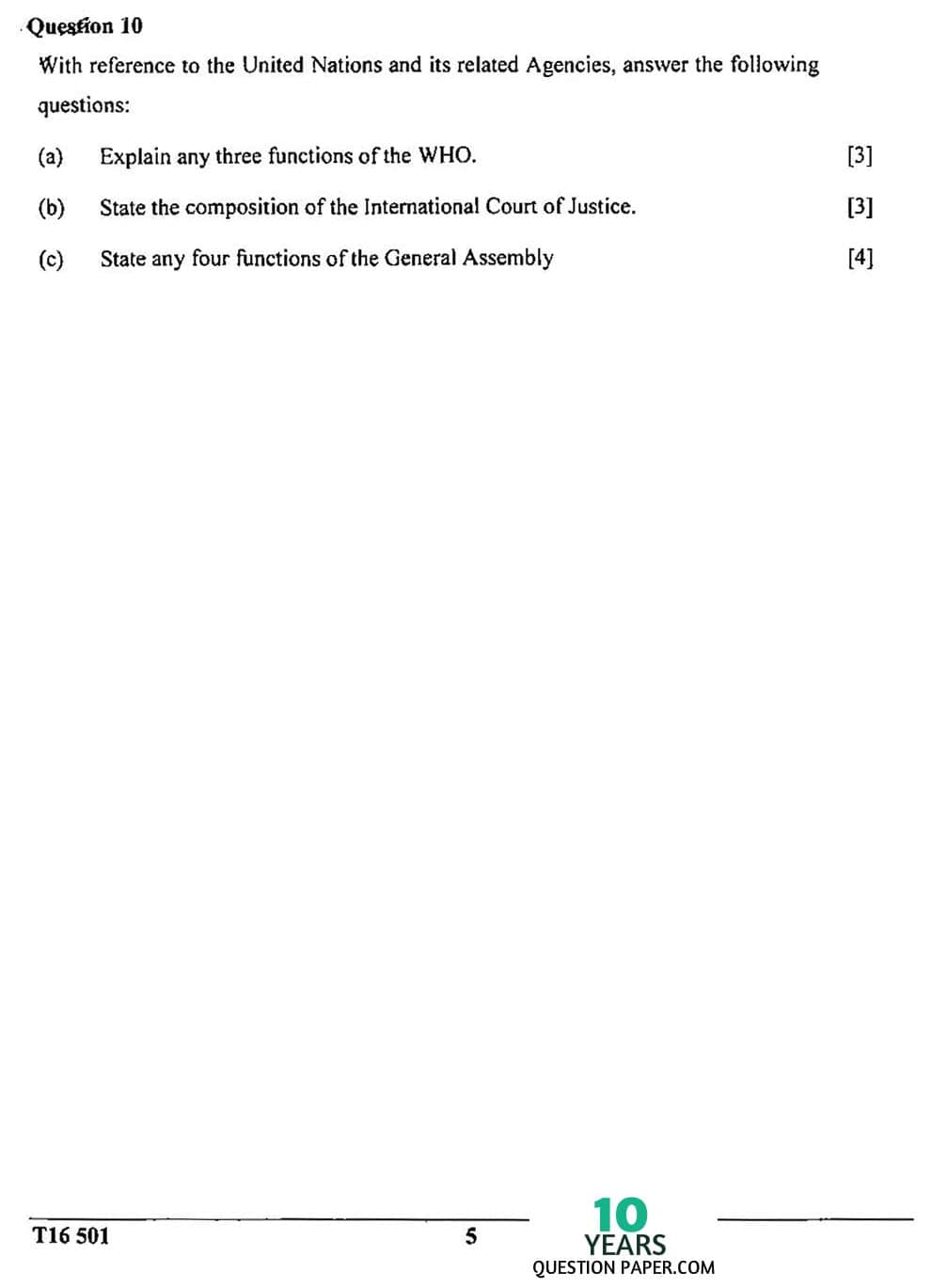
- State the composition of the International Court of Justice.
Free email alert
Get the 2027 ICSE Class 10 papers first
One email when the new ICSE Class 10 History Civics question papers are published here. No spam, unsubscribe any time.
What's next
Class 10 done next year?
A number of scholarships for Class 11–12 depend on your Class 10 marks.
Check eligibility