ICSE 2018 Economics Question Paper for Class 10

ICSE
Economics2018ICSE 2018 Economics solved question paper for class 10 - prepared by our expert teachers download and view previous year ICSE Economics 2018 question and solve them to make sure you are well prepared.
Downloaded from www.cisce.org
About this paper
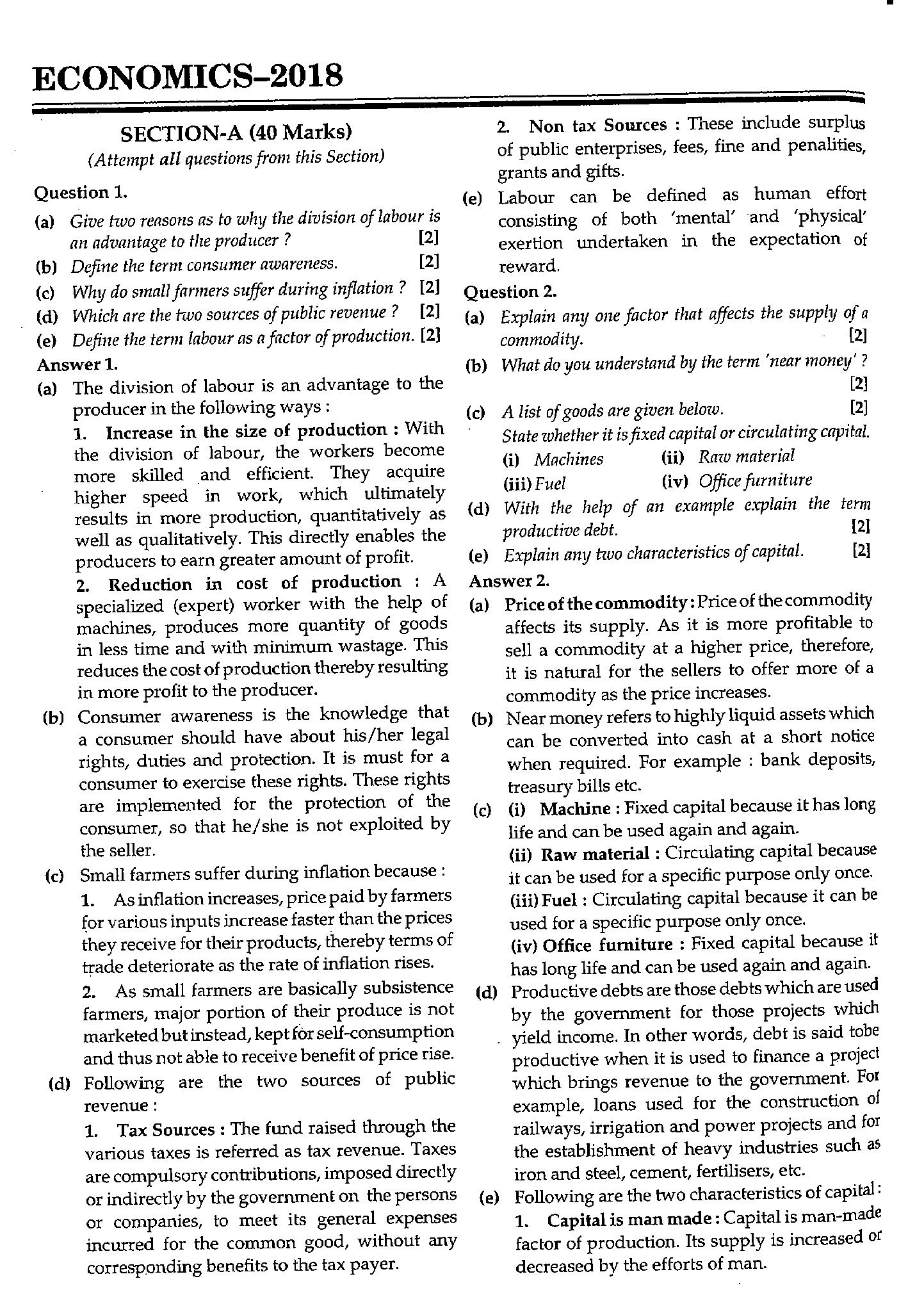
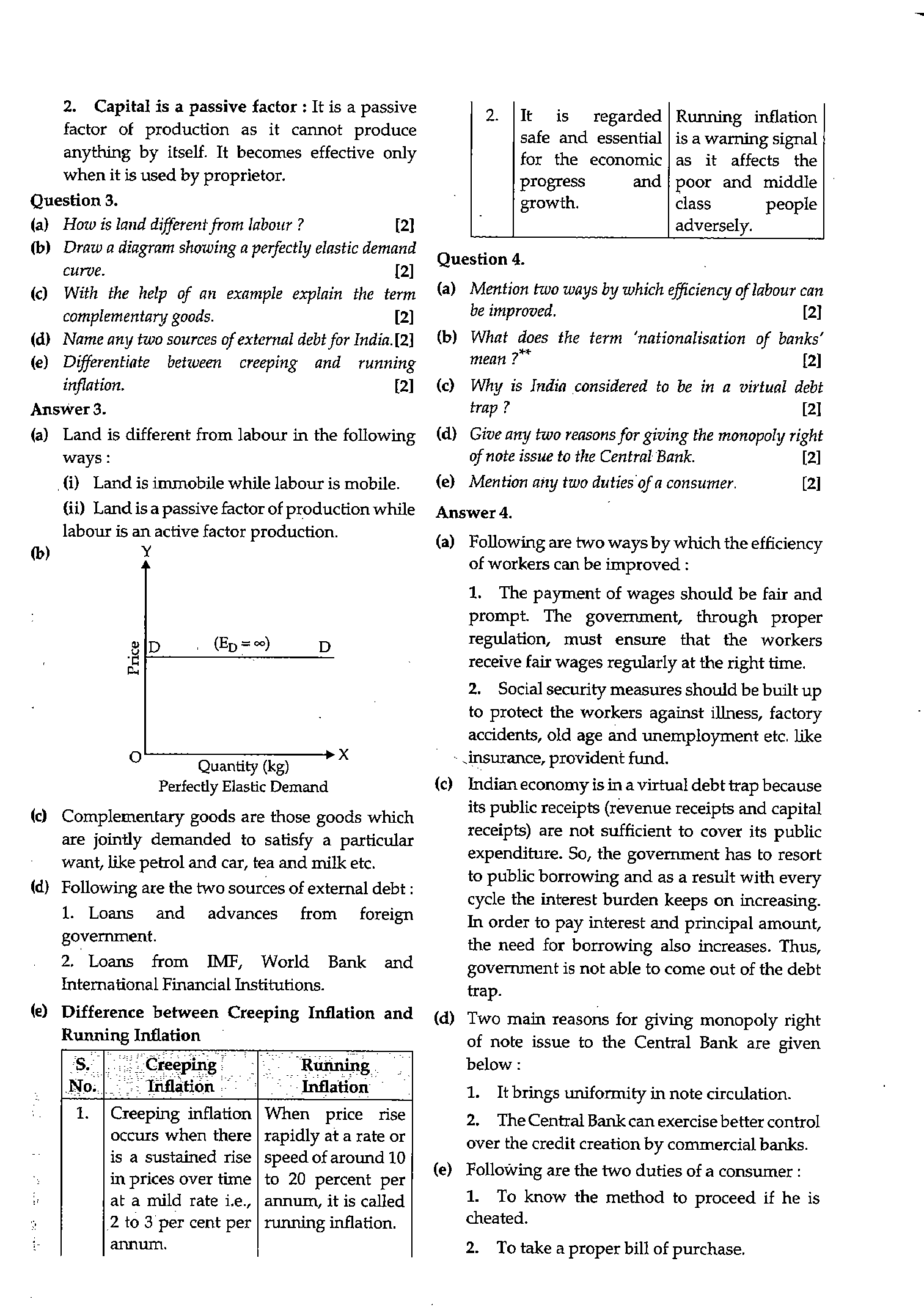
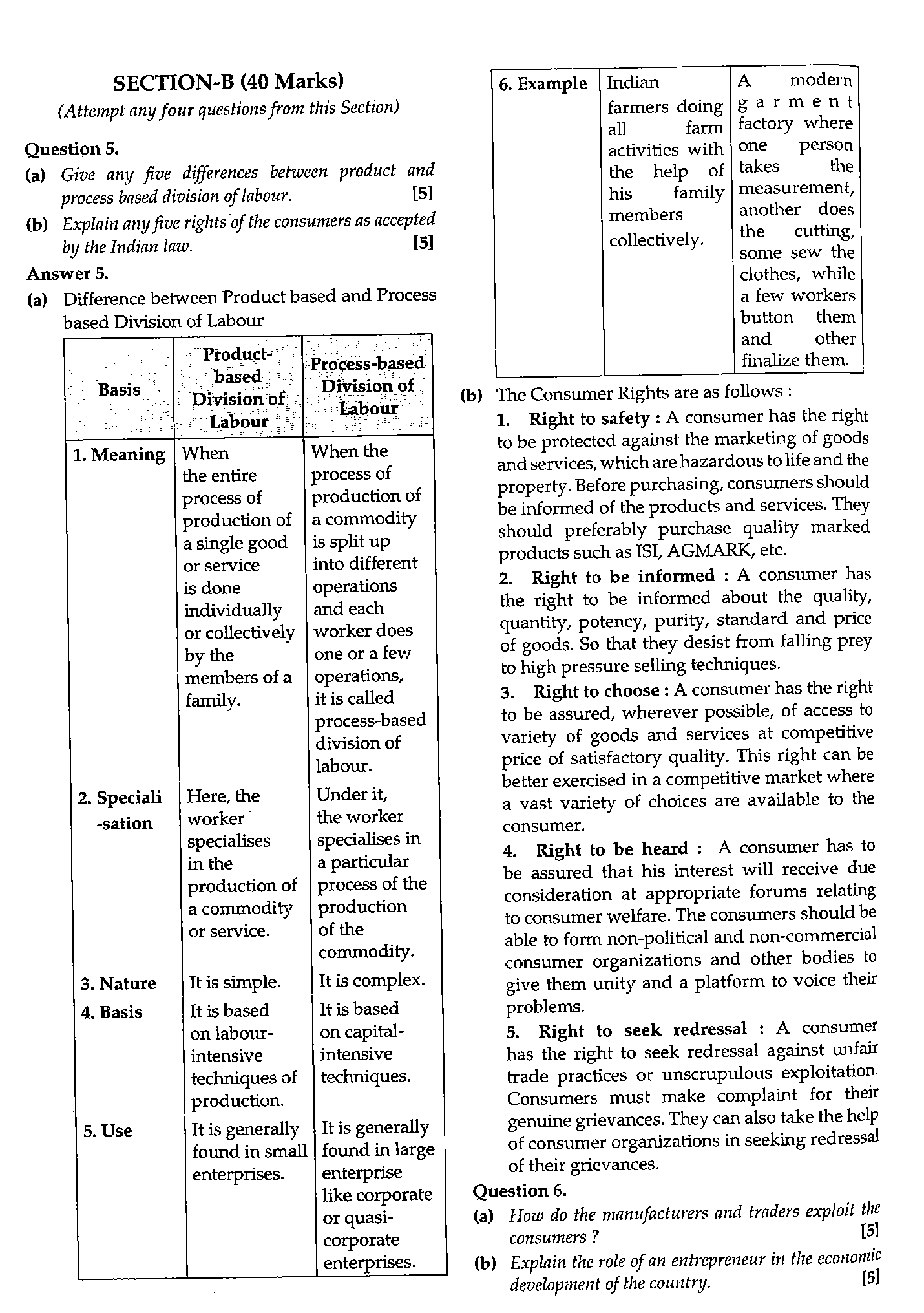
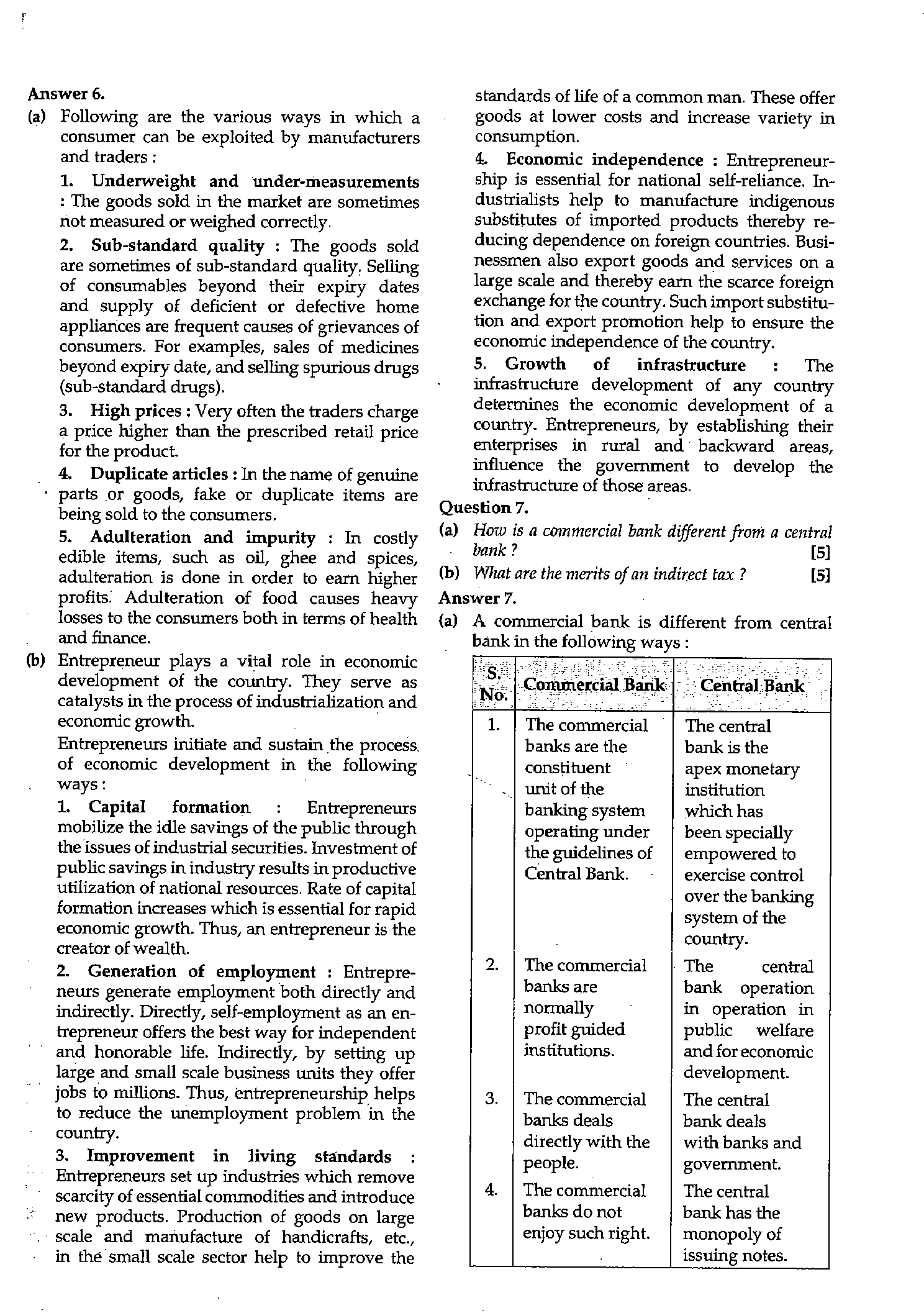
This is the ICSE Class 10 Economics paper from the 2018 board examination, with a worked answer printed after every question. Section A (40 marks) has four compulsory questions of five two-mark parts each, including classifying machines, raw material, fuel and office furniture as fixed or circulating capital, explaining near money and productive debt, and why India is said to be in a virtual debt trap. Section B (40 marks) asks students to attempt any four of six 10-mark questions on division of labour and consumer rights, consumer exploitation and entrepreneurs, commercial versus central banks and indirect taxes, inelastic demand and bank accounts, taxes and demand-pull inflation, and demand and public expenditure. The answers include demand-curve diagrams and comparison tables.
- Exam
- ICSE Class 10
- Subject
- Economics
- Year
- 2018
- Maximum marks
- 80
- Questions
- 10
- Pages
- 7
- Answers included
- Yes
Paper pattern
Section A
40 marksQuestions 1–4, each with five two-mark parts; all compulsory
Section B
40 marksQuestions 5–10, 10 marks each (5 + 5); attempt any four
Topics covered
- Demand, its determinants and elasticity
- Supply and its determinants
- Factors of production: land, labour, capital and entrepreneur
- Division of labour
- Money and near money
- Commercial banks and the central bank
- Inflation
- Taxation and public revenue
- Public debt and public expenditure
- Consumer awareness and consumer rights
Questions from this paper
- Why do small farmers suffer during inflation?
- State whether each of the following is fixed capital or circulating capital: machines, raw material, fuel and office furniture.
- Why is India considered to be in a virtual debt trap?
- Give any five differences between product-based and process-based division of labour.
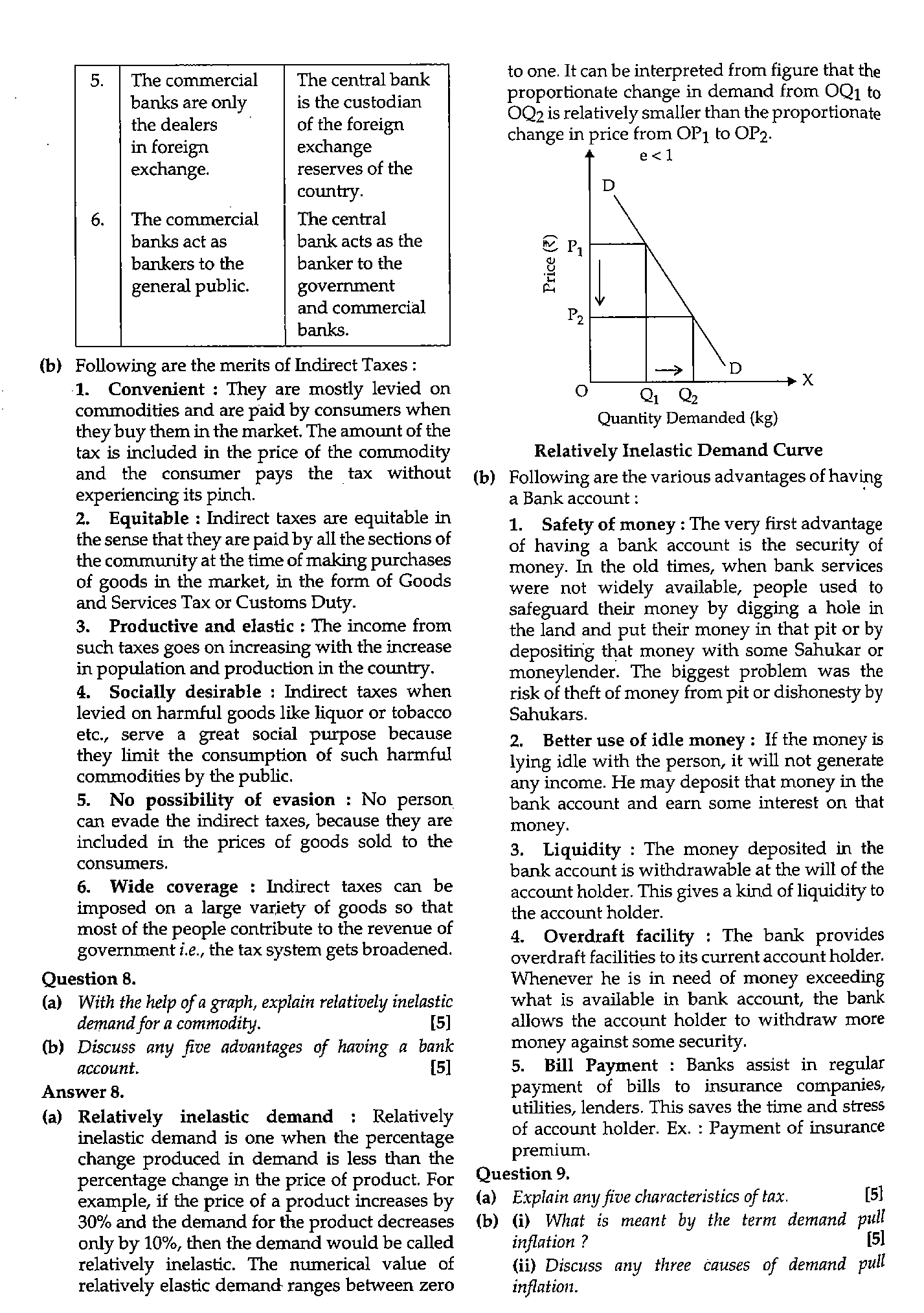
- With the help of a graph, explain relatively inelastic demand for a commodity.
- Why are articles of distinction, or the Veblen effect, an exception to the law of demand?
Free email alert
Get the 2027 ICSE Class 10 papers first
One email when the new ICSE Class 10 Economics question papers are published here. No spam, unsubscribe any time.
What's next
Class 10 done next year?
A number of scholarships for Class 11–12 depend on your Class 10 marks.
Check eligibility