ICSE 2018 Economic Applications Question Paper for Class 10

ICSE
Economic Applications2018ICSE 2018 Economic Applications solved question paper for class 10 - prepared by our expert teachers download and view previous year ICSE Economic Applications 2018 question and solve them to make sure you are well prepared.
Downloaded from www.cisce.org
About this paper
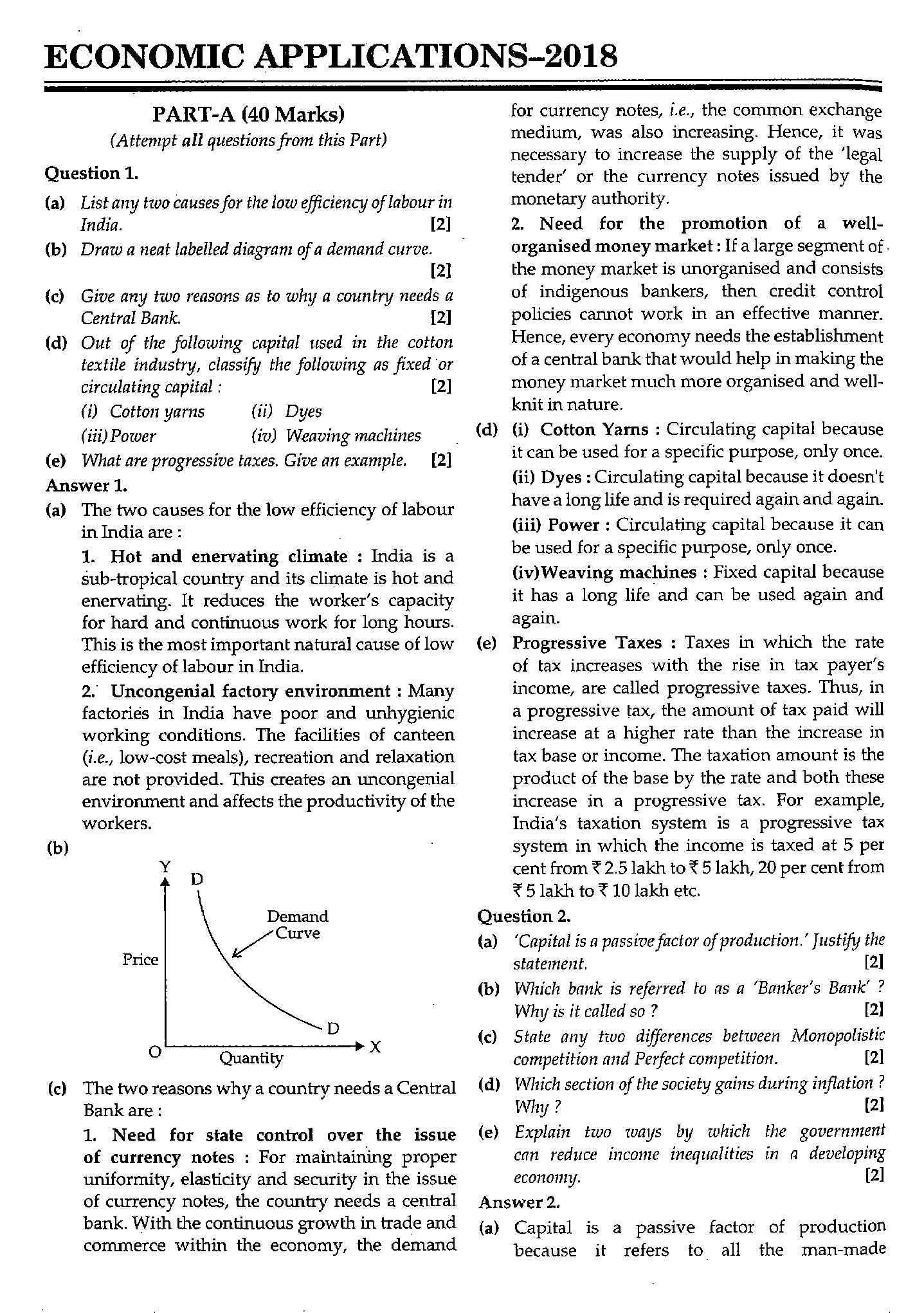
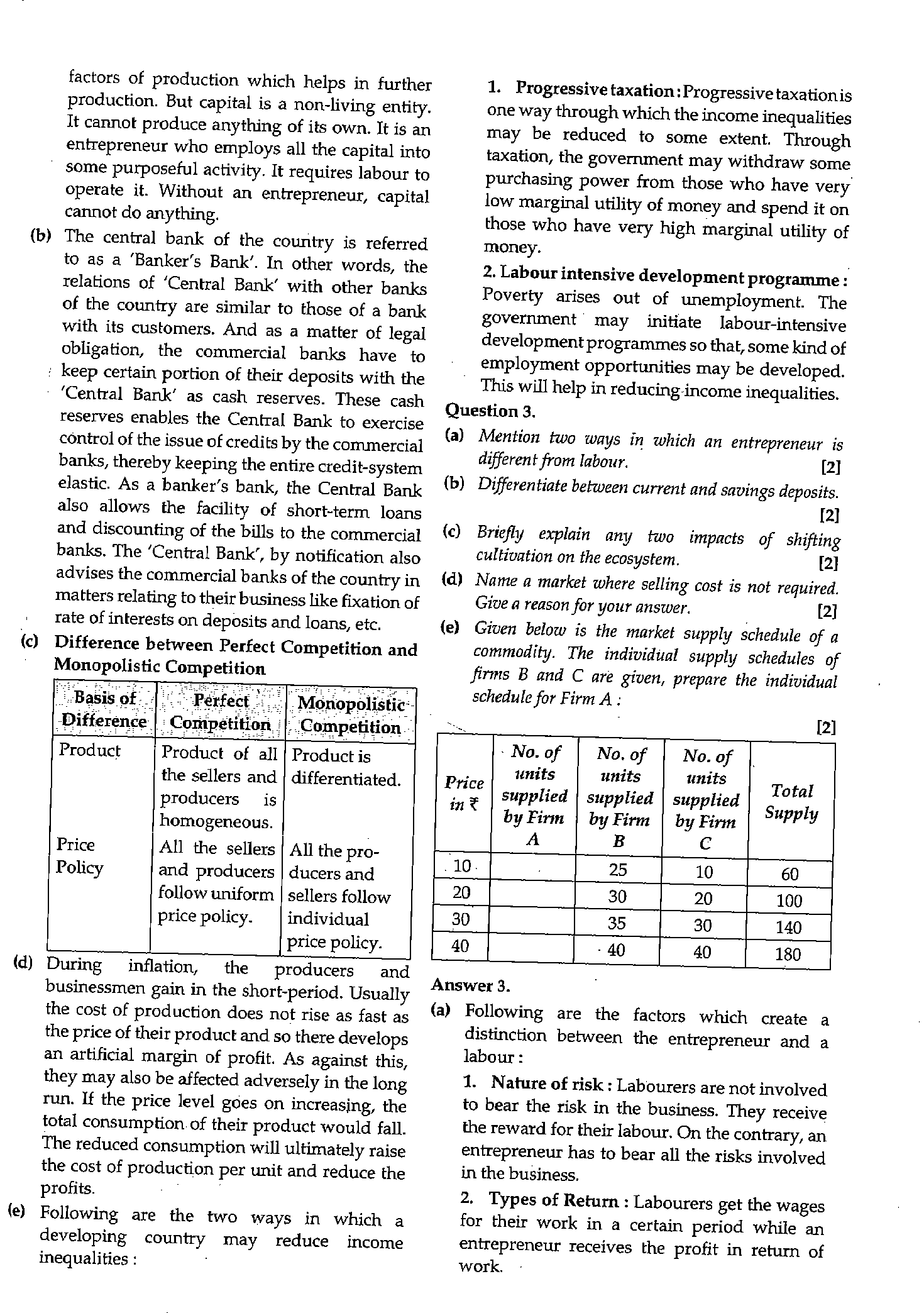
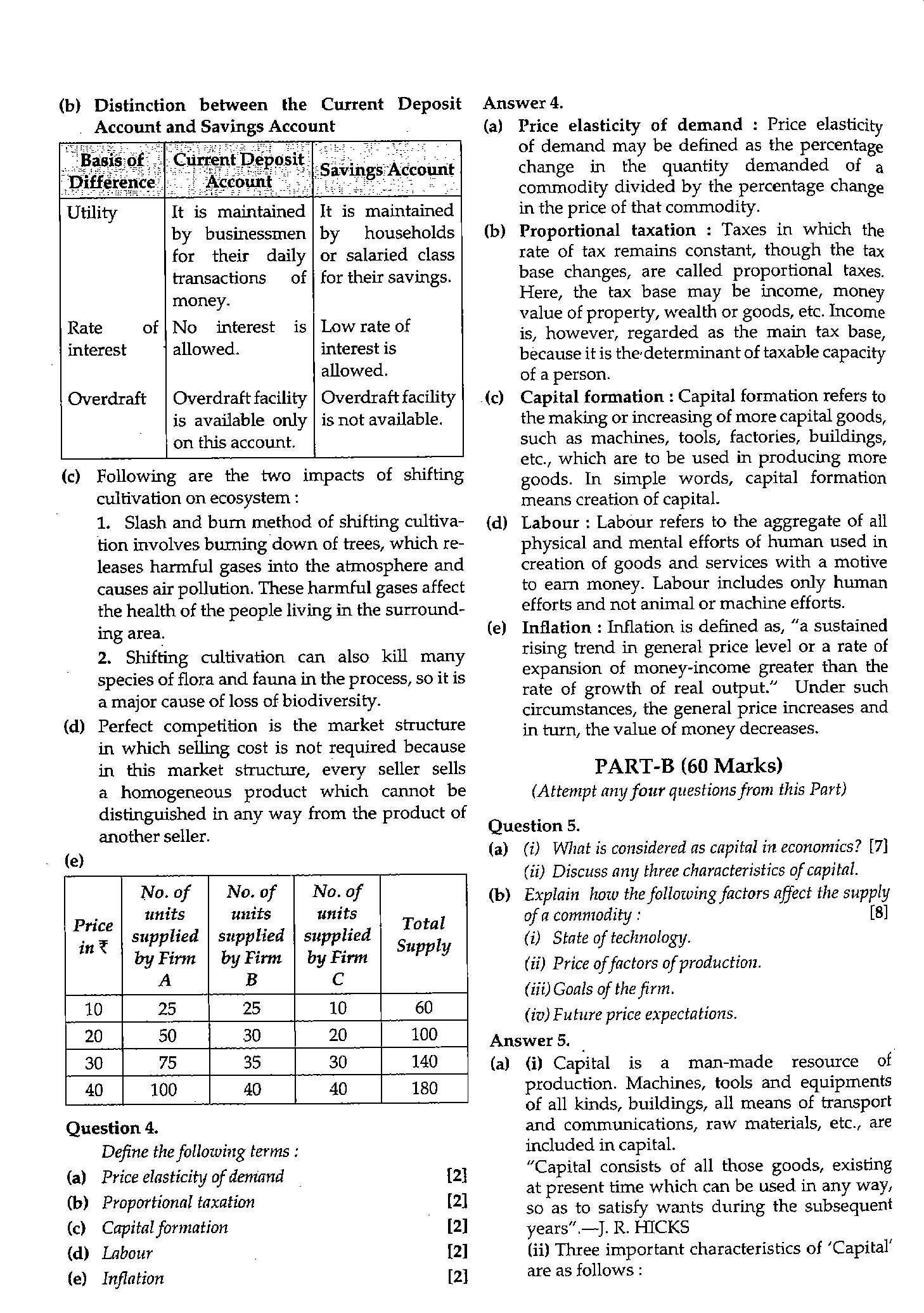
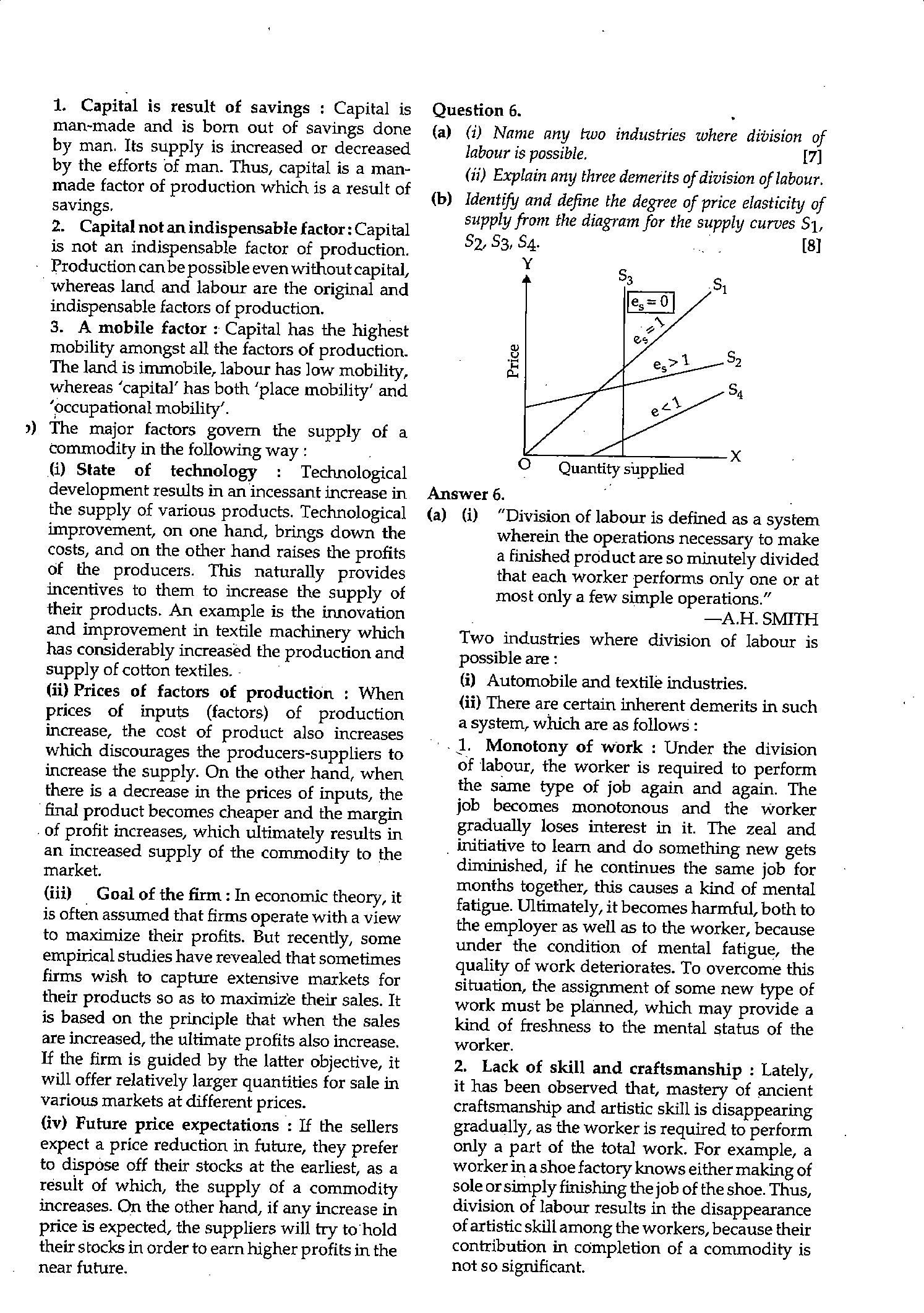
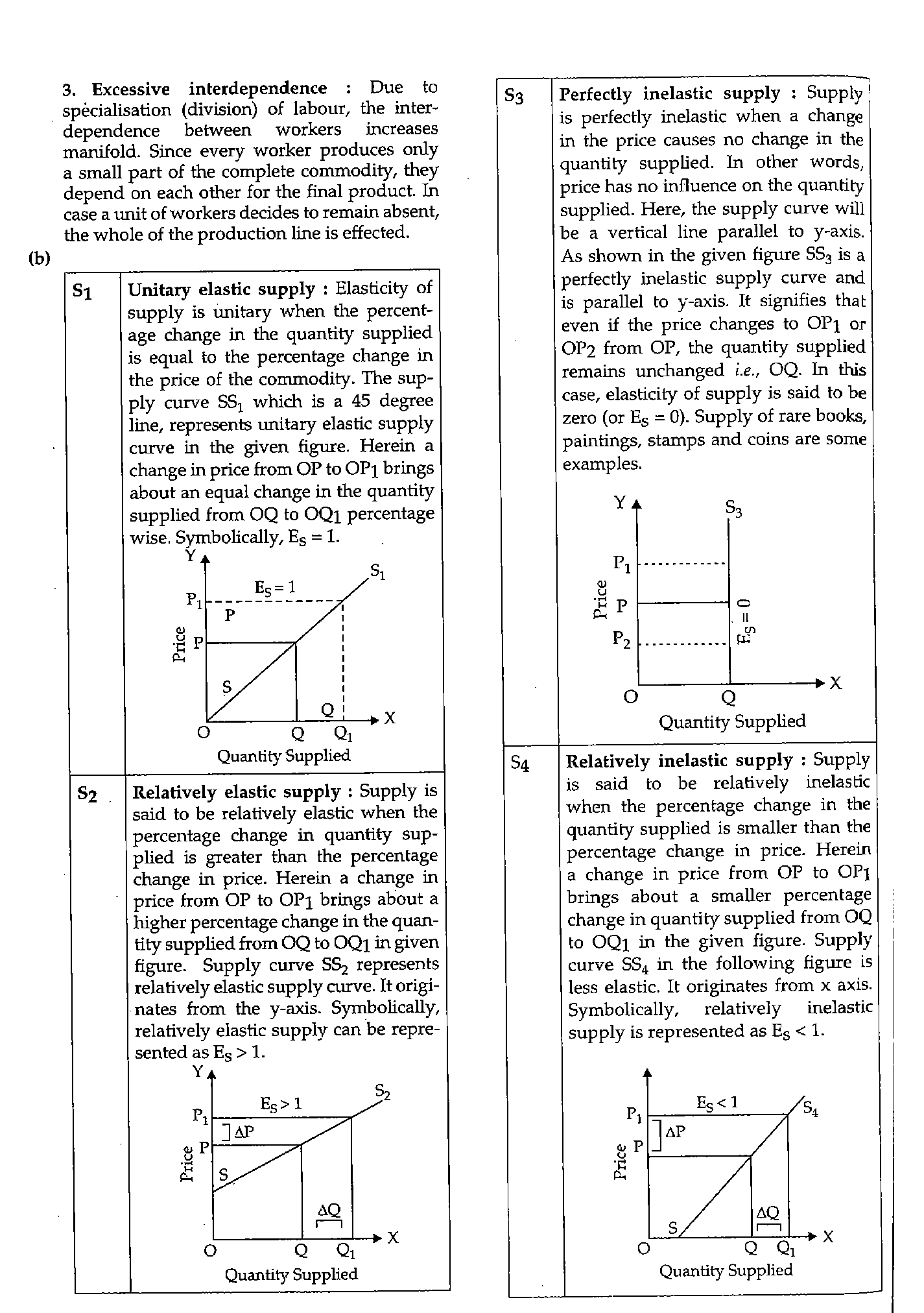
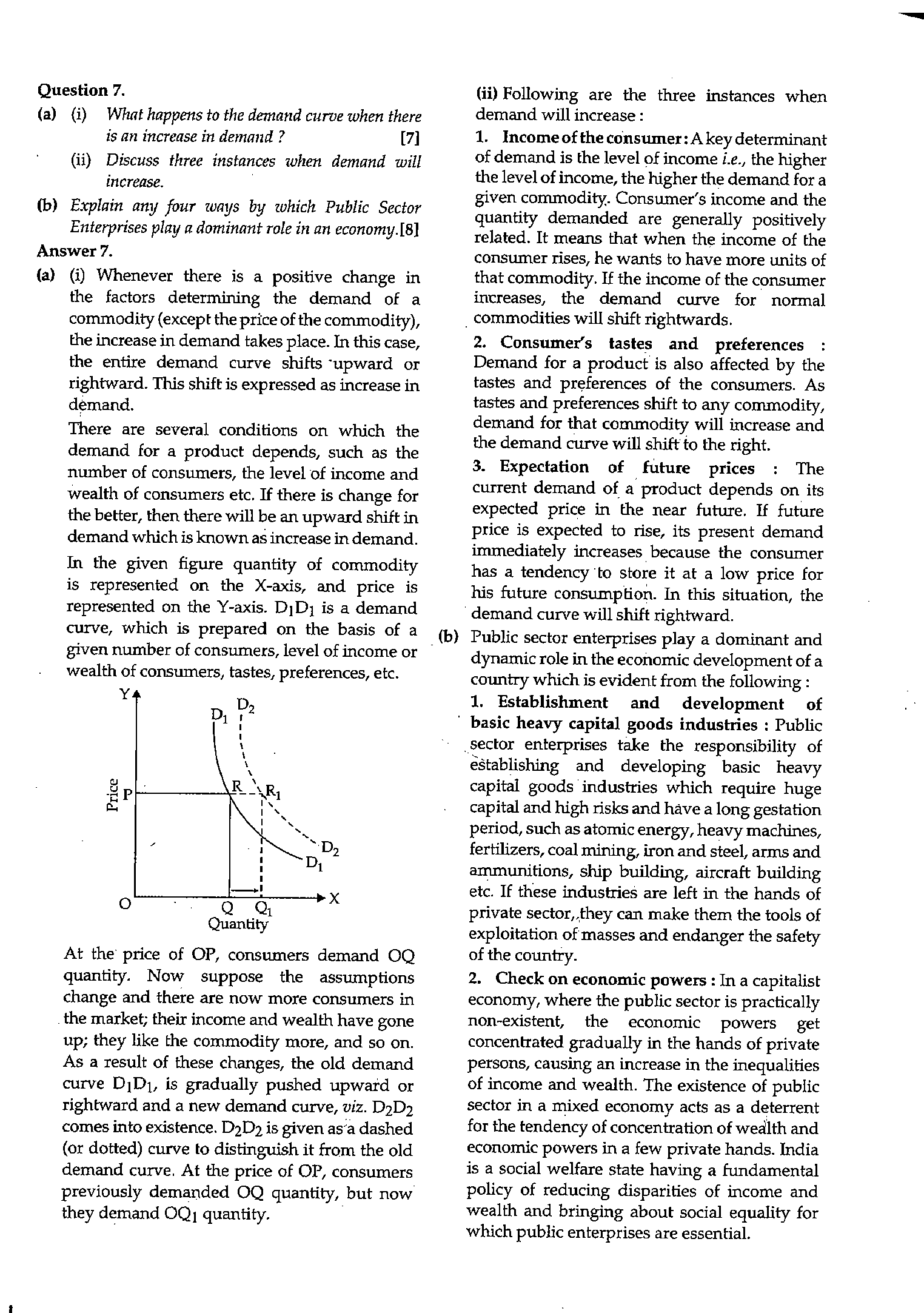
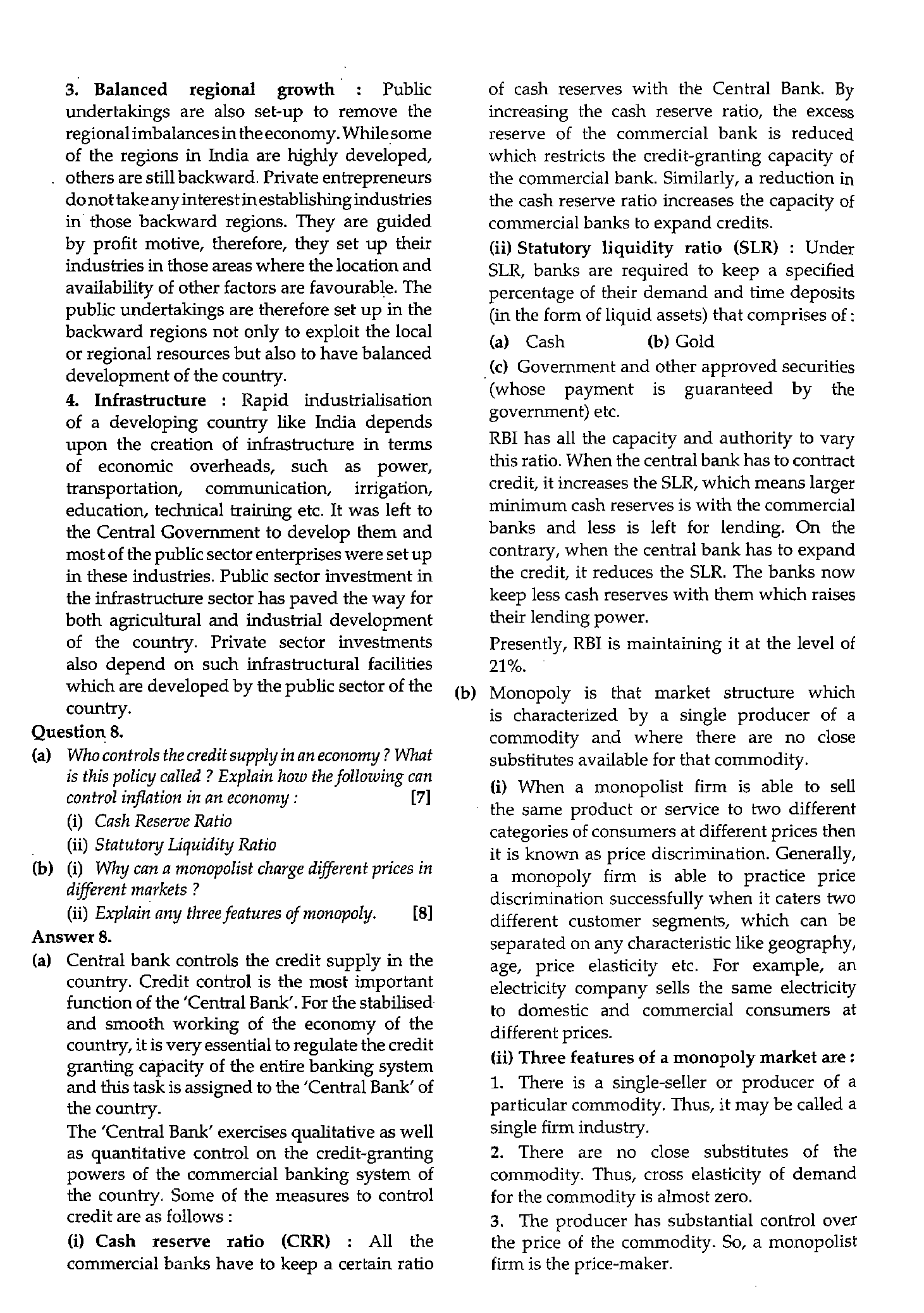
This is the ICSE Class 10 Economic Applications paper from the 2018 board examination, with a worked answer printed after every question. Part A (40 marks) has four compulsory questions of five two-mark parts each, including classifying inputs of a cotton textile mill as fixed or circulating capital, completing a firm's supply schedule from the market schedule, and defining terms such as proportional taxation and capital formation. Part B (60 marks) asks students to attempt any four 15-mark questions; this copy shows Questions 5–8, on capital and the determinants of supply, division of labour and degrees of elasticity of supply, increase in demand and public sector enterprises, and credit control and monopoly. The answers include labelled demand and supply diagrams.
- Exam
- ICSE Class 10
- Subject
- Economic Applications
- Year
- 2018
- Maximum marks
- 100
- Pages
- 7
- Answers included
- Yes
Paper pattern
Part A
40 marksQuestions 1–4, each with five two-mark parts; all compulsory
Part B
60 marks15-mark questions (7 + 8) from Question 5 onwards; attempt any four
Topics covered
- Demand and shifts in the demand curve
- Supply and its determinants
- Elasticity of demand and supply
- Factors of production: labour, capital and entrepreneur
- Division of labour
- Perfect competition, monopolistic competition and monopoly
- Central bank and credit control
- Commercial bank deposits
- Inflation
- Taxation and income inequality
- Public sector enterprises
- Shifting cultivation and the ecosystem
Questions from this paper
- List any two causes of the low efficiency of labour in India.
- Classify the following capital used in the cotton textile industry as fixed or circulating capital: cotton yarns, dyes, power and weaving machines.
- 'Capital is a passive factor of production.' Justify the statement.
- Briefly explain any two impacts of shifting cultivation on the ecosystem.
- Explain how the state of technology, the prices of factors of production, the goals of the firm and future price expectations affect the supply of a commodity.
- Who controls the credit supply in an economy? Explain how the Cash Reserve Ratio and the Statutory Liquidity Ratio can control inflation.
Free email alert
Get the 2027 ICSE Class 10 papers first
One email when the new ICSE Class 10 Economic Applications question papers are published here. No spam, unsubscribe any time.
What's next
Class 10 done next year?
A number of scholarships for Class 11–12 depend on your Class 10 marks.
Check eligibility