Solved CBSE Class 12 Chemistry Term-1 Question Paper 2021

CBSE
Chemistry2021CBSE Class 12 Chemistry Term-1 question paper 2021-22 (code 056/1/4): 55 MCQs, attempt 45, for 35 marks in 90 minutes. Questions only, no solutions.
Practice these questions to improve your performance in the board examination.
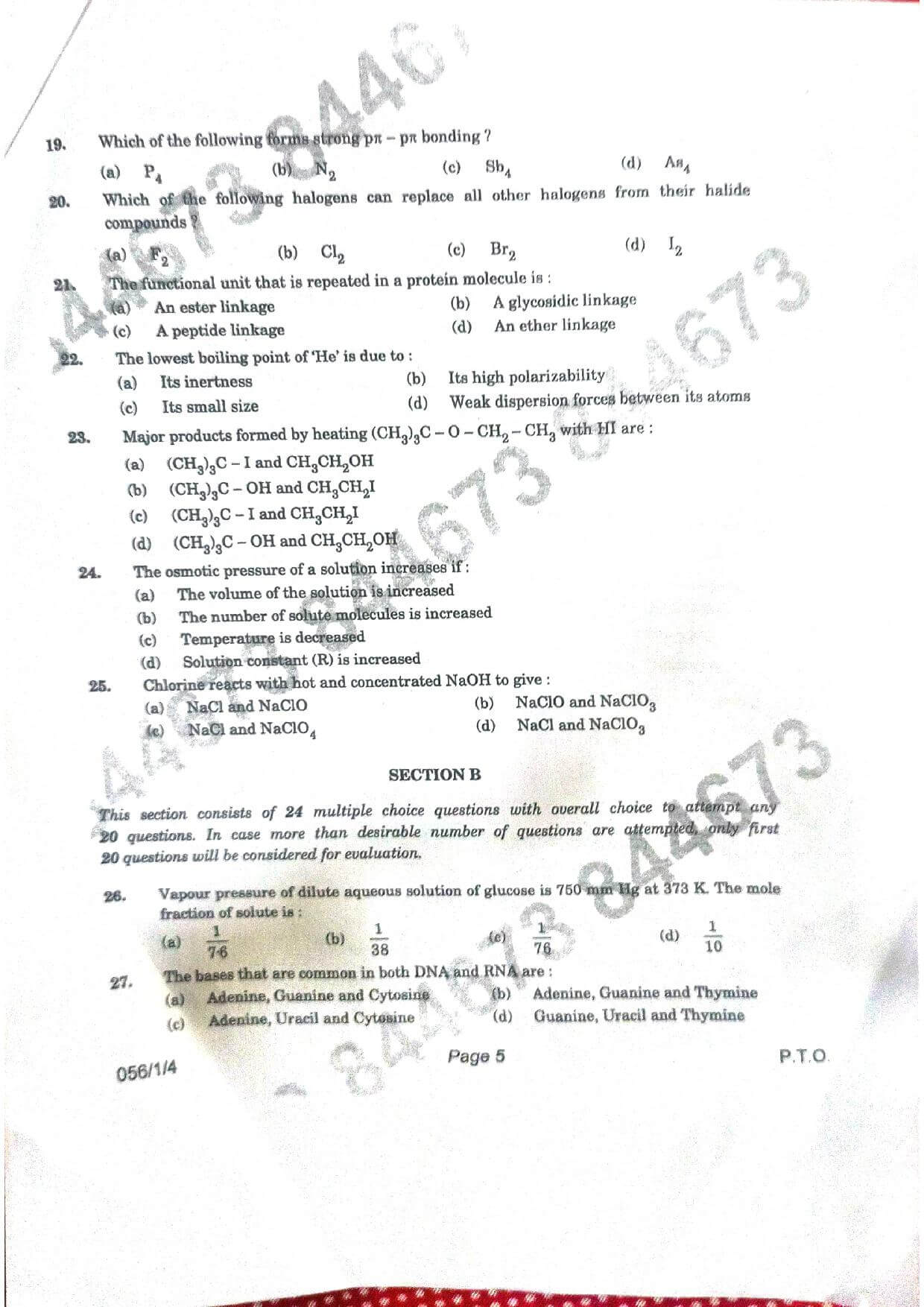
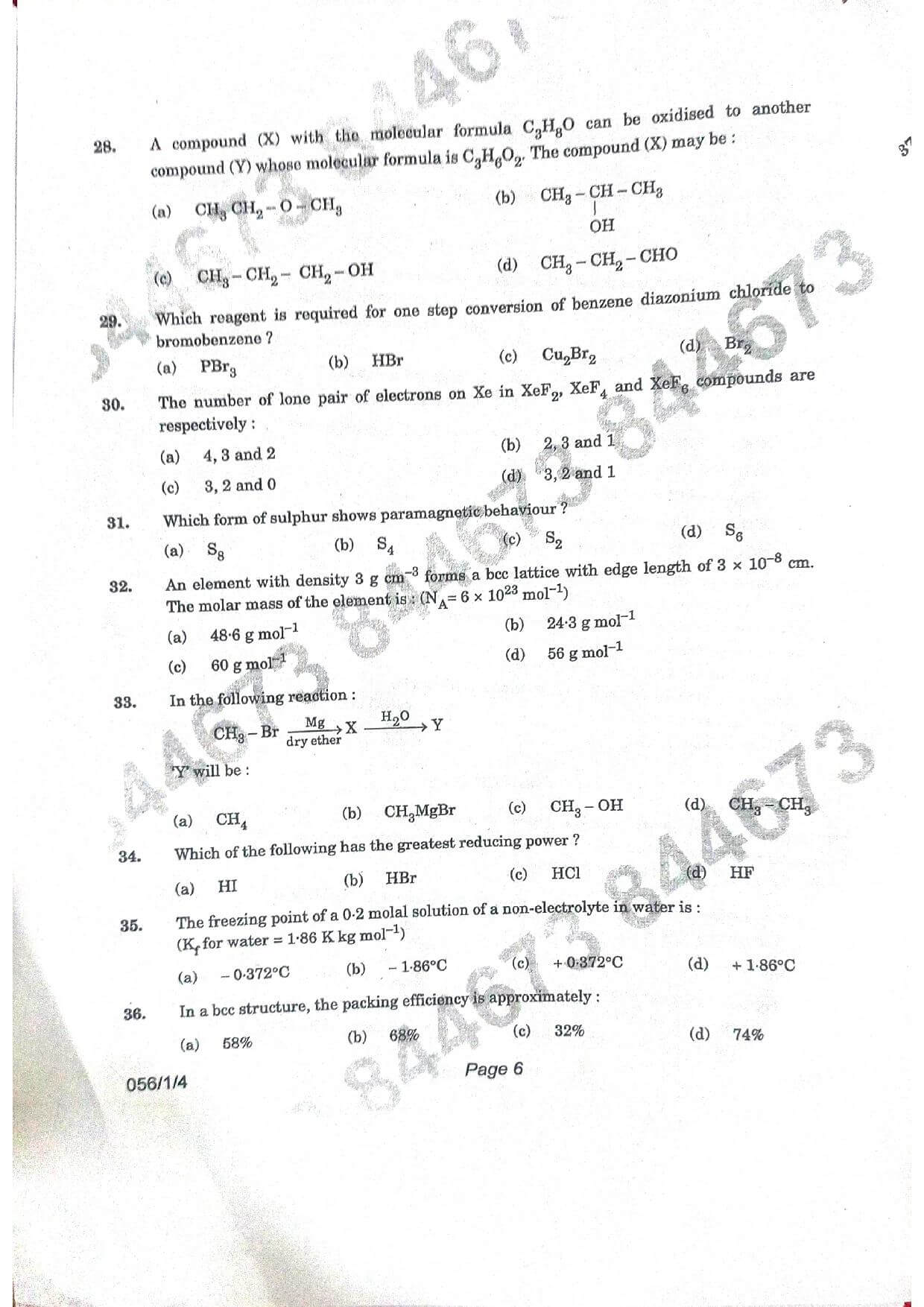
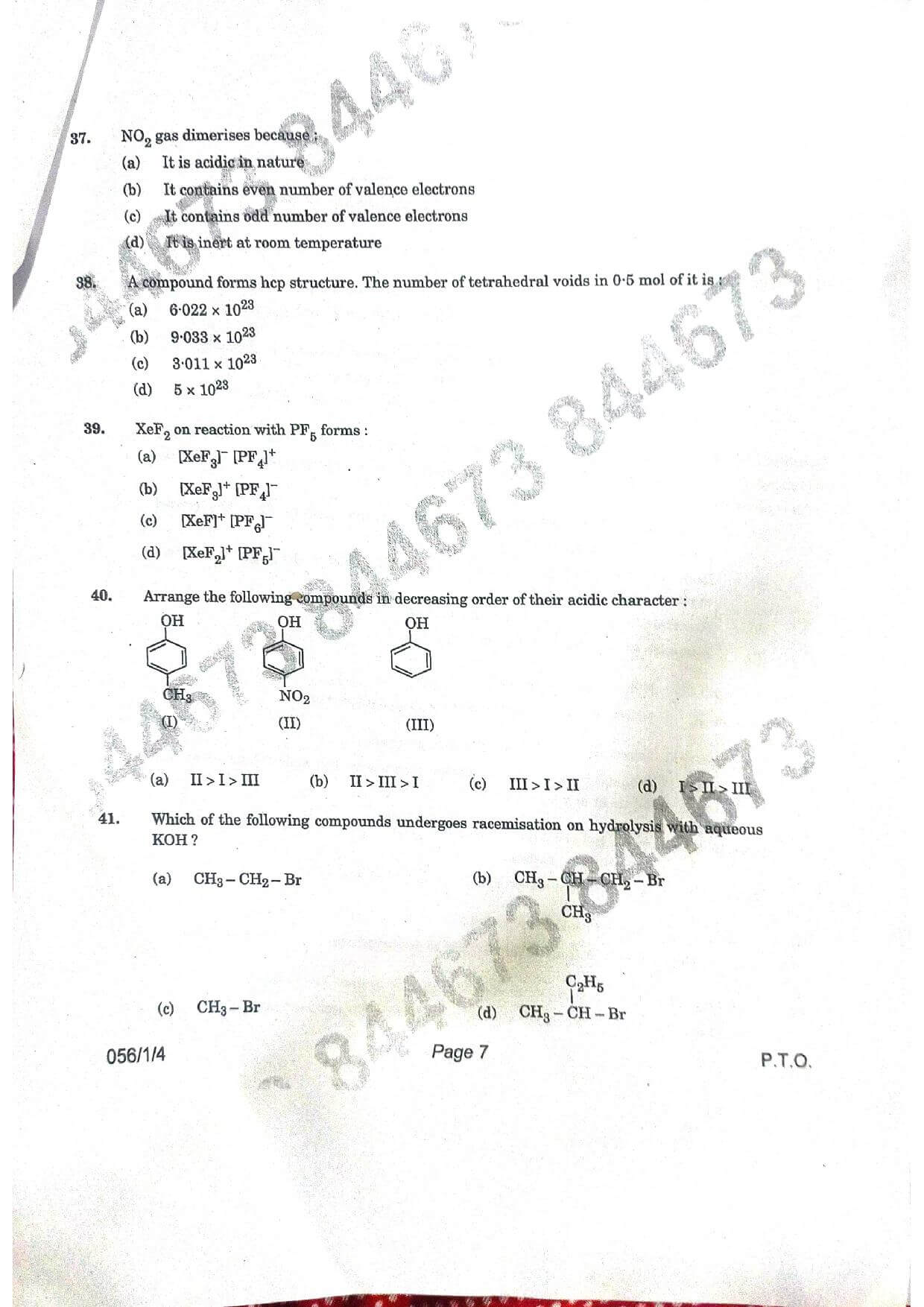
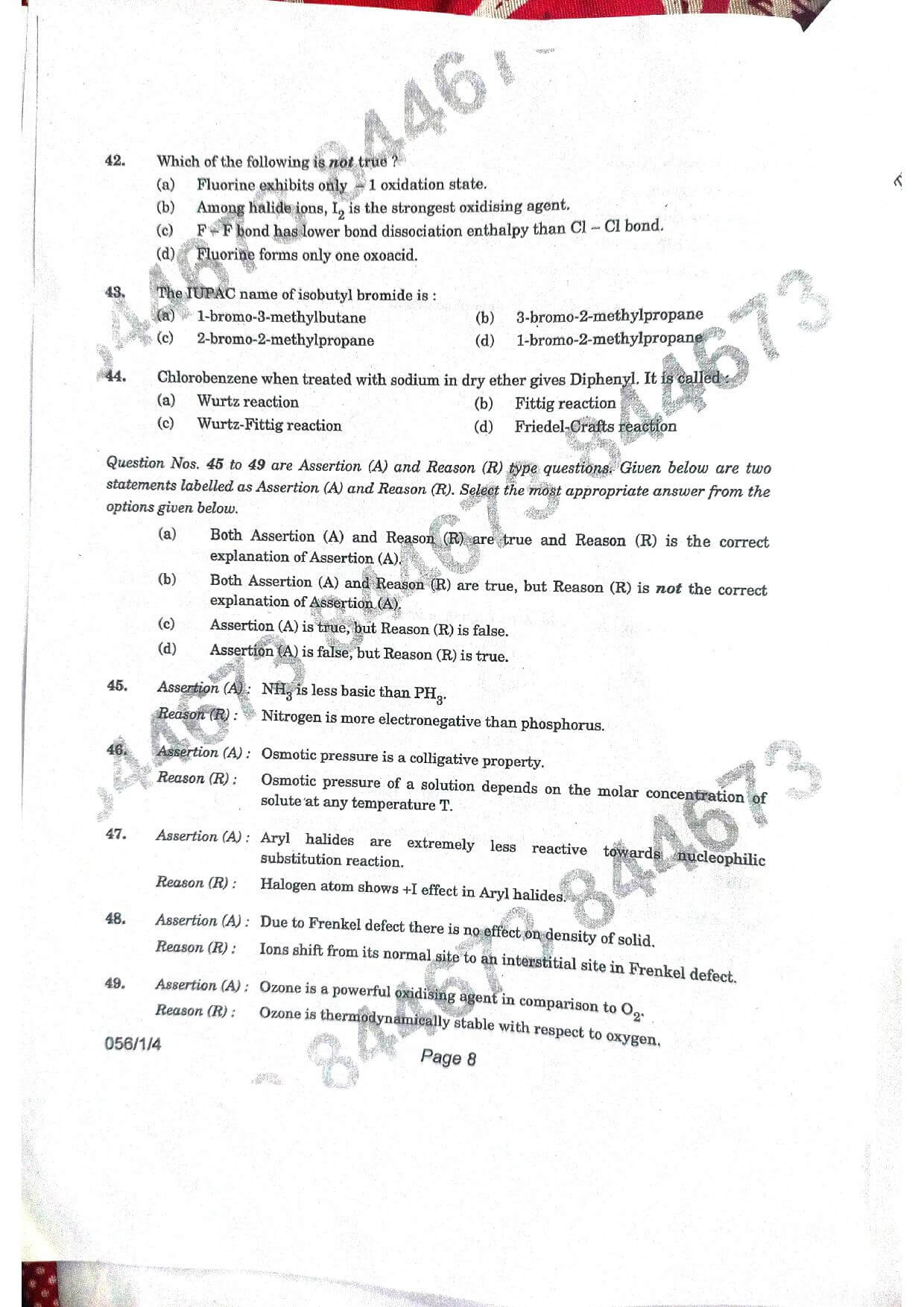
About this paper
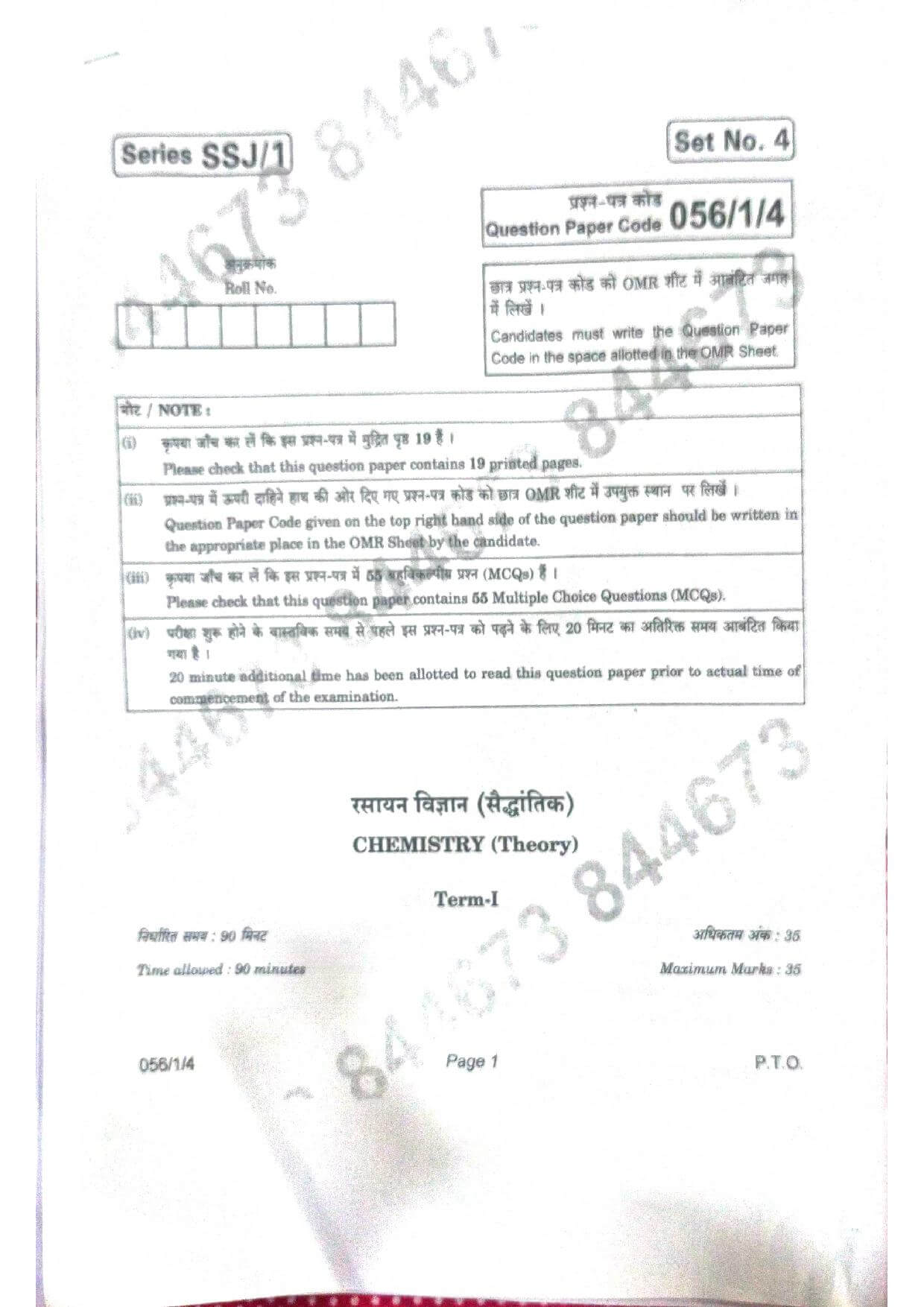
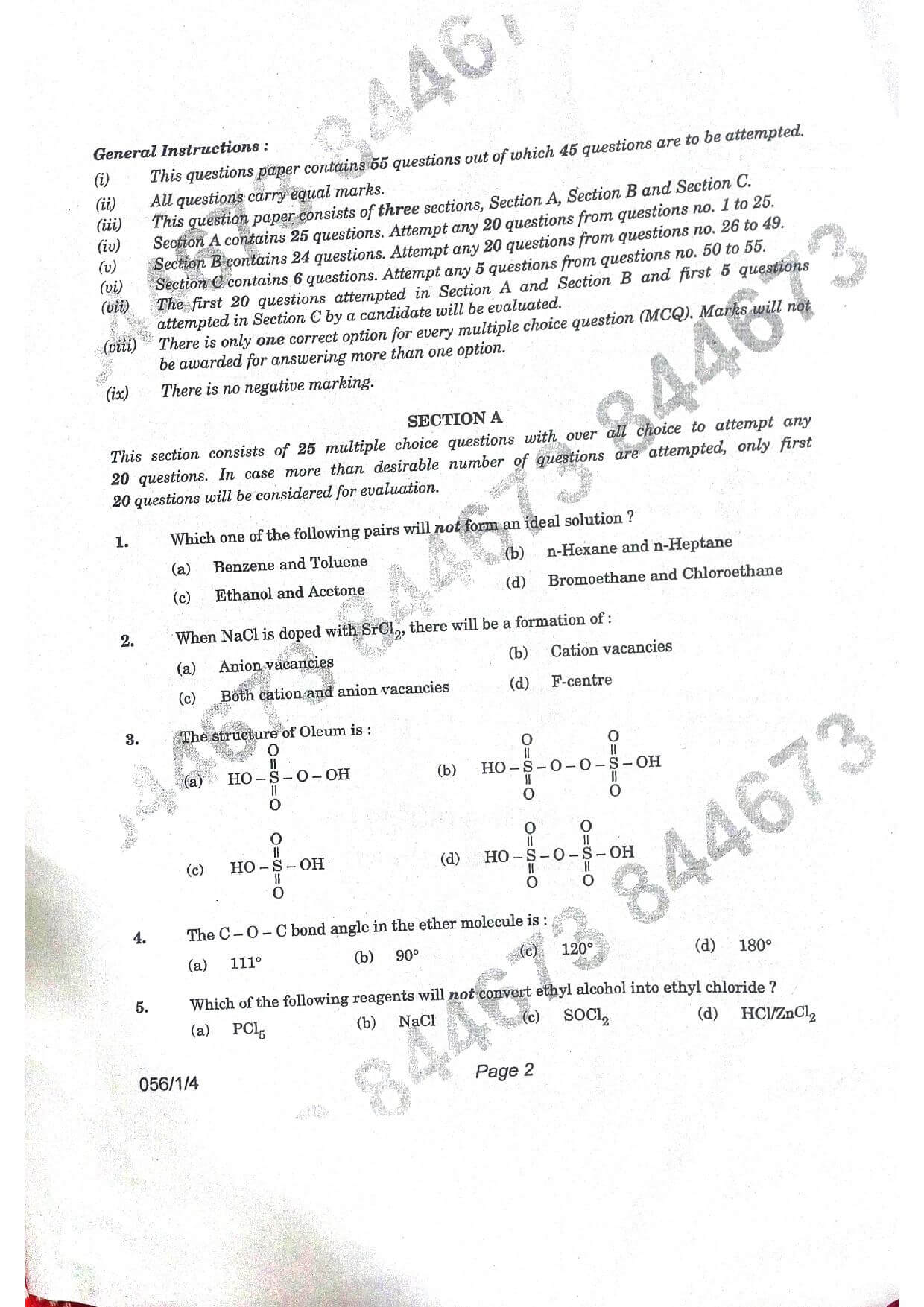
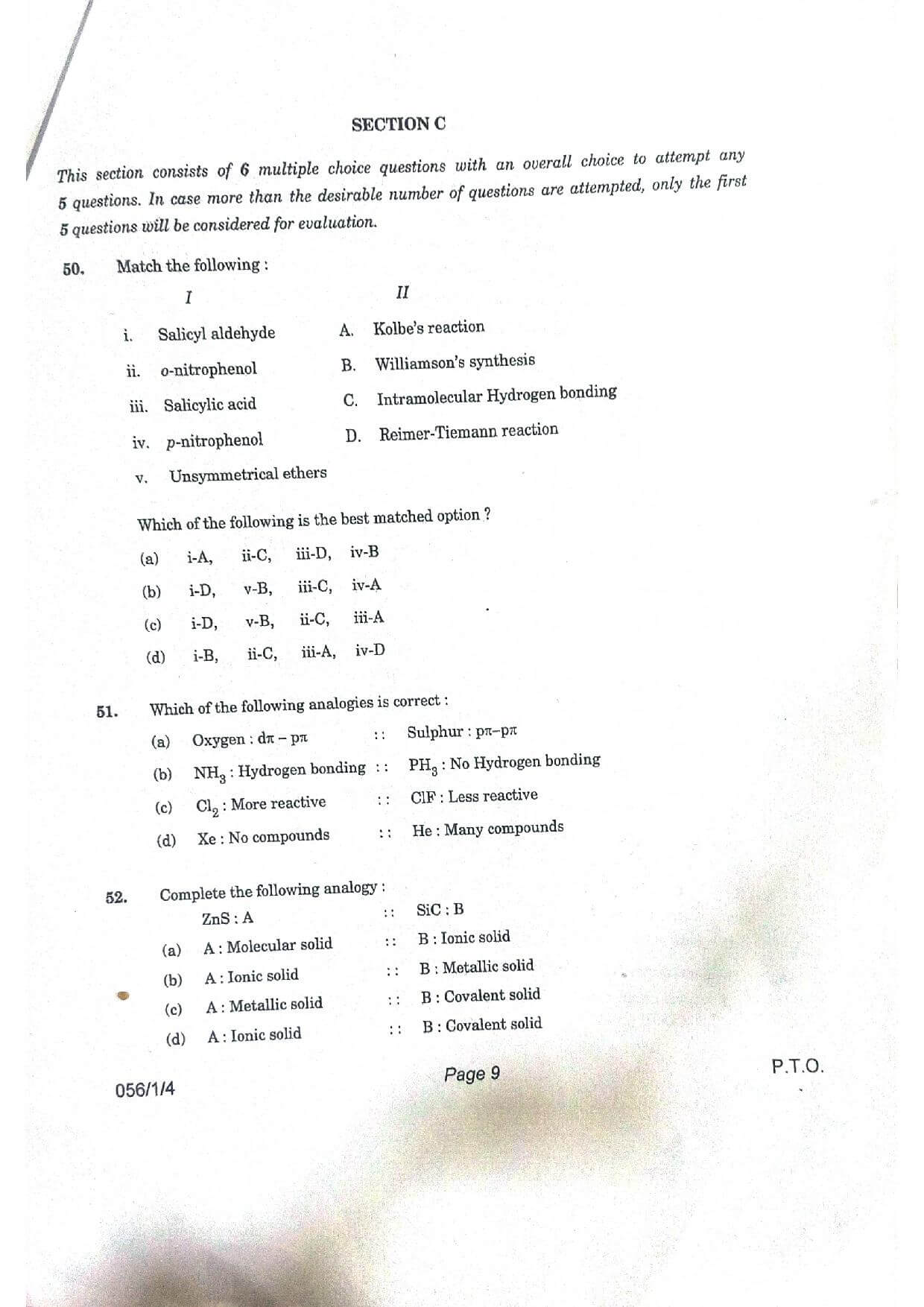
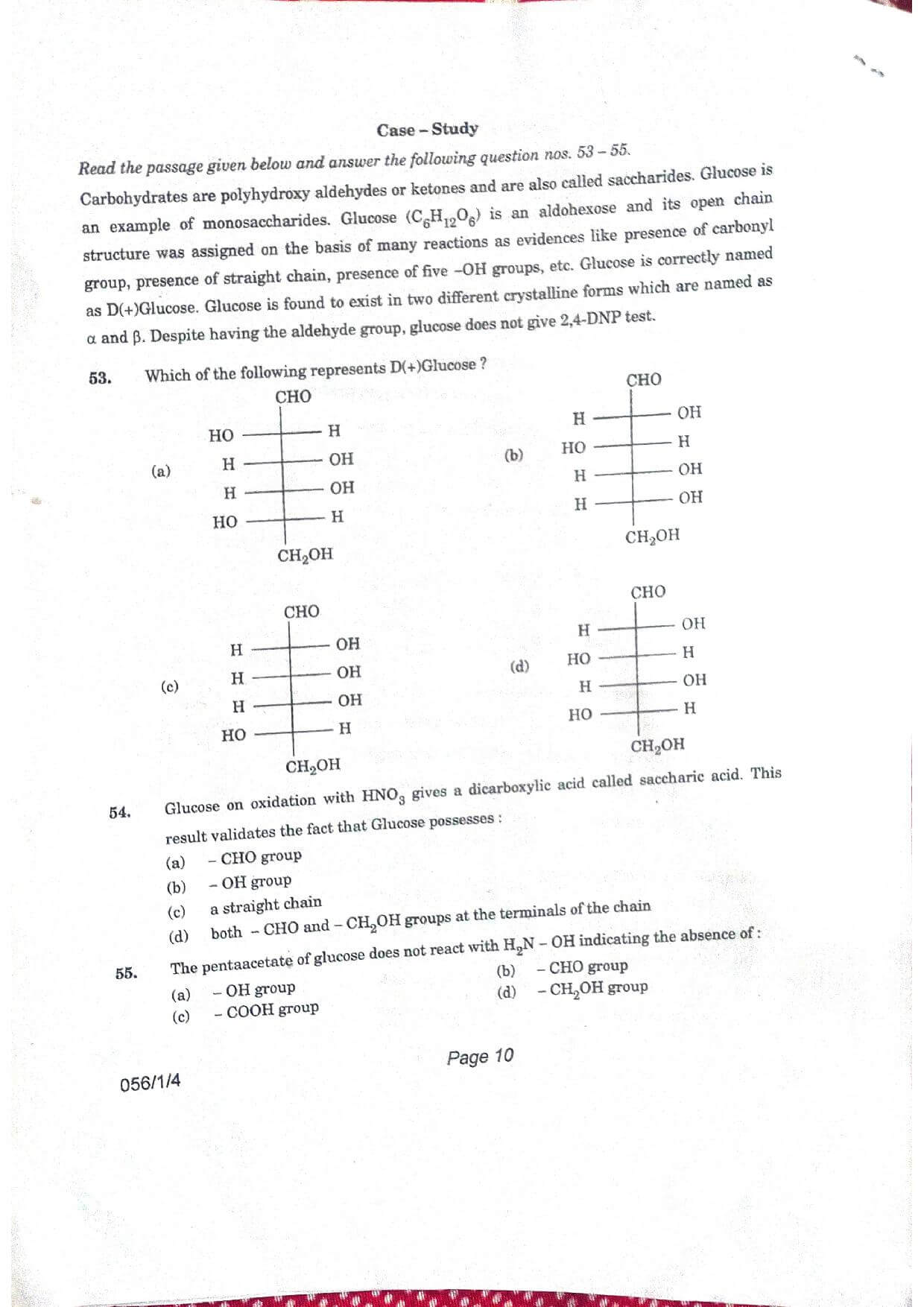
This is the CBSE Class 12 Chemistry (Theory) Term-I question paper from the 2021-22 session, Q.P. code 056/1/4 (Series SSJ/1, Set 4), answered on an OMR sheet. It carries 35 marks, allows 90 minutes plus 20 minutes of reading time, and has 55 multiple-choice questions, of which 45 are to be attempted; all carry equal marks and there is no negative marking. Section A and Section B each ask you to attempt 20 questions, and Section B includes five assertion–reason questions. Section C has match-the-following and analogy questions, plus a case study on the structure of glucose. The questions cover the Term-I chapters only. This copy has the questions only, without solutions.
- Exam
- CBSE Class 12
- Subject
- Chemistry
- Year
- 2021
- Paper code
- 056/1/4
- Maximum marks
- 35
- Time allowed
- 90 minutes + 20 min reading
- Questions
- 55
- Pages
- 10
- Answers included
- No, questions only
Paper pattern
Section A
Questions 1–25, multiple choice; attempt any 20
Section B
Questions 26–49, multiple choice including five assertion–reason questions; attempt any 20
Section C
Questions 50–55: match-the-following, analogies and a three-question case study on glucose; attempt any 5
Topics covered
- Solid state and crystal defects
- Solutions and colligative properties
- p-Block elements (Groups 15–18)
- Haloalkanes and haloarenes
- Alcohols, phenols and ethers
- Biomolecules
Questions from this paper
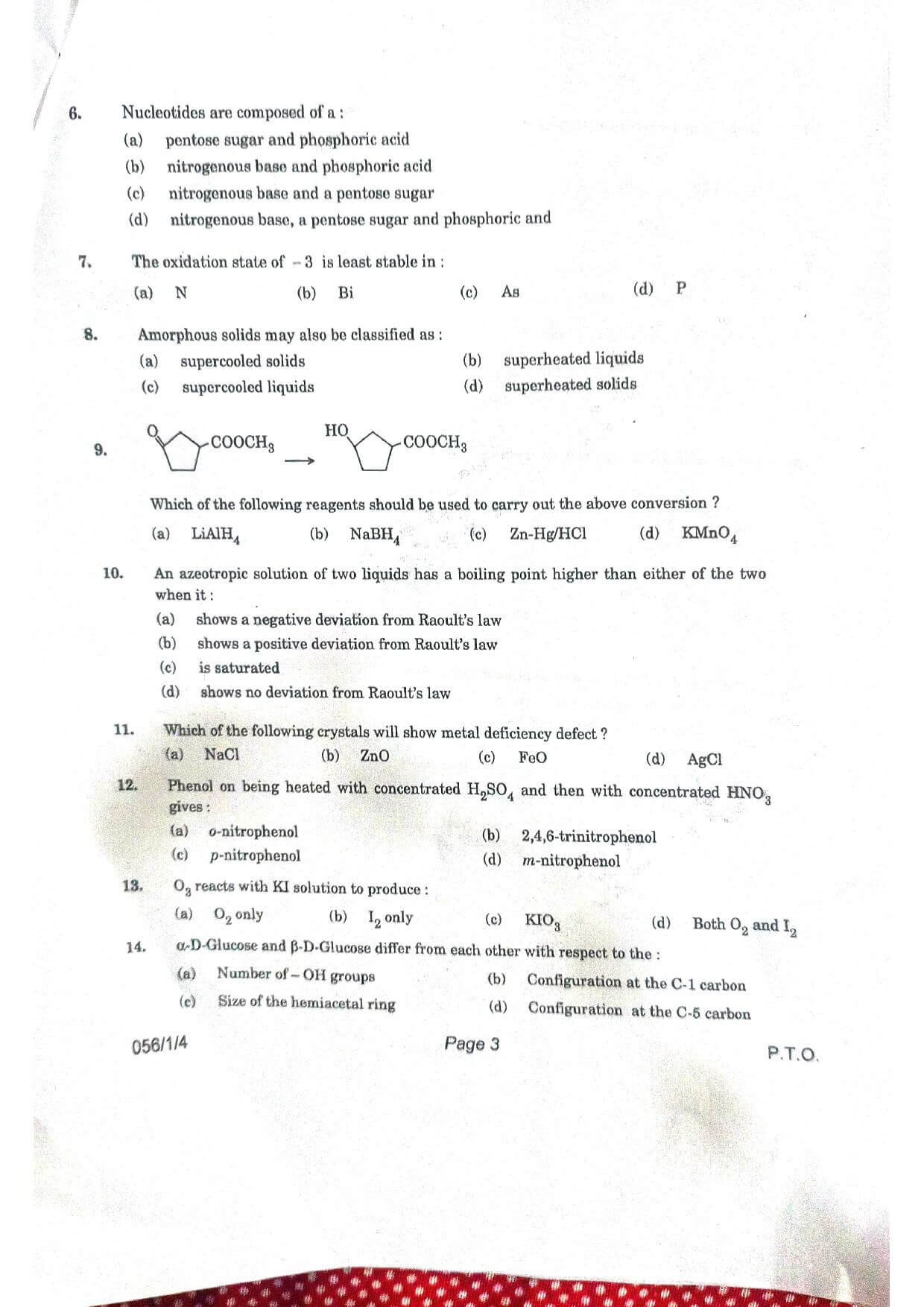
- Under what condition does an azeotropic solution of two liquids have a boiling point higher than either of the two liquids?
- An element with density 3 g cm⁻³ forms a bcc lattice with edge length 3 × 10⁻⁸ cm. Find the molar mass of the element. (Nₐ = 6 × 10²³ mol⁻¹)
- What is the freezing point of a 0.2 molal solution of a non-electrolyte in water? (Kf for water = 1.86 K kg mol⁻¹)
- A compound forms an hcp structure. What is the number of tetrahedral voids in 0.5 mol of it?
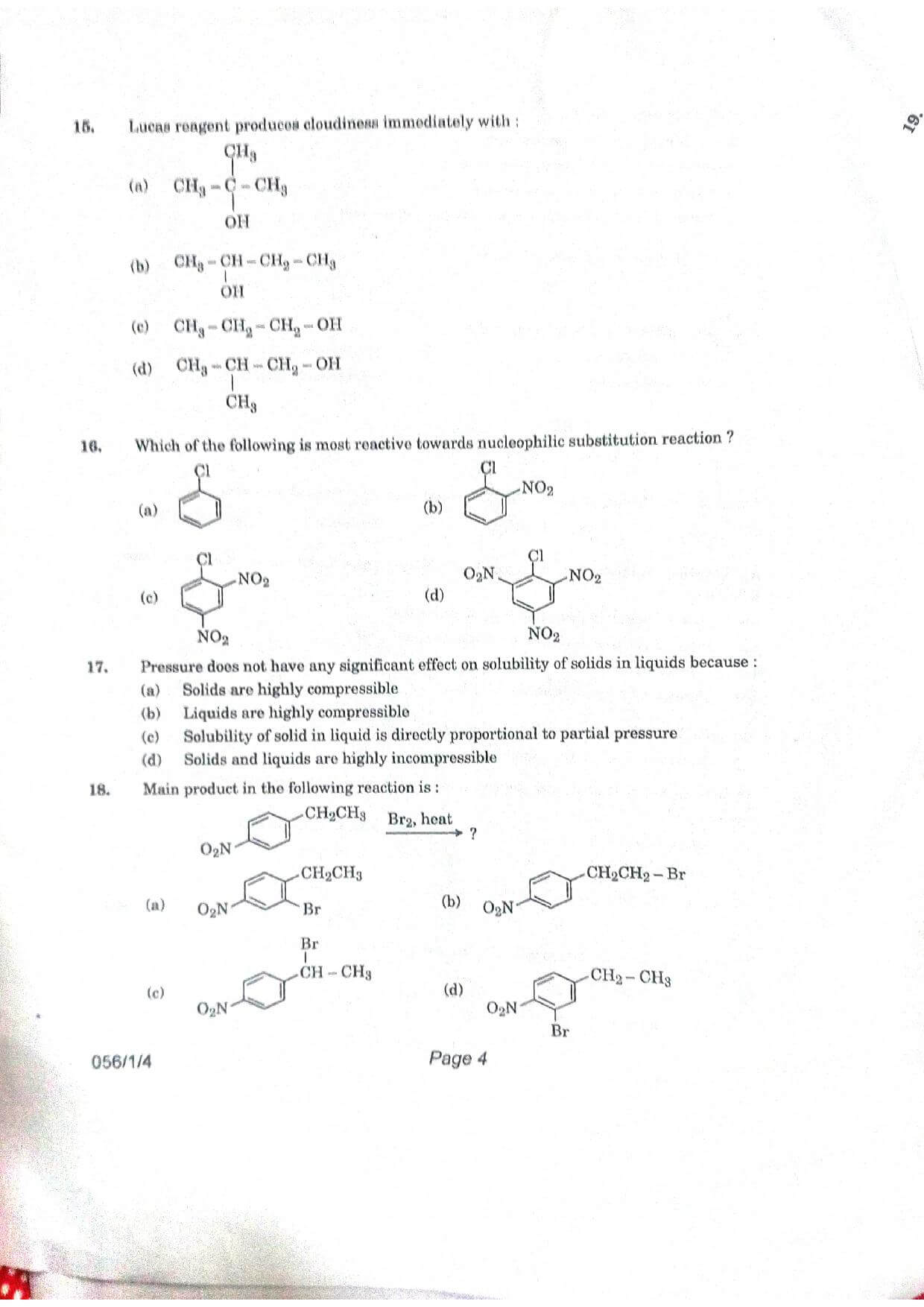
- Chlorobenzene treated with sodium in dry ether gives diphenyl. What is this reaction called?
- Glucose on oxidation with HNO₃ gives a dicarboxylic acid called saccharic acid. What does this result show about the structure of glucose?
Free email alert
Get the 2027 CBSE Class 12 papers first
One email when the new CBSE Class 12 Chemistry question papers are published here. No spam, unsubscribe any time.
Download
- Format
- Size
- N/A
- Pages
- 10
What's next
Planning what comes after Class 12?
Compare college costs, education loans, and scholarships in one place.
See the cost breakdown