Solved CBSE Class 12 Chemistry Term-2 Paper 2021-22

CBSE
Chemistry2022CBSE Class 12 Chemistry Term-2 question paper 2021-22 (code 56/4/2): 12 questions for 35 marks in 2 hours, in Hindi and English. Questions only, no solutions.
Practice these questions to improve your performance in the board examination.
About this paper
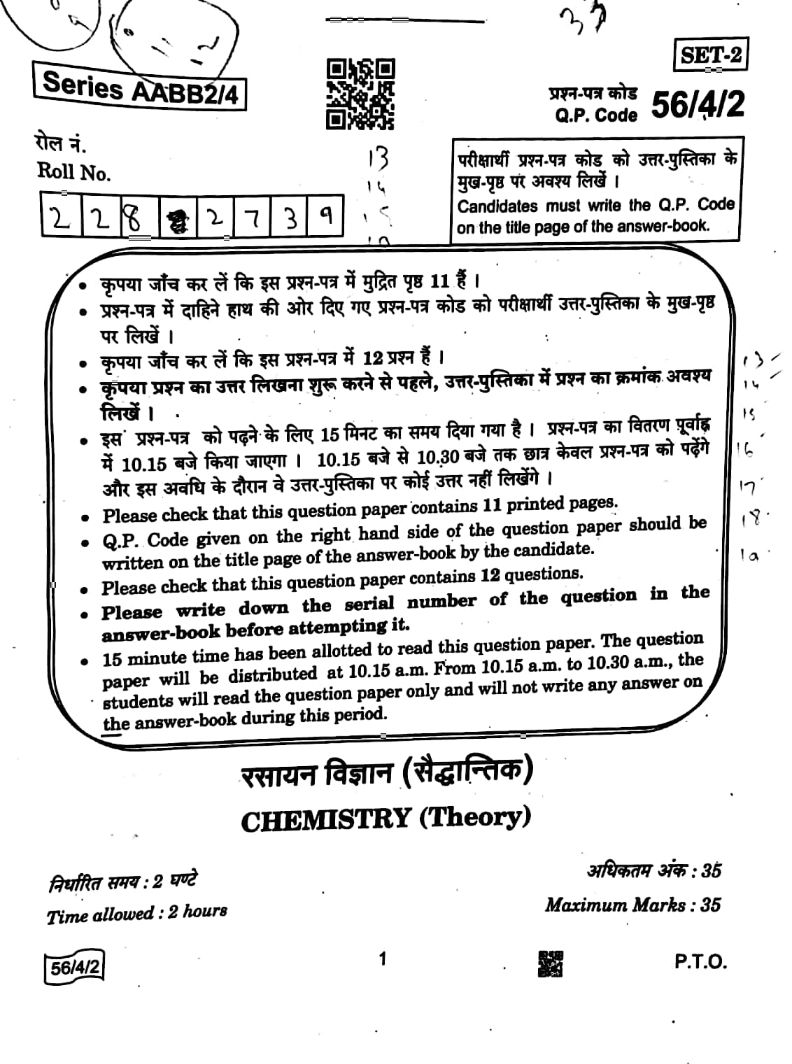
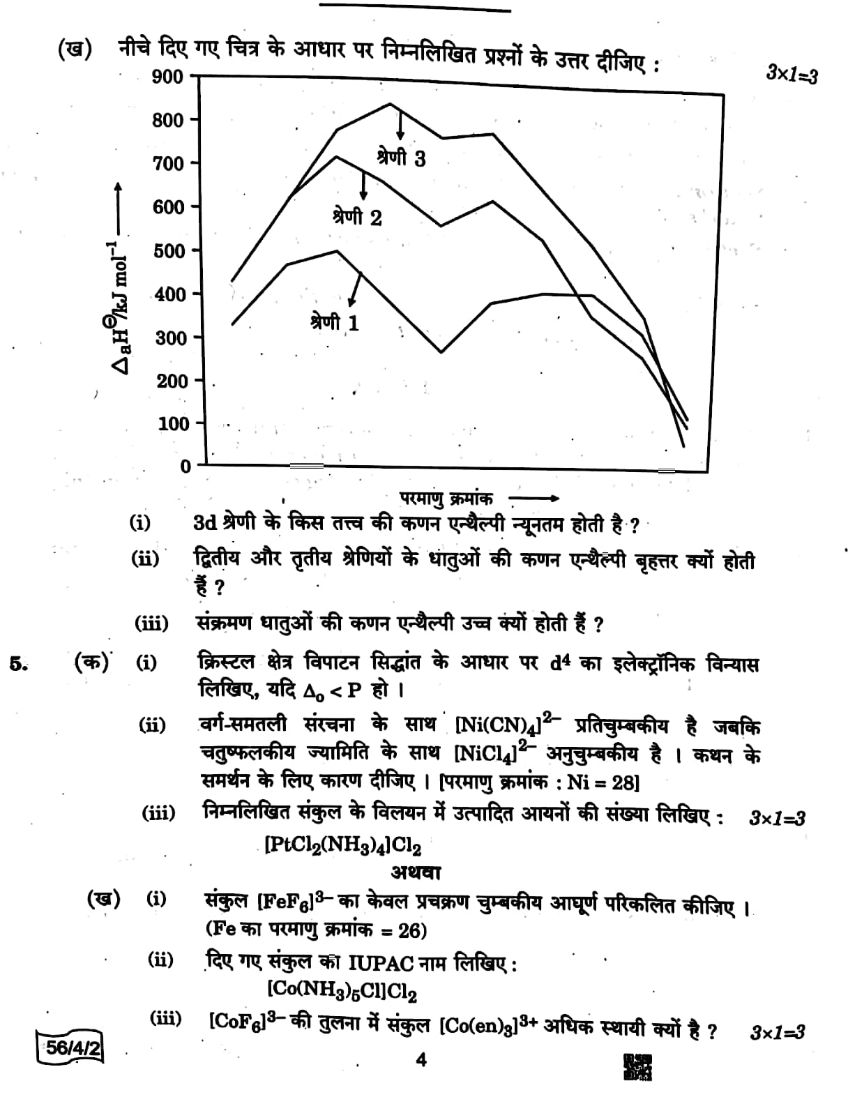
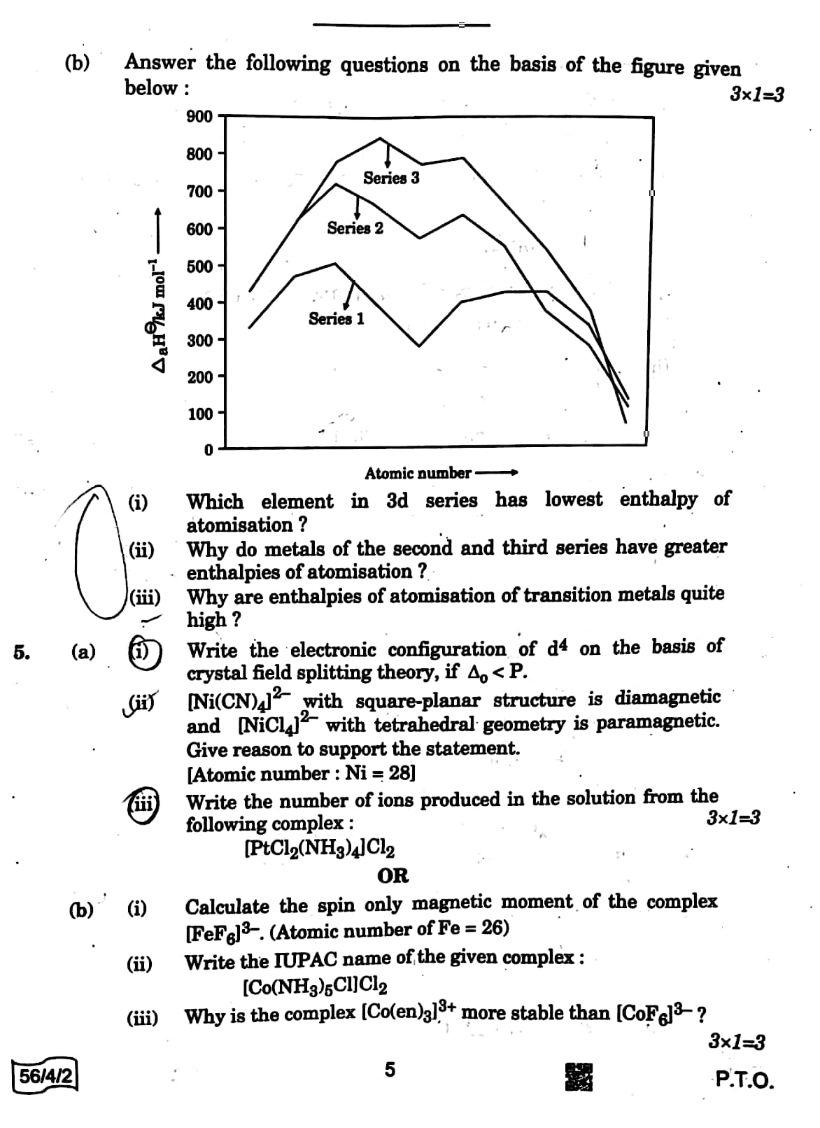
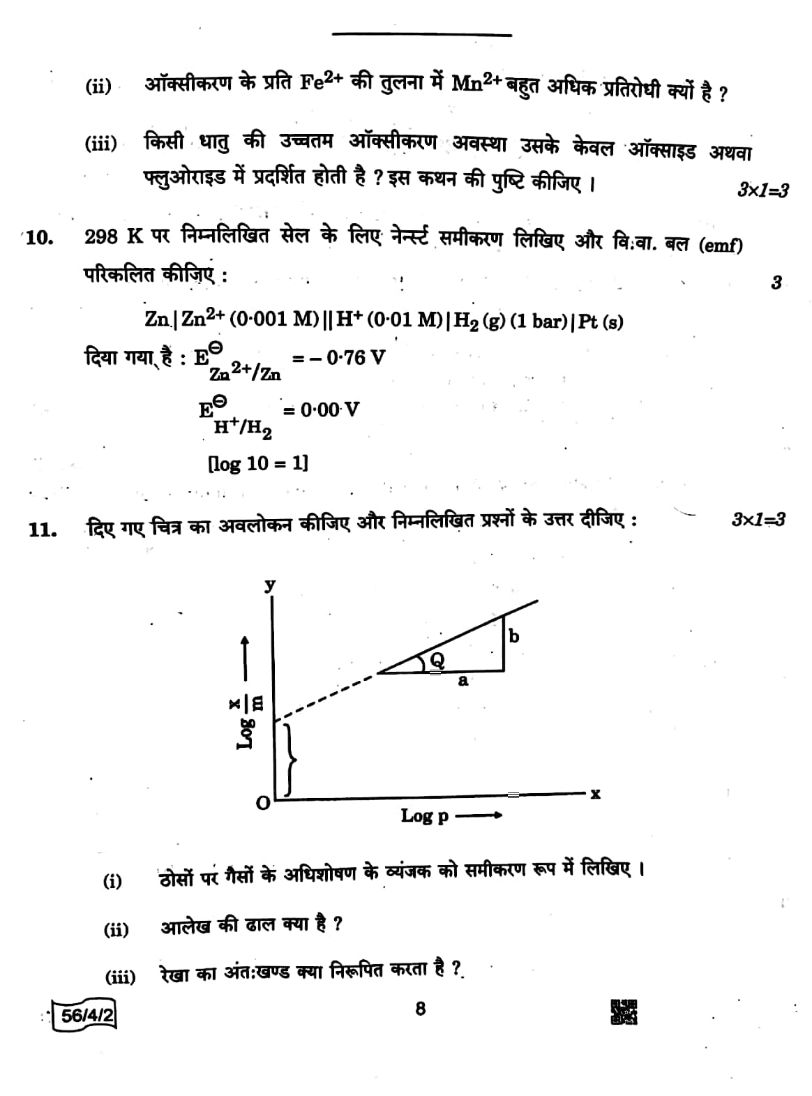
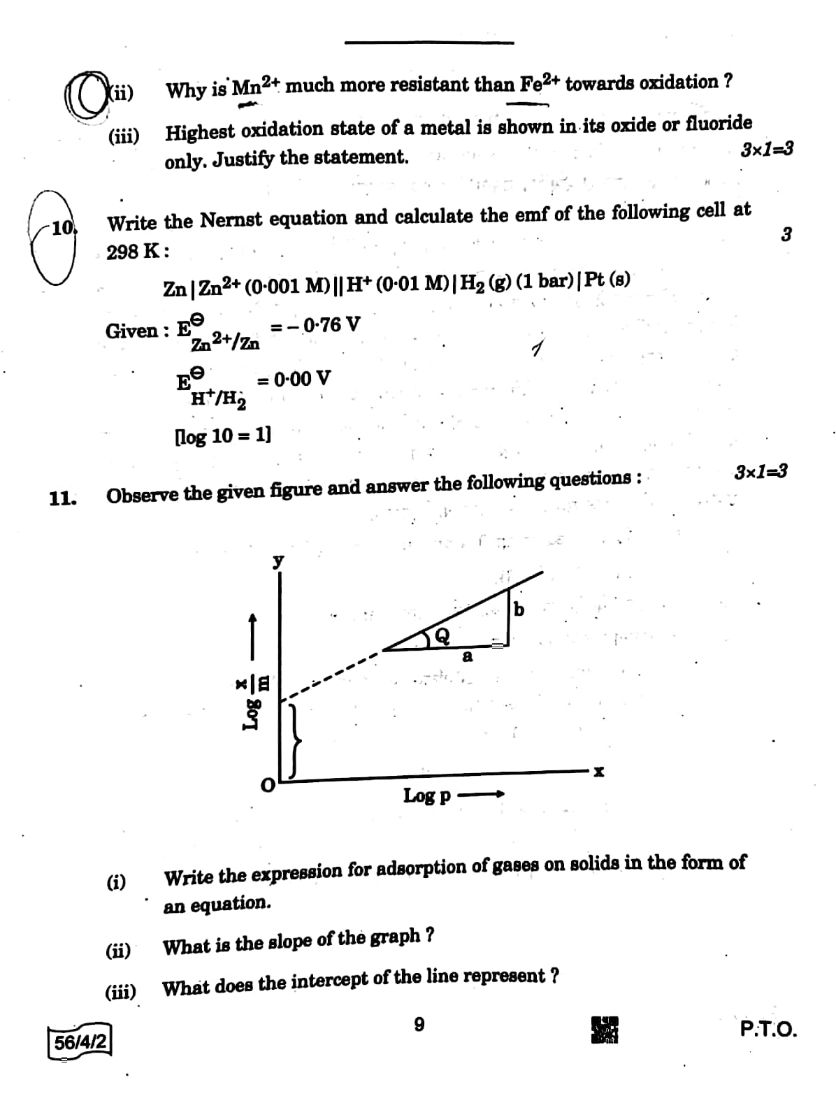
This is the CBSE Class 12 Chemistry (Theory) Term-2 paper from the 2021–22 session, Q.P. Code 56/4/2 (Set 2, Series AABB2/4). It carries 35 marks over two hours, with 15 minutes of reading time, and has 12 compulsory questions in three sections. Section A has three two-mark short answers, Section B has eight three-mark questions with several internal choices, and Section C is a five-mark case-based question built on a passage about rate laws and reaction order. Some questions rely on a figure, such as a graph of enthalpies of atomisation of the transition series and a Freundlich adsorption plot. Log tables and calculators are not allowed. The paper is printed in Hindi and English on alternate pages, and this copy has the questions only, without solutions.
- Exam
- CBSE Class 12
- Subject
- Chemistry
- Year
- 2022
- Paper code
- 56/4/2
- Maximum marks
- 35
- Time allowed
- 2 hours
- Questions
- 12
- Pages
- 11
- Answers included
- No, questions only
Paper pattern
Section A
6 marksQuestions 1–3, very short answer type, two marks each; choice of any two parts in Question 3
Section B
24 marksQuestions 4–11, short answer type, three marks each; internal choices in several questions
Section C
5 marksQuestion 12, case-based question on rate law and order of reaction, with an internal choice in the last part
Topics covered
- Electrochemistry and Nernst equation
- Kohlrausch's law and molar conductivity
- Chemical kinetics
- Surface chemistry and adsorption
- d- and f-block elements
- Coordination compounds
- Aldehydes, ketones and carboxylic acids
- Amines
Questions from this paper
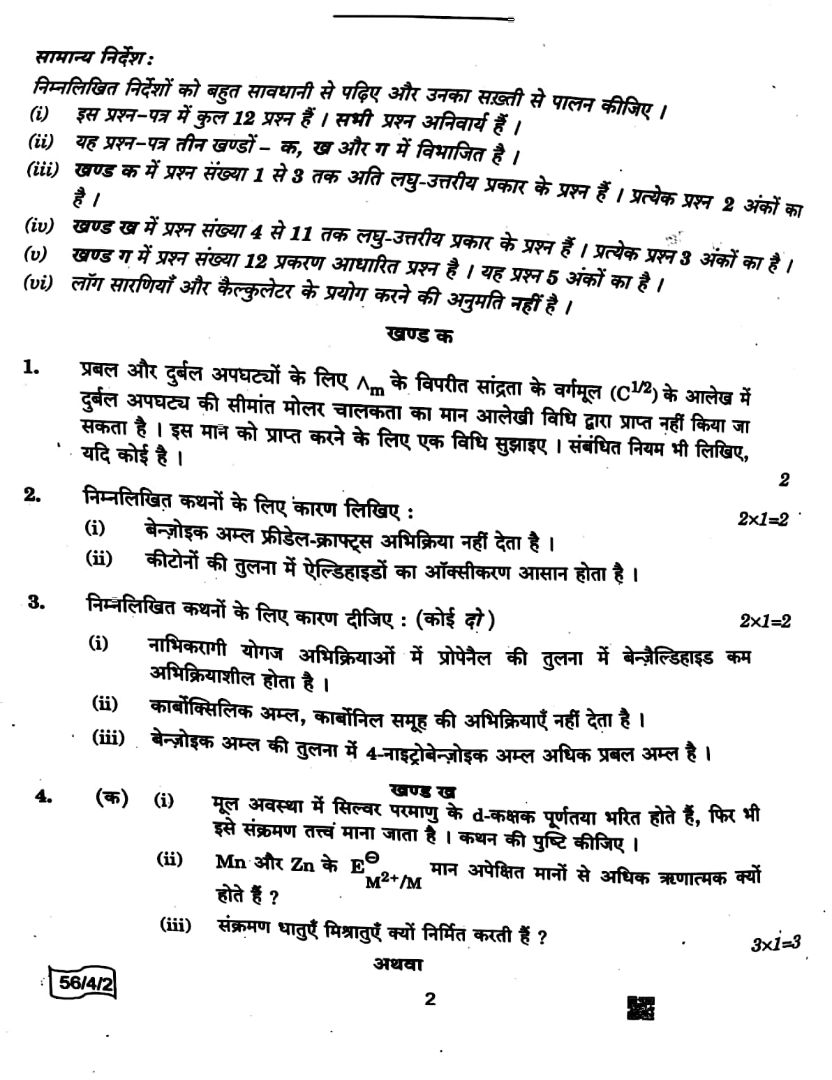
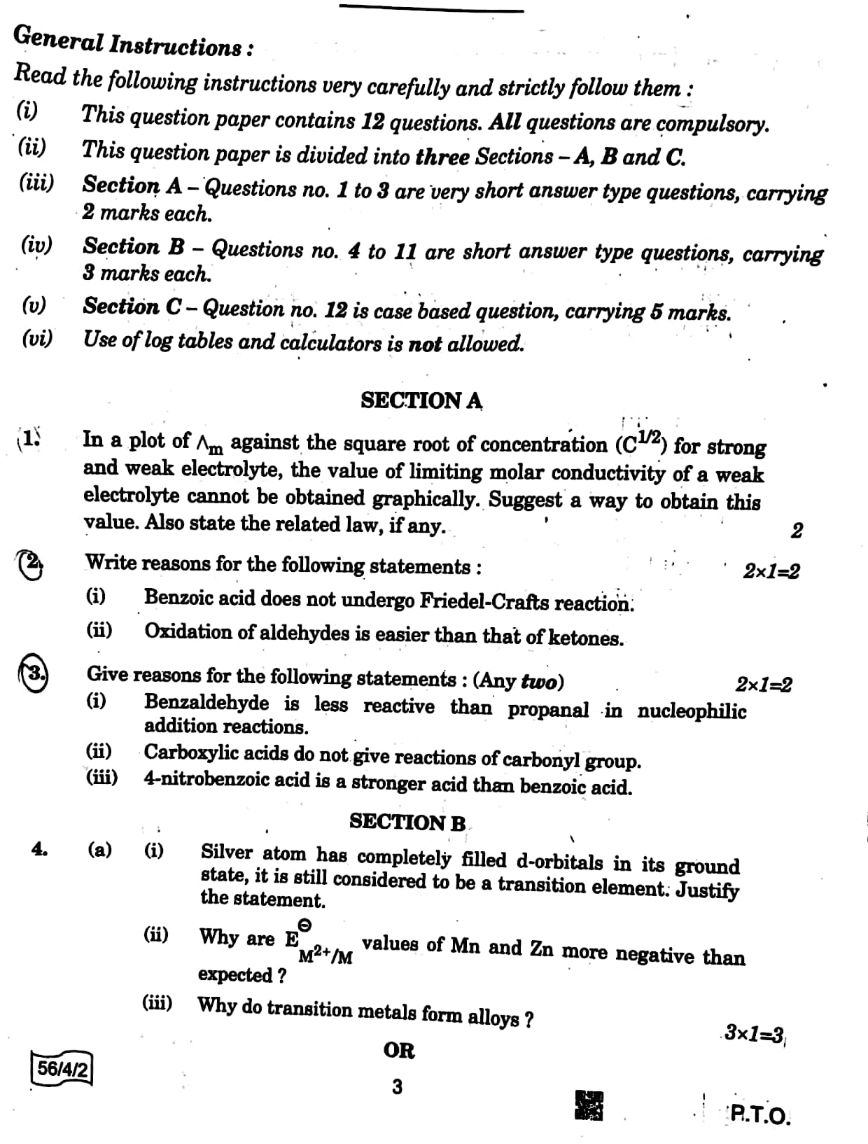
- In a plot of Λm against the square root of concentration (C^½), the limiting molar conductivity of a weak electrolyte cannot be obtained graphically. Suggest a way to obtain this value and state the related law.
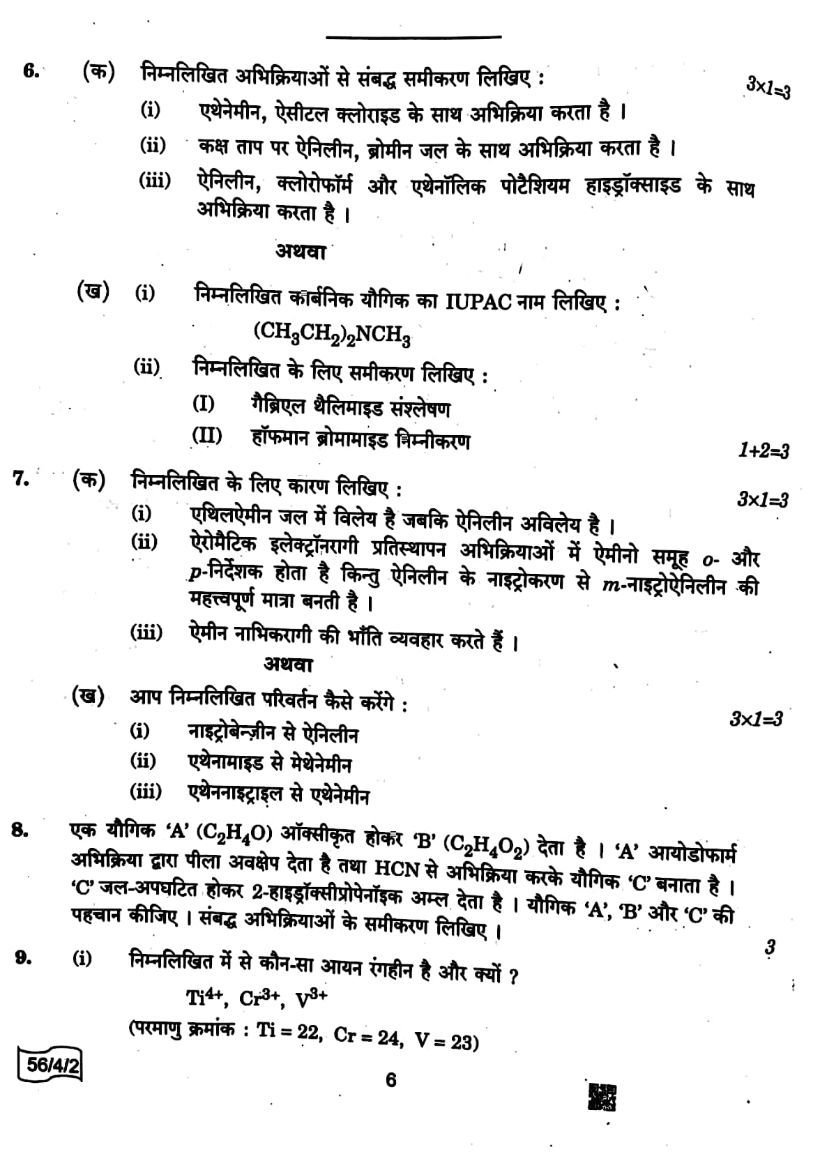
- Write the Nernst equation and calculate the emf of the cell Zn | Zn²⁺ (0.001 M) || H⁺ (0.01 M) | H₂ (g) (1 bar) | Pt (s) at 298 K, given E°(Zn²⁺/Zn) = −0.76 V and E°(H⁺/H₂) = 0.00 V.
- Calculate the spin-only magnetic moment of the complex [FeF₆]³⁻. (Atomic number of Fe = 26)
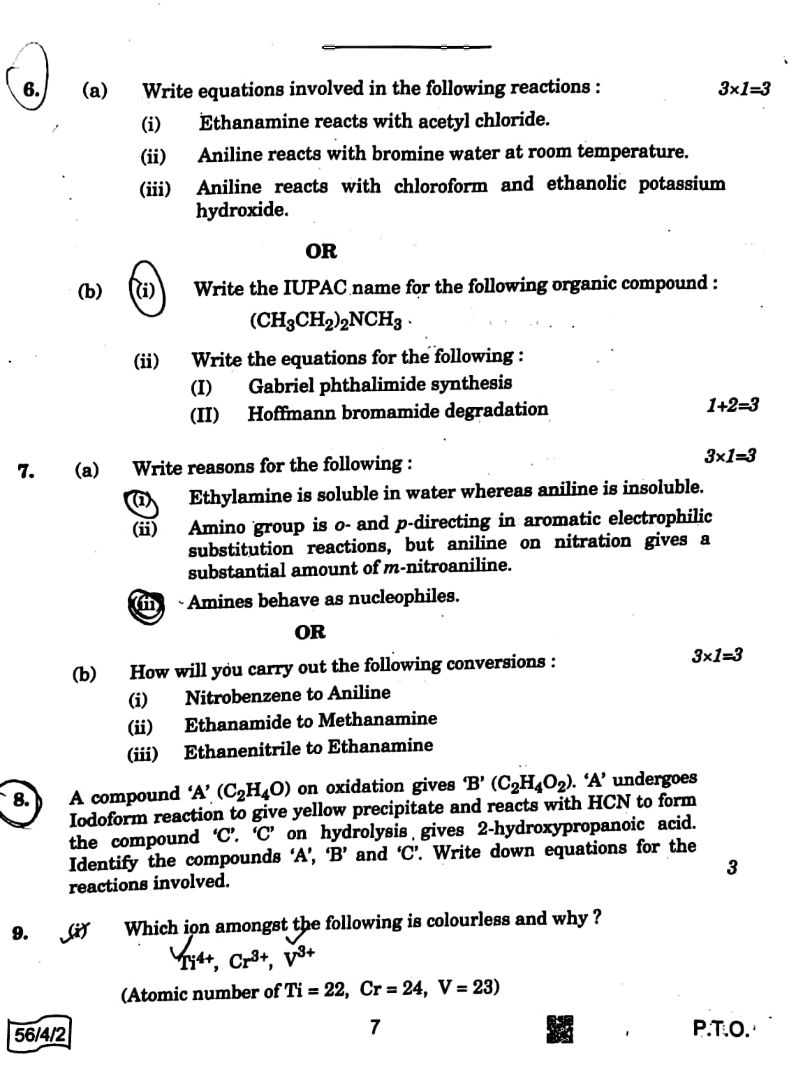
- A compound 'A' (C₂H₄O) on oxidation gives 'B' (C₂H₄O₂). 'A' undergoes the iodoform reaction and reacts with HCN to form 'C', which on hydrolysis gives 2-hydroxypropanoic acid. Identify A, B and C and write the equations involved.
- How will you convert ethanamide to methanamine?
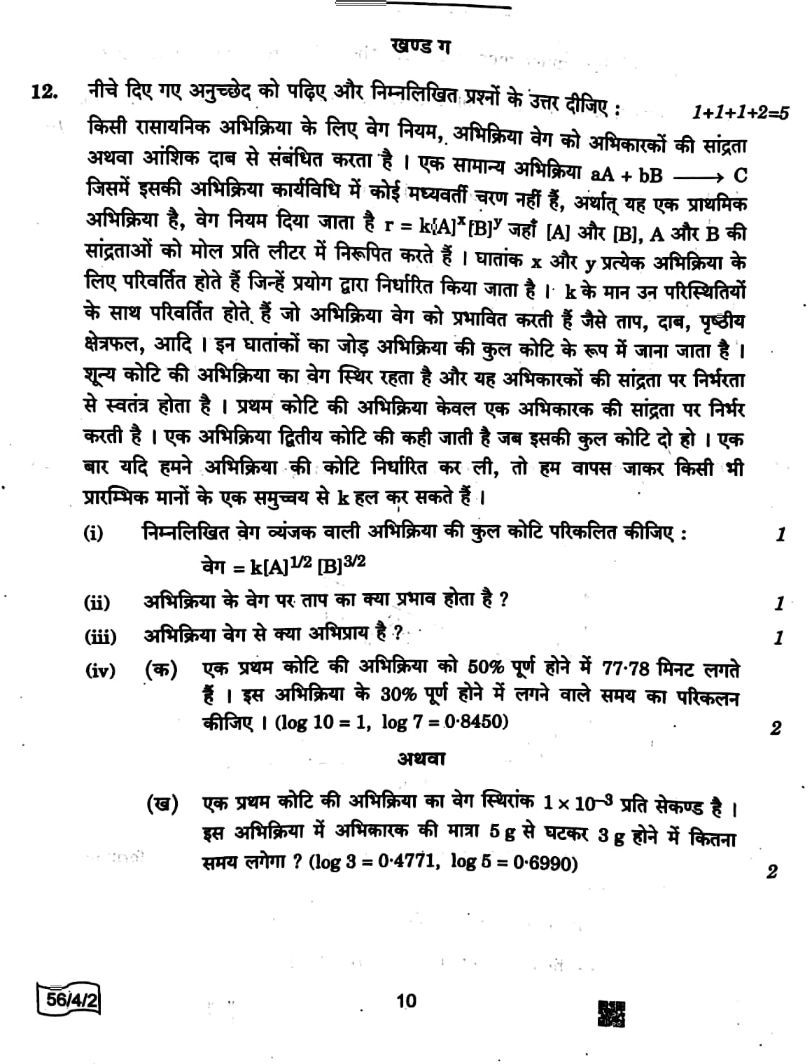
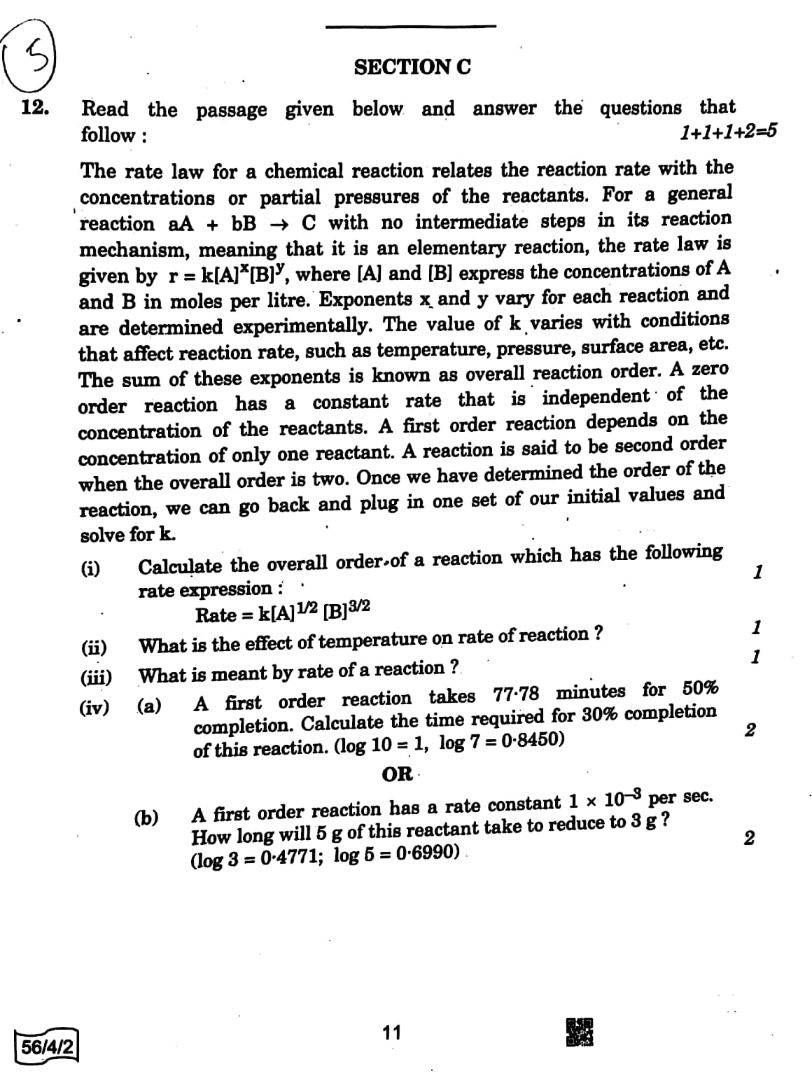
- A first order reaction takes 77.78 minutes for 50% completion. Calculate the time required for 30% completion of this reaction.
Free email alert
Get the 2027 CBSE Class 12 papers first
One email when the new CBSE Class 12 Chemistry question papers are published here. No spam, unsubscribe any time.
Download
- Format
- Size
- N/A
- Pages
- 11
What's next
Planning what comes after Class 12?
Compare college costs, education loans, and scholarships in one place.
See the cost breakdown