CBSE 2017 Chemistry Question Paper for Class 12

CBSE
Chemistry2017CBSE Class 12 Chemistry 2017 question paper (code 56/3, Set 3): 26 questions for 70 marks in 3 hours, with a value-based question. Questions only, no solutions.
Practice these questions to improve your performance in the board examination.
About this paper
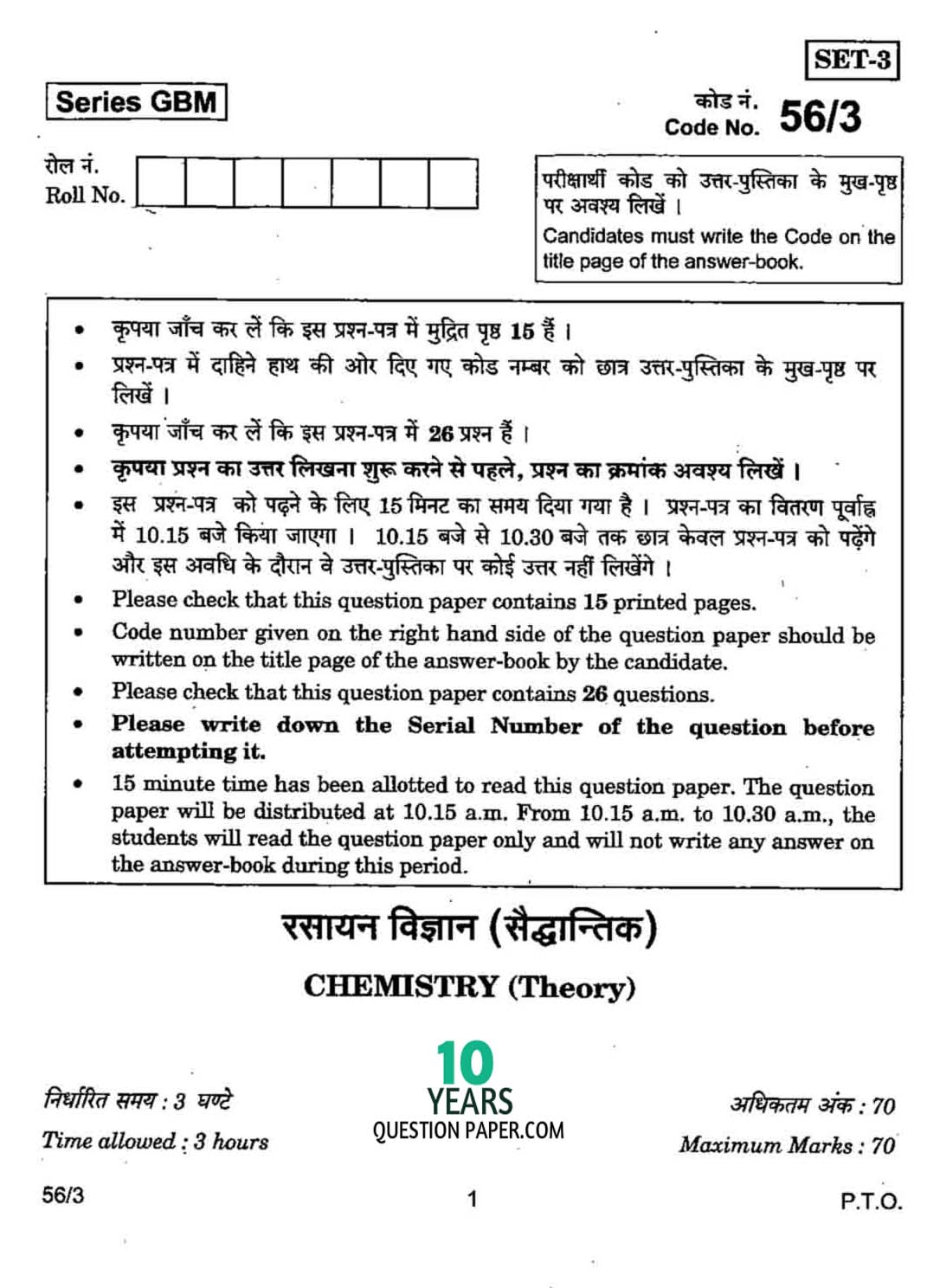
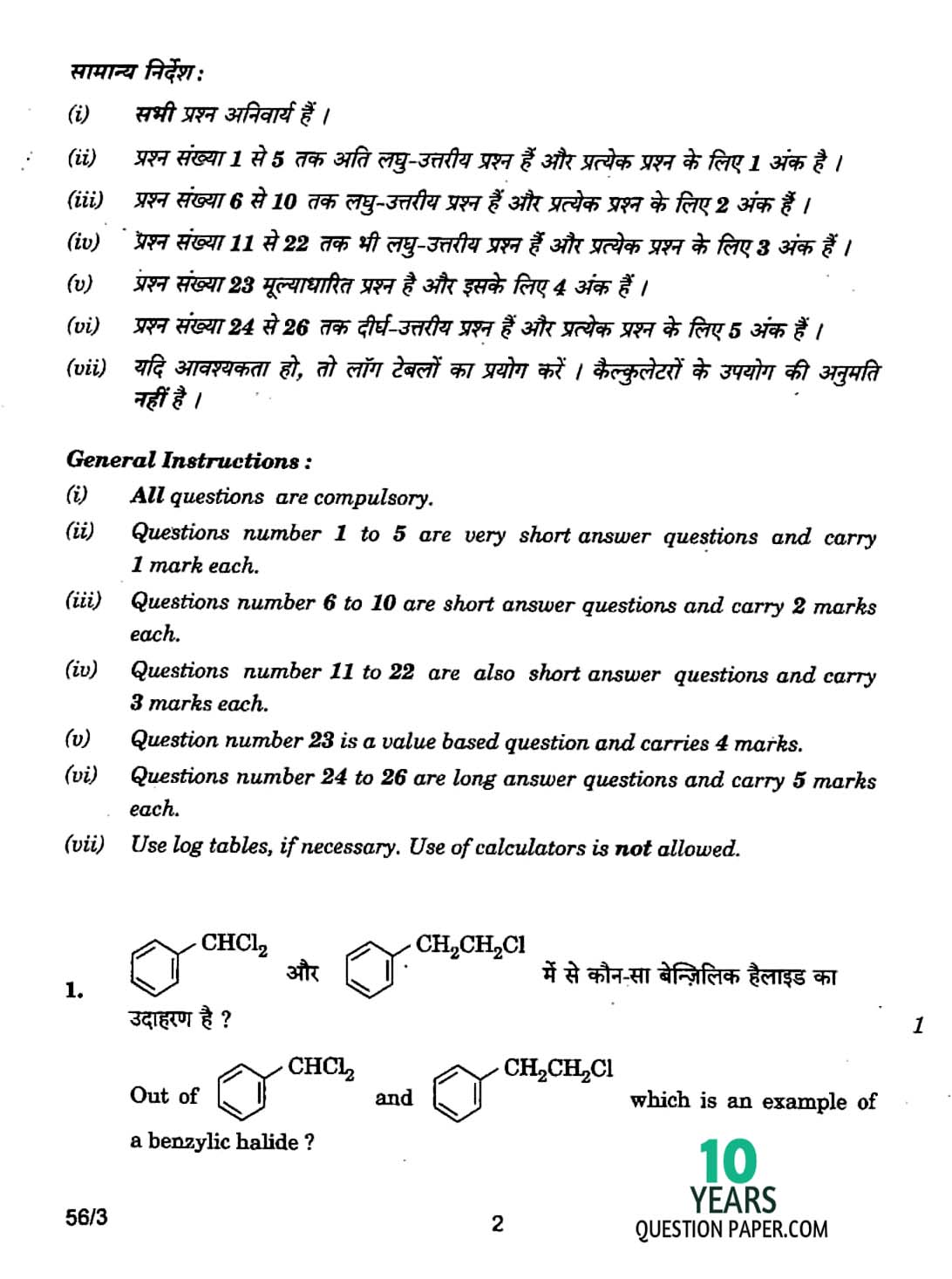
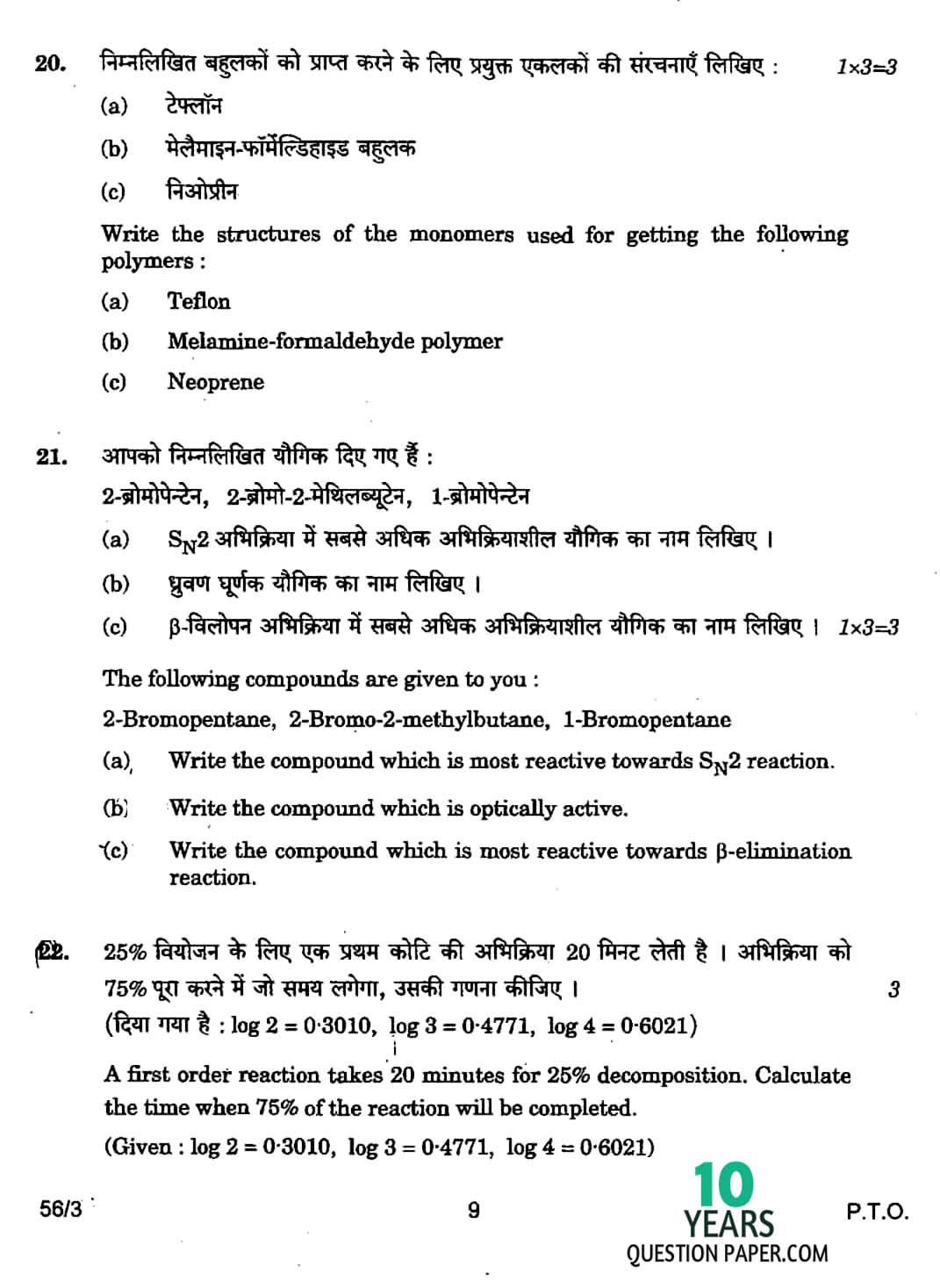
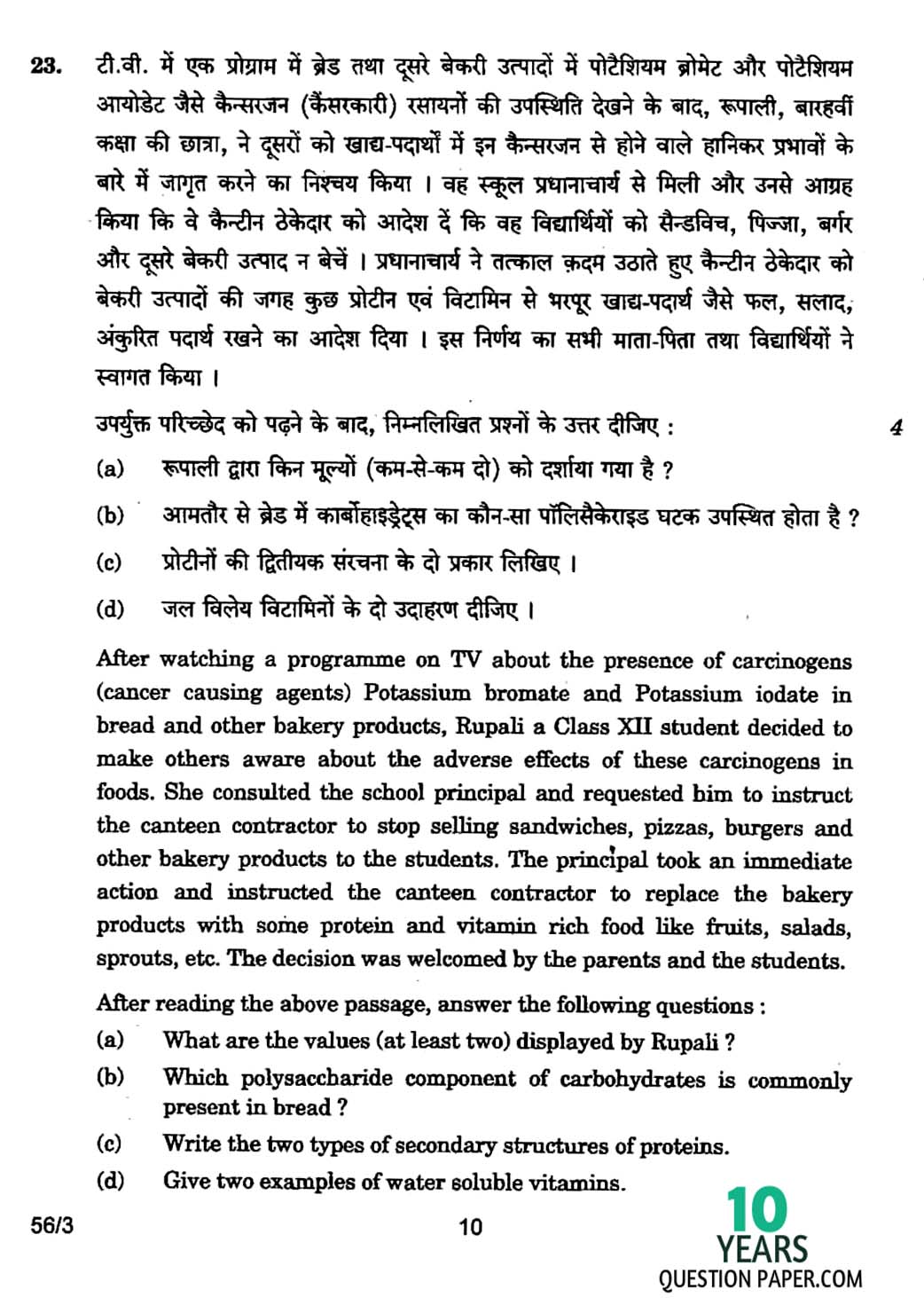
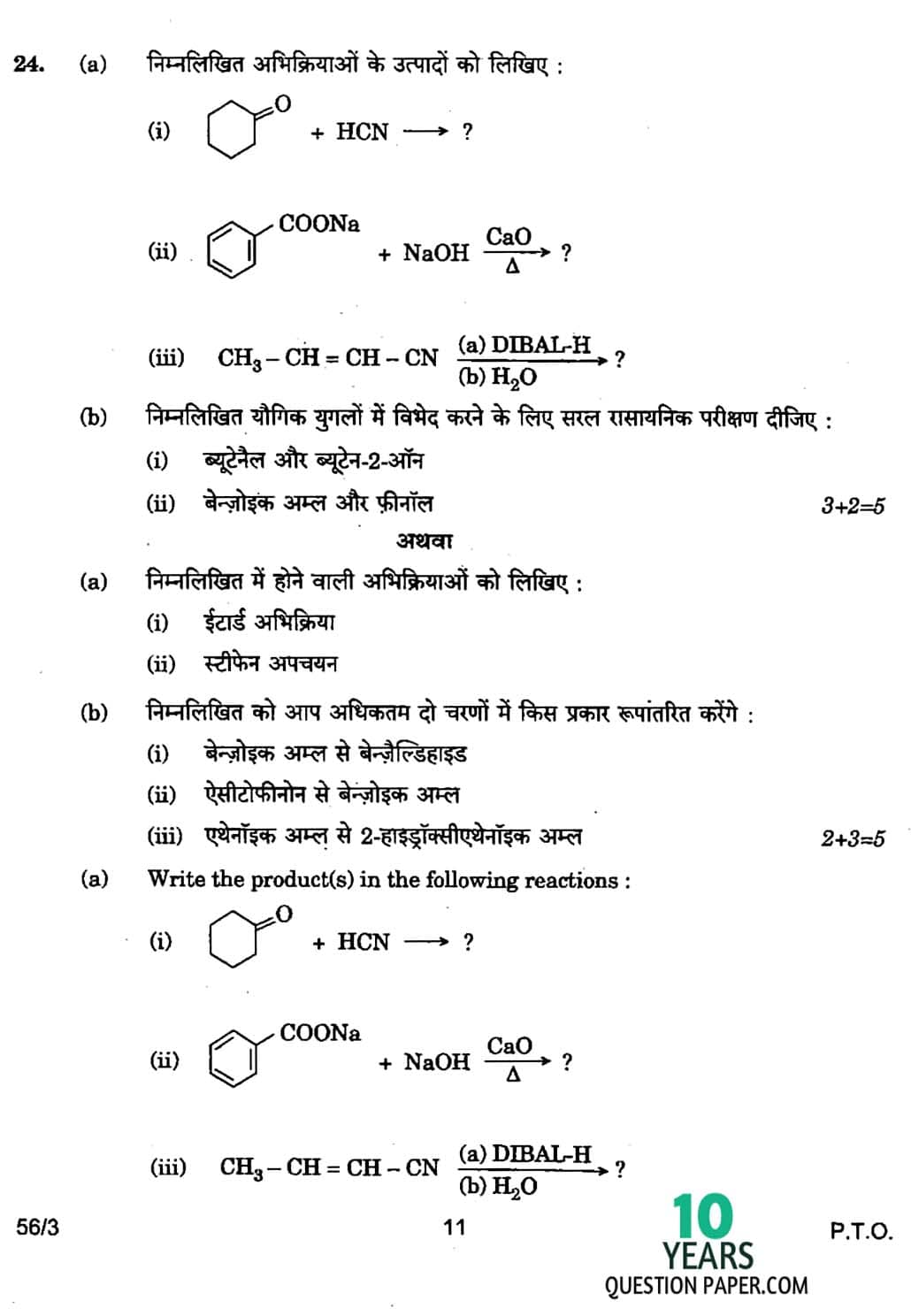
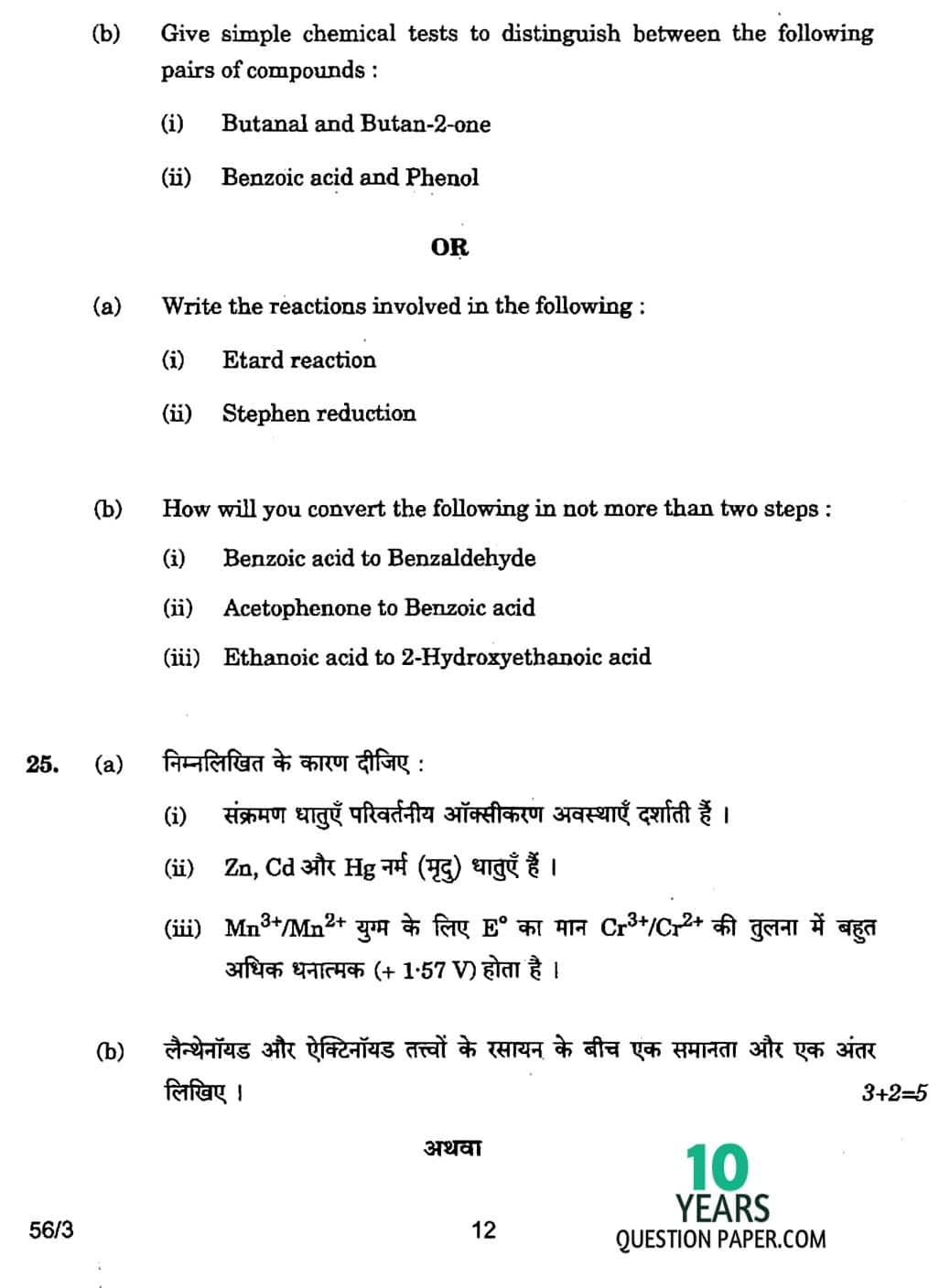
This is the CBSE Class 12 Chemistry (Theory) question paper code 56/3, Series GBM, Set 3, from the 2017 board examination, printed in both Hindi and English. It carries 70 marks over three hours and has 26 compulsory questions: five one-mark, five two-mark, twelve three-mark, one four-mark value-based question and three five-mark long answers. The value-based question is about a student who campaigns against potassium bromate and iodate in bakery products. Internal choices are given in one two-mark question, one three-mark question and the long answers on carbonyl compounds, the d-block and solutions. Log tables may be used, but calculators are not allowed. This copy has the questions only, without answers, and its last page is missing.
- Exam
- CBSE Class 12
- Subject
- Chemistry
- Year
- 2017
- Paper code
- 56/3
- Maximum marks
- 70
- Time allowed
- 3 hours + 15 min reading
- Questions
- 26
- Pages
- 14
- Answers included
- No, questions only
Paper pattern
Questions 1–5
5 marksVery short answer questions, one mark each
Questions 6–10
10 marksShort answer questions, two marks each; internal choice in one
Questions 11–22
36 marksShort answer questions, three marks each; internal choice in one
Question 23
4 marksValue-based question
Questions 24–26
15 marksLong answer questions, five marks each, each with an internal choice
Topics covered
- Solid state
- Solutions and colligative properties
- Electrochemistry
- Chemical kinetics
- Surface chemistry and colloids
- Isolation of elements
- p-Block elements
- d- and f-Block elements
- Coordination compounds
- Haloalkanes and alcohols
- Aldehydes, ketones, carboxylic acids and amines
- Biomolecules, polymers and chemistry in everyday life
Questions from this paper
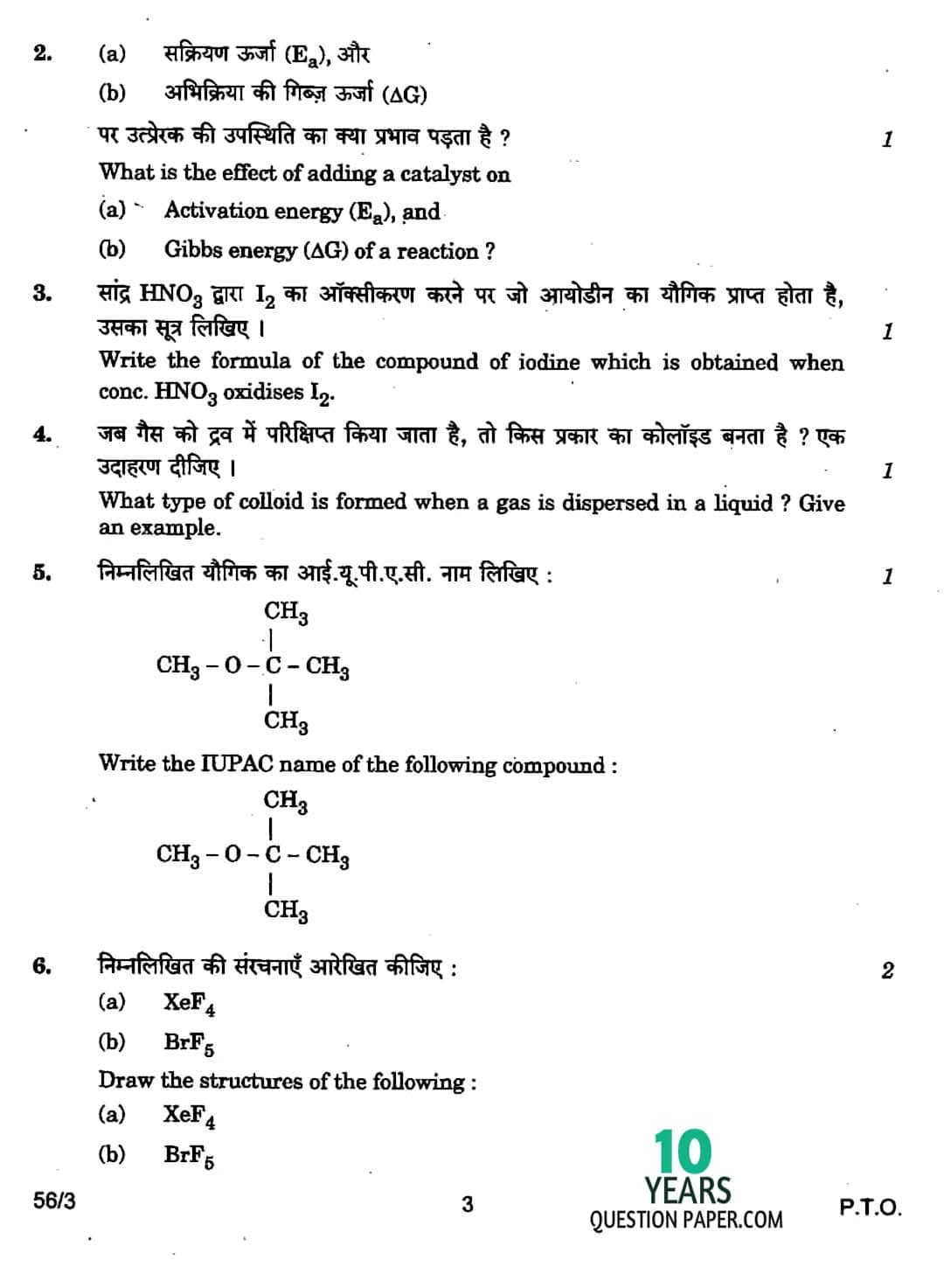
- What type of colloid is formed when a gas is dispersed in a liquid? Give an example.
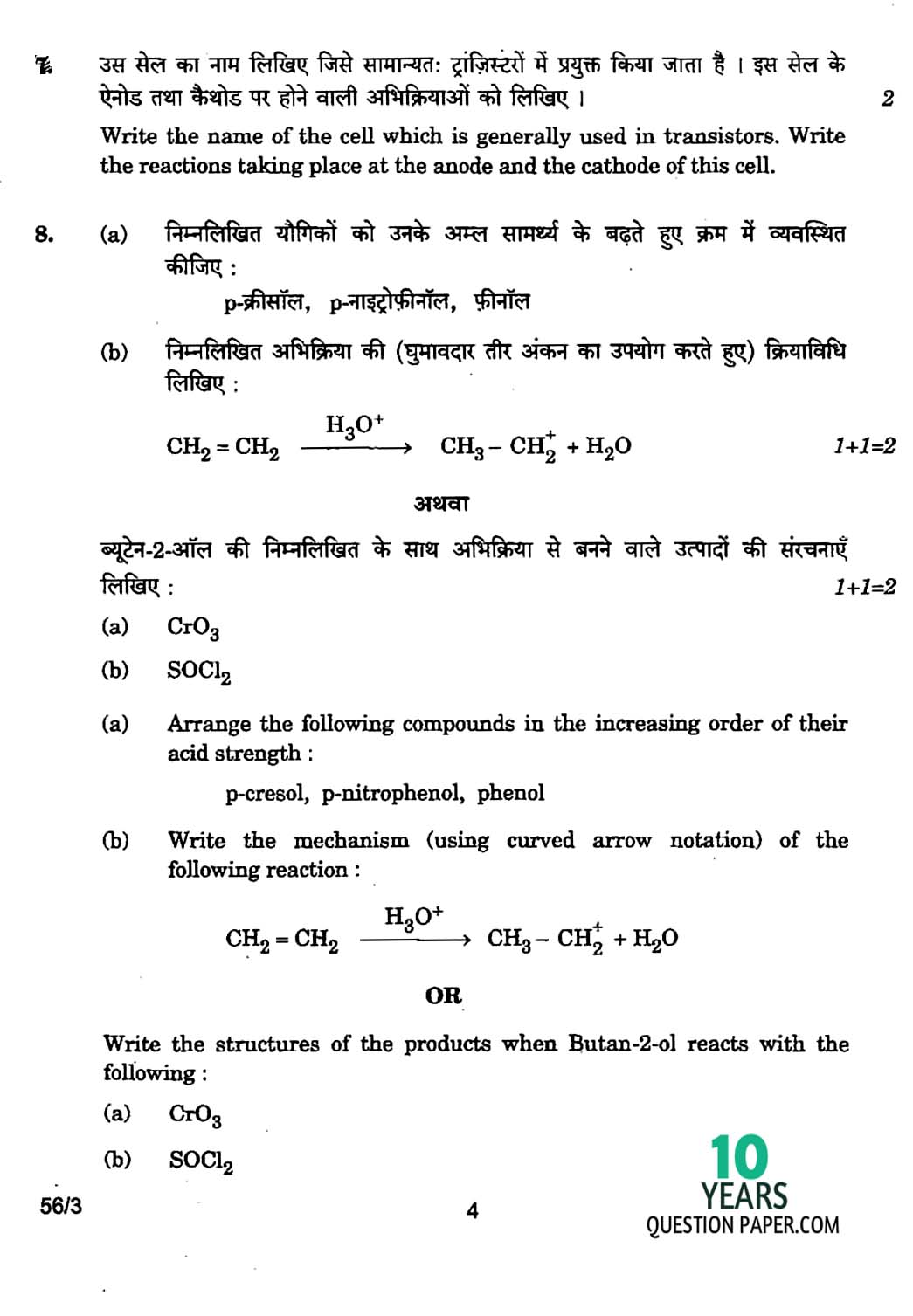
- Write the name of the cell which is generally used in transistors. Write the reactions taking place at the anode and the cathode of this cell.
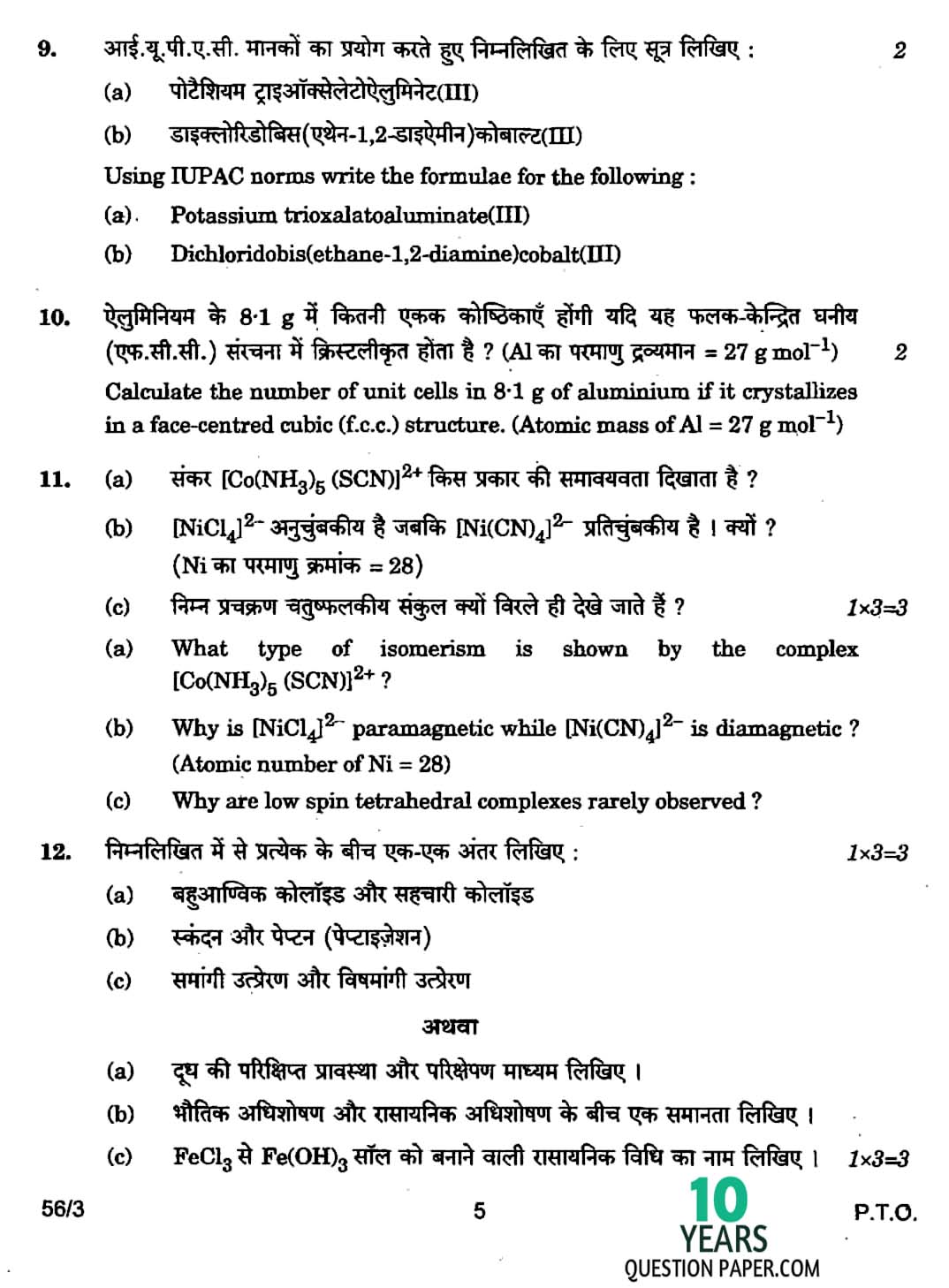
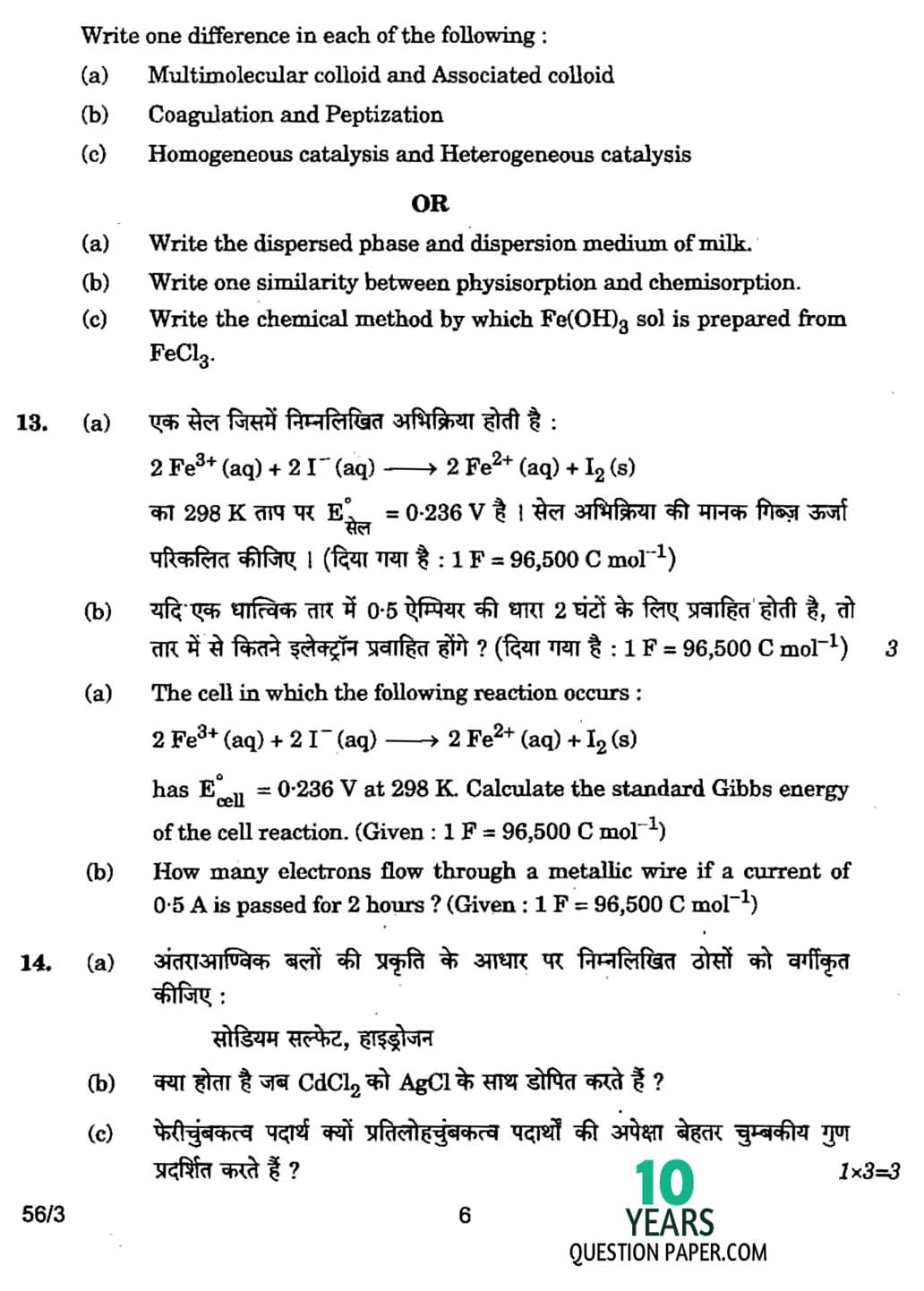
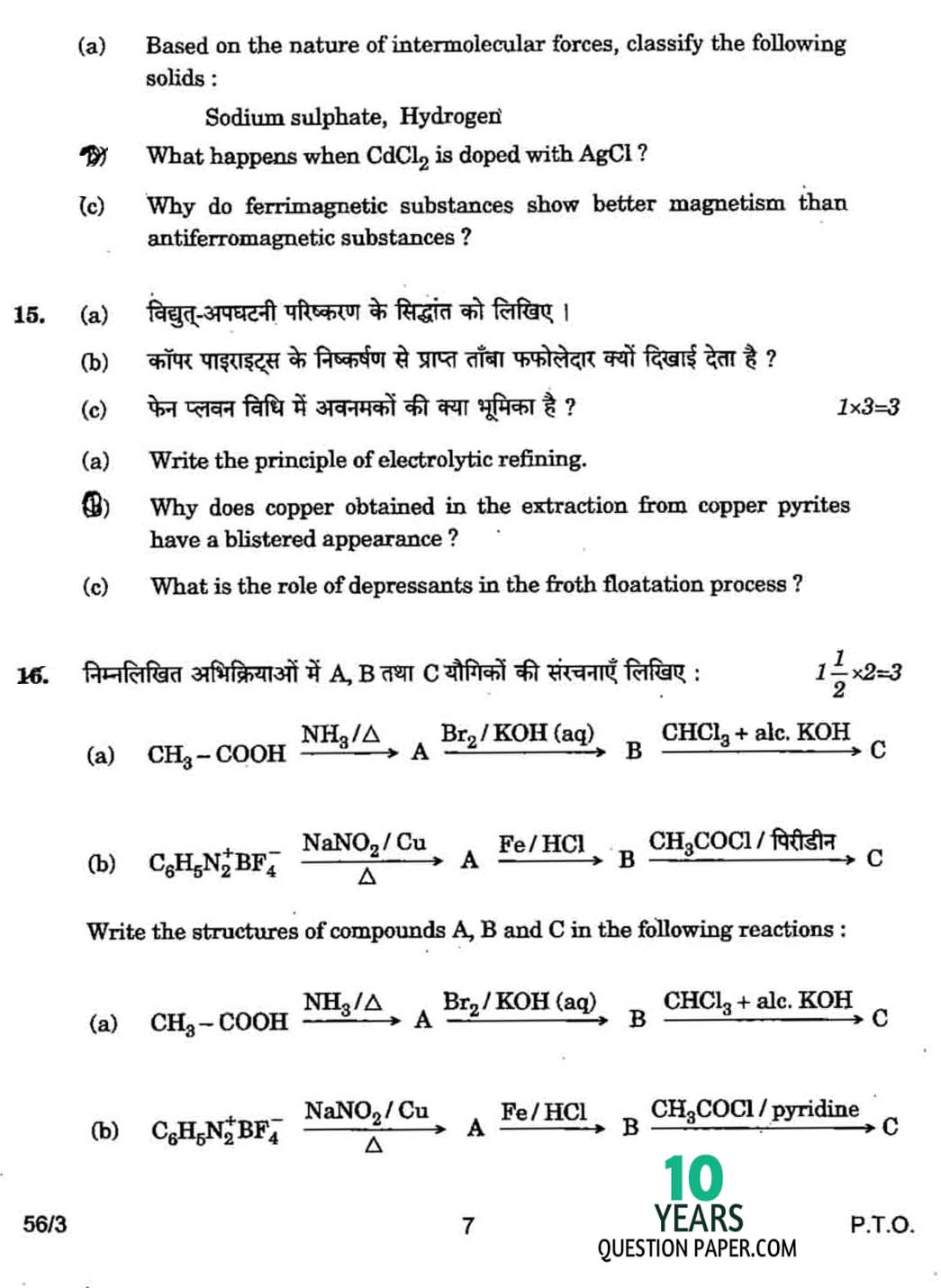
- Why do ferrimagnetic substances show better magnetism than antiferromagnetic substances?
- Why does copper obtained in the extraction from copper pyrites have a blistered appearance?
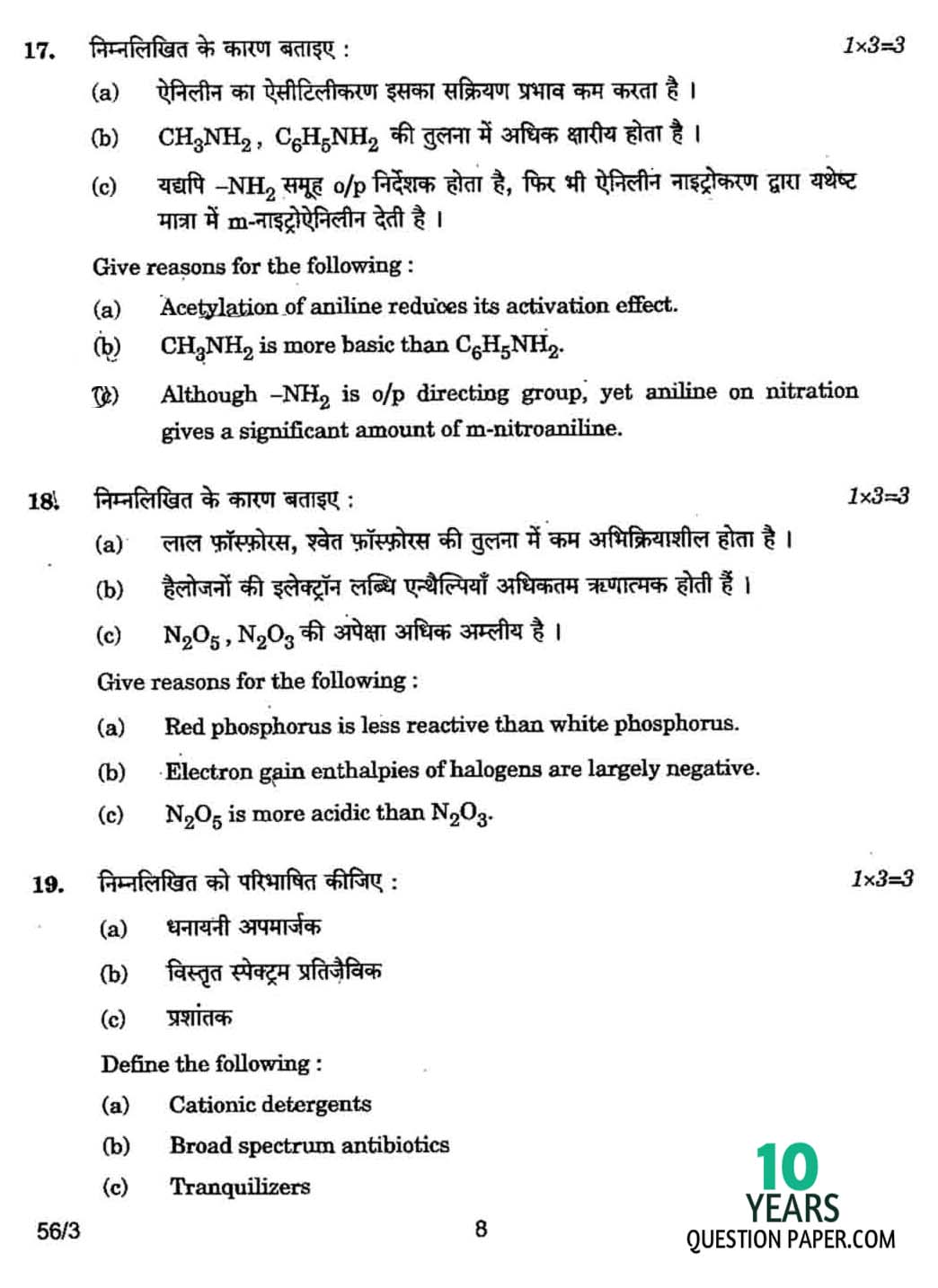
- Define the following: cationic detergents, broad spectrum antibiotics and tranquilizers.
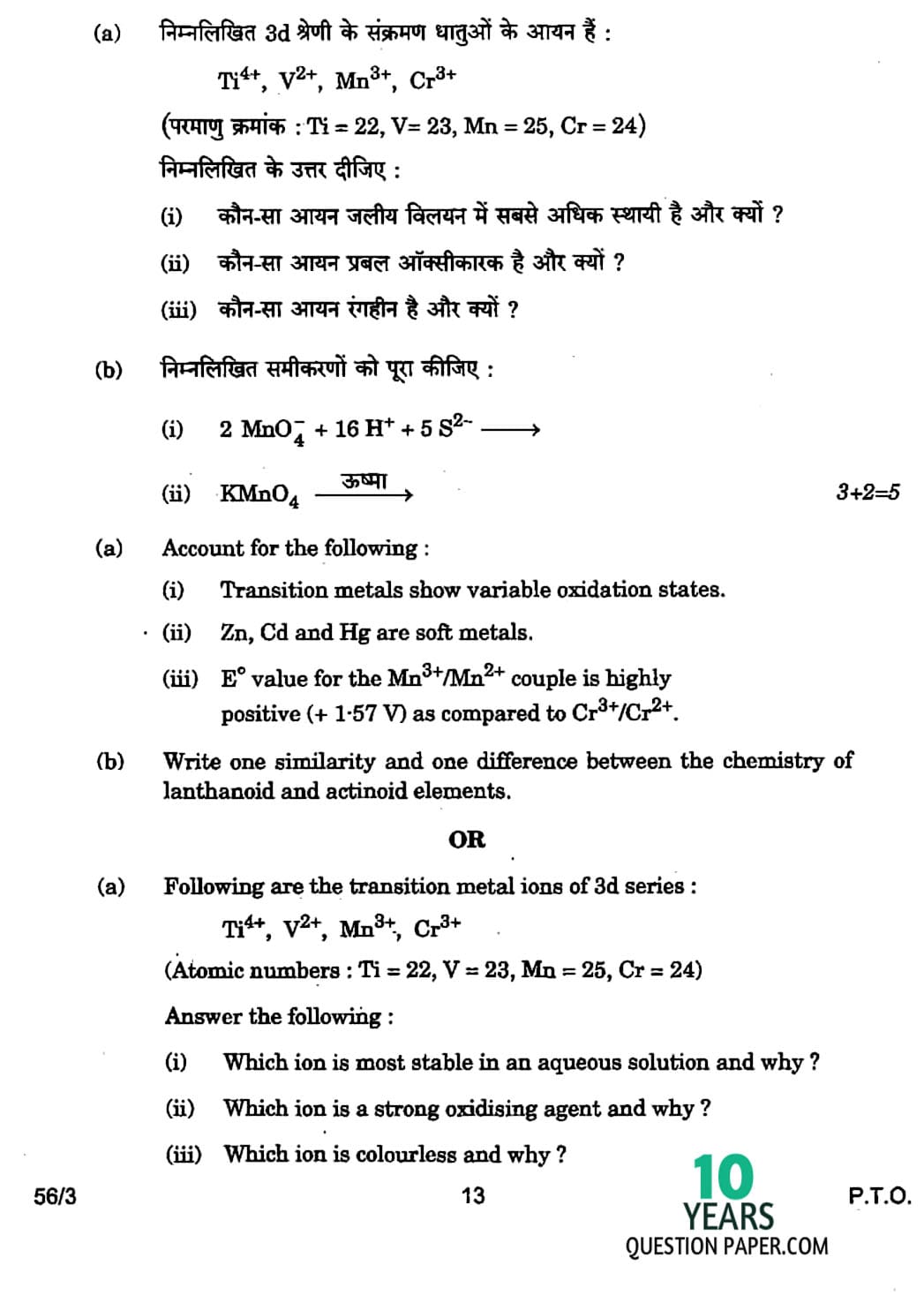
- Write one similarity and one difference between the chemistry of lanthanoid and actinoid elements.
Free email alert
Get the 2027 CBSE Class 12 papers first
One email when the new CBSE Class 12 Chemistry question papers are published here. No spam, unsubscribe any time.
What's next
Planning what comes after Class 12?
Compare college costs, education loans, and scholarships in one place.
See the cost breakdown