ICSE 2014 Chemistry Question Paper for Class 10

ICSE
Chemistry2014ICSE 2014 Chemistry solved question paper for class 10 - prepared by our expert teachers download and view previous year ICSE Chemistry 2014 Chemistry and solve them to make sure you are well prepared.
Downloaded from www.cisce.org

About this paper
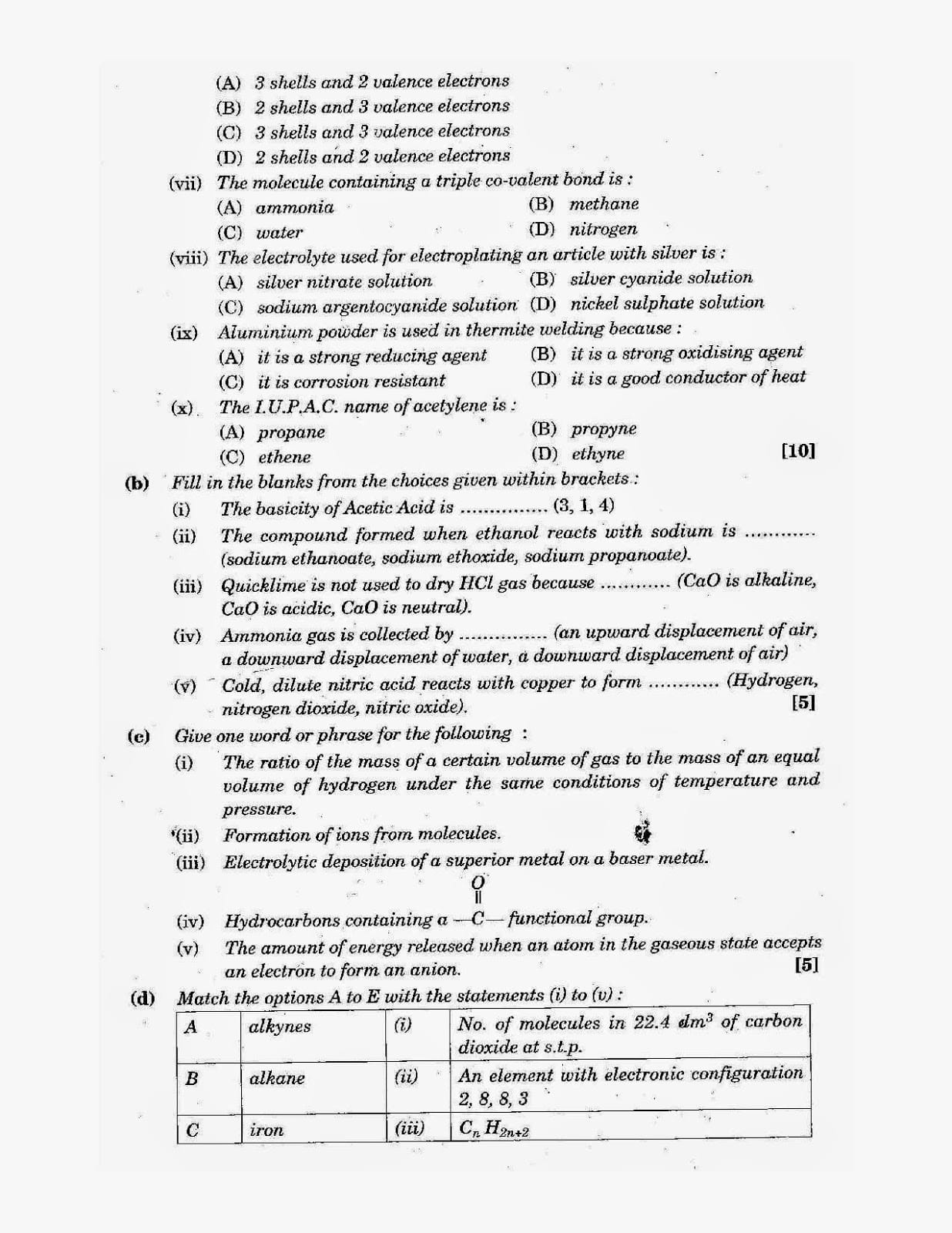
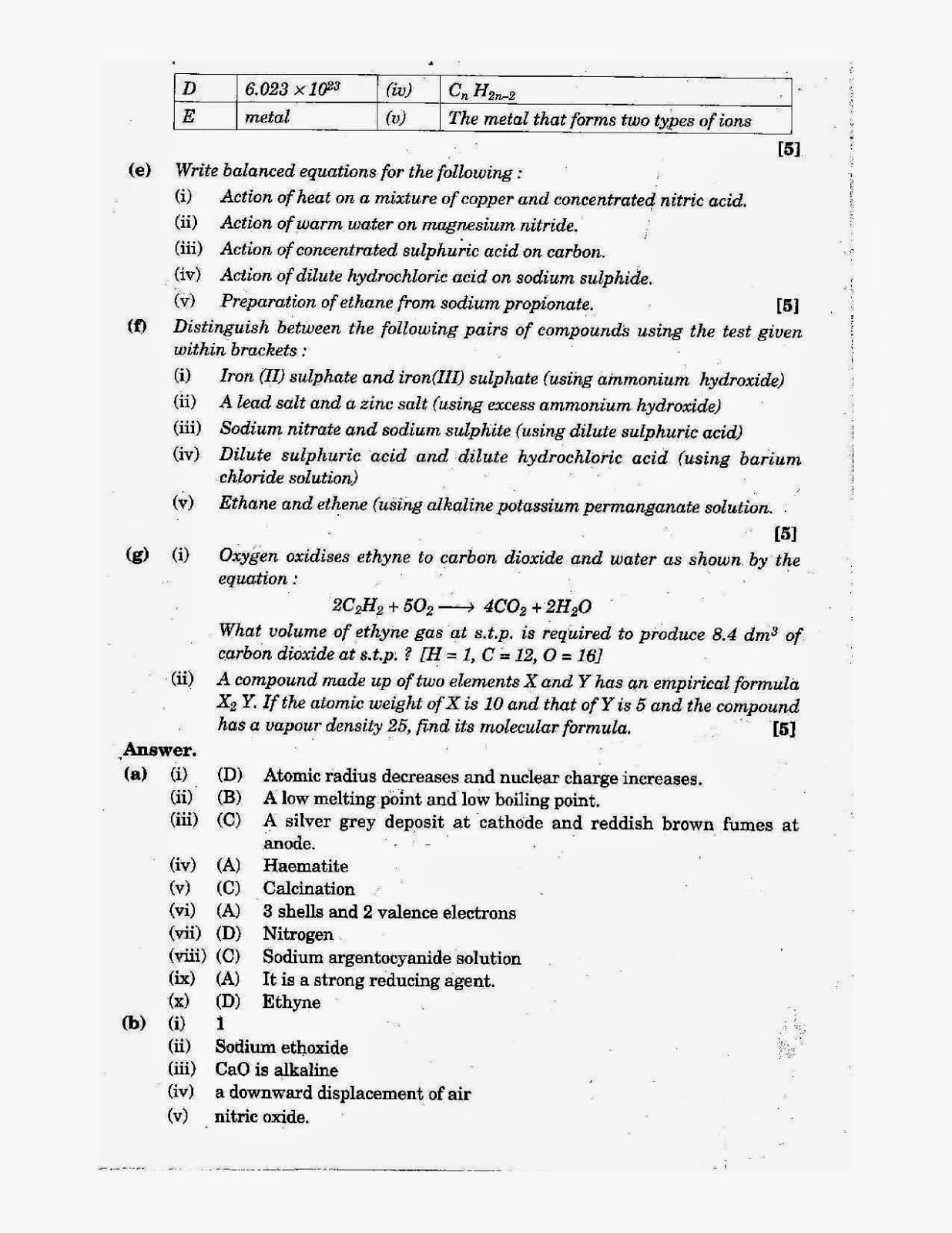
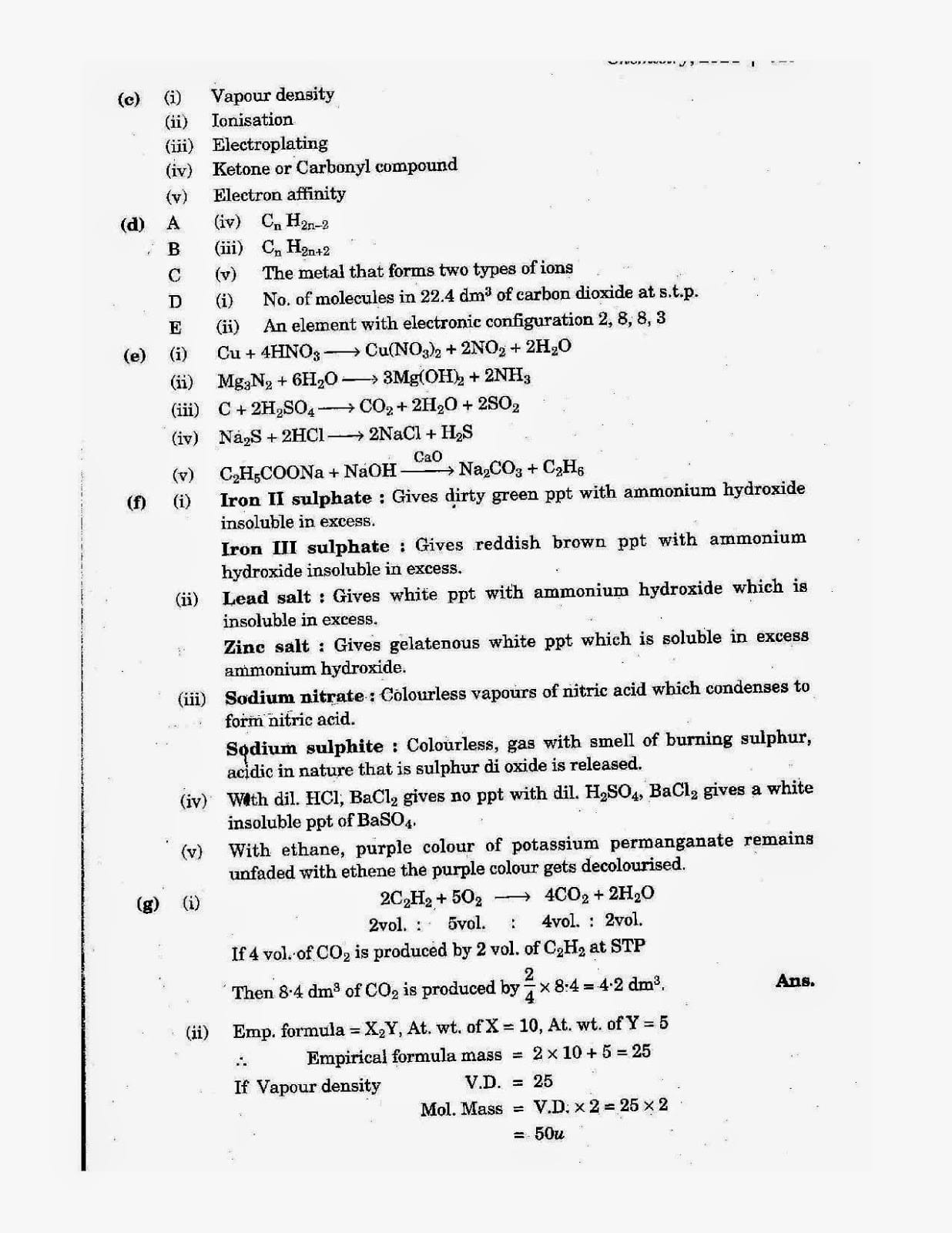
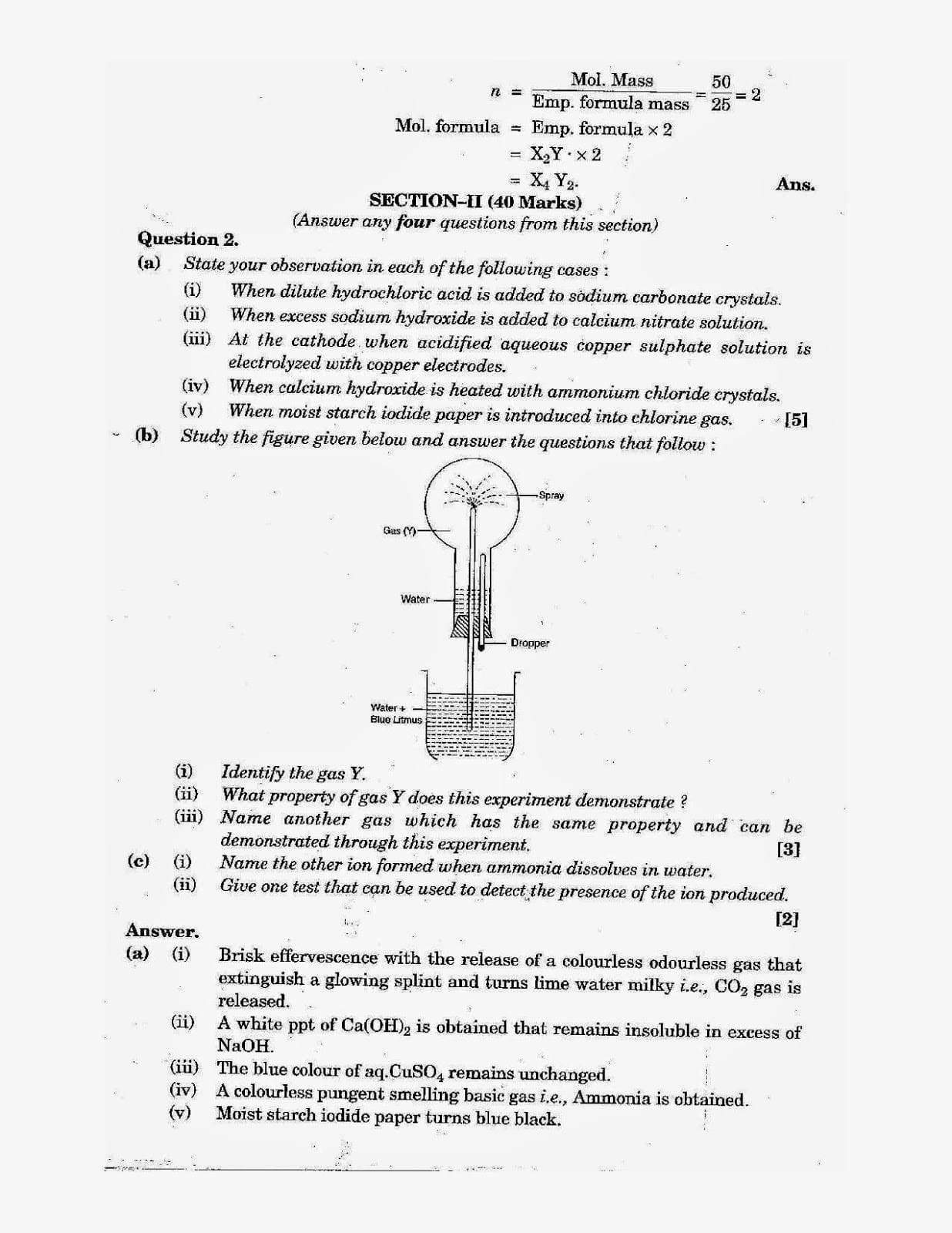
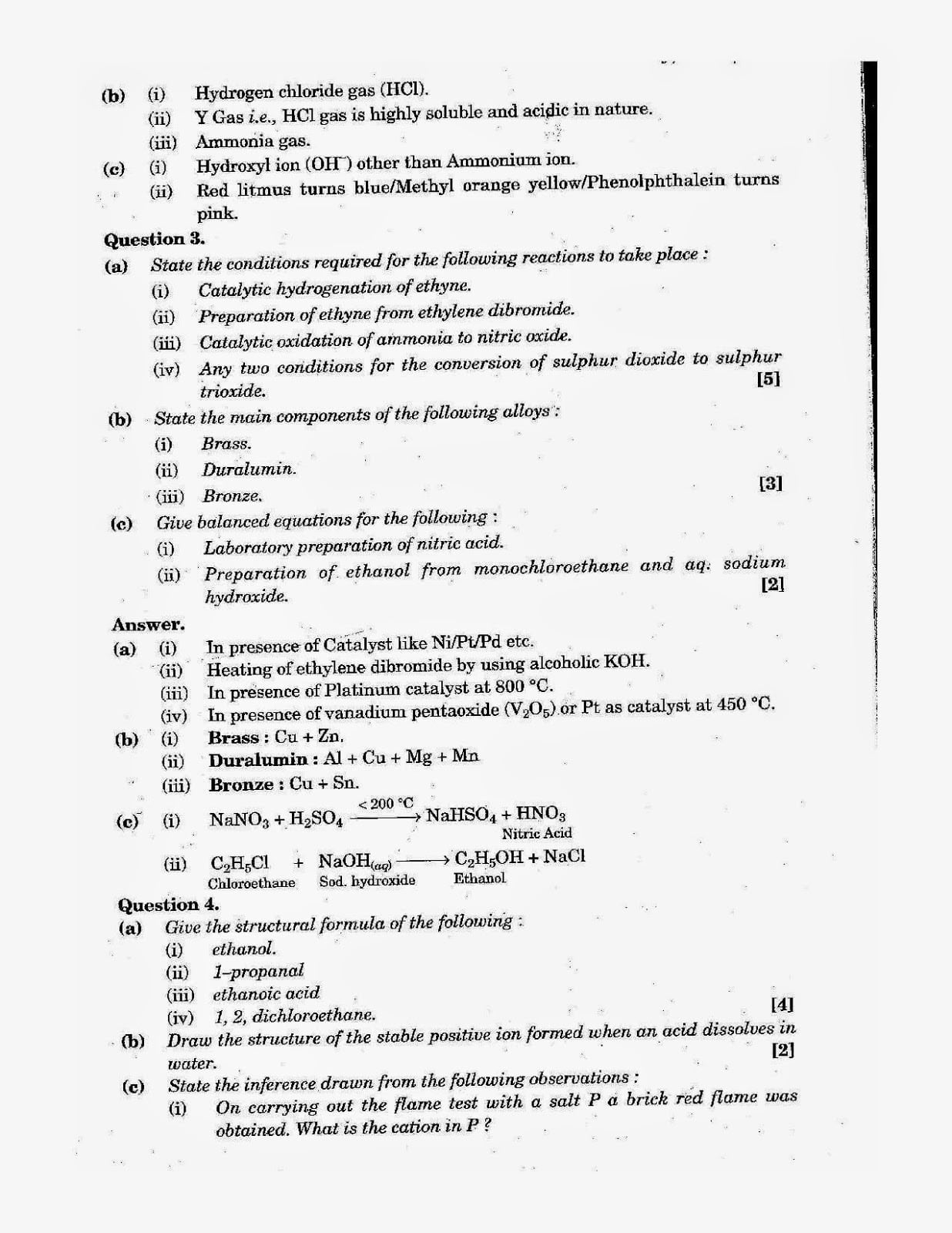
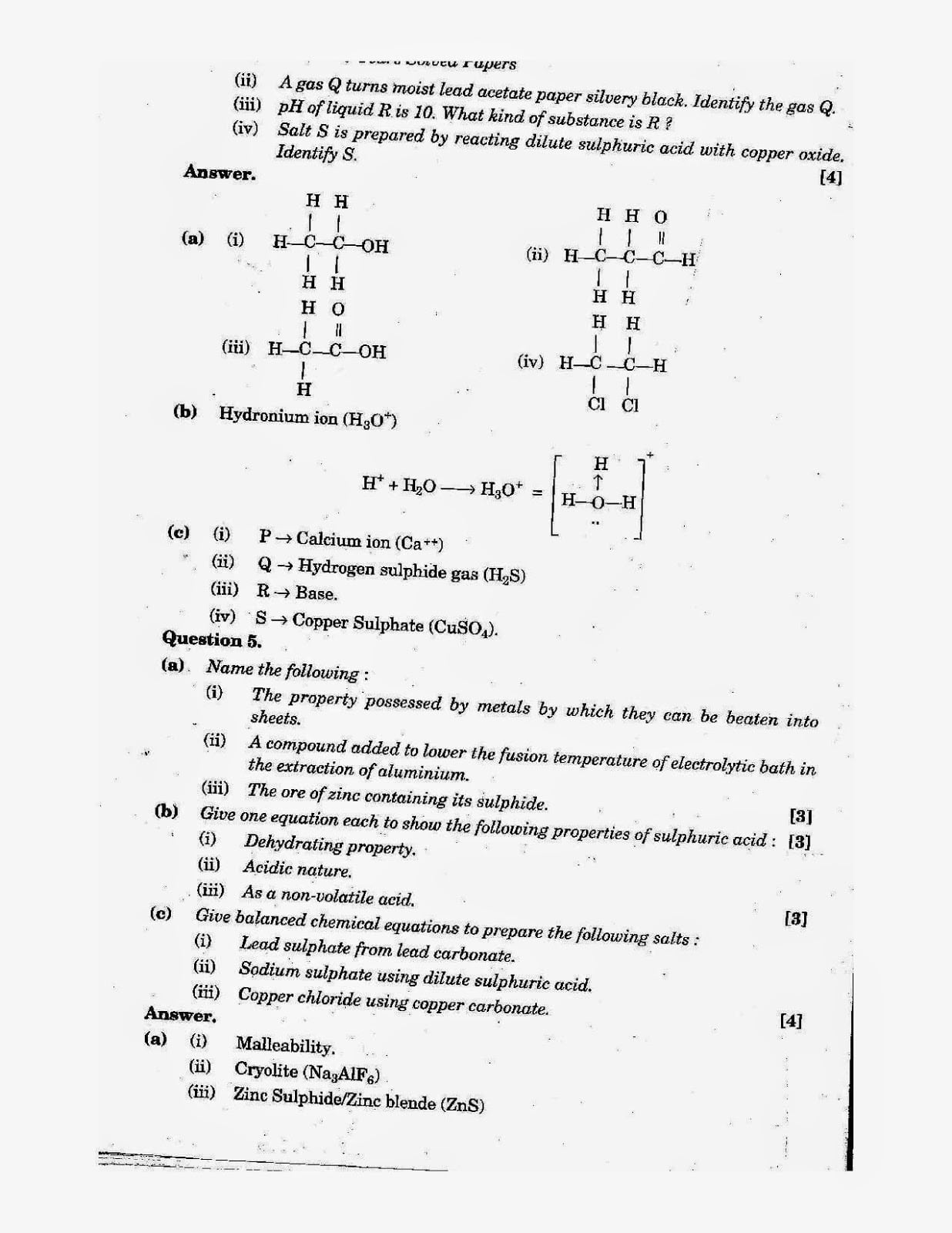
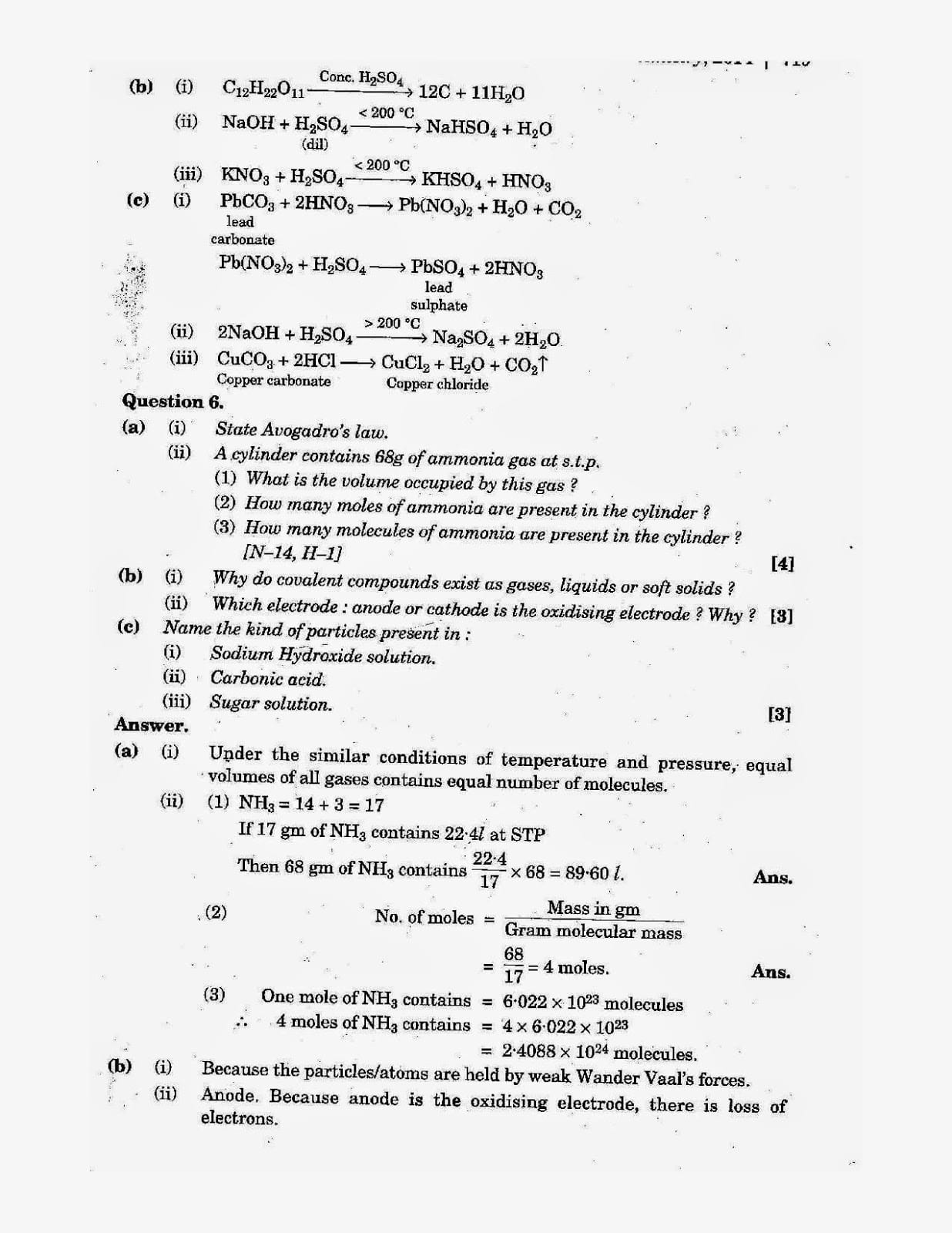
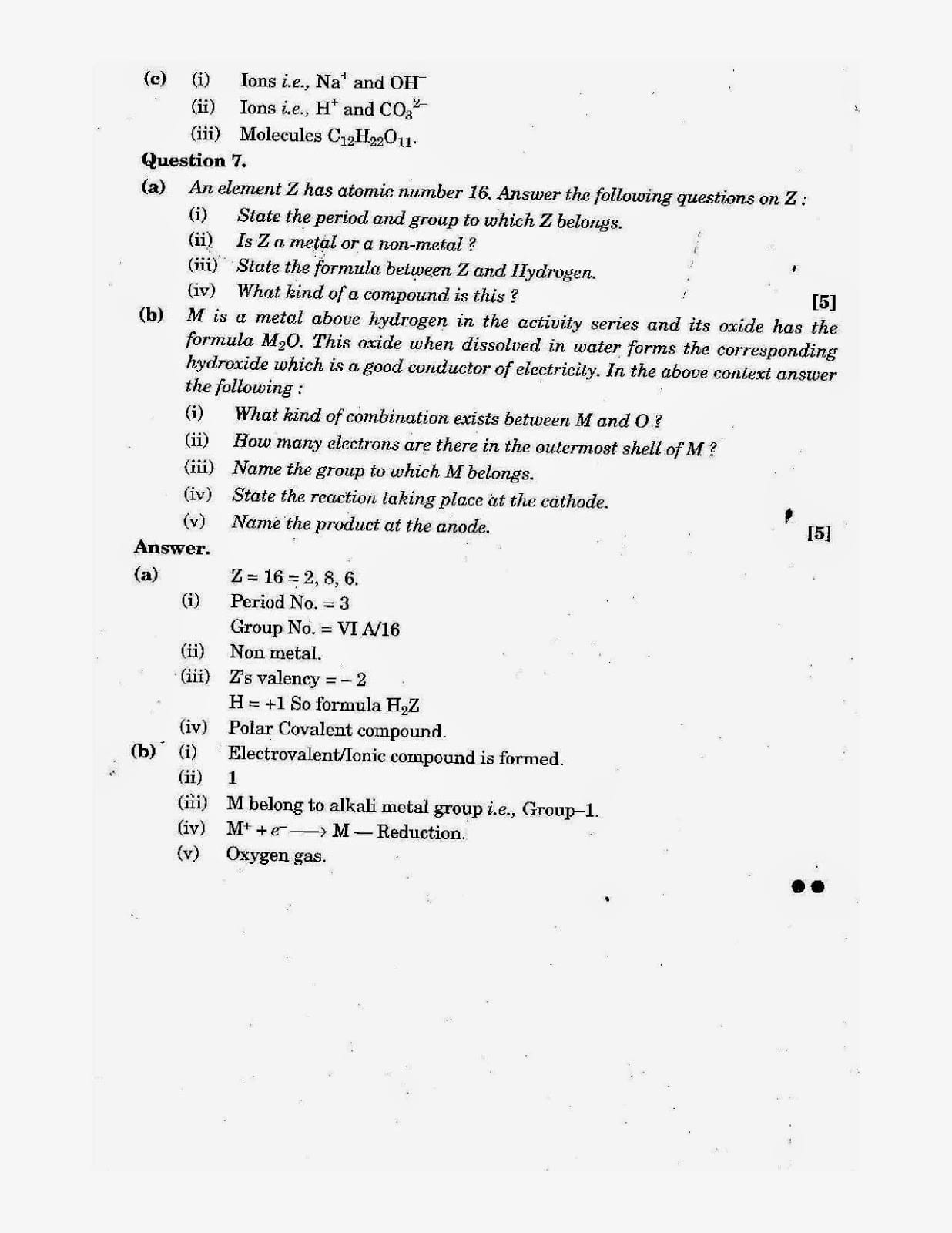
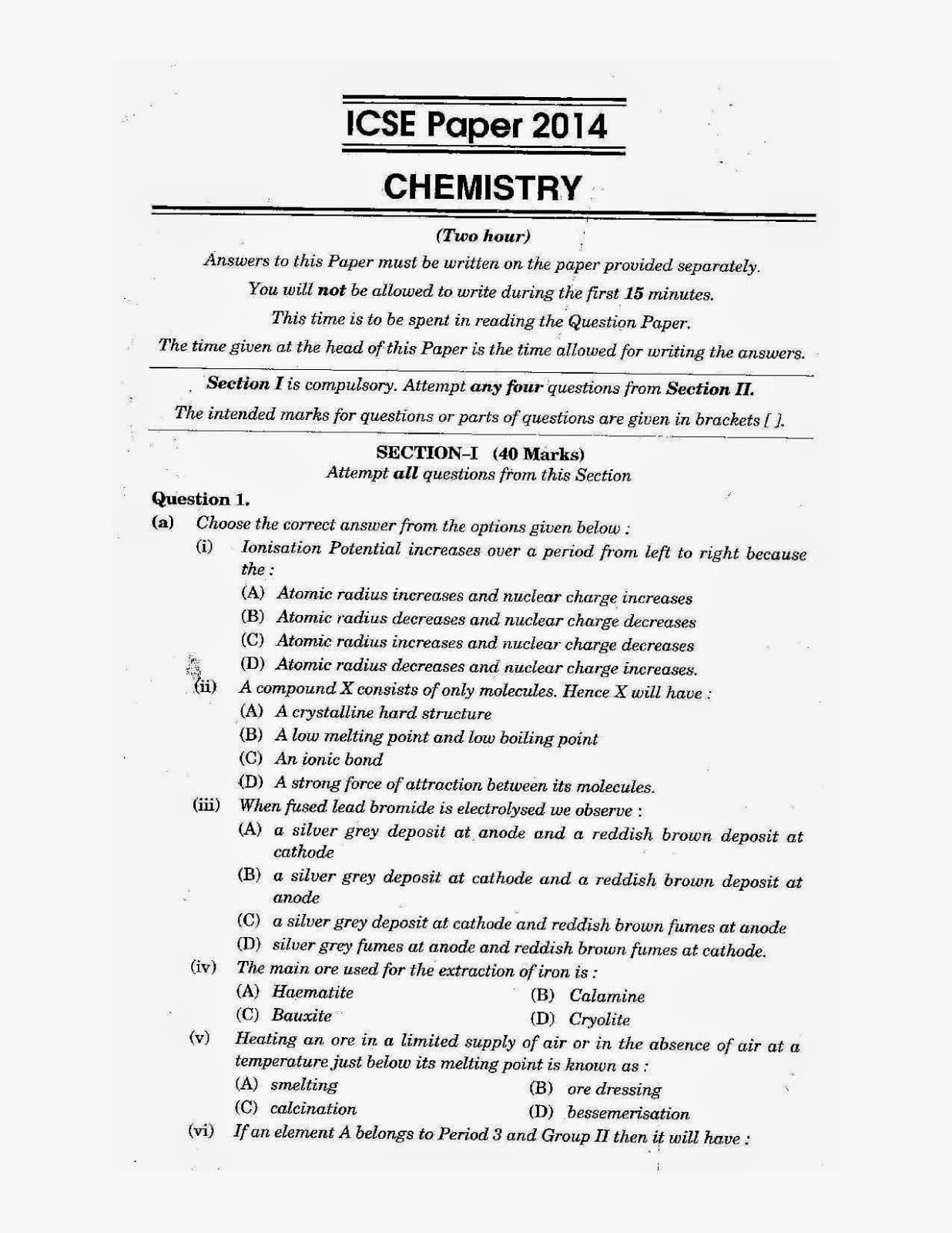
This is the ICSE Class 10 Chemistry question paper from the 2014 board examination, reproduced from a book of solved ICSE papers with answers after each question. It allows two hours of writing time plus 15 minutes of reading time. Section I (40 marks) is compulsory and includes ten multiple-choice questions, fill-in-the-blanks, one-word answers, matching, balanced equations, distinguishing tests, and calculations on the combustion of ethyne and a molecular formula from vapour density. In Section II (40 marks) candidates attempt any four of Questions 2–7, on observations and the fountain experiment, reaction conditions and alloys, structural formulae and inferences, metallurgy and sulphuric acid, Avogadro's law and moles of ammonia, and the periodic table and electrolysis.
- Exam
- ICSE Class 10
- Subject
- Chemistry
- Year
- 2014
- Maximum marks
- 80
- Time allowed
- 2 hours + 15 min reading
- Questions
- 7
- Pages
- 10
- Answers included
- Yes
Paper pattern
Section I
40 marksQuestion 1, compulsory, parts (a)–(g): 10 multiple-choice questions, fill in the blanks, one-word answers, matching, equations, distinguishing tests and numericals
Section II
40 marksQuestions 2–7, attempt any four, 10 marks each
Topics covered
- Periodic properties
- Chemical bonding
- Electrolysis and electroplating
- Metallurgy and alloys
- Acids, bases and salts
- Analytical chemistry
- Ammonia and hydrogen chloride
- Nitric acid and sulphuric acid
- Organic chemistry
- Mole concept and stoichiometry
Questions from this paper
- Oxygen oxidises ethyne to carbon dioxide and water: 2C₂H₂ + 5O₂ → 4CO₂ + 2H₂O. What volume of ethyne gas at s.t.p. is required to produce 8.4 dm³ of carbon dioxide at s.t.p.?
- Distinguish between iron(II) sulphate and iron(III) sulphate using ammonium hydroxide.
- State the conditions required for the catalytic oxidation of ammonia to nitric oxide.
- Give one equation to show the dehydrating property of sulphuric acid.
- A cylinder contains 68 g of ammonia gas at s.t.p. What volume does this gas occupy, and how many moles of ammonia are present? [N = 14, H = 1]
- Why do covalent compounds exist as gases, liquids or soft solids?
Free email alert
Get the 2027 ICSE Class 10 papers first
One email when the new ICSE Class 10 Chemistry question papers are published here. No spam, unsubscribe any time.
What's next
Class 10 done next year?
A number of scholarships for Class 11–12 depend on your Class 10 marks.
Check eligibility