ICSE 2015 Chemistry Question Paper for Class 10

ICSE
Chemistry2015ICSE Class 10 Chemistry 2015 question paper (code T15 522), questions only: 80 marks in 2 hours, Section I compulsory and any four questions from Section II.
Downloaded from www.cisce.org
About this paper
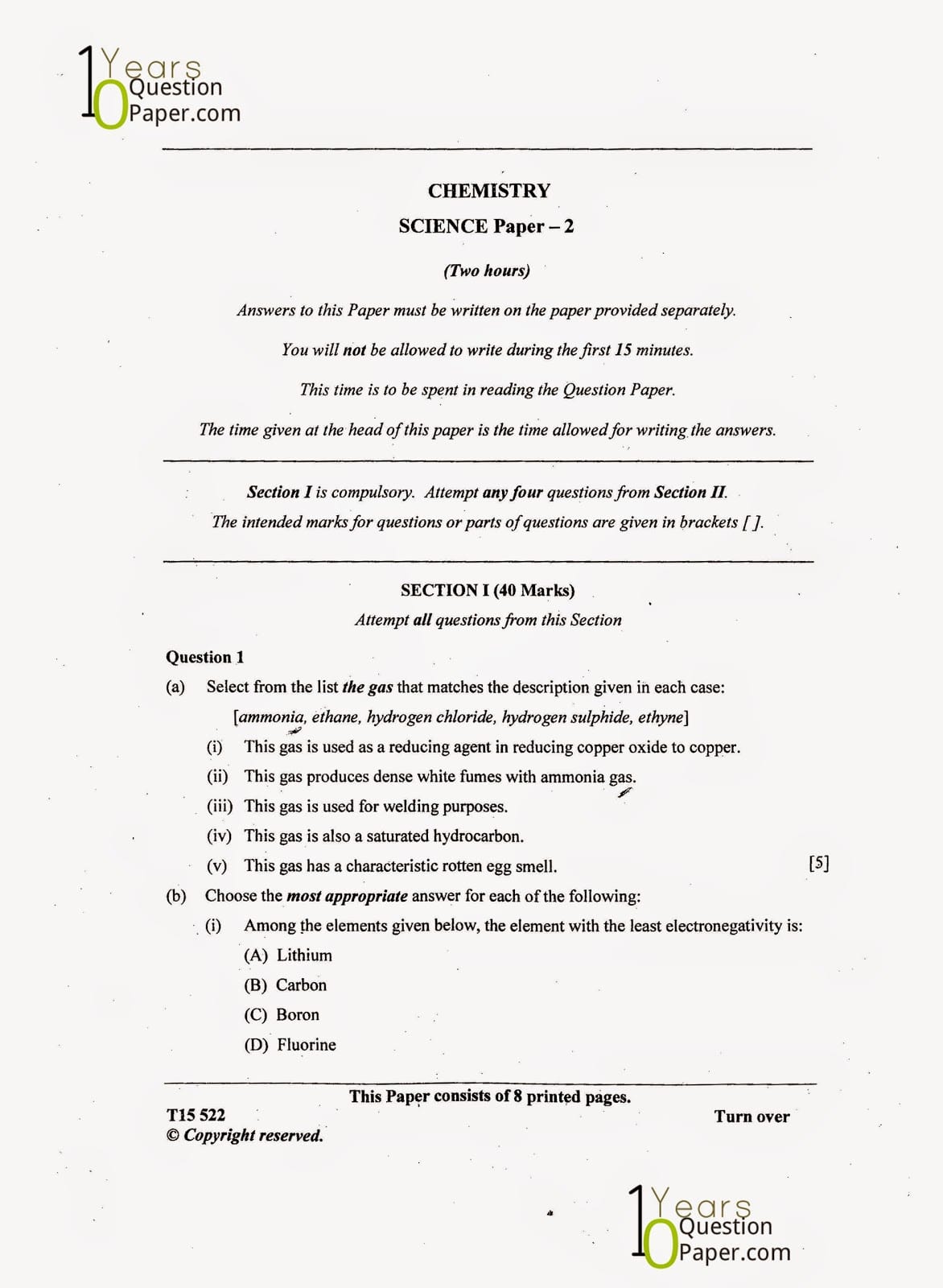
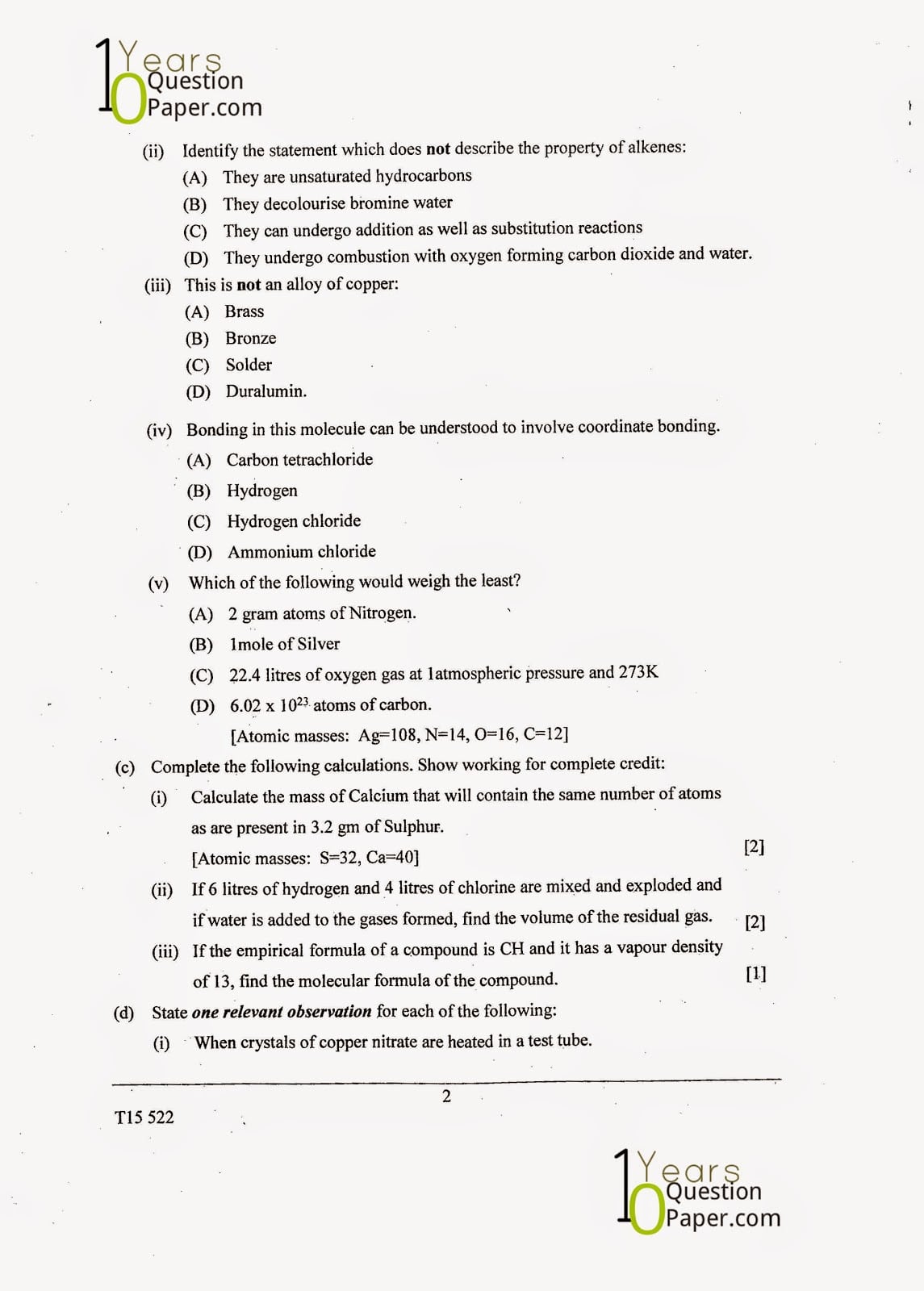
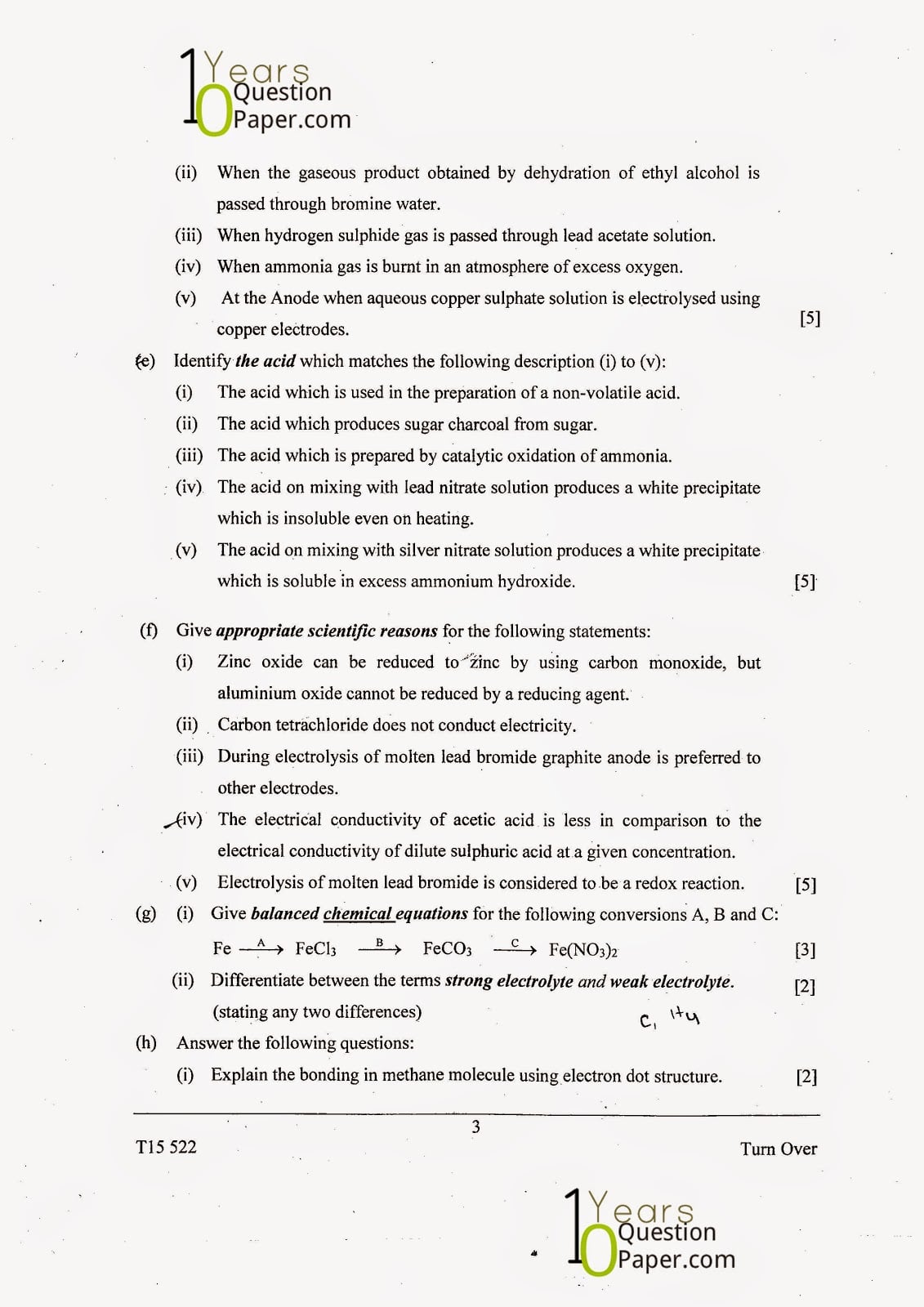
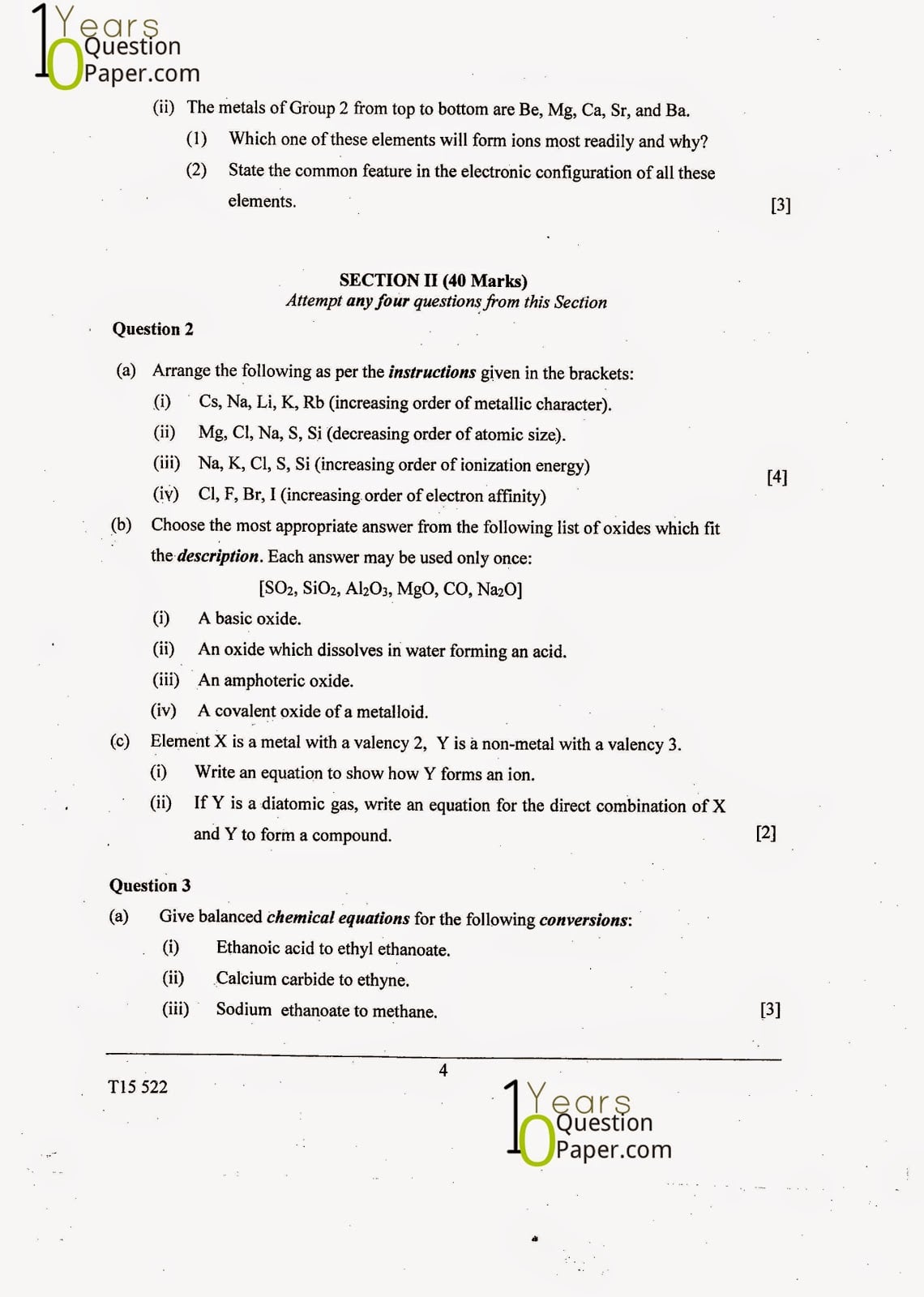
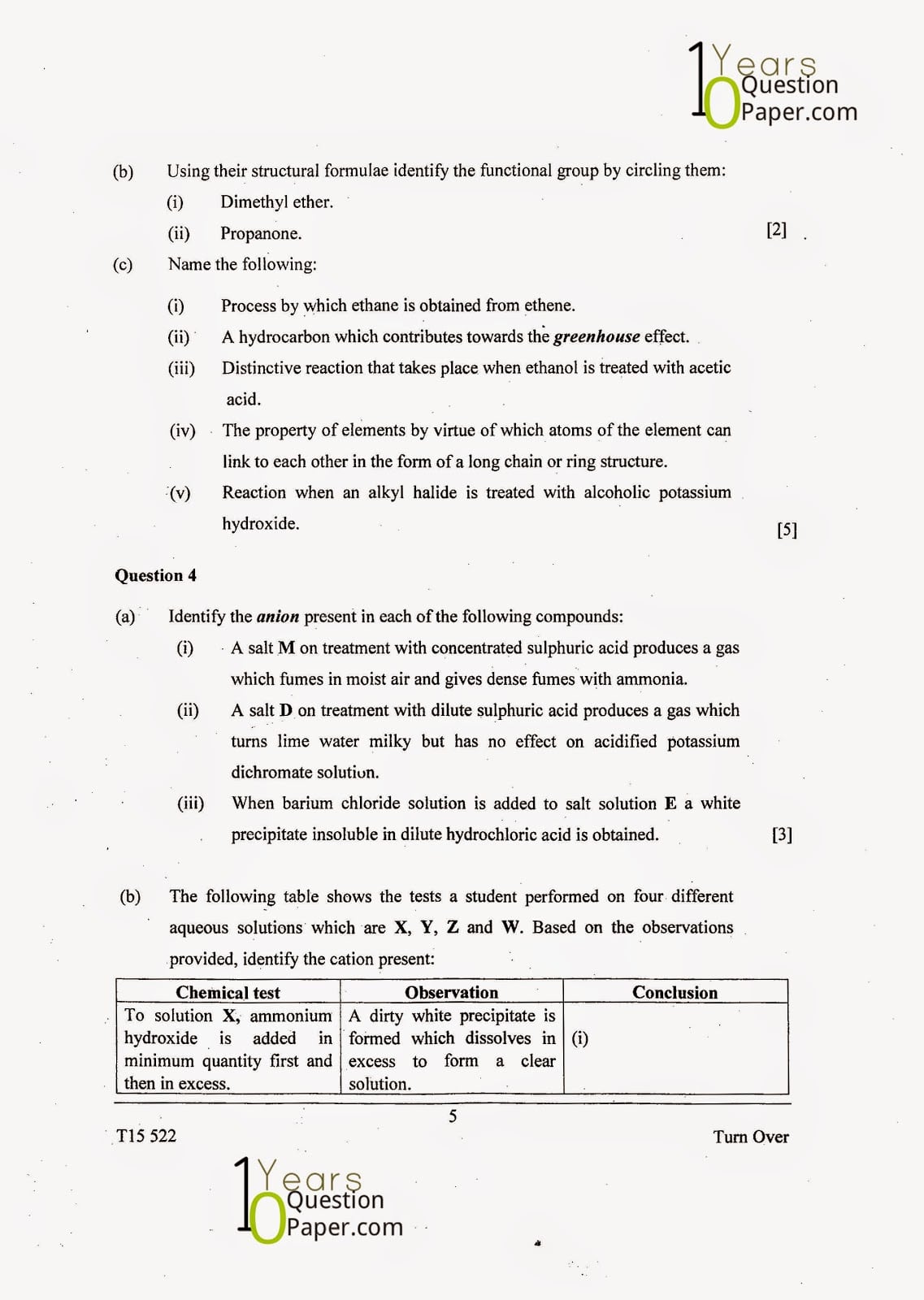
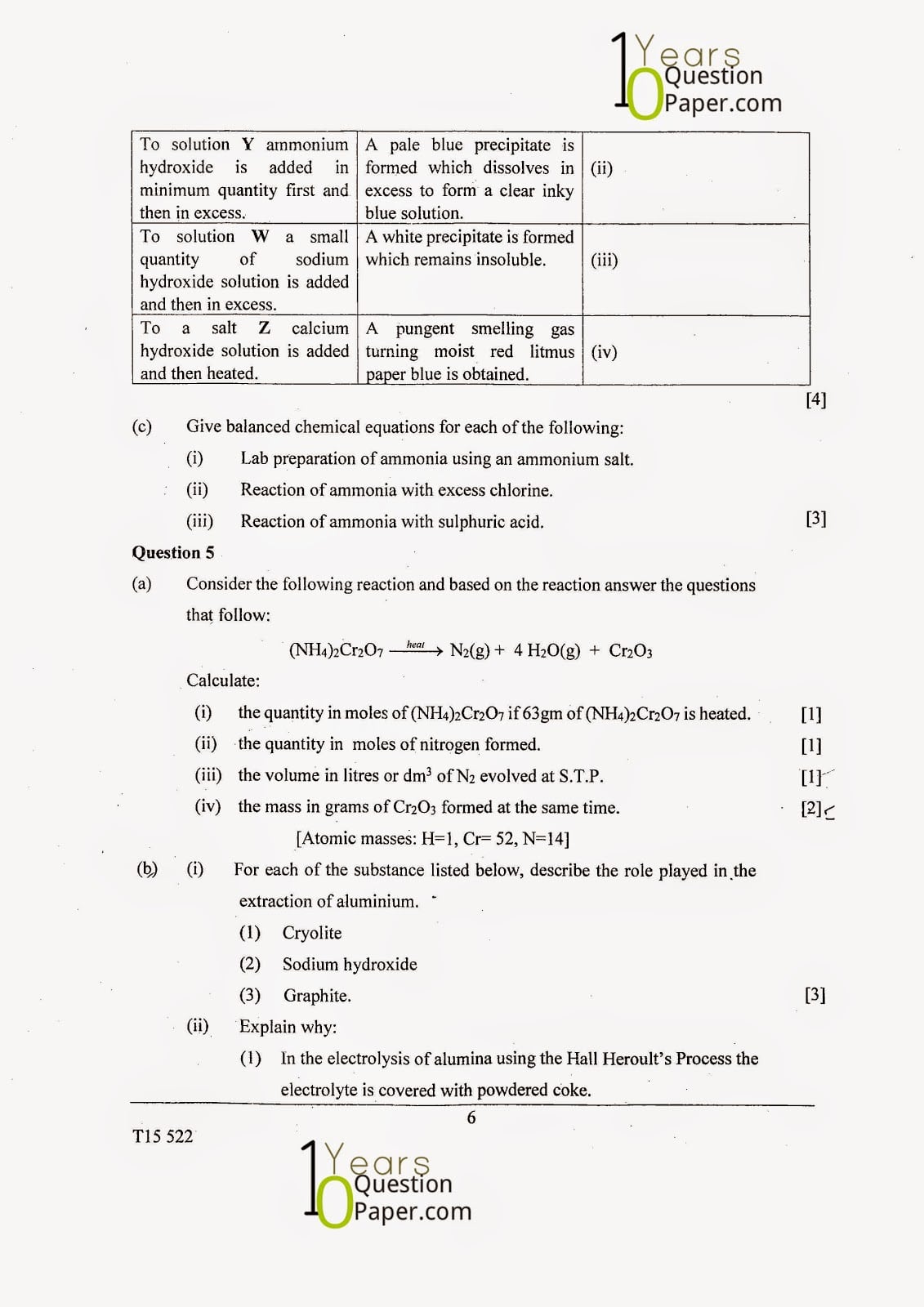
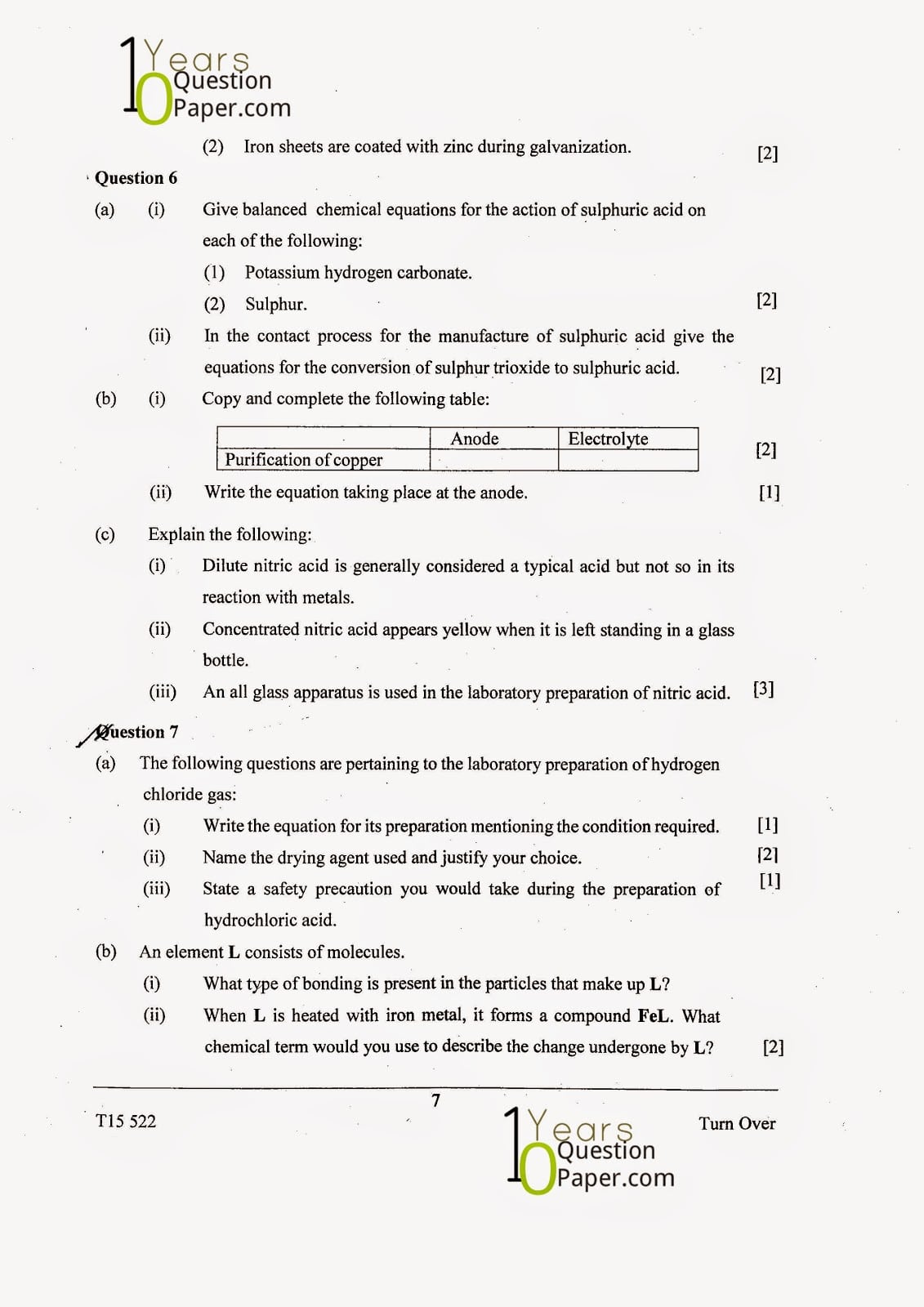
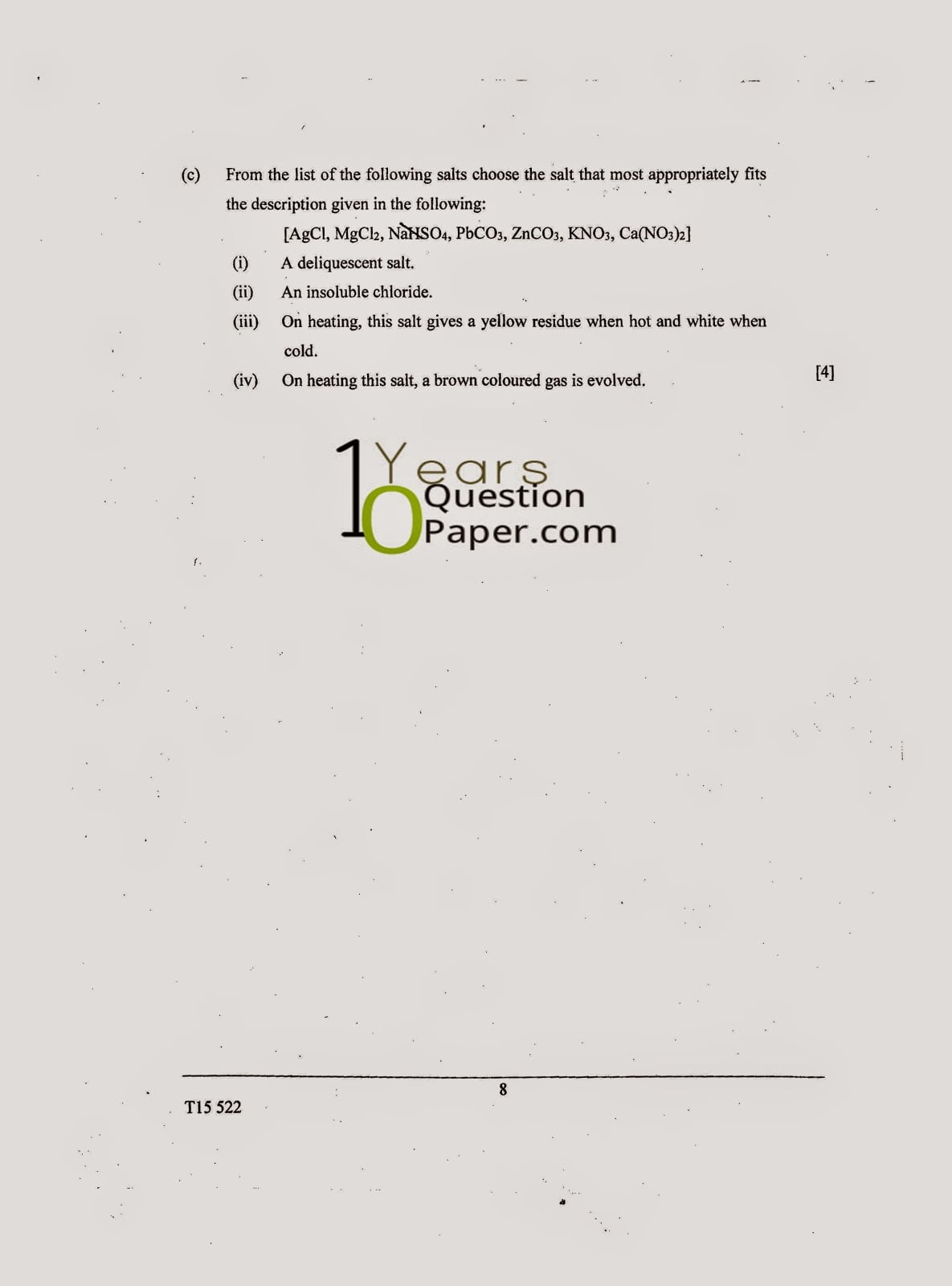
This is the official ICSE Class 10 Chemistry (Science Paper 2) question paper from the 2015 examination, paper code T15 522. Writing time is two hours, plus 15 minutes of reading time. Section I (40 marks) is compulsory and covers Question 1: picking gases and acids from a list, multiple choice, short mole and gas-volume calculations, observations, scientific reasons, conversions of iron compounds, and the bonding in methane. In Section II (40 marks) candidates attempt any four of Questions 2–7, which deal with periodic trends, organic chemistry, identifying ions from test results, a stoichiometry problem on ammonium dichromate, the extraction of aluminium, sulphuric and nitric acid, and the preparation of hydrogen chloride. The paper has questions only, without answers.
- Exam
- ICSE Class 10
- Subject
- Chemistry
- Year
- 2015
- Paper code
- T15 522
- Maximum marks
- 80
- Time allowed
- 2 hours + 15 min reading
- Questions
- 7
- Pages
- 8
- Answers included
- No, questions only
Paper pattern
Section I
40 marksQuestion 1, compulsory, with parts (a)–(i) on selection, multiple choice, calculations, observations, reasons and equations
Section II
40 marksQuestions 2–7, attempt any four; 10 marks each
Topics covered
- Periodic table and periodic properties
- Chemical bonding
- Mole concept and stoichiometry
- Electrolysis
- Metallurgy of aluminium
- Analytical chemistry
- Hydrogen chloride
- Ammonia
- Nitric acid
- Sulphuric acid
- Organic chemistry
Questions from this paper
- Calculate the mass of calcium that will contain the same number of atoms as are present in 3.2 g of sulphur. [Atomic masses: S = 32, Ca = 40]
- If the empirical formula of a compound is CH and it has a vapour density of 13, find the molecular formula of the compound.
- Give a scientific reason: zinc oxide can be reduced to zinc by using carbon monoxide, but aluminium oxide cannot be reduced by a reducing agent.
- Arrange Cs, Na, Li, K and Rb in increasing order of metallic character.
- In the electrolysis of alumina by the Hall–Héroult process, why is the electrolyte covered with powdered coke?
- Explain why concentrated nitric acid appears yellow when it is left standing in a glass bottle.
Free email alert
Get the 2027 ICSE Class 10 papers first
One email when the new ICSE Class 10 Chemistry question papers are published here. No spam, unsubscribe any time.
What's next
Class 10 done next year?
A number of scholarships for Class 11–12 depend on your Class 10 marks.
Check eligibility