ICSE Class 10 History & Civics (H.C.G. Paper 1) Question Paper 2025 with Solutions

ICSE
History Civics2025Download the official ICSE Class 10 History & Civics Question Paper 2025 with step-by-step solutions prepared by subject matter experts. Practicing the 2025 ICSE H.C.G. Paper 1 helps students master Union Parliament, Union Executive, the Judiciary, the Indian National Movement, Contemporary World History (World Wars, UN, and Non-Aligned Movement), and CISCE picture-study questions. Access the free PDF download above with complete answer keys.
About this paper
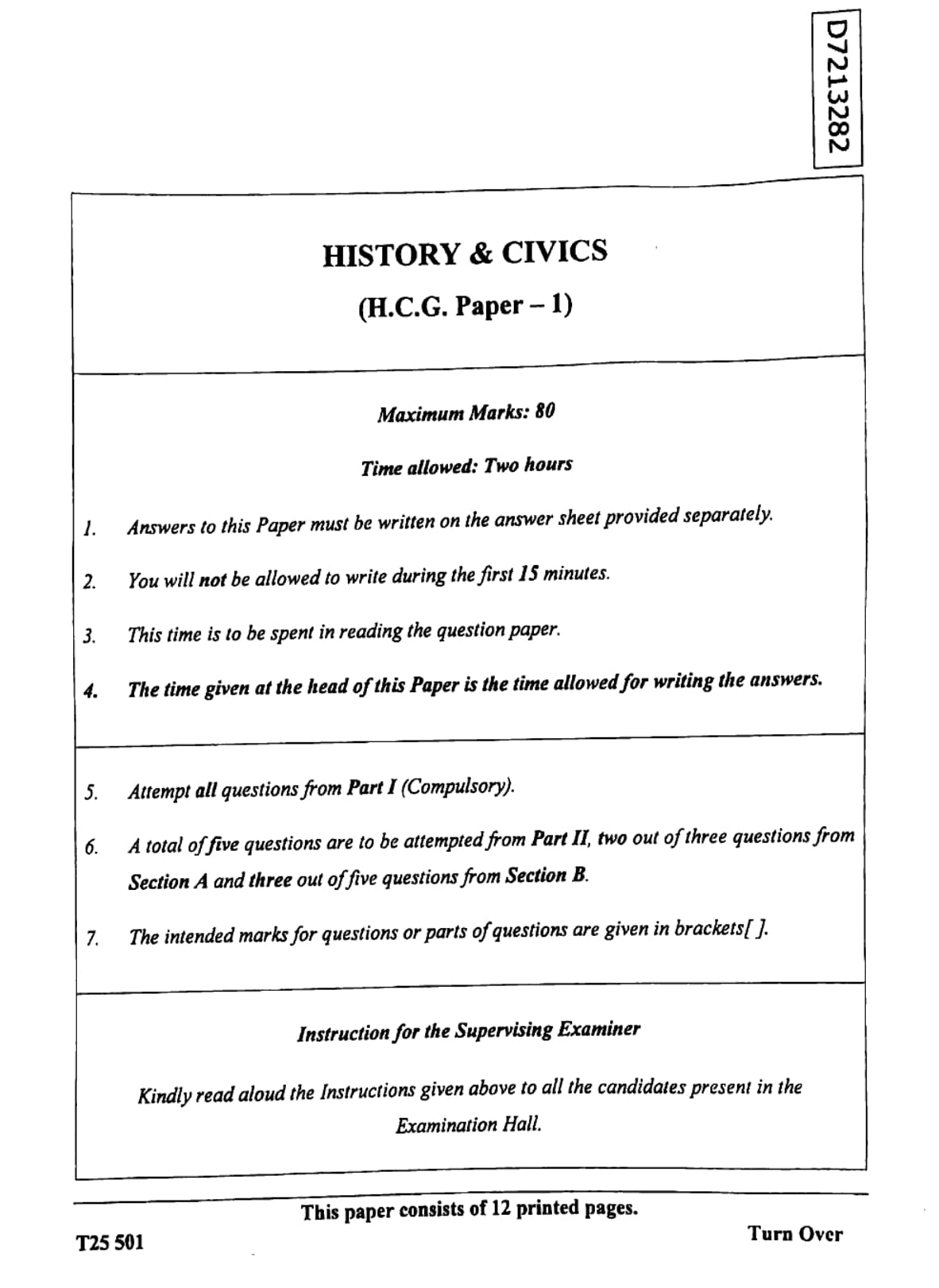
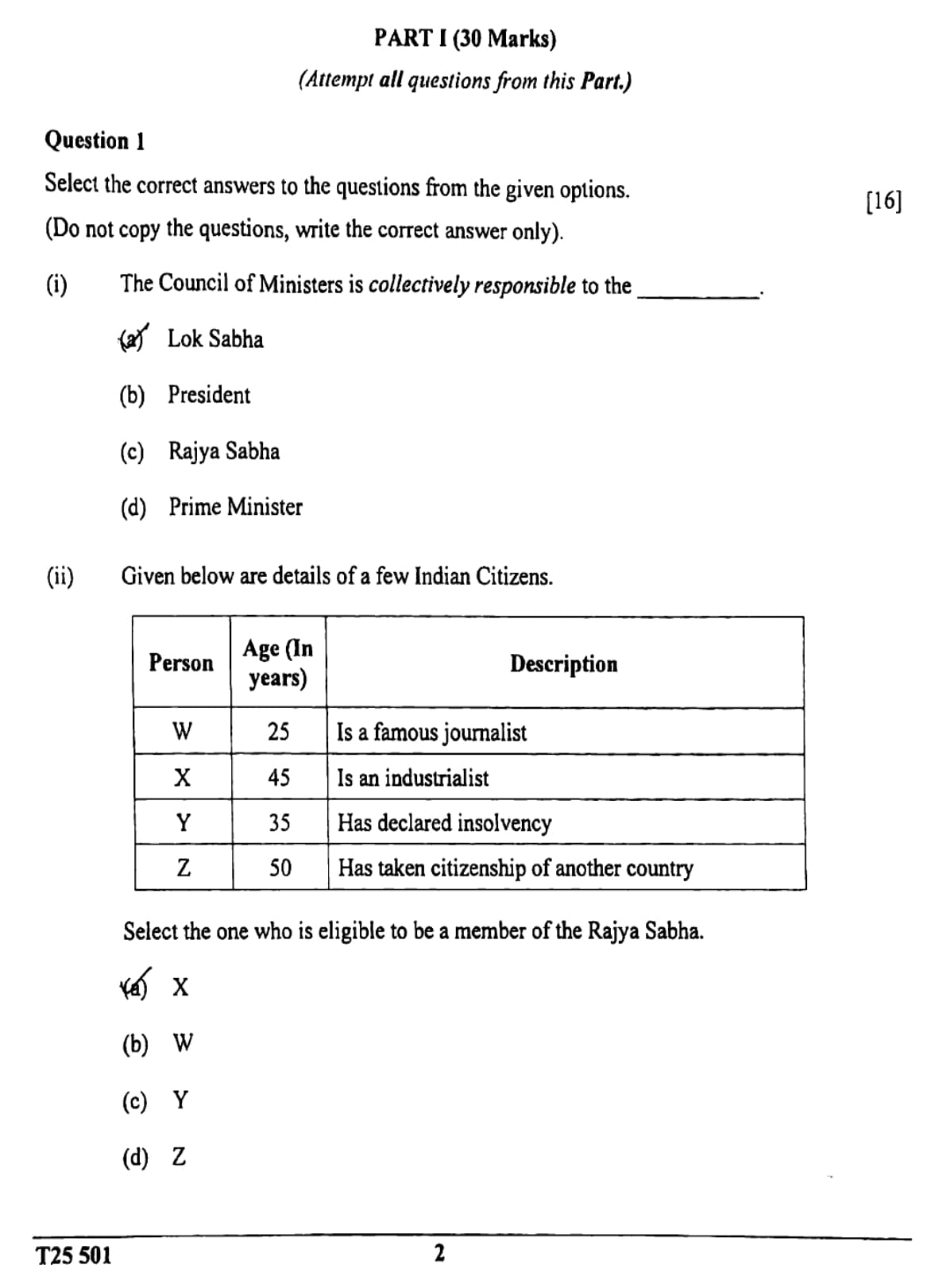
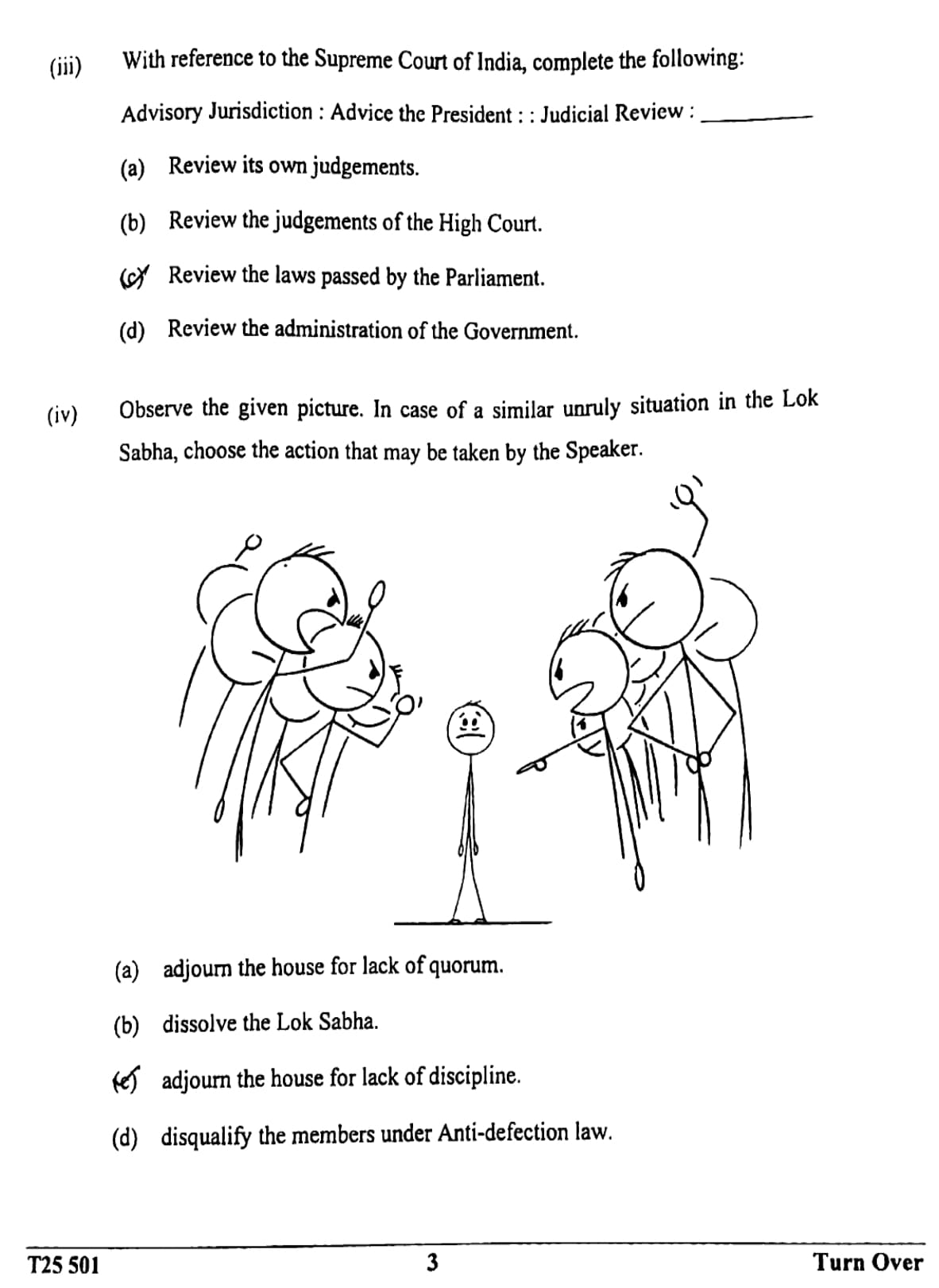
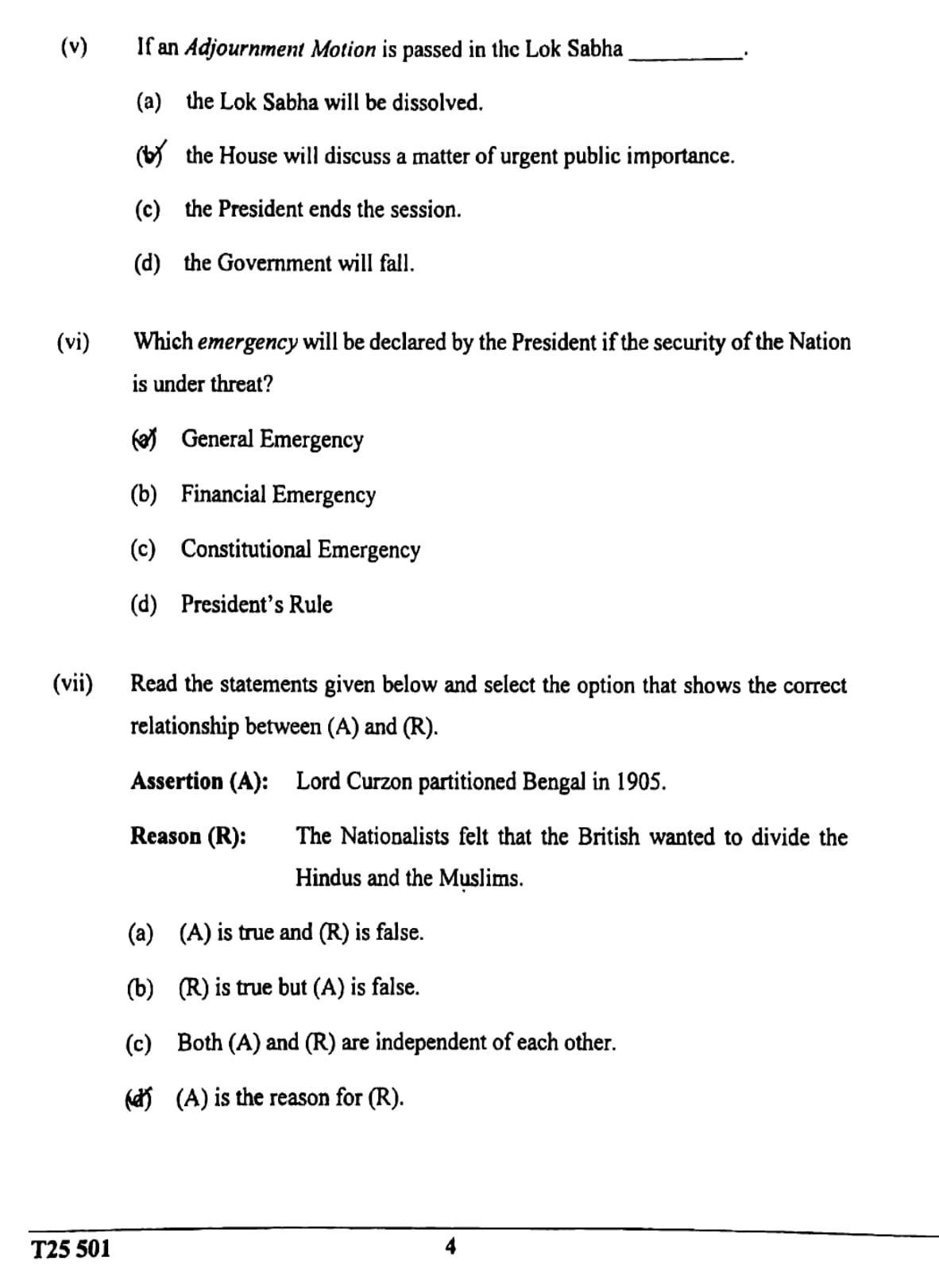
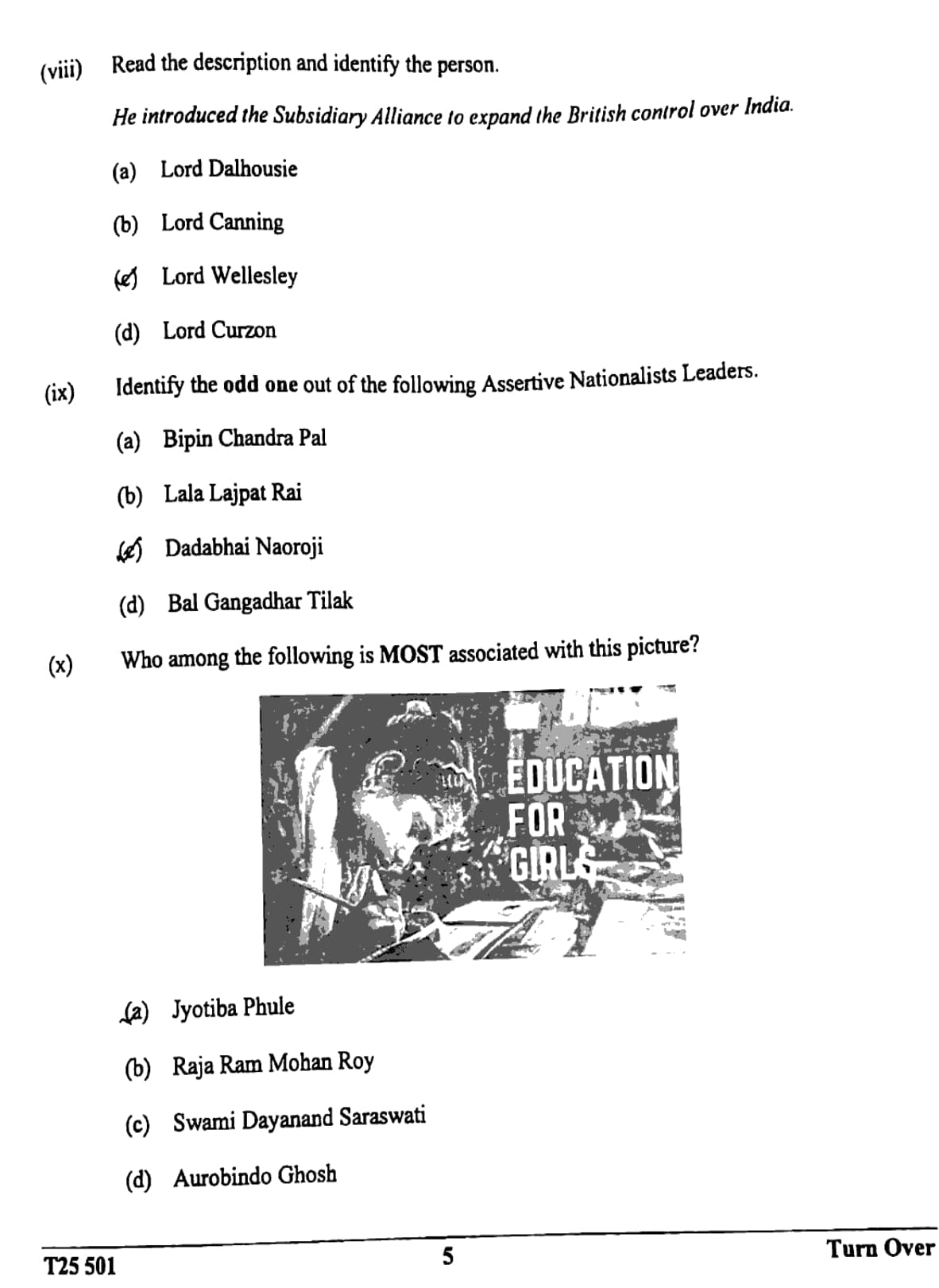
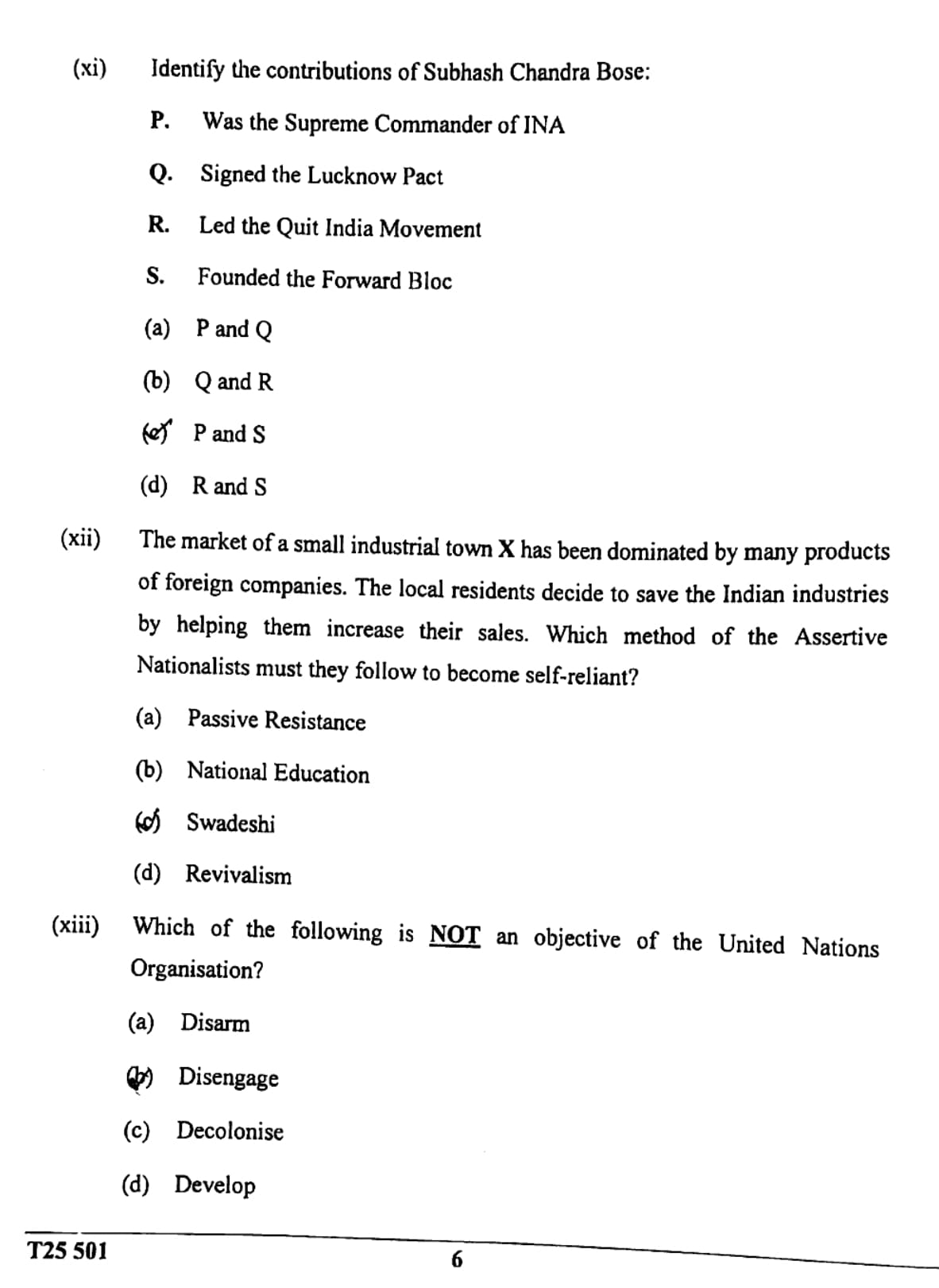
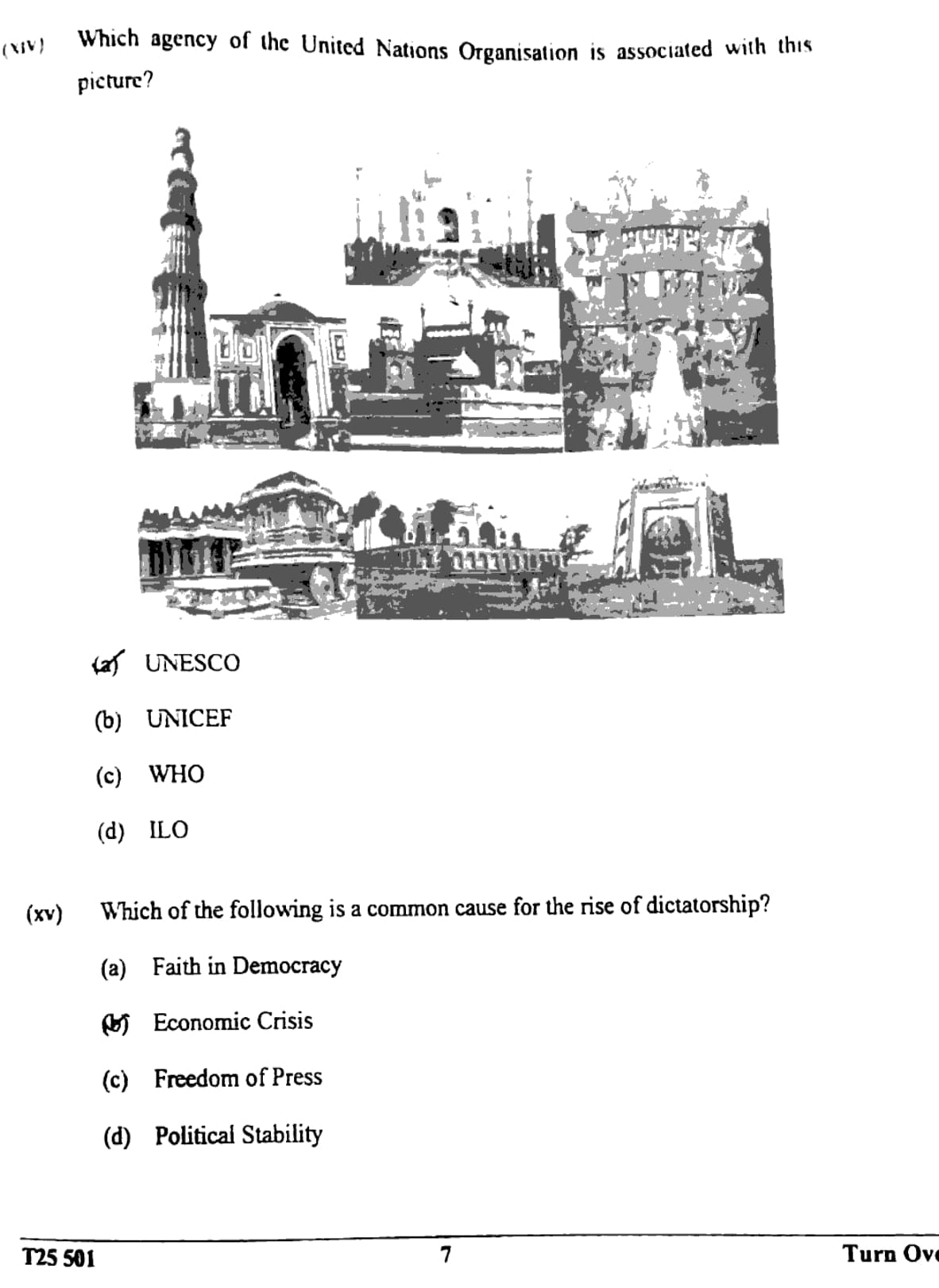
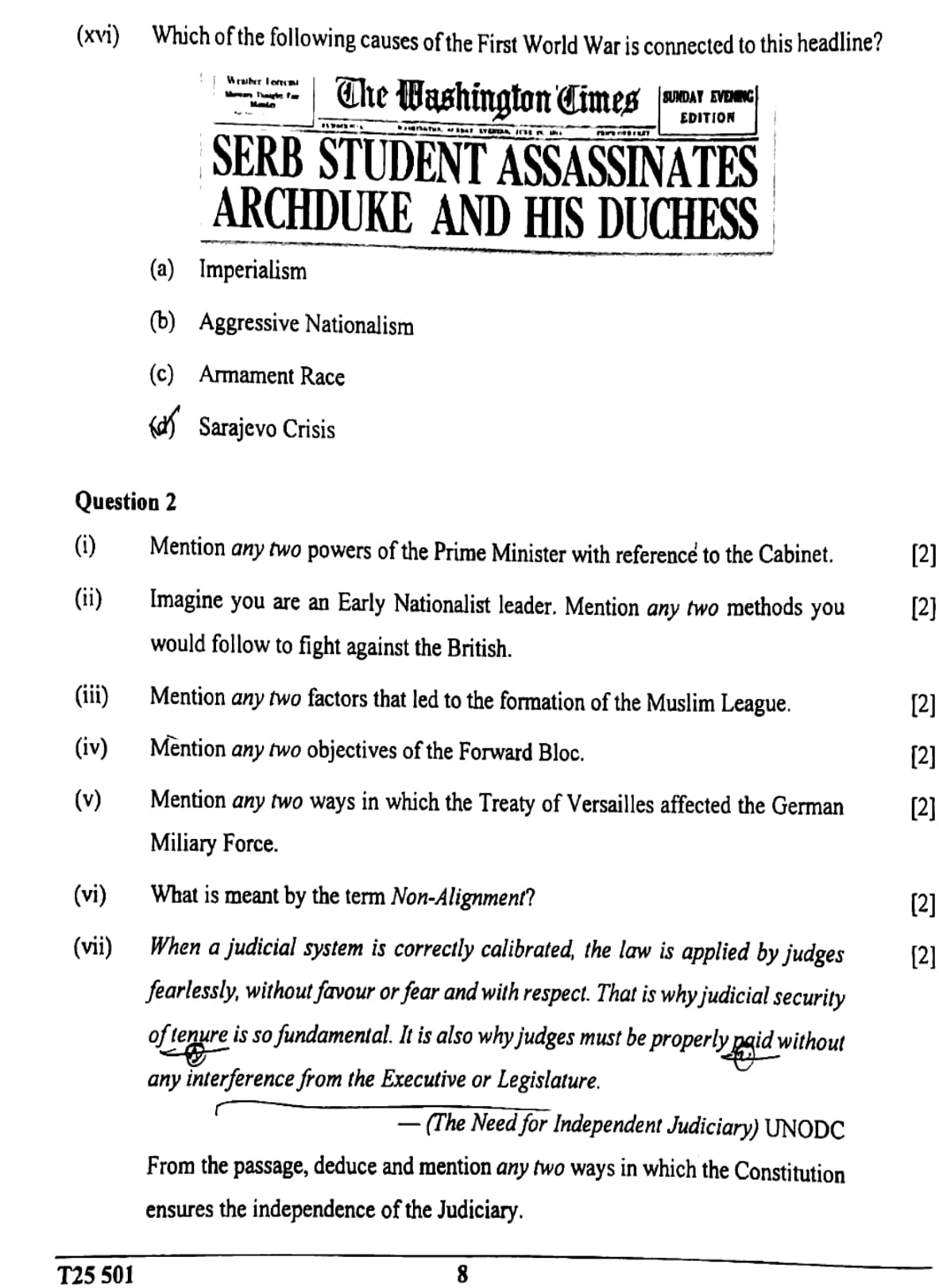
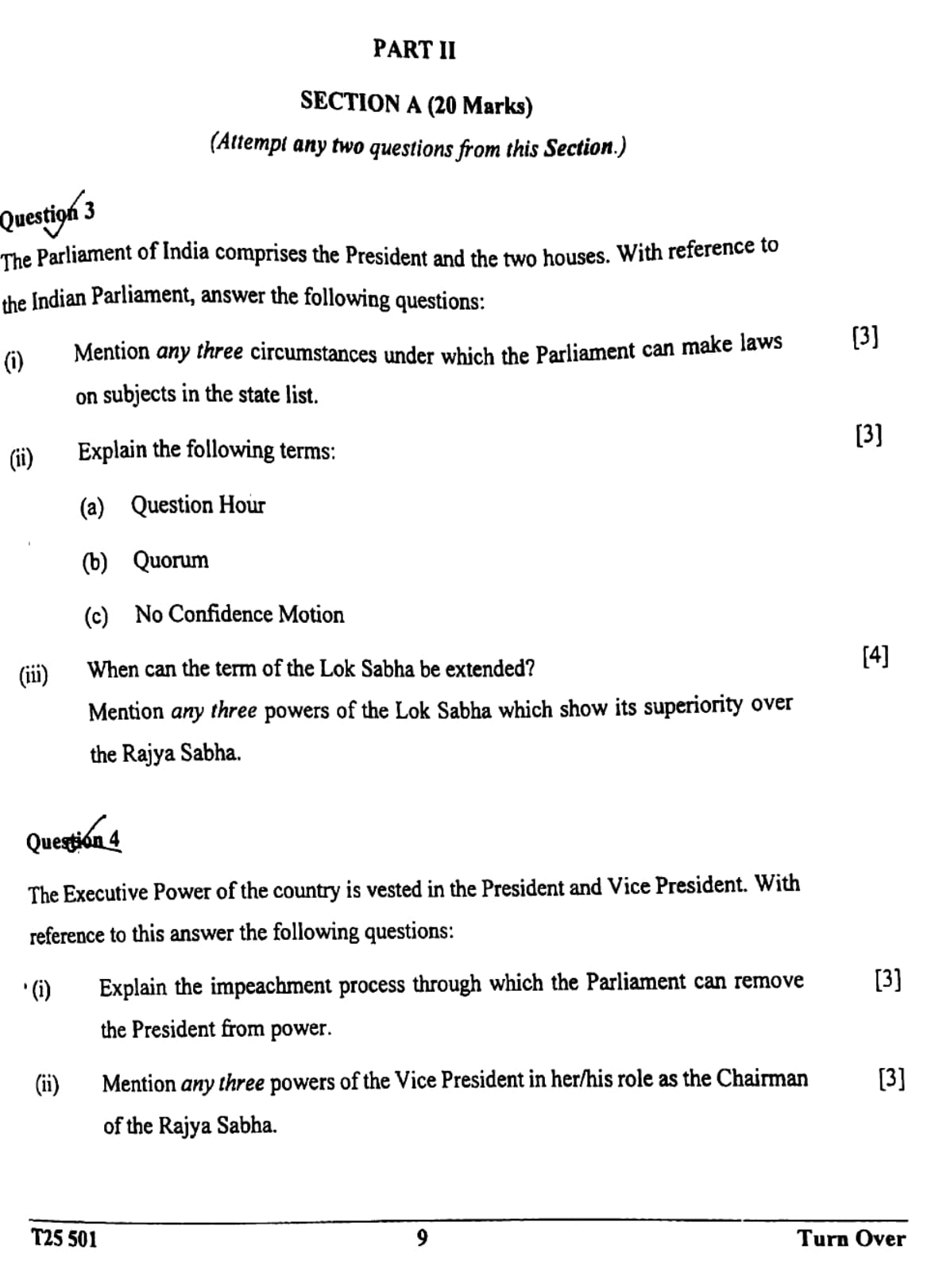
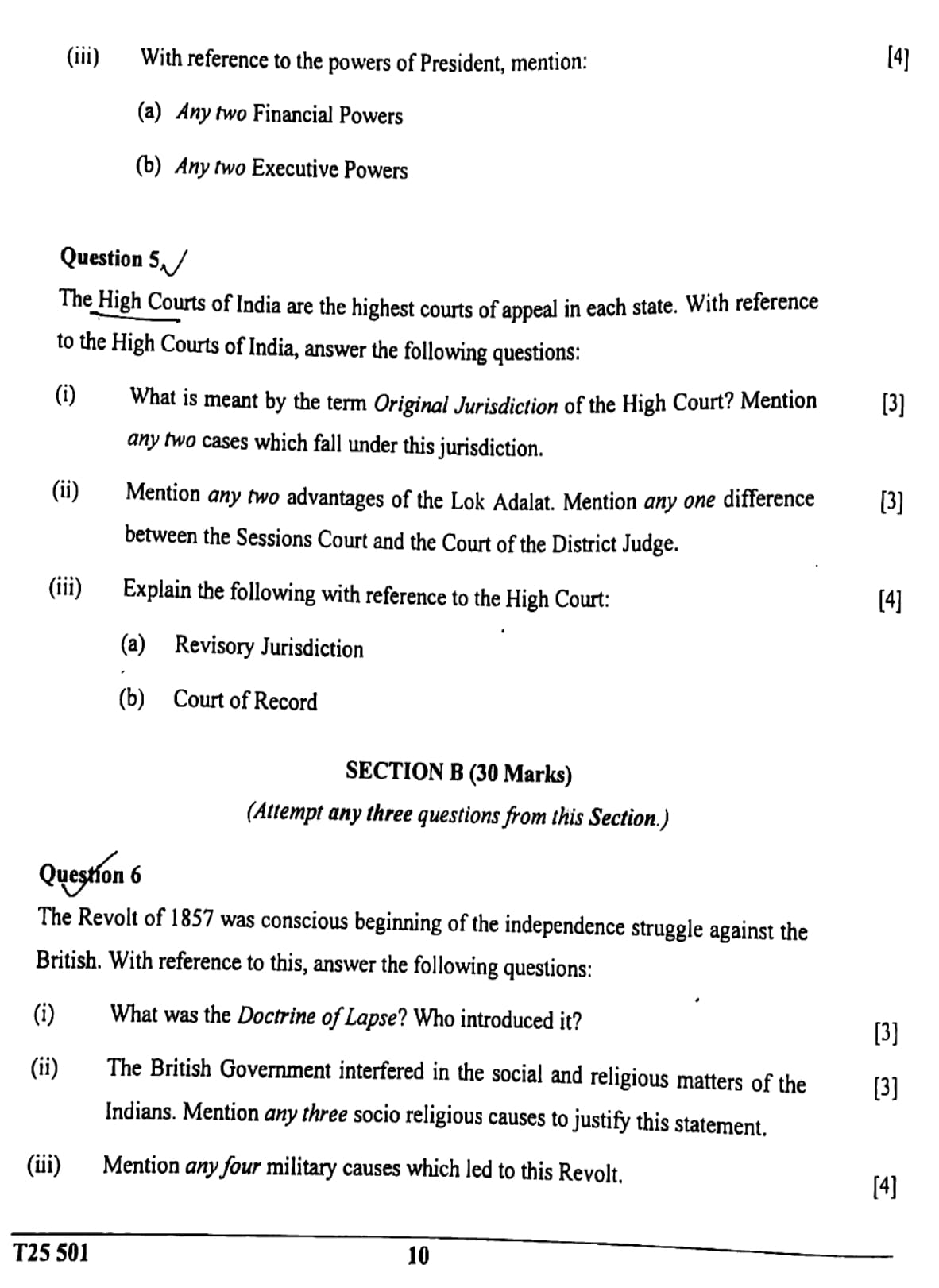
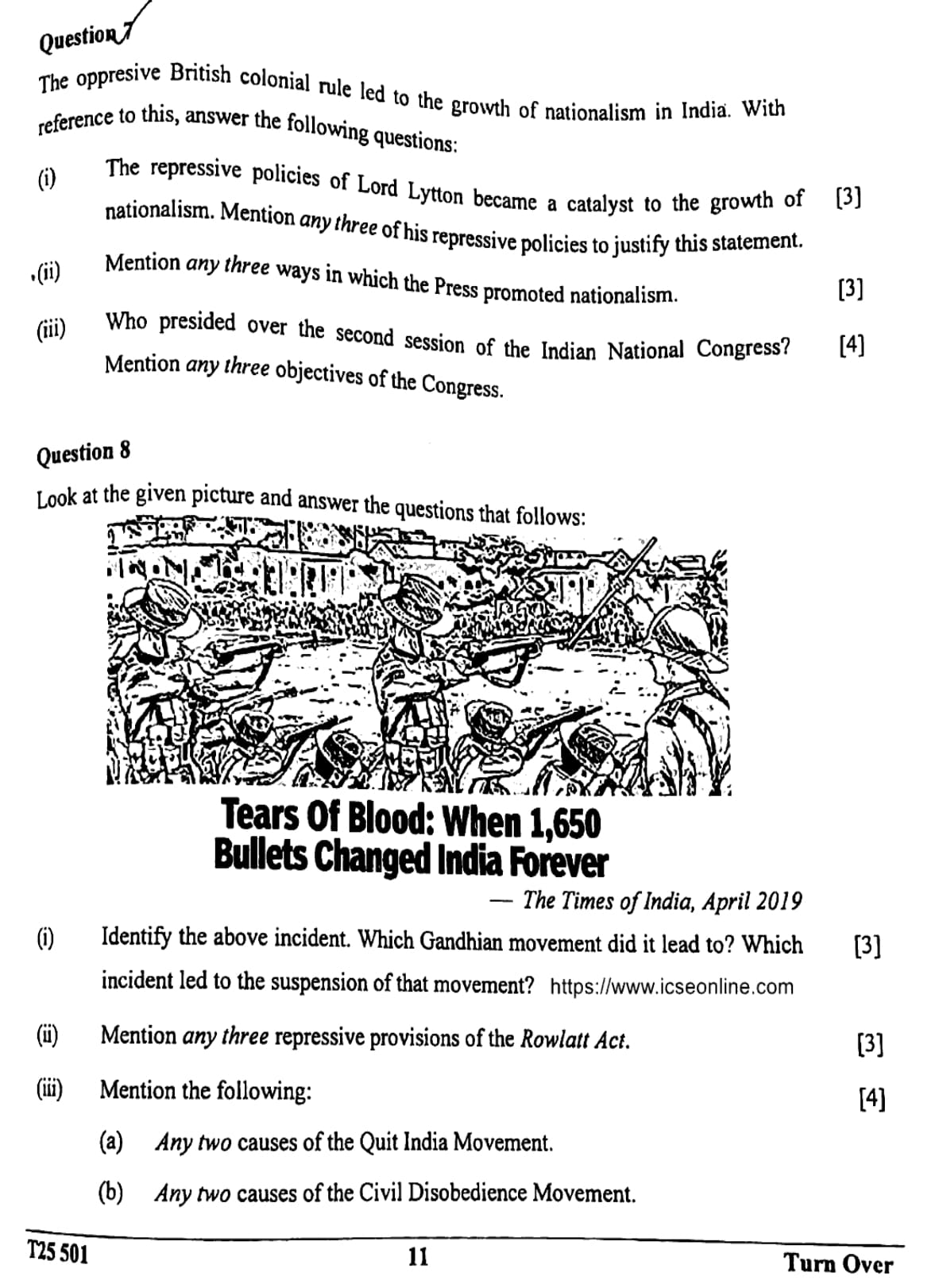
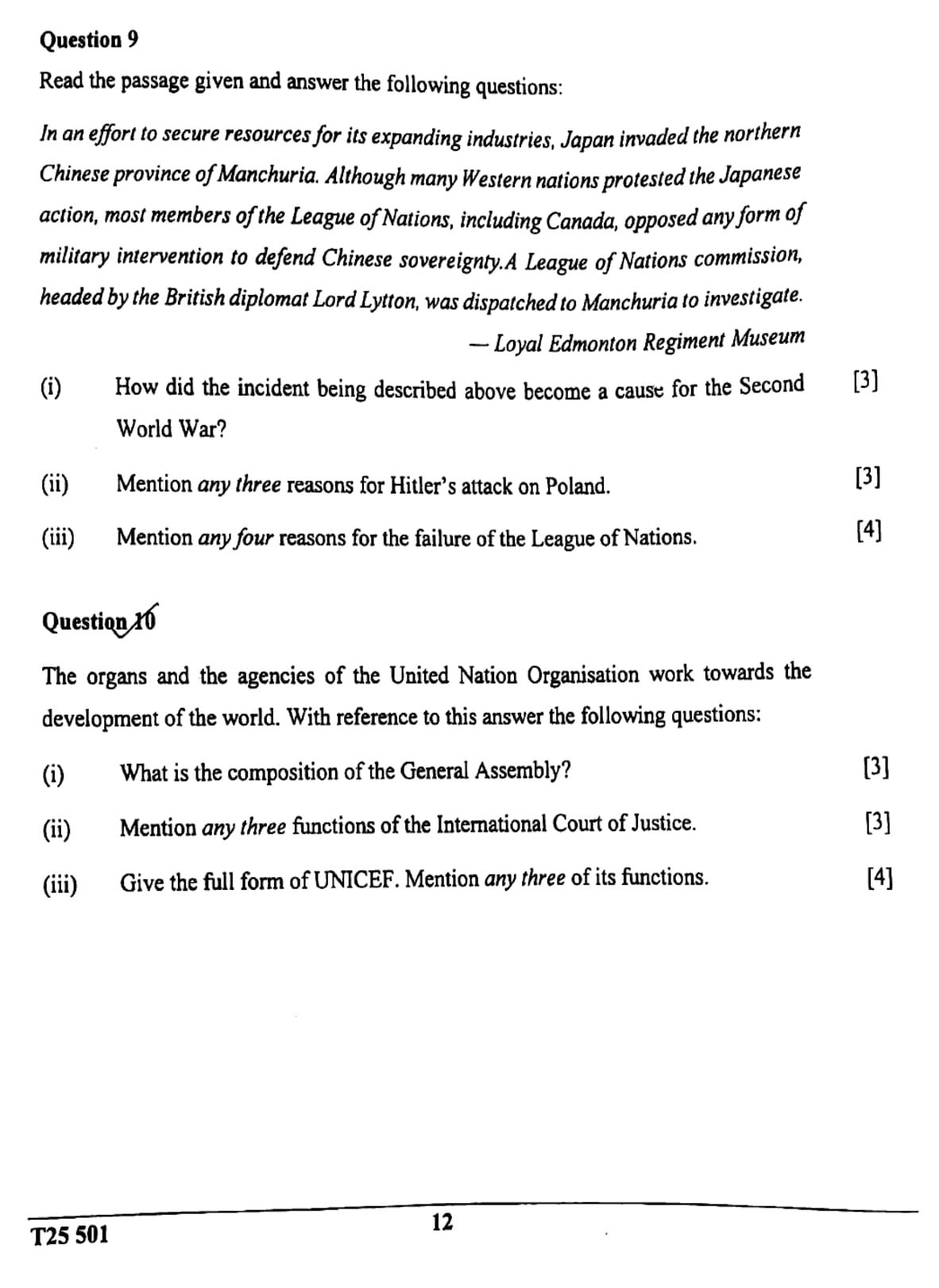
This is the ICSE Class 10 History & Civics paper (H.C.G. Paper 1), set by CISCE for the 2025 board examination. It carries 80 marks for two hours of writing, after 15 minutes of reading time. Part I (30 marks) is compulsory: Question 1 has sixteen one-mark multiple-choice items, several based on pictures and a newspaper headline on the Sarajevo assassination, and Question 2 has seven two-mark short answers, one based on a UNODC passage on judicial independence. In Part II, students answer two of three Civics questions on the Parliament, the President and Vice President, and the High Courts, and three of five History questions. These include a Times of India report on the Jallianwala Bagh massacre and a passage on Japan's invasion of Manchuria. This copy has the questions only, without answers.
- Exam
- ICSE Class 10
- Subject
- History Civics
- Year
- 2025
- Paper code
- T25 501
- Maximum marks
- 80
- Time allowed
- 2 hours + 15 min reading
- Questions
- 10
- Pages
- 12
- Answers included
- No, questions only
Paper pattern
Part I
30 marksCompulsory: Question 1 with 16 one-mark multiple-choice items and Question 2 with 7 two-mark short answers
Part II, Section A
20 marksCivics: attempt any two of Questions 3–5, ten marks each
Part II, Section B
30 marksHistory: attempt any three of Questions 6–10, ten marks each
Topics covered
- The Union Parliament
- The President and Vice President
- The Prime Minister and Cabinet
- High Courts and subordinate courts
- The Revolt of 1857
- Growth of nationalism and the Indian National Congress
- Early and Assertive Nationalists
- Mahatma Gandhi and the national movement
- Subhash Chandra Bose and the Forward Bloc
- First World War and the Treaty of Versailles
- Rise of dictatorships and the Second World War
- United Nations and its agencies
Questions from this paper
- Mention any three circumstances under which the Parliament can make laws on subjects in the State List.
- Explain the impeachment process through which the Parliament can remove the President from power.
- What was the Doctrine of Lapse? Who introduced it?
- Mention any three ways in which the Press promoted nationalism in India.
- Mention any three repressive provisions of the Rowlatt Act.
- Mention any four reasons for the failure of the League of Nations.
What's next
Class 10 done next year?
A number of scholarships for Class 11–12 depend on your Class 10 marks.
Check eligibility