ICSE Class 10 Physics (Science Paper 1) Question Paper 2025 with Solutions

ICSE
Physics2025Download the official ICSE Class 10 Physics Question Paper 2025 with step-by-step solutions prepared by subject matter experts. Practicing the 2025 ICSE Science Paper 1 helps students master force, work, energy, machines, light refraction, lenses, spectrum, sound, current electricity, electromagnetism, calorimetry, and radioactivity according to official CISCE marking schemes. Access the free PDF download above with complete answer keys.
About this paper
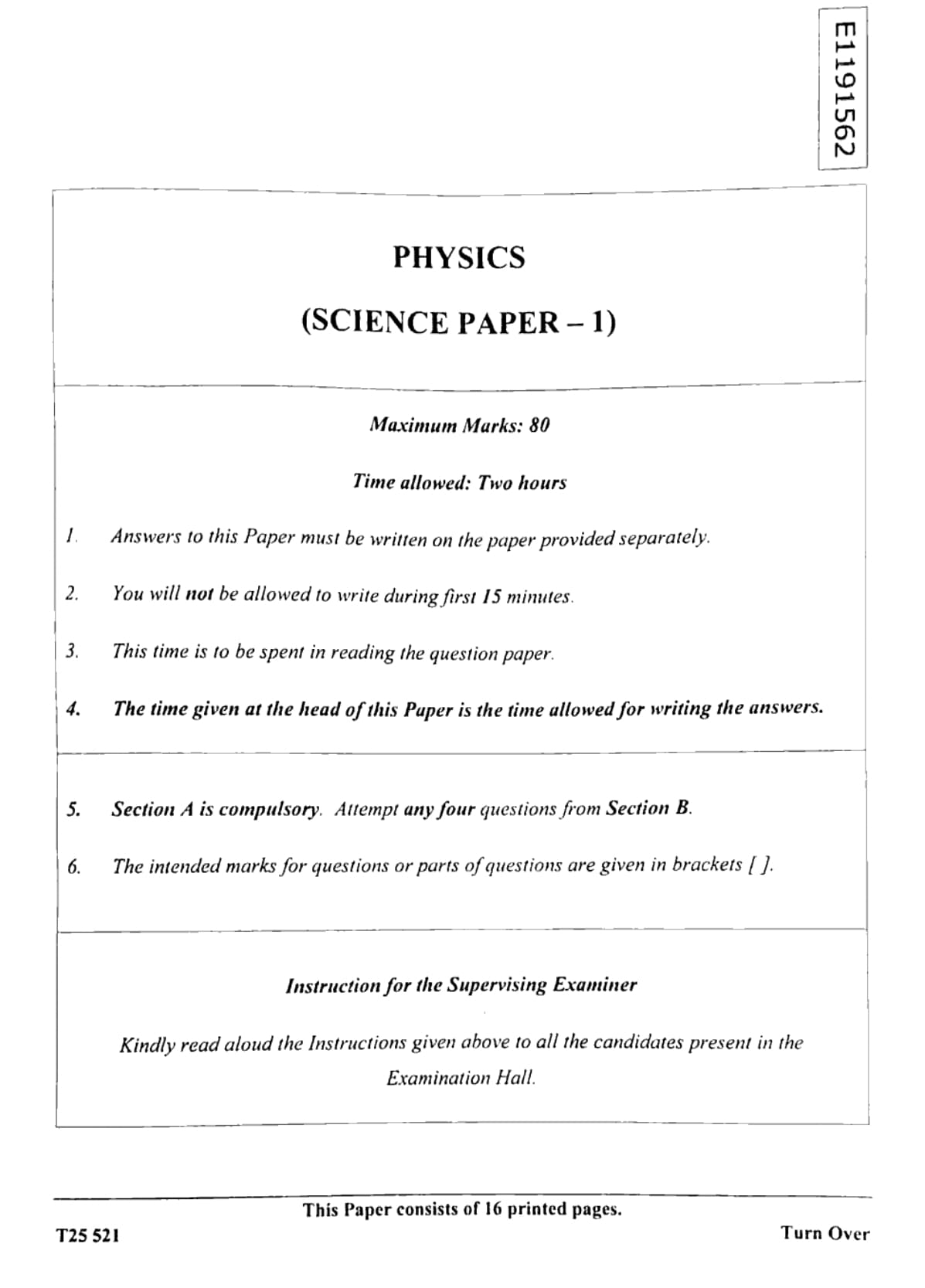
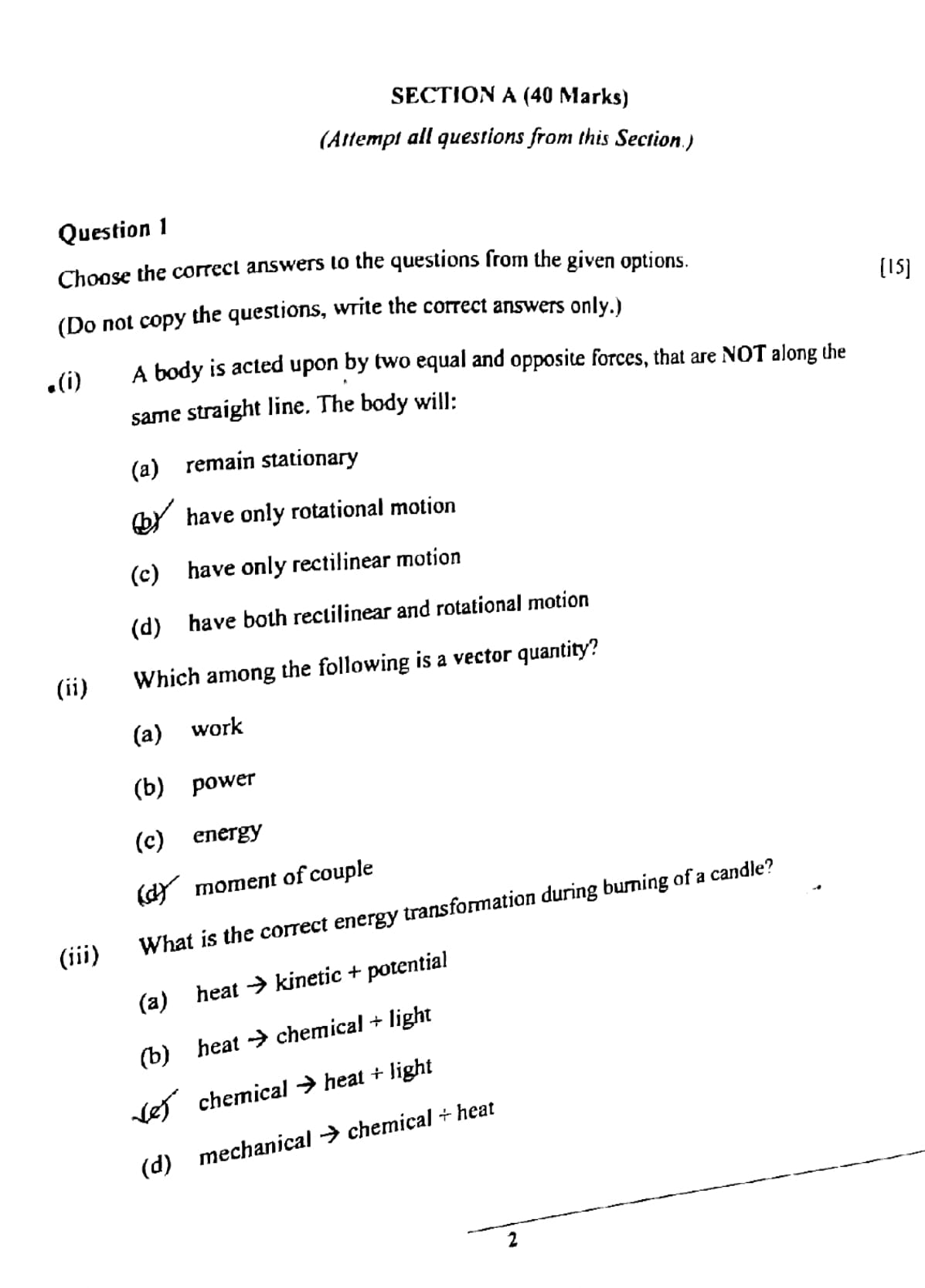
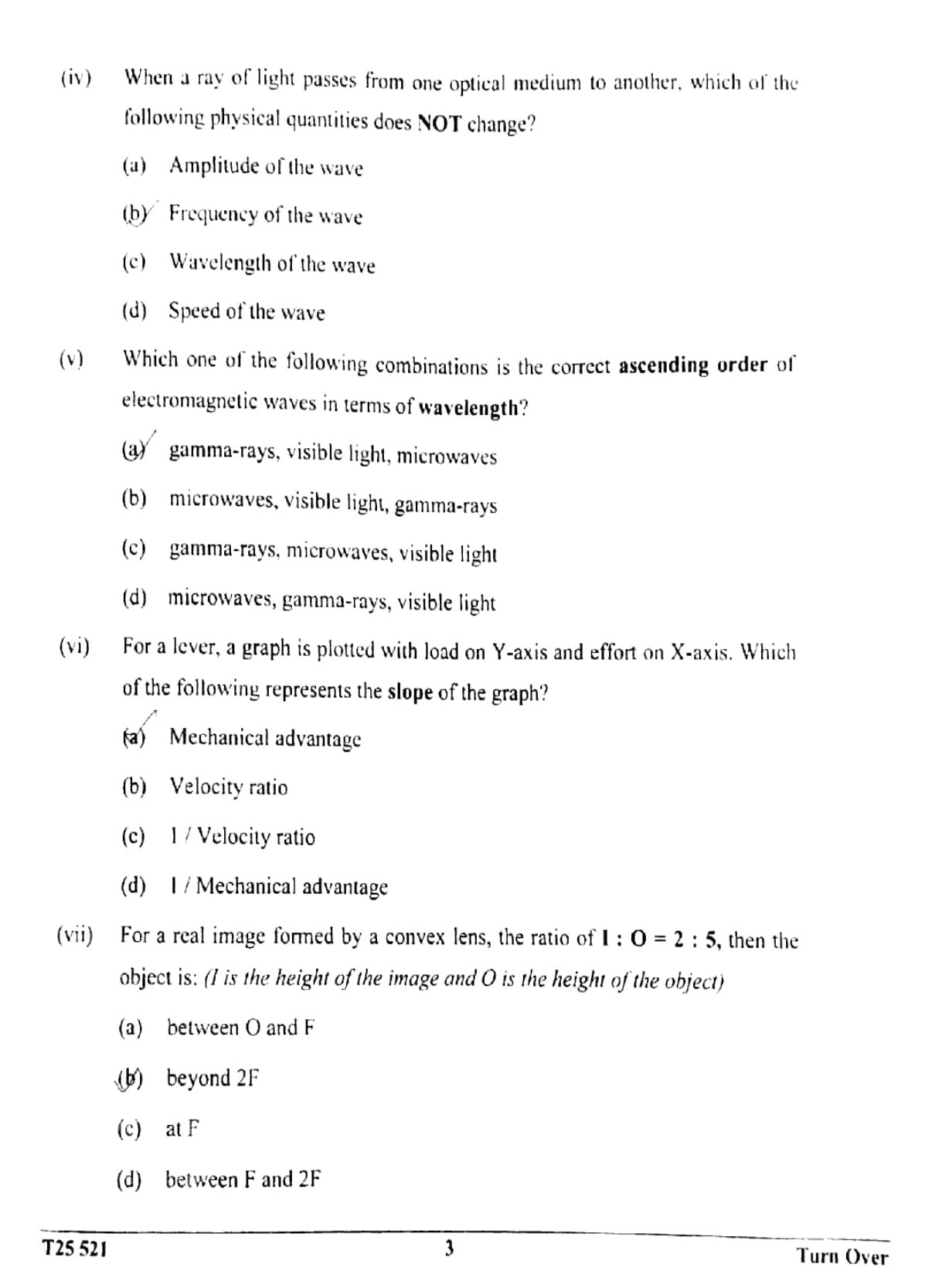
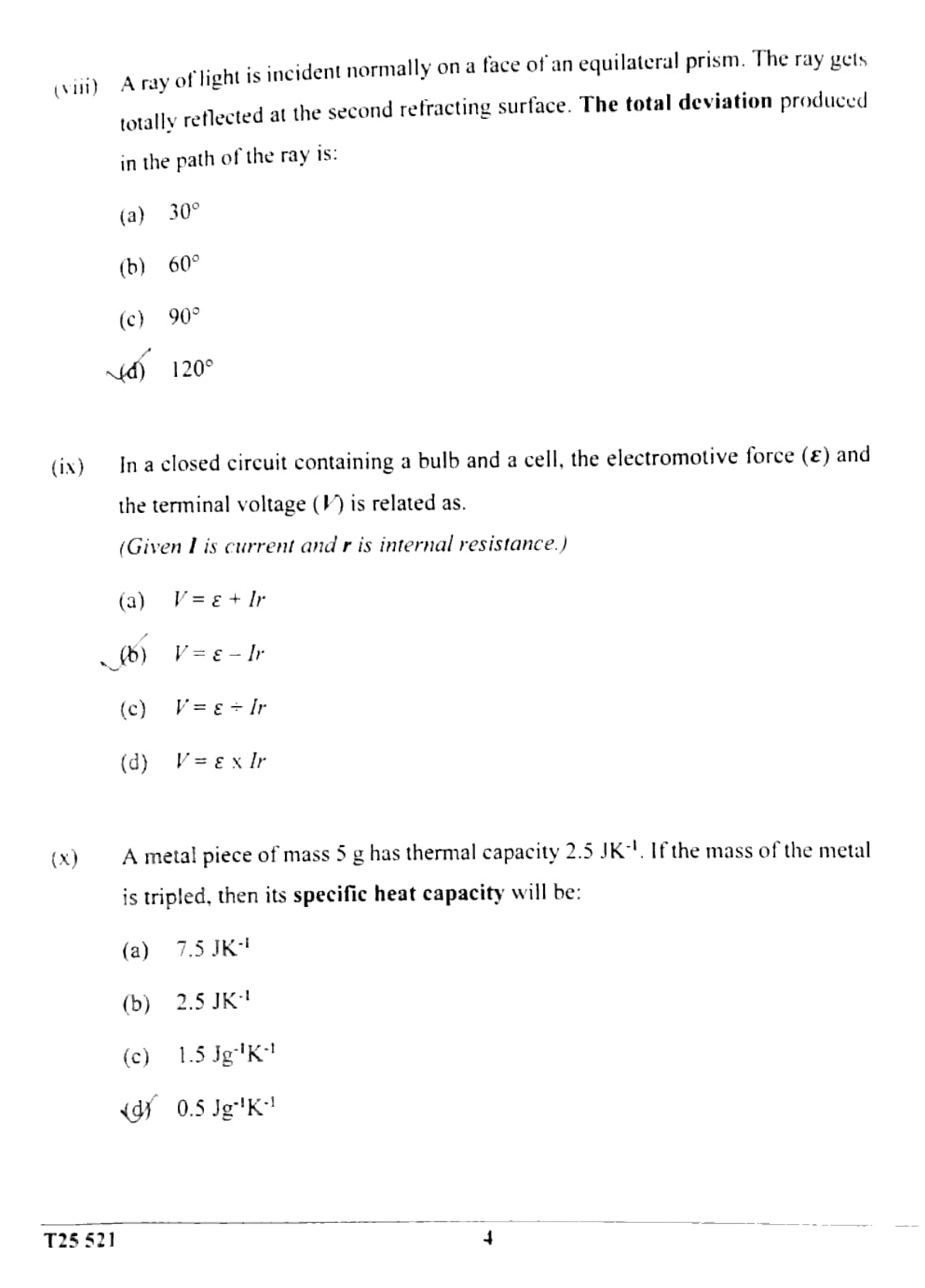
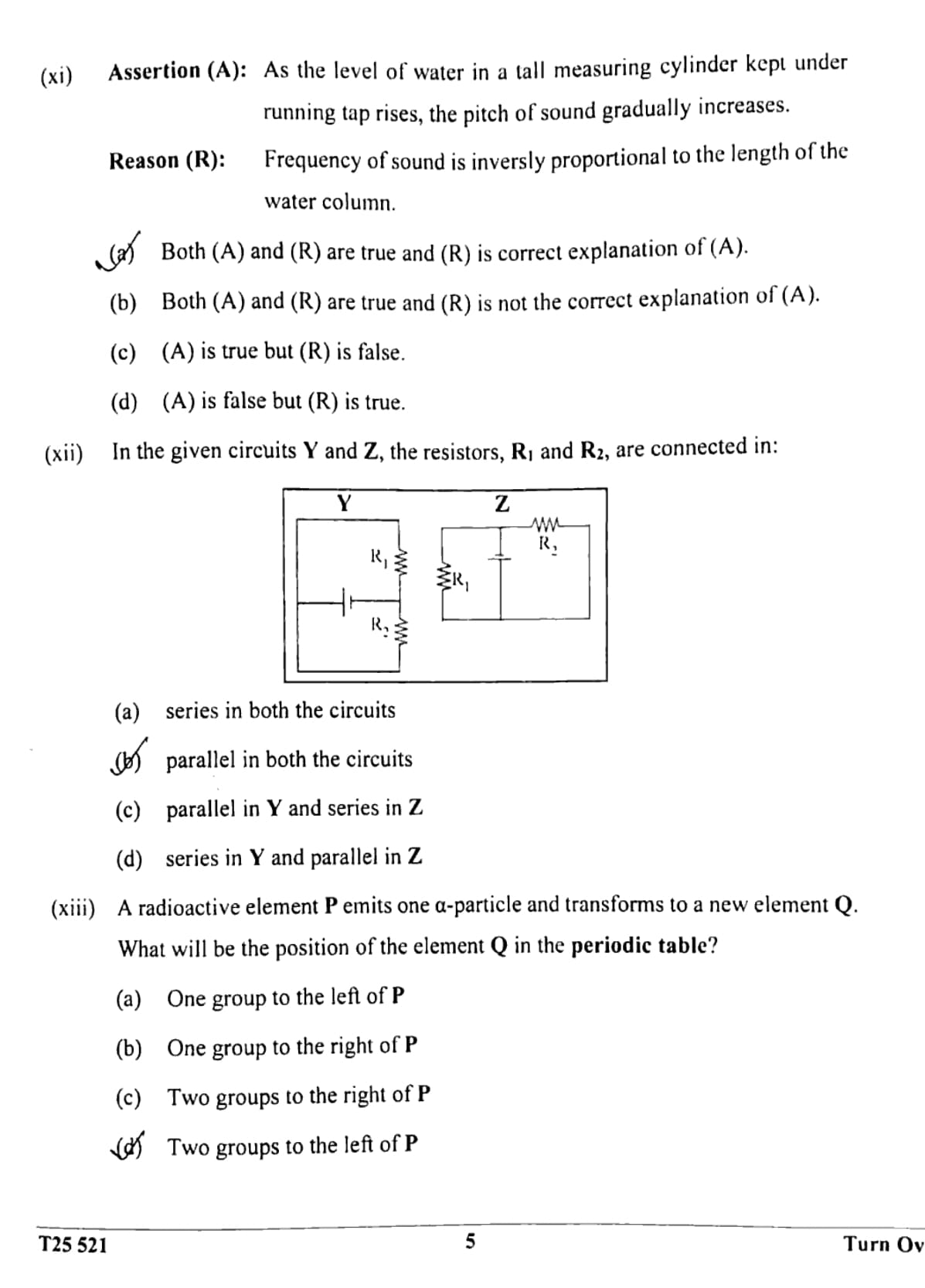
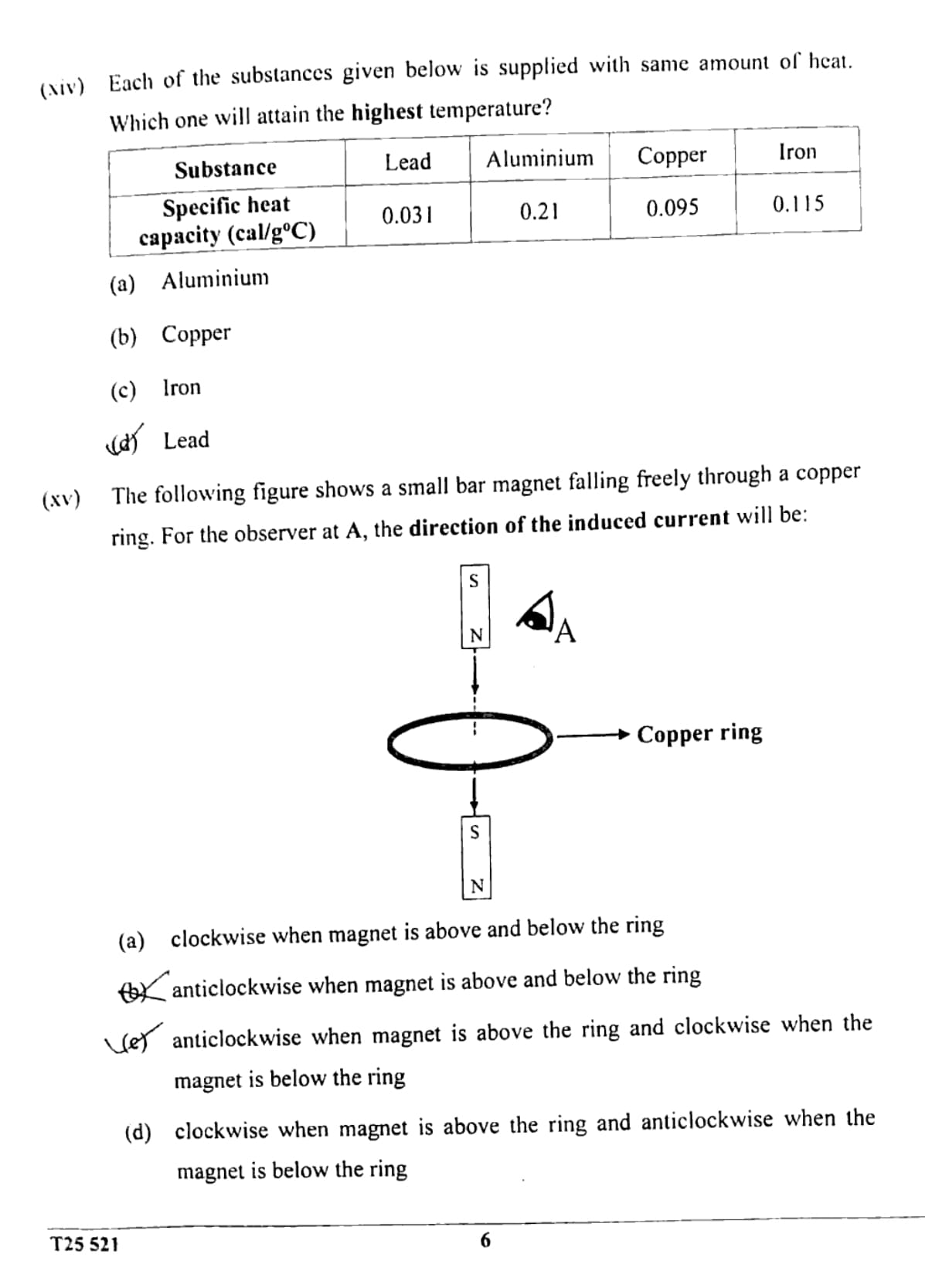
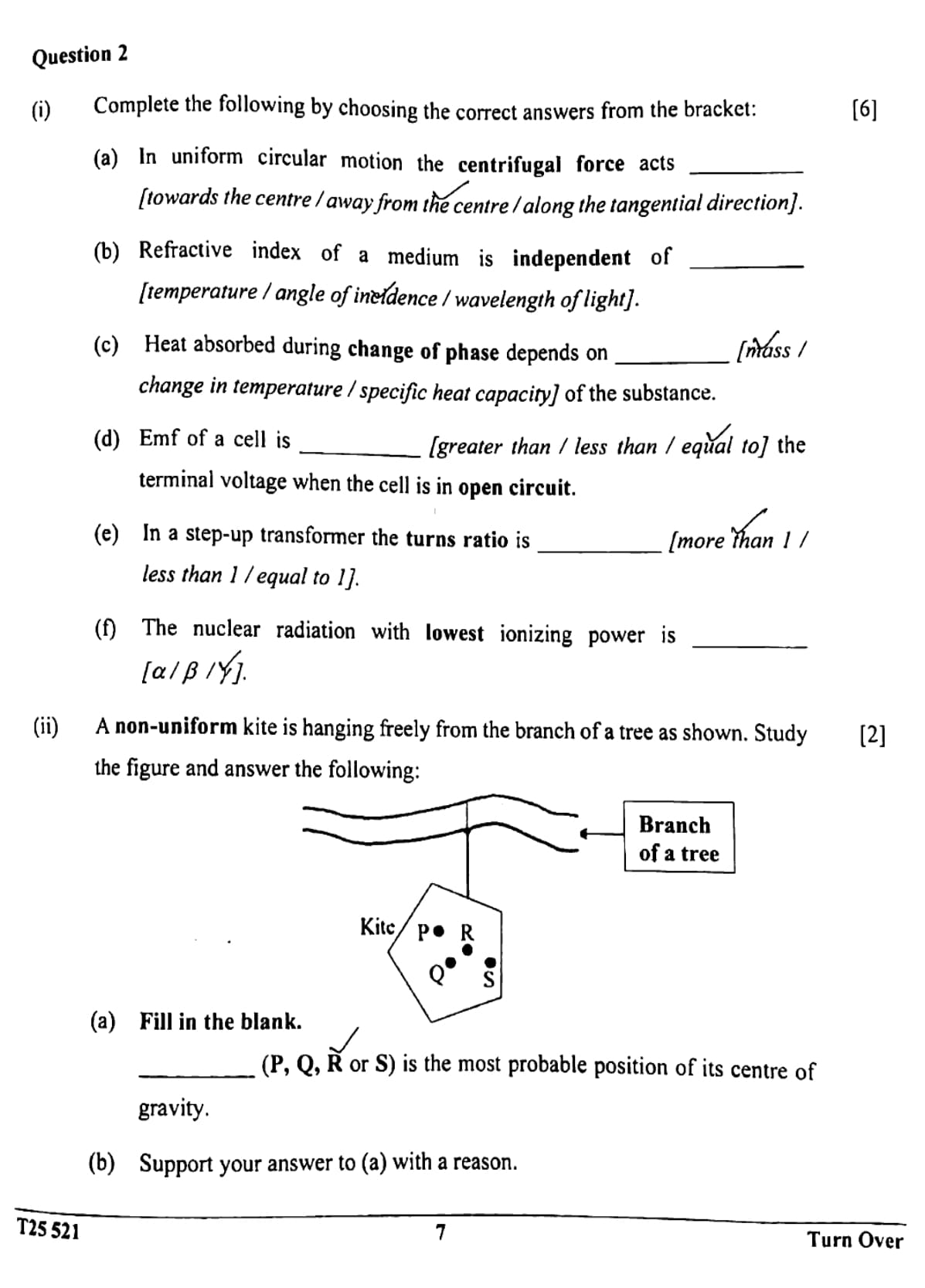
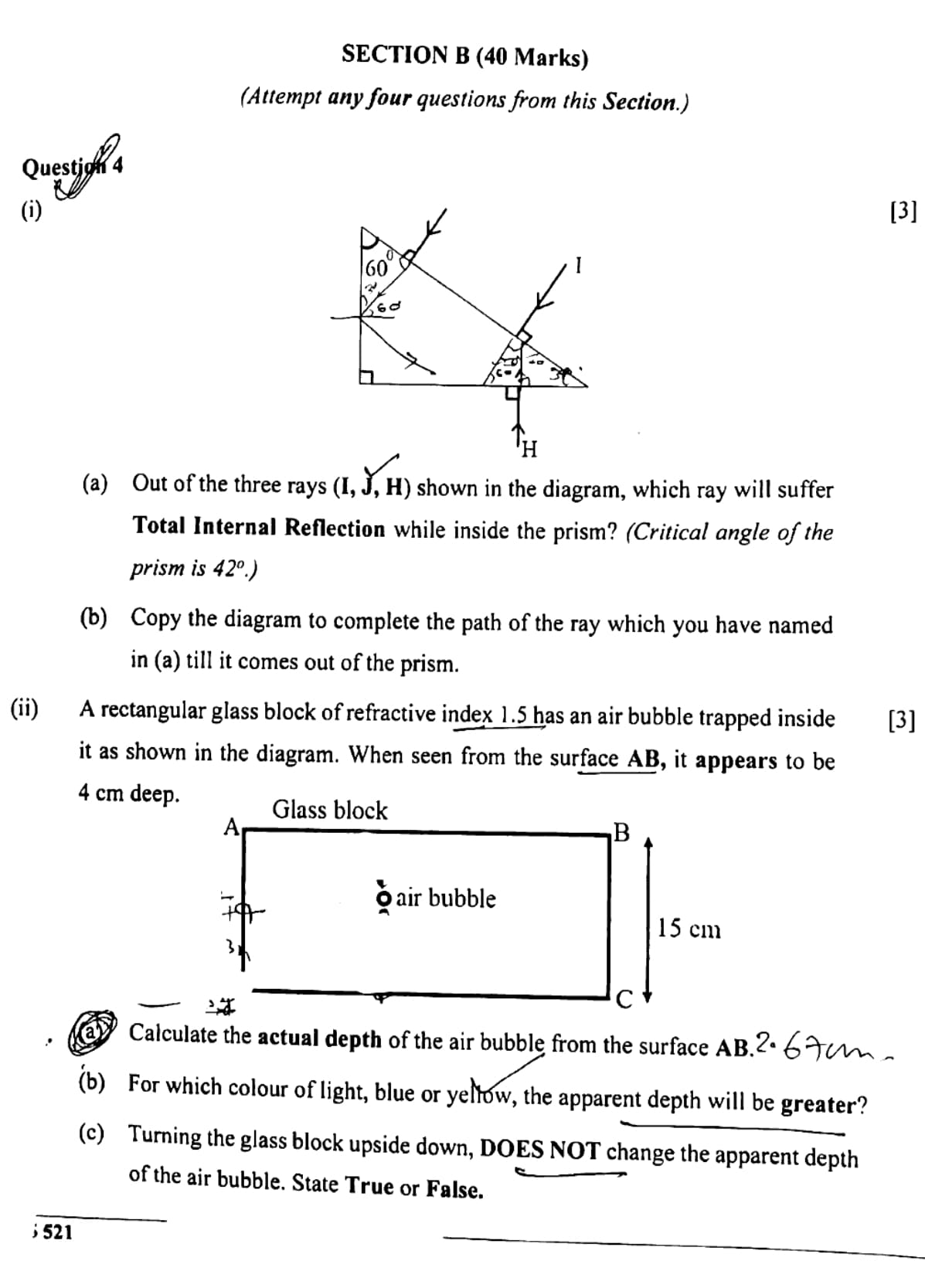
This is the ICSE Class 10 Physics question paper, Science Paper 1, from the 2025 examination, code T25 521. It is marked out of 80, with two hours to write after 15 minutes of reading, and the supervising examiner is asked to read the instructions aloud. Section A (40 marks) is compulsory. Question 1 has 15 multiple-choice items, including an assertion–reason item on pitch and a bar magnet falling through a copper ring. Question 2 has six sentences to complete from brackets. Question 3 includes a glass slab in water, paraffin wax and curium-247. Section B has Questions 4 to 9, and any four are to be attempted, with an air bubble in glass, a submarine echo and ice cooling water. This copy has the questions only.
- Exam
- ICSE Class 10
- Subject
- Physics
- Year
- 2025
- Paper code
- T25 521
- Maximum marks
- 80
- Time allowed
- 2 hours + 15 min reading
- Questions
- 9
- Pages
- 16
- Answers included
- No, questions only
Paper pattern
Section A – Question 1
15 marks15 multiple-choice questions, one mark each, including one assertion–reason item
Section A – Questions 2 and 3
25 marksSix completions from brackets, then short answers on centre of gravity, sound, refraction, wiring, heat and curium
Section B
40 marksQuestions 4–9, attempt any four; each is built from three-, three- and four-mark parts
Topics covered
- Force, equilibrium and centre of gravity
- Work, energy and power
- Levers and pulleys
- Refraction, lenses and total internal reflection
- Electromagnetic spectrum
- Sound, resonance and echoes
- Current electricity and household wiring
- Electromagnetic induction and the motor effect
- Heat capacity and change of state
- Nuclear fission and radioactivity
Questions from this paper
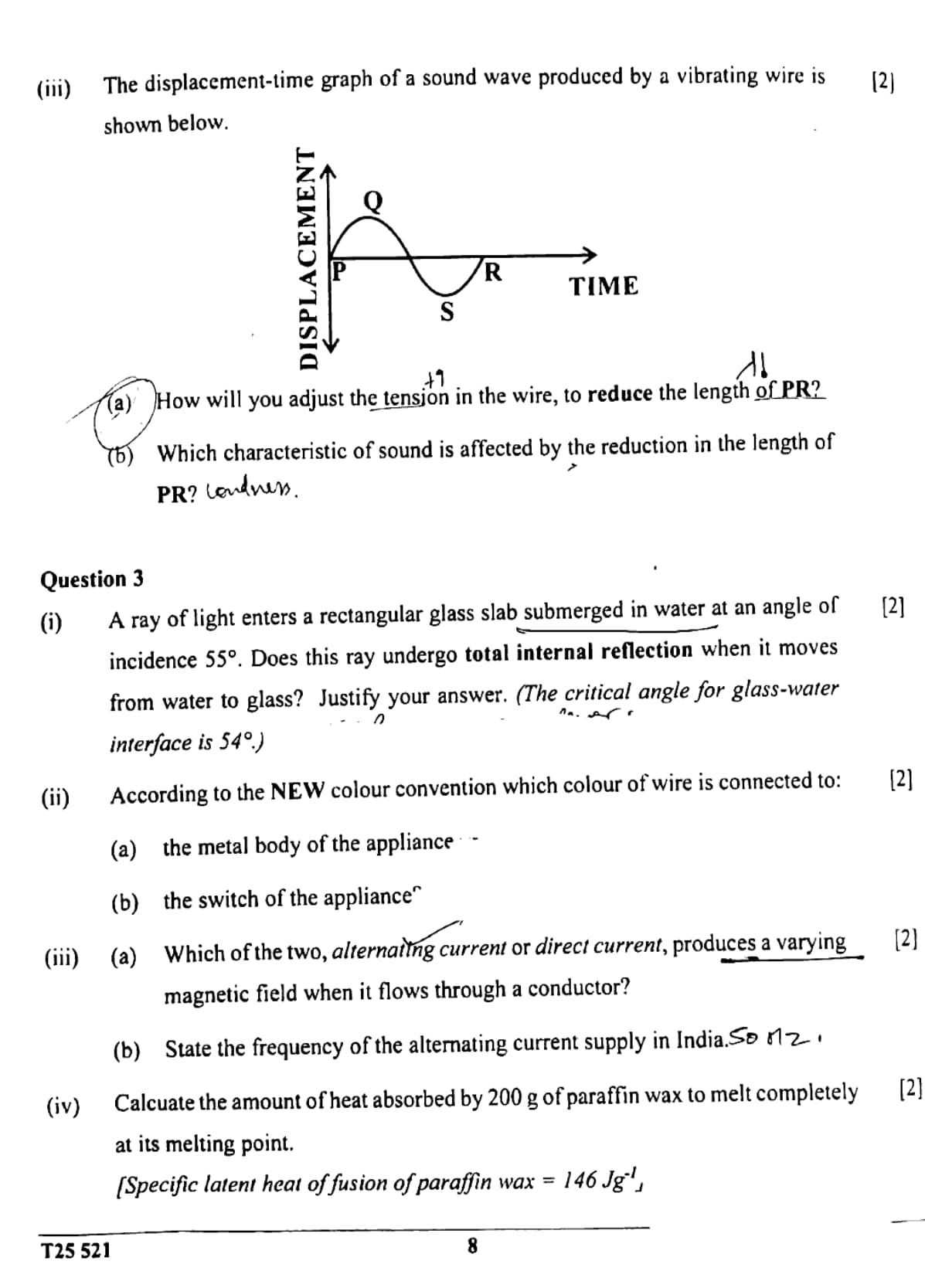
- A ray of light enters a rectangular glass slab submerged in water at an angle of incidence 55°. Does it undergo total internal reflection on going from water to glass? The critical angle for the glass–water interface is 54°.
- Calculate the heat absorbed by 200 g of paraffin wax to melt completely at its melting point. Specific latent heat of fusion of paraffin wax = 146 J g⁻¹.
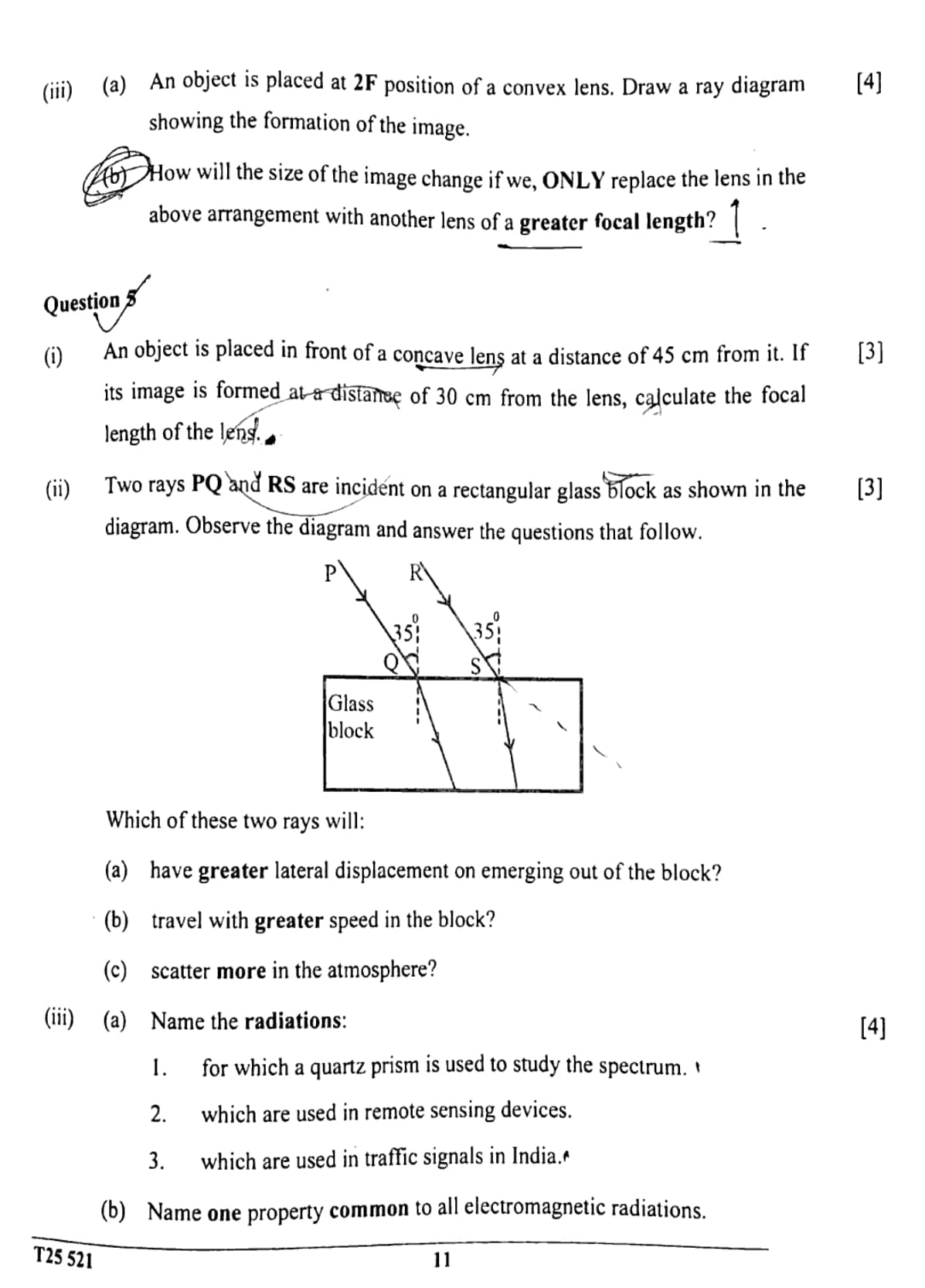
- An object is placed 45 cm in front of a concave lens and the image is formed 30 cm from the lens. Calculate the focal length of the lens.
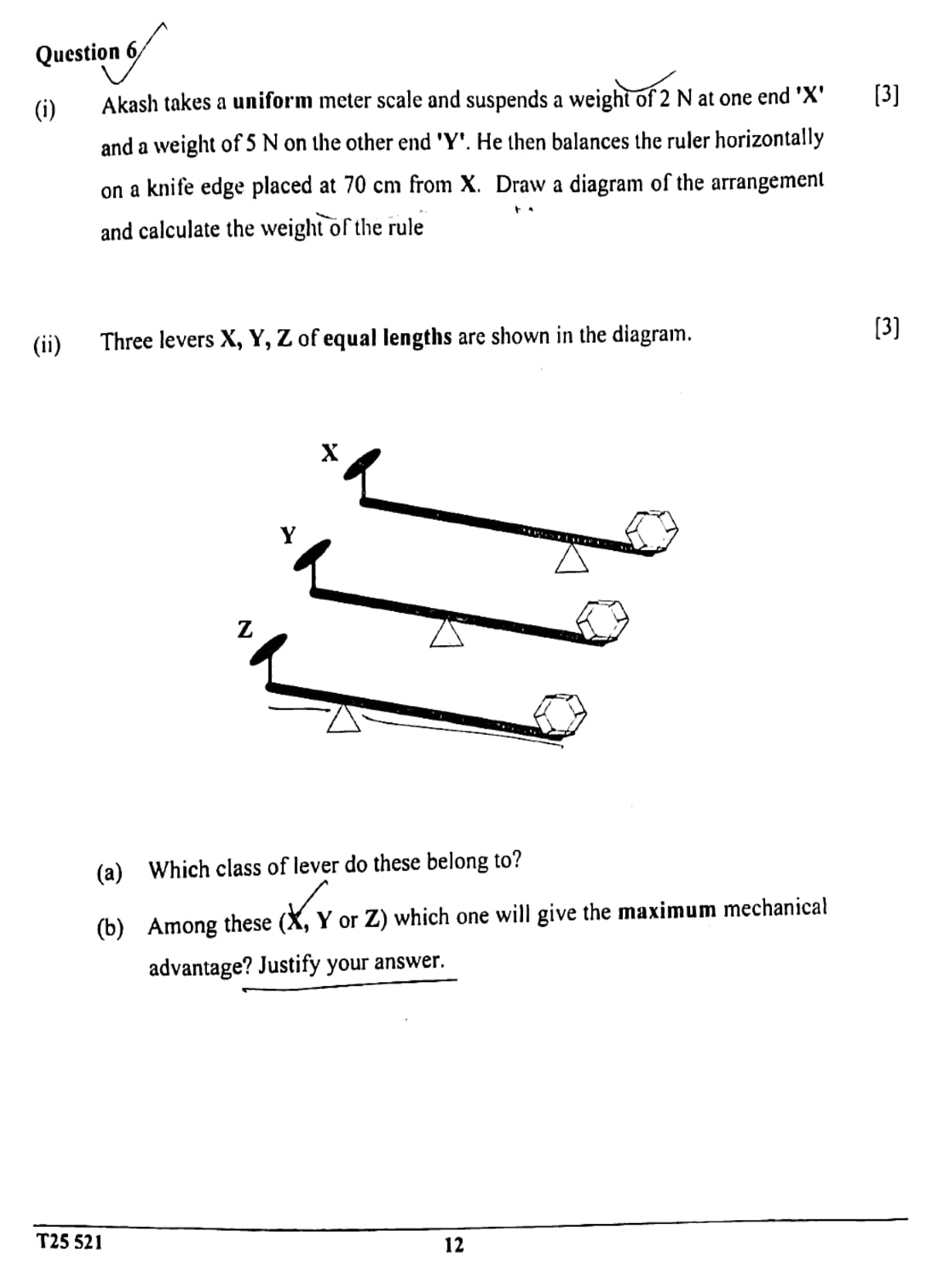
- A uniform metre scale has a weight of 2 N at end X and 5 N at end Y, and balances on a knife edge 70 cm from X. Calculate the weight of the rule.
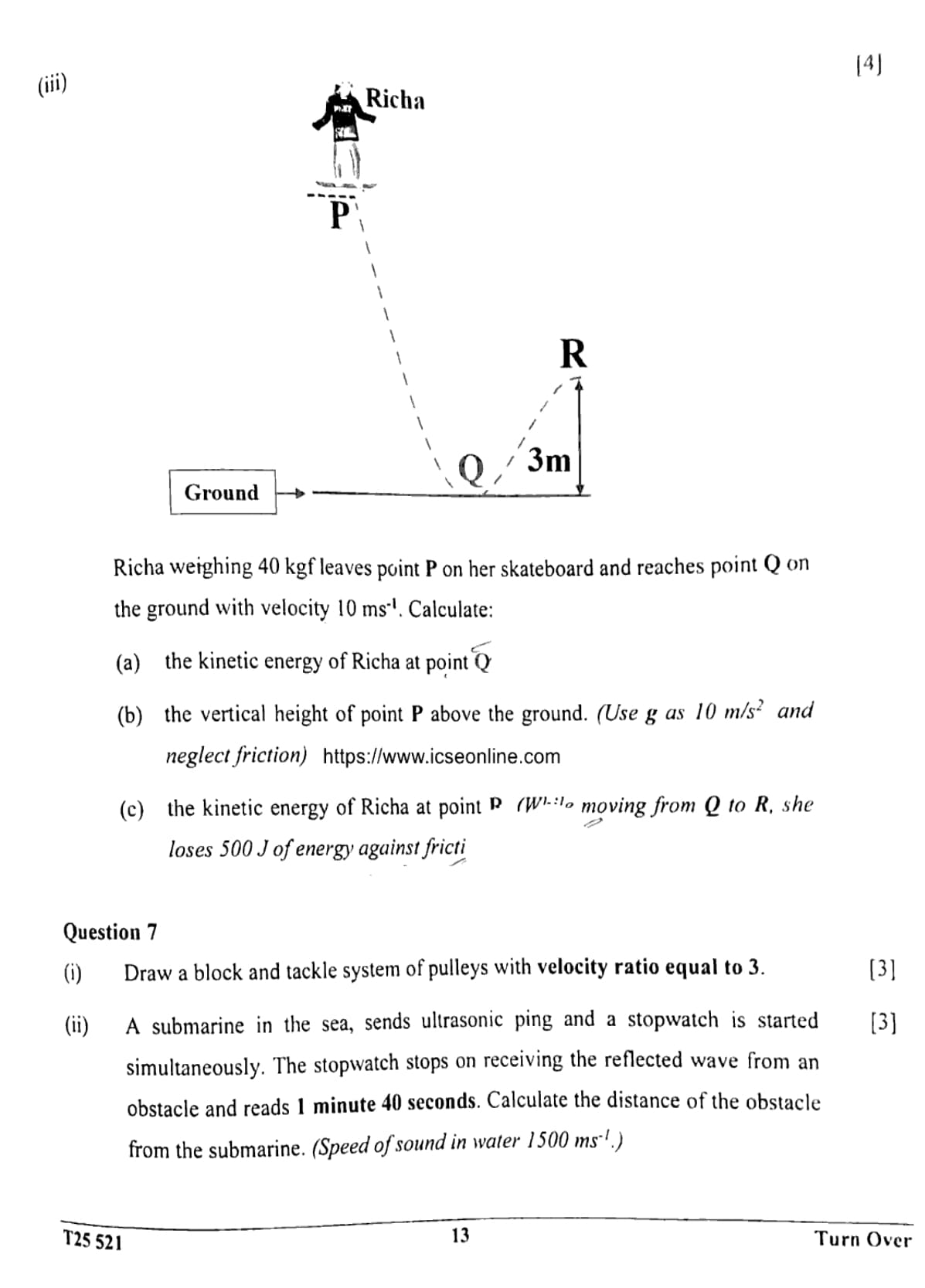
- A submarine sends an ultrasonic ping and receives the reflection after 1 minute 40 seconds. Find the distance of the obstacle. Speed of sound in water = 1500 m/s.
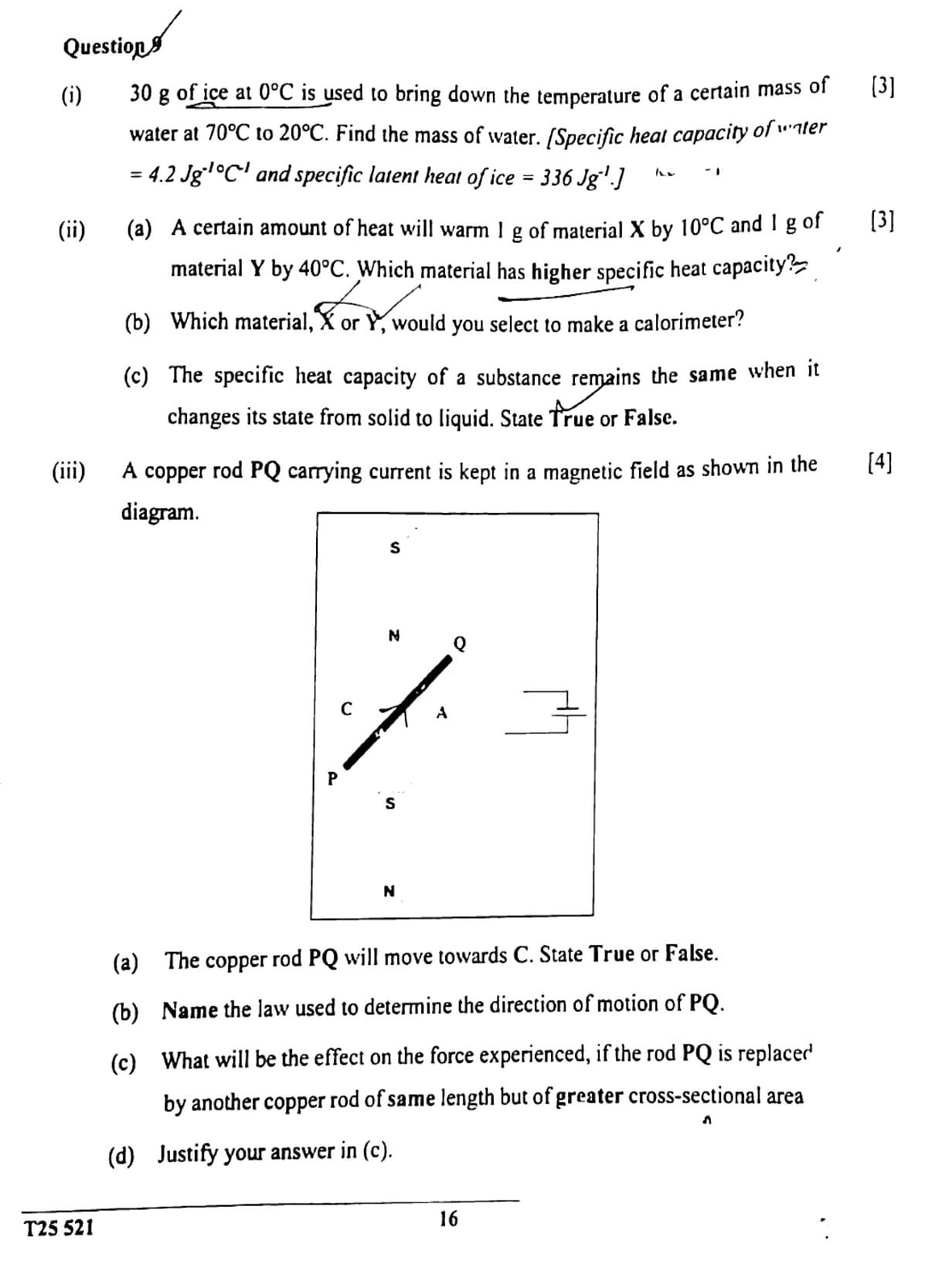
- 30 g of ice at 0°C brings a certain mass of water at 70°C down to 20°C. Find the mass of water. Specific heat capacity of water = 4.2 J g⁻¹ °C⁻¹ and specific latent heat of ice = 336 J g⁻¹.
What's next
Class 10 done next year?
A number of scholarships for Class 11–12 depend on your Class 10 marks.
Check eligibility