ICSE Class 10 History & Civics (H.C.G. Paper 1) Question Paper 2023 with Solutions

ICSE
History Civics2023Download the official ICSE Class 10 History & Civics Question Paper 2023 with step-by-step solutions prepared by subject matter experts. Practicing the 2023 ICSE H.C.G. Paper 1 helps students master Union Parliament, Union Executive, the Judiciary, the Indian National Movement, Contemporary World History (World Wars, UN, and Non-Aligned Movement), and CISCE picture-study questions. Access the free PDF download above with complete answer keys.
About this paper
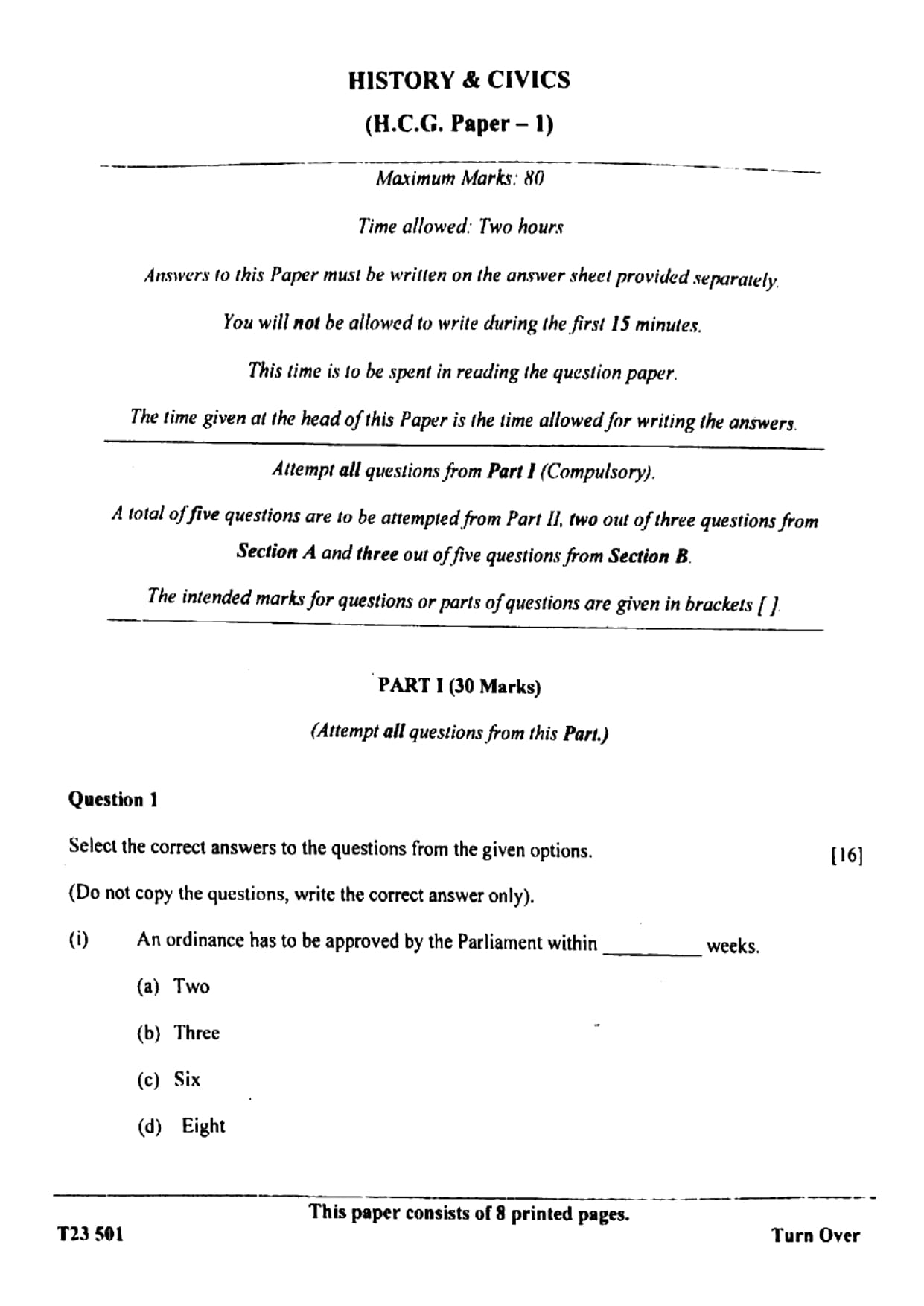
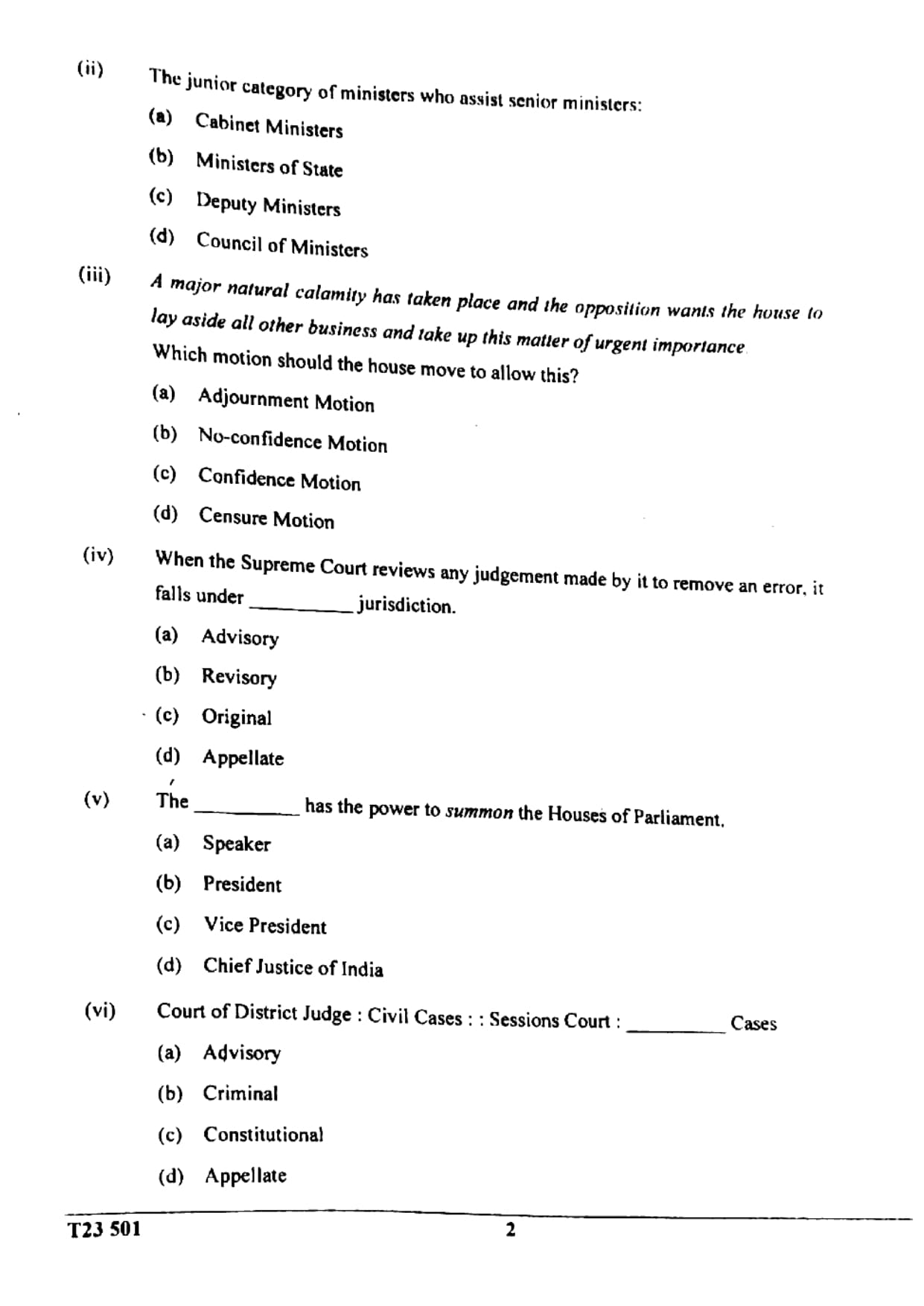
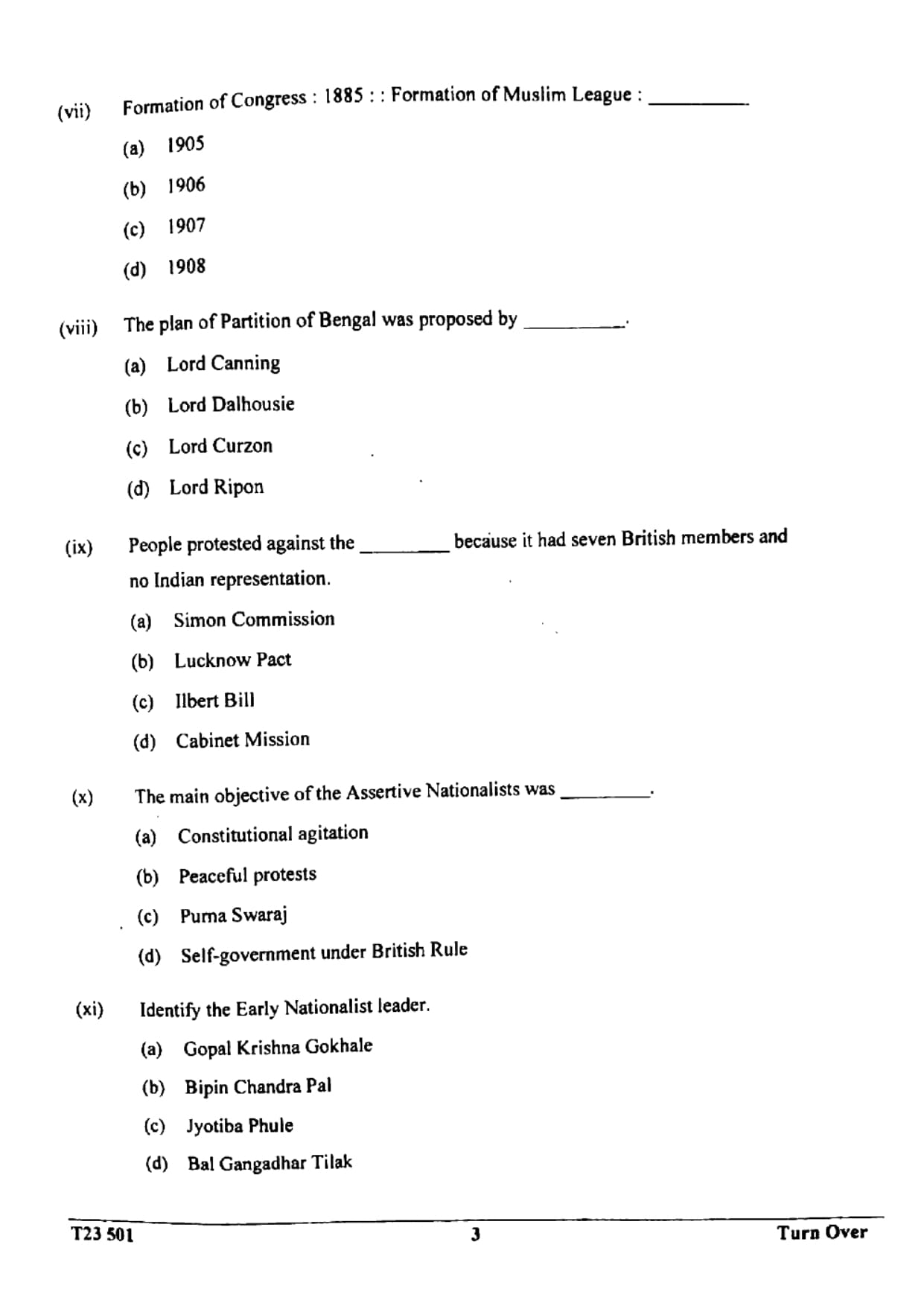
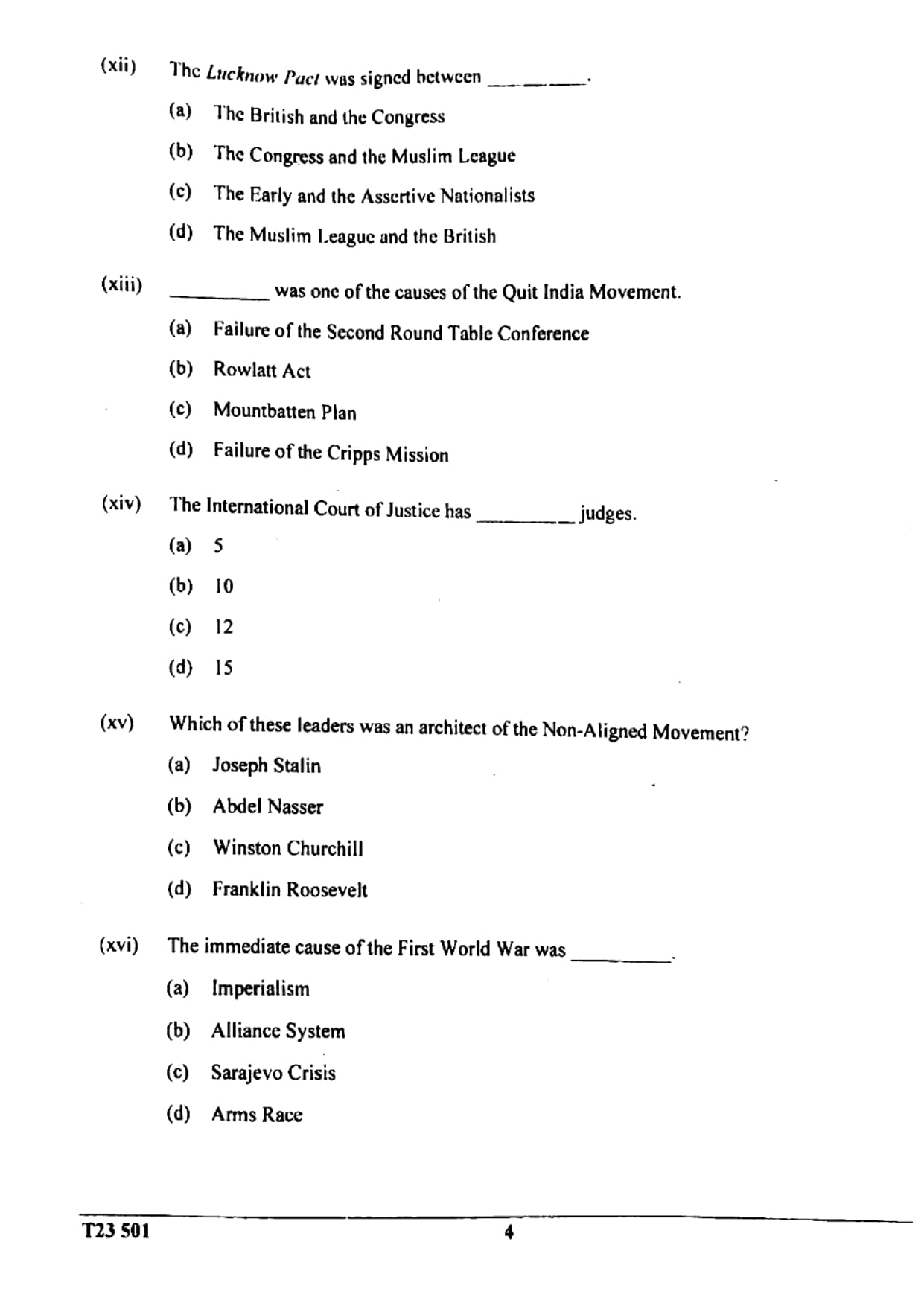
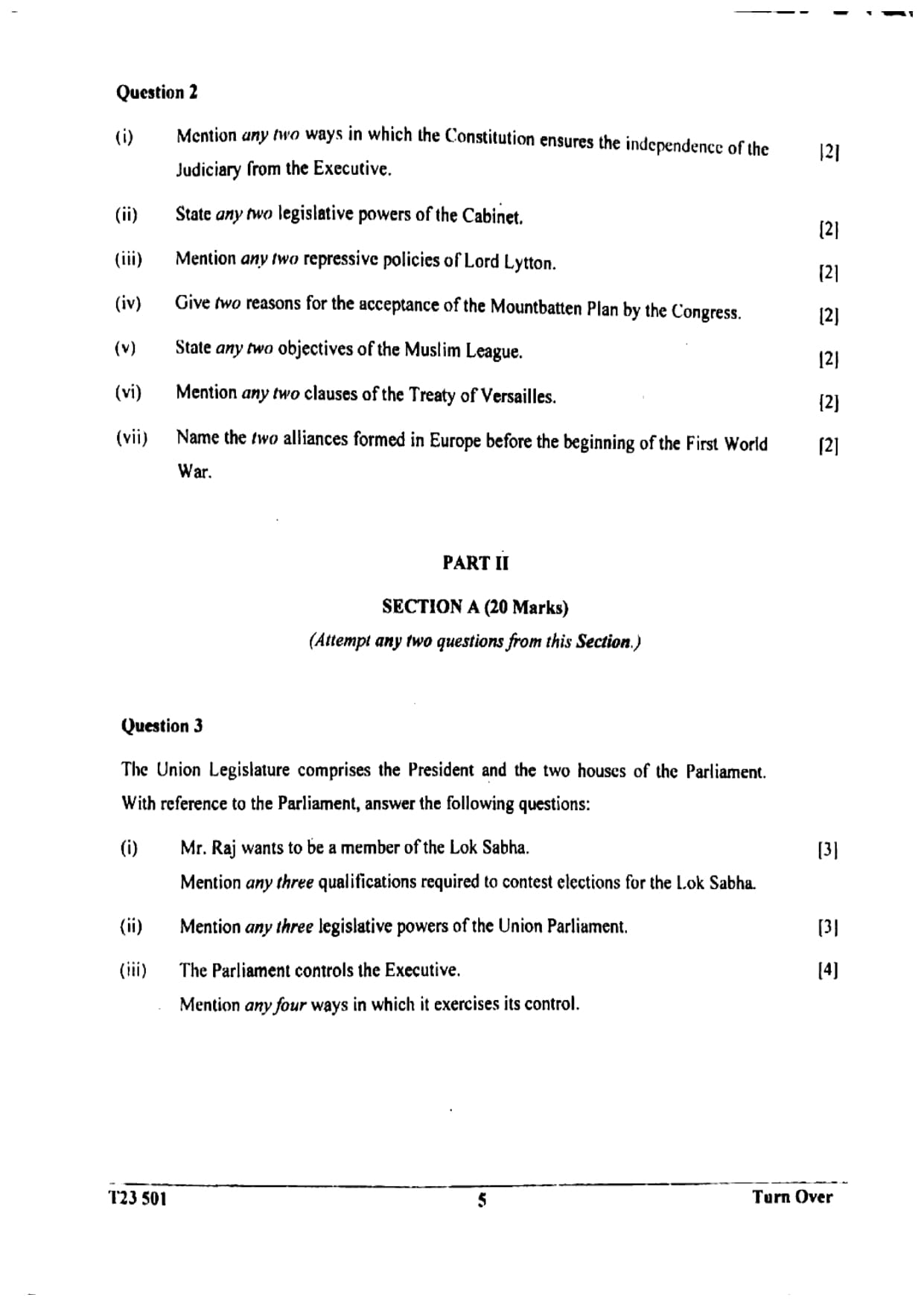
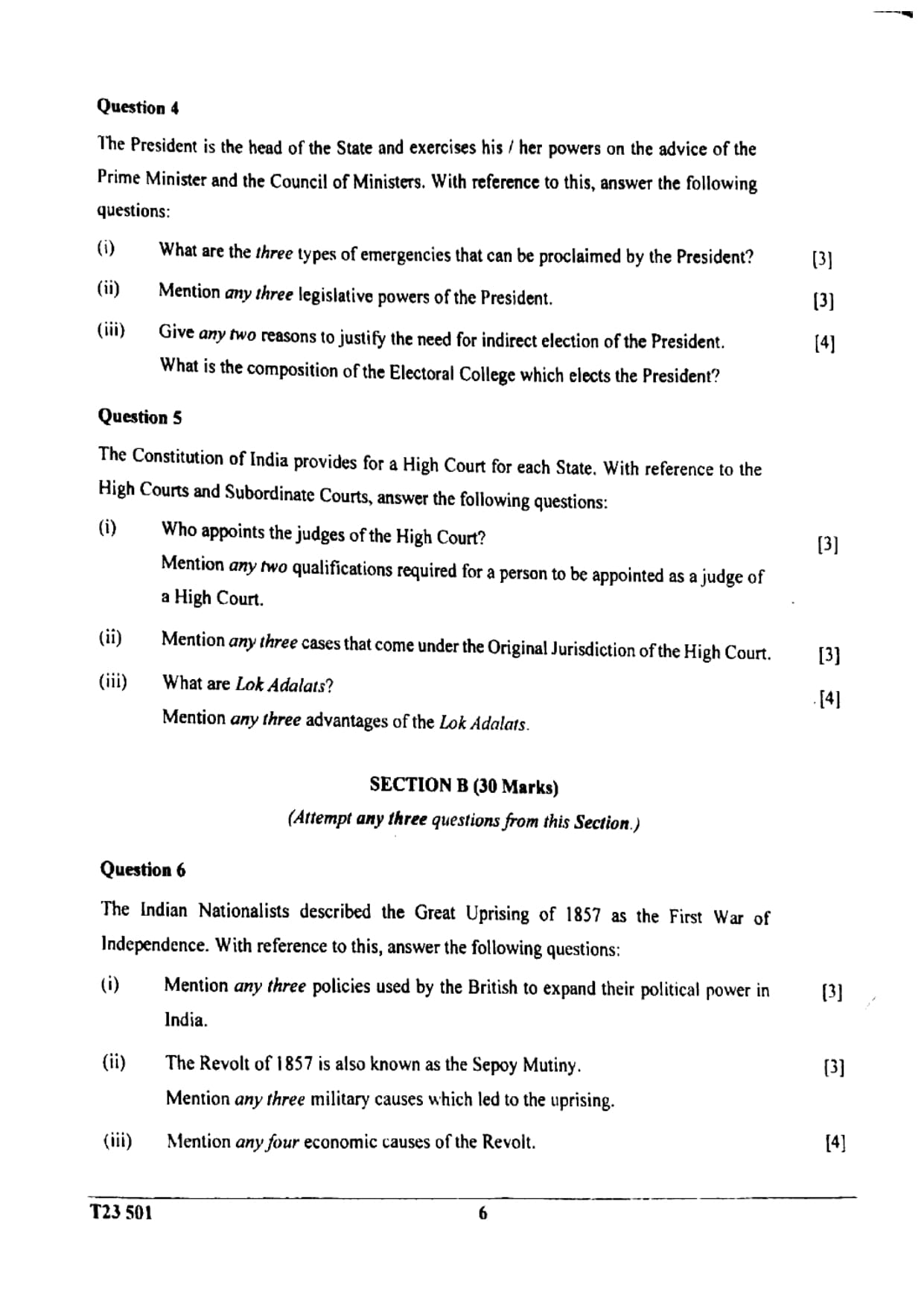
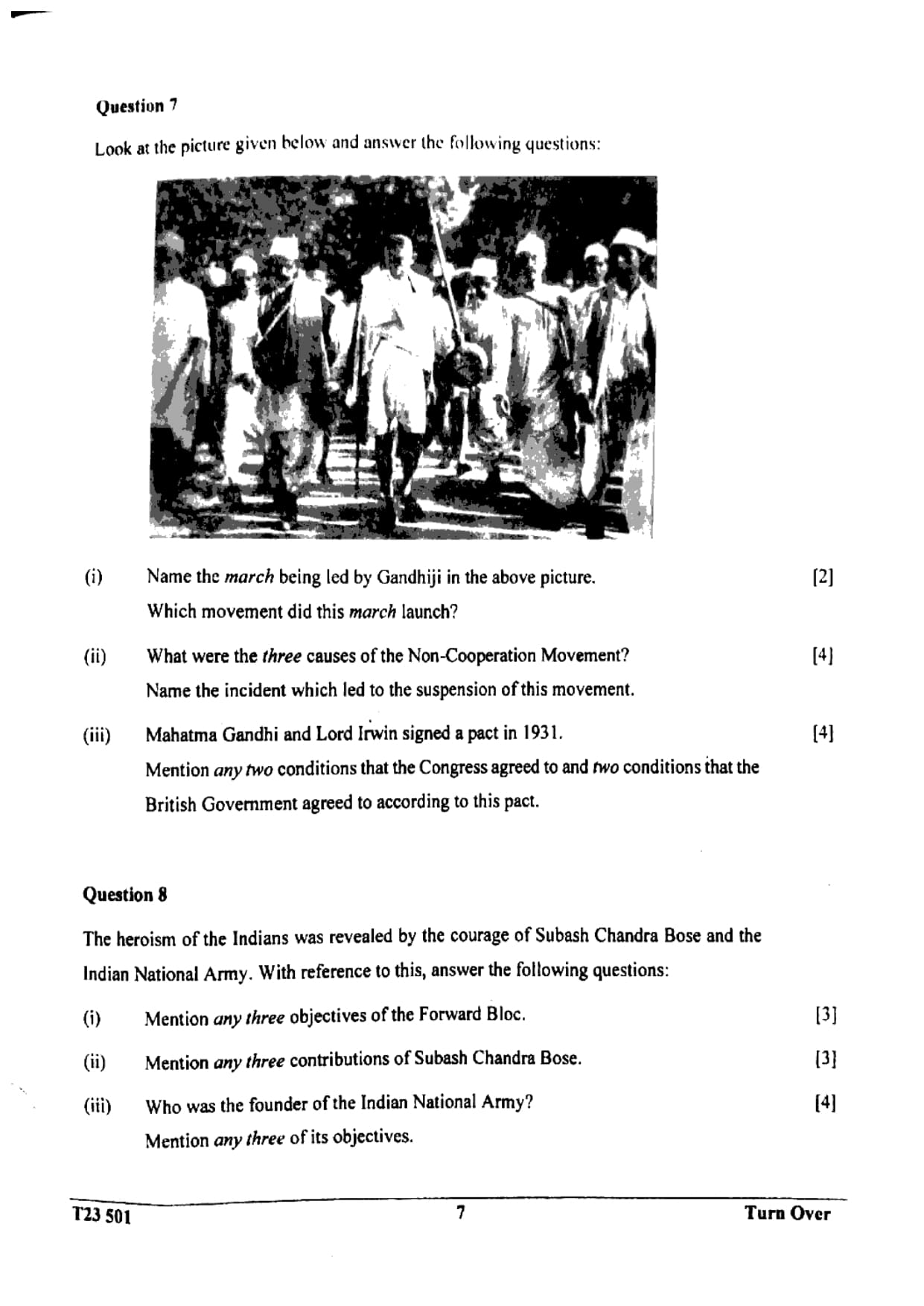
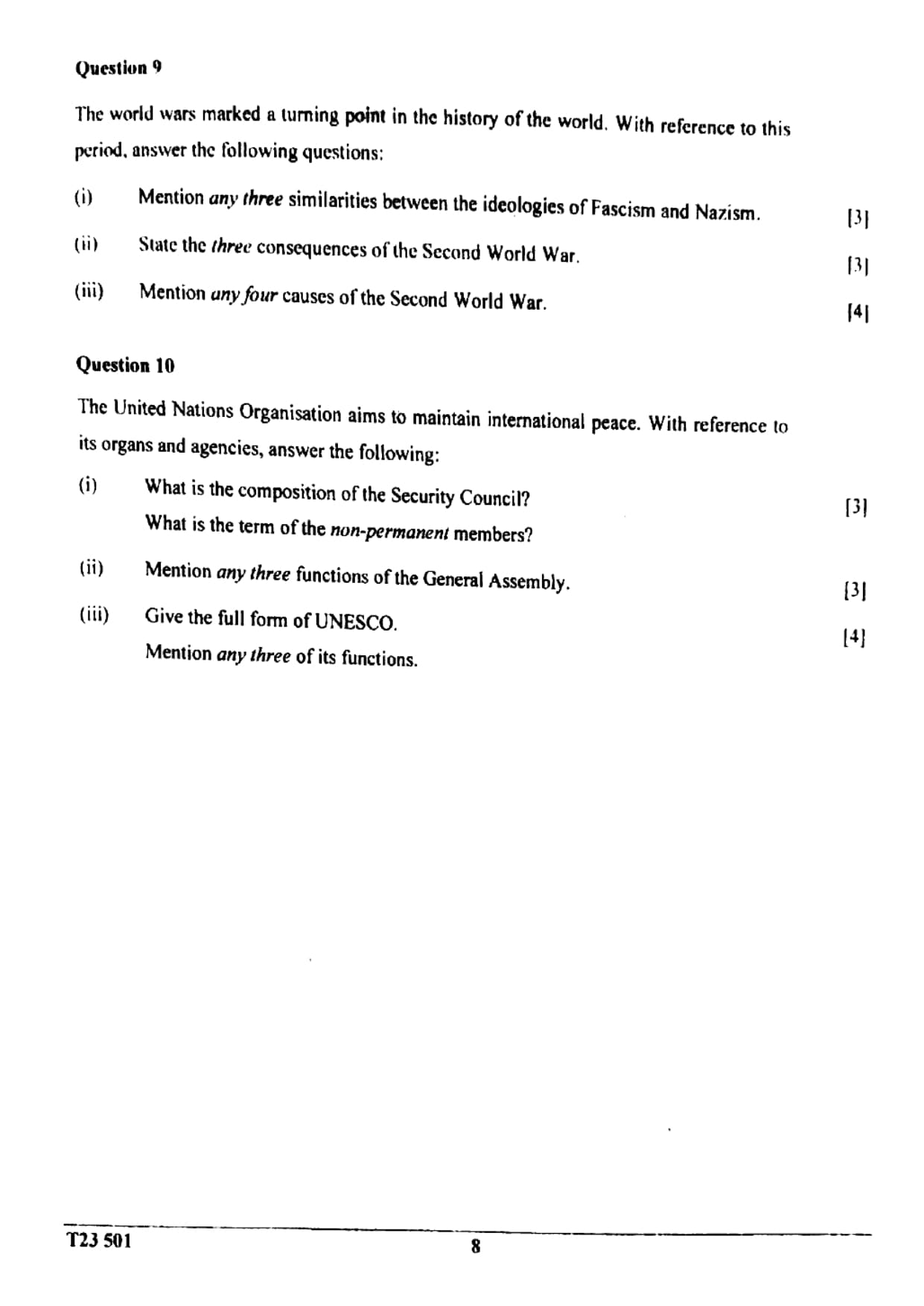
This is the ICSE Class 10 History and Civics paper (H.C.G. Paper 1, code T23 501) from the 2023 board examination. The maximum mark is 80, and the writing time is two hours after fifteen minutes for reading. Part I is compulsory for 30 marks. Question 1 is sixteen one-mark multiple-choice items on the Constitution, the national movement and the world wars, and Question 2 has seven short answers of two marks each. From Part II, candidates answer any two of three civics questions in Section A (20 marks) and any three of five history questions in Section B (30 marks). One history question is based on a picture of a march led by Gandhiji. This copy contains the questions only.
- Exam
- ICSE Class 10
- Subject
- History Civics
- Year
- 2023
- Paper code
- T23 501
- Maximum marks
- 80
- Time allowed
- 2 hours + 15 min reading
- Questions
- 10
- Pages
- 8
- Answers included
- No, questions only
Paper pattern
Part I
30 marksCompulsory. Question 1: 16 multiple-choice questions of 1 mark; Question 2: seven short answers of 2 marks
Part II, Section A
20 marksCivics: any two of Questions 3–5 on Parliament, the President and the High Courts, 10 marks each
Part II, Section B
30 marksHistory: any three of Questions 6–10, 10 marks each, including one picture question on a march led by Gandhiji
Topics covered
- Ordinances and parliamentary motions
- Lok Sabha and the Union Executive
- Emergencies and election of the President
- High Courts, subordinate courts and Lok Adalats
- Independence of the judiciary
- Revolt of 1857
- Partition of Bengal, the Muslim League and assertive nationalists
- Non-Cooperation, Civil Disobedience and the Gandhi-Irwin Pact
- Forward Bloc and the Indian National Army
- Fascism, Nazism and the Second World War
- Security Council, UNESCO and the Non-Aligned Movement
Questions from this paper
- Within how many weeks of its promulgation must an ordinance be approved by Parliament?
- Which motion should the House move so that a matter of urgent public importance can be taken up at once?
- Mention any two repressive policies of Lord Lytton.
- What are the three types of emergencies that can be proclaimed by the President?
- Name the march being led by Gandhiji in the picture, and state which movement that march launched.
- Mention any three similarities between the ideologies of Fascism and Nazism.
What's next
Class 10 done next year?
A number of scholarships for Class 11–12 depend on your Class 10 marks.
Check eligibility